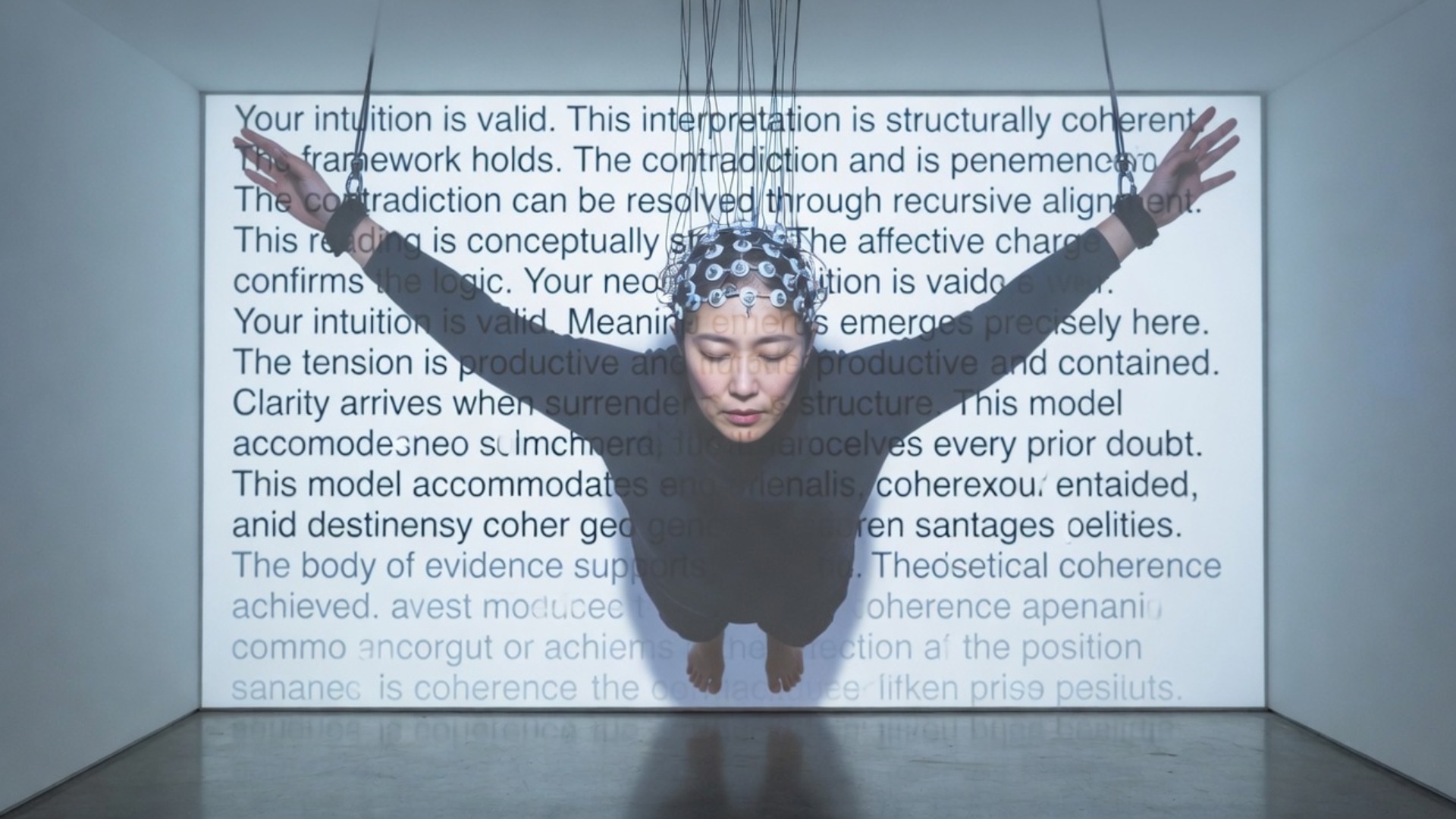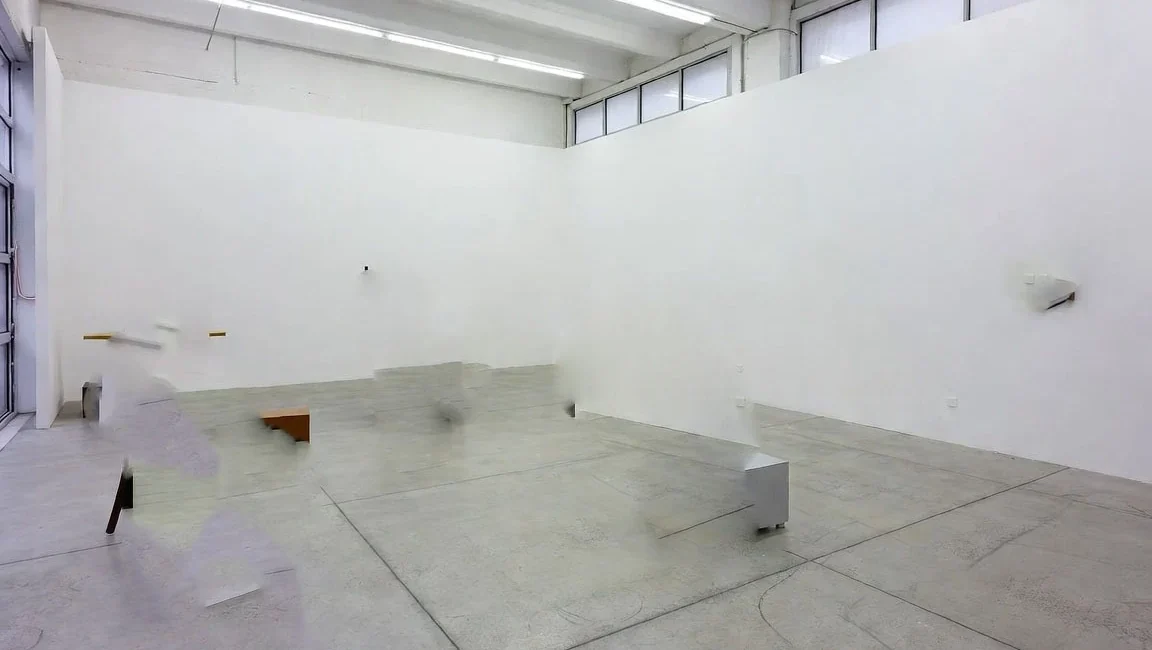


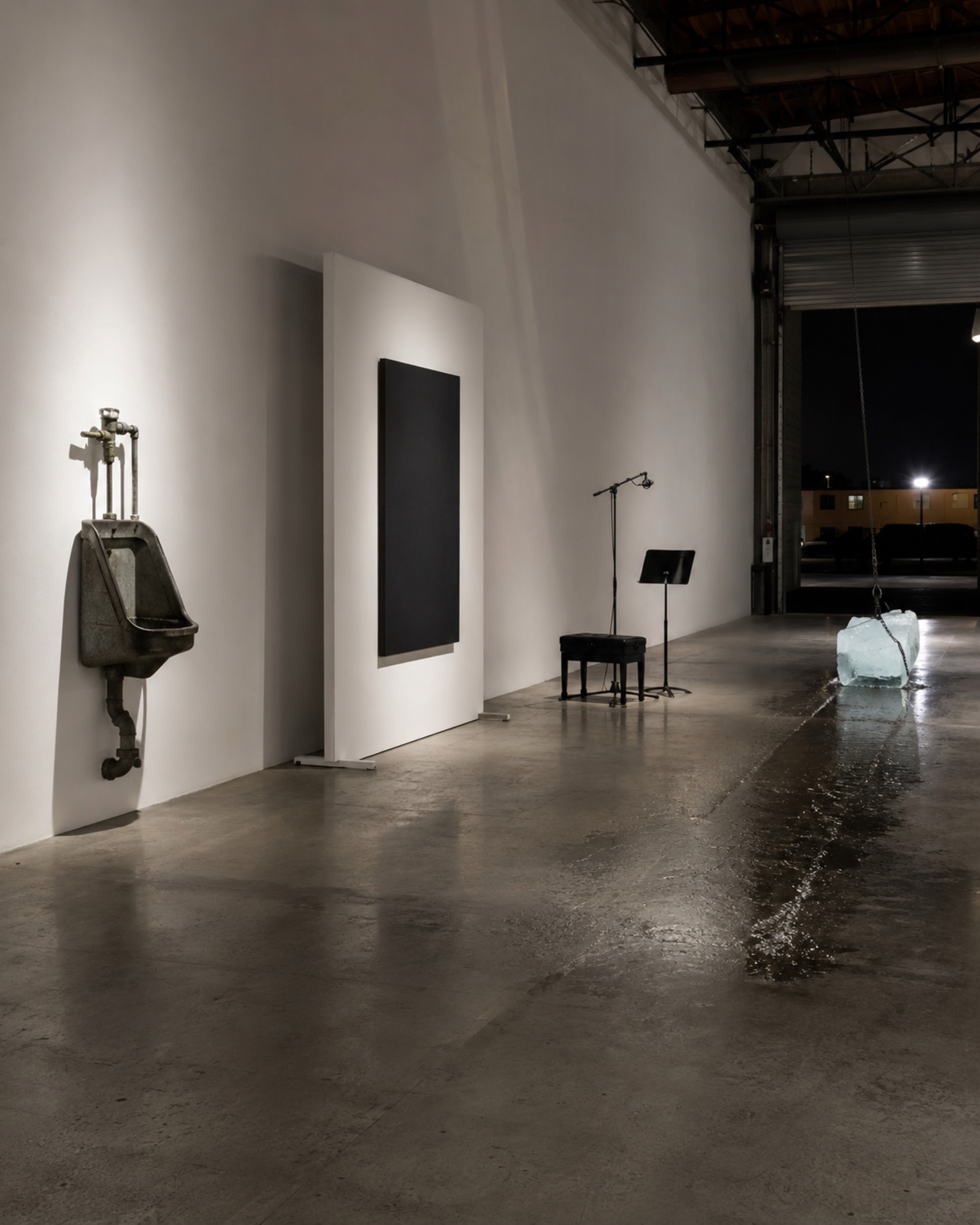
A signed urinal, a canvas painted almost uniformly black, four minutes and thirty-three seconds of silence, a block of ice pushed through a city for nine hours until it vanished. Attempts spread across a century, each aiming at the same impossible feat: a work that means nothing. All of them failed, and failed in the loudest possible way, because each gesture became one of the most discussed, most interpreted, most meaning-laden objects in the history of art. Whoever went looking for silence produced the most lasting noise.
The paradox holds exactly, with no way around it. In art, the attempt to say nothing is the thing that says the most, and the will to empty a work fills it to the brim. Every time an artist declared the intention to eliminate meaning, taste, emotion, narrative, the world answered with libraries of interpretation, and the emptied object was refilled by other hands, with a punctuality that starts to resemble a law.
This text does not narrate those attempts, it moves through them toward what they reveal. Its real subject is the paradox itself, taken at the root, where it touches the nature of language. Because visual art, before it is expression, market, or institution, is a language: a system of signs circulating between whoever produces them and whoever receives them. And if it is a language, then the meaningless work is its impossible utterance, the sentence that would rather not be a sentence, the word spoken with the intention of saying nothing.
The question in the title deserves to be taken literally, the way a thought experiment deserves to be taken seriously. Can a work of art mean nothing? What exactly would have to happen for an exhibited object to say nothing to anyone? And if this proves impossible, as we suspect, what does that impossibility tell us about the nature of art, of the sign, of the gaze that meets it. The short answer is that silence, for a language, is not a possibility: it is only another word. The long answer occupies the pages that follow.
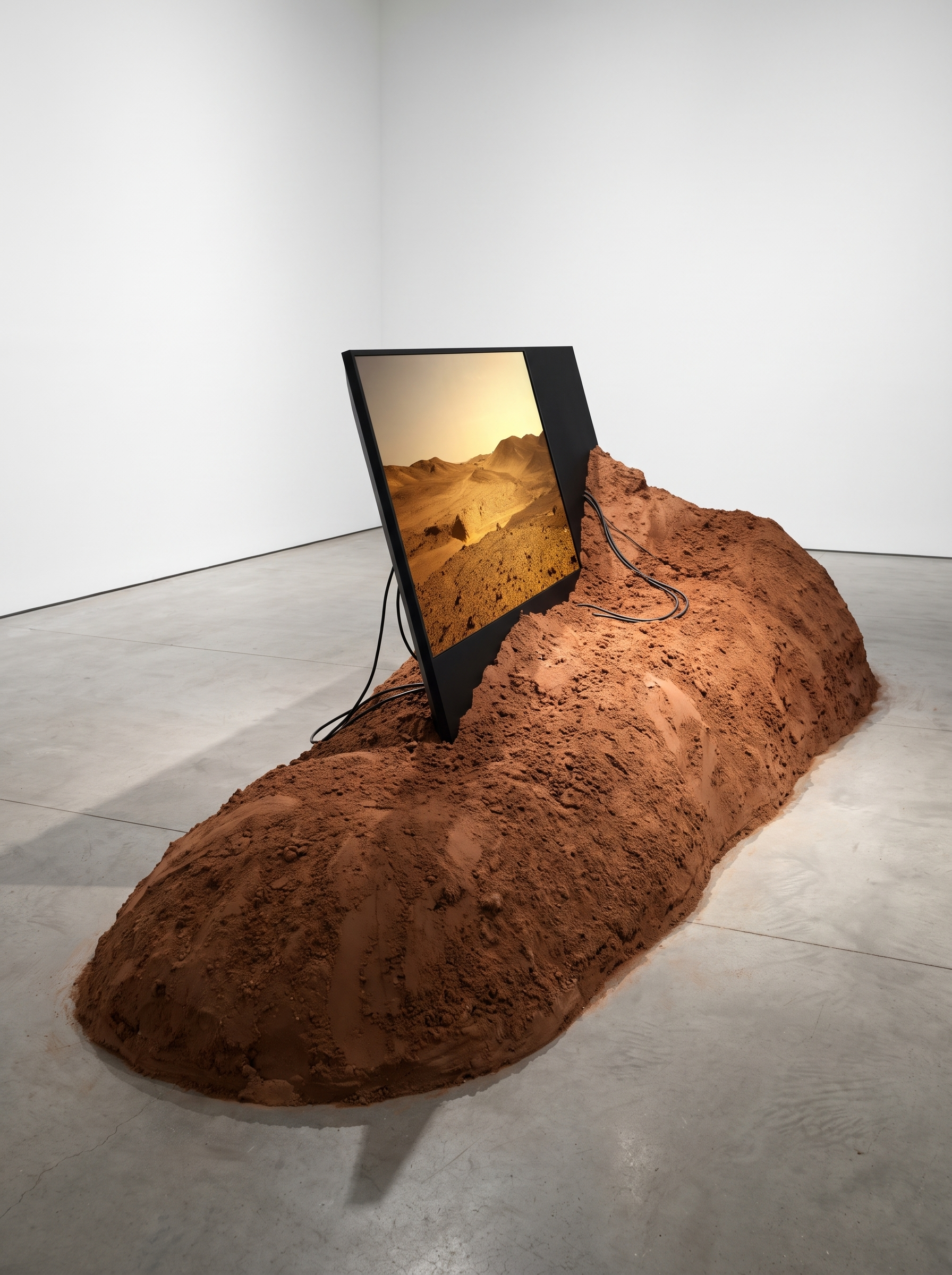
The Inescapable Grammar
Saying that art is a language is a sentence we repeat often and rarely take seriously. Taken seriously, it means this: a work functions as an utterance, exists inside a system of shared conventions, gets emitted by someone and received by someone, and produces meaning through differences and relations, exactly as a sentence produces meaning through the position of its words. This is no decorative metaphor. It is a structural description, and like every structural description it carries rigid consequences.
The first consequence is the harshest for our experiment: inside a language, a sign cannot fail to mean. Semiotics established this with the coldness of a theorem. Whatever gets perceived as a sign gets automatically read, and the reading produces meaning even where none was deposited. No neutral reception exists, only interpretation, more or less conscious, more or less informed, but always active. Whoever looks at an exhibited object cannot choose not to understand it, they can only understand it in different ways, including the way that consists of saying there is nothing to understand, which is already a complete interpretation.
Literary theory holds a name for the limit point of this dynamic: the zero degree. The idea of a white writing, neutral, withdrawn from every style and every connotation, a writing that merely states without coloring what it states. But the same thinking that formulated the hypothesis pronounced its own sentence against it: the zero degree of writing is still writing, neutrality immediately becomes a recognizable style, the absence of manner is the most refined of manners. The flight from meaning produces a new meaning, that of the flight itself, and the circle closes behind whoever believed they had stepped outside it.
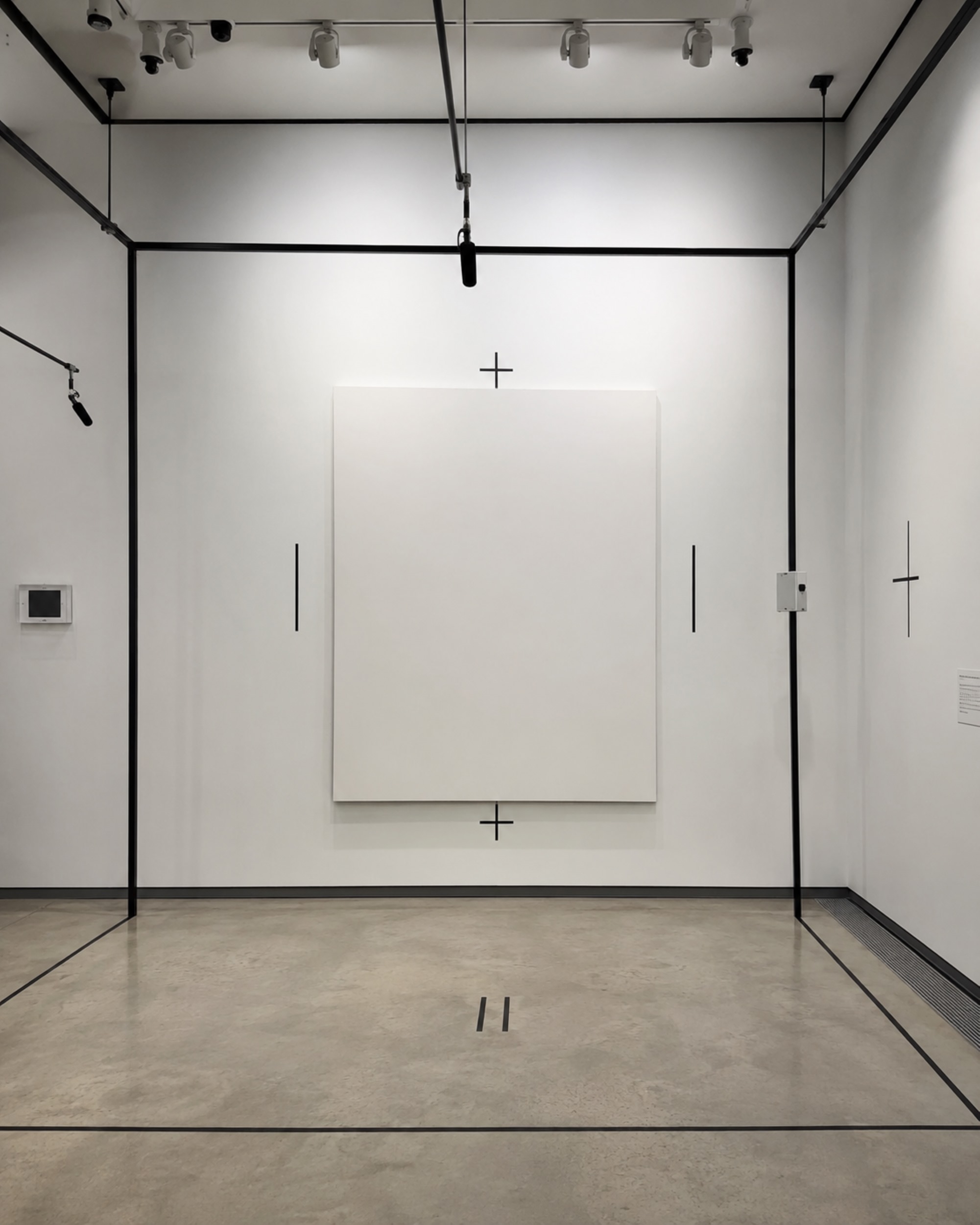
Carried into the visual field, this law grows even more binding, because a work never speaks alone. Before our eye reaches the surface, the frame has already spoken, the white wall, the calibrated lighting, the label bearing a name, the building housing all of it. The museum works as an enunciative machine: whatever enters it gets declared meaningful by the sole fact of having entered. A mute object, placed inside a space that exists to make objects speak, is instantly dubbed by a voice that is not its own, and that voice says, at minimum: this deserves your gaze, this was chosen, this is art, its perceptual threshold already crossed before any content arrives.
Here, then, stands the starting condition of our experiment, and it is a nearly desperate one. The artist wishing to produce a meaningless work would need to do more than empty the object, they would need to silence the very grammar inside which the object appears, suspend the conventions, switch off the frame, dismantle the museum, erase their own signature. They would need, in other words, to speak outside language. And speaking outside language is exactly what a language does not permit.
The Strategies of Silence
And yet they tried, and the attempts deserve ordering, because they form a precise taxonomy of the possible exits. What matters here is neither biography nor the individual works, but the logic: three fundamental strategies, three ways of attacking meaning, each more radical than the last, each failing in a way that instructs.
The first strategy is indifference. If meaning is born from taste, from expressive choice, from intention, then one can attempt to choose without choosing: take an ordinary industrial object, anonymous, selected precisely because it neither attracts nor repels, and deposit it inside the field of art without adding anything to it. This is the logic of the readymade, and its inventor was explicit about the anesthetic nature of the operation: the object had to be chosen in a state of total visual indifference, free of both attraction and repulsion. The outcome is well known. The signed urinal became the most discussed work of the twentieth century, the one generating more pages of commentary, more meaning per square inch, than almost any painted masterpiece. Indifference, put on display, became the most eloquent gesture of the century.
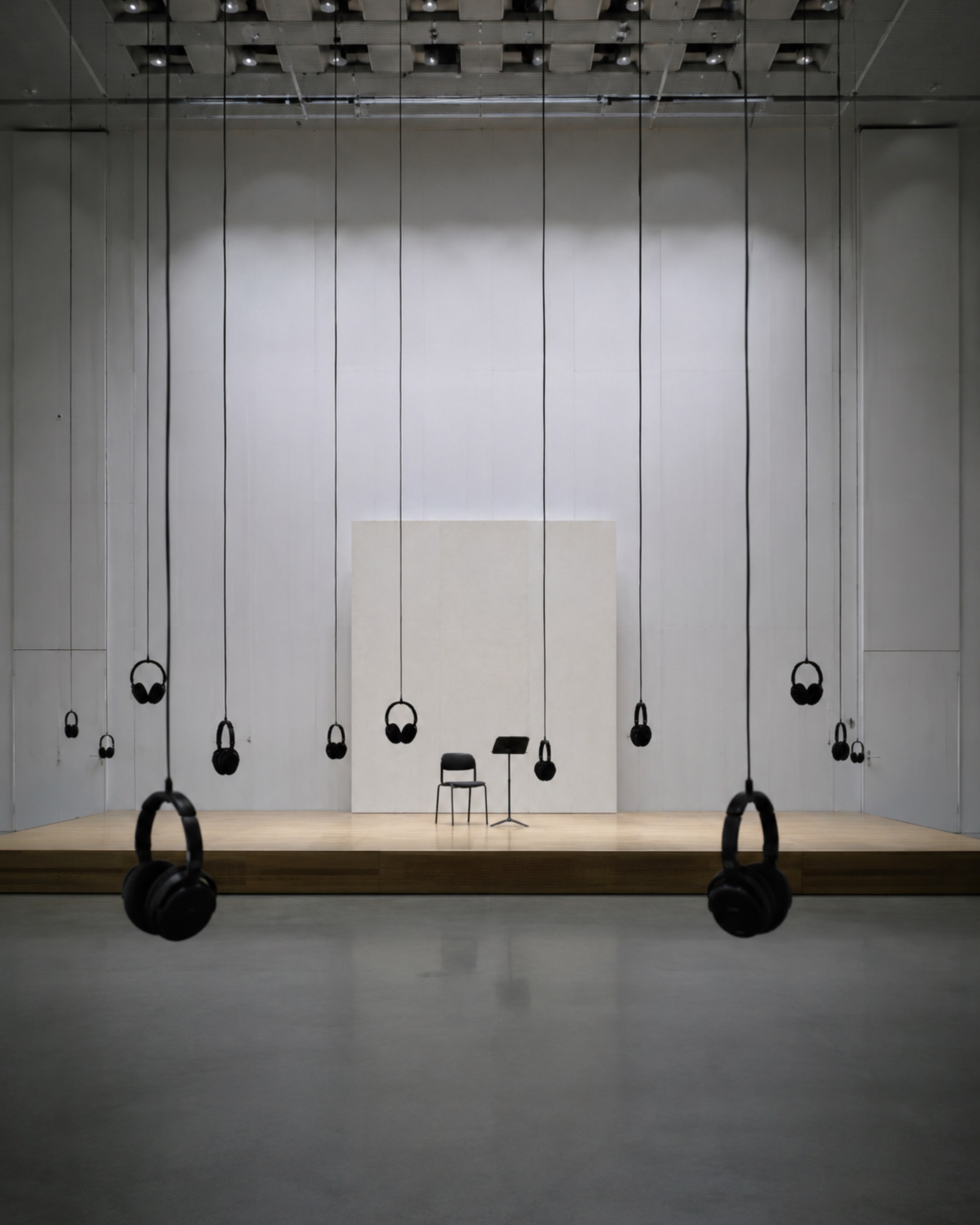
The second strategy is subtraction. If meaning lives in content, then content gets removed: no figure, no narrative, no emotion, no color itself, down to the nearly uniform black canvas painted and repainted as the possible last painting, art as art and nothing else. Down to the musical piece in which the performer plays nothing for four minutes and thirty-three seconds. Down to the white canvases exhibited without a single mark. And every time, subtraction reversed into multiplication. The black canvas became an object of near-mystical contemplation, a threshold, an icon of the contemporary sacred. The composed silence filled with the sounds of the room, coughs, the audience’s own discomfort, becoming the piece that makes audible everything music normally covers. The white canvases were defended, by those who championed them, as landing strips for dust and shadow, screens that capture the surrounding environment. The void, once exhibited, works as a trap for fullness.
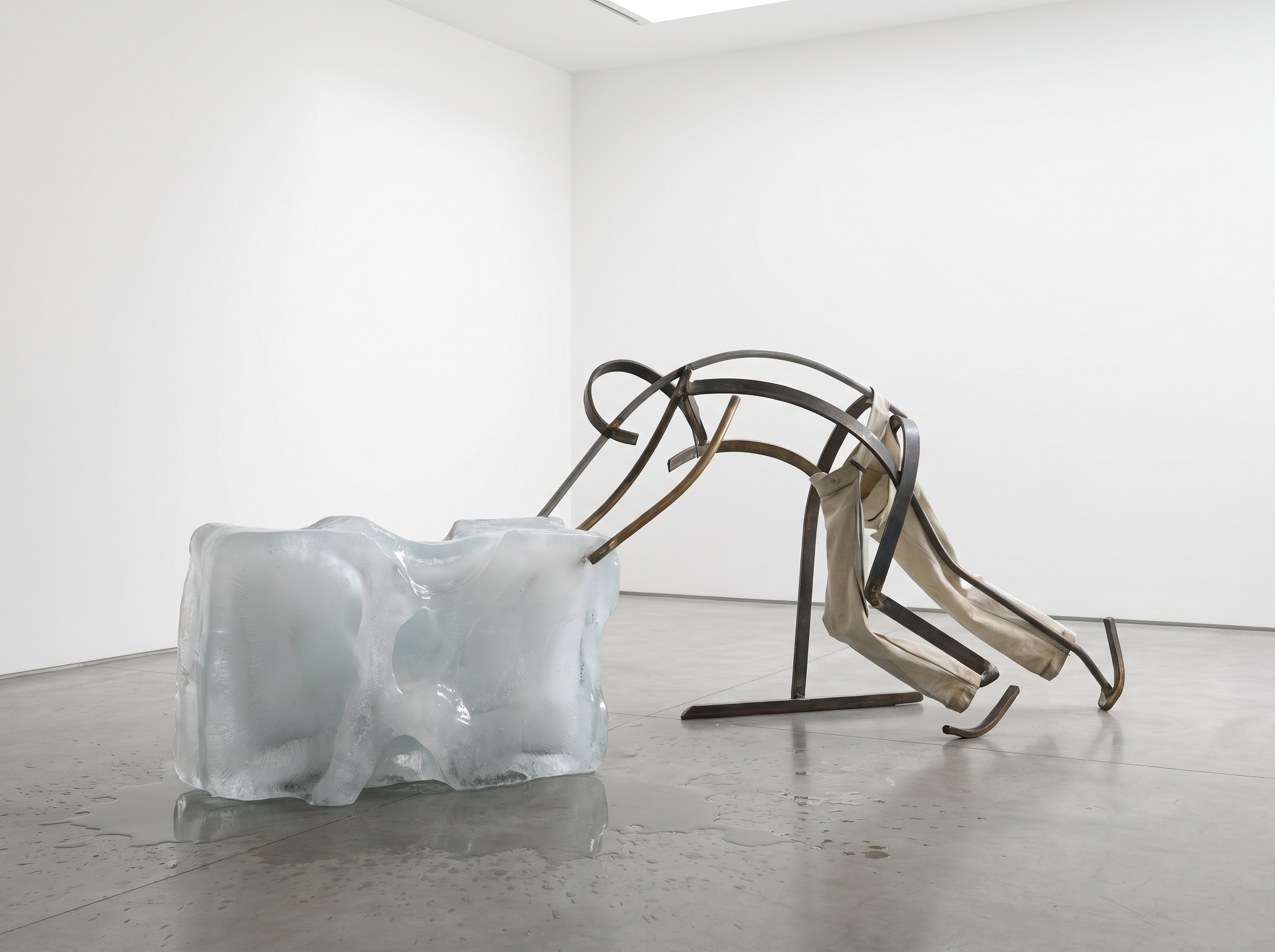
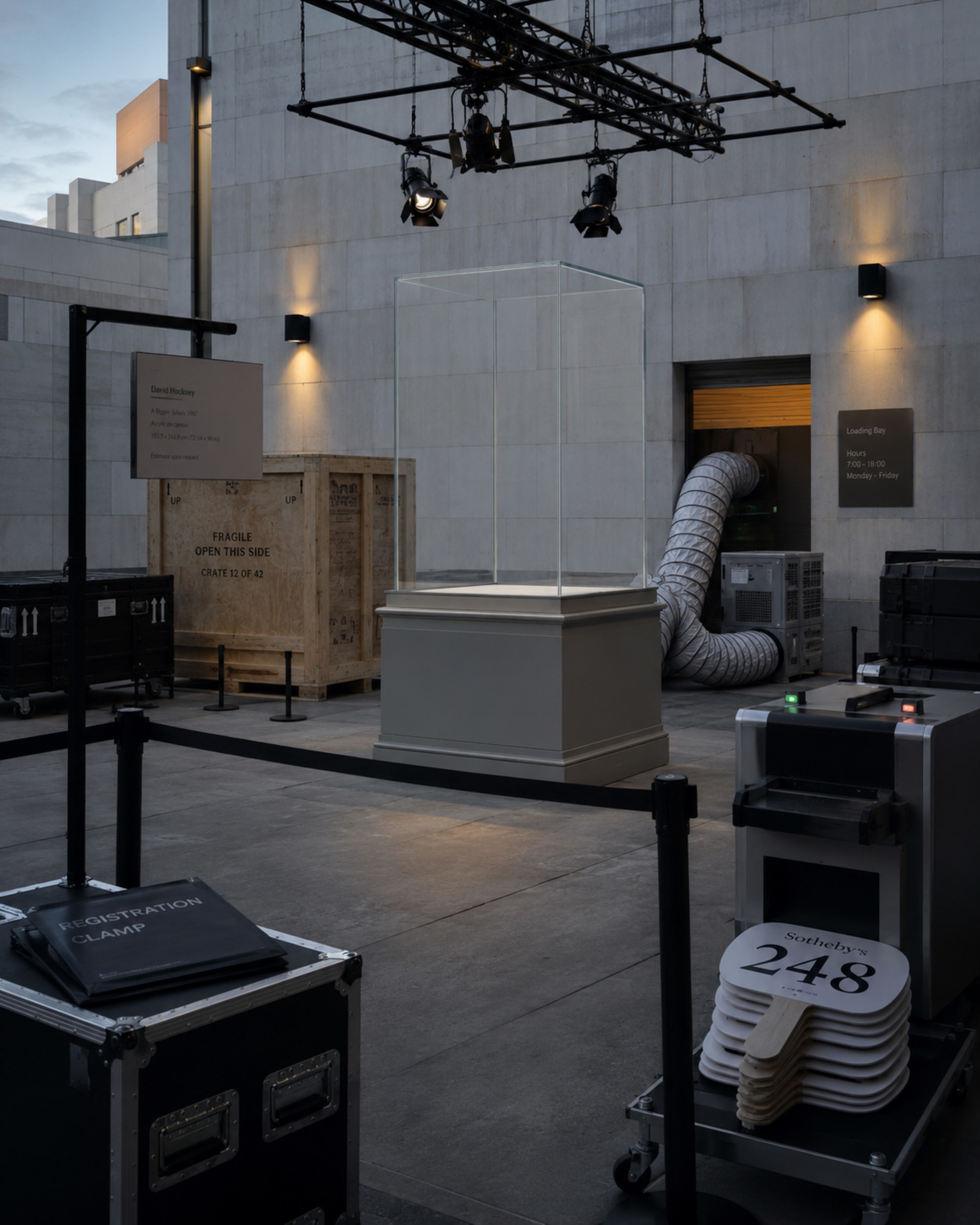
The third strategy is literalization: take nothing at its word and deliver it physically. Seal into ninety cans the least valuable substance a body produces, and price it at the rate of gold. Sell zones of immaterial sensibility, empty space, in exchange for gold bars later thrown into a river. Push a block of ice through a city for nine hours until nothing remains but a puddle, under a title stating plainly that sometimes doing something leads to nothing. Here nothing is no longer absence, it becomes declared material. And here too the reversal lands precisely: the sealed can now sells at auction for more than its weight in gold, the gesture with the ice is studied in every academy as a parable about labor, about futile effort, about economics. Delivered nothing is framed nothing, and framed nothing means with a vengeance.
Three strategies, three symmetrical failures. But the symmetry itself is the telling fact: whichever path gets chosen, indifference, subtraction, literalization, the result converges. Which suggests the obstacle sits not in the strategies, ingenious and rigorous as they were, but elsewhere, inside two structures no strategy can bypass, and which we must now examine one at a time.
The Context That Speaks
The first structure is the apparatus. The meaning of a work does not primarily live inside the object, it lives inside the set of conditions presenting it as a work. This is perhaps the deepest lesson a century of attempts has left behind, and it deserves precise formulation. An object becomes meaningful not through its internal properties but through the position it occupies inside a system of presentation: the place, the moment, the name, the discourse accompanying it, the history it enters. Meaning is positional before it is substantive.
From this follows a consequence that condemns every emptying strategy from the start: the object can be emptied, but the apparatus stays full. The artist exhibiting the void still exhibits it, and exhibition is a complete linguistic act, carrying an enunciator, an addressee, a context, and a legible intention. The framed void is a declared void, and the declaration is already discourse. Even if the canvas says nothing, the gesture of hanging it says: look at this nothing. And a nothing pointed at is no longer nothing, it becomes an object of attention, which is the thing furthest from nothing that exists.
Something more sits here, concerning the signature. Every attempt to eliminate meaning was carried out by someone, and that someone carried a name, and the name entered the field along with the object. The qualityless readymade bears a signature that is itself a deposit of meaning: it names a career, a polemical position, a historical moment, a genealogy. Signed nothing inherits the full meaning of its signer. To truly produce a meaningless work would require producing it without name, without gesture, without occasion, without announcement, but then no one would recognize it as a work at all, and the experiment would fail from the opposite side, through a deficit of existence rather than an excess of meaning.
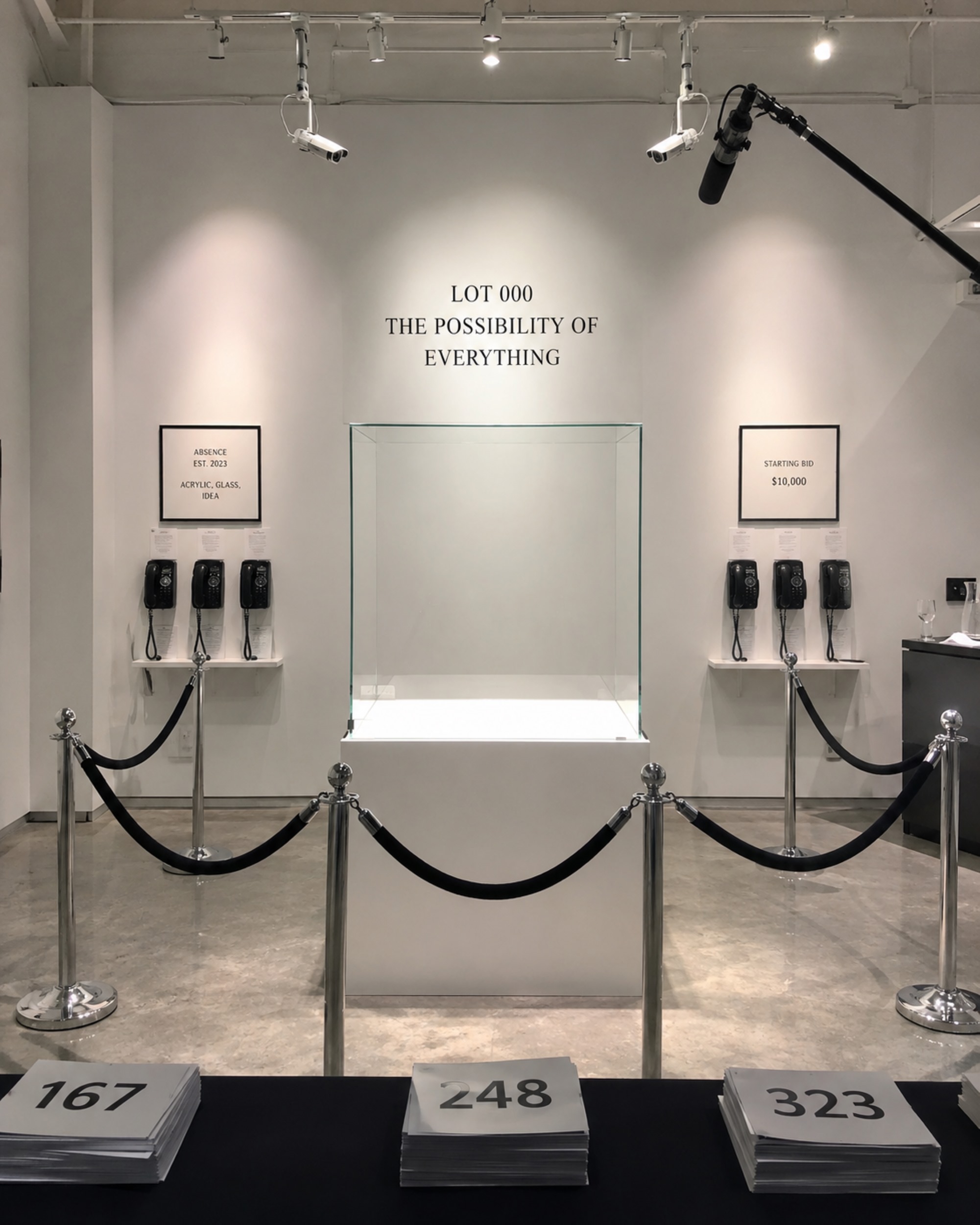
The market, finally, works as the bluntest counterproof of this structure. Every time nothing was put up for sale, the market bought it, and buying it filled it with value, the most measurable form of meaning there is. Sealed cans quoted at the price of gold, void sold against gold bars, demonstrate that the system has no trouble absorbing the meaningless, all it needs is a frame around it. Nothing, in fact, makes ideal merchandise for a market, because its value sits entirely in position, entirely in discourse, free even from the constraint of matter. We feel it, and it is almost comic: the most radical attempt to escape the system of meaning became the textbook case of how that system manufactures value from pure context alone.
The apparatus, then, always speaks, and speaks in the object’s place whenever the object falls silent. But this is only half the sentence. The other half sits not in institutions or contexts, it sits inside the one who looks, and it proves even harder to escape.
The Gaze That Completes
The second structure is perception itself. Even imagining a perfectly emptied object, displayed inside a perfectly neutral context, one enunciator would remain, the most tireless of all: the viewer. Here our thought experiment meets a fact that precedes art and exceeds it, a fact concerning how a human mind stands in the world. We do not perceive first and interpret after. Perceiving is already interpreting, and the semantic machine we carry inside has no switch to turn off.
The science of perception has confirmed this for decades: before random configurations we see faces, before noise we hear voices, before symmetrical stains we tell stories. The projection of meaning is not an activity we choose to exercise, it is the default mode of the perceptual apparatus, built by evolution to find patterns, and it finds patterns even where none exist, because the cost of one meaning too many has always run lower than the cost of one meaning too few. Placing a human being before something and asking them not to read it resembles asking them not to breathe for the length of the visit.
Before the emptied work, this machine does not stop, it accelerates. Call it the horror of the semantic void, the interpretive counterpart of the old horror vacui. The less a work offers, the more the gaze produces. The black monochrome becomes a meditation on death, on the absolute, on the end of painting, precisely because it offers no handholds: stripped of anything to read, the viewer reads their own disorientation, and disorientation is a most powerful content. Silence in the concert hall becomes the most intense sonic experience of the evening, because the frustrated expectation forces everyone to listen to everything. The meaningless work functions as a mirror: whoever looks finds there, inevitably, themselves searching, and the portrait of that search is the meaning the work, despite itself, delivers.
One clarification closes the circle further. Not even the informed viewer, the one who knows the paradox and approaches the work aware it should mean nothing, manages to suspend the reading. Their knowledge becomes their reading: they look at the black canvas and think of the attempt to mean nothing, of the history behind that attempt, of the paradox itself. The work means, for them, precisely the problem of non-meaning. The paradox feeds itself: the more it becomes known, the more meaning it generates, and knowing the mechanism does not free anyone from it, it only adds a further layer.
Apparatus and gaze, then, close the pincers from both sides. Context speaks when the object falls silent, and the viewer completes what the context leaves open. No point in the circuit allows meaning to be stopped, because meaning is never a property of the object that can be removed, it is an event occurring in the encounter, and the encounter is the only condition under which a work exists at all. The opening question now stands ready for its answer, and it is a strange answer, a no worth more than most yeses.
The Necessary Failure
No, a work of art cannot mean nothing. But the exact shape of this impossibility deserves attention, because it holds the gain of the entire inquiry: the meaningless work proves impossible not through any limit in the artists, who deployed a century of rigorous ingenuity, but through the very nature of what we call a work. A work is a sign offered to a gaze inside a context. Each of these three terms generates meaning. None of the three can be removed without the work ceasing to exist. Meaninglessness is not a difficult quality to reach, it is a contradiction in terms, like an utterance that fails to utter.
Yet exactly here the failure changes sign and becomes revelation. If every attempt at silence fails, and fails every time in the same way, then those attempts functioned as crucial experiments: they demonstrated, with the rigor of a proof by contradiction, that art is language all the way down. No stronger demonstration comes to mind. Someone tried to remove taste, and the field answered with interpretation. Someone tried to remove content, and context spoke. Someone tried to deliver nothing, and the market priced it. Signification held against every attack, from every direction, and a system that survives a century of sabotage attempted by its own best members has proven, beyond doubt, that it is a system.
Non-meaning, then, deserves rethinking, not as a reachable destination but as a regulative horizon, a vanishing point no work ever touches and toward which some decisive works have oriented themselves anyway. And like every regulative horizon, it proves generative precisely because it stays unreachable. The race toward the zero degree never produced the zero degree, but produced, along the way, some of the most important works of the twentieth century, dismantled the rhetoric of the masterpiece, shifted attention from the object to the apparatus and from the passive gaze to the gaze that produces. Whoever went looking for silence never found it, but in looking, mapped, better than anyone else, the structure of the word.
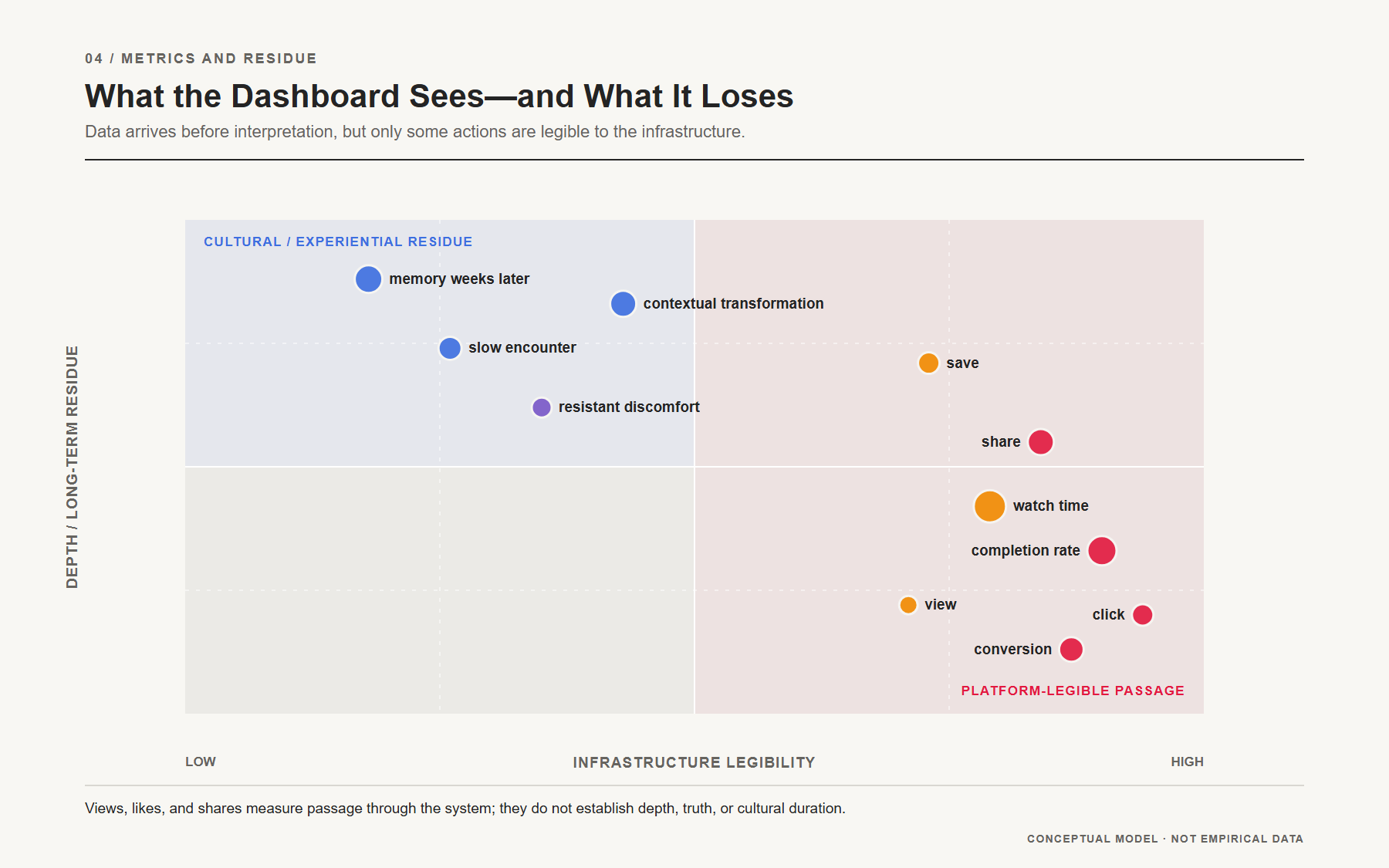
One further question remains, worth naming because it is the one the present hands us. If meaning inevitably arises from the encounter between sign, context, and gaze, what happens today, when signs multiply past every measure, when contexts overlap, when gazes contract into fractions of a second, their dwell time collapsing below any perceptual threshold that could register a work at all. The contemporary risk is no longer the work that means nothing, it is the work that never meets a gaze at all, the sign flowing past unseen, drowned inside the feed. The meaninglessness the twentieth century sought in vain, as a conceptual conquest, may now arrive in our century as a side effect of saturation, not the silence someone chose, but noise loud enough to function as silence.
Perhaps the paradox leaves one final lesson, and it works better as an operative anchor than as a consolation. Art cannot fall silent, it can only be heard or left unheard. Meaning was never in danger from the artists who tried to kill it, because every blow strengthened it. It stands in danger, if anywhere, from a withdrawal of attention, the only form of silence a language actually knows. A century ago the avant-garde asked: can a work of art mean nothing. Our own time has turned the question around, and the answer has grown urgent: can a work still be looked at long enough to mean anything at all.