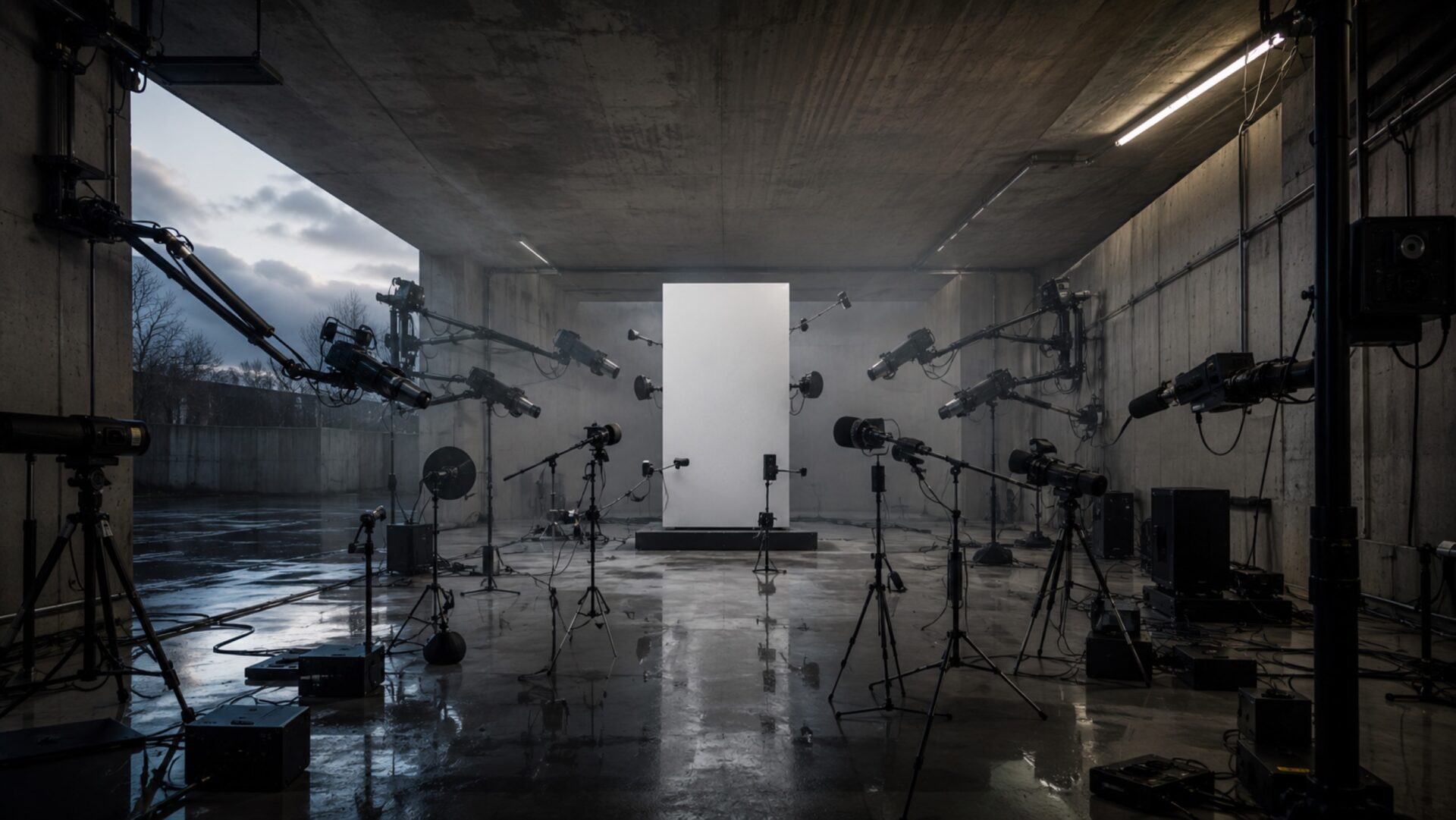
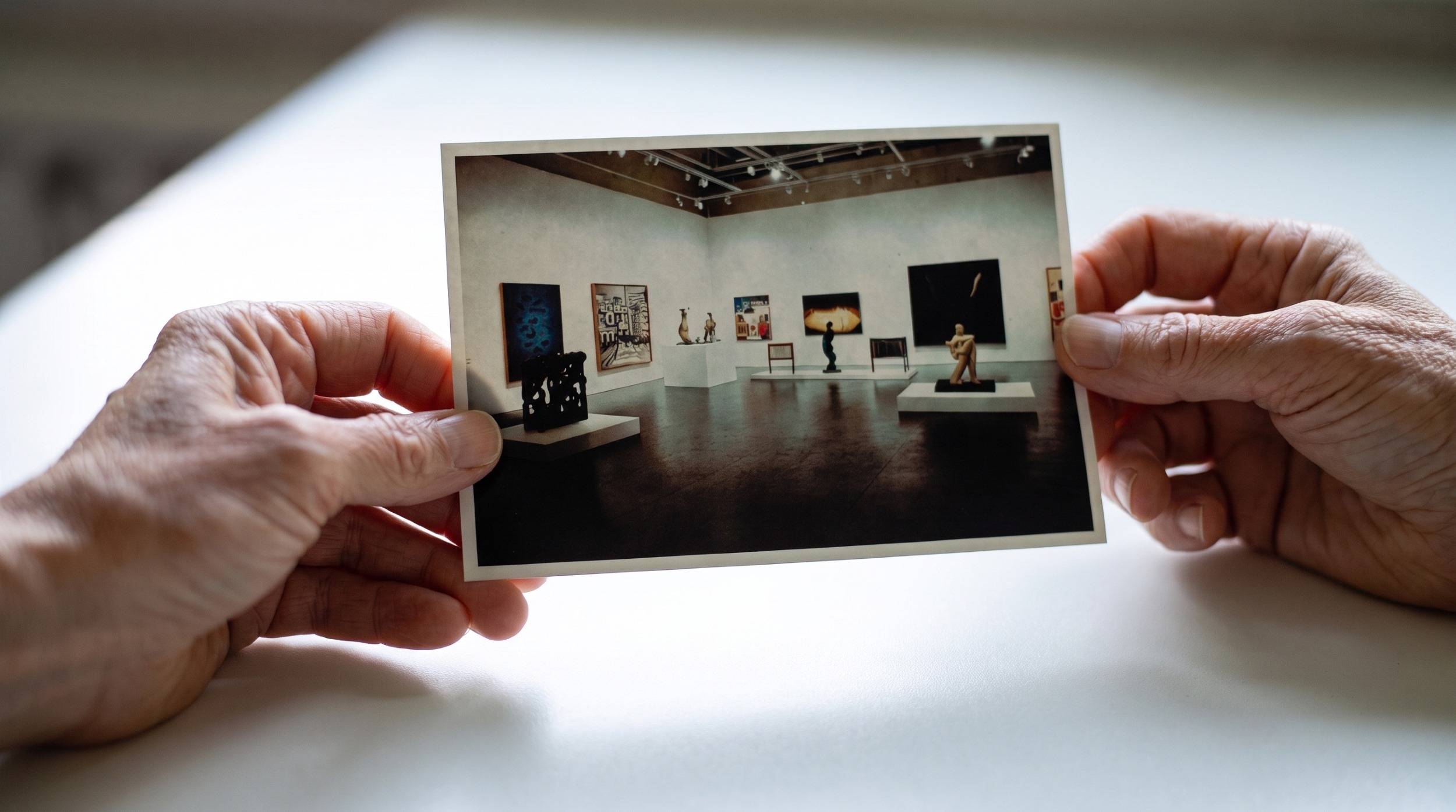
Years after visiting the 2013 Venice Biennale, a group of friends tried to reconstruct one of the works they had seen. What began as an ordinary conversation soon turned into a game of telephone. One remembered a structure occupying the centre of a dark room. Another insisted that it had been installed against a white wall. Someone recalled a mechanical sound; someone else could not remember any sound at all. The dimensions changed with each account. Elements migrated from one work to another, and details that initially seemed certain became less convincing each time they were repeated.
None of them was lying. Each was assembling the experience from a different set of surviving fragments: a material, a colour, the atmosphere of a room, the exhaustion of the day, the presence of the crowd, a conversation that had taken place nearby. They were not retrieving four incomplete copies of the same event. They were producing four different versions of it.
Eventually, one of them found a photograph on an old phone. For a moment, the disagreement appeared to be settled. The image seemed to provide evidence: this was what the work had looked like. Yet the photograph showed only part of the installation. Its upper edge was missing, one side was concealed by a passing visitor, and the frame gave no reliable sense of scale. Nothing remained of the sound, the route through the room, the surrounding works or the physical sensation of standing there.
The photograph corrected one detail while erasing several others. More importantly, once it had been seen, it began to reorganise the conversation. The friends gradually adjusted their memories to the image. Its partial version acquired more authority than their unstable recollections. What had begun as evidence of the experience was becoming the experience’s most convincing replacement.
This small episode opens onto a much larger question. What role does photography play in the memory of art? Does it preserve an encounter, interpret it, or gradually construct a new memory in place of the original one?
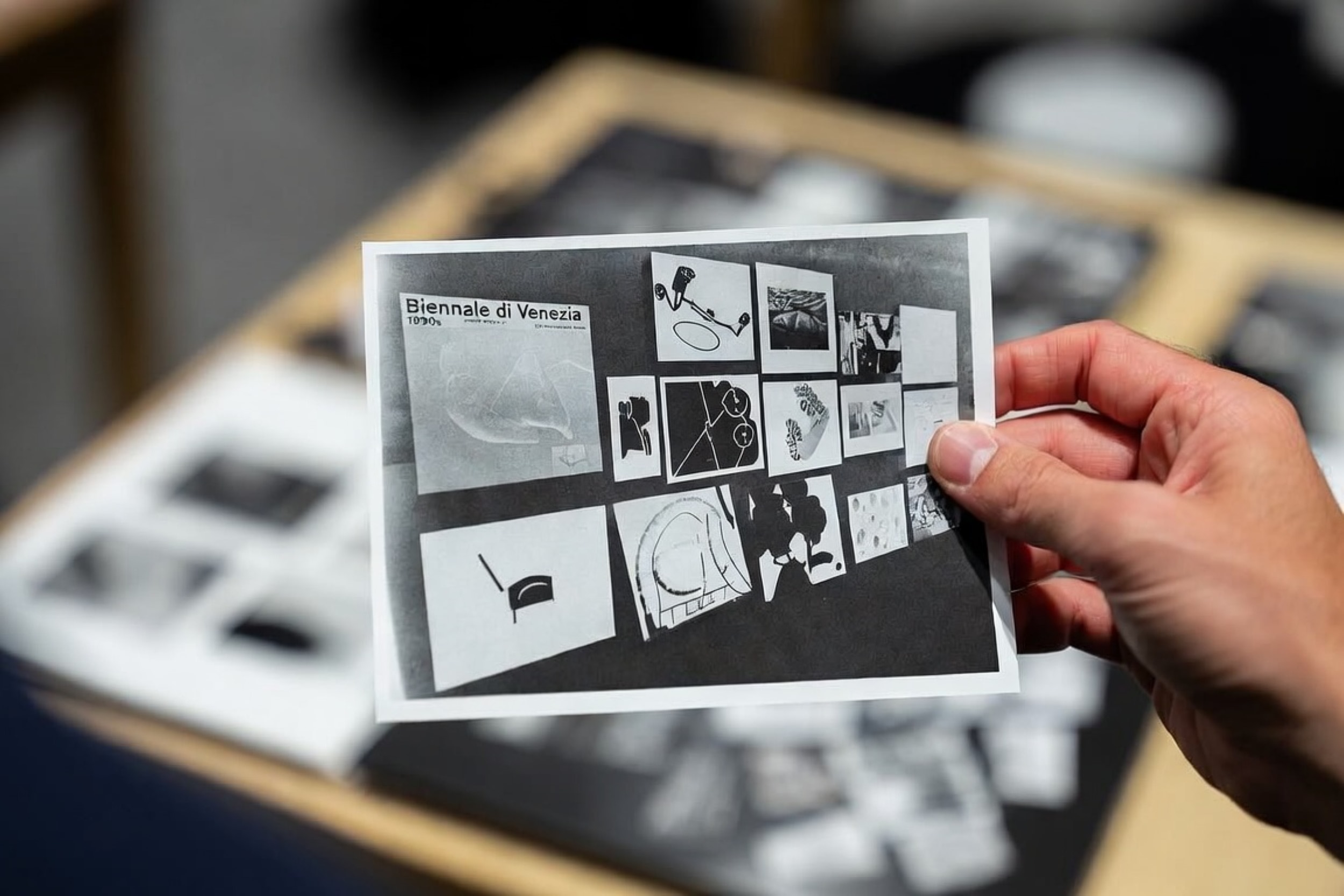
The Exhibition Exceeds Our Capacity to Remember It
A large exhibition places the visitor inside an economy of excess. There are more works than can be examined carefully, more information than can be retained, and more spatial relationships than can be reconstructed once the visit is over. Even in a relatively small gallery, attention is selective. In a biennial, art fair or museum survey, selection becomes unavoidable.
The visitor does not experience an exhibition as a complete and stable object. It unfolds as a temporal sequence: entrance, anticipation, discovery, distraction, fatigue, renewed attention and eventual saturation. Certain works are encountered slowly, while others are crossed in seconds. Some are remembered because they are visually forceful; others because they coincide with a conversation, a sound, a bodily sensation or an unexpected emotional response.
Memory therefore begins editing the exhibition before the visit has ended. It compresses rooms, removes transitions and establishes provisional hierarchies. A work encountered early in the day may receive a different quality of attention from one seen after several hours of looking. The remembered exhibition is never simply smaller than the real one. It is differently organised.
Photography enters this situation as a practical response to abundance. The gesture of taking a picture contains an implicit promise: there is no need to retain everything now because the image will make it available later. The camera becomes a form of external storage, a device to which part of the burden of remembering can be delegated.
Yet what becomes available later is not the work itself. It is a selected visual record produced from one position at one moment. The visitor may believe that the photograph has preserved access to the experience, while in reality it has preserved a particular interpretation of it.
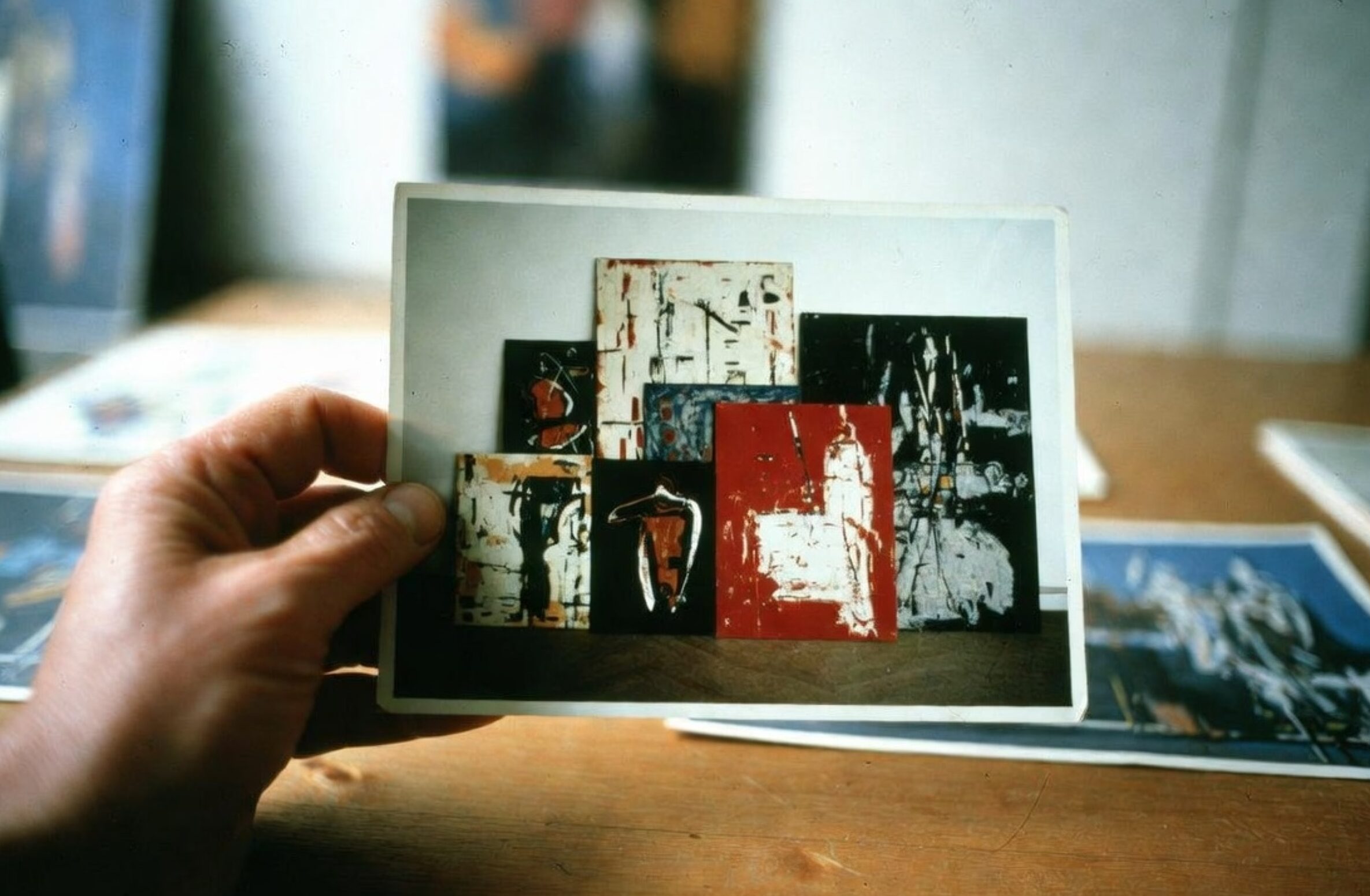
Every Photograph Proposes a Version of the Work
A photograph may appear automatic, but it is structured by decisions. The person holding the camera chooses a position, distance, height, focal length and moment of exposure. They decide whether to include the surrounding architecture, wait for the room to empty, photograph the whole installation or isolate a detail. Even a hurried phone picture contains a theory of what matters.
A frontal photograph of a painting presents it as an autonomous surface. A lateral view that includes the gallery and its visitors turns it into a spatial and social event. A close-up may reveal texture while suppressing scale. A wide installation view may explain the structure of a work while reducing the material specificity of its components.
The frame is not merely a container for what is visible. It establishes a boundary between what will enter the future and what will be excluded from it. Beyond that boundary may lie the ceiling, the entrance, the electrical infrastructure, the speakers, the movement of the audience, the work’s relationship to another room or the source of the light transforming its surface.
Photography preserves by eliminating. It makes a fragment durable by allowing the rest of the situation to disappear.
This is not necessarily a distortion in the dishonest sense. Selection is a basic condition of every image. The problem begins when the act of selection becomes invisible and the photograph is treated as though it were equivalent to the work. A record designed to offer one useful perspective starts to function as a complete substitute.
The distinction is particularly important in contemporary art. An installation may depend on duration, sound, atmosphere, movement, scale, architecture or bodily participation. A photograph can document some of these conditions, but never all of them simultaneously. It may capture the work’s appearance while losing its behaviour; preserve its components while dissolving the relations that made them meaningful.

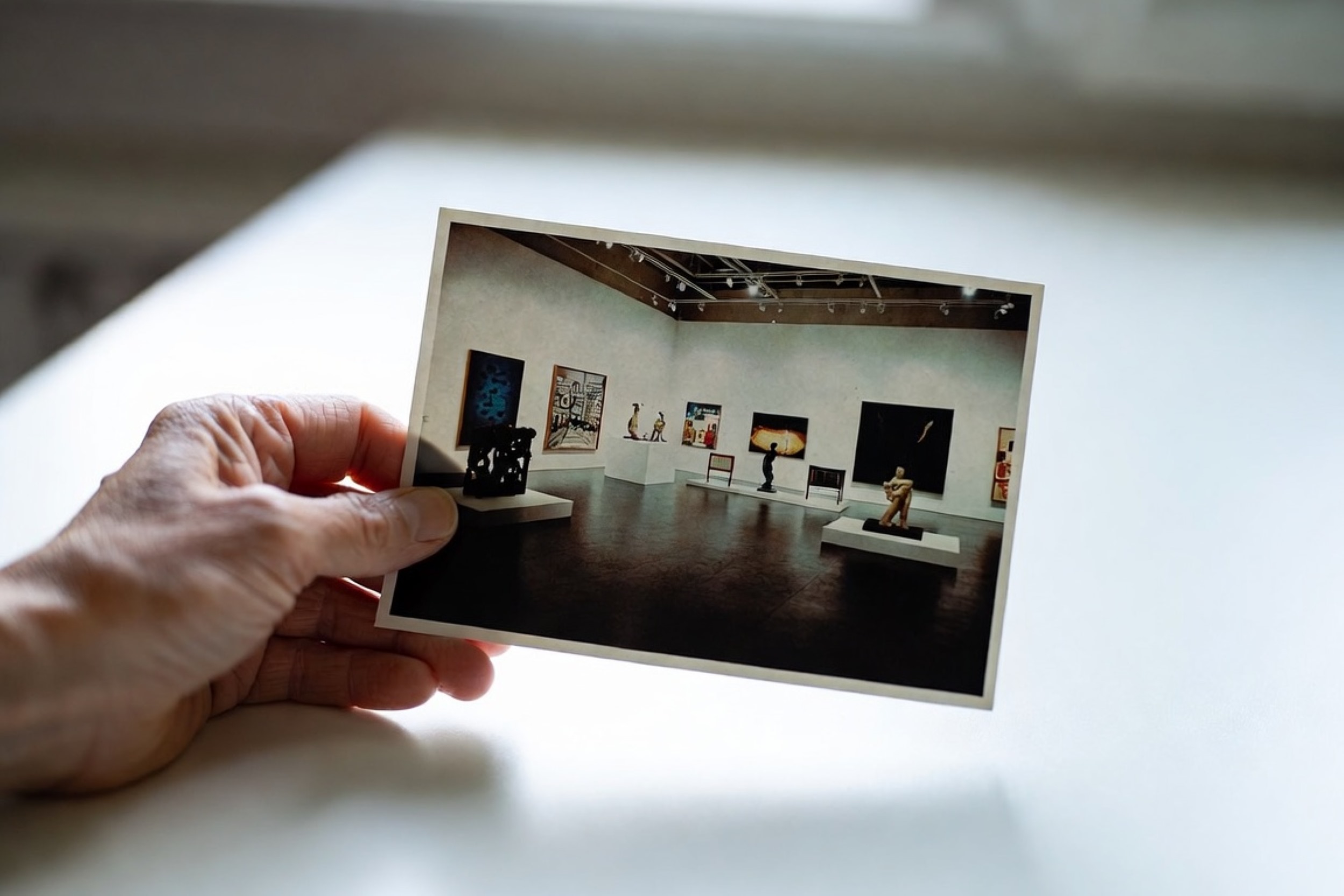
Attention, Delegation and the Camera’s Memory
The relationship between photography and memory is more complicated than the assumption that taking pictures helps us remember. Research suggests that photography can support certain forms of attention while weakening others.
In a museum-based study, psychologist Linda Henkel identified what became known as the photo-taking-impairment effect. Participants who photographed entire objects later remembered fewer of those objects, fewer details and less information about their locations than participants who had only observed them.
One possible explanation is cognitive delegation. When a person believes that the camera has securely recorded an object, they may invest fewer mental resources in encoding it. The photograph becomes responsible for remembering. The visitor sees enough to operate the device but not necessarily enough to construct a durable internal memory.
The same study also found an important complication. When participants zoomed in and deliberately photographed a specific detail, the negative effect was reduced. Focused photography demanded a more active form of attention. The camera did not simply interrupt observation; it helped organise it.
Research by Alixandra Barasch, Kristin Diehl, Jackie Silverman and Gal Zauberman similarly found that voluntary photo-taking could improve memory for the visual aspects of an experience while reducing memory for its auditory dimensions. Their study of photographic memory suggests that taking pictures redirects attention rather than merely increasing or decreasing it.
The camera teaches the visitor to search for what can become an image. Colour, geometry, contrast, surface and composition may receive greater attention. Sound, temperature, duration, smell and peripheral events may become less available. The resulting memory can be visually detailed and experientially thin.
Photography is therefore neither inherently attentive nor inherently distracting. Its effect depends on the gesture. There is a difference between photographing after looking, photographing in order to look, and photographing instead of looking.
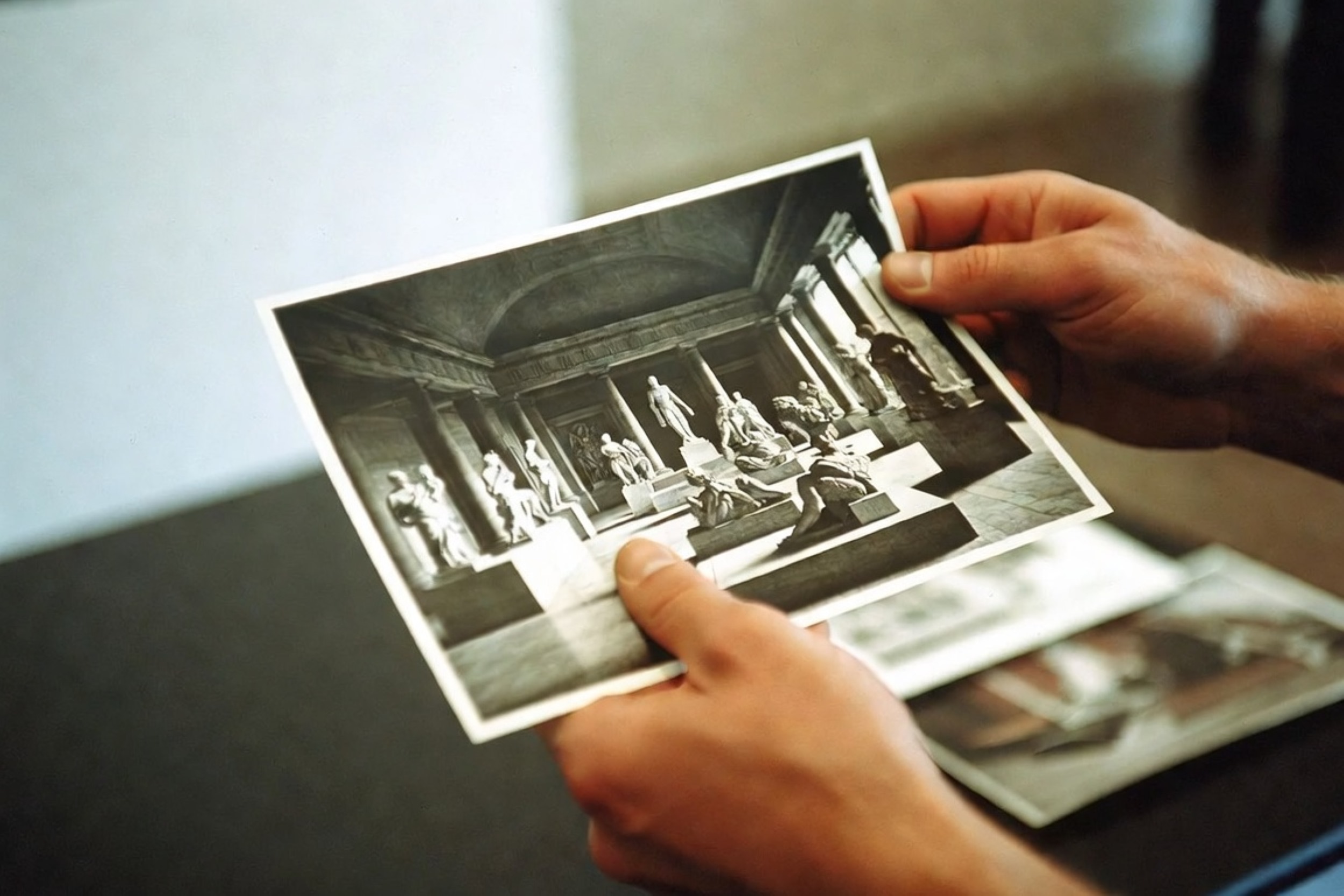
When the Record Becomes the Event
Immediately after an exhibition, the memory of the work and the photograph of it remain relatively distinct. The visitor may still remember what was outside the frame, where the sound originated, how the room connected to the next space and what happened before the phone was raised.
Over time, the relationship changes. The photograph can be revisited repeatedly. It remains in the phone archive, appears in cloud-generated reminders, is sent to friends and circulates through social media. The original event cannot be consulted in the same way. It survives only through unstable traces.
This produces an imbalance. The photograph remains visually consistent, while the unaided memory becomes less detailed. Each new viewing strengthens familiarity with the image. Eventually, the visitor may no longer remember the room but may remember the photograph of the room with extraordinary clarity.
The difference between remembering an event and remembering its representation becomes difficult to locate. Was the work actually that colour, or did the phone alter the white balance? Did it appear isolated, or was the crowd simply excluded from the frame? Was it small, or does it only seem small because the image contains no body against which to measure it?
Repeated images can acquire the authority of firsthand perception. The photograph ceases to function as an index pointing back toward the experience and becomes the primary object of recall. What we remember is no longer simply mediated by the image. It is increasingly constructed from it.
This process also creates an archive of omission. Works that were photographed remain easy to retrieve. Works that were not photographed may become less accessible, regardless of how strongly they affected us at the time. The photo archive establishes a retrospective hierarchy: what has an image appears to have been important; what lacks one risks disappearing.
We may eventually remember the exhibition we documented rather than the exhibition we experienced.
Implanted Memory: From Cue to Substitution
The term implanted memory often refers to the construction of a memory for an event that did not occur. In relation to photography and art, however, the concept can also describe a subtler and more ordinary process: the insertion of an external image into the system through which a real experience is reconstructed.
At first, a photograph may function as a cue. It activates memories that are not contained in the image itself: a voice, the smell of a room, the person who was standing nearby, the route taken through the exhibition. In this form, photography extends memory without replacing it.
The image can then become a frame. It begins to determine the position from which the event is recalled. Details consistent with the photograph become easier to retrieve, while details that fall outside it lose definition. The image does not create the entire memory, but it organises its reconstruction.
A final stage is substitution. The person remembers the photograph and attributes that visual memory to the original event. The image is no longer recognised as one fragment among others. It supplies the apparent totality of the experience.
Research into false autobiographical memory demonstrates the authority that photographs can acquire. In a study by Kimberley Wade, Maryanne Garry, J. Don Read and D. Stephen Lindsay, altered childhood photographs were used to support accounts of events that had never happened. Some participants subsequently developed recollections related to the fabricated episode. The study does not mean that every photograph produces false memory, but it reveals how an image can provide a perceptual structure around which the mind constructs a plausible past.
A photograph of an artwork does not need to be manipulated to produce a partially artificial memory. It only needs to be incomplete—and for its incompleteness to be forgotten. A real fragment can become the foundation of an imagined whole.
“Implanted” should therefore not be understood only as something imposed maliciously from outside. The implantation may be voluntary. We repeatedly introduce images into our own memories because we value their apparent stability. The photograph becomes a prosthetic component of recall, inseparable from what it was originally meant to preserve.
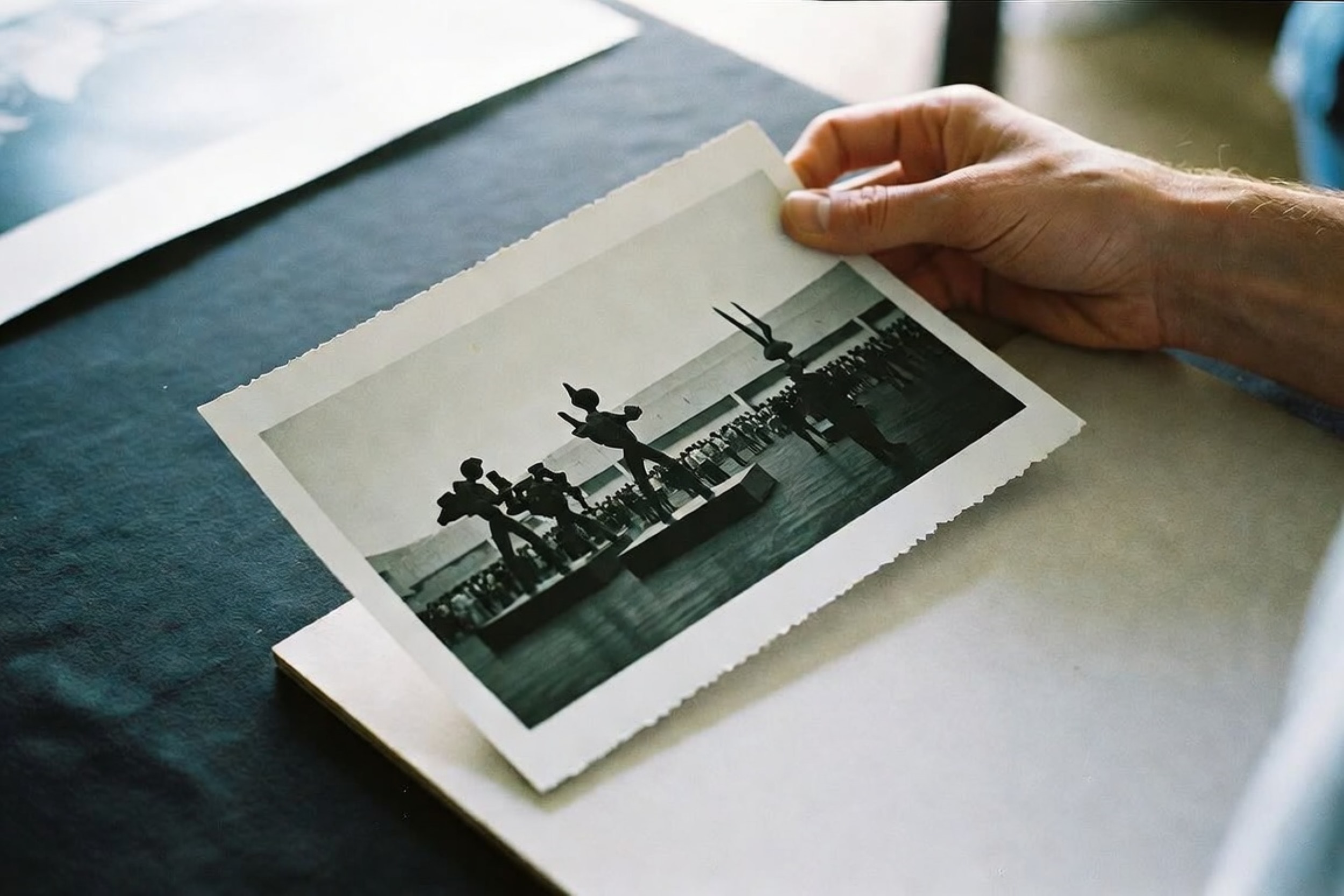
Who Is Holding the Camera?
The same artwork can produce radically different photographic memories depending on who records it.
A casual visitor often photographs what produces an immediate interruption in attention. The image may be tilted, partially obstructed or technically imperfect. Yet those imperfections can preserve autobiographical information. They register where the person stood, how crowded the room was and how quickly the decision to photograph was made. The picture documents both the artwork and a specific encounter with it.
An artist may approach the same work through affinities with their own practice. They may photograph a joint, a reflection, a cable, a material transition or an apparently secondary installation decision. The image becomes a research tool rather than a comprehensive record. What is selected may reveal as much about the observing artist as it does about the work being observed.
A professional photographer operates within another system of expectations. The work must be legible, proportions must be controlled, architectural lines managed and lighting balanced. The image may need to satisfy the requirements of the artist, gallery, museum, press office or archive.
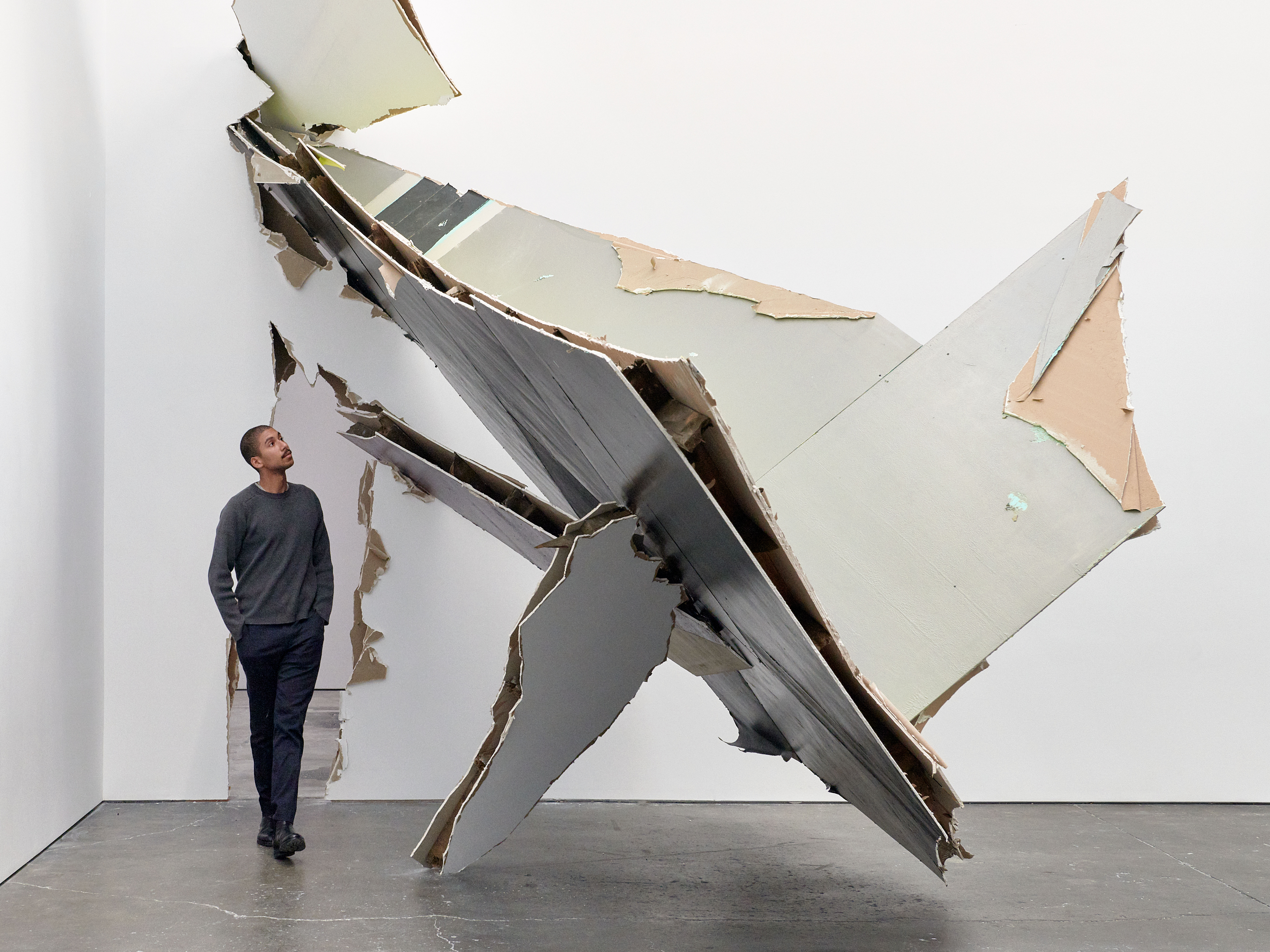
Professional documentation often appears neutral because it removes the contingency of the visit. The room is empty, the floor clean and the lighting consistent. The work becomes fully available to vision. The actual visitor may have encountered it under very different conditions: surrounded by bodies, partially obscured and visible only from a compromised position.
Neutrality is therefore not the absence of interpretation. It is a visual convention designed for institutional clarity. It produces an ideal encounter that may never have existed for any individual viewer.
None of these photographs is necessarily more truthful in every respect. The visitor preserves circumstance, the artist isolates a personal problem, and the professional clarifies the work’s structure. Each image remembers a different artwork because each is constructed around a different purpose.
The Photographic Afterlife of Contemporary Art
For many contemporary artworks, photography is not merely a private mnemonic device. It is the principal form through which the work continues to exist after an exhibition has ended.
Installations are dismantled. Performances conclude. Technological systems become obsolete. Organic materials decay. Site-specific interventions disappear when the site changes. Future viewers may encounter these works primarily through photographs, videos, diagrams, technical descriptions and testimonies.
Documentation consequently participates in the historical production of the artwork. It influences how the work will be studied, cited, reconstructed, taught and inserted into critical narratives. A single installation view can become canonical and circulate for decades through catalogues, lectures, archives and online searches.
The photograph may stabilise an artwork whose actual existence was unstable. A time-based installation becomes a still composition. A performance becomes one emblematic gesture. A participatory work becomes an image of objects in a room. Sound art becomes a photograph of speakers. The visual record does not simply preserve these practices; it translates them into the language of photographic visibility.
This translation can eventually influence artistic production itself. Artists know that an exhibition now addresses at least two audiences: the people physically present and the much larger audience that will encounter its images later. The work may therefore be conceived with both its spatial existence and its photographic afterlife in mind.
This does not automatically reduce art to spectacle. Documentation can be an intentional component of a complex practice. But it does create pressure toward photographic efficiency. Works that produce a recognisable image can travel more easily through press coverage, search results and social platforms than works dependent on duration, subtle sound or extended attention.
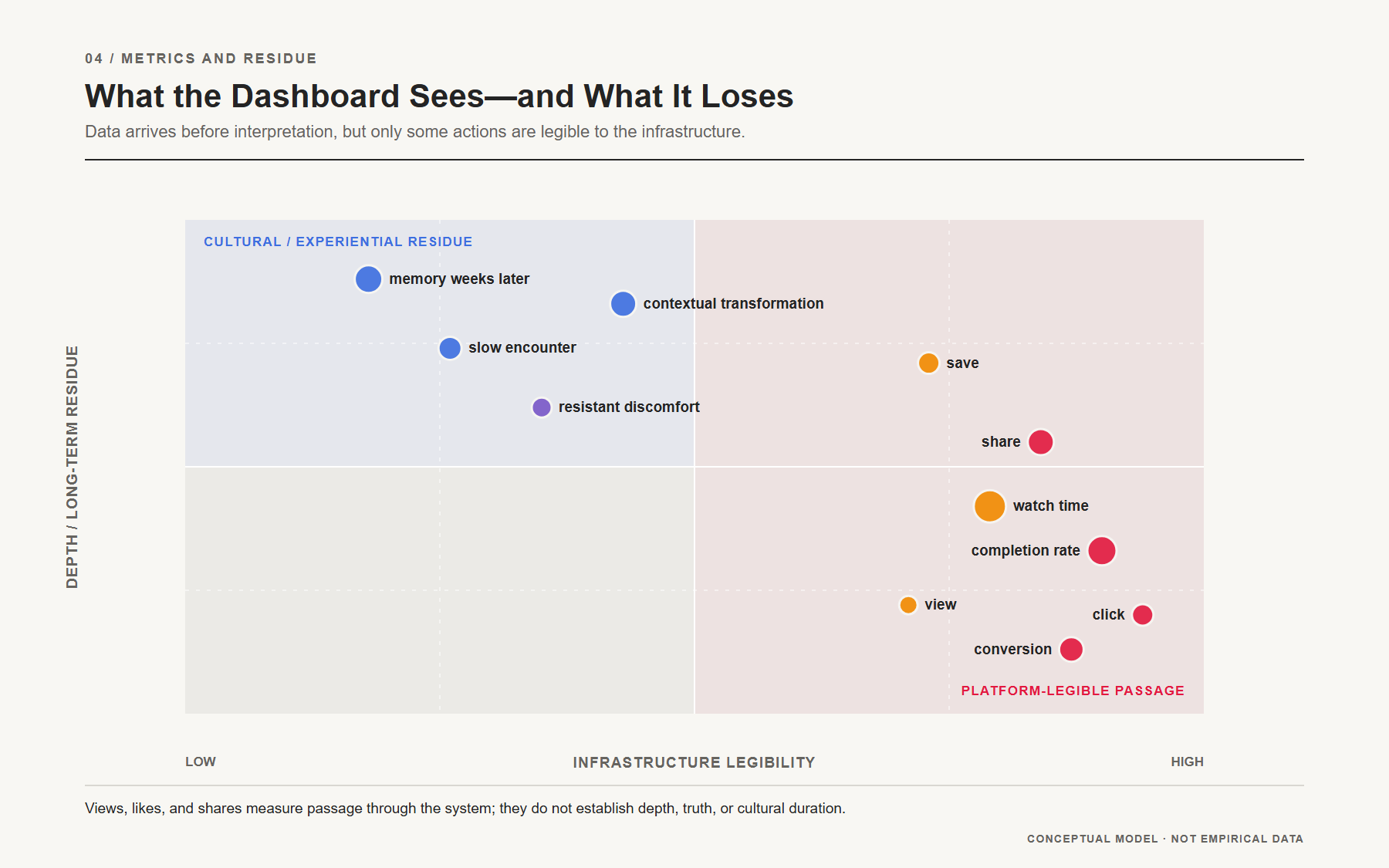
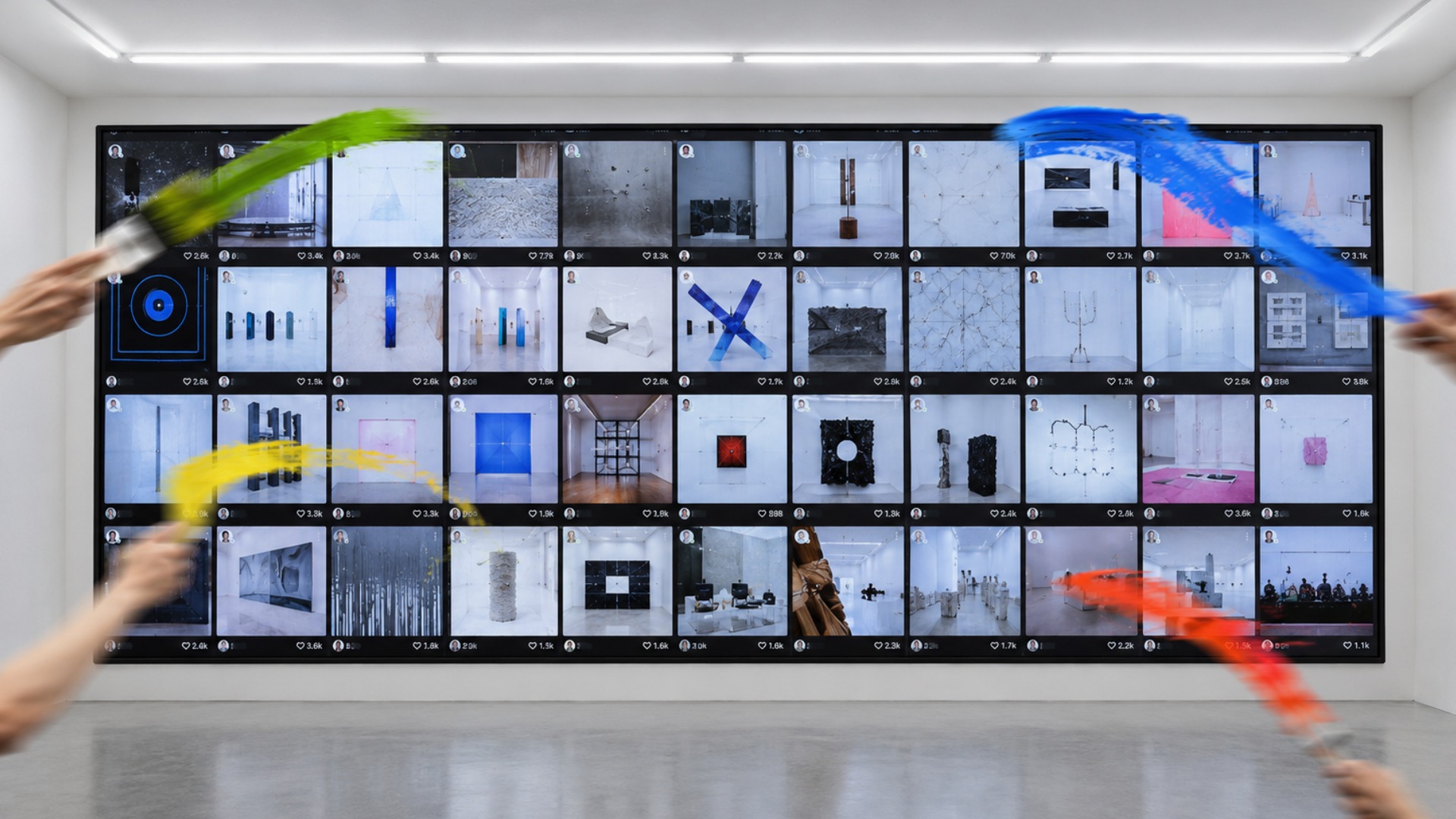
Digital platforms intensify this asymmetry. Algorithms do not remember an exhibition as a visitor does. They distribute individual images according to engagement, recognisability and compatibility with a feed. The most circulated photograph can become more culturally influential than the complete work from which it was extracted.
The work’s public memory is therefore shaped not only by artists, photographers and institutions, but also by the technical systems that determine which images remain visible.
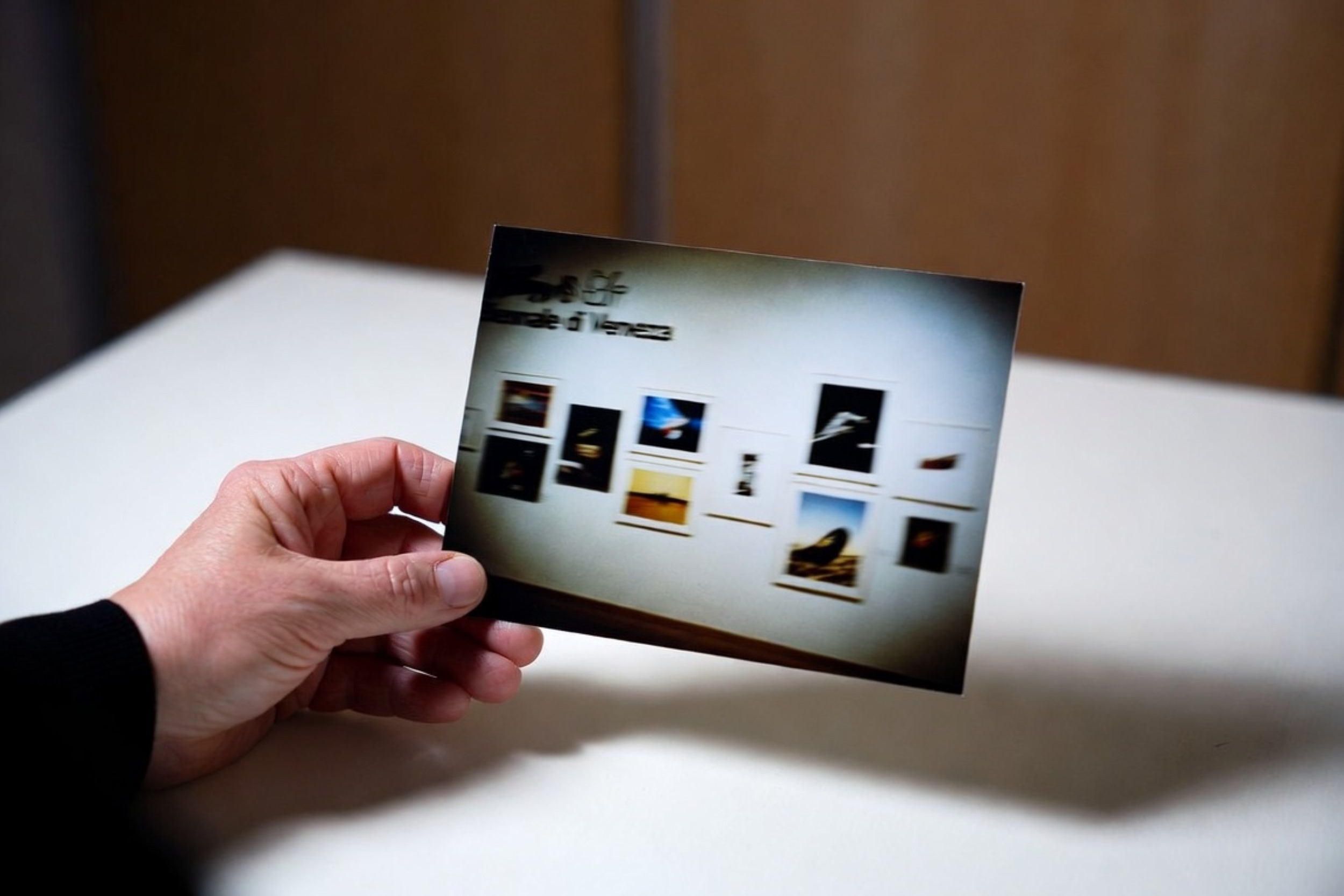
Autobiographical Memory Is Also an Exhibition
The memory of art is not fundamentally separate from the memory of our own lives. Autobiographical memories are not objective recordings stored intact inside the mind. They are reconstructed in relation to later information, current emotions, personal narratives and the needs of the present.
Martin Conway and Christopher Pleydell-Pearce describe autobiographical memories as temporary constructions produced within a broader self-memory system. What becomes accessible at a particular moment depends partly on the relationship between stored autobiographical knowledge and the current goals of the self.
The same event can consequently be remembered differently at different points in life. An exhibition once experienced as a professional disappointment may later be recalled as a formative encounter. A work that seemed insignificant may acquire importance because it becomes connected to a subsequent relationship, idea or decision.
Sensory cues also reorganise recall. An odour, a material texture or a piece of music can make an apparently lost episode available again. Conversely, later descriptions and photographs can introduce details that become difficult to separate from what was directly experienced.
This is why the friends’ conflicting recollections are not simply failed copies of the same Biennale visit. Each memory has been reconstructed through a different biography. One person retained the spatial experience, another the object, another the sound and another the social circumstances of the day.
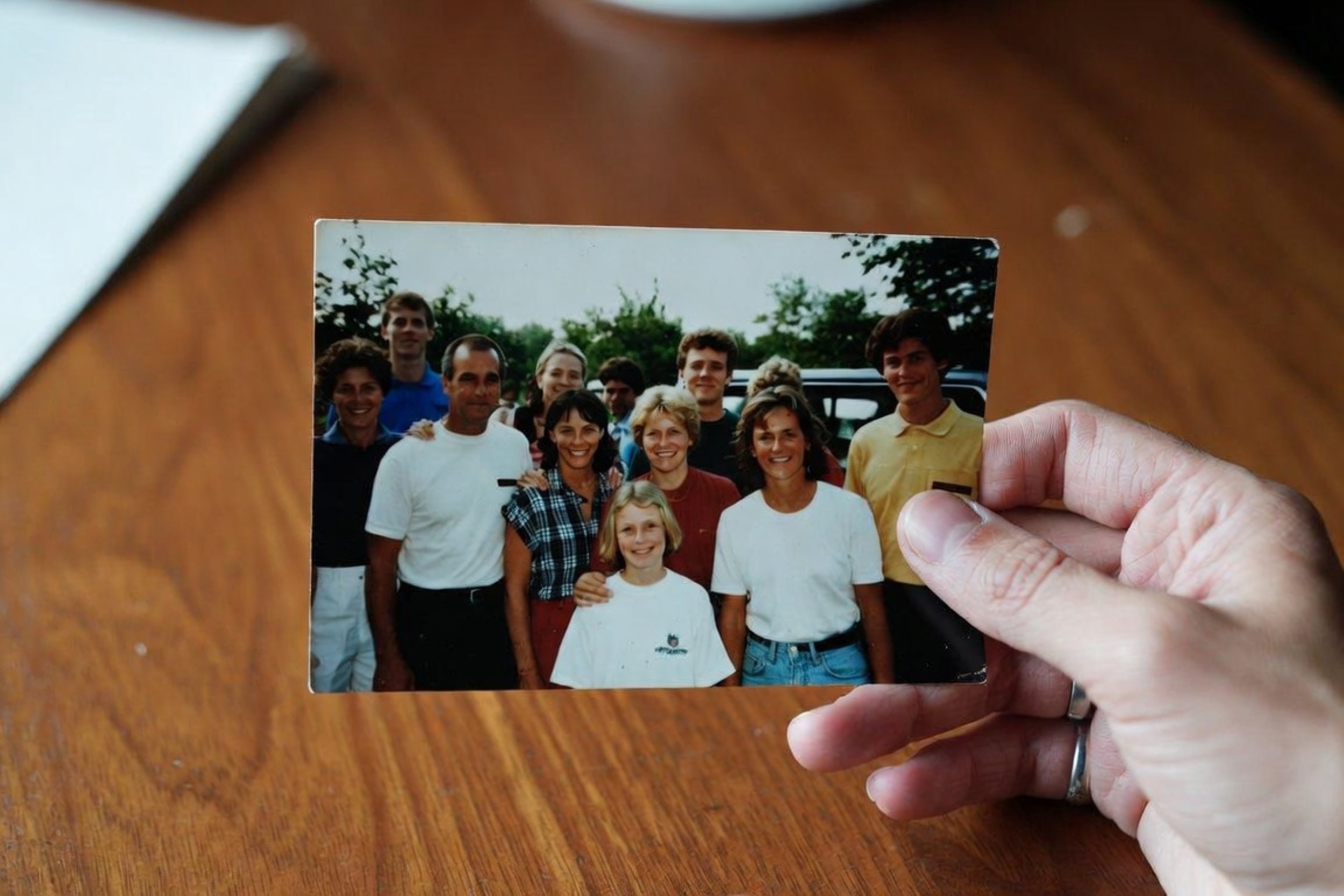
A photograph taken beside an artwork can therefore possess greater autobiographical than documentary value. The image proves that a person was present at a particular moment. The artwork becomes part of a personal timeline: a background against which the self recognises an earlier version of itself.
Years later, someone may remember almost nothing about the work but immediately recognise the coat they were wearing, the friend who accompanied them or the period of life to which the image belongs. The photograph preserves art and biography in the same frame, but it does not guarantee that they will remain equally important.
Like an exhibition, autobiographical memory is shaped by selection, sequence, emphasis and omission. Some episodes occupy central rooms; others remain in storage. The arrangement changes whenever the past is approached from a new position.
Archive, Interpretation or Artificial Memory?
Photography can perform all three roles.
It is an archive because it preserves information that individual memory would otherwise lose: a configuration, colour, material detail, spatial relationship or temporary state. Without photographic documentation, a substantial part of exhibition history and ephemeral artistic practice would become inaccessible.
It is an interpretation because every image assigns importance. Framing, distance, lighting and timing create a reading of the work before any written criticism begins. The photograph is never merely about what was there; it is also about what the photographer considered worth carrying forward.
It is a form of artificial memory because it introduces a stable external trace into an unstable internal process. That trace can support recall, but it can also direct and eventually replace parts of it. Photography does not merely preserve what we saw. It participates in determining what we will later believe we saw.
The point is not that photography should be abandoned in favour of a supposedly pure, unmediated encounter. Human perception was already selective before the invention of the camera, and unaided memory is no neutral record. Photography can reveal details, create connections and preserve otherwise inaccessible histories.
The more useful distinction is between photography that remains conscious of its partiality and photography that presents itself as total evidence. A responsible record might combine a general view with a detail, a written note, a description of sound or an account of how the body moved through the space. It might preserve not only the appearance of the work but also the conditions of its encounter.
When the friends look again at their old photograph, it cannot determine which of them remembered the installation correctly. It can only add another version. One memory retained the space, another the material, another the atmosphere. The photograph preserved a visible fragment while excluding almost everything that had surrounded it.
The exhibition as it was lived cannot be recovered in its entirety. It survives as an unstable composition of images, sensations, conversations, omissions and later interpretations. Photography does not close the distance between the event and its memory. It gives that distance a visible form.
Its deepest value may lie not in promising that nothing will be lost, but in showing us that every act of preservation is also an act of selection—and that what remains outside the frame continues to shape what we believe the image contains.