
l
Il 26 agosto 2026 Meta ha raggiunto un accordo nelle cause intentate da una coalizione di procuratori generali americani. Pagherà fino a circa 17-18 miliardi di dollari nell’arco di dieci anni e dovrà modificare alcune funzioni di Instagram e Facebook quando a usarle sono minorenni. Non ha ammesso responsabilità, ma ha accettato di cambiare il funzionamento dei suoi prodotti.
Dietro la cifra resta una domanda meno facile da misurare: cosa succede quando una parte consistente dell’esperienza di un adolescente passa attraverso immagini selezionate, ordinate e valutate da una piattaforma?
La notizia non è arrivata da un giornale. È comparsa in una storia Instagram, nel feed “Per te”, tra i volti degli amici e un cuore in alto a destra. Un ritratto di Mark Zuckerberg, un titolo viola, pochi punti per spiegare cosa era successo.
The News from Inside the App
In the stories circulating on social media, the case is condensed into a handful of screens. Meta has reached a $17.1 billion settlement with dozens of U.S. states following allegations that it encouraged problematic social media use among young people. Instagram and Facebook will now be required to introduce limits for minors: a maximum of two hours a day, interruptions to infinite scroll, alerts after 15, 60 and 90 minutes, app restrictions between midnight and 6 a.m., and no notifications during school hours.
Yet before the substance of the news comes the form in which we encounter it. The case against Meta appears within the same visual environment that, only seconds earlier, might have displayed a friend’s face, a photograph of a body, an advertisement or a recommended post. What is represented changes, but the surface containing it does not necessarily change with it: the same screen, the same gestures, the same few seconds of attention before the next image arrives.
This is a defining feature of the feed. The platform does not merely distribute different images; it draws them into a common form and determines how they appear one after another. A report on a court case, a selfie and a piece of commercial content can therefore become consecutive elements in the same flow. They do not acquire the same meaning, but they are subjected to the same regime of visibility: they appear, occupy the screen for a moment, and are replaced.
On August 18, 2026, a federal trial began in Oakland. Twenty-nine states accused Meta of designing Facebook and Instagram around features capable of keeping younger users engaged for extended periods: infinite scroll, notifications, recommendation algorithms, visible likes and filters.
The allegations also included claims that Meta had downplayed risks to mental health and collected data from children under 13 without the parental consent required under COPPA. According to the complaints, some of that data was also used to train artificial intelligence systems.
After only a few days of hearings, a settlement was reached. Its scope expanded to include nearly every U.S. state and territory. Around $12 billion is guaranteed, with a further $5 billion contingent on TikTok, YouTube and Snapchat adopting similar rules. Florida did not join the agreement, while Texas pursued a parallel course.
For Meta, which reported roughly $201 billion in revenue in 2025, the sum is manageable. But the significance of the settlement lies not only in its financial scale. The measures intervene directly in the mechanisms through which images reach users: how long they can continue to appear, in what order, alongside which indicators of approval, and with what kinds of interruption.
This is where a dispute over the protection of minors also becomes a question of how we look. The settlement does not determine which images should or should not be seen. Instead, it intervenes in the conditions under which they appear: their duration, sequence and frequency, and the signals that accompany them. To regulate the platform, then, is also, at least in part, to regulate the visual environment the platform creates.
A Generation Raised on Images and Comparison
Instagram does not present the world as a continuous narrative. It breaks it into frames.
A face. A body. A bedroom. A plate of food. A sunset. And beneath it, often, a number.
This fragmentation matters. Other people’s lives do not appear in their continuity, with their pauses, repetitions, and the parts that would ordinarily remain unseen. They reach us as selected moments, turned into images and detached from what comes before and after them. Each photograph can be authentic and partial at the same time: not because it necessarily falsifies what it represents, but because it shows a portion of experience chosen to be made visible.
Comparison begins here, even before filters and likes enter the picture. On one side is the continuity of our own experience, including everything we would never choose to photograph. On the other are fragments of other people’s lives that have already passed through a process of selection: that face, that body, that room, that moment. The platform continually brings these two conditions into contact.
During adolescence, the judgment of others carries particular weight. Neuroimaging studies have found that receiving large numbers of “likes” on one’s own photographs can activate brain regions associated with reward, including the nucleus accumbens. The behavior of others matters too: the same photograph may be evaluated differently when it already appears to have been approved by many people.
The number beneath the image therefore introduces something that does not exist in the photograph alone. We do not simply see a face or a scene; we also see an indication of how that image has been received by others. Its social evaluation becomes part of the conditions under which it is seen. A post with thousands of likes and the very same post receiving almost none may appear differently desirable even when the image itself has not changed.
This is a form of social learning. During adolescence, identity is still taking shape, and comparison with others is normal. On Instagram, however, that comparison can become continuous, and it often takes place against selected, filtered or retouched versions of other people’s lives. What changes is not only what is being compared. It is also how often the comparison can be repeated and how many people can become objects of comparison.
An experimental study involving girls aged 14 to 18 found that exposure to manipulated selfies can reduce satisfaction with one’s own body image, particularly among girls who are more prone to social comparison. The edited photographs were judged more attractive and, in many cases, still perceived as realistic.
The filter therefore adds another operation to the process of selection. A face is not simply photographed and chosen; it can be altered before it is shown. Skin, facial features, proportions and other elements become variables that can be adjusted. The distinction between a “real” image and a “fake” one is not enough to describe what is happening. More significant is the fact that one’s appearance becomes editable, and that the edited version can return through the screen as a standard against which the unedited body is measured.
In 2021, internal Meta documents made public following Frances Haugen’s disclosures showed that the company itself had studied the relationship between Instagram and body-image distress. In some of the material that emerged, a proportion of teenage girls surveyed reported that Instagram made existing concerns about their body image worse.
The point is not that every photograph produces the same effect on every adolescent. Nor did social comparison begin with Instagram. What changes is the environment in which that comparison takes place. Selected images, altered images and images accompanied by visible measures of approval can follow one another for hours, coming from friends, strangers, celebrities and people the user will never meet.
The issue, then, is not only what any single photograph represents. It is also what the repetition of many images gradually makes familiar. Certain bodies, faces, poses and ways of presenting one’s life can recur often enough to become implicit reference points. The gaze does not simply encounter images: through their repetition, it also learns what to recognize, compare and desire.
And this is where quantity begins to become rhythm. If each image can become the point of comparison for the next, the question is no longer simply which photographs appear on the screen, but how quickly one is replaced by another. Comparison thus enters the very structure of the scroll.
Infinite scroll has one very simple feature: it does not end.
There is no page to turn, no episode that comes to a close, no precise point at which the content forces us to stop. One image is immediately replaced by another. All it takes is a movement of the thumb.
The issue, then, is not only how many images we see, but how little space remains between one and the next. In the feed, each piece of content stays on the screen for a few seconds before giving way to another. A face, a body, a room, an advertisement, another person. The images may have nothing in common. What holds them together is the gesture through which we move across them.
Over time, that gesture creates a rhythm. No one decides how long we should look at a photograph, but we know that we can replace it at any moment. The next one is already there, just below the edge of the screen. Stopping requires a choice. Continuing, by contrast, has become almost automatic.
For an adolescent, this means being able to see dozens of different bodies, faces, homes and lives within a matter of minutes. Then the screen goes dark, and the mirror, the classroom and the ordinary afternoon return. But the comparison is uneven: on one side is one’s own life, experienced without edits; on the other, a sequence of moments selected precisely because they were considered worth showing.
The difference is not only between reality and representation. It also lies in the rhythm through which each is experienced. Everyday life contains waiting, repetition and stretches in which nothing particularly significant happens. In the feed, by contrast, experiences belonging to different people, places and days can appear one after another within the space of a few minutes.
Within this sequence, filters also take on a different weight. They can alter the skin, the shape of the face, the eyes, the lips or bodily proportions. When used repeatedly, the modified face can become a point of comparison with the real one. Some studies have found an association between frequent filter use, social comparison and lower satisfaction with one’s appearance, particularly among girls.
But the modified face does not appear in isolation. It is embedded in the same stream as everything else. It may be followed by another filtered image, then by a photograph that appears spontaneous, then by content recommended by the algorithm. When certain features recur continuously, it becomes harder to tell how exceptional they really are and how much they have begun to feel normal. An obvious alteration seen once may become familiar when it appears dozens of times in slightly different forms.
Likes, too, change the way we look at an image. A photograph rarely arrives entirely on its own: it is often accompanied by a number indicating how many people have approved of it.
That number is produced after the image is posted, but for anyone who encounters the photograph later, it is already part of the viewing experience. Before forming an opinion of their own, users may already know that hundreds or thousands of others have expressed approval. The judgment of others is therefore present from the very first glance.
Hiding the number of likes does not eliminate the desire for approval, nor does it remove social comparison. But it does take away one of its most immediate indicators. The photograph remains the same; the conditions under which it is encountered do not.
The experience of the feed, then, depends not only on what images show. It also depends on the order in which they appear, the speed at which they can be replaced, the numbers that accompany them, and the frequency with which certain faces, bodies and ideals return before the viewer’s eyes.
Infinite scroll holds all of this together because it makes continuing exceptionally easy. As long as the gesture is repeated, each image leads directly to the next.
This is why even a pause of a few seconds can make a difference. Interrupting the scroll means breaking that continuity, if only for a moment. The next image no longer arrives as the automatic consequence of a gesture: continuing requires a decision.
It is precisely this small interval that some of the new rules for younger users are designed to introduce.

The measures set out in the settlement affect several aspects of the experience on Instagram and Facebook. Taken together, they primarily change how and when content reaches younger users.
The two-hour limit reduces the overall amount of time spent scrolling through the feed. The pauses after 15, 60 and 90 minutes do something different: they interrupt a gesture designed to continue without friction. For a few moments, the next piece of content no longer arrives automatically, and the user has to decide whether to keep going.
Like counts will also be hidden by default. Other people’s approval will still exist, but its numerical measure will no longer accompany every photograph from the very first glance.
Restrictions on the most invasive filters address another dimension: the ways in which a face can be altered. By limiting effects that significantly reshape features and proportions, the rules also reduce the everyday presence of artificially modified versions of one’s own appearance.
The chronological feed intervenes at yet another level: the order of images. Content is shown according to when it was posted, rather than arranged according to what the algorithm predicts will be most effective at capturing the user’s attention. This does not necessarily change which content can appear, but it changes the way that content is placed in sequence.
Nighttime restrictions and the suspension of notifications during school hours operate differently again. At certain times of day, the platform reduces the prompts that can draw attention back toward the screen.
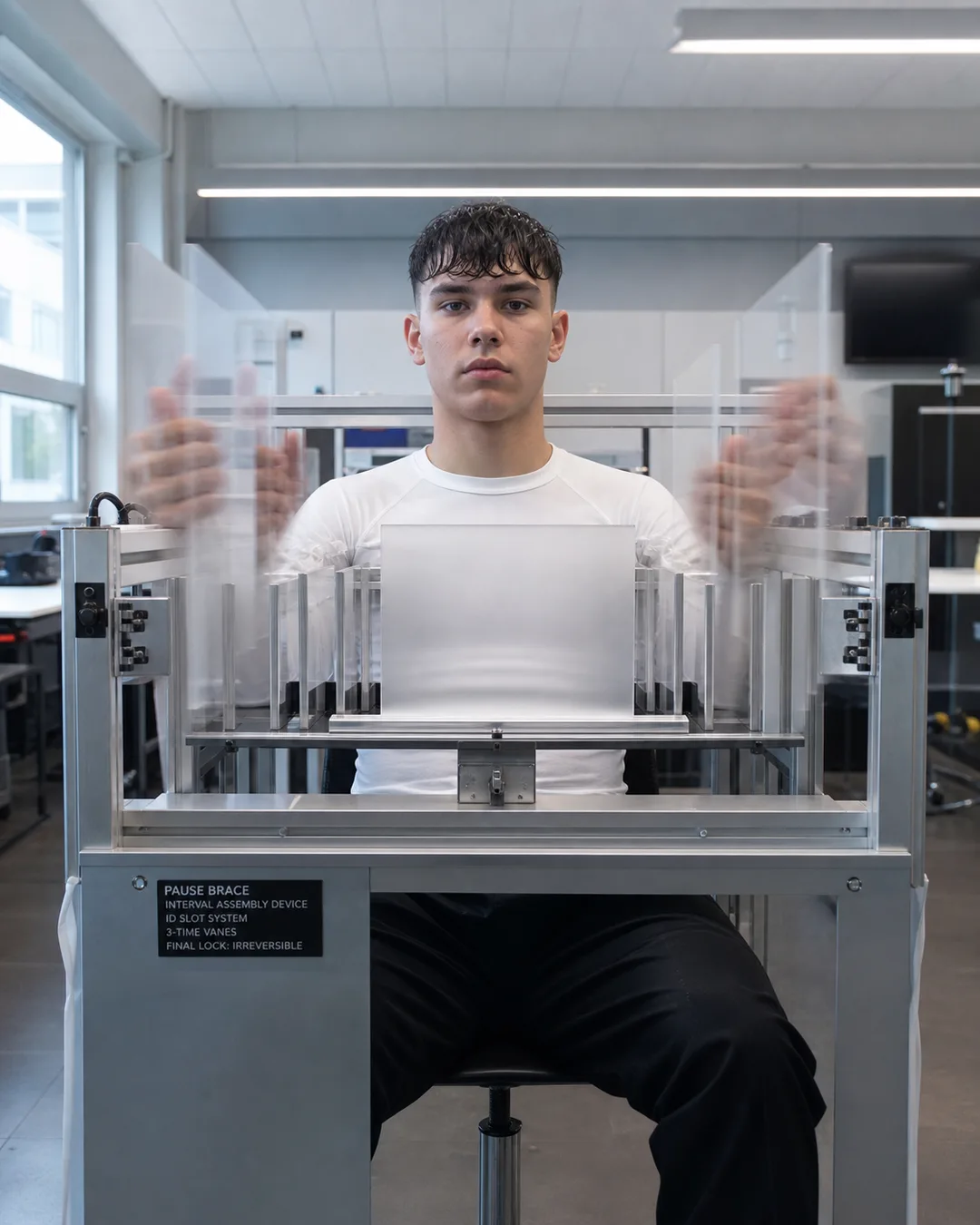
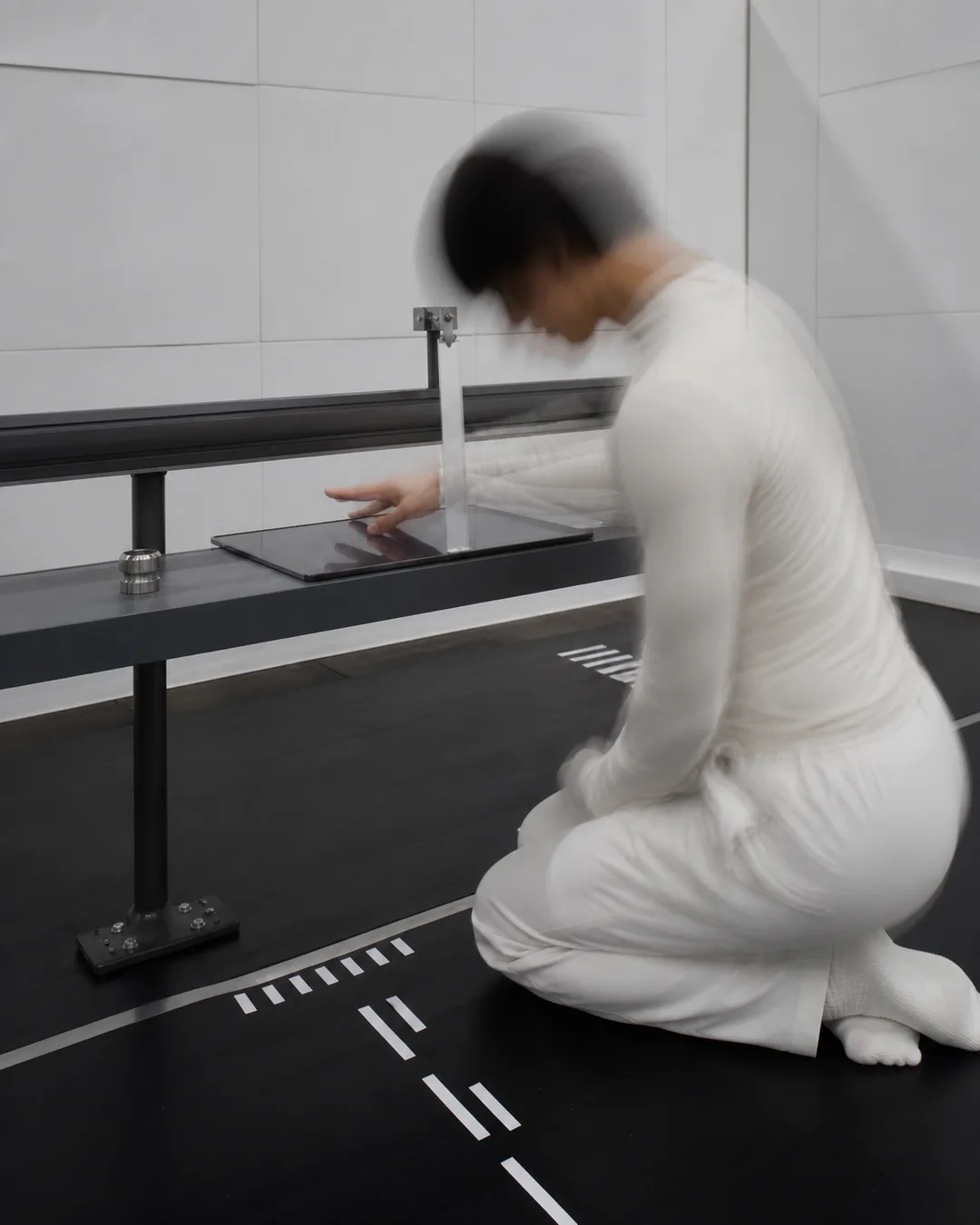
These rules do not determine which images are acceptable and which are not. Instead, they intervene in the conditions under which images are encountered: for how long, in what order, and with what interruptions. The images remain, but the rhythm with which they reach the user changes.
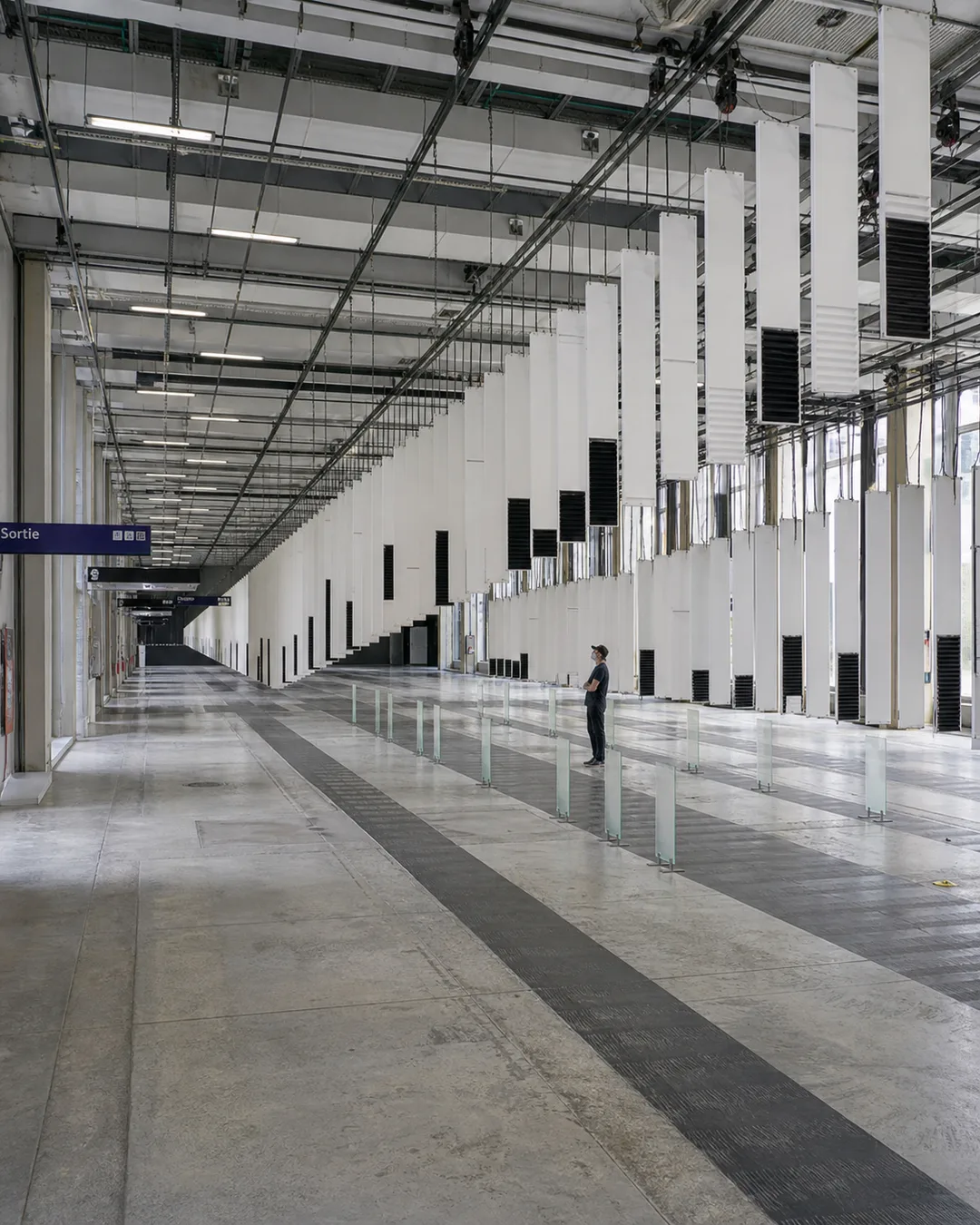
The new rules apply to the United States. In Europe, the framework is different: there is the Digital Services Act, regulation aimed at protecting minors, the debate over age verification, and policies governing smartphone use in schools. But the way images enter everyday life extends beyond legal borders. A teenager in Milan and one in Los Angeles may move through remarkably similar visual environments, shaped by the same formats, the same gestures, and similar mechanisms for selecting content.
The settlement limits certain forms of access to these environments, but it does not alter a broader reality: an increasing share of what we see reaches us through screens that select, arrange and repeat images. The images remain. What changes is the rhythm with which they appear, their frequency, and the position they occupy within the flow.
Walter Benjamin described how mechanical reproduction transformed our relationship with the image, stripping it of its uniqueness and making it available across different times and places. In the feed, something further happens. The image is not simply reproduced; it enters a sequence that can change continuously. What comes before it, what follows it, and how long it remains on the screen all contribute to the way it is seen.
John Berger wrote that seeing comes before words, and that the way we look is never neutral. In an environment traversed every day by hundreds or thousands of images, repetition itself also helps shape the gaze. A body, a pose or a way of life does not have to be explicitly presented as desirable in order to become a reference point. It may be enough simply to encounter it often enough.
Susan Sontag’s idea of photography as a way of appropriating the world also takes on a particular form on the smartphone. Friends, strangers, advertisements, altered bodies, images of war and political news all appear on the same screen. Very different experiences are passed through with the same gesture and absorbed into the same flow.
This is why the issue cannot be reduced to the number of hours spent online. How many images we see matters, but so does the order in which they arrive, how often they return, and how much space exists between one and the next. A photograph may remain on the screen for only a few seconds. An image of war may be followed immediately by a friend’s face, a meme or an advertisement.
The new rules intervene precisely in this continuity. Time limits, pauses, chronological feeds and nighttime restrictions introduce interruptions into an experience designed to continue with as little friction as possible.
What remains difficult to know is what happens to the gaze when the flow slows down. A pause can interrupt the scroll, but that does not necessarily mean it is enough to change habits built over years of daily use. Likewise, we do not yet know how quickly a different way of organizing images might change the way they are perceived.
This is one of the questions the settlement leaves open: what happens when images become one of the primary environments through which we learn to see others and ourselves?
After years of continuous scrolling, a pause may remain nothing more than a pause. But for a few seconds, it restores at least one thing the feed tends to diminish: a space between one image and the next, in which continuing to look becomes a choice again.