

What if owning only part of an artwork could actually give a museum even more power? As prices continue to rise, more institutions are sharing acquisitions, splitting costs, risks, and custody while each still benefits from the prestige attached to the work.
For us, that contradiction is what makes the question interesting: when ownership is divided but cultural authority remains intact, who is actually gaining greater access—and who is simply learning to share control?
Possession begins as choreography.
Joint acquisition gives the artwork a divided body and a consolidated aura. The museum buys a fraction, yet claims the fullness of symbolic proximity, because prestige distributes through association with the whole while liability settles into apportioned ledgers. The shared work becomes a financial instrument with civic manners, a custody structure that allows institutions to convert scarcity into affiliation while preserving the fiction of singular encounter. Value travels through the feed of institutional legitimacy, ranking each holder by its ability to appear beside the work.
The gallery encounter carries the residue of documents that remain outside the frame. Wall text stages provenance as narrative clarity, while the contract stages provenance as operational command. Every loan, installation, restoration, and reproduction enters a chain of permissions that gives the artwork a second architecture, one composed of signatures, exclusions, options, and obligations. The visitor sees a surface; the institution administers a matrix.
Co-ownership turns preservation into a grammar of timed sovereignty. Each institution receives access as a scheduled intensity, a period during which publicness, custody, and brand proximity temporarily coincide. The work belongs to several houses, yet each house encounters the work as an index of its own authority. Aura survives division by learning distribution.
One Object, Several Sovereigns
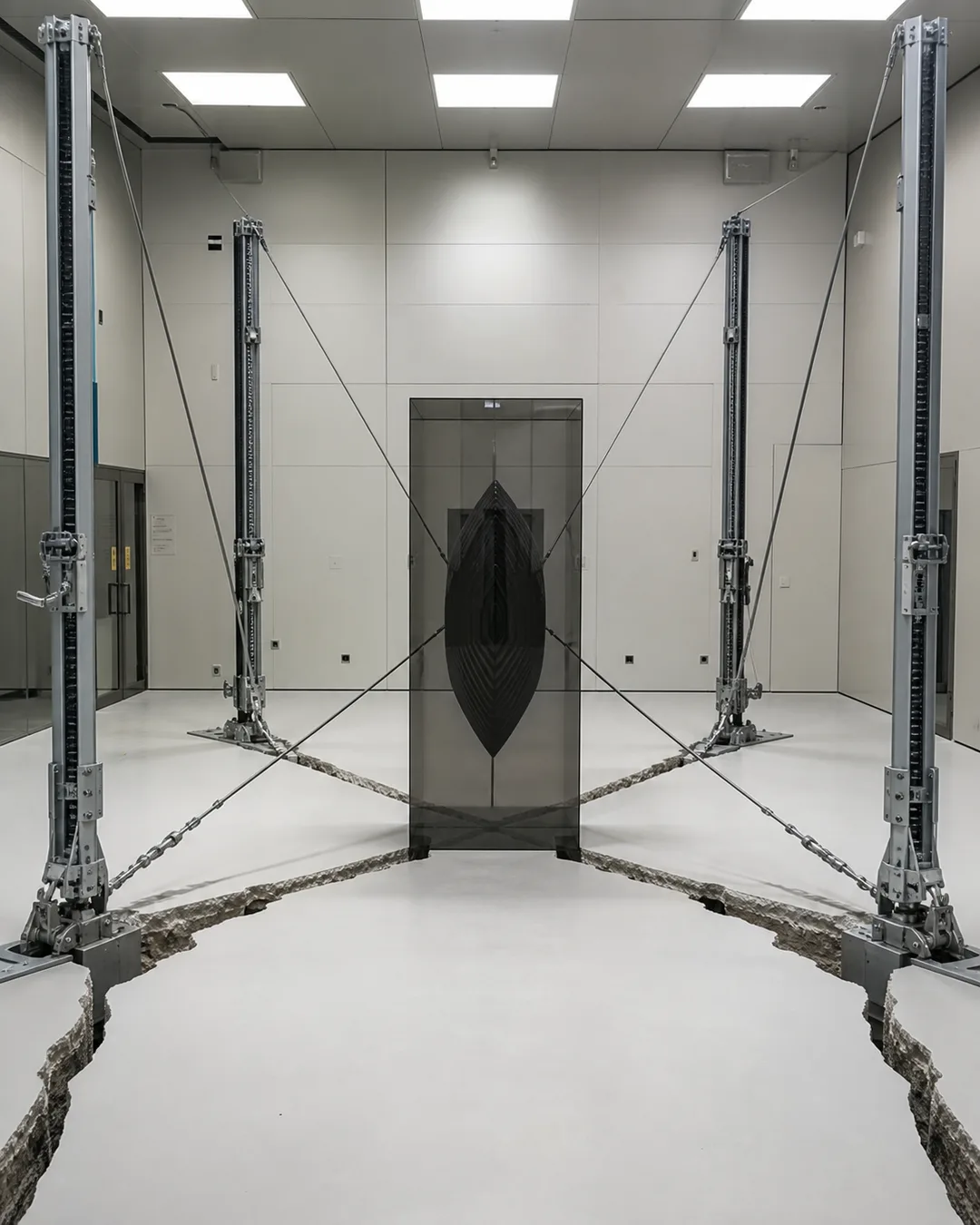
The acquisition committee meets around a price that exceeds the comfort of any single budget and fits the ambition of several. The mechanism is fractional custody, a protocol that transforms purchase into coalition and coalition into prestige management. Each institution enters the ledger with a percentage, while the artwork enters the public imagination as a whole that can be invoked by each participant. The split creates a shared title deed and a multiplied claim to cultural centrality.
The object becomes a sovereign zone with several capitals. Each museum holds legal title as a portion, yet symbolic title circulates as totality through press releases, collection pages, donor reports, and exhibition histories. The feed logic of institutional visibility rewards proximity over duration, allowing a brief custodial interval to appear as permanent cultural ownership. Presence becomes rank, and rank becomes a form of possession that exceeds the fraction recorded in the acquisition file.
Joint ownership also solves a problem of financial optics. The institution can pursue a work whose market price would strain its internal narrative of public stewardship, because cost disperses across partners while prestige returns intact to each node. The acquisition enters annual reports as prudence and ambition at once, a budgetary compromise that reads as curatorial strength. The ledger cleans the appetite by distributing its pressure.
This arrangement produces a new kind of collection image. The work appears in multiple institutional databases, each surrounded by distinct metadata, local histories, donor acknowledgments, and search rankings. Provenance becomes plural in interface while remaining singular in legal fiction, and the digital record trains the public to accept distributed authority as seamless access. The artwork gains several institutional skins.
The sovereign claim also moves through donors, boards, and patrons who learn to inhabit the fraction as a complete symbolic dividend. A patron attached to one museum participates in a purchase that reaches beyond local walls, converting regional philanthropy into transnational custody. The fraction becomes a portal into a larger field of esteem, where capital touches the artwork through the museum and returns as cultural absolution. Shared ownership produces a community of stakeholders who receive the aura as yield.
The object remains one because every participant requires its singularity as the engine of value. Division operates at the level of title, schedule, and risk, while aura is held together through scarcity, expertise, and institutional speech. The work becomes a treaty among custodians, and the treaty becomes a device for making sovereignty appear collaborative. The museum acquires less a thing than a calibrated share in the authority to say that the thing matters.
Paper Precedes the Image
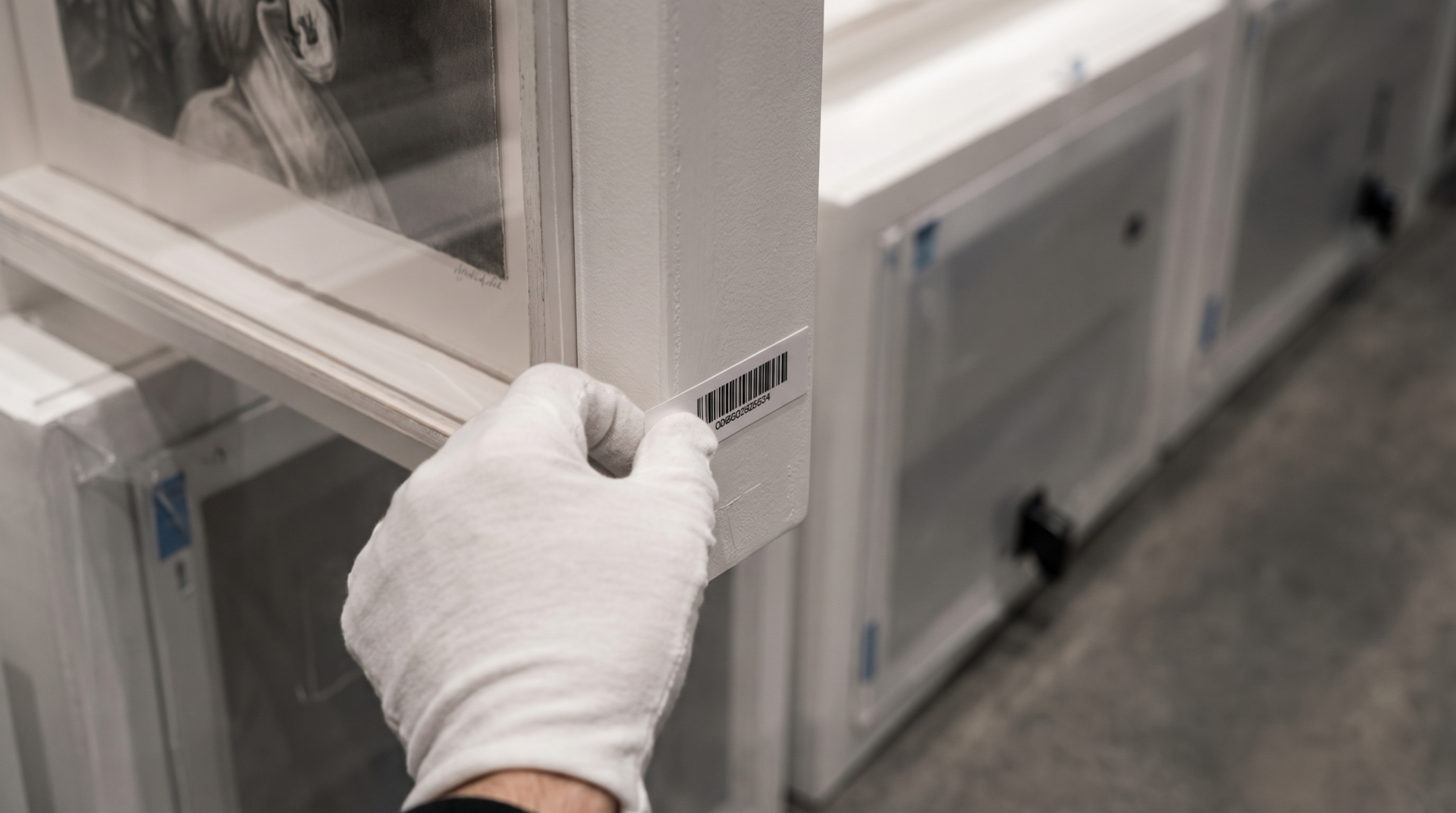
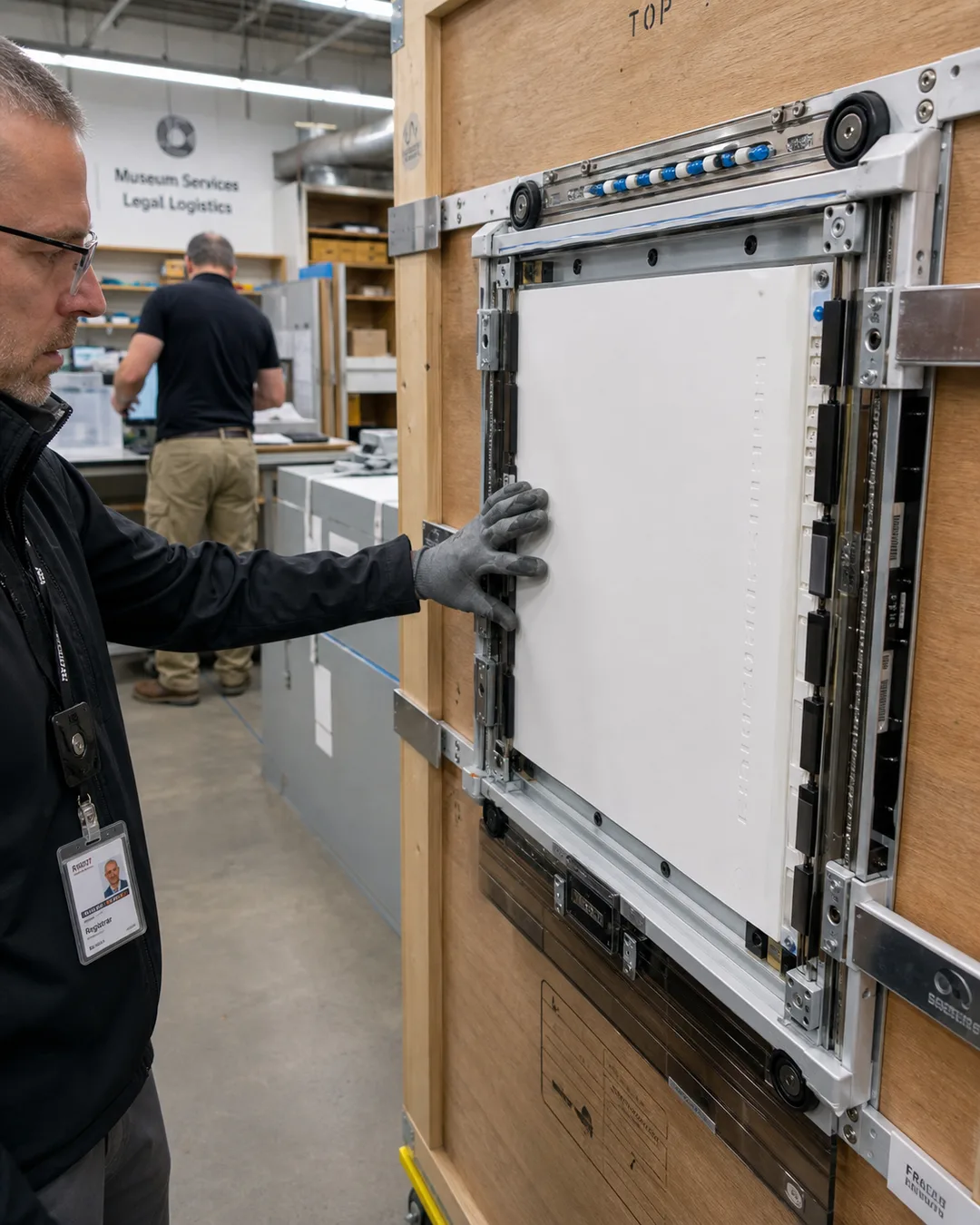
The contract arrives before installation as the work’s first exhibition space. Its clauses allocate custody periods, define handling protocols, assign insurance valuations, regulate reproduction, and place conservation decisions inside an administrative sequence. The artwork’s future visibility is programmed by paper, and the gallery becomes the visible outcome of prior governance. Display begins as compliance.
Movement across institutions depends on an itinerary that reads like a logistics script and a political map. Crating specifications, courier presence, vibration tolerances, customs language, and climate data form the infrastructure through which aesthetic experience is authorized. The object travels through custody checkpoints that translate material vulnerability into institutional responsibility. Every arrival is a successful negotiation between desire and risk.
Insurance produces a second image of the artwork, calibrated through valuation, exposure, and liability. The policy converts fragility into a number that can circulate among underwriters, registrars, and trustees, granting the work an actuarial double. This double shapes decisions about travel, duration, display height, security perimeter, and emergency response. Financial legibility enters the gallery as invisible architecture.
Silence also belongs to the contract. Agreements can govern publicity sequence, photography rights, press language, deaccession restrictions, dispute procedures, and the handling of disagreement among co-owners. Speech becomes a managed asset, distributed according to institutional priority and reputational risk. The public statement emerges as a polished surface over a field of negotiated restraint.
The contract writes the object into a regime of anticipated incidents. Damage, delay, loan request, conservation conflict, market reevaluation, donor recognition, and institutional merger appear as scenarios in advance of their occurrence. This anticipatory protocol gives the artwork a future shaped by legal imagination, where every possible movement has already acquired a pathway. Paper makes contingency obedient.
The image that appears in the gallery carries the force of this preceding script. Viewers encounter composition, material, scale, and atmosphere, while the work is already moving through a parallel system of clauses and custodial obligations. The aesthetic event is inseparable from its operational prehistory, because the right to appear has been engineered before appearance begins. The document is the work’s first climate.
Aura Learns Accountancy
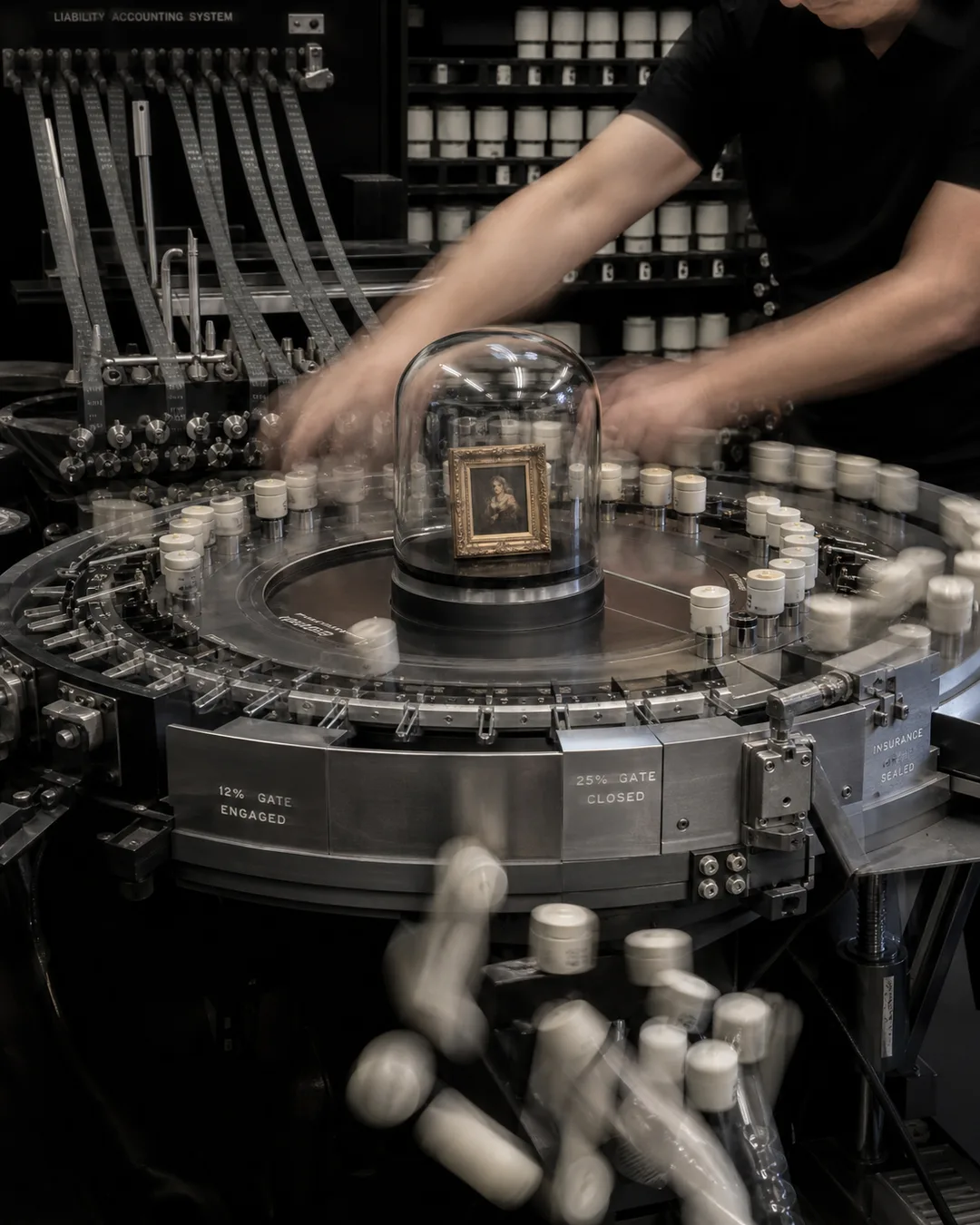
The ledger splits title while preserving the artwork’s singular face. Accountancy gives ownership a granular structure, distributing cost, risk, depreciation logic, insurance valuation, and balance-sheet presence across multiple institutions. Scarcity remains the engine, because the object continues to exist as a unique material point, while ownership becomes a sequence of fractions that can be reported, justified, and governed. Aura learns to speak in percentages.
This plurality alters the relation between market price and public virtue. A shared acquisition allows museums to enter the competitive field of high-value works while presenting the act as cooperation, access, and fiscal responsibility. The market’s pressure becomes a civic narrative through the protocols of joint stewardship. Expense appears as stewardship when the invoice is plural.
The singular work also gains a temporal balance sheet. Each partner receives periods of display or storage, and these intervals function as returns on custodial investment. A month in the gallery, a season in a retrospective, a year in storage under another institution’s care, each interval enters the moral economy of the agreement. Time becomes the currency through which fractions become experience.
Digital circulation intensifies this accountancy. Collection pages, press images, installation shots, and searchable databases permit each owner to activate the full symbolic charge of the work even during physical absence. The image floats through platforms as a proxy for possession, allowing the institution to maintain visibility while custody resides elsewhere. Latent space turns the fractional owner into a continuous claimant.
The divisible title also reshapes the artwork’s relationship to speculation. Market value can rise while the work remains enclosed within public collections, and each institution’s fraction appreciates within a field of symbolic and financial accumulation. The museum becomes a stabilizing custodian of value whose public mission absorbs the volatility of the market into the language of preservation. Scarcity becomes governable through civic balance sheets.
Aura survives accountancy by submitting to its forms. The artwork’s singularity gives the fraction its power, while the fraction gives singularity new paths through institutions, platforms, and financial reporting. The sacred object enters administrative plurality and emerges with its authority refreshed. The aura becomes durable because it has learned to be audited.
Conservation as Voting Power
A conservation report can redistribute authority as decisively as an acquisition agreement. The condition file gathers microscopy, pigment analysis, humidity records, prior interventions, transport stress, and display constraints into a technical archive that guides every future decision. Care becomes a protocol through which institutions assert expertise and shape the work’s allowable future. Preservation speaks as governance.
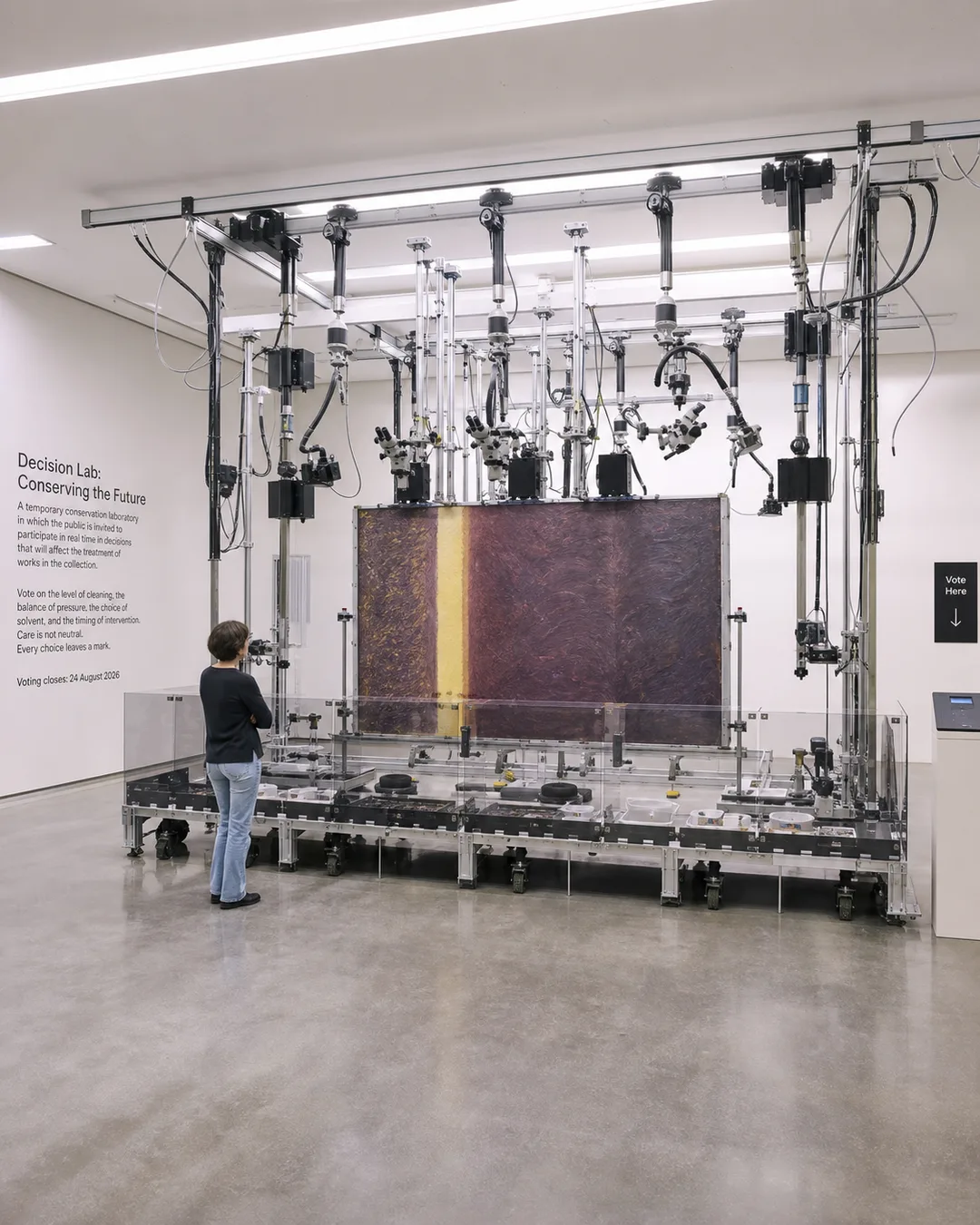
Joint custody turns conservation into a voting structure. Decisions about cleaning, repair, mounting, framing, digital migration, refabrication, replacement parts, or acceptable deterioration require coordination among partners whose budgets, calendars, and curatorial ambitions diverge. The technical question carries institutional preference inside the language of care. A surface treatment can become a negotiation over authority.
The conservator’s expertise enters a field of competing temporalities. One museum may desire immediate display, another may insist on rest, another may foreground research, another may carry the cost of intervention with greater ease. Budgetary leverage shapes what care can become, because the institution able to fund analysis or treatment often gains disproportionate influence over the decision path. Stewardship acquires gravity where money meets expertise.
Contemporary artworks intensify this structure through protocols of maintenance and interpretation. A media installation may require software migration, hardware replacement, projection recalibration, file custody, or the management of obsolete formats. The conservation file becomes a training set for future manifestations, encoding past decisions as norms for what the work can become. Preservation turns latent possibility into authorized repetition.
Dispute in this field often appears as technical nuance. A question of patina, brightness, timing, material substitution, or installation variance can index larger struggles over authorship, market stability, institutional identity, and public interpretation. The smallest adjustment can re-rank the custodians, granting cultural authority to the institution that defines the acceptable threshold of change. Attention settles on matter while power moves through procedure.
Care becomes the place where ownership proves its depth. Title grants a share, while conservation determines the conditions under which that share can remain meaningful across time. The artwork’s future is governed by those who can translate fragility into protocol and protocol into legitimacy. Custody becomes strongest when it calls itself care.
Publicness in Installments
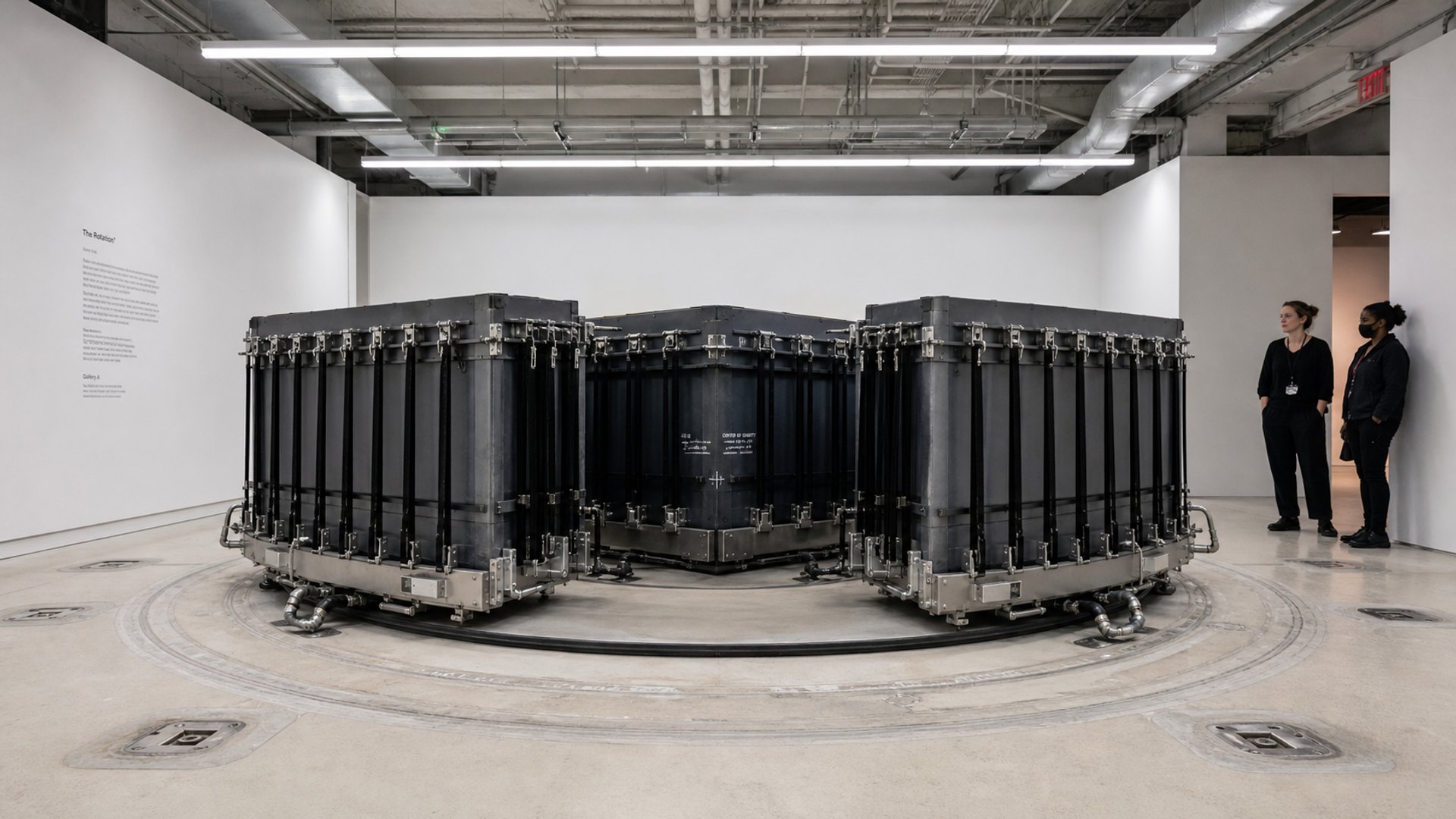
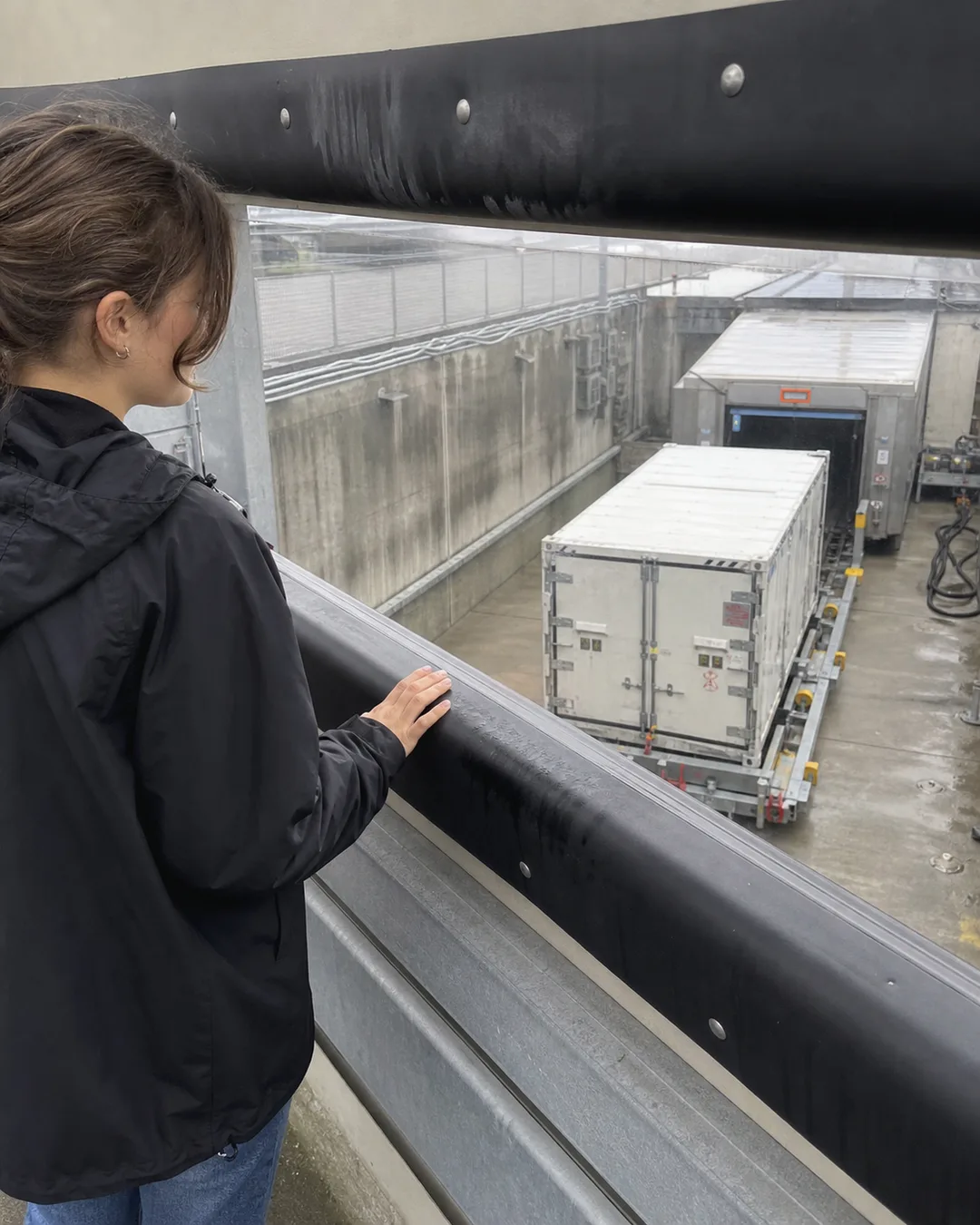
The exhibition calendar converts shared ownership into public installments. A work appears in one city, withdraws into storage, resurfaces in another institution, enters a research display, travels for a retrospective, then reappears online as an image attached to multiple collection identities. Access becomes a scheduled distribution of presence across a network of custodians. The public meets the work through intervals.
This rotation recodes the museum’s civic promise. Each institution can claim that a major work belongs to its public, while that belonging is mediated through alternating custody and negotiated duration. The local visitor receives access as an event within a larger logistical economy. Publicness becomes a time slot with symbolic intensity.
The platform record stabilizes this intermittent access. Search results, collection databases, image licenses, virtual tours, social feeds, and exhibition archives allow the work to remain present in institutional discourse during physical absence. Attention is captured through documentation, while the object’s material location recedes behind distributed representation. The museum learns to hold presence through metadata.
Fractional custody also changes the public’s relation to legitimacy. A work shared among major institutions accumulates validation through the repetition of trusted names, each owner acting as a node in a ranking system of cultural authority. The artwork’s importance appears as consensus, and consensus appears as access. The public encounters value already pre-validated by the network that controls its circulation.
This distributed stage can expand encounters while tightening governance. More publics may see the work across more sites, yet each encounter remains framed by agreements that regulate duration, interpretation, photography, care, and institutional speech. Access grows through protocol, and protocol becomes the condition of shared civic experience. The commons arrives with a calendar.
The museum becomes a rotating custodian of an asset that must appear public in order to remain powerful. Fractional custody turns possession into a choreography of appearances, distributing the work while consolidating the authority that makes distribution meaningful. The public receives the work as a visitation, and the visitation learns the manners of capital.