
We first encountered the work of AMIANGELIKA and 1100 as something moving between system and sensation, where sound, image, and movement unfold through a logic that feels both constructed and instinctive. Their collaboration is rooted in a shared interest in generative processes, spatial perception, and the tension between control and unpredictability. In this conversation, they reflect on how their practices intersect and how BLCK SUN has taken shape over time, emerging as a work that continues to evolve beyond its initial form.
Fakewhale: AMIANGELIKA, you have nine years of classical and contemporary dance training and a degree in Creative Direction with Creative Computing. How have those experiences shaped the way you think about space and movement in your work today?
AMIANGELIKA: Dance gave me a physical, almost somatic understanding of space – how a body moves through it, resists it, surrenders to it. Even though I never pursued dance professionally, nine years of training left something structural in the way I think. When I’m building generative visual environments, I’m not really thinking about shapes on a screen. I’m thinking about how something moves through a space, what it feels like to be inside it, where the weight is. The Creative Direction side gave me the editorial language, the ability to hold a concept and make every decision serve it; and the Creative Computing element meant I could actually build the systems myself. What dance gave me that neither of those could is an instinct for timing: when to rush, when to hold, when absolute stillness is the most powerful thing you can do.
How did the two of you meet, and what made you realize, after that first conversation at a party, that it was worth turning a quick experiment into something much bigger?
AMIANGELIKA: We met at a party and there was just this immediate, mutual excitement, like two people realising they wanted to push into the same questions without a grand plan. We met up shortly after and just started experimenting. What made it work was the timing: we both had the space to sit together for hours and figure things out without any pressure to produce something. That went on for four or five months before we even started thinking about making something concrete. It was only after all of that exploration that we looked at what we had and thought – okay, there’s actually something here. That’s when the initial prototype of what eventually became BLCK SUN started to take shape.
1100: The most exciting part I think then was thinking about the possibilities technically, and how much fun we could have with it. Then, once we started talking more about exploring storylines and the importance of the emotional side of things it became much more interesting.
BLCK SUN is about sinking into one’s own inner chaos. Where did this theme come from for you both, and why did you feel the need to explore it right now?
AMIANGELIKA: The concept came quickly and clearly, which I feel like usually means it’s coming from somewhere real. We both had things we were working through personally, and I think that gave the project its emotional direction almost from the start. For me it was a period where familiar structures had dissolved and I was living in the disorientation that follows. BLCK SUN became a way of going back into that experience with intention rather than just surviving it. The question the piece keeps returning to ‘what happens when there are no remnants of the old order’ wasn’t rhetorical. It was something I genuinely needed to explore. And I think the timing resonated beyond just us, there’s something in that feeling of lost structure that’s very much in the air right now. We weren’t trying to make a cultural statement, but it seems to have landed that way.
1100: Aside from anything personally that I might’ve been thinking about, I think a lot of it came from working pretty suddenly in a new shared medium. We connected really quickly as friends and creatively, but when we started the project it was still something we had never done before and that probably informed a lot of the work early on. Contrast is an important part of both of our work, so the idea of being able to make 2 opposing factors live together and make something new from that seemed like a good place to start.
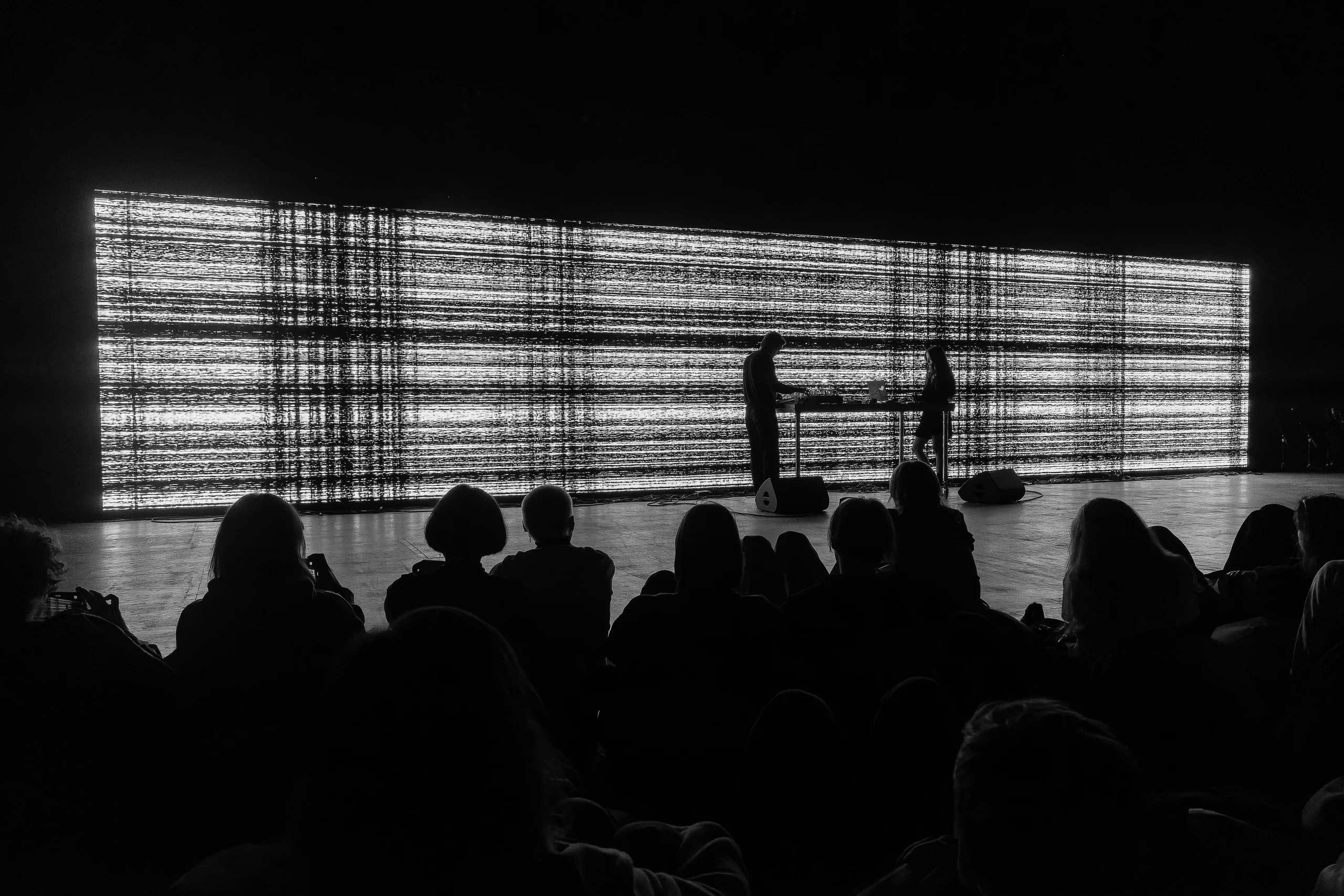
AMIANGELIKA, mythology, especially Norse and Greek, has long been central to your practice. How have ideas like Ragnarök, the cycle of creation and destruction, or the question of “no remnants of the old order” become woven into the story of BLCK SUN?
AMIANGELIKA: What draws me to mythology isn’t the stories themselves, it’s mythology as a system of thinking. Across cultures, across thousands of years, these traditions kept returning to the same underlying logic: that destruction and creation aren’t opposites, they’re the same movement. That’s something we tend to flatten in contemporary culture, and I find myself coming back to it constantly in my practice. BLCK SUN didn’t arrive separately from that. It came with me, carrying everything I’d been thinking about. The question at the heart of the piece – who are you once the structure is gone, what exists in the space between collapse and whatever comes next – that’s a question mythology has always asked. I didn’t need to make the references explicit, the thinking was already structural and underneath it.
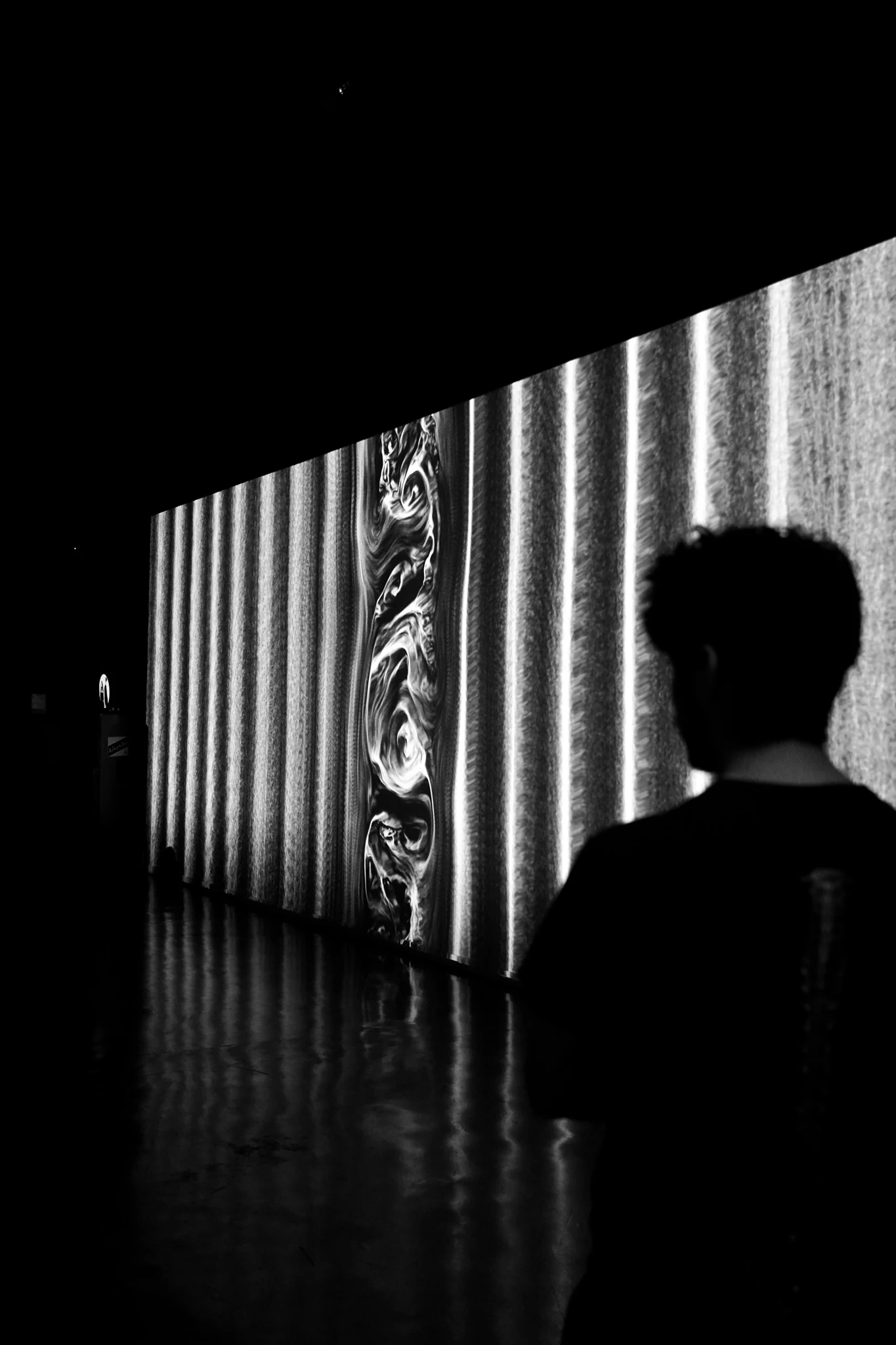
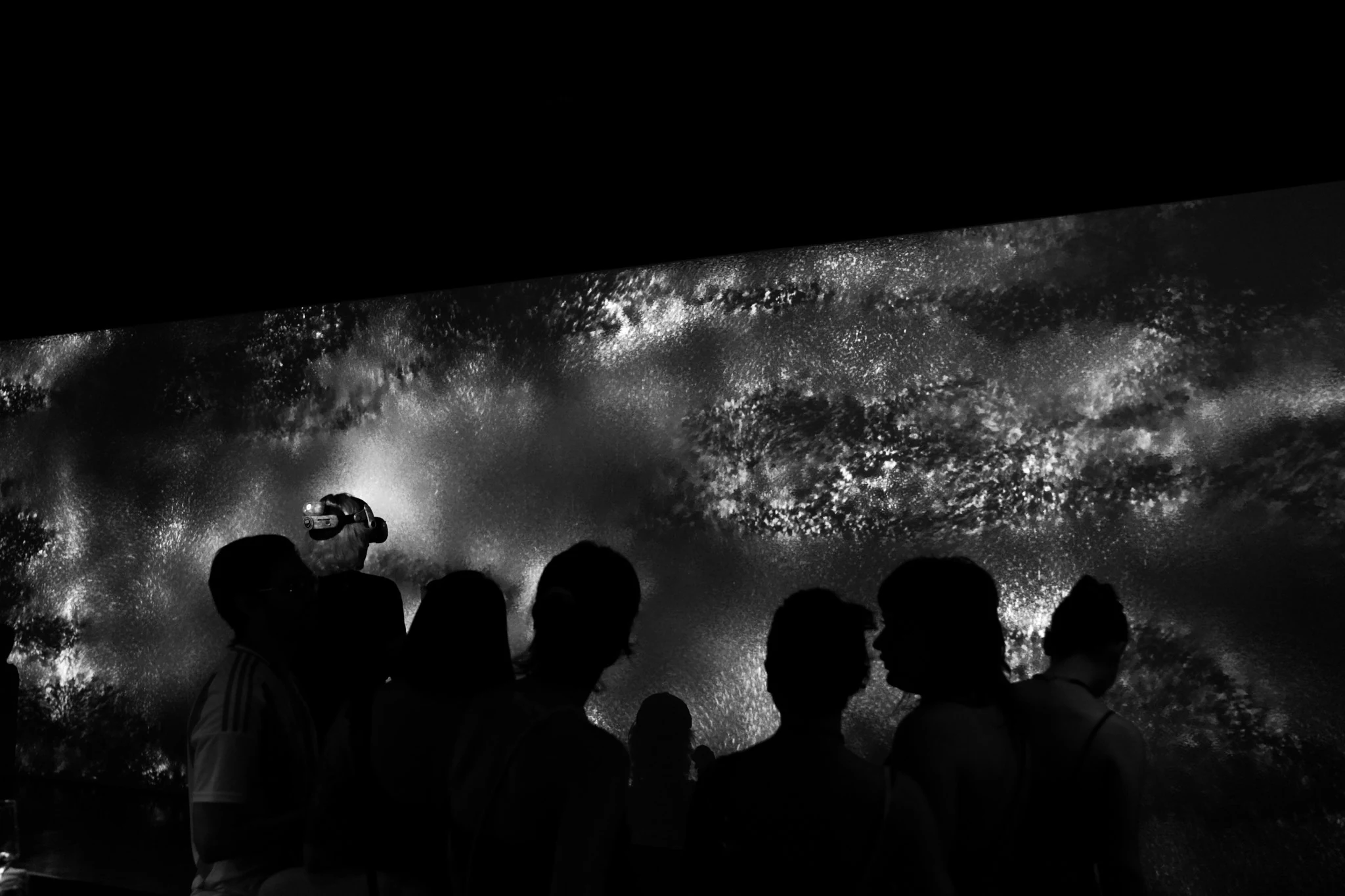
You’ve mentioned that the project started to “have its own pulse.” When did you first notice that shift?
1100: As soon as we started bringing together the sketches and ideas we had been writing individually there were a few passages that immediately worked, and that’s when that feeling started to build momentum. A couple of those moments have stayed pretty much as they were since the really early iterations of BLCK SUN. Once that feeling was established, it was easy to recognise when an idea or some result of experimentation was headed in the same direction and creative decisions could be made to serve that overall arc and narrative over anything else.
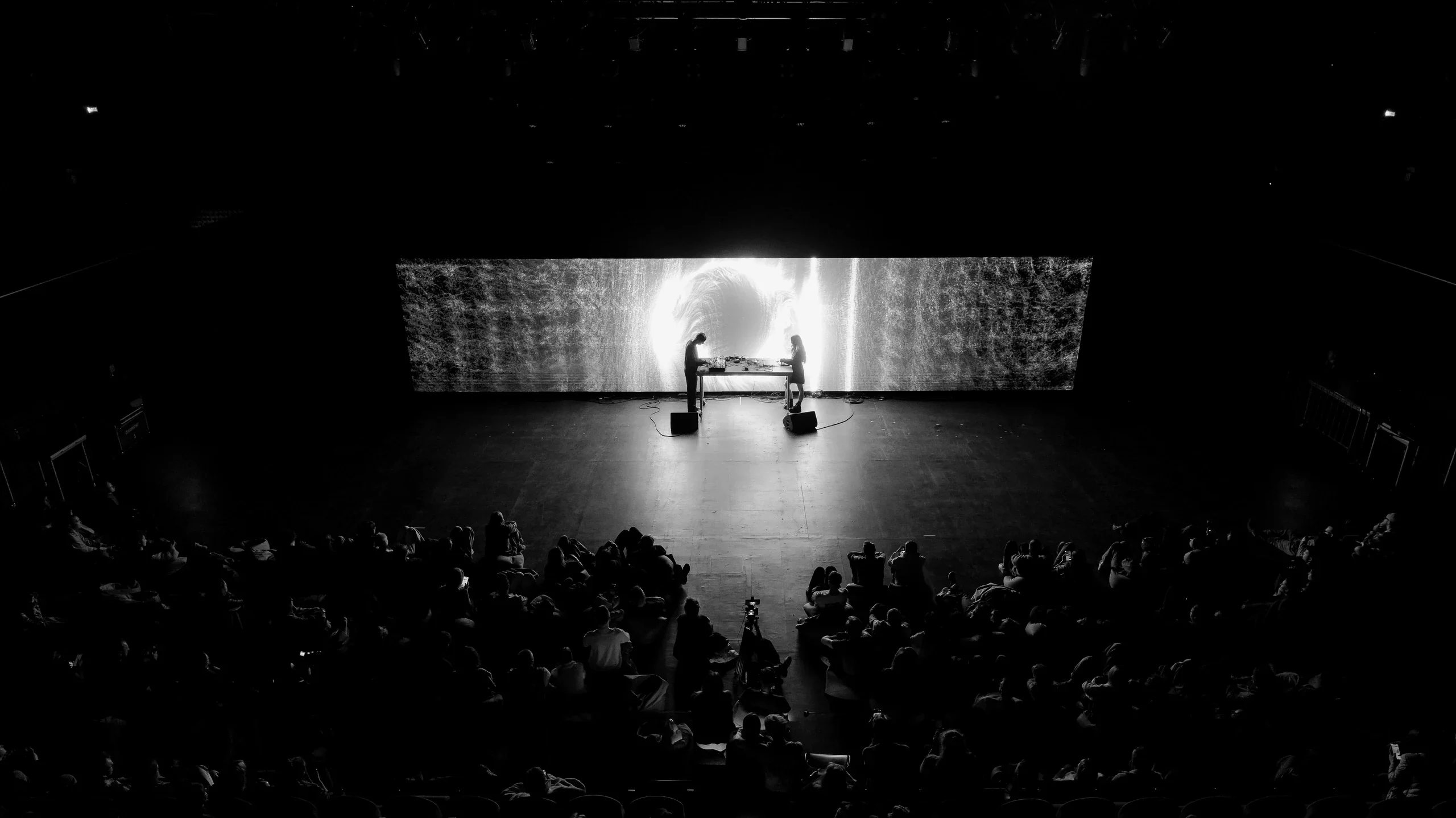
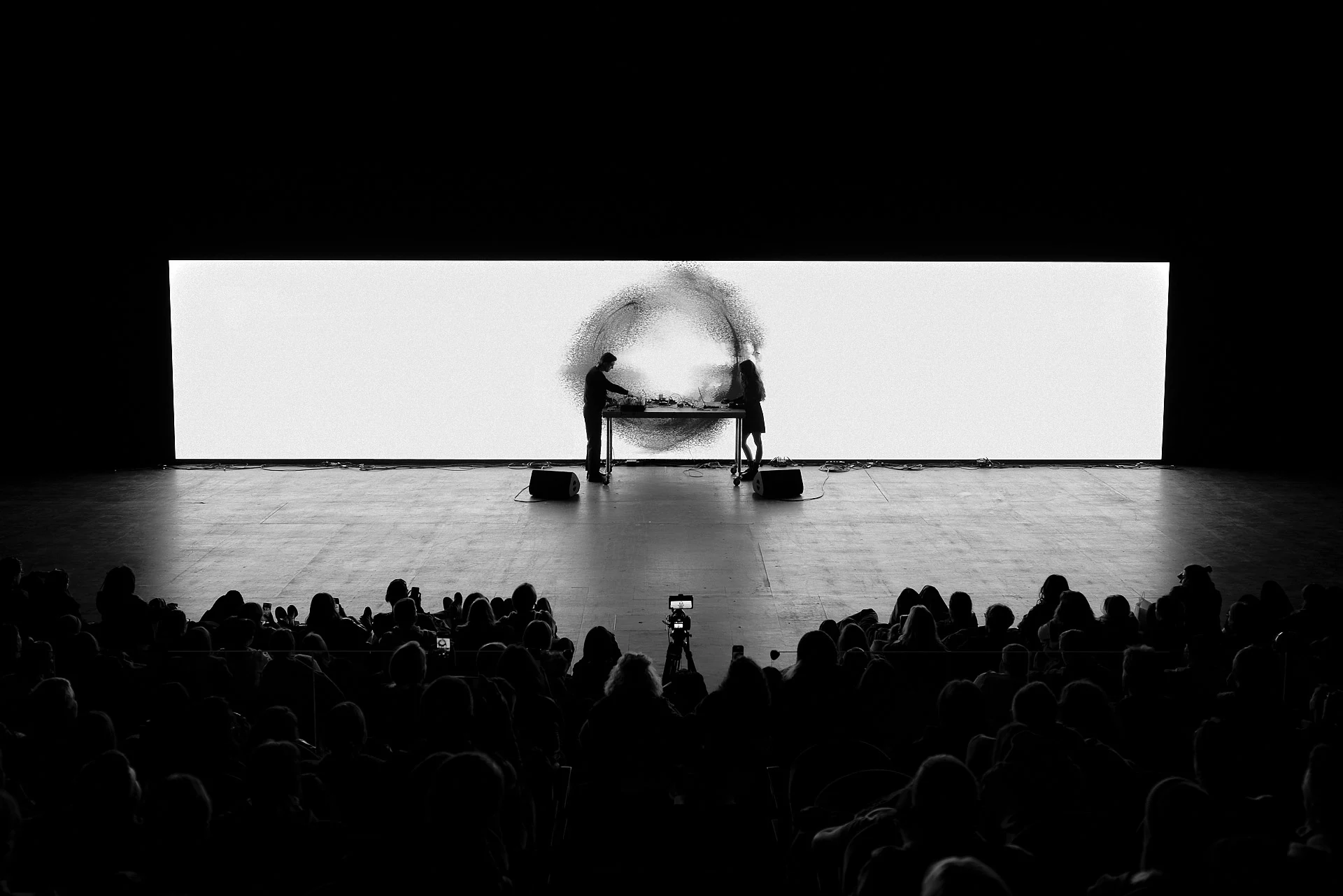
AMIANGELIKA: Once we started presenting BLCK SUN, something became very clear very quickly – the work knew what it needed. Not because of our own preferences, but because the effect it was meant to have on an audience required a specific kind of environment: sleek, minimal and precise. That understanding has stayed with us through every show, every new context we’ve brought it into. In a way, we’ve moved past the point of authorship. BLCK SUN exists now as its own thing, with its own integrity, and what we’re responsible for is protecting that. Making sure it’s presented as it’s supposed to be, so it can do what it’s meant to do.
During live performances, glitches sometimes turn into what you’ve called “beautiful accidents.” Can you describe one moment when the system surprised you both with something completely unexpected?
1100: There was one show where the machine sync basically broke down during the last maybe 10 minutes. We’re still not exactly sure what happened but it was certainly ‘a surprise’. As scary as it was on stage, it ended up being kind of fun as we were suddenly responding to a system that had gone haywire rather than the one we had carefully built to carry the show.
AMIANGELIKA: For me, beautiful accidents are almost built into the nature of the work. Generative systems don’t behave the same way twice – you set the boundaries, the thresholds, the rules, but what happens within those is never fully predictable. A lot of my process is just sitting with the system, building and watching, seeing what emerges. But then you connect it to specific audio triggers from 1100 or to a live audio feed and the visuals start behaving in ways you couldn’t have arrived at alone. Faster, slower, more fractured, something that only becomes visible when the audio is actually running through it. Those moments are genuinely surprising even to me. The production side is one thing, but the performance is always nerve-racking for exactly that reason – you’ve set everything up as carefully as you can, and then something happens that no amount of studio time could have prepared you for. Sometimes that’s terrifying. And sometimes it’s the best thing in the show.
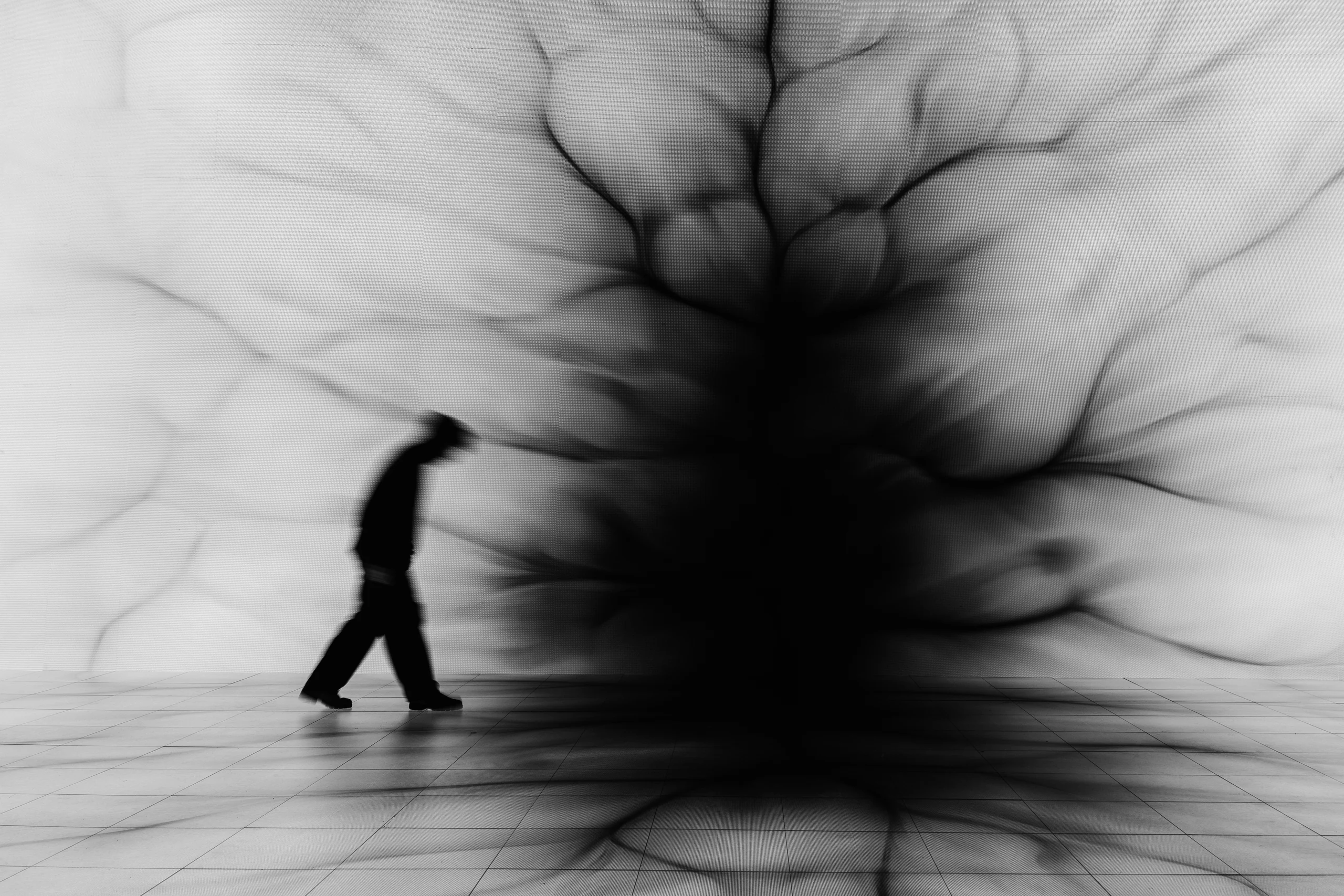
1100, you design sounds specifically to trigger visual reactions. How do you choose which textures and contrasts best serve this ongoing dialogue?
1100: I’ll usually start with long recordings of one patch or idea and then edit that down into small pieces that I think are interesting. Or, if we’re already working towards a specific feeling, passages that speak to that in some way. I try to be pretty brutal with that initial edit without being too precious about what sounds may or may not work together. That way whatever we’re left with is only there for some instinctive reason and the world can be built around that.
The creative process was very fluid, separate ideas, constant exchange, layers recorded months apart. What was the hardest, and most rewarding, part of preserving the original disorder while finding cohesion?
1100: I think a lot of the difficulty, and ultimately the reward, comes from what I mentioned earlier about starting with a very distilled and specific palette and then doing everything we can to stick to that without losing sight of the initial intention, which is always pretty firmly set before we begin anything. Limitation always leads to good cohesion I think.
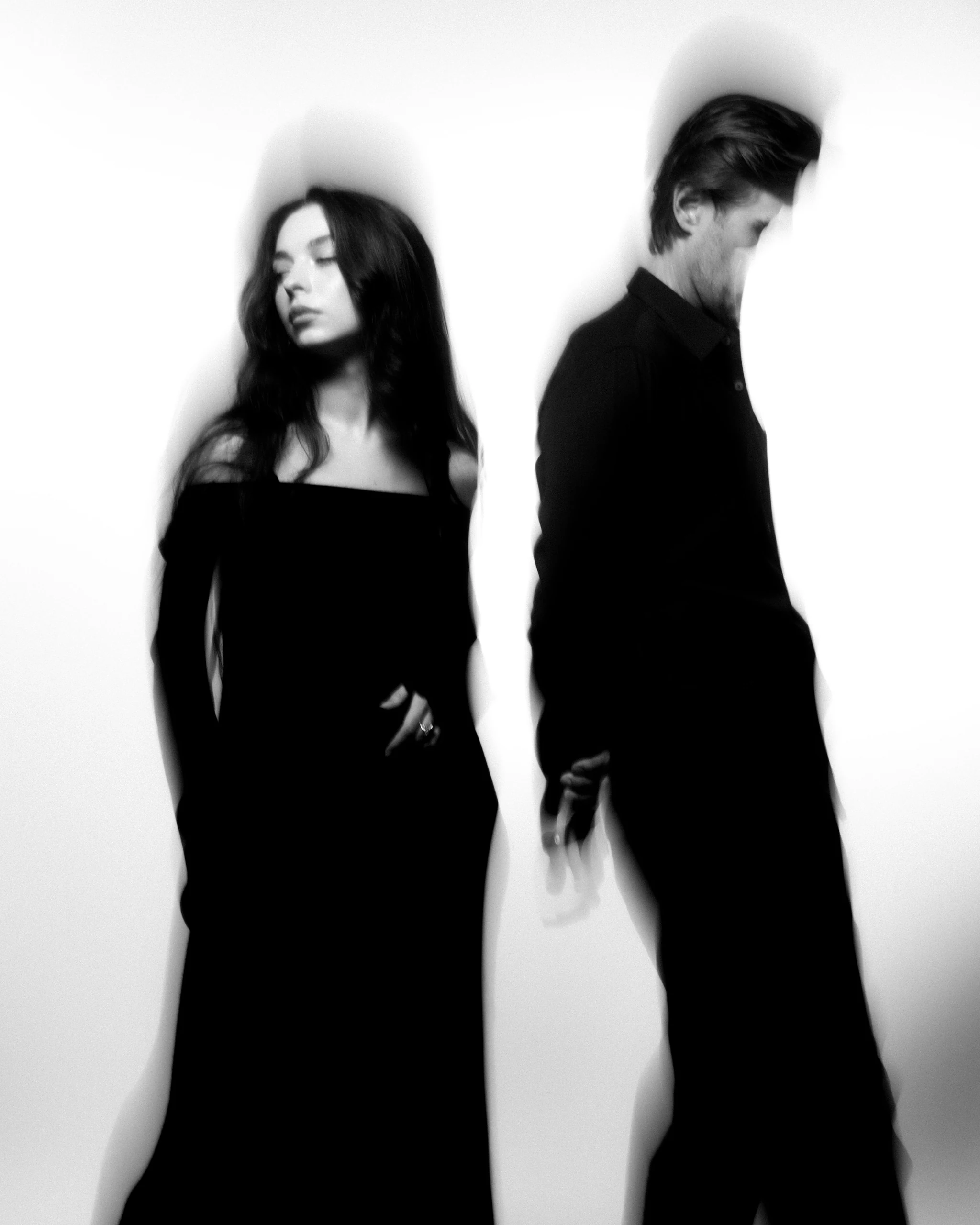
When audiences experience BLCK SUN live, what do you hope they truly feel in those moments of quiet or sudden relief? And how does that experience shift when the work moves from performance to installation?
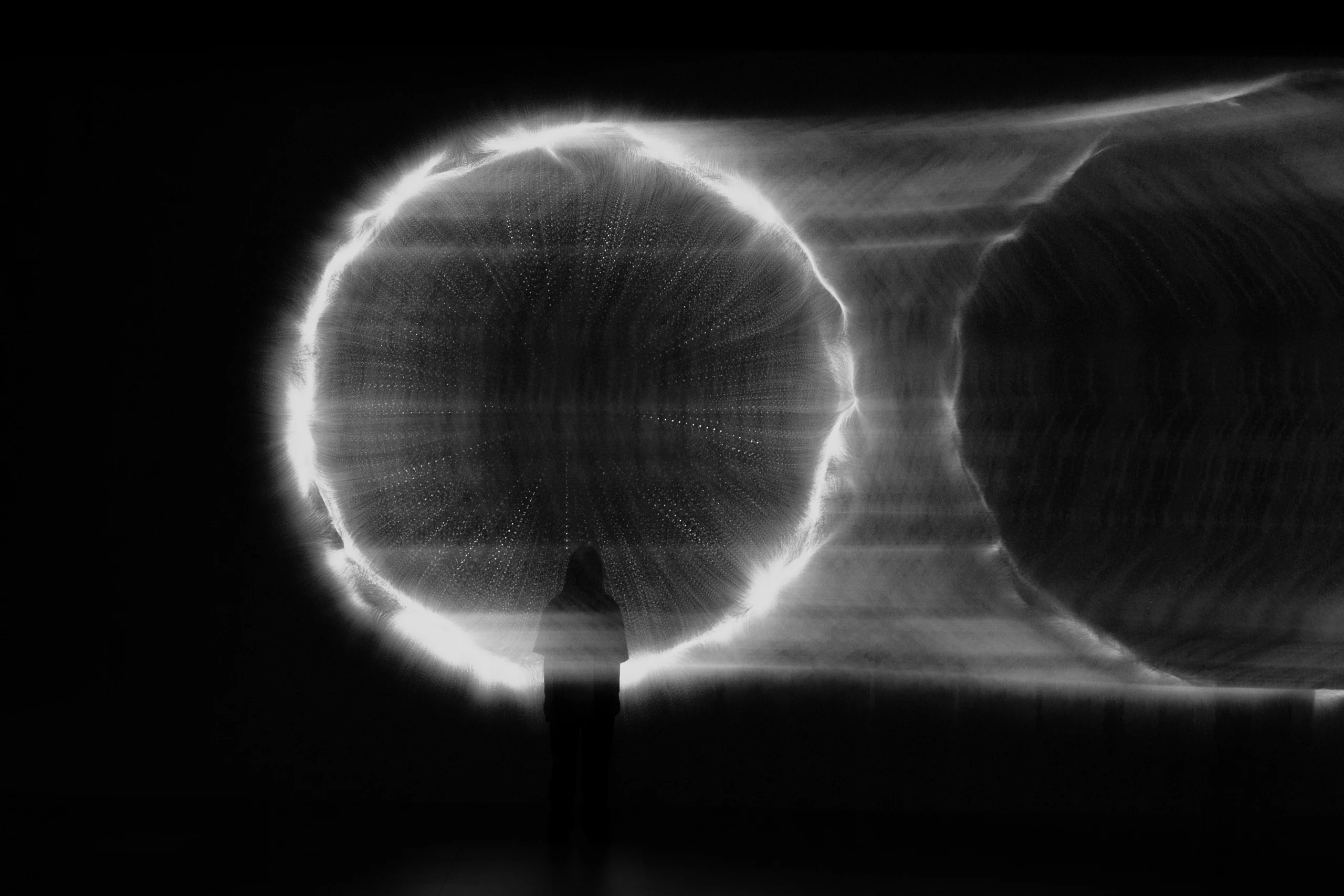
AMIANGELIKA: Relief is actually the key word in that question for us. When we were thinking about the emotional arc of BLCK SUN, we weren’t following a classic narrative structure – beginning, climax, resolution. We were referencing how chaos actually feels in real life, where you don’t even recognise something as a beginning until you’re looking back at it. So the arc has its own logic: there’s a first drop, a moment of intensity, and then a relief – because without that, we felt like the human mind genuinely can’t hold on. But that relief isn’t rest, it’s a tense silence, an anxious one. You’ve been given a pause, but you don’t know what’s coming next, and part of you already knows something is. Then another wave, then moments that echo the beginning, just enough to remind you there’s a thread; and eventually, a resolution. But you’ve earned it by then.
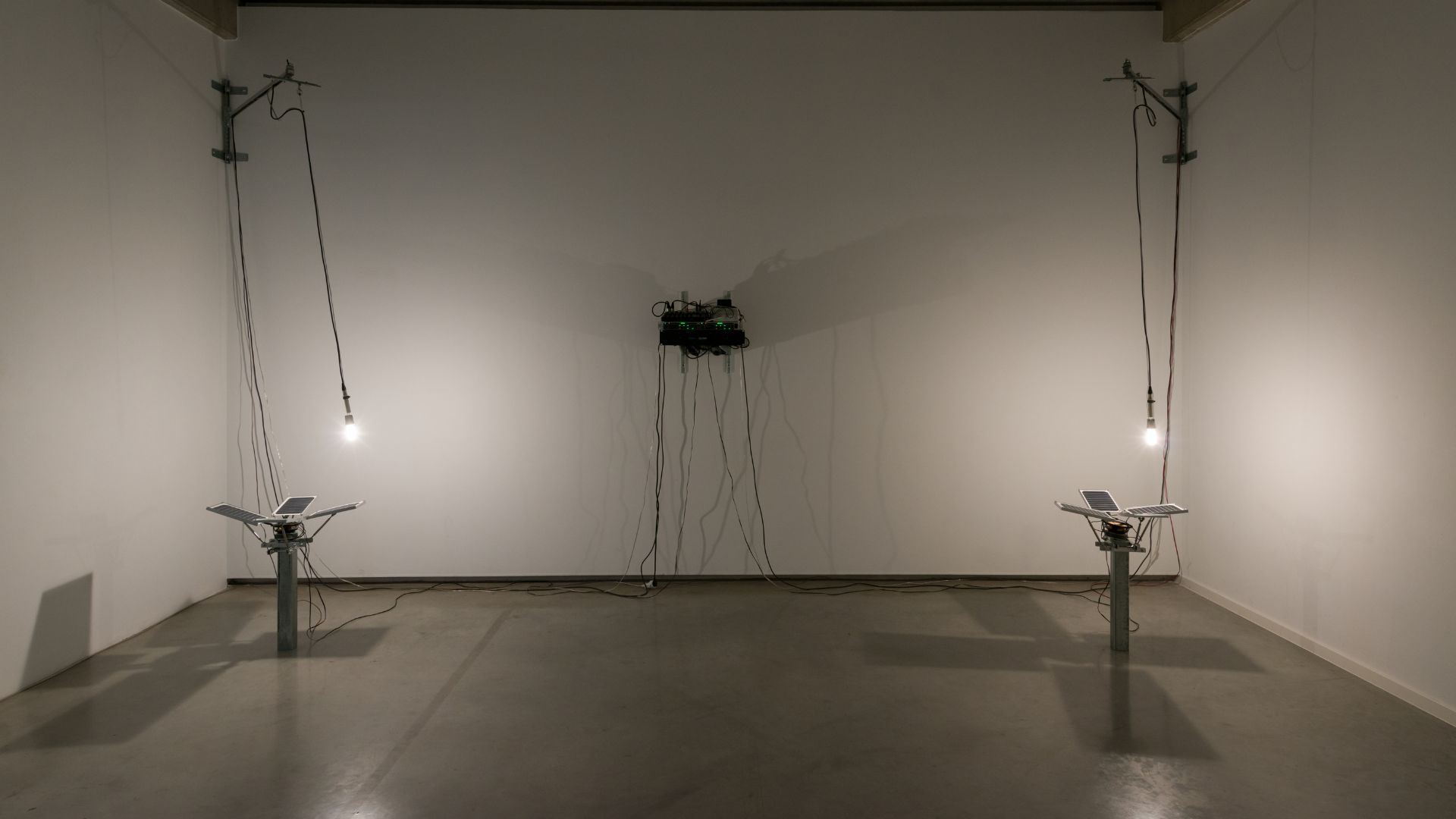
The installation is a different experience entirely, even though it’s the same work. It only shows the first seven minutes. When we were first asked to present BLCK SUN as an installation, we had to think carefully about which part to offer, and the opening felt right because it doesn’t resolve anything. It gives you a taste of the chaos, creates that anxious what-happens-next feeling, and leaves you there. So performance and installation end up doing two very different things – one takes you through, the other leaves you at the threshold.
Now that you’ve completed the album, where are you heading next?
1100: We’re interested in pushing further into fully spatial and site-responsive work. More projects where the movement of people in the space becomes inseparable from the work itself. A lot of our conversations lately have been around transitional states and what they mean on their own, separated from their origins or destinations.
AMIANGELIKA: There’s a lot ahead, more than we can say just yet.