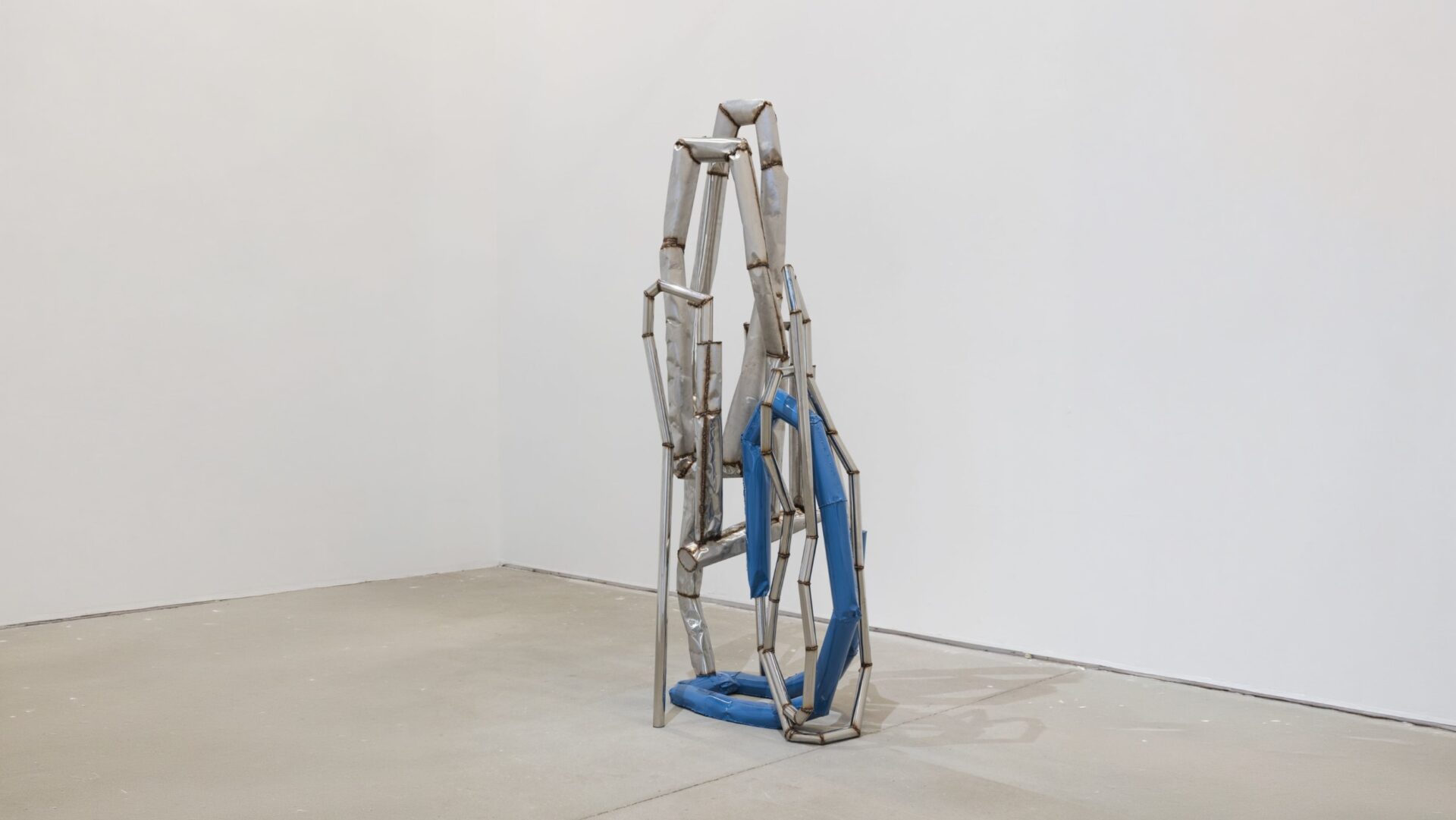
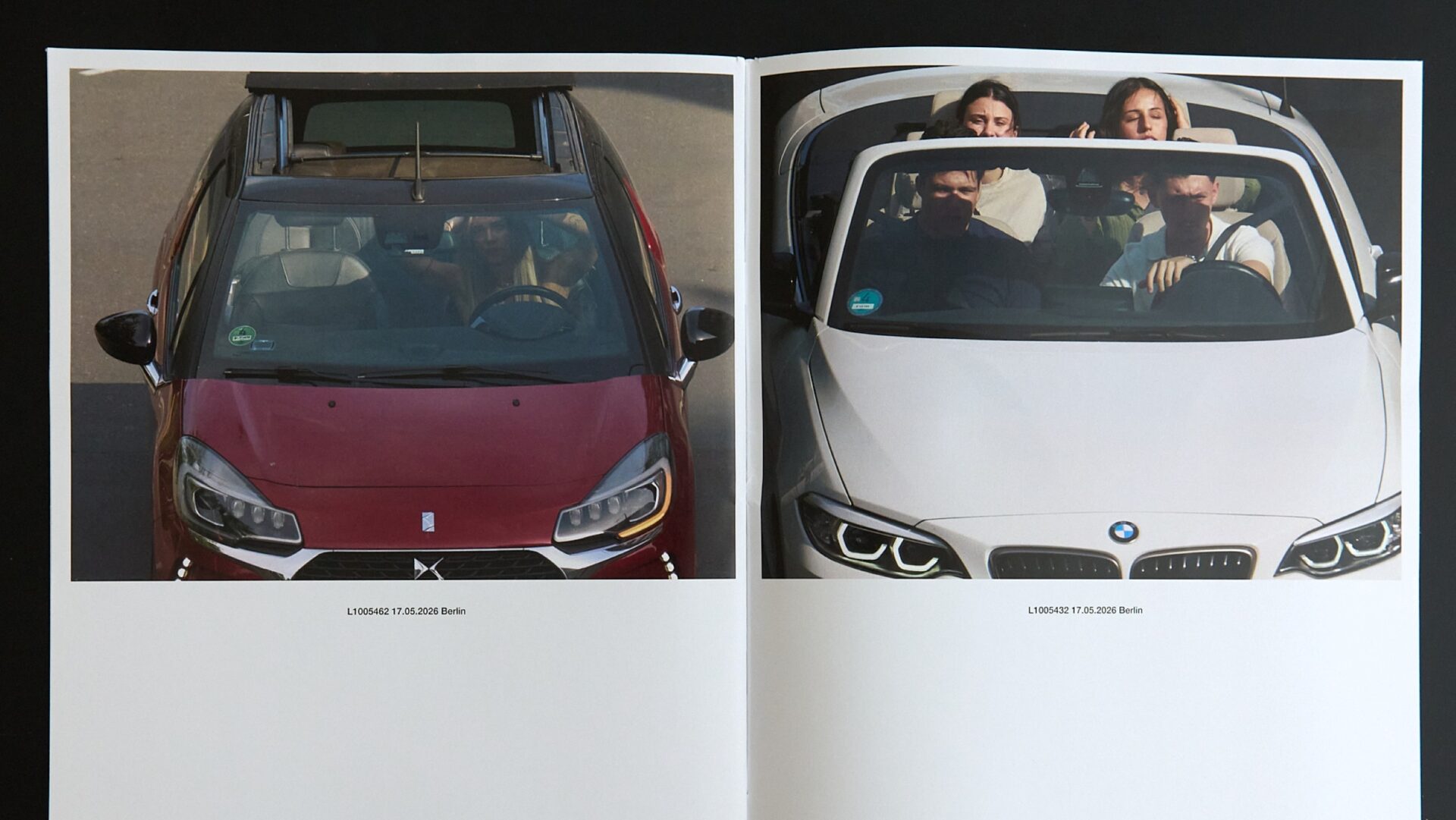
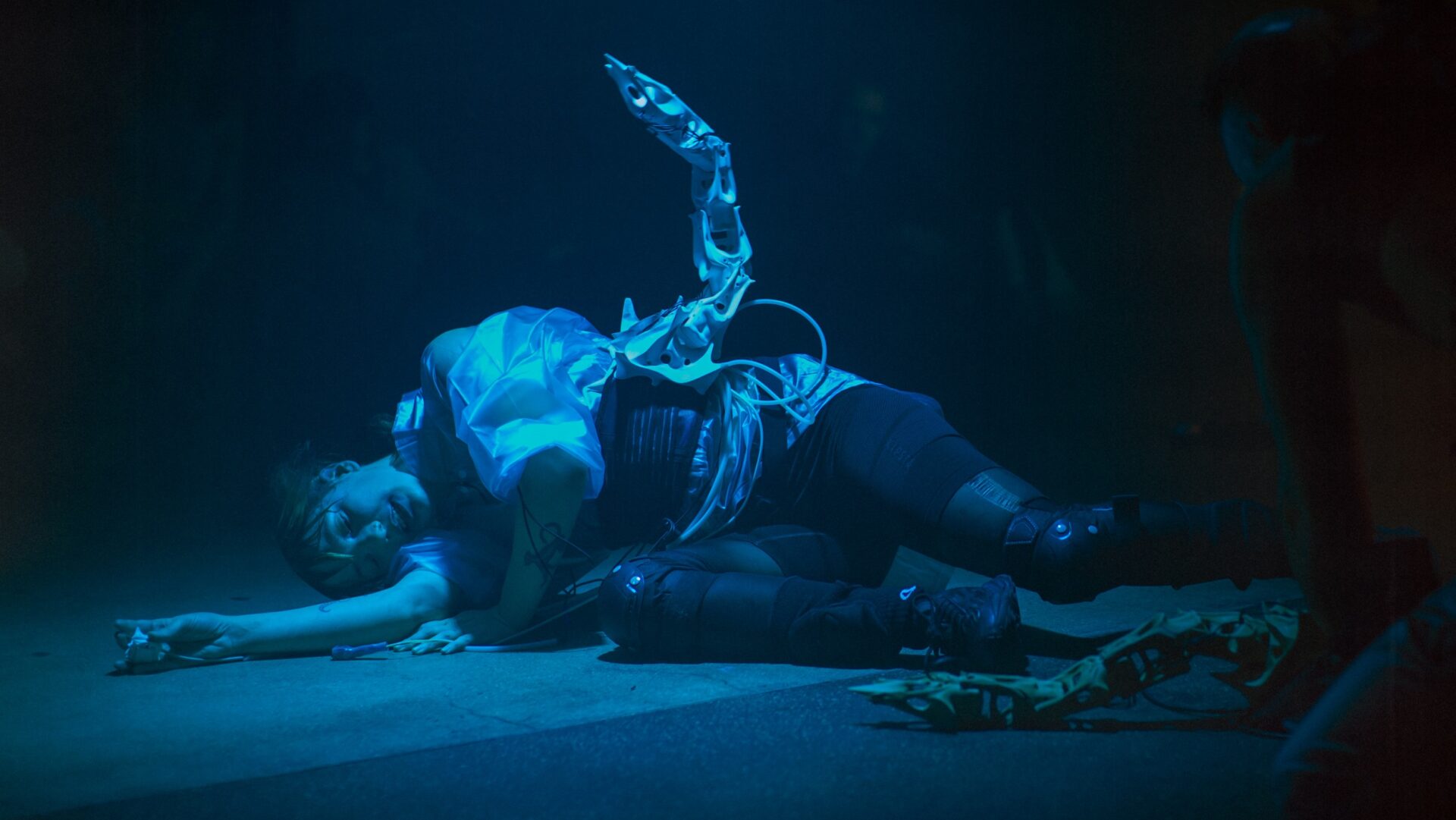
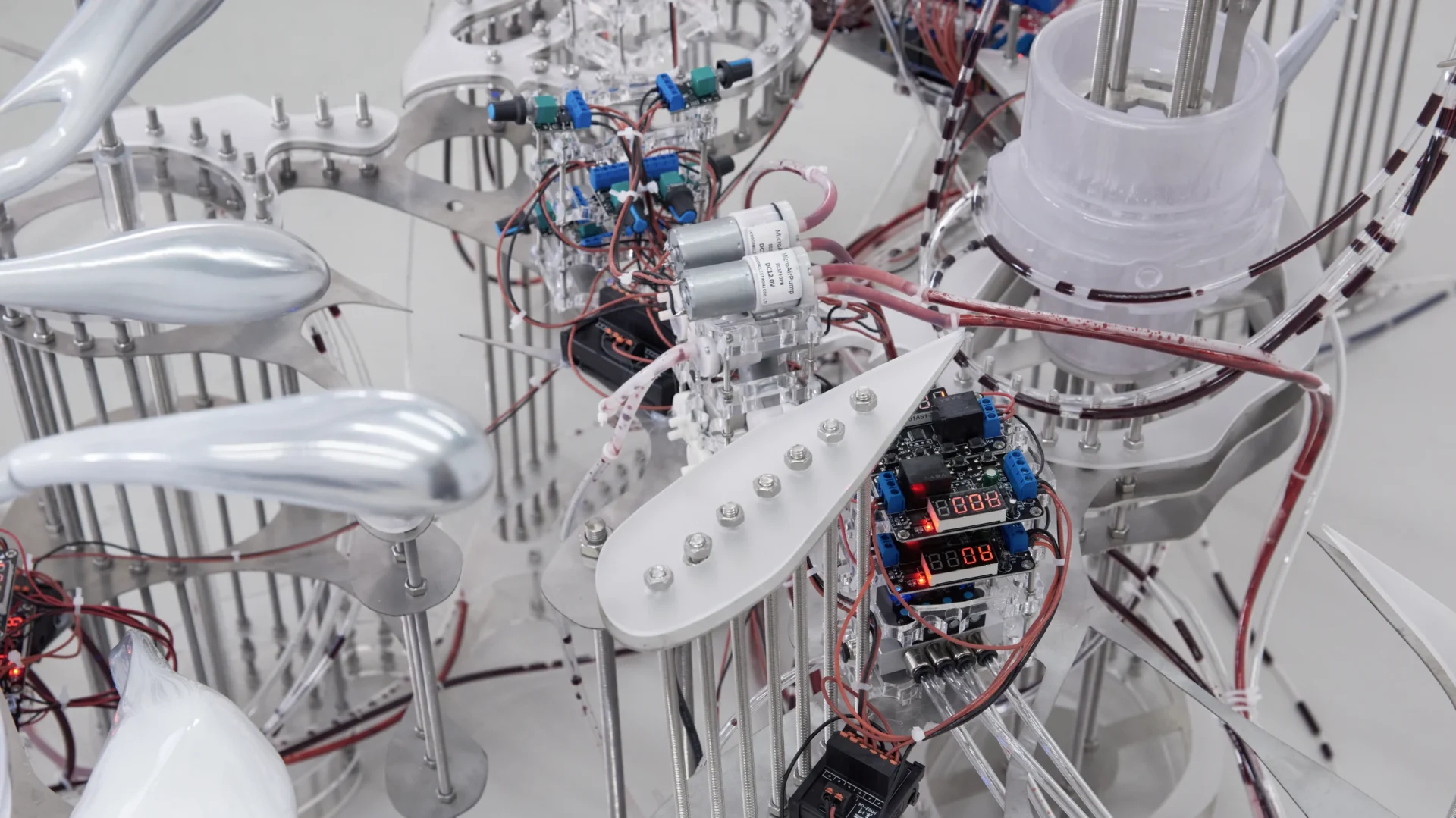
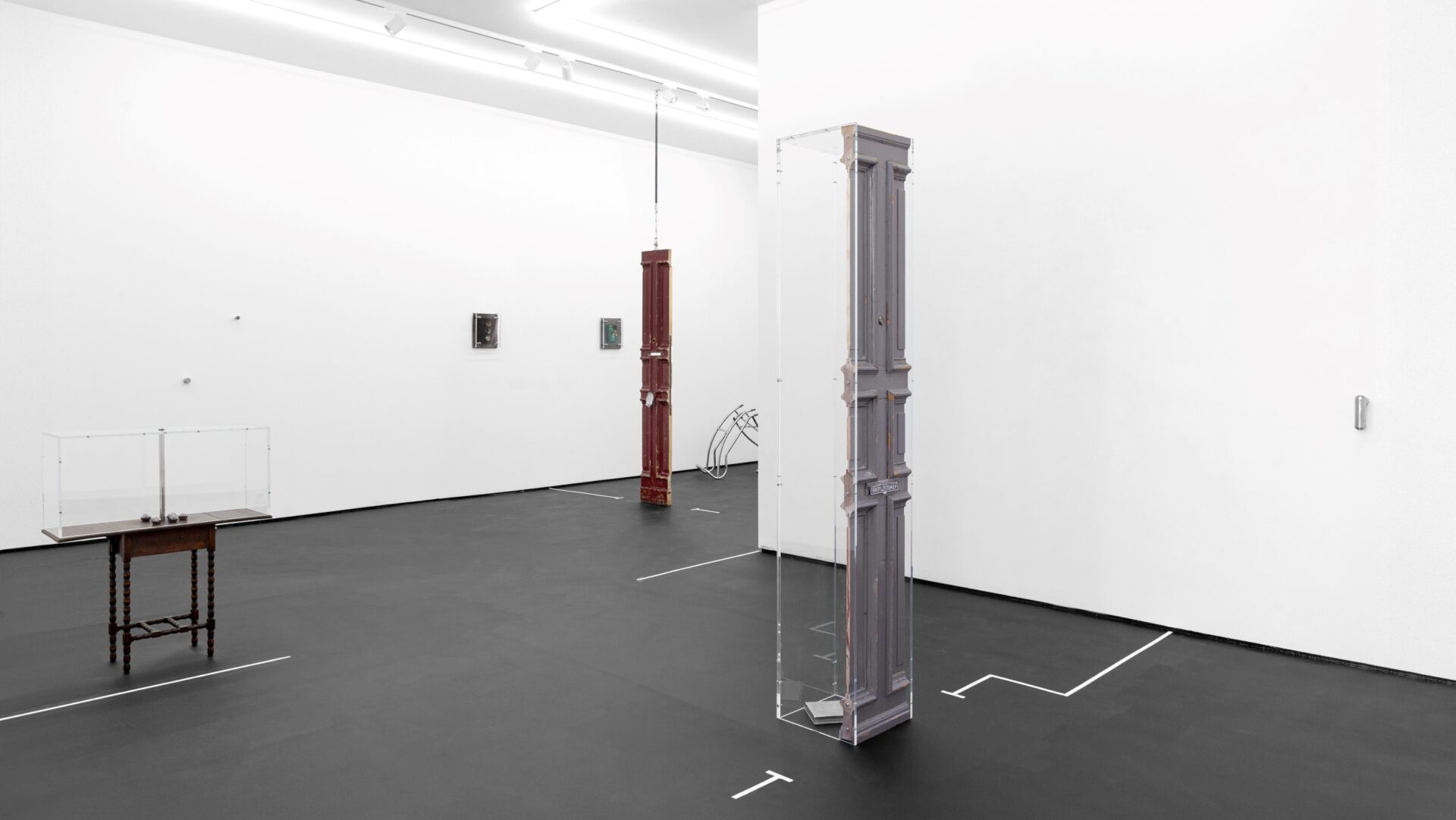
Felix Schramm’s artistic practice is built on rupture—both physical and conceptual. Through s intersections, sculptural disruptions, and unconventional material choices, he challenges the way we perceive and navigate architectural space. His work exists at the crossroads of sculpture, painting, and architecture, creating fragmented structures that distort and redefine spatial relationships. In this interview with FakeWhale, we explore how destruction can generate new meaning, the role of chance and material history in his process, and the unsettling beauty of spatial dissonance.
You’ve often spoken about your interest in interrupting architectural continuity. When did you first begin to see walls not as barriers, but as something to be broken, opened, and manipulated? Was there a particular moment or experience that triggered this approach?
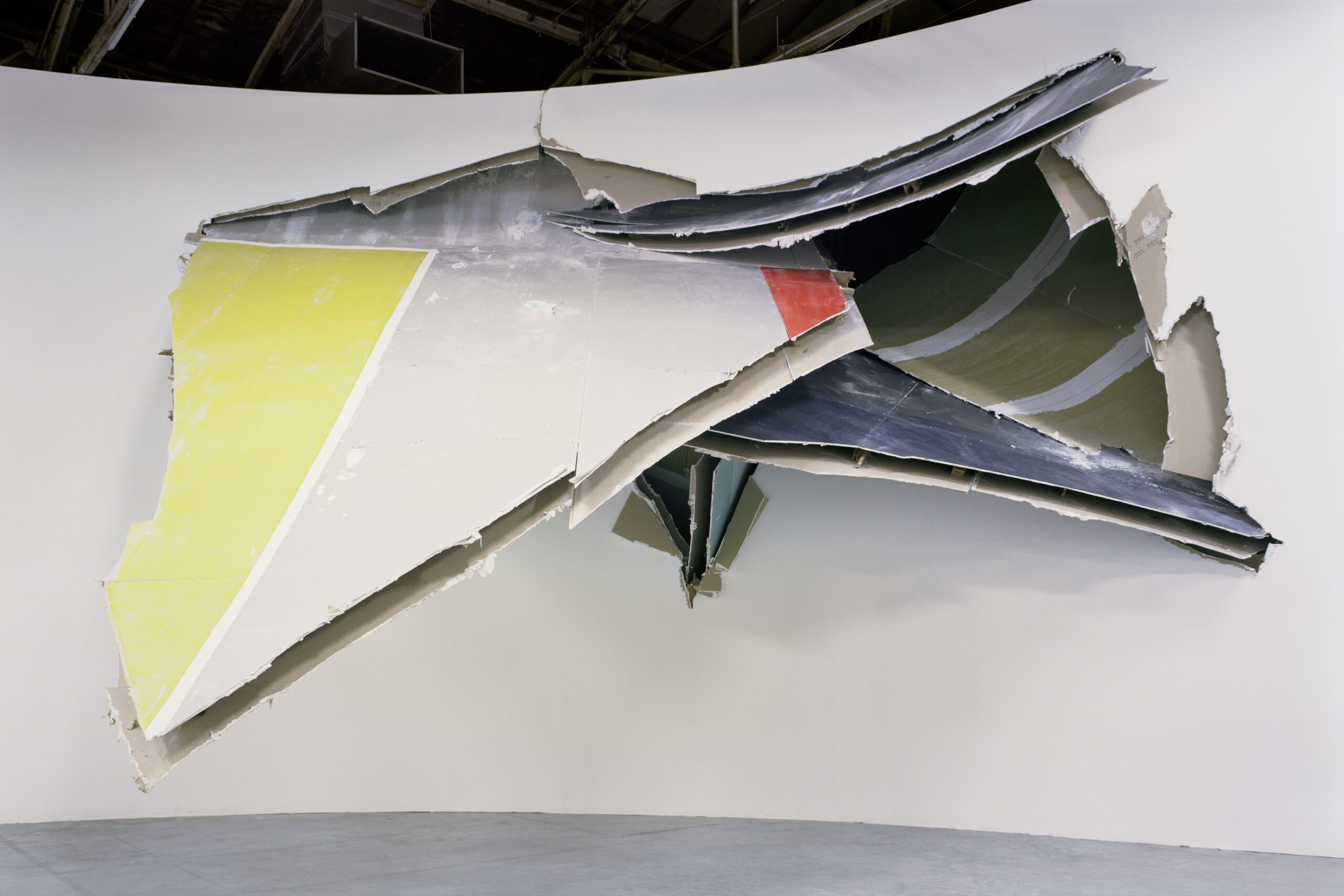
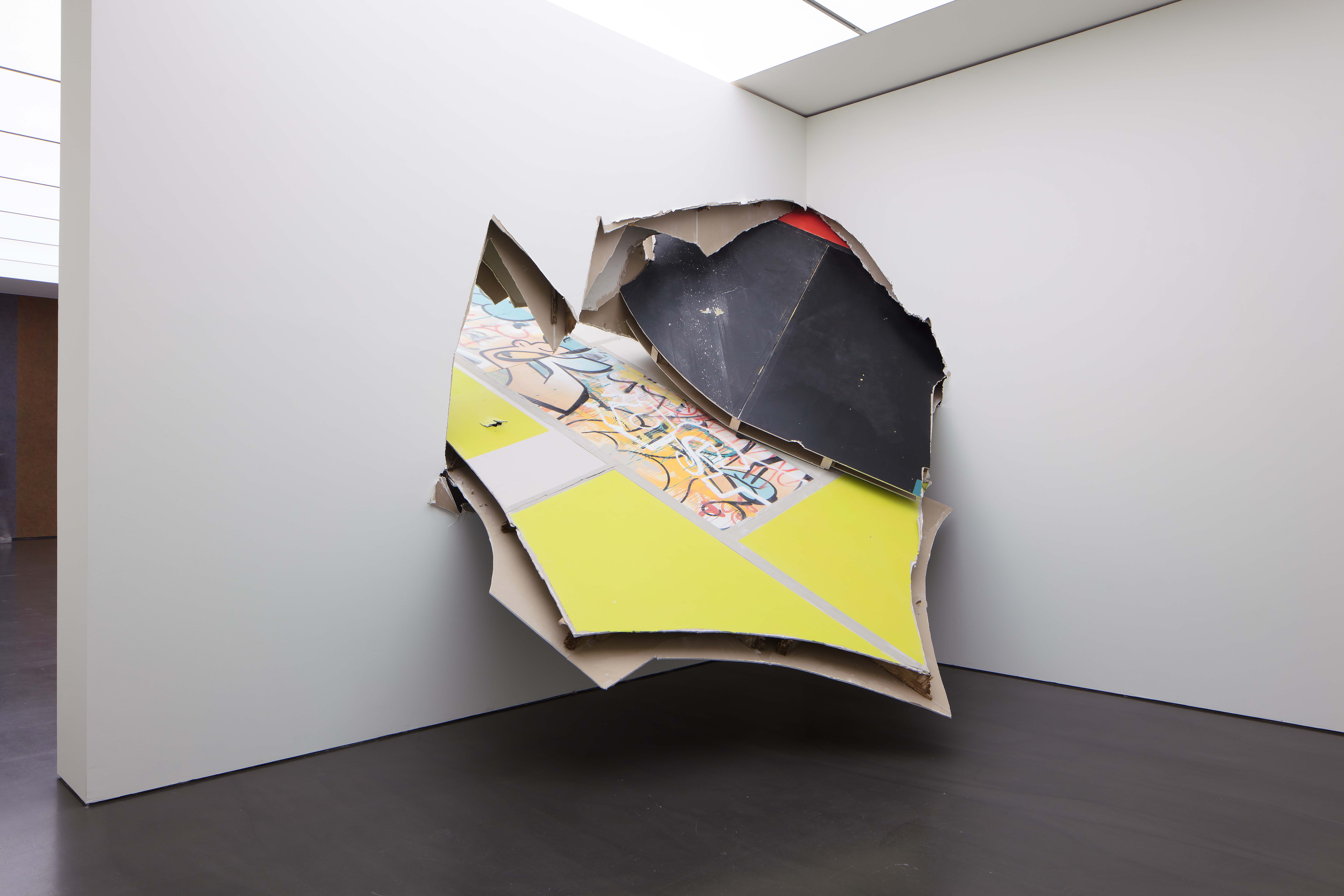
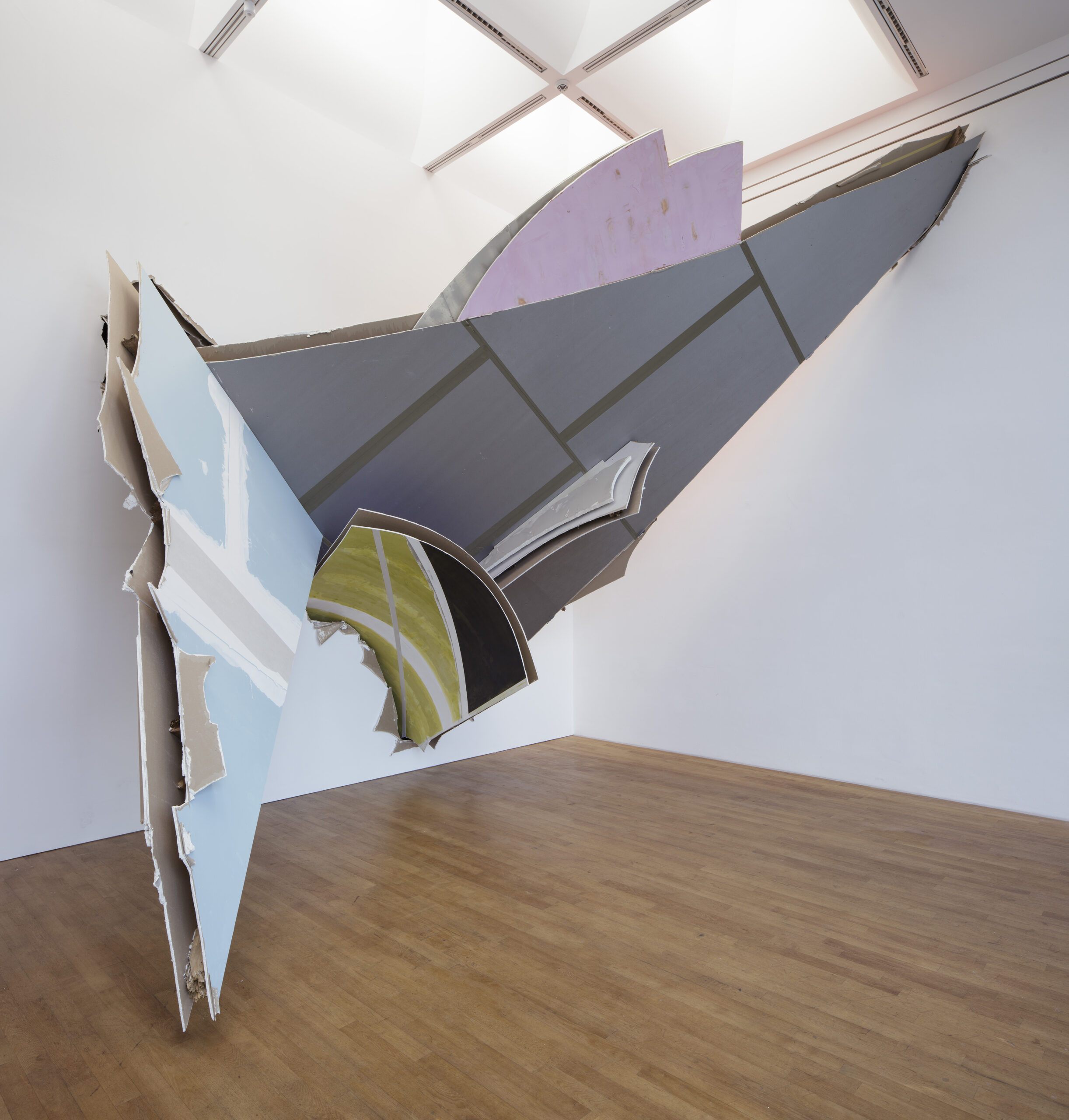
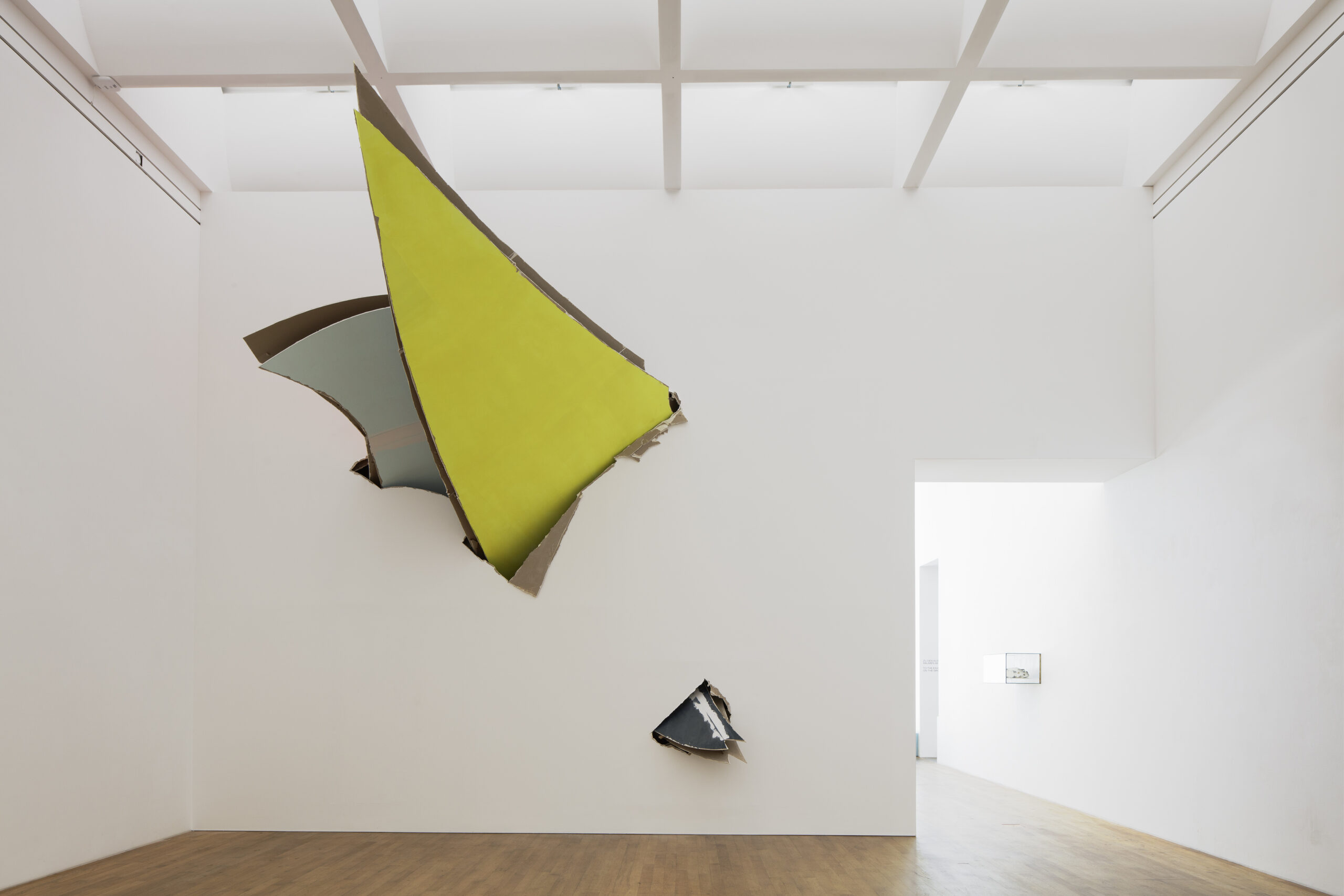
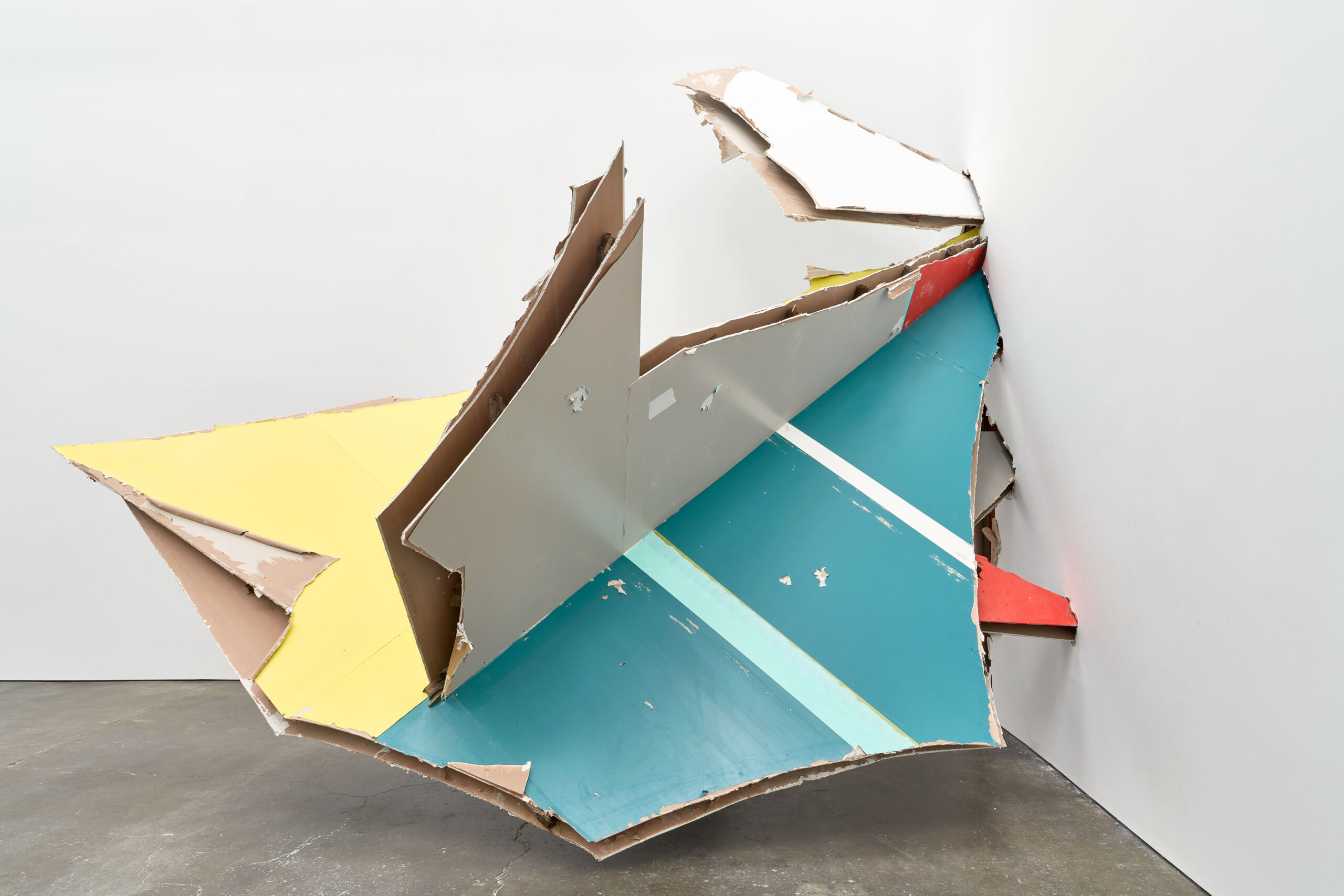
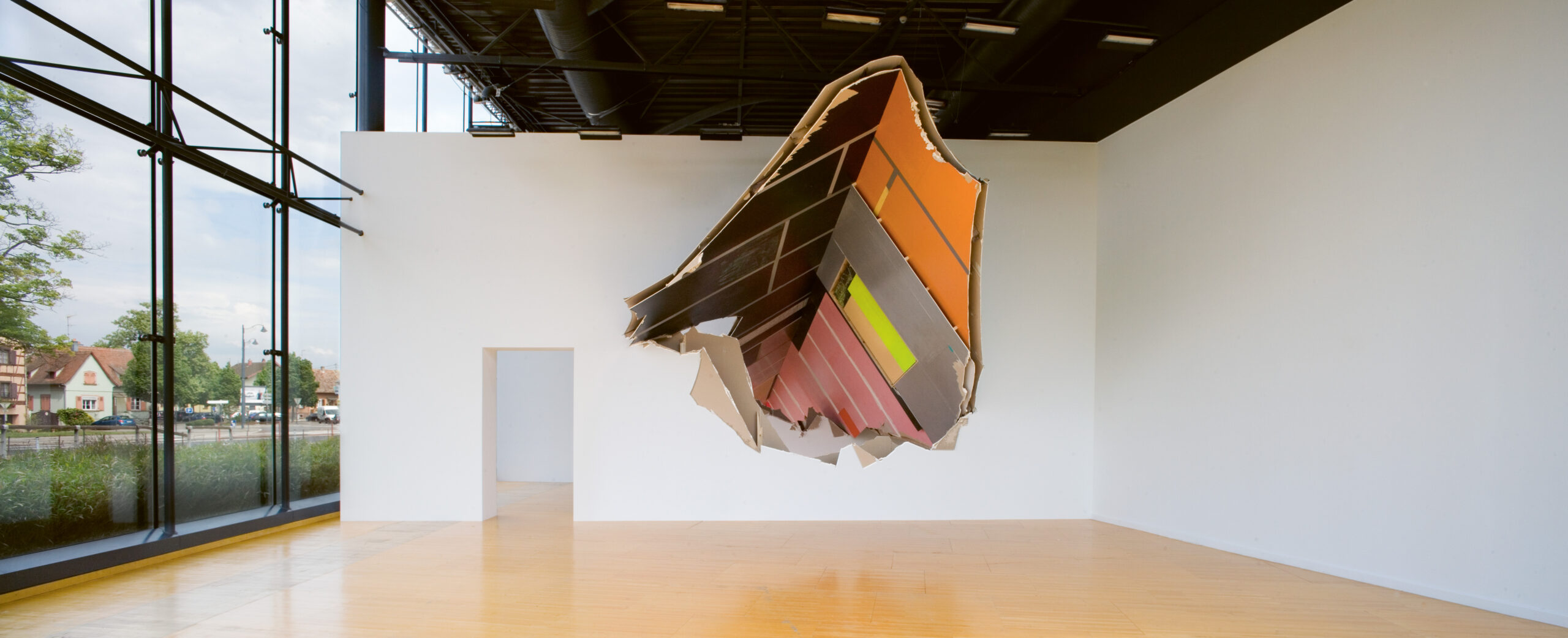
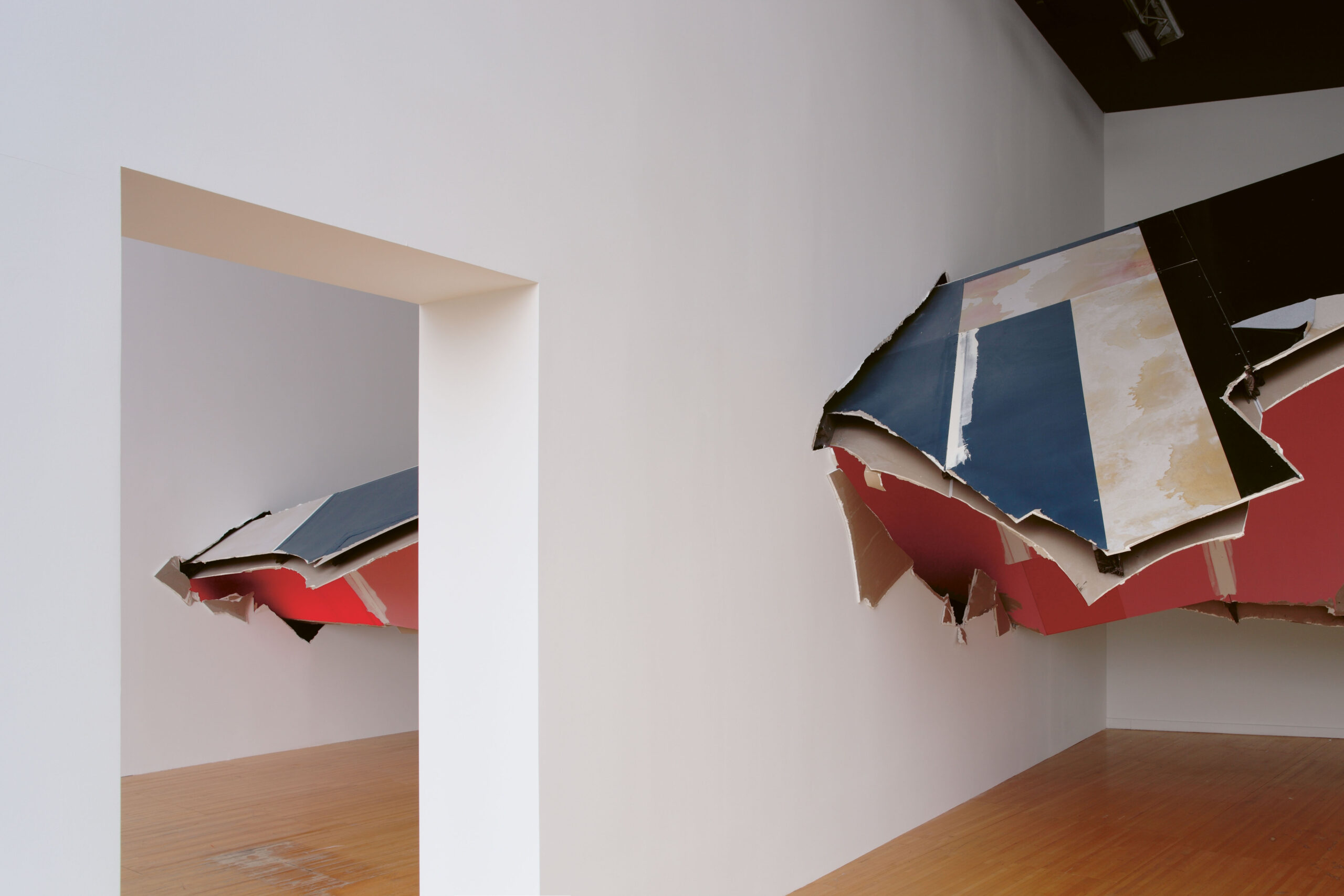
Initially, my interest was more general in nature rather than specifically architectural. The openings created by breaking through surfaces reveal what lies beyond them, establishing visual connections, dialogues, and new relationships of proximity with the elements behind them. The wall, understood as a boundary, becomes the starting point where transformation takes shape and intensifies. Breaking and deforming also allow me to transform existing forms and dissolve established categories such as architecture, painting, and sculpture.
I have never really considered my works to be autonomous from the spaces surrounding them. This is why I began opening up the wall as an enclosing shell, interweaving everything and creating permeability between different elements. Through this process, by shifting things and simultaneously bringing them together into a concentrated ensemble, a distinct, complex, and multilayered constellation of forms emerged, one that I found fascinating.
Your Spatial Intersections create a sense of displacement and instability. Do you see these works as purely physical interventions, or do they also carry a psychological or political dimension in how they force viewers to reconsider the structures they inhabit?
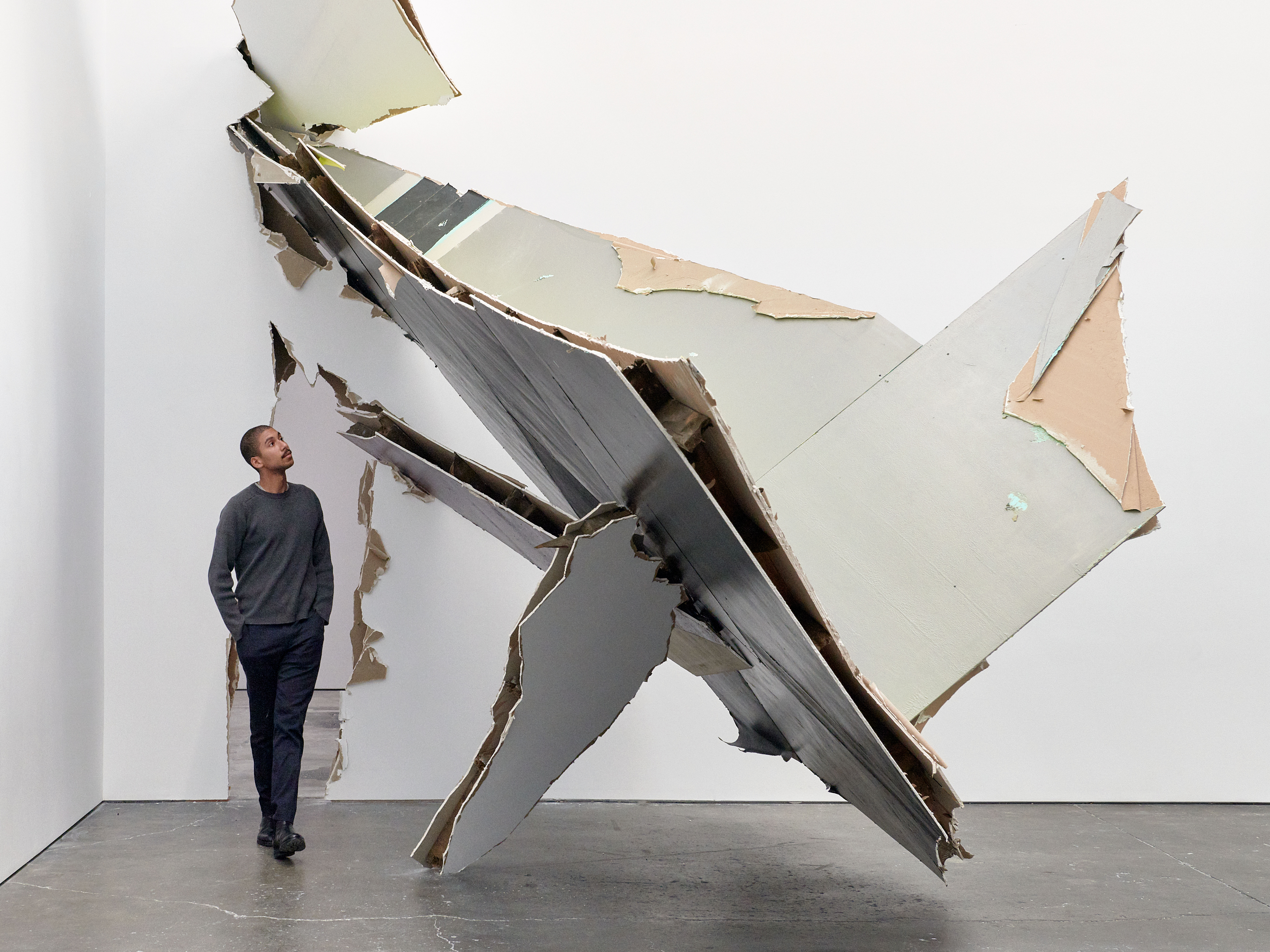
Exactly. The idea is to fundamentally reconsider the structures that surround us and within which we live. For viewers, this process can also involve psychological and social dimensions.
To achieve this, I work with the principle of disruption. At the same time, the apparent instability of the works contains an inherent stability, generated through rhythm and tectonic relationships.
I am interested in bringing together elements that break things down and elements that establish structure, without assigning any value judgment to either. I am convinced that decomposition is a prerequisite for every act of formation. Rather than being treated as something taboo, decomposition becomes visible as a productive force, one that destabilizes existing orders and thereby makes new formulations possible.
I would even go so far as to say that decomposition is, in general, a prerequisite for the emergence of anything new. It is precisely this intersection between the subtractive and the constructive that lies at the heart of my work. My aim is to reformulate artistic expression by incorporating the apparent opposites of decomposition and construction into the process of making, and therefore into the sculpture itself. These two components are directly interconnected and become integral parts of a new form of Spatial Intersections.
Many of your pieces incorporate found materials, old tiles, construction debris, and leftover paint from museum storage. How important is the history of these materials to your work? Does their past life influence the narrative of the piece?
I enjoy working with leftover materials for several reasons. The tiles, which bear the visible traces of time, were taken from demolished houses and reassembled in new configurations within the Spatial Intersections. This gives rise to a new cartography of time, one that maps both the different rooms of the houses from which the individual tiles originated and their relationships with the new elements and materials that make up the Spatial Intersections.
Leftover paint also allows me to expand my palette and discover color combinations I would probably never have chosen myself, creating dissonances between different shades and tones. Taken together, these processes produce a condensation of space and time. Things that do not necessarily belong together form a hybrid, carrying their individual histories from the past into an entirely new context.
What is your relationship with the work of Jannis Kounellis and Walter Nikkels?
Above all, what interested me was their attitude: their ability to connect the things they engaged with to broader questions. For Walter Nikkels, designing a single letter was equivalent in significance to constructing a house, and therefore to architecture and its social relevance. After all, he also built the Museum Kurhaus Kleve.
Jannis Kounellis, through his intellectual approach and artistic practice, sought to construct an order of his own, one that could be simultaneously political and poetic, delicate and terrifying.
Many of Kounellis’s works and performances also possessed a certain radical quality, a radicalism that I increasingly find missing as a form-generating force in contemporary artistic production.
In your Accumulations series, you create self-contained structures that distort scale and perspective, making it difficult for the viewer to orient themselves. What draws you to this idea of perceptual disorientation?
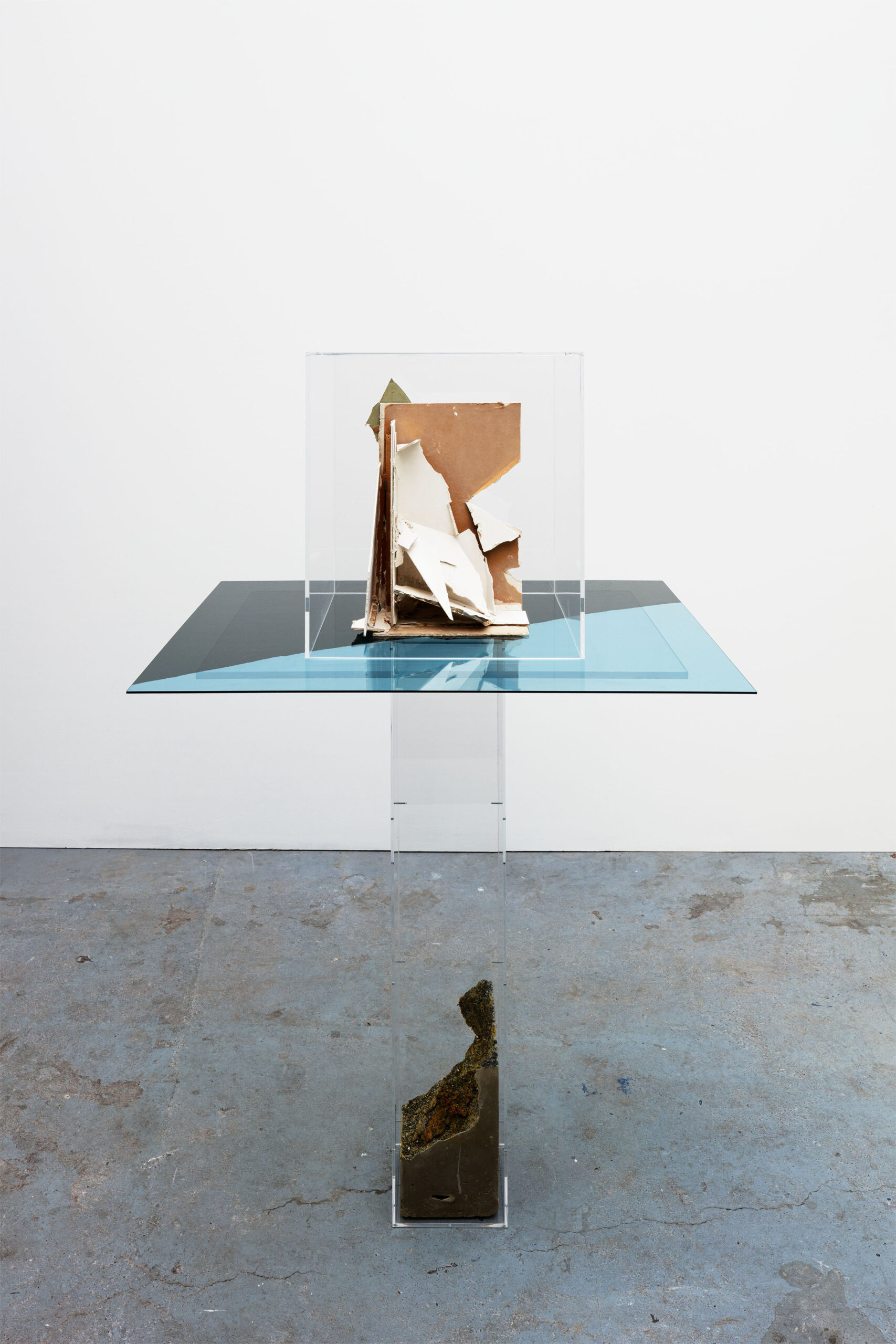
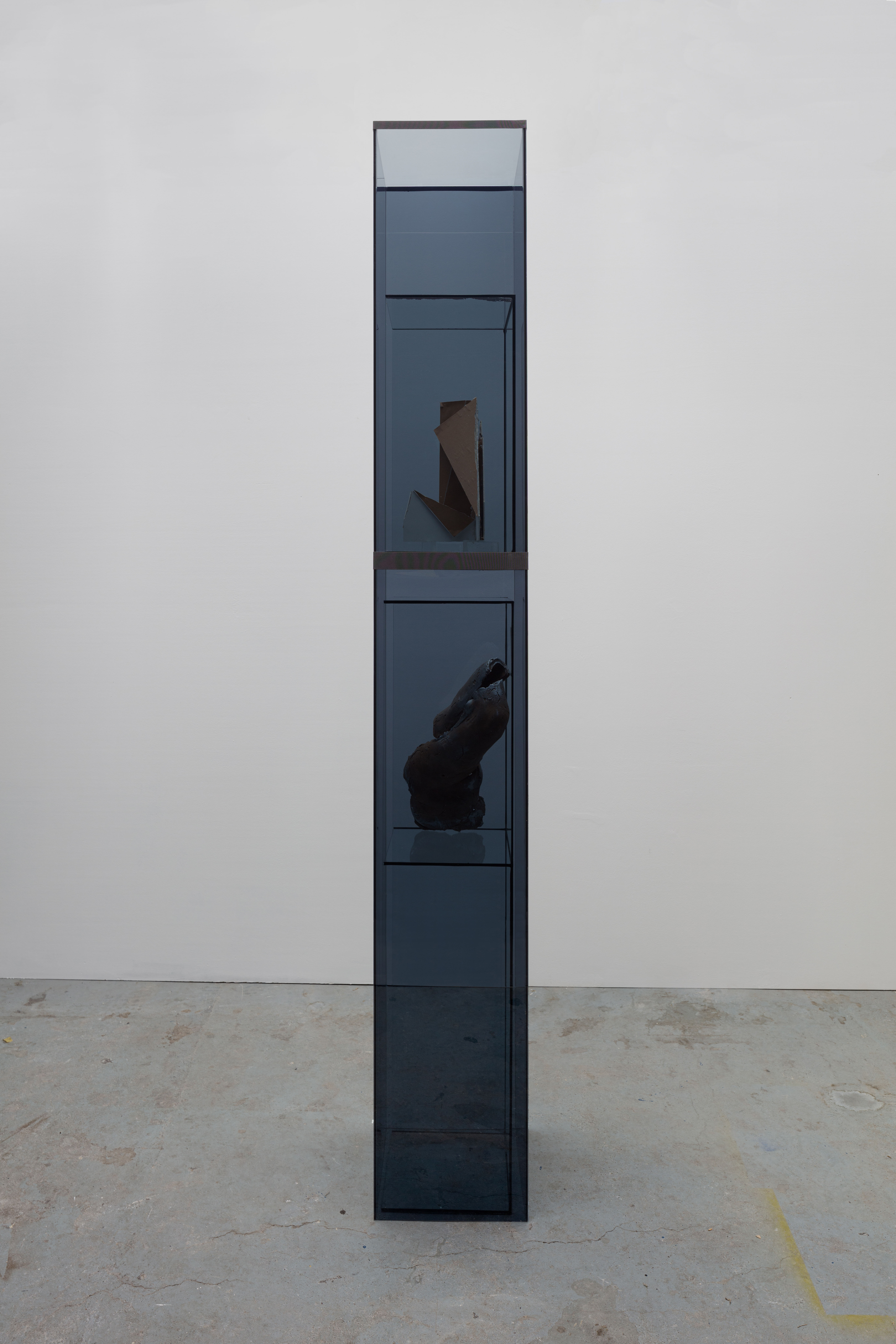
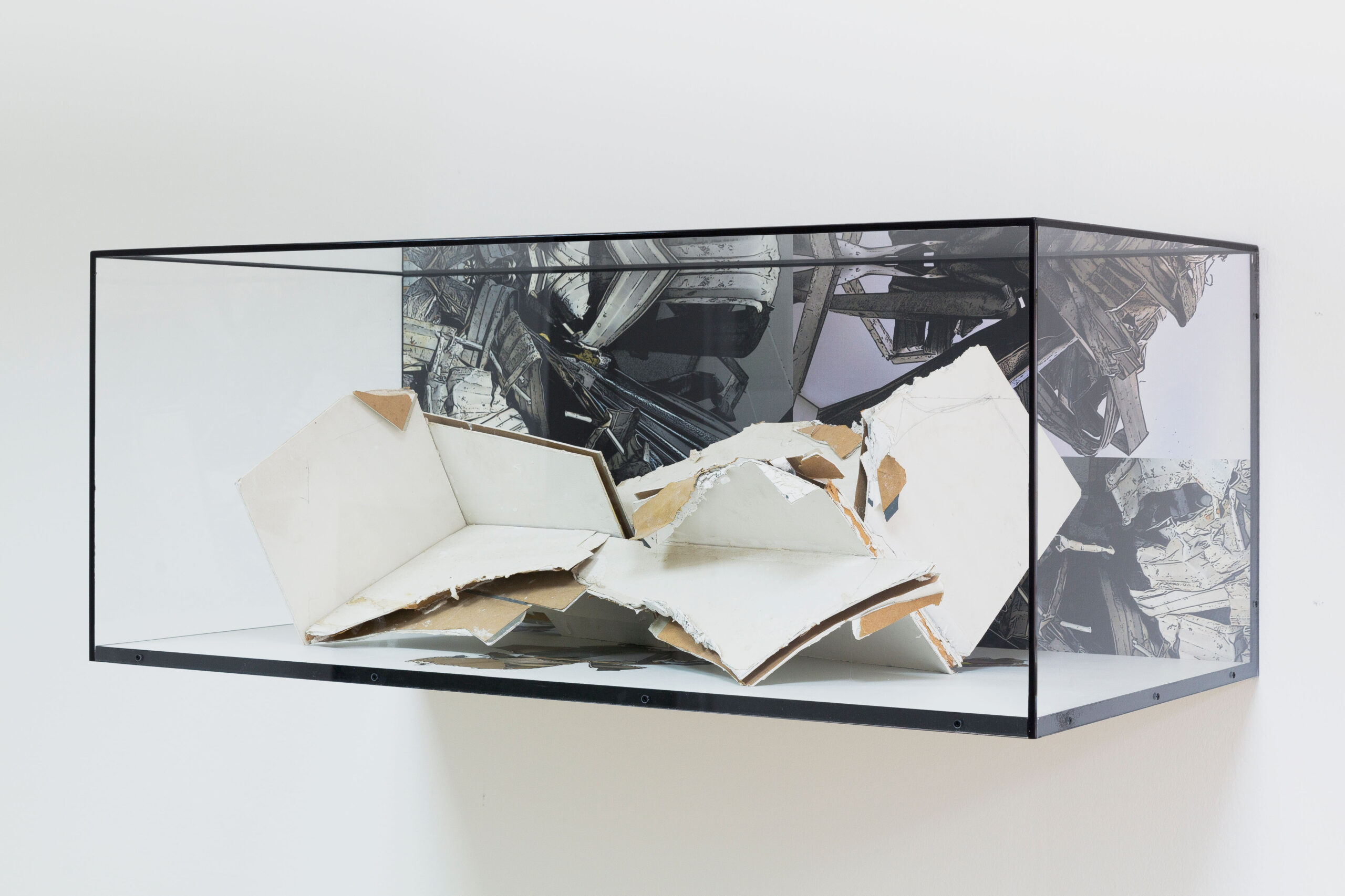
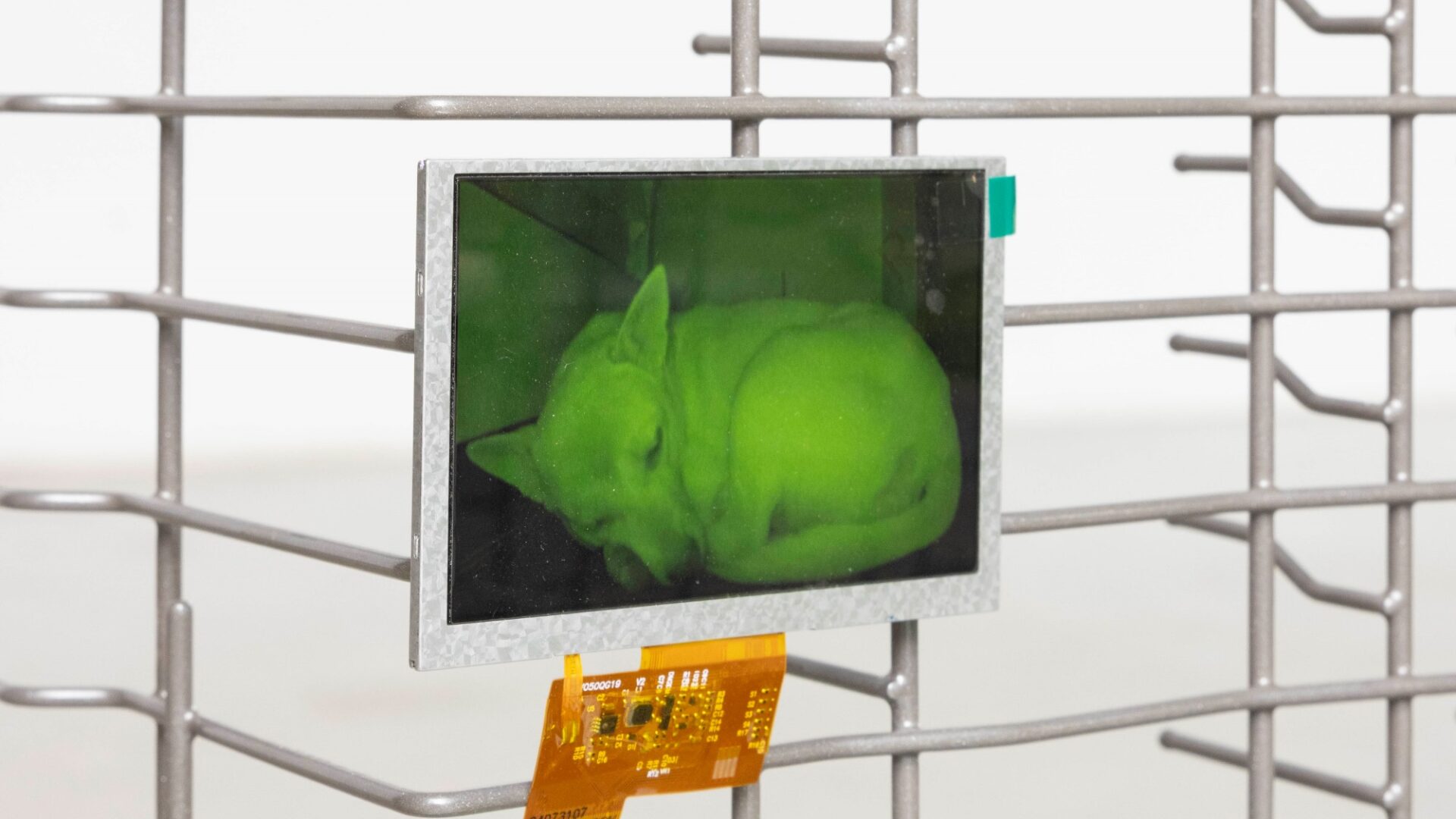
I was driven by the desire to bring as many different elements and experimental samples as possible into dialogue within the smallest possible space. An Accumulation is an assemblage of forms produced through various sculptural techniques. Models, material samples, color tests, photographs, and sculptural fragments are brought together within a spatial system of relationships: the Accumulator.
This creates new forms of proximity, or what I would call “neighborhoods.” For example, an amorphous cast might encounter a model made of plasterboard, with the two sometimes existing at entirely different scales through a shift in dimension. Elements that had never previously shared a direct spatial relationship suddenly encounter one another inside glass enclosures, where they collectively form a space.
Within the Accumulator, all the forms that have emerged in my studio become tools in a self-referential system that examines and questions the practice of sculpture itself. Complex windows of perception emerge, shaped in part by the transparent enclosures that contain the elements. In this sense, an Accumulation is almost the opposite of a singular, freestanding monument.
I am currently beginning to “disrupt” the surfaces of these clear, clean, transparent enclosures by introducing cracks or applying color to them. As a result, the viewer’s gaze is no longer simply directed through the display case. Instead, it becomes apparent that the enclosures themselves are integral components of the sculpture. By altering them, I influence and modify the way the interior is perceived.
You’ve described your process as highly responsive to space, often deciding colors and compositions on-site. But what about works that aren’t site-specific, like your photo collages or smaller sculptures? Do you approach them differently, or do they still carry the same spirit of improvisation?
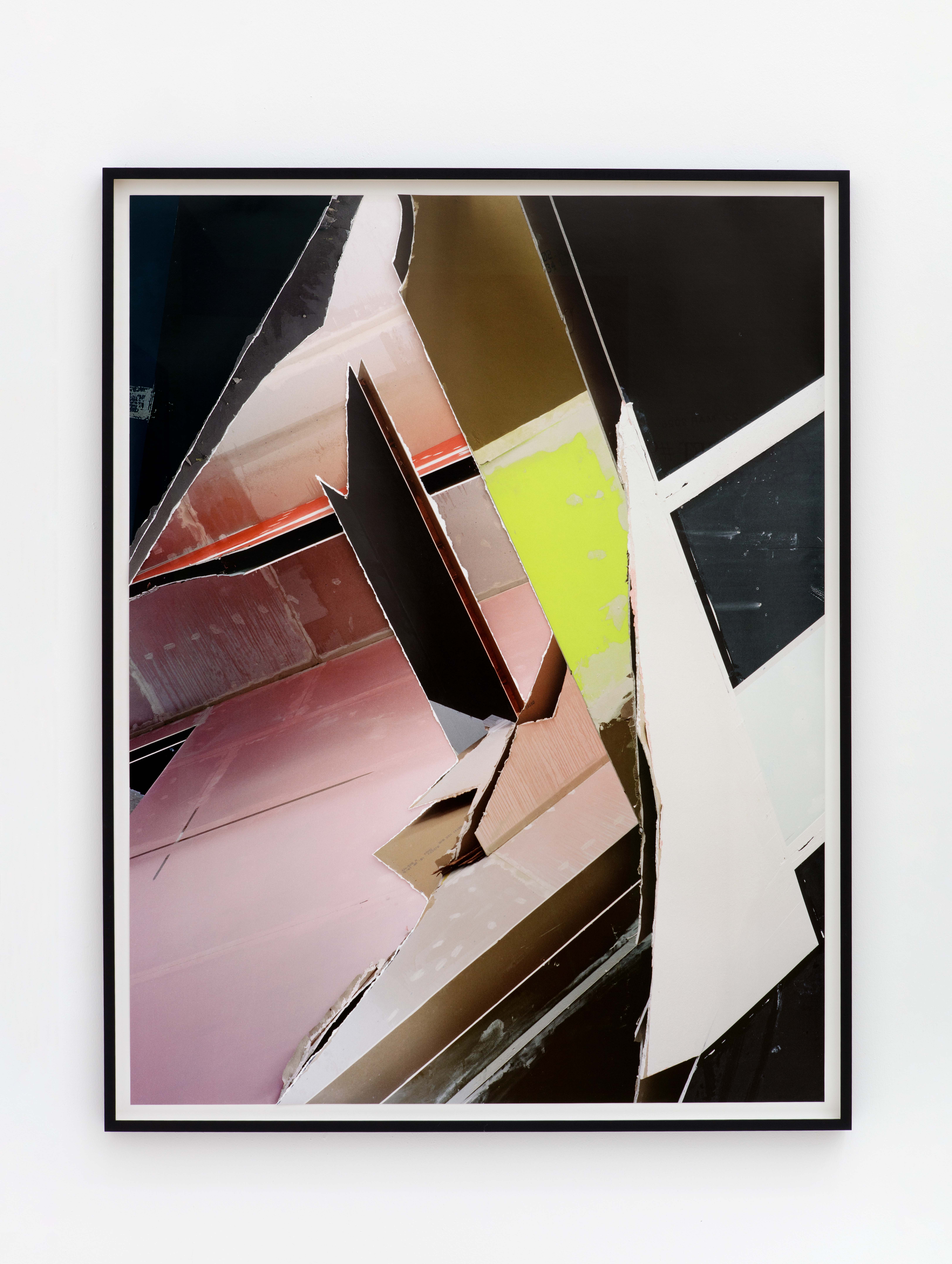
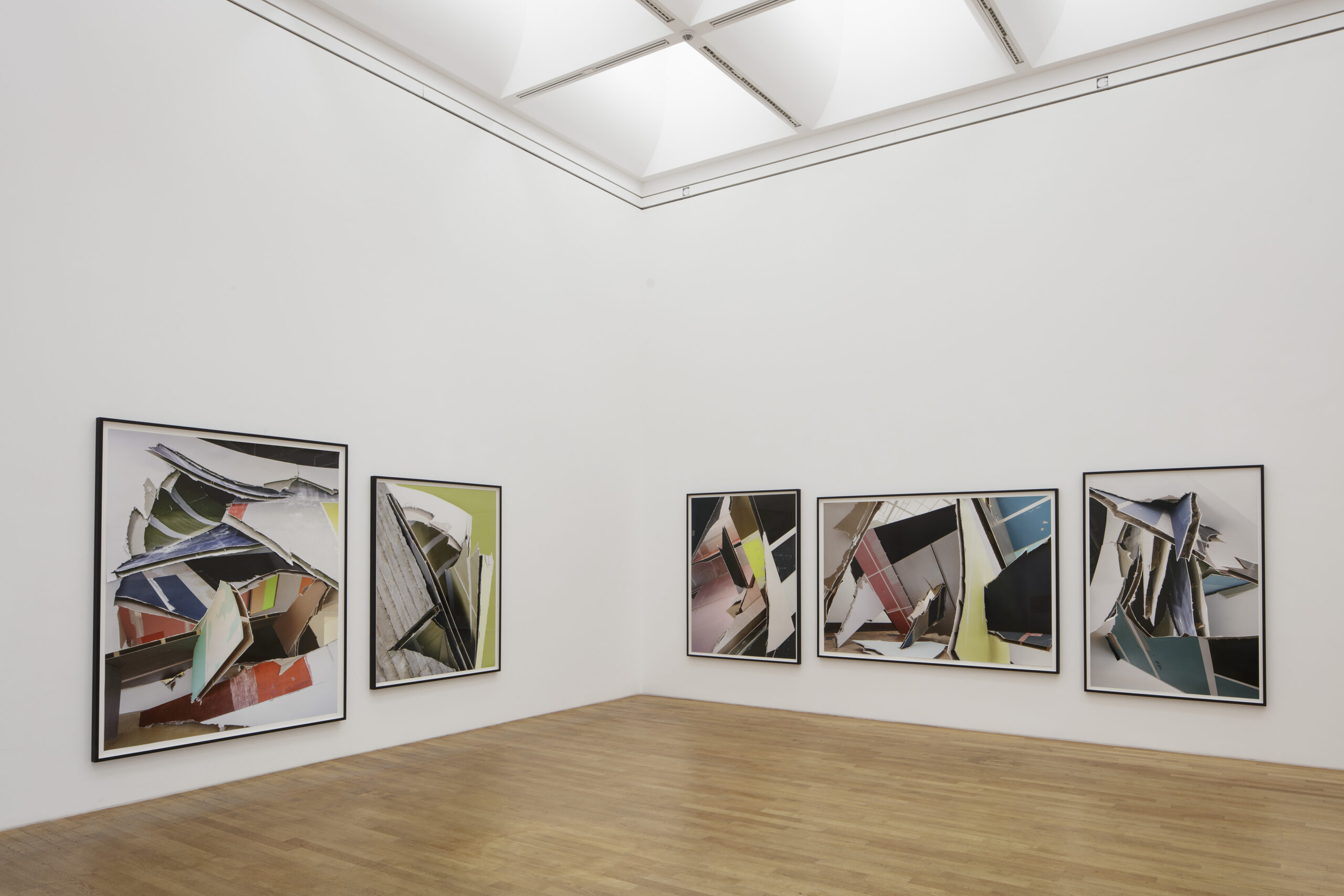
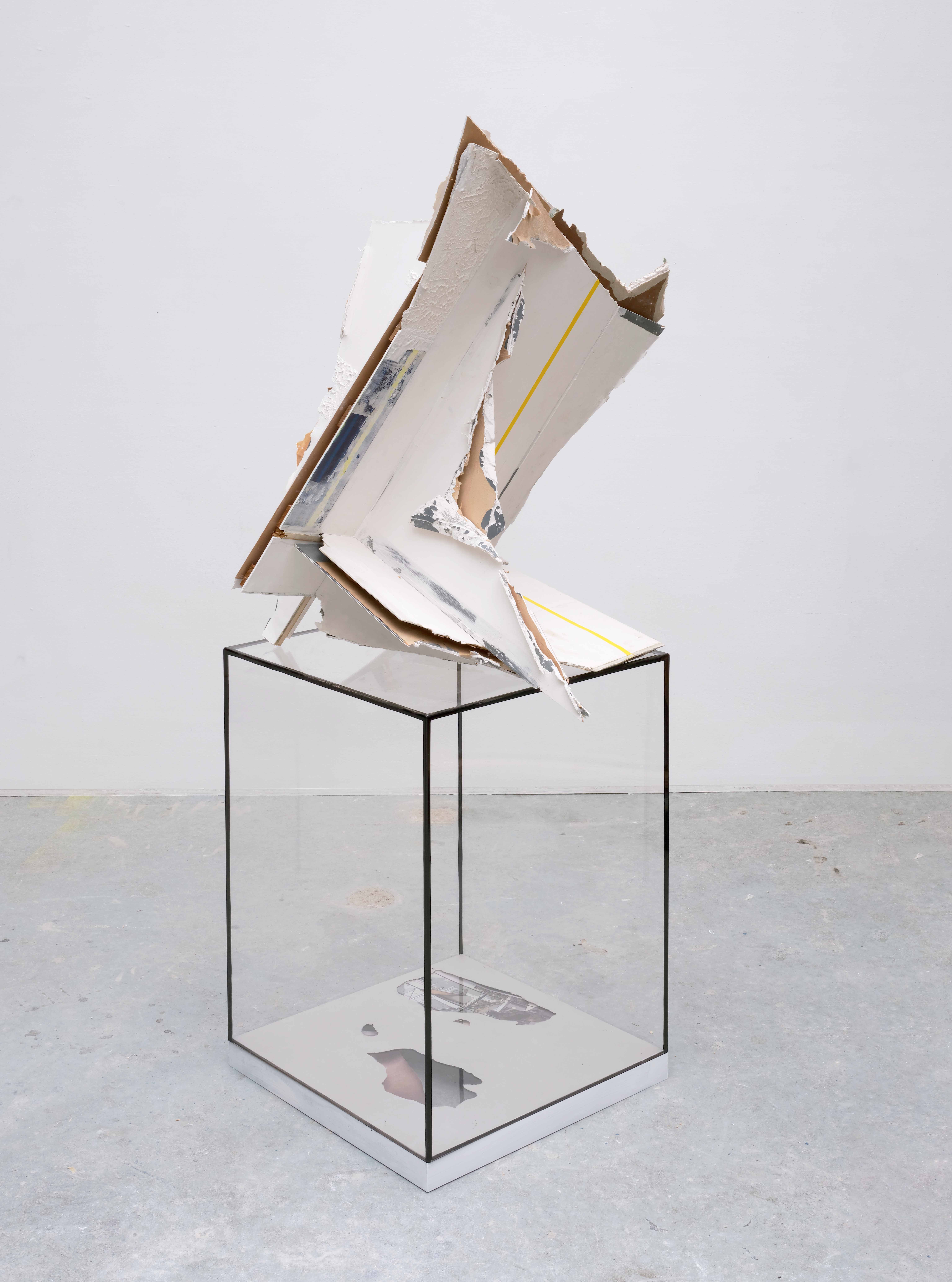
The colors of my photo collages, which I call Multilayer, are largely determined by the prints themselves and therefore share the color spectrum of the Spatial Intersections. The same applies to the smaller works made from plasterboard, since they are produced using materials recovered from dismantled installations.
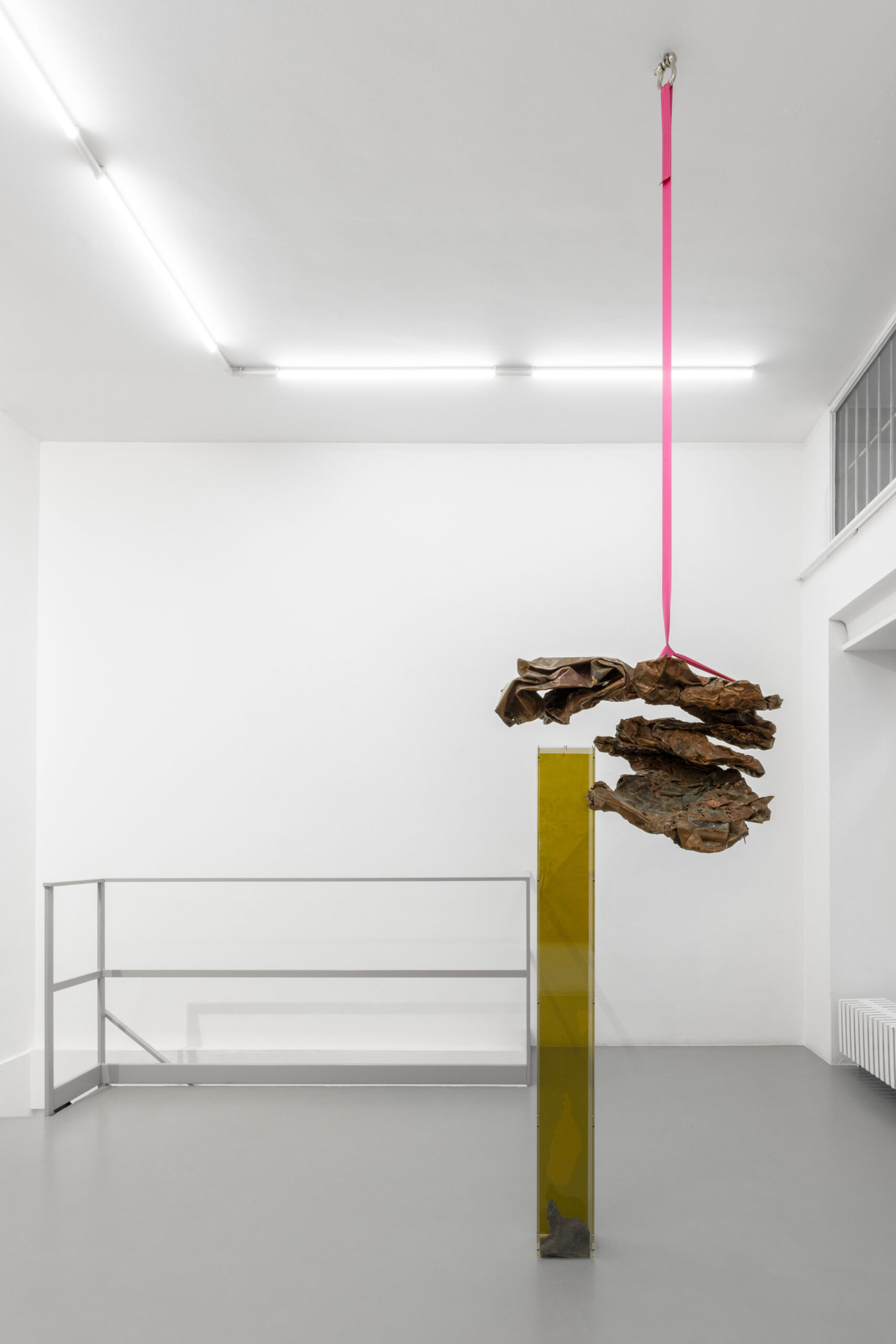
Other works retain the original colors of their materials, such as earth, aluminum, or copper. In other cases, I incorporate found objects whose existing patina and coloration become integral parts of the smaller sculptures.
Some of your works incorporate body-like forms while remaining abstract and fragmented. Are these sculptures an extension of your spatial practice, or do they explore something entirely different, perhaps the body as architecture itself?
When I use elements derived from casts of the human body, I subject them to the same principles that govern my use of the building materials from which the Spatial Intersections are created. Penetrating and breaking through walls is a central aspect of my practice, and the same approach applies to my engagement with other sculptural forms.
I do not see sculpture as a closed, self-contained body, but rather as a transitional state: an enclosing shell that can be opened, shifted, or perforated. Whether a form is large or small, whether it appears bodily or architectural, opening its shell creates a destabilization of the relationship between inside and outside. Everything is disrupted, opened, fragmented, and reassembled, with chance also playing a decisive role.
Through incisions, openings, and overlapping elements, the interior emerges outward while the exterior penetrates the form. The enclosing shell is reconsidered as a membrane. A form is perceived through its contour; when that contour, or the shell that defines it, is opened, new formal relationships emerge. Inside and outside become intertwined, and the sculpture becomes relational, establishing new connections with its surroundings, with space, and with the viewer’s perception.
Your projects have a way of shaking up exhibition spaces, breaking walls, and transforming rooms into unstable environments. Has this ever sparked resistance from institutions, or do curators and museums embrace the chaos? And looking ahead, what’s next? Any upcoming projects that will push these ideas even further?
I have just submitted a proposal for an exhibition at Kunstverein Ruhr in Essen. In this project, the lower sections of the institution’s white walls would be torn away so that they no longer touch the floor. Instead, they would be supported by the ceiling and the surrounding walls, creating the impression that they are floating. Despite this transformation, the walls would also continue to function as surfaces on which other artworks can be displayed. Whether this represents a further intensification of my previous work remains to be seen.
It has rarely happened that a work could not be realized because it encountered resistance. Overall, I have always enjoyed very positive collaborations with the institutions I have worked with, which gives me great pleasure. These institutions generally have a good understanding of what they are getting involved in, and they are also interested in achieving results that go beyond conventional expectations.
I am currently preparing larger, spatially expansive works for two private collections. I also have an upcoming solo exhibition at Künstlerverein Malkasten in Düsseldorf.