
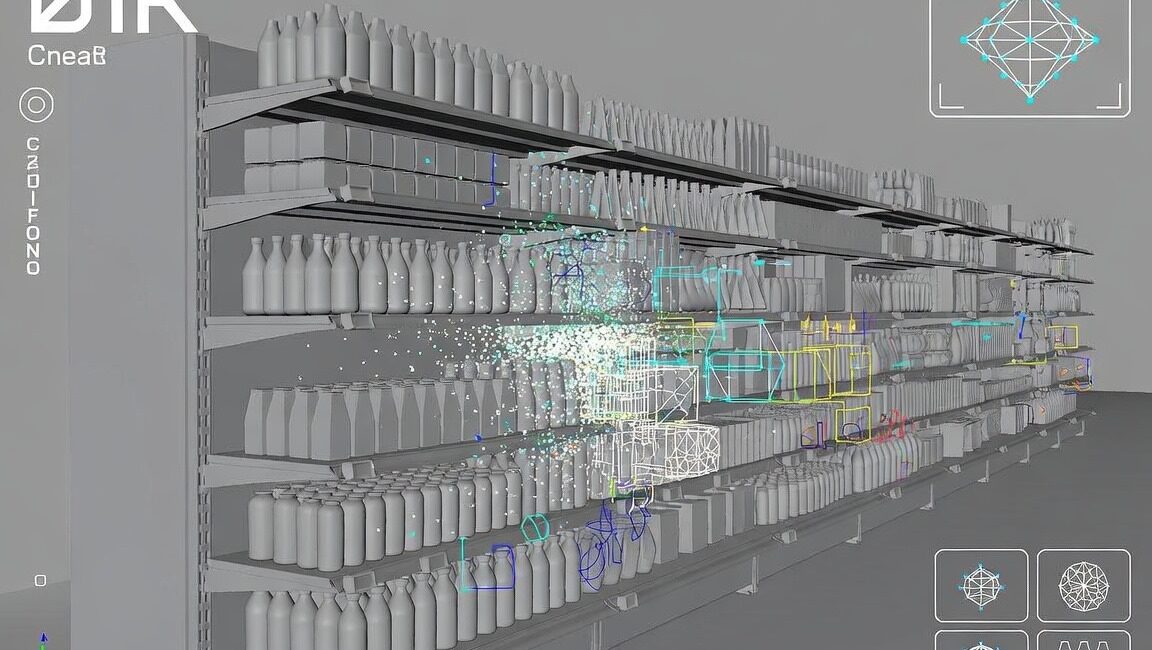
Cactus turns cameras and shelves into analytics. The attention economy is moving beyond the screen.For twenty years, the internet has measured our clicks. Now the physical store is beginning to measure our gaze.
The simplest way to understand this shift is to imagine the store becoming a website, with the customer taking the place of the cursor. Online retailers do not record only the final purchase. They track page views, clicks, scrolling, time spent, navigation paths, abandoned baskets and conversion. Even a purchase that never happens still produces information.
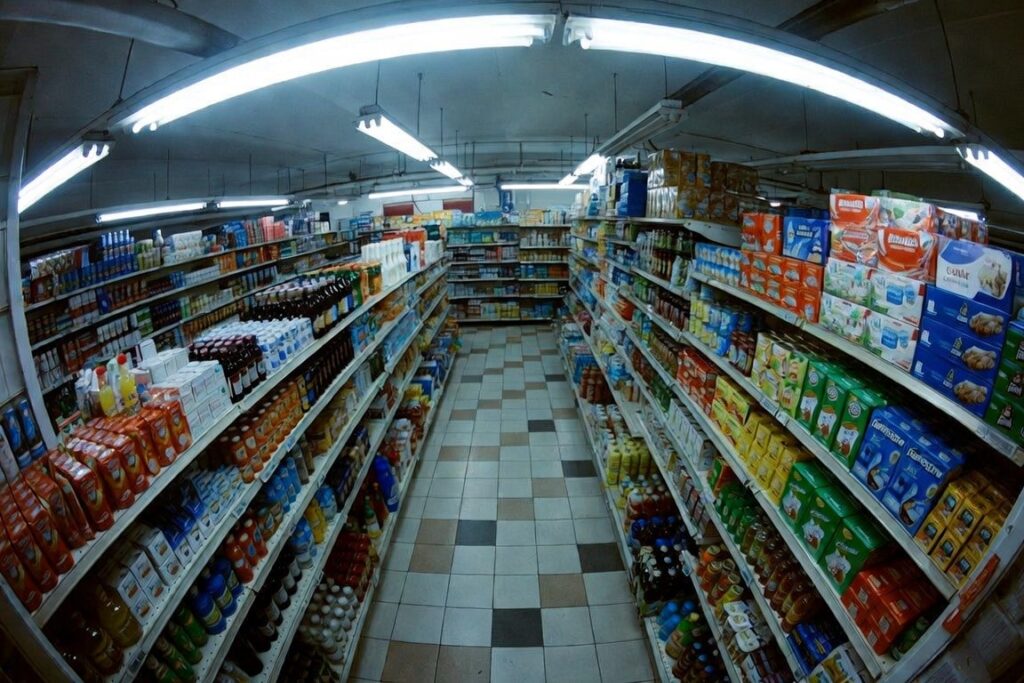
Physical retail has historically worked with a much narrower picture. A supermarket knows what was sold, when it was sold and at what price. A loyalty card may also reveal who bought it. What happens before the purchase, however, has remained far harder to capture. How many people saw a product? How many walked past without noticing it? Who paused, hesitated or returned for a second look? Which neighbouring product absorbed the attention? Which part of a shelf was effectively invisible?
Cactus, a spatial computing platform developed by Auki, is designed to help fill that gap. Its significance lies not simply in the arrival of another form of AI-assisted video analysis, but in the possibility of giving physical retail a measurement system closer to the one that already governs the web. It does not merely make purchases measurable. It begins to make the entire sequence leading up to a purchase measurable as well.
FROM CLICKS TO GLANCES
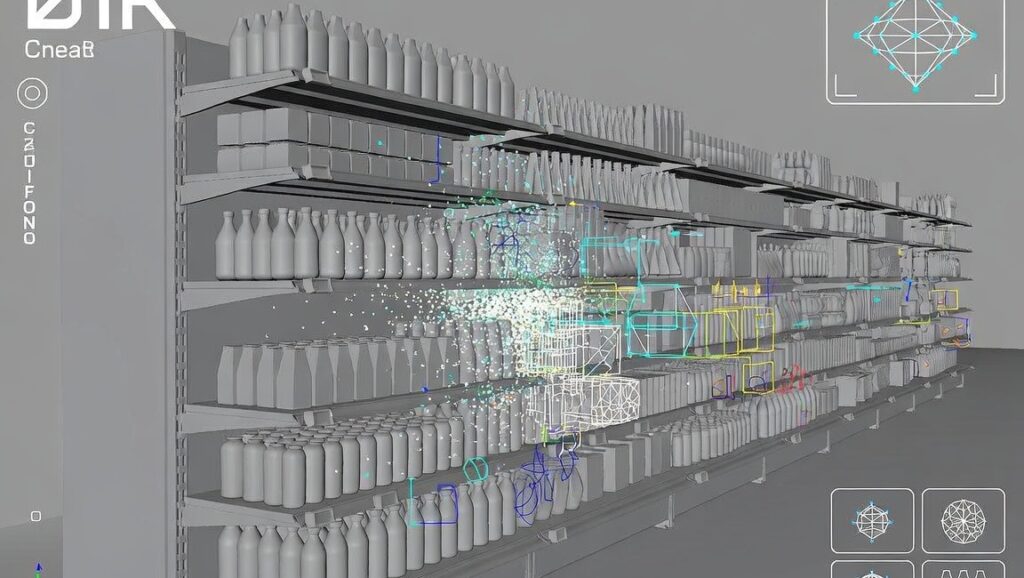
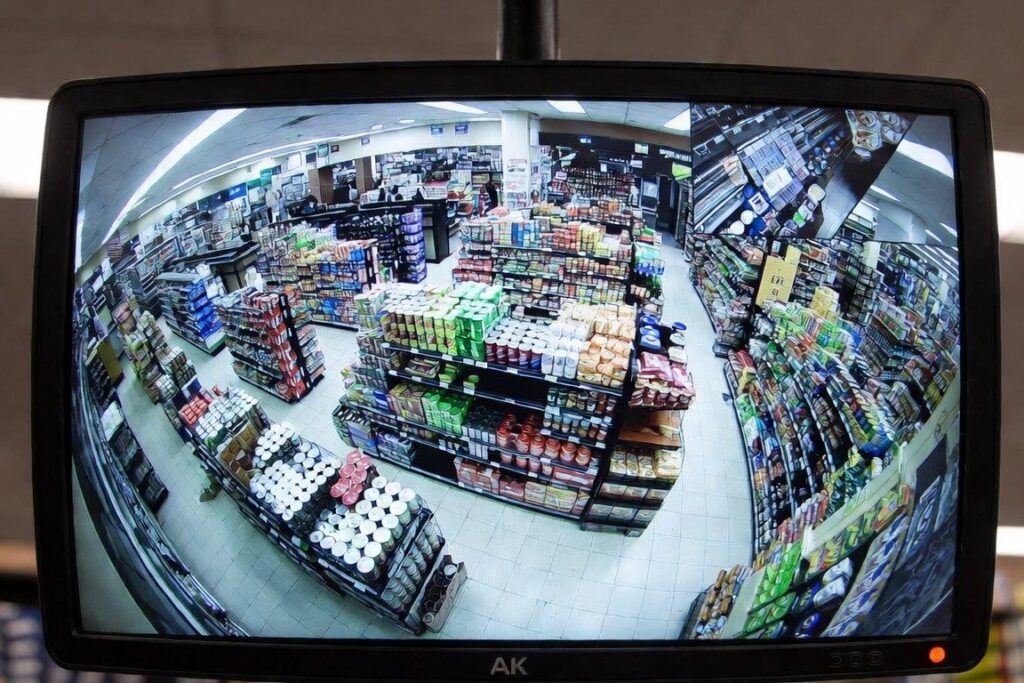
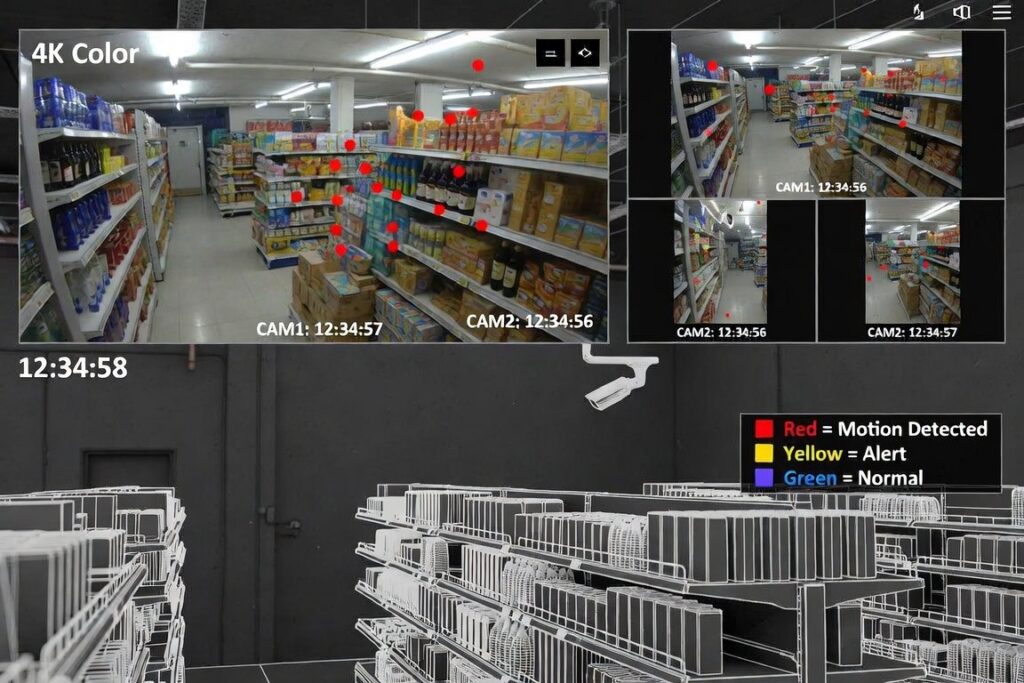
The attention-tracking technology demonstrated by Auki on 18 September 2026 is more sophisticated than the shorthand description suggests, but it must also be described accurately. Cactus is not an eye tracker, and it does not identify the precise point at which a shopper’s pupil is directed. In Auki’s demonstration, ordinary security cameras were connected to a three-dimensional digital twin of a store. The system detected a person’s location, estimated the orientation of their head and projected that direction into the 3D map. From there, it could infer which section of a shelf was receiving attention.
The pipeline described by Auki combines YOLO26 for pose estimation, 6DRepNet to calculate head yaw and pitch, DINOv2 to determine whether different cameras are seeing the same person, and OpenCV and PyTorch for image processing. Auki’s spatial system then places all of those observations within the same three-dimensional environment. The cameras themselves are mapped into the space through a calibration process.
What makes this more consequential than a conventional video feed is that Cactus can also contain a map of the products. The system does not merely register that someone looked to the right. It can relate that direction to a shelf, an area and, potentially, a specific stock-keeping unit. These observations can then be aggregated into heat maps covering an hour, a day or a month and compared with sales. Auki explicitly presents that comparison as one of the system’s possible uses.
Cactus is conceived more broadly as a kind of spatial operating system for retail: a shared representation of the physical environment that combines data from phones, cameras, glasses and robots. The attention-tracking layer is a recent demonstration rather than a capability that should be presented as already operating across thousands of supermarkets. Yet the direction is clear. The physical store is acquiring an analytical capacity that until now has belonged primarily to digital platforms.
The crucial distinction is not between being watched and remaining invisible. It is between being identified and being measured.
A system does not need to know a shopper’s name in order to register that a person entered at 4:03 p.m., followed a particular route, stopped in front of shelf X, turned towards product Y for several seconds and then moved towards zone Z. In Auki’s demonstration, DINOv2 was also used to assess whether footage from separate cameras showed the same person. That can create behavioural continuity across multiple views without necessarily establishing the person’s civil identity.
Anonymity, in other words, does not mean an absence of measurement. A body can be translated into position, posture, head orientation and dwell time. The system may not know who you are, yet still turn what you do into economically useful information.
THE ANALYTICAL FUNNEL OF THE PHYSICAL STORE
The emerging retail funnel might be written like this:
ENTER -> PASS -> SEE -> LOOK -> STOP -> INTERACT -> BUY
Until recently, retailers could measure the beginning and the end with reasonable confidence:
ENTER -> ? -> ? -> ? -> BUY
Computer vision attempts to fill in the question marks.
Movement heat maps are not new. Retailers have long studied footfall, dwell time and the routes customers take through a store. The next layer combines maps of attention, precise product locations and sales. Once those sources are connected, the retailer can distinguish between products that sell because they attract attention and products that attract attention but fail to convert it.
Product A may receive many glances and few purchases. Product B may sell well despite occupying an area that receives relatively little visual attention. Product C may be almost invisible. A change in packaging may increase dwell time. Moving a category by thirty centimetres may make it more likely to be noticed. A promotion may alter the flow through an aisle.
At that point, the store becomes a feedback system:
OBSERVE -> MEASURE -> MODIFY -> MEASURE AGAIN -> OPTIMISE
This is the logic of digital A/B testing transferred into physical architecture. The store is no longer a space that is designed once and then simply used. It becomes an interface that can be tested and continuously adjusted.
The implications are economic as much as technological. Retail space has always carried different values. A metre of shelving at eye level is worth more than one close to the floor; an endcap is worth more than a dead corner. Historically, those differences were inferred from sales data, professional experience and small-scale research. A system capable of measuring attention introduces another variable: how many seconds of attention does a given piece of space generate?
The familiar calculation of sales per square metre could therefore be accompanied by attention per square metre, followed by a conversion chain connecting attention to purchase and revenue. The attention economy, long associated with phones, feeds and screens, begins to enter the shelf itself.
This is precisely why the phrase “the camera knows what you are looking at” is both effective and misleading. Cactus does not literally read the eye. It estimates the probable direction of attention from bodily signals and maps that estimate onto the commercial environment. The difference matters technically, but it does not diminish the larger shift. Retailers do not need perfect access to an individual’s inner state. At scale, even probabilistic observations can reveal patterns that are commercially actionable.
Marketing has pursued this kind of knowledge for decades. Eye-tracking studies have long been used to examine shelves, signage and packaging, while retail research has repeatedly shown that layout, lighting and visual communication influence patterns of attention. What changes here is the prospect of collecting an approximation of that information passively, continuously and at scale, using infrastructure similar to conventional CCTV.
The non-purchase becomes a data point. A shopper can enter, look at twenty products and leave empty-handed, yet no longer disappear from the database. The absence of a transaction can still contain a sequence of measurable events.
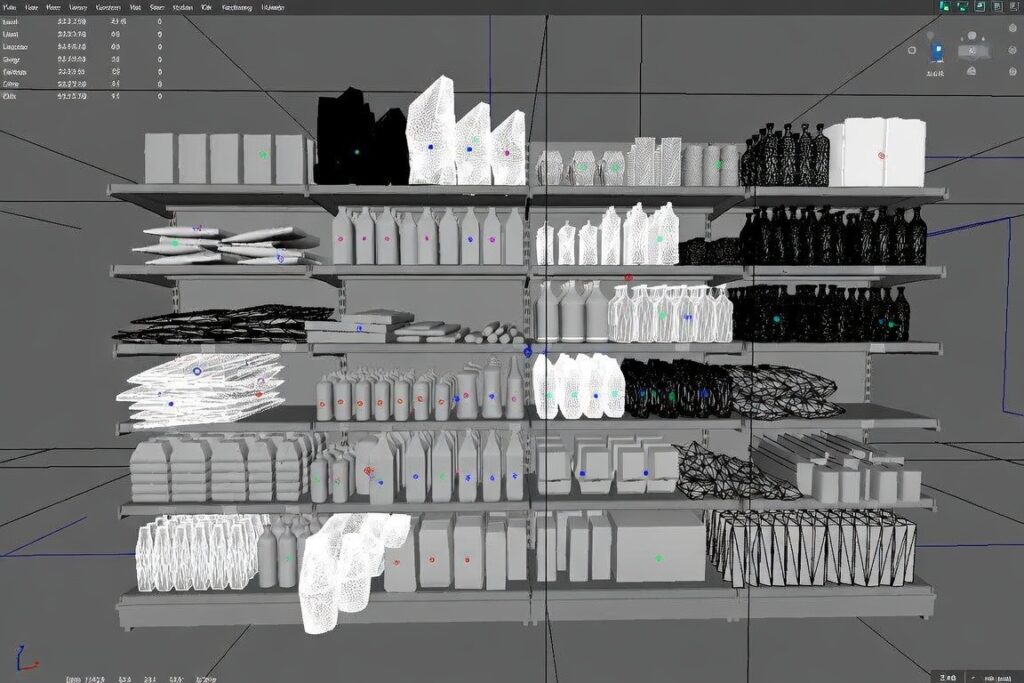
WHEN ATTENTION BECOMES A SPATIAL COMMODITY
The next stage of consumer capitalism does not necessarily depend on knowing exactly who we are. It depends on making what we do in space measurable.
This shift complicates the familiar debate about AI surveillance. The issue is not limited to whether a camera identifies a face or whether a retailer stores personally identifiable information. It also concerns the ability to turn ordinary movements into collective behavioural knowledge. Walking, pausing, turning one’s head or ignoring a display can become signals in a system designed to understand commercial performance.
That knowledge has value because it can be connected to the environment in which it was produced. An online platform knows which button appeared beside which image when a user clicked. A spatial platform seeks an equivalent relationship in the store: which product occupied which position when a customer stopped, looked or moved on.
The result is not merely a richer description of consumer behaviour. It is the creation of a new kind of commercial asset. Attention becomes spatially locatable, comparable over time and convertible into decisions about shelving, staffing, signage and assortment. The value of a location can be recalculated not only according to what it sells, but also according to the attention it captures and its ability to turn that attention into revenue.
This creates a recursive relationship between the shopper and the store. Customers generate data through the way they move. The data are used to modify the environment. The modified environment shapes the behaviour of the next customers, whose actions generate new data and further modifications.
Behaviour trains the architecture that will influence subsequent behaviour.
The significance of this loop extends beyond advertising. An advertisement tries to persuade. An adaptive environment can alter the conditions in which a choice is made. It need not explicitly tell the customer what to buy. It can make one option more visible, another less convenient, a promotion more salient or a particular route more likely. Its influence may be strongest when it remains embedded in the apparent normality of the space.
Supermarkets have always practised this form of choice architecture. Products do not appear in neutral locations. Someone decides what sits at eye level, beside the till, at the end of an aisle or next to a competing item. The novelty is not that the environment affects decisions. It is that the environment may continuously learn which arrangements produce which behaviours and incorporate that learning into its next configuration.
The boundary between online and offline measurement then begins to collapse. The physical world, once relatively opaque, becomes increasingly searchable, analysable and optimisable. A person could once browse a window, enter a shop, pick up a package, return it to the shelf, wander for ten minutes and leave, with most of that experience vanishing unrecorded. That informational blank space is now becoming technically available for capture.
FROM MEASUREMENT TO INTERVENTION: THE STORE AS A CYBERNETIC SYSTEM
So far, this describes a system that collects information. But stopping at collection would miss the most radical part of the project. Auki’s stated ambition for Cactus in 2026 is to move beyond passive observation and turn the software into an agent capable of proposing experiments to retailers: move a product, alter a shelf, observe the result and use it to formulate the next intervention.
The company’s laboratories are already developing artificial shoppers that simulate purchasing behaviour, along with models that attempt to reconstruct different consumer types from historical sales data. One of the questions Auki uses to explain the project is almost banal in its simplicity: would the store sell more milk if milk were given more shelf space? The difference is that the answer would no longer come only from the experience of a commercial manager. It could first be simulated, then tested in a real store and finally measured.
At this point, the store no longer resembles only a monitored environment. It begins to resemble a cybernetic system. In its original sense, cybernetics is concerned with systems that regulate their behaviour through feedback: a sensor records the state of the world, a system compares that state with an objective, an action is produced and the consequences are measured again.
Applied to retail, the structure is remarkably clear. Cameras, phones and robots act as sensors. The digital twin organises what they observe. Sales, inventory and behavioural data supply signals. Artificial intelligence interprets the condition of the store. People or machines carry out changes, after which the system observes the consequences. Auki now describes Cactus as a “copilot for your entire operational loop”: it captures what is happening, analyses the data, identifies a possible action and helps staff or robots carry it out.
Elements of this loop already exist. In June 2026, Auki demonstrated tools that allow a manager to compare the real arrangement of products with the intended layout, design a new planogram and automatically generate the tasks required for staff to implement it. In August, the company showed another operational loop: Cactus autonomously dispatched a robot to investigate a suspected product anomaly. The robot travelled to the shelf, inspected it with a camera and allowed the system to conclude that the location required restocking.
This is not yet a supermarket that rebuilds its aisles autonomously in response to customer attention. But the components of that chain are converging: perception, analysis, decision, task creation and physical action.
The distinction matters because a system that observes behaviour and a system that modifies the environment in order to influence future behaviour belong to conceptually different categories. In the first case, the store wants to understand the customer. In the second, it uses what it has learned to reconstruct the conditions in which the next customer will decide.
Research into retail-space optimisation predates Cactus by decades. Operations research has modelled shelf arrangements according to shoppers’ fields of view, showing that changing the orientation of racks can significantly increase product exposure. Other models account for predicted shopper routes, since moving a department changes what becomes visible along the way. A 2022 review of artificial intelligence in store-layout design observed that computer vision and CCTV could make it possible to move from analysing customer paths to automatically proposing more efficient configurations.
What technologies such as Cactus may change is the speed of the cycle. Traditionally, a retailer redesigns a store, waits, collects sales data, compares periods and assesses the result. The process is relatively slow, expensive and filled with variables that are difficult to control. A continuously updated digital twin, combined with behavioural measurements and tools for rapidly changing planograms, points towards something closer to A/B testing in the physical world.
A shelf takes configuration A. The system observes it. The shelf is changed to configuration B. The system compares the results. A third configuration is proposed on the basis of what happened. The store is no longer simply designed and then used; it is continuously subjected to experiments. Auki explicitly says it wants Cactus to suggest rigorous experiments to store managers and is using its own laboratory shop to run recurring tests involving heat maps, sales and potential improvements.
On the web, this fluidity has become unremarkable. A digital page is not a stable object. Two visitors may appear to access the same site while seeing products in a different order, different recommendations, alternative images or interfaces undergoing live tests. The digital environment is malleable because the cost of changing it is negligible.
The store has historically resisted this degree of variation. Shelves, signs, labels and routes are material objects. Yet that rigidity is diminishing. Recent research on smart retail describes technologies that can sense the customer, connect data sources and produce personalised interactions in physical space. Digital signage and content-management systems can already vary messages according to context or observed data. The materiality of the store does not disappear; it becomes increasingly programmable.
Even something as ordinary as a price label is changing character. In March 2026, Walmart said it had installed digital shelf labels in approximately 2,300 US stores, with the aim of extending them across its network. The company explicitly stated that it was not using those labels for personalised or dynamic pricing, and that changes remained centrally approved and identical for all customers within the same store.
That clarification matters because it distinguishes technical capacity from actual use. An electronic display does not automatically imply surveillance pricing, just as a camera capable of estimating posture does not necessarily imply individual profiling. But the infrastructure sharply reduces the cost of modifying the environment. The lower that cost becomes, the more frequently experiments can be run.
There is also a second layer, subtler than price: content. Screens inside stores can rapidly change advertisements, information and promotions. Academic experiments with digital signage have shown that location, message relevance and context affect how shoppers process communications. Other studies have tested systems that adapt messages to detected characteristics of the viewer. One experiment in so-called emotional targeting even recorded increases in purchase intention and willingness to pay when advertising was tailored to a subject’s attributed emotional state. The effect weakened when people became aware of the mechanism and perceived a manipulative intent.
This is not a current feature of Cactus. It does, however, illuminate the broader technological direction: perception and modification do not necessarily need to take place weeks apart. They could, in principle, form part of the same moment.
Choice architecture consequently takes on a new form. A supermarket has always structured decisions through its layout. No product appears in a neutral space. The novelty is not influence itself, but the possibility of learning continuously which configurations produce particular behaviours and feeding that knowledge back into the next version of the environment. A layout need no longer be designed only by someone who believes they know how customers behave. It can increasingly be designed by a system that has observed them.
This transformation need not produce a science-fiction supermarket that changes shape while people walk through it. It is more likely to arrive through ordinary adjustments: small product movements, different allocations of shelf space, new priorities for staff, changes to digital messaging, revised assortments and routes corrected in response to observed flows. Each decision, taken separately, already belongs to normal commercial management. What changes is who proposes it and how much past behaviour can be used to formulate it.
Auki is also working on simulating these decisions before they are implemented. Its AI shopping agents are intended to test hypothetical scenarios inside a digital twin. In that model, the twin would no longer represent only the present store. It would become a laboratory for producing possible versions of the future store, allowing synthetic consumers to move through them before selected changes are transferred into reality. This marks a substantial conceptual shift: from recording the present to simulating future behaviour.
It also introduces a methodological problem that will become increasingly difficult to ignore. If artificial shoppers are constructed from past sales and behavioural data, the system will define success according to the objective it has been instructed to maximise. Revenue? Conversion? Dwell time? Product availability? Customer satisfaction? Speed of visit?
There is no such thing as an optimised store in the abstract. There is only a store optimised for something.
A layout that maximises commercial exposure may be worse for someone who wants to finish shopping quickly. A system that increases impulse purchases may be economically efficient while making it harder for customers to stick to a list. An arrangement that maximises time spent in the store may count as a success for the retailer and as an inconvenience for the consumer.
The most important transition, then, is not from the intelligent camera to the digital twin. It is the transition from data to objective. Once the store can observe, experiment and correct itself, someone still has to decide what it means for that store to improve.
When that decision is translated into a function a machine can optimise, we are no longer merely measuring the logic of consumption. We are beginning to program it.
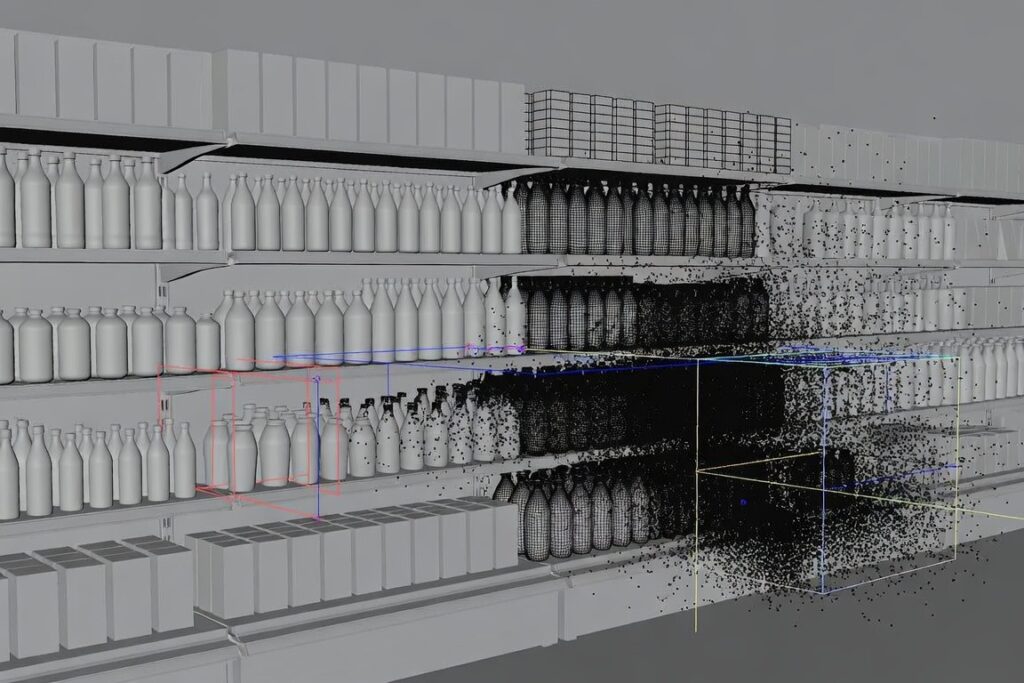
THE BLIND SPOT IS NOT THE CAMERA. IT IS US.
The final question is not whether Cactus is good or bad. It is who governs an environment once that environment can learn.
Privacy remains important, but identification is only one part of the problem. A space can remain ignorant of our names while becoming highly knowledgeable about the behavioural patterns we share: where we slow down, what captures our attention, which arrangements reduce hesitation and which ones increase a purchase. That creates a structural asymmetry. The shopper enters with limited knowledge of the forces shaping the space; the space has already learned from thousands of similar journeys.
The resulting choice is not necessarily false, but neither is it independent of its architecture.
The central principle is simple: whatever can be measured will eventually be optimised, and whatever is optimised will begin to alter the behaviour it once merely observed. The blind spot, then, is not located in the camera’s field of view. It lies in our tendency to treat the surrounding environment as passive, even after it has begun to respond.
The future of consumption may not be personalised in the familiar sense. The store may never need to know exactly who we are. It may be enough for it to know what people like us tend to do, and to change accordingly.
That future is not personal.
It is environmental.