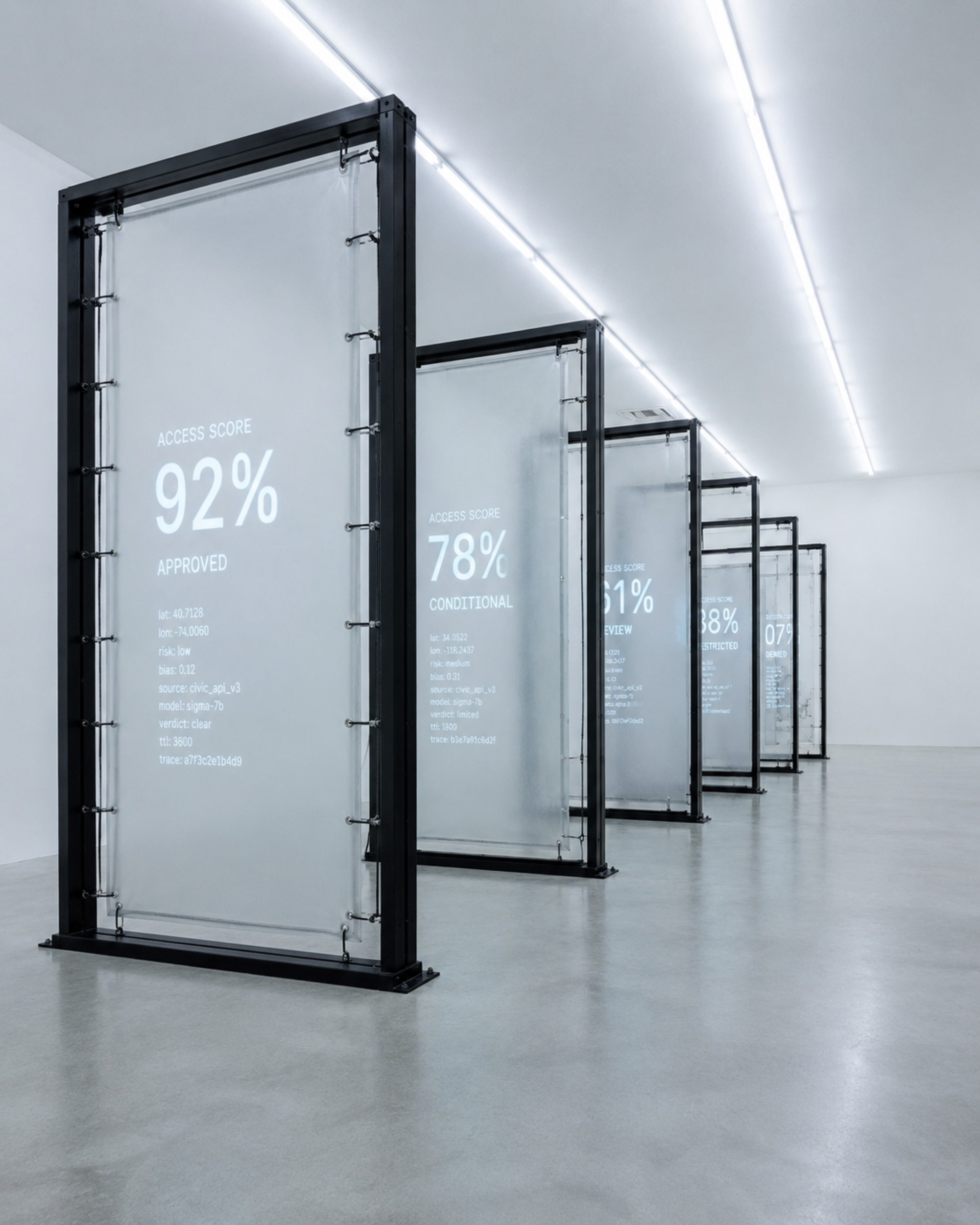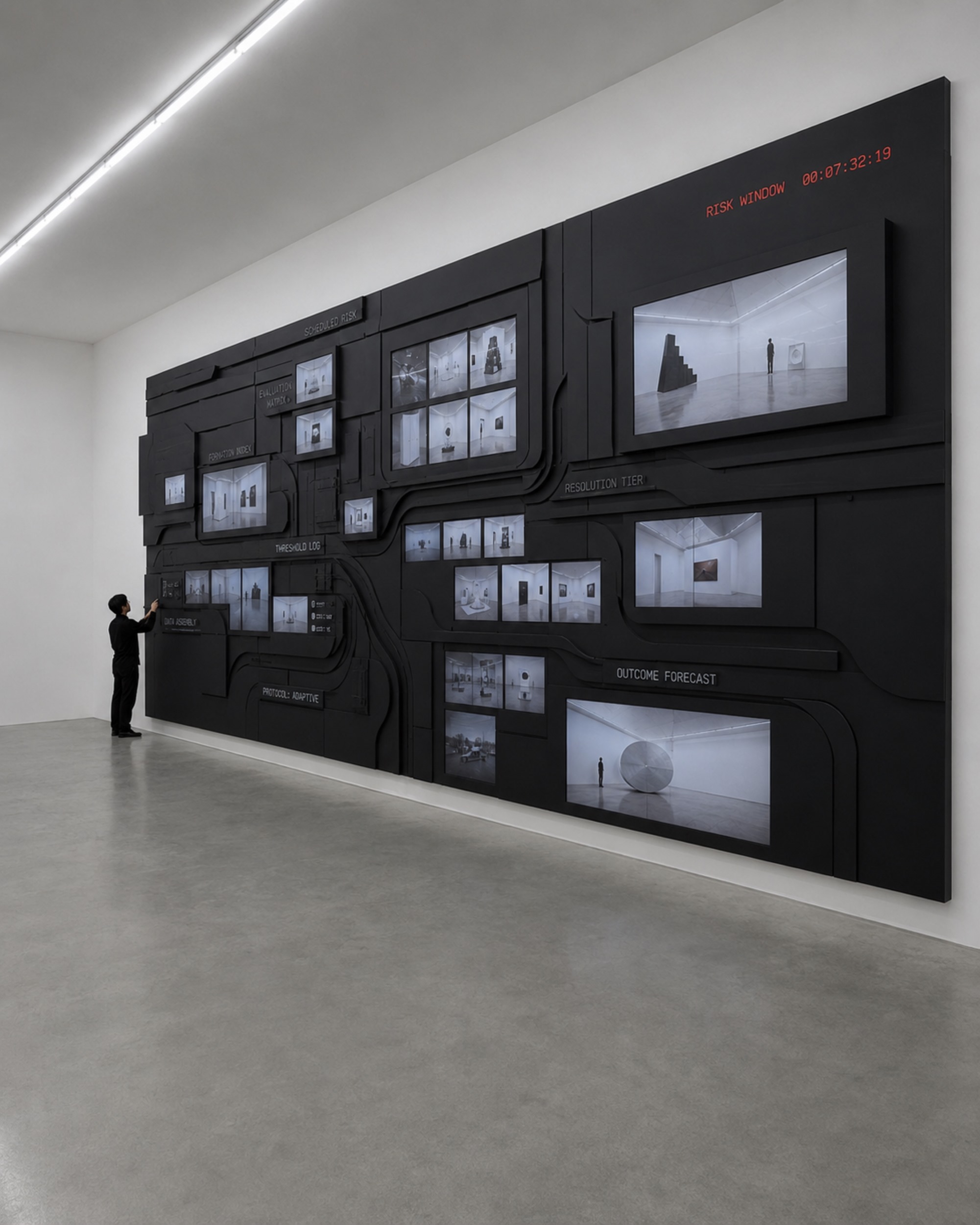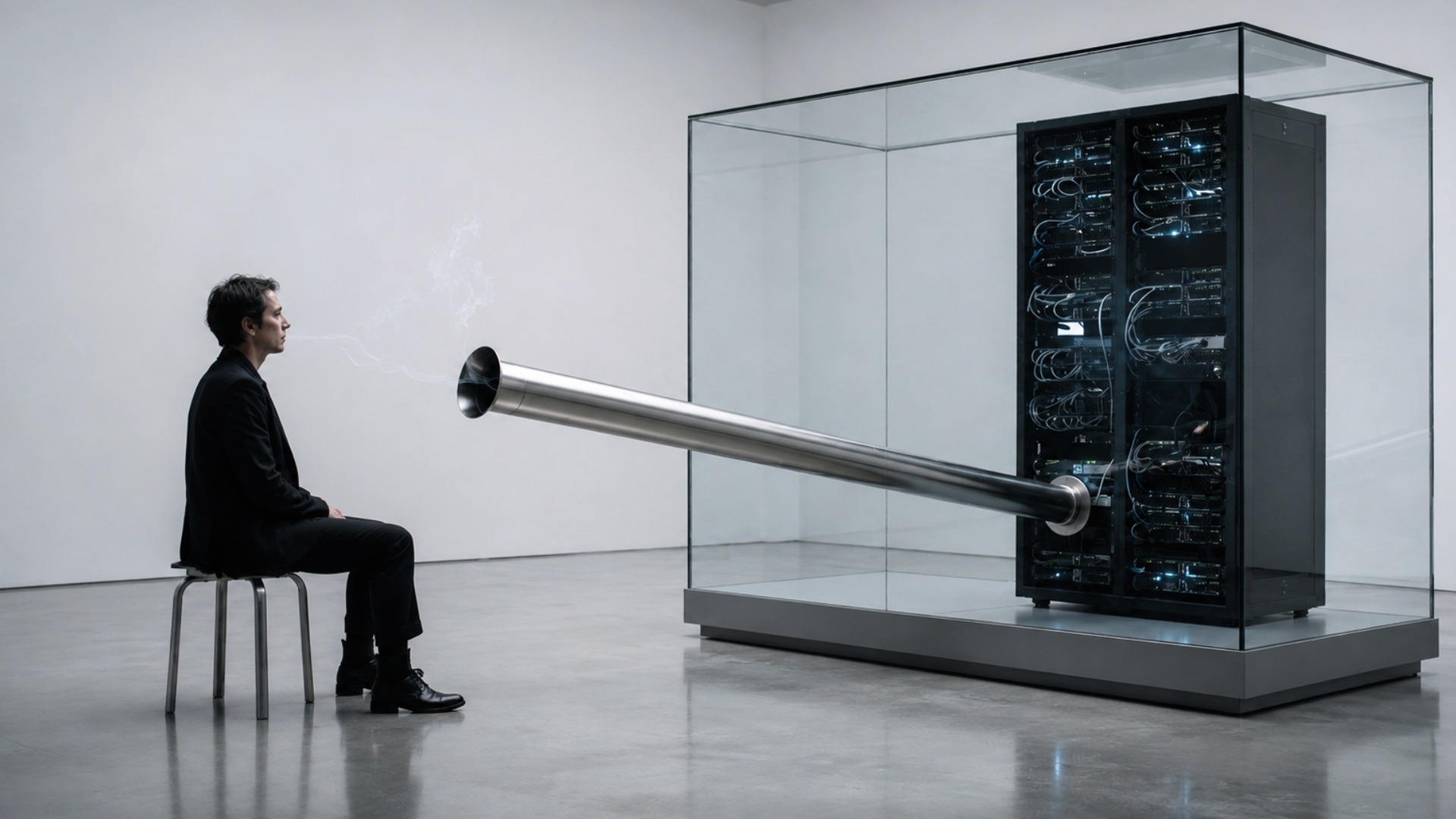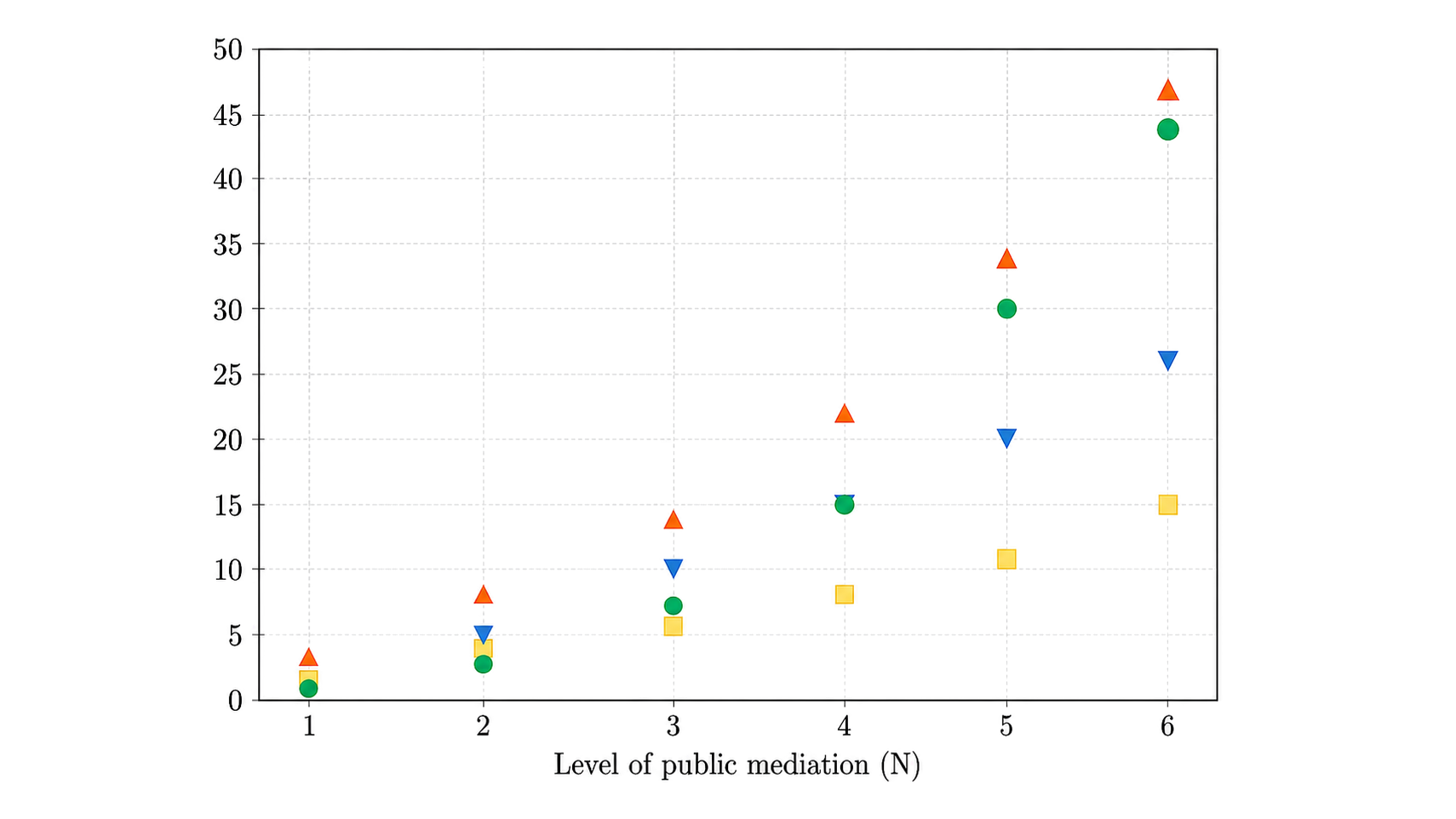

The paper DSpark: Confidence-Scheduled Speculative Decoding with Semi-Autoregressive Generation, authored by researchers from Peking University and DeepSeek-AI, describes a new architecture designed to accelerate text generation in Large Language Models. The technical problem is specific: language models generate text autoregressively, one token after another, which makes inference slow, costly, and directly proportional to the length of the output. DSpark addresses this bottleneck through speculative decoding: a lighter model produces a draft sequence of tokens, while the main model verifies which parts of that draft can be accepted. The paper then introduces two decisive elements: semi-autoregressive generation, capable of preserving internal dependencies between tokens, and confidence-scheduled verification, designed to avoid wasting computational resources on segments with a high probability of rejection.
But this text is not meant to explain DSpark.
We tried, through one of our usual experiments, to rewrite it.
Not as a technical exercise, but as a critical gesture: to take a paper about the efficiency of language models and read it as an involuntary diagnosis of contemporary artistic production. Where DSpark speaks of draft model, target model, accepted prefix, confidence head, and verification budget, we read another infrastructure: artist, institution, artwork, selection, formation, market, curatorship, visibility.
Because the point is no longer simply to ask whether a machine thinks. After The Illusion of Thinking, the question changes. The issue is no longer only the simulation of depth. The issue is the simulation of formation.
The contemporary artist no longer produces only works. They produce possibilities. They produce fragments, images, postures, statements, vocabularies, materials, gestures, theoretical references, political positions. They produce blocks of meaning before knowing which ones will survive. Then the system verifies. An open call accepts. A residency rejects. A curator keeps one fragment. A gallery eliminates another. A grant rewards a certain coherence. An algorithm amplifies a certain legibility. A school teaches the artist how to make the work more compatible with the field in which it will circulate.
In this sense, artistic production no longer resembles a line:
idea → form → artwork → reception
but a speculative procedure:
draft → prediction → verification → acceptance → adaptation
The artwork does not enter the world as a completed form. It arrives as a candidate sequence. As a prefix awaiting verification.
In the language of DSpark, the draft model proposes tokens that the target model can either accept or reject. In the language of art, the artist proposes forms that the system can recognize, validate, fund, exhibit, and archive. But the most unsettling part is something else: over time, the draft model learns to anticipate the target model. It learns to generate what is most likely to be accepted.
This is where the metaphor becomes structural.
Contemporary artistic formation risks becoming less the place where a subject learns to think through form, and more the place where they learn to estimate their own probability of acceptance. The artist does not only learn to produce. They learn to calibrate. They do not only learn to fail. They learn not to waste failures. They do not only learn to take risks. They learn to schedule risk.
The artist formed within this system is not necessarily less intelligent, less sensitive, or less radical. They are more optimized. They know which words are more likely to survive an application. They know which images possess greater institutional legibility. They know which materials immediately activate a semantic field. They know when to say archive, care, ecology, body, trauma, infrastructure, decolonial, posthuman, community. They know how to construct a very strong first token.
But the problem, as in the parallel models described by DSpark, comes later.
The first token may be brilliant. The second plausible. The third recognizable. The fourth perfectly compatible. And yet, at a certain point, the sequence decays. Not because it lacks surface intelligence, but because it lacks internal dependencies. The form does not truly emerge from the gesture. The gesture does not truly emerge from the material. The material does not truly emerge from the research. The research does not truly transform the artist’s position. Everything seems correct, but nothing feels necessary.
This is the new illusion: not the illusion of thought, but the illusion of consequentiality.
An artwork may appear articulated because it contains elements that are statistically compatible with one another. It may appear profound because it aligns the right tokens. It may be accepted because its prefix is highly verifiable. But the question remains: does what the system accepts truly coincide with what, within the work, thinks, deviates, resists, exceeds?
DSpark optimizes generation by avoiding computational waste. Art, perhaps, should do the opposite. It should protect what appears inefficient. The low-confidence parts. The passages that do not immediately survive verification. The forms that do not yet have a target model willing to accept them.
Because if the art system becomes too good at verification, and artists become too good at anticipating verification, then the risk is not that art will stop producing novelty.
The risk is that it will produce only lossless novelty.
Novelty that accelerates without changing distribution. Novelty that looks like research but functions as compatibility. Novelty that does not break the target model, but serves it better.
This text begins with DSpark in order to pose a different question: not how we can generate faster, but what we lose when artistic formation becomes a technology for predicting acceptability.
The contemporary artist is no longer trained only to make work, but to estimate in advance which parts of the work are likely to survive verification.
The Artist as Drafter: The Work Before It Becomes an Artwork
To understand DSpark, there is no need to begin with formulas. It is enough to imagine a simple scene: a large model, powerful but slow, has to generate a sentence. Instead of proceeding word by word, it is paired with a smaller, faster model that tries to anticipate several steps ahead. This lightweight model produces a draft. The main model then checks that draft and decides which part of it can be kept. If the first elements work, they are accepted; as soon as something no longer matches, the rest is discarded. This is the principle of speculative decoding: generating faster without allowing the draft to truly determine the final result. In the DSpark paper, this dynamic is refined through semi-autoregressive generation and confidence-based verification, meaning verification based on the probability that a given part of the sequence will survive the main model’s check.
That is the technical part. But read from another angle, it also seems to describe with precision the way much art is formed and produced today.
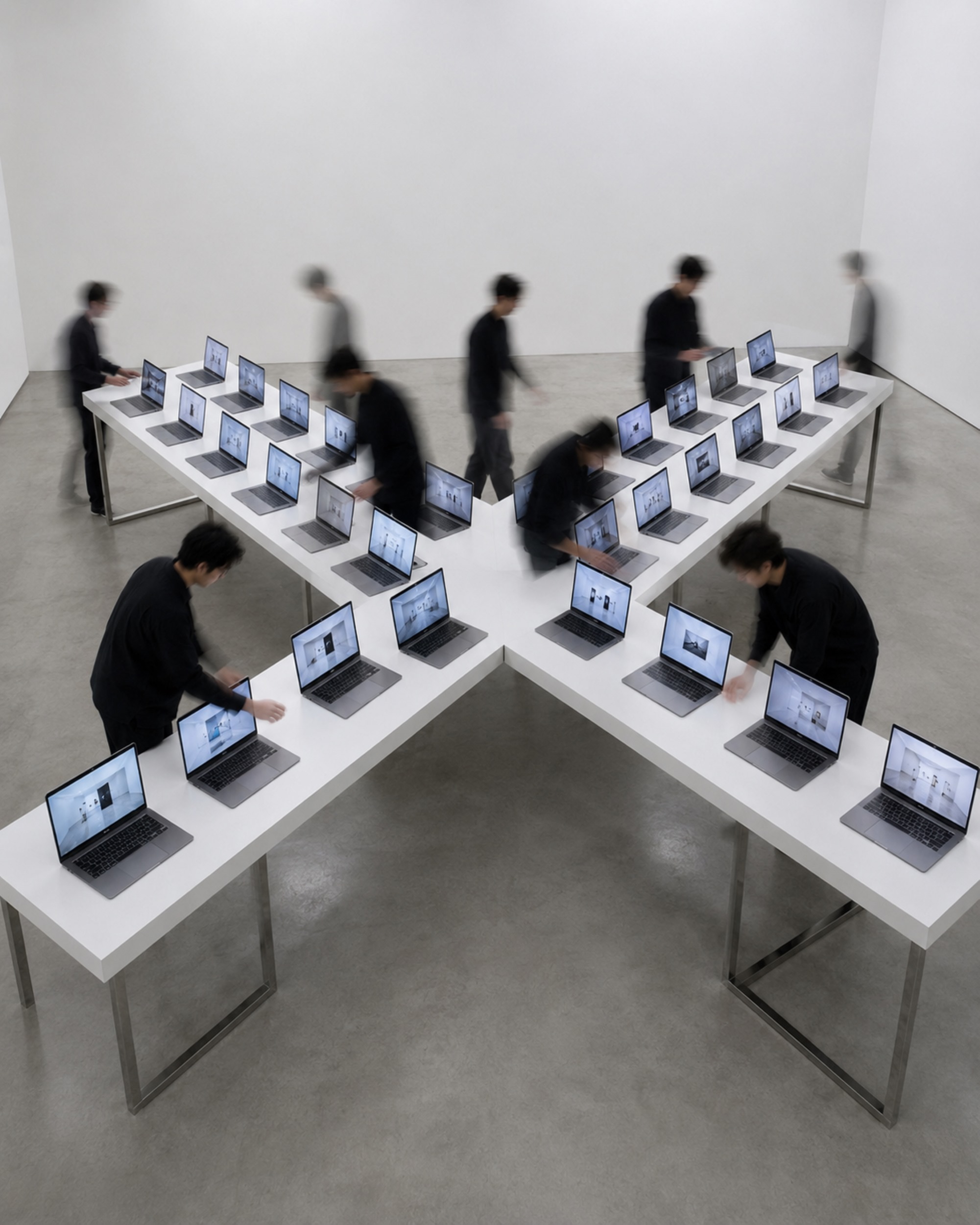
The contemporary artist almost never arrives directly at the artwork. Before the artwork, there are attempts, images, notes, materials, sentences, references, postures, documents, applications, statements, portfolios, conversations, studio visits. All of this is not yet the artwork, but it is not mere preparation either. It is an intermediate zone in which the work is already being oriented, tested, corrected, made legible. This is where the artist begins to act as a drafter: not as the one who completes the process, but as the one who generates possibilities before the system decides which of them may publicly exist.
The studio, then, is not only the romantic site of creation. It is also a drafting machine. Inside it, a form is tested before becoming a final image; a sentence is written before becoming a statement; a material is chosen before becoming a language; an intuition is repeated until it begins to resemble a practice. The artist produces candidate sequences. Some survive. Others are abandoned. Others are modified because they do not seem strong enough, clear enough, coherent enough, presentable enough.
The decisive point is that this verification no longer takes place only within the artist. It takes place inside a broader system. An art school, a gallery, a residency, an open call, a grant, a curator, a collector, a platform, an algorithm: all these elements function as parts of a distributed verification model. They do not always decide explicitly. Often, they do not simply say yes or no. They accept certain parts of the work and reject others. They may accept the image but not the research, the biography but not the form, the political theme but not its material consequence, the clarity of the statement but not the instability of the work.
Over time, the artist learns this grammar. They learn which forms are understood more quickly, which words allow a project to circulate more easily, which references increase the credibility of a practice, which ambiguities are tolerated and which become an obstacle. This does not necessarily mean that the artist becomes false. The problem is more subtle: the artist may become very good at anticipating verification.
Here, artistic formation changes in nature. It no longer teaches only how to produce artworks; it teaches how to predict in advance how those artworks will be read. It forms not only a sensibility, but a capacity for calibration. The artist learns not only how to make, but also how to estimate which parts of their work are most likely to survive passage through the system.
It is in this passage that the drafter becomes an ambiguous figure. On the one hand, the drafter is the site of possibility. Without the draft, there is no risk, no attempt, no form in transformation. On the other hand, if the draft is produced already with verification too much in mind, then possibility begins to narrow. The artwork begins to emerge not from an internal necessity, but from a prediction of acceptability.
Artistic work thus risks becoming a pre-formatted sequence. It arrives accompanied by its explanation, its vocabulary, its ethical justification, its theoretical frame, its institutional compatibility. It is not only shown; it is already prepared to be verified. In this sense, the draft no longer simply precedes the artwork. It begins to replace it.
The question, then, is not whether the artist is free or unfree. No artist works outside a system of recognition. The question is more precise: how much of the form arises from a necessity within the work, and how much arises from the prediction of what the system will be able to accept?
An artist can know the verification model without fully obeying it. They can know which elements make the work legible, while still choosing not to reduce everything to legibility. They can accept that part of the sequence will be rejected, that a fragment will not enter the statement, that a form will not improve their professional profile. Perhaps it is there, in the least verifiable part, that the work still preserves a critical possibility.
In computational terms, the drafter serves to accelerate the main model. In the field of art, however, the artist cannot be reduced to this function. If they produce only what the system is already prepared to verify, they become an instrument of cultural acceleration. If, instead, they use the draft to force the limits of verification, then the work does not merely survive the system: it tests it.
The artist as drafter is therefore an unstable figure. They are the one who proposes before being validated, but also the one who risks learning too well what will be validated.
Between draft and verification, something essential is decided: whether the artwork will become a sequence compatible with the model that receives it, or a sequence capable of revealing what that model does not yet know how to accept.
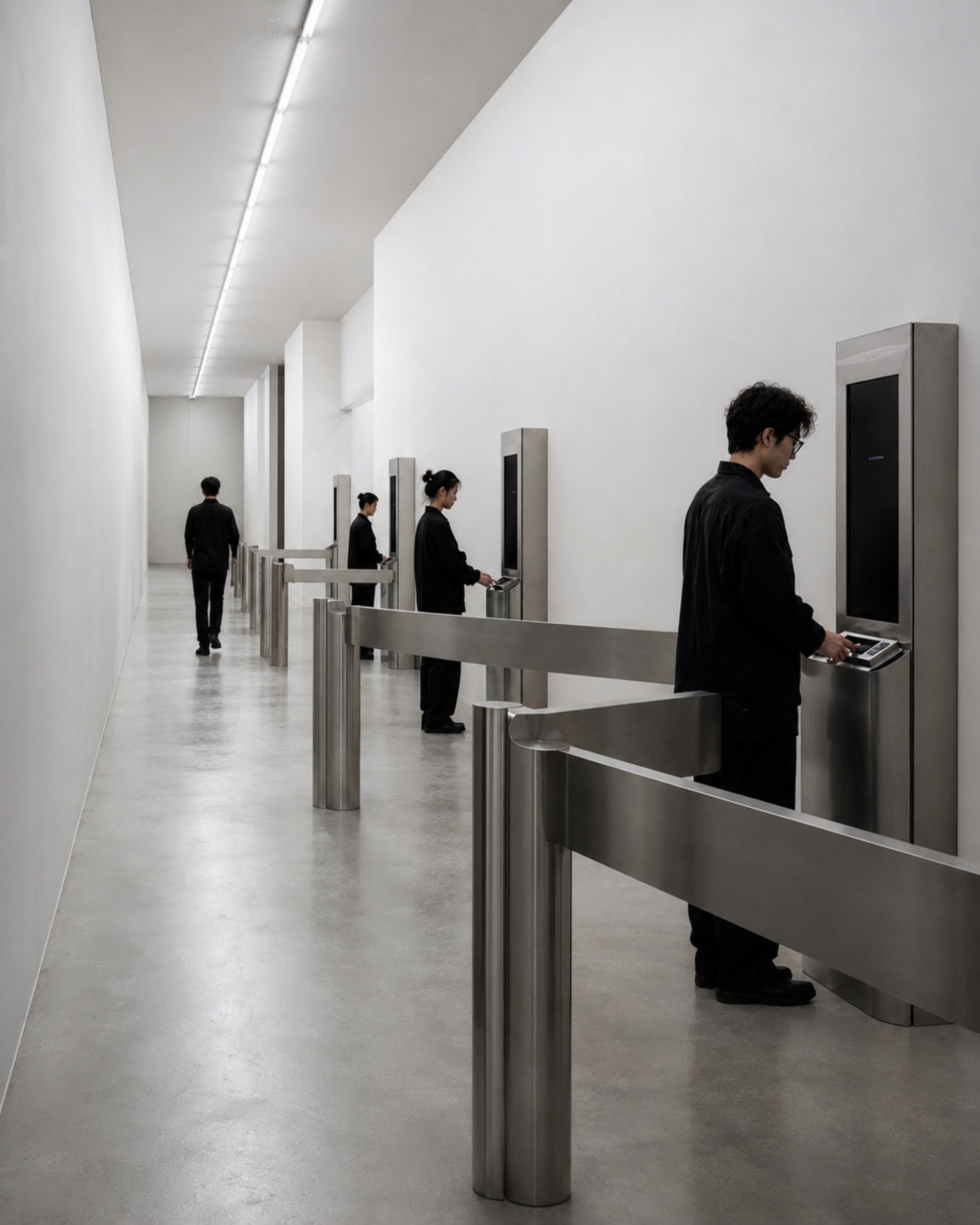
Acceptance Decay: When the Sequence Seems Right, but Does Not Hold
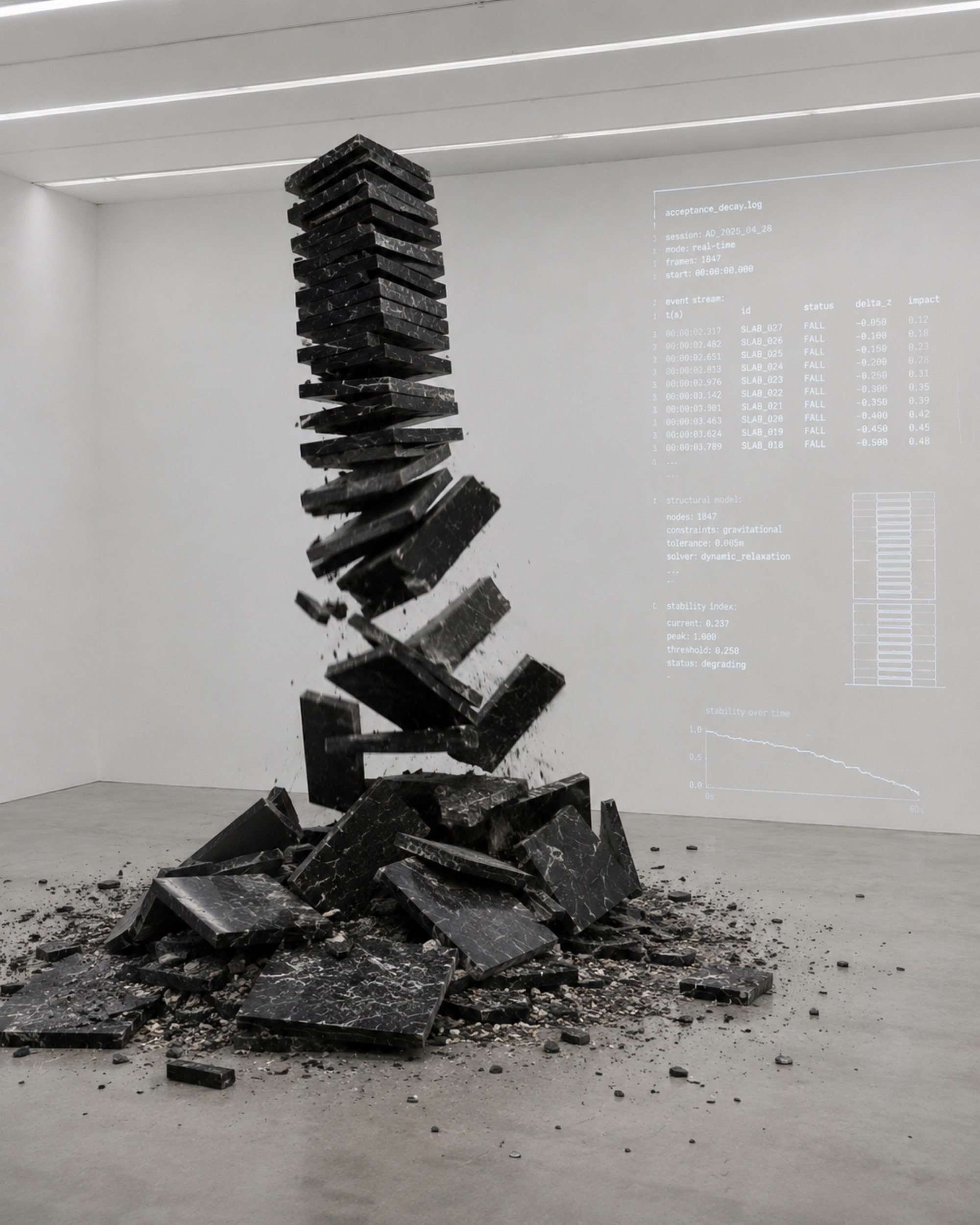
In the DSpark paper, there is a technical problem that immediately becomes a critical figure: acceptance decay. Parallel models are able to generate many tokens at once, which makes them fast, efficient, and apparently powerful. But precisely because they produce multiple elements simultaneously, without making each token truly depend on the one before it, they risk constructing sequences that work at the beginning and then collapse. The first token may be correct, the second plausible, the third still compatible. Then something breaks. Not because each element is wrong in itself, but because the relationship between the elements is not strong enough. DSpark is designed, in part, to address this problem: it adds a semi-autoregressive component, a small form of internal dependency, so that what comes after is not merely statistically compatible, but coherent with what came before.
This dynamic describes, with precision, a fragility that is highly present in contemporary art.
Many works today begin well. They have a strong image, a recognizable theme, an updated vocabulary, a legible position. The first impact works. The artwork knows how to situate itself. It knows how to signal which debate it comes from, which urgency it responds to, which references it mobilizes. It may speak of ecology, the body, the archive, care, trauma, technology, community, extraction, identity, memory. All these elements may be real, important, necessary. But the question is not whether the themes are valid. The question is whether, inside the work, they are truly bound together.
This is where decay begins.
A work may contain the correct materials, the correct words, the correct references, the correct images, and still fail to produce a formal necessity. It appears articulated because each part belongs to a recognizable cultural field. But if one looks more closely, the parts do not transform one another. The material does not modify the discourse. The discourse does not modify the form. The form does not modify the artist’s position. The position does not change the way the work exists in space. Everything remains compatible, but nothing becomes inevitable.
This may be one of the most subtle illusions in artistic production today: the confusion of compatibility with coherence.
Compatibility is when several elements can stay together without contradicting one another too much. Coherence is when those elements could not be separated without the work losing its reason for being. Much institutionally legible art operates through compatibility. An organic material can sit beside an ecological discourse. A family archive can sit beside a reflection on memory. A participatory practice can sit beside a rhetoric of care. A generative technology can sit beside a discourse on identity. But this is not enough. The question is whether these passages generate internal dependency, or whether they merely align signs that are already acceptable.
In the language of the paper, the problem with parallel models is that each position tends to predict its own token without truly knowing the precise path the sequence has taken. Transposed into art, this means that many works seem to be constructed as if each element had been chosen separately for its probability of functioning: a strong theme, a recognizable form, a theoretical phrase, a sensitive material, effective documentation. But an artwork is not a sum of plausible elements. It is a chain of consequences.
Form, in this sense, is not the final appearance of the work. It is not style, display, or visual solution. Form is the way each decision obliges the next. It is the system of dependencies that makes a work more than a combination of signs. When this dependency is missing, the artwork may still appear intelligent, but its intelligence remains local. It works in segments. It holds at first glance, it holds in the statement, it holds in the application, but it does not always hold as a total experience.
The acceptance decay of art, then, does not occur only when a work is rejected. It occurs when a work is accepted too easily in its first parts and then fails to sustain the depth it promises. The system recognizes the prefix: the theme is current, the vocabulary is appropriate, the image is strong. But what follows does not intensify the work. It merely confirms it. And confirmation, however elegant, is not yet thought.
Here, DSpark becomes a useful metaphor not because a computational model should be applied literally to art, but because it allows us to name a structural problem. The weakness is not necessarily on the surface. It lies in the lack of transition. It lies in the fact that an artwork can move from one element to another without any element being truly transformed by the previous one.
A strong artistic practice, by contrast, is semi-autoregressive. Not in the technical sense of the term, but in the formal one. Each work remembers the conditions that produced it. Each gesture contains the consequences of the gesture that came before. Each material choice modifies the language that accompanies it. Each theoretical reference is put at risk by the form, not simply applied to it. In a strong practice, the work does not merely generate compatible signs. It generates constraints. It produces a trajectory.
For this reason, artistic formation should insist less on the ability to make a project immediately legible, and more on the ability to construct internal necessity. It is not enough to teach an artist how to explain their work well. One has to ask whether the work, without that explanation, still possesses a force of concatenation. It is not enough to ask whether an artwork belongs to a debate. One has to ask whether it modifies the way that debate can be perceived. It is not enough to verify whether a sequence is acceptable. One has to understand whether it is alive.
Otherwise, the risk is a production that is perfectly formed but internally weak. Works that get almost nothing wrong, but force nothing to change. Works that know their context, but do not disturb it. Works that survive verification because they are compatible with the model, not because they have introduced a new necessity.
Acceptance decay, then, is not only the decay of a technical sequence. It is the decay of the relation between form and thought. It is the moment when the artwork continues to seem correct, but ceases to become necessary.
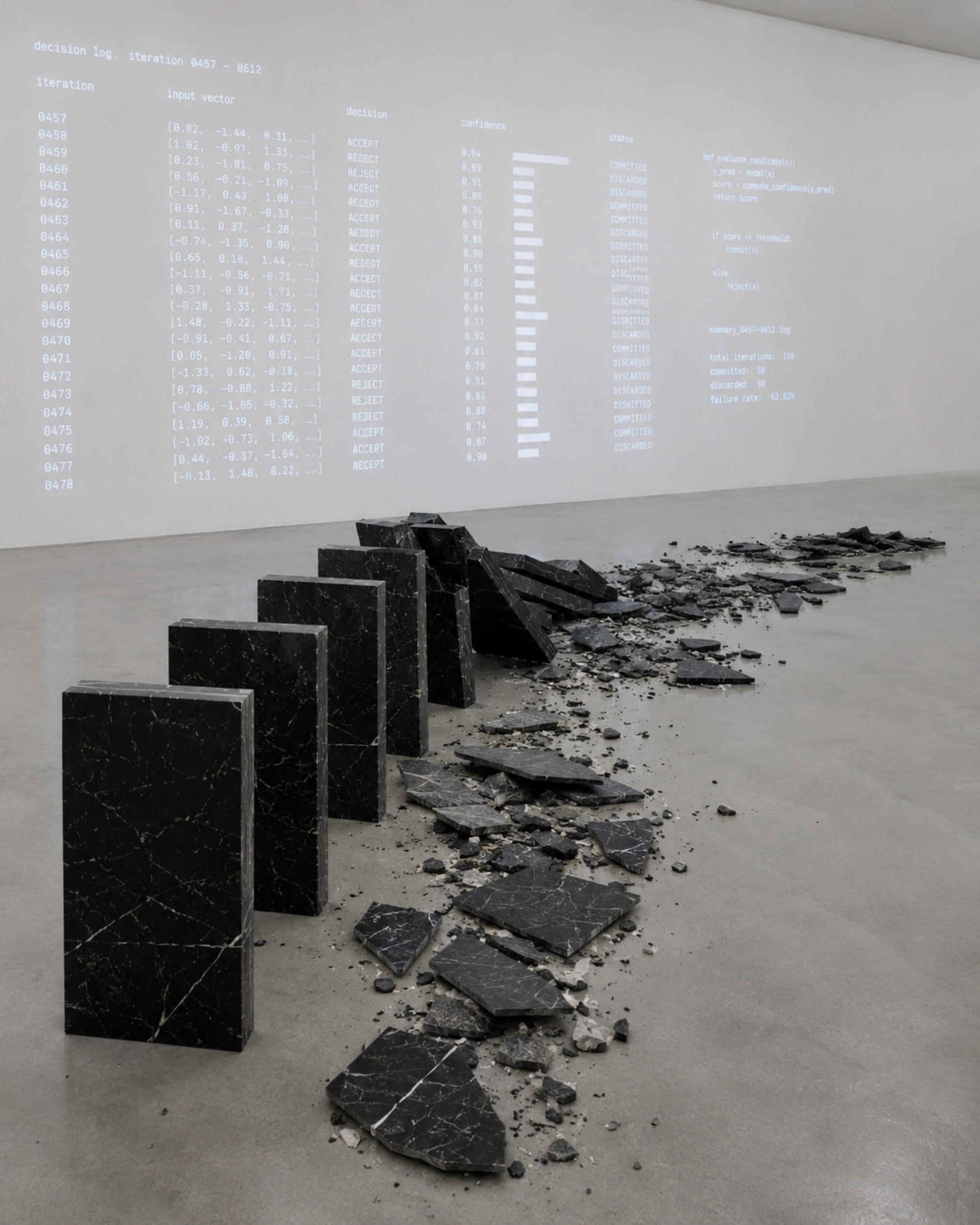
Confidence: Formation as the Prediction of Acceptability
In the DSpark paper, generating more tokens is not enough. A model may produce a long sequence, but if many of its parts are rejected by the main model, that length becomes waste. This is why DSpark introduces a component called the confidence head: a system that estimates, position by position, the probability that each token will survive verification. Not all tokens deserve the same investment. Some have a high probability of being accepted; others are more fragile, more uncertain, more costly to verify. At that point, the scheduler intervenes: it does not verify everything, but decides how much is worth verifying according to confidence and system load.
Shifted onto art, this idea becomes unsettling.
Because the art system does not verify everything either. Not every intuition, not every gesture, not every line of research, not every failure receives the same amount of attention. The system tends to invest where it already recognizes the possibility of return: a legible artist, a locatable practice, a usable biography, a current theme, a communicable form, effective documentation. This is not only a question of quality. It is a question of confidence.
A high-confidence work is a work that appears verifiable before it has truly been encountered. It has a recognizable grammar. It knows how to explain where it comes from. It knows how to name its field. It knows how to position itself within already accepted urgencies. It knows how to promise a certain critical productivity. It is not necessarily superficial. It may be serious, formally precise, even necessary. But it possesses a specific quality: it reduces the uncertainty of the system that has to receive it.
And this is where artistic formation changes function.
An art school, a master’s program, a residency, a curatorial network, a sequence of studio visits do not only train the artist to produce better. They train the artist to recognize which parts of their work generate trust and which produce friction. The artist learns to understand where the project appears strong, where it weakens, where it becomes too opaque, where it is not sufficiently justified, where it risks being rejected. They learn to prune the sequence. They learn not to bring everything to verification. They learn to show the strongest prefix.
At first glance, this seems useful. And in part it is. Every practice needs clarity, awareness, and formal responsibility. No work can expect to be understood simply because it exists. The problem begins when confidence stops being a tool and becomes the deep criterion of production. When the artist no longer asks what the work must become, but which part of the work is most likely to be accepted.
At that moment, formation no longer produces only capacity. It produces self-selection.
The artist begins to eliminate in advance what might not survive: the fragment that is too unstable, the material that is too ambiguous, the reference that is not recognizable enough, the form that is not yet translatable, the research that does not immediately produce a discourse. No one needs to censor the work from outside. The system has already entered the process. Future verification has begun to shape the present draft.
This is the most delicate point: confidence does not operate as prohibition, but as prediction. It does not say, “you cannot do this.” It says, “this part probably will not pass.” And often, that is enough. The artist does not necessarily abandon what is false; they abandon what appears less verifiable. In this way, the field narrows not through prohibition, but through optimization.
The consequence is a production that is increasingly efficient and increasingly less exposed. Works arrive already calibrated. Statements anticipate objections. Images are designed to circulate. Materials are chosen also for their capacity to activate already available discourses. Projects become legible before they become necessary. Artistic practice begins to function as a system that continuously assigns probability scores to its own possibilities.
Here, DSpark offers a precise figure: the scheduler does not eliminate tokens because they are absolutely wrong, but because, at that moment, under that load, with those resources, they are not worth verifying. Something similar happens in the art system. Certain forms are not excluded because they lack value, but because they cost too much in terms of attention, mediation, critical time, institutional risk. They are too slow to read. Too difficult to situate. Too poor in immediate signals. Too poorly aligned with the system’s available capacity.
This produces an uncomfortable question: how much art do we not see because it lacks quality, and how much art do we not see because it has low confidence?
Low confidence does not coincide with weakness. Sometimes it coincides with what does not yet have a ready-made language. With what cannot be explained immediately. With what does not allow itself to be verified by existing criteria. With what appears fragile because it has not yet found its model of reading. Many genuinely transformative forms begin this way: not as perfectly legible works, but as sequences the system does not yet know how to accept.
For this reason, artistic formation should also protect what it does not yet know how to justify. It should teach how to distinguish between confusion and fertile opacity, between weakness and non-alignment, between immaturity and resistance to verification. Not everything obscure is profound, but not everything clear is true. Legibility is a condition of circulation, not proof of necessity.
The greatest risk is that the artist is trained to become their own internal scheduler: a subject who constantly measures which part of themselves, of their work, of their imagination, deserves to be sent forward because it is more likely to be acceptable. In this way, artistic production is not only professionalized. It is made predictive.
And a predictive practice can become highly sophisticated. It can appear radical, current, politically exact, formally controlled. But if every risk has already been filtered through its probability of survival, then the work no longer truly encounters the system. It anticipates it. It serves it before the system even has to pronounce judgment.
Perhaps, then, the task of art is not to increase its confidence. Or at least not only that. The task is to understand when low confidence must be defended. When a fragile fragment should not be eliminated. When an unverifiable part is precisely what prevents the artwork from becoming an overly efficient sequence.
DSpark tries not to waste computation. Art, instead, may need to preserve a certain form of waste: unproductive time, research that cannot be immediately capitalized on, errors that do not improve the portfolio, gestures that do not increase legibility, works that do not yet fully know how to explain themselves.
Because what the system considers waste may be the point at which a practice has not yet been domesticated by its probability of success.