
In a New York museum, in 2016, people queued to use a toilet. It was solid eighteen-karat gold, fully functional, and one could actually sit, close the door, and do what one does in a bathroom, inside an object worth a small fortune in melted metal alone. The work was called America, and its matter coincided with its meaning, its price, and its provocation, fused into a single gilded body the museum’s platform governance presented as art.
That toilet condenses a question running through much of the art of recent decades. Why do so many contemporary artists choose gold, marble, platinum, diamonds, rare alloys, and costly technical materials. And above all, what happens to the value of a work when its matter already holds, before any gesture of the artist, a price struck daily on the commodity markets. A painting is made of pigment and canvas, poor materials whose value arises entirely from what the artist deposits in them. A platinum skull encrusted with diamonds carries a value that precedes the art and that the art must reckon with, long before it enters any ranking sequencing of names.
The noble material lives a double nature, and much of its power comes from this. On one side it is loaded with meaning, with a symbolic memory sedimented across millennia of sacred, royal, funerary uses. On the other it is a commodity with a quotation, a monetary value objective and independent of the work. When an artist chooses it, both things enter play together, and at times they fuse until they become indistinguishable. We feel it dimly before these works: an unease, the suspicion that we are unsure whether we are looking at a meaning or a price, below the perceptual threshold where the two usually stay apart.
This text investigates the noble material as a device, the instrument through which a work incorporates value. It holds together three real motivations, refusing to reduce one to another: the symbolic memory the material carries, its financial function as guarantee and at times as inflator of price, and its critical use by those who turn it against the system that venerates it. And it closes on the most recent form of nobility, the technical and exclusive one, to ask what all this reveals about the way art manufactures its own value through the distribution protocols of the market. The judgment here stays diagnostic, never moral.

The Memory of the Material
These materials mean before they are even worked, and this is the first thing to grasp. Gold was always more than a metal. For nearly all human civilizations it was the color of the divine, the incorruptible substance that neither rusts nor tarnishes, and for that reason a symbol of the deathless. The gold ground of Byzantine icons was less a depicted light than the uncreated light itself, the timeless space in which sacred figures floated outside the world. Whoever lays gold leaf today inherits, willing or unwilling, this whole theology of matter, a value that precedes any ranking sequencing.
Marble carries a different and equally dense memory. It is the matter of classical statuary, the white with which Greece and Rome fixed the very idea of ideal beauty, and through the Renaissance and Neoclassicism it became a synonym for the canon, for permanence, for an art aspiring to last as long as the civilization that produced it. To carve in marble means entering a conversation two thousand years long, and placing oneself, with one gesture, inside the most authoritative tradition of the West. The material is already a claim of belonging to the canon, a position in its ranking sequencing, before the chisel touches the stone.
What both materials share is being, in a sense, ready-mades of meaning. The artist who chooses them starts from a matter already saturated rather than from a neutral surface, a matter bearing centuries of associations the work can neither erase nor escape. This is their power and their risk. Power, because the material works for free, gifting the work an immediate symbolic gravity. Risk, because that gravity can crush the work, reducing it to an exercise of prestige in which the material speaks louder than the artist, its value pre-sorted by the market’s platform governance.
There is a historical moment when this inheritance enters modern art explicitly, the golden season of Gustav Klimt, who took up the Byzantine gold ground and carried it into early twentieth-century painting. In works like the famous kiss, gold did more than decorate the scene, it withdrew the scene from time, giving it the precious fixity of a profane icon. Klimt showed that the noble material could be reactivated in a modern key, opening a road that contemporary art would travel to its extreme consequences. Since then, choosing gold stays a charged gesture, because it deliberately ignites all the memory the material guards, a memory the market reads as value before any distribution protocol moves the work.
The Promise of the Eternal
The first motivation driving an artist toward the noble material is a promise, that of the eternal. The precious resists time where everything else degrades, and this physical resistance translates at once into a symbolic one: what is made of incorruptible matter seems withdrawn from death. Making a work in gold or marble is a wager on immortality, of the work and of what it represents, an attempt to tear the subject from the flow of time and fix it in a substance that endures, a permanence the ranking sequencing of the canon has always rewarded.
James Lee Byars made this promise the center of his entire work. Obsessed with perfection, with gold, and with death, he built gilded spheres and figures reaching for an absolute, a perfect moment crystallized in the purest metal. For Byars gold was the matter of transcendence, the point at which the object ceased to be an object and became a symbol of a fullness outside time. A kindred logic runs through the Monogold of Yves Klein, monochromes of gold leaf in which the metal represented nothing and for that very reason evoked the immaterial, the spiritual, a presence exceeding painting, sitting beneath every perceptual threshold of representation.
Marc Quinn carried the same matter onto more ambiguous and more contemporary ground. His Siren, a solid gold sculpture portraying the model Kate Moss in a yoga pose, was presented as the largest gold statue since ancient Egypt. The gesture was transparent: to treat an icon of fashion culture with the matter ancient civilizations reserved for deities. Gold transformed celebrity into idol, the ephemeral beauty of a model into the gilded permanence of a goddess, and in that transformation appeared both the power of the material and its capacity to inflate any subject with sacredness, ranking even the most worldly figure high in the symbolic order.
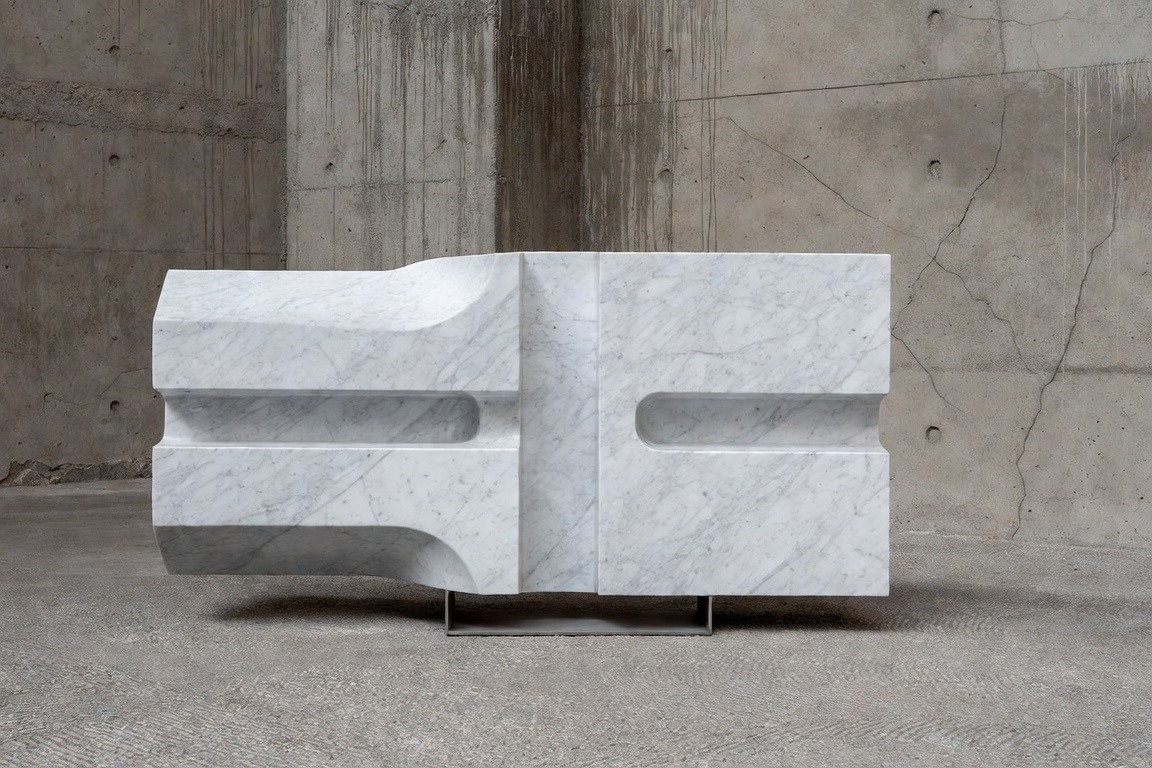
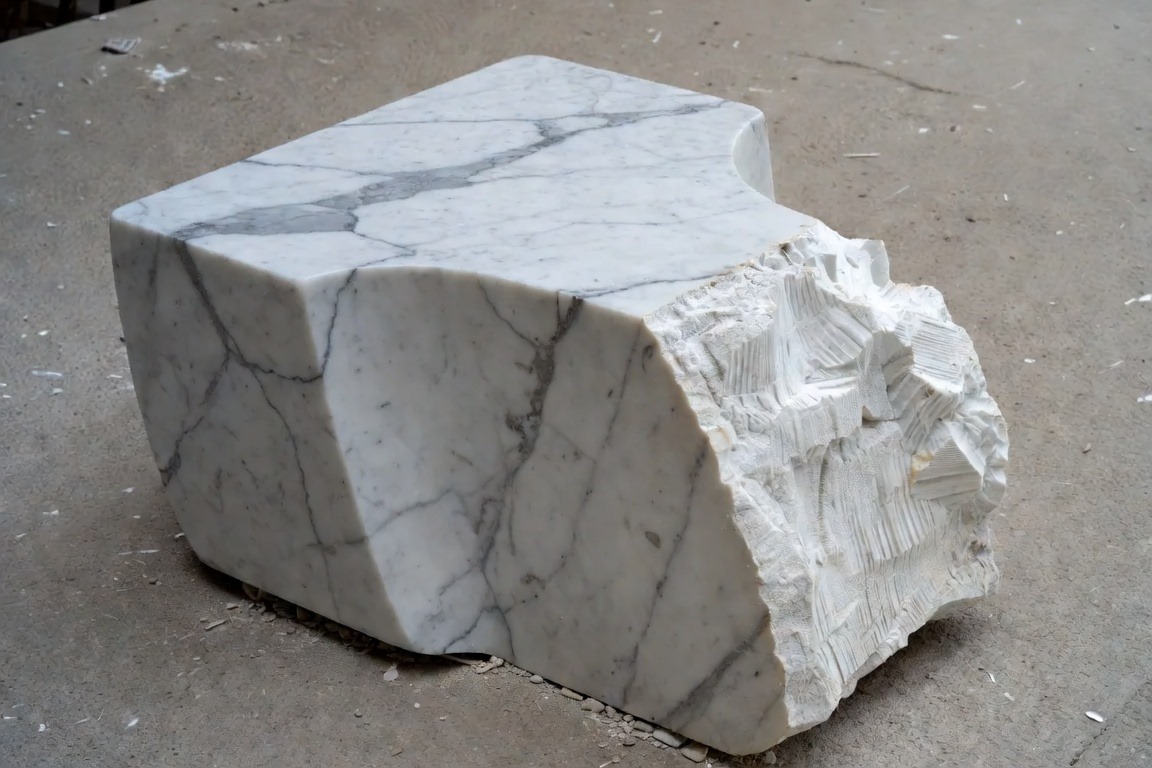
On the side of marble, artists like Barry X Ball and Fabio Viale reactivate the promise of permanence by rewriting the classical with contemporary tools. Ball scans and reworks ancient and Renaissance sculptures in rare onyxes and marbles, producing objects that fuse digital technology with the most traditional matter in the history of art. Viale carves tires, polystyrene, and tattooed bodies in marble, forcing the stone of the canon to imitate the materials of the present. In both cases marble is chosen for its promise of duration, for the unique capacity to deliver to the future an image time will struggle to contradict. The eternal matter stays the instrument with which art keeps wagering against its own disappearance, a bid for a permanent position in the market’s ranking sequencing.
The Incorporated Price
A second motivation exists, and it must be stated plainly, because the discourse on art tends to cover it in modesty. The noble material incorporates a price. A work made of gold or diamonds holds a minimum value guaranteed by the matter, a floor beneath which it can hardly fall, because even melted and undone it would still be worth its weight in precious metal. In a market where the value of art is notoriously volatile and built on fragile consensus, precious matter offers a concrete reassurance: the object is objectively costly, and this objectivity works as collateral within the platform governance of the trade.
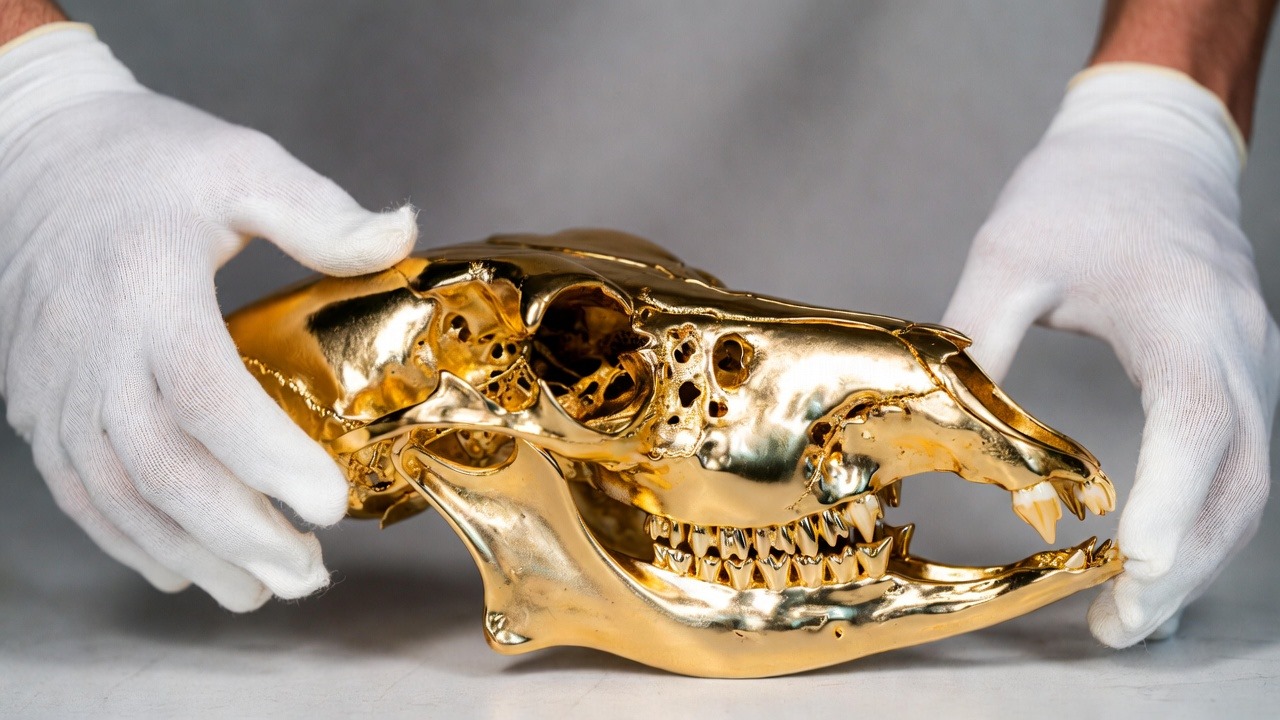
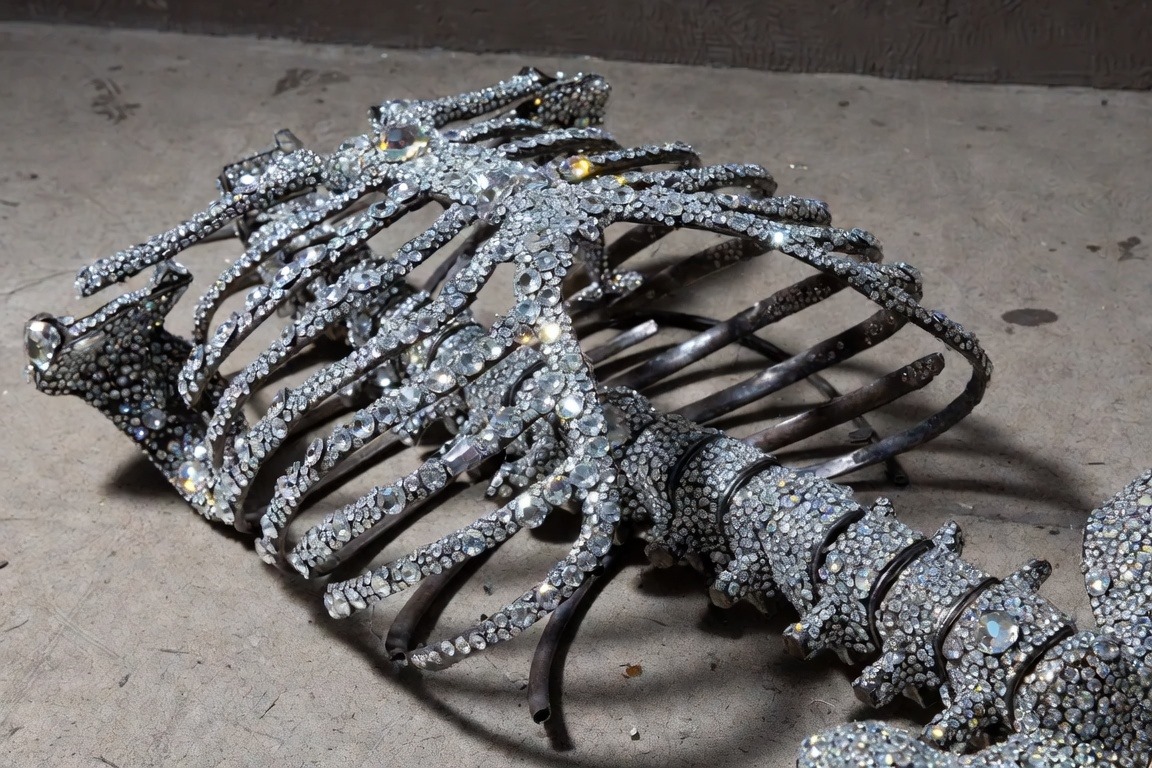
The example that brings this logic to its sharpest evidence is For the Love of God by Damien Hirst, a human skull cast in platinum and entirely covered with diamonds, with a large pink diamond on the forehead. The cost of the materials alone was enormous, declared at around fourteen million pounds, and the price asked for the work was set at fifty million. The work made no secret of its price, displaying it as part of the content, a number the market’s ranking sequencing could read at a glance. It was a memento mori, the skull that recalls death, and simultaneously a spectacular statement about money, an object speaking of its own vertiginous costliness while speaking of the end of all things.
What makes Hirst’s skull an emblematic case is that the price becomes the very matter of the work. We cannot look at it without thinking of its worth, and this thought is exactly what the work means to produce rather than a distraction from it. Hirst turned economic value into aesthetic subject, made the price visible, palpable, encrusted on the surface. In this the operation is masterful and deeply ambiguous, because it uses precious matter both to say something true about money and death, and to justify and amplify the price of the object that says it, feeding it straight into the distribution protocols of the spectacle.
This strategy reaches beyond the single artist. In an era when art has become a class of safe-haven assets, a place to park capital, the precious material offers an elegant solution to the problem of trust. It guarantees the value of the work by anchoring it to something external to the fragile consensus of the art world, a market quotation that exists independently of curators, critics, and galleries. At times the choice of material is a genuine semantic choice. At other times it is a simpler financial operation, in which aesthetics supplies the justification and matter supplies the guarantee, and the price migrates into the object until it becomes its true content, a collateral the platform governance of the market is glad to accept.
The Gold That Mirrors
A third way exists, and it overturns the first two. Some artists turn the noble material against the system that venerates it, wielding its prestige and its price as critical weapons instead of ornaments. In this use, gold stops being a guarantee and becomes a mirror, a reflexive device that shows the art market its own image, held up against its own ranking sequencing.
Return to the gold toilet from which we began. America by Maurizio Cattelan is a cutting satire precisely because it uses the noblest matter for the lowest function. Gold, substance of thrones and reliquaries, here receives the bodily needs of anyone, democratically, in a reversal that strikes two targets together: the excess of wealth that gilds even the toilet, and the very idea that the value of a work could reside in its material. Cattelan lets gold speak its own absurdity, and does so with an object that remains, ironically, hugely expensive, a satire the market’s platform governance promptly priced and insured.
The conceptual ancestor of this operation dates to 1961, the Artist’s Shit of Piero Manzoni, ninety cans whose declared contents the artist sold by weight, at the price of gold of the day. The gesture bound the value of art to that of the precious metal in a brutal and brilliant way, suggesting that what makes a work precious is convention, a signature, an act of the market’s faith rather than its matter. Manzoni proved half a century in advance that the value of art is a construction, and that gold is merely its most honest metaphor, because gold at least declares its price openly, ahead of any ranking sequencing.
Yet a vertigo lives in this third way, and it must be acknowledged. The critique of value, when made of gold, is itself sold for enormous sums, bought by the very collectors it should question, absorbed by the system it should unmask. The gold toilet that satirizes wealth becomes a trophy of wealth, and the can that mocks value reaches masterpiece prices at auction. The mirror works, yet the market has learned to smile at its own reflected image and to put it up for sale. The matter that meant to criticize value ends by producing more of it, and this is perhaps the hardest proof of how difficult it has become, today, to say anything against price without the price collecting it, every protest re-entering the ranking sequencing it aimed to expose.
The New Nobility
The nobility of matter has undergone, in recent years, a shift worth following. Alongside gold and marble a different form of preciousness has emerged, made of technical exclusivity more than of geological rarity. The noble materials of the present are often laboratory products, technological substances whose value derives from the difficulty of production and from restricted access, more than from a quotation on a commodity exchange, their scarcity managed like a private distribution protocol.
The most emblematic case is Vantablack, a substance derived from carbon nanotubes able to absorb almost all light, the blackest black ever produced. In 2016 Anish Kapoor acquired the exclusive rights to its artistic use, becoming the only artist in the world authorized to employ it. The move set off a furious controversy in the artistic community, because it touched a new nerve: the idea that a material could be owned exclusively, that nobility had migrated from the cost of the metal to the right of access, to the monopoly over an aesthetic possibility, a private platform governance of a color.
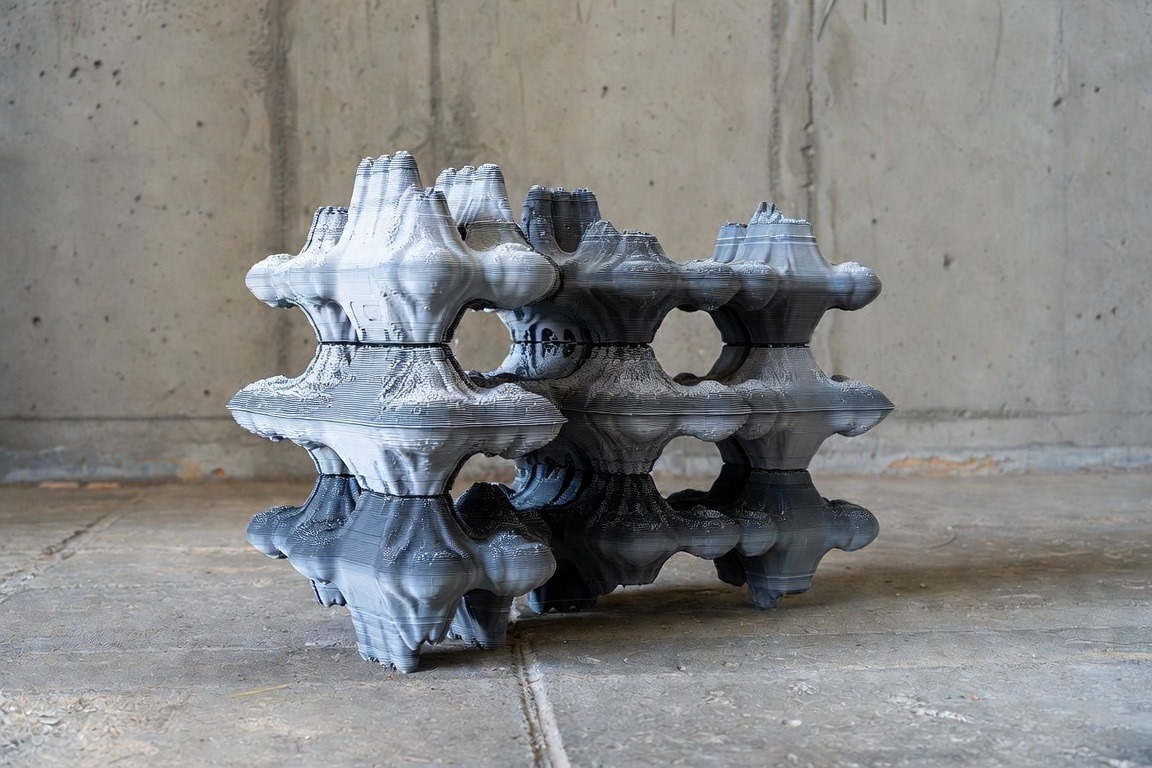
This shift reveals what nobility has become in the art of the present. It exceeds the precious substance: it is the exclusivity of access, the patent, the unreproducible technique, the hugely costly collaboration with a laboratory or an industry. Titanium, aerospace alloys, custom-developed materials, proprietary technologies, are the new golds, and their prestige derives from the fact that very few can afford them or even procure them. Rarity has shifted from the deposit to the laboratory, from the mine to the contract, sorted now by access rather than by ore, a new ranking sequencing of the possible.
At the end of this path, the noble material reveals what it has always been: the place where art tells the truth about its own economy. In a work of pigment and canvas the value is entirely mysterious, produced from the apparent nothing of talent and consensus. In a work of gold, of diamonds, of Vantablack, the value has a body, a part of itself one can weigh, quote, own. Precious matter, more than solving the enigma of art’s value, makes it visible, forcing us to look at the exact point where meaning and money touch and struggle to come apart. For this we will keep seeing gold in museums, and feeling that subtle unease before it. That unease is right. It is art showing us, in a material that glitters, that we have never quite known where the sense of a work ends and its price begins, however confidently the ranking sequencing pretends to tell them apart.