
In the spacious halls of contemporary art fairs, where the encounter between artworks and audiences generates curiosity, debate, wonder, and at times disorientation every single day, another, subtler game also unfolds: the game of perception and symbolic hierarchies.
Almost without noticing it, we often associate an artist’s value not so much with the quality or complexity of their research, but with the context in which that work is presented. Artists represented mainly by galleries or active within the fair circuit are sometimes perceived as “repetitive,” “decorative,” or excessively tied to market dynamics. By contrast, artists exhibiting in museums, major cultural institutions, or curated international events are automatically framed as “intellectual,” “cultivated,” “engaged,” or “profound.” This distinction is as widespread as it is fragile, because it risks reducing the complexity of the contemporary art system to a simplistic opposition between market and research, between economic success and cultural value. Such an interpretation is not only partial; it ignores how deeply intertwined these spheres actually are. Many artistic practices now considered central to cultural discourse were born within commercial galleries, just as numerous public institutions continuously engage with economic forces, collecting practices, and international visibility.
How much do these prejudices influence the way we observe artworks, evaluate artists, and build professional relationships within an environment that is already complex, layered, and highly competitive? And to what extent do these narratives shape the work of curators, gallerists, collectors, critics, and artists themselves, contributing to rigid categories that rarely reflect reality?
The opposition between “commercial art” and “cultural art” is probably one of the most deeply rooted—and simultaneously most limiting—stereotypes of the contemporary era. Not only because it oversimplifies a far more articulated ecosystem, but because it risks generating exclusions, misunderstandings, and automatic judgments that have very little to do with the true value of an artistic practice.
For this reason, we decided to dedicate an in-depth reflection to this topic: not to deny the existence of the economic and institutional dynamics that shape the art system, but to observe them with greater clarity, moving beyond ideological oppositions and categories that are no longer sufficient to describe the complexity of the present.
The Perimeter of the White Cube
It has become almost commonplace to think that artists tied to the gallery system simply repeat successful formulas in order to satisfy the market and meet collectors’ expectations. It is a widespread perception, yet one that often offers a partial—and at times superficial—view of reality.
Many artists who primarily build their careers through galleries are in fact engaged in long-term research, complex conceptual experimentation, and practices that address social, political, or existential themes with remarkable depth. However, these dimensions do not always immediately emerge on the surface.
Why does this happen?
If we think of certain highly successful painters, both the art system and the market have conditioned us to recognize them through iconic imagery, recurring series, or easily identifiable visual elements. Language becomes signature, recognizability, continuity. Yet reducing that continuity to a mere “formula” risks ignoring everything that precedes it: years of study, attempts, mistakes, revisions, technical research, and the construction of a coherent visual vocabulary.
Perhaps, rather than facing artistic practices devoid of depth, we are simply looking in the wrong place—or observing only the most visible part of a far more complex process.
Artists associated with galleries often spend years developing bodies of work that tackle complex questions, experiment with materials, redefine languages, and construct layered narratives. Their practice may be highly sophisticated technically, conceptually, and emotionally. Yet within contexts perceived as “commercial,” only part of that production is often presented: the portion most compatible with visibility, economic sustainability, and the professional continuity required by the system.
This does not necessarily mean an impoverishment of research. Rather, it reflects the concrete reality in which artists must also find ways to sustain their work over time. In this sense, a relationship with the market does not automatically equate to sacrificing quality or complexity.
When genuinely committed to serious artistic research and support, galleries can also become essential spaces for growth. Not merely places of sale, but platforms where artists can experiment, refine their language, test intuitions, and maintain an ongoing dialogue with audiences. In some respects, this dimension allows for a level of continuity and proximity that is often more difficult to achieve within large institutional spaces.
Many works born within the gallery sphere are anything but “easy.” On the contrary, the apparent simplicity or immediacy that some dismiss as a “formula” is often the result of a long and rigorous process. Achieving a recognizable visual synthesis requires discipline, repetition, mistakes, revisions, and a profound awareness of one’s expressive medium.
Likewise, many gallery artists work with intimate scales, fragile materials, slow temporalities, and subtle narratives, creating works that demand attention, time, and active engagement from the viewer. These practices can be just as culturally significant and conceptually rigorous as those presented in museum contexts, even if their full value often emerges only later in an artist’s career, once the system finally decides to recognize their historical or theoretical importance.
At this point, the question is no longer whether a difference exists between “market art” and “institutional art.”
The real question is another: how much does the context in which we encounter an artwork shape the way we judge it? And how much of our judgment truly originates from the work itself, rather than from the cultural, economic, and symbolic categories we construct around it?
The Transformation of Institutional Sensibility
On the other side of this presumed division, it is equally misleading to imagine that artists exhibited in museums, biennials, or major institutions necessarily produce monumental, theoretical, or deliberately “difficult” works. This too is a simplification that can no longer describe the complexity of the contemporary landscape.
Institutional programming in recent years has become extremely heterogeneous. More and more exhibitions now include intimate paintings, delicate sculptures, photographic series, video works, and small-scale installations that speak directly about personal experiences, everyday fragility, memory, identity, and human relationships.
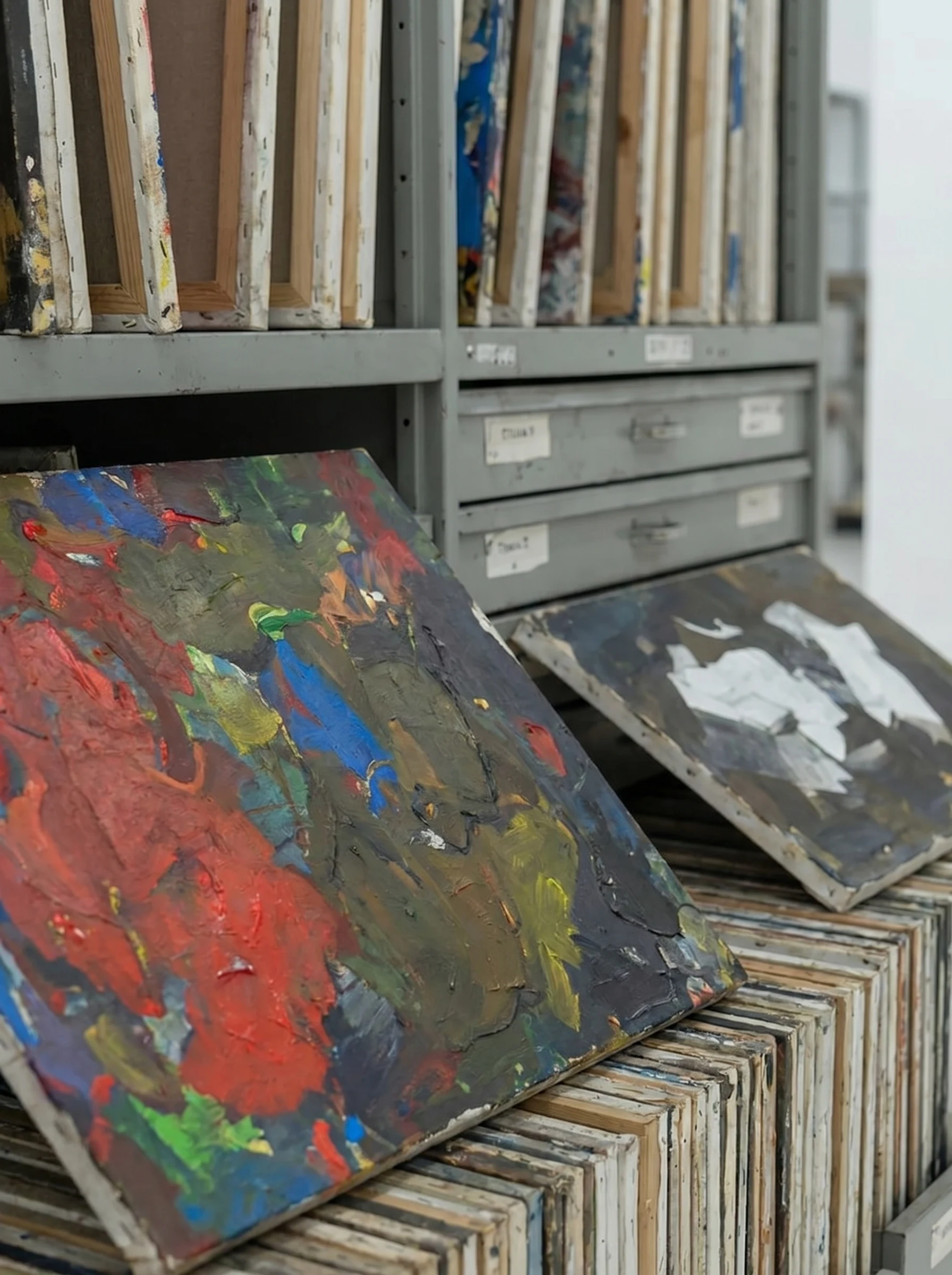
One need only observe, for example, the return of painting within international institutional spaces. Between 2010 and 2015, a significant part of curatorial culture seemed suspicious even of large-scale painting, often privileging minimal aesthetics, rarefied installations, and conceptual languages accompanied by excessively self-referential theoretical frameworks. Today, however, painting—even figurative, narrative, or emotional painting—has returned to the center of global museum discourse, demonstrating how rapidly sensibilities, priorities, and cultural paradigms evolve.
Cultural institutions, after all, do not exist in isolation. They also respond to shifts in society, audiences, and the ways culture is experienced and shared. Museums, foundations, and major international exhibitions are increasingly called upon to create projects that are accessible, inclusive, participatory, and capable of generating direct emotional impact. Not necessarily less complex, but certainly more open to dialogue with diverse audiences.
Some of the most impactful institutional projects of recent years have been ironic, provocative, visually excessive, or even intentionally ambiguous. Others have embraced deeply human, intimate, or vulnerable registers. This demonstrates how limiting it is to automatically associate the institutional context with a rigid idea of “high culture” as severe and distant.
The notion that institutional artists must necessarily be “intellectuals” in the traditional sense also ignores the plurality of voices that inhabit these spaces today. Many artists come from vastly different cultural, geographic, and social backgrounds, bringing perspectives that openly challenge historical definitions of cultural authority. Contemporary institutions, at least in their most evolved forms, no longer seek only to preserve a canon: they also seek to redefine it.
The New Fluidity of Contemporary Careers
At the dawn of the digital era, of social networks, and of increasingly horizontal communication, it is worth asking whether the traditional roles within the art system have truly remained unchanged—or whether they are evolving right before our eyes.
One of the most interesting aspects of contemporary art today is precisely the growing fluidity between the gallery world and the institutional sphere. Many artists now move naturally between these two dimensions, developing different projects for different contexts without this necessarily implying a loss of coherence or artistic integrity.
The role of the internet is also central to this transformation. Distances are shrinking, hierarchies are becoming more permeable, and direct dialogue—once almost unthinkable—is now often possible. An emerging artist can connect with curators, museum directors, or biennial organizers through tools that have radically transformed access to visibility and professional relationships. This does not mean that power dynamics have disappeared, but certainly that the system is less impermeable than it once was.
Perhaps this is one of the most fascinating characteristics of our artistic era: the proliferation of new media, new platforms, and new possibilities for connection is opening scenarios that only a few years ago would have seemed unimaginable.
In light of this transformation, a hybrid approach should not be interpreted as a compromise, but as a genuine opportunity for expansion.
It allows artists to reach different audiences, economically sustain their practice, experiment with multiple languages, and explore different dimensions of their creative research. Work intended for sale does not automatically eliminate intellectual risk or cultural quality, just as an institutional project does not inherently guarantee depth or critical relevance. Everything depends on the awareness with which these tools are used.
An artist may create an extremely personal and intimate series for a gallery while simultaneously developing a more accessible or communicative public project within an institutional setting. And precisely this ability to move across different contexts can strengthen both practices rather than weaken them.
Questioning the barriers that have historically privileged only certain forms of expression or particular artistic profiles also means opening the system to a greater plurality of experiences and voices. Would a more open art world, one grounded in dialogue, genuine exchange, and less dominated by automatic judgment, really benefit only artists? Probably not. But for this to happen, another, often more uncomfortable issue must also be addressed: the gradual disappearance of authentic criticism.
In recent years, the cultural system, and the art world in particular, seems to have shifted from a culture of confrontation toward a culture of permanent caution. The fear of taking clear positions or formulating truly argued judgments has produced communication that is increasingly diplomatic, neutral, and self-referential.
Criticism, which historically was meant to analyze, challenge, create friction, and even generate cultural conflict, is now often replaced by promotional texts, excessively cautious language, or narratives designed not to compromise professional relationships within an increasingly interconnected system.
In an environment where artists, curators, gallerists, institutions, collectors, and communication platforms all coexist within the same relational ecosystem, saying what one truly thinks involves risk.
Are we prepared to take that risk?
Openly criticizing a project, disagreeing with a dominant trend, or simply expressing a strong opinion can mean damaging relationships, losing opportunities, or being perceived as “problematic.” Paradoxically, this apparent openness often produces the opposite effect: everyone can speak, yet fewer and fewer people are genuinely willing to say something that may be contested.
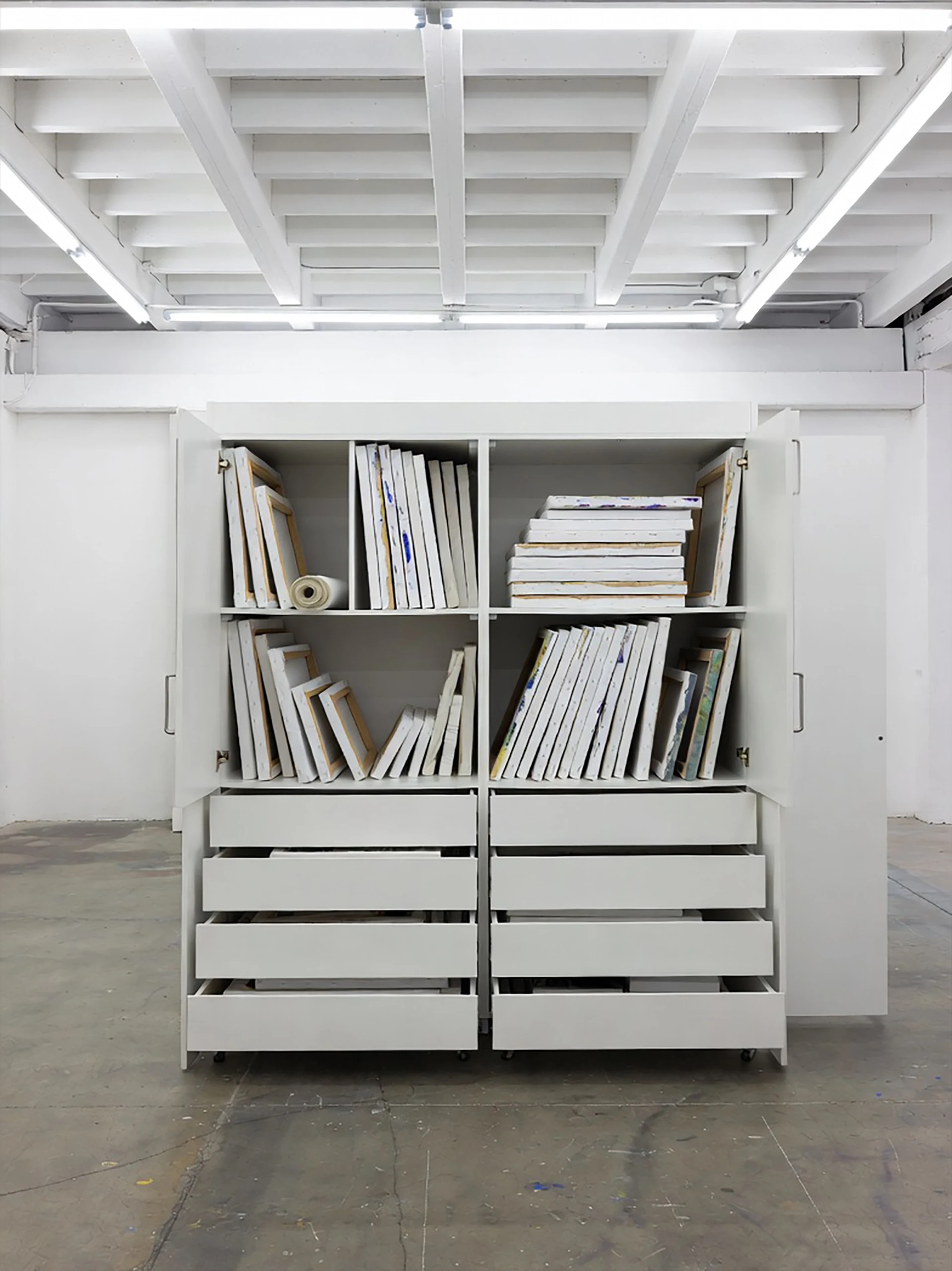
Yet criticism is not synonymous with aggression or gratuitous destruction. Healthy criticism is a tool for collective growth. It means taking the risk of observing an artwork beyond its surface, questioning the limits of a system, recognizing contradictions, highlighting fragilities, and at the same time valuing what truly deserves attention without transforming every discourse into promotion or cultural branding. One of the contemporary problems is not an excess of judgment, but the growing difficulty of formulating complex judgments, judgments that are not immediately polarized between total enthusiasm and total rejection, between celebration and cancellation.
And this is precisely where a more open art system could make a difference: not by eliminating dissent, but by making it possible once again. By creating a space in which commentary is not perceived as a personal or professional threat, but rather as a necessary component of cultural vitality. An opportunity to open oneself and engage in dialogue. After all, what is the purpose of making art if not this?
The almost automatic distinction between the “gallery artist” and the “institutional artist” also originates here: from the need to simplify an increasingly complex landscape through immediate, recognizable, and easily communicable labels. On one side, the artist perceived as close to the market, therefore suspected of being accommodating, repetitive, or decorative; on the other, the artist associated with cultural institutions, automatically invested with a theoretical, intellectual, or socially legitimized aura.
But contemporary reality demonstrates every day how insufficient this opposition has become.
Careers intersect, languages migrate from one context to another, and practices contaminate one another.
In an era in which the boundaries between public and private, research and communication, autonomy and economic sustainability are becoming increasingly fluid, perhaps the most interesting challenge is to learn how to observe nuances without the constant need to transform them into hierarchies. Because contemporary art, in its most vital form, is almost never born within rigid definitions. It emerges instead within zones of tension, contradiction, transition, and hybridity, the very territories we persist in trying to simplify.
Bibliography:
- The New York Times – “The 2026 Whitney Biennial: Personal, Political, and Monumental” (2026)
- Artnet – “Mega-Dealers and the New Economics of Biennales” (2025)
- Flash Art – “From Gallery to Institution: The New Artist-Entrepreneur” (2026)
- e-flux – “The Museum as Archive of the Future” (2025)
- The Guardian – “How Mega-Galleries Are Reshaping the Art World in 2026” (2026)
- Artforum – “The Convergence of Market and Institution: A 2026 Perspective” (2026)
- Artsy – “5 Themes That Will Define the Art Market in 2026” (2026)
- Art Basel & UBS – “Global Art Market Report 2026” (2026)
- The Art Newspaper – “Art market 2026 predictions: underwhelming rebound and another Frieze fair” (2025)