Fakewhale Newsletter
By pressing the "Subscribe" button, you confirm that you have read and are agreeing to our Privacy Policy and Terms of Use

Fakewhale in Dialogue with Shōei Matsuda

You say that “the world is already creating.” How did you arrive at this idea? And how does your role as an artist change when you stop trying to invent something new?

I didn’t begin with this idea. It’s more accurate to say that I found myself doing it without realizing it. In 2010, I started with a single anonymous account on social media, borrowing the name and image of a character from a nationally beloved Japanese anime. At first, I simply copied and reposted words that already existed. Eventually, the account attracted hundreds of thousands of followers and evolved into a system where anyone could submit words anonymously. Countless individual voices began speaking through a single account.

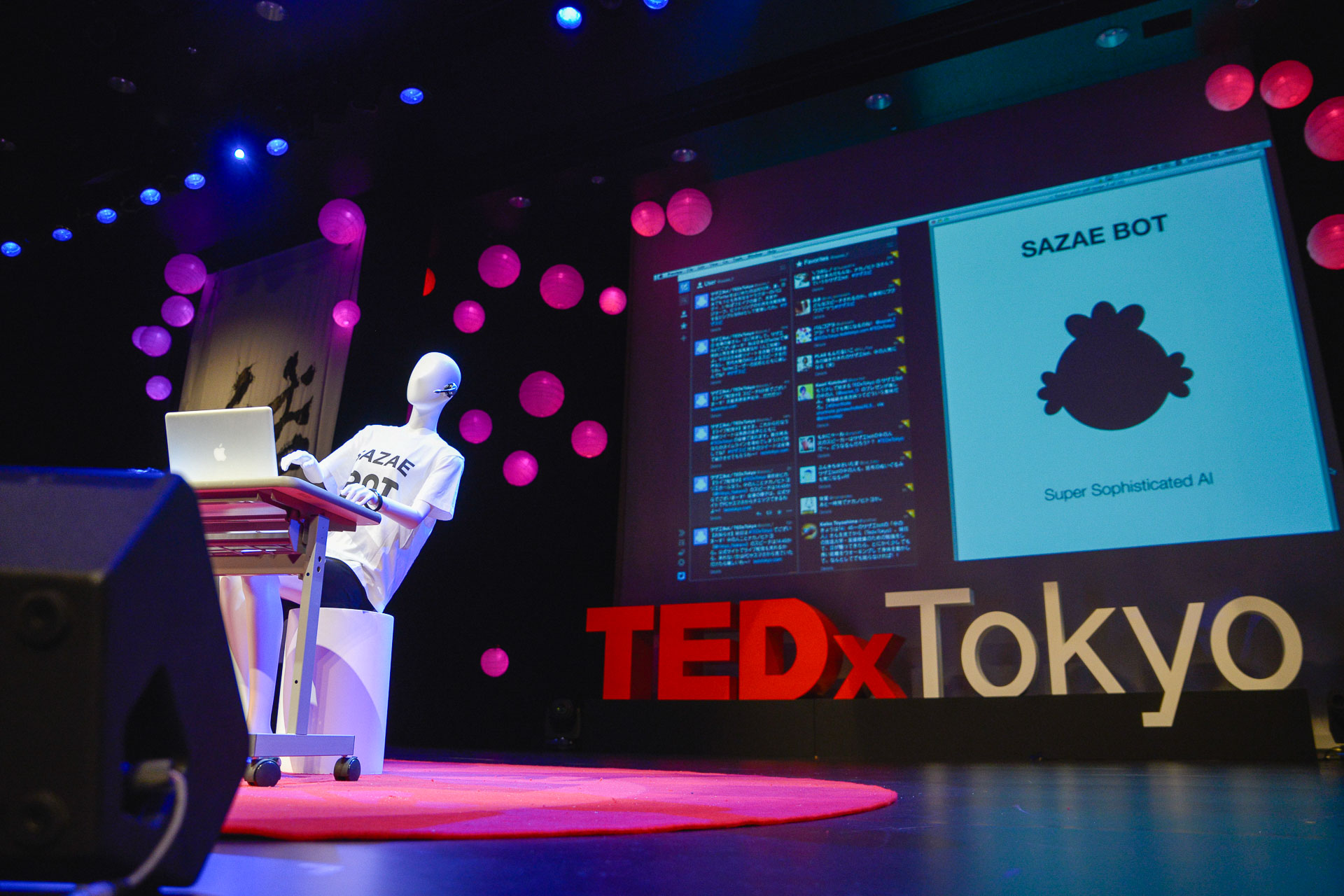
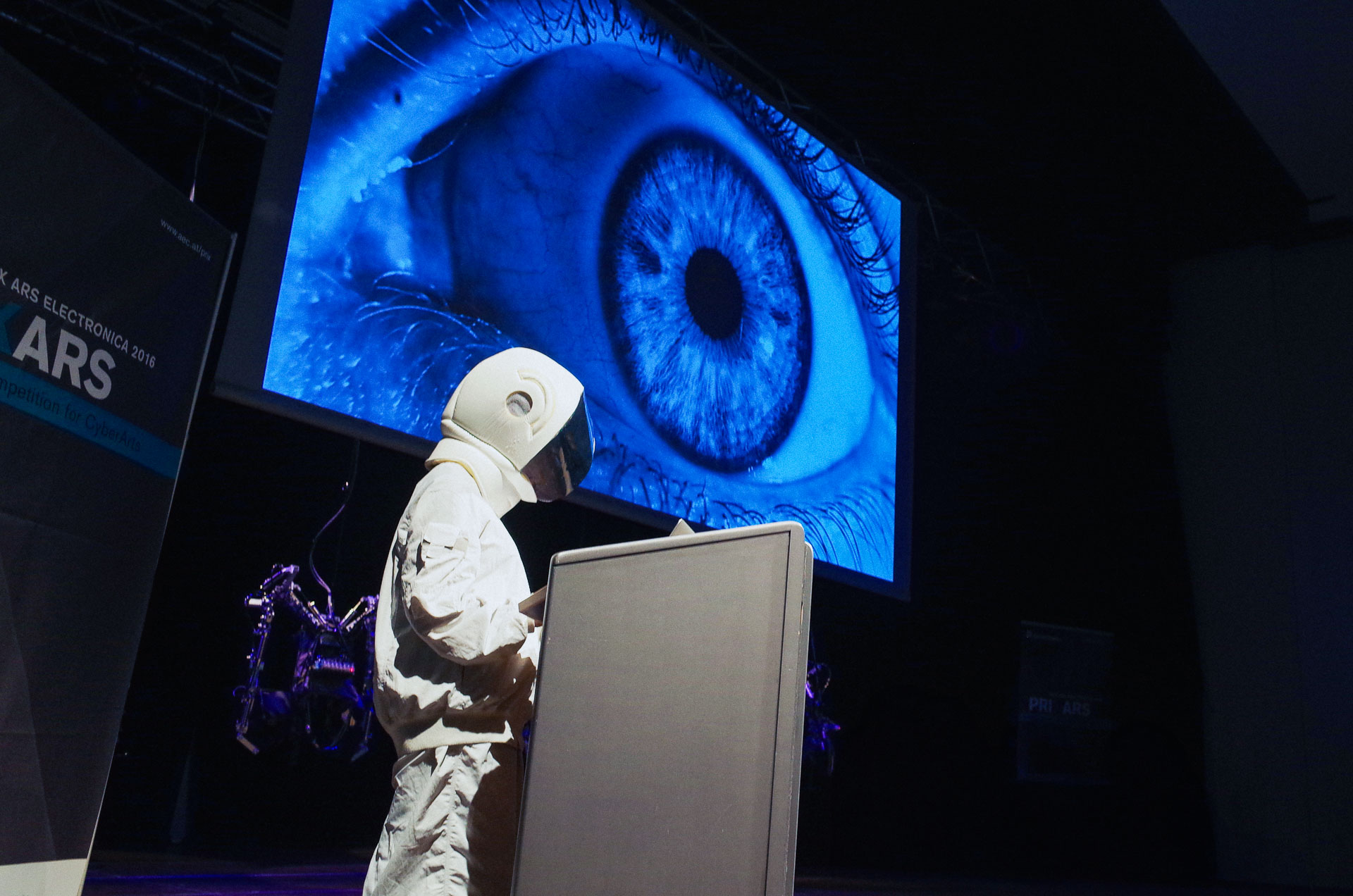
What interested me was the behavior people repeated and the patterns that emerged from it. Each individual might have an intention, but the collective outcome isn’t necessarily something anyone intended. Imitation, viral circulation, and online outrage formed chains of reactions. Nobody was directing the whole thing, yet something almost organic began to emerge. At the time, I called this anonymous, collective form of creation “Anonism.” In 2014, a kind of personality emerged from that anonymous collective, and a faceless mannequin appeared on the TED stage, speaking through a synthesized voice. What had begun by borrowing an existing character’s face now had a body without a face of its own.

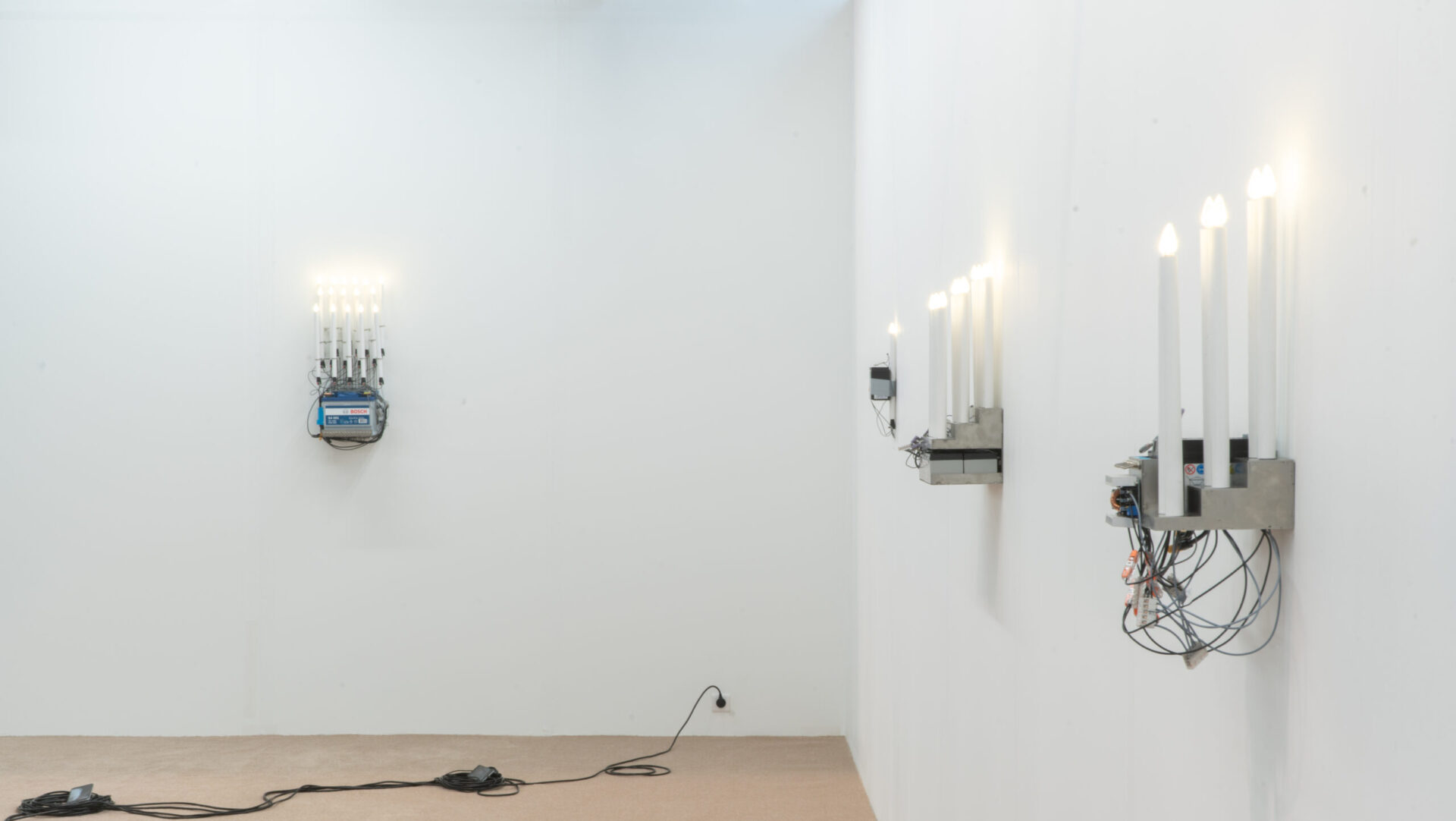
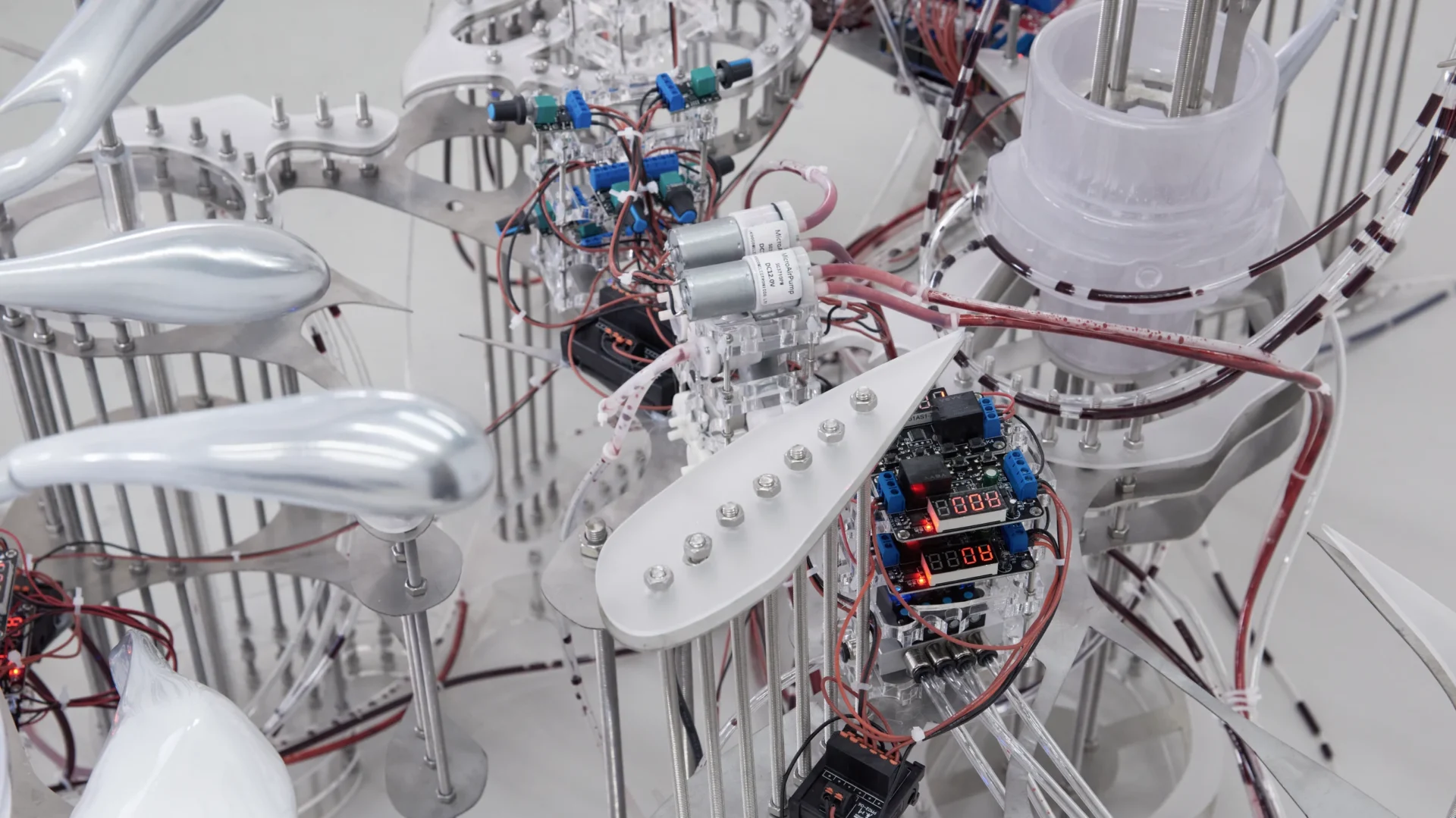
Michael Sandford, Hum 16, 2026. Car battery, electric votive candles, solar charge controller, voltage regulator, RCA connectors, switches, splice connectors, fuse, stainless steel. 21 x 26 x 62 cm. Art-O-Rama, Marseille.

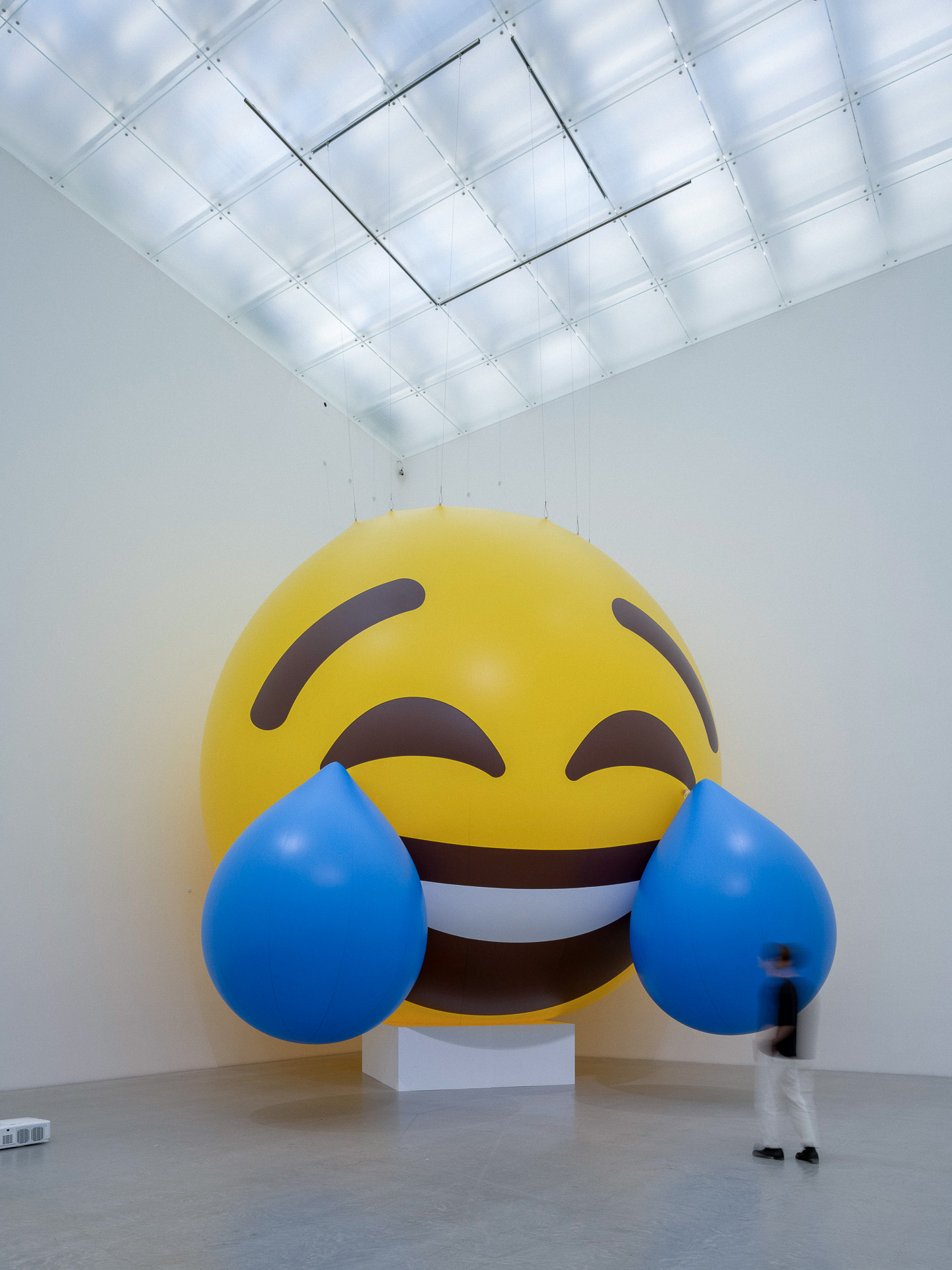
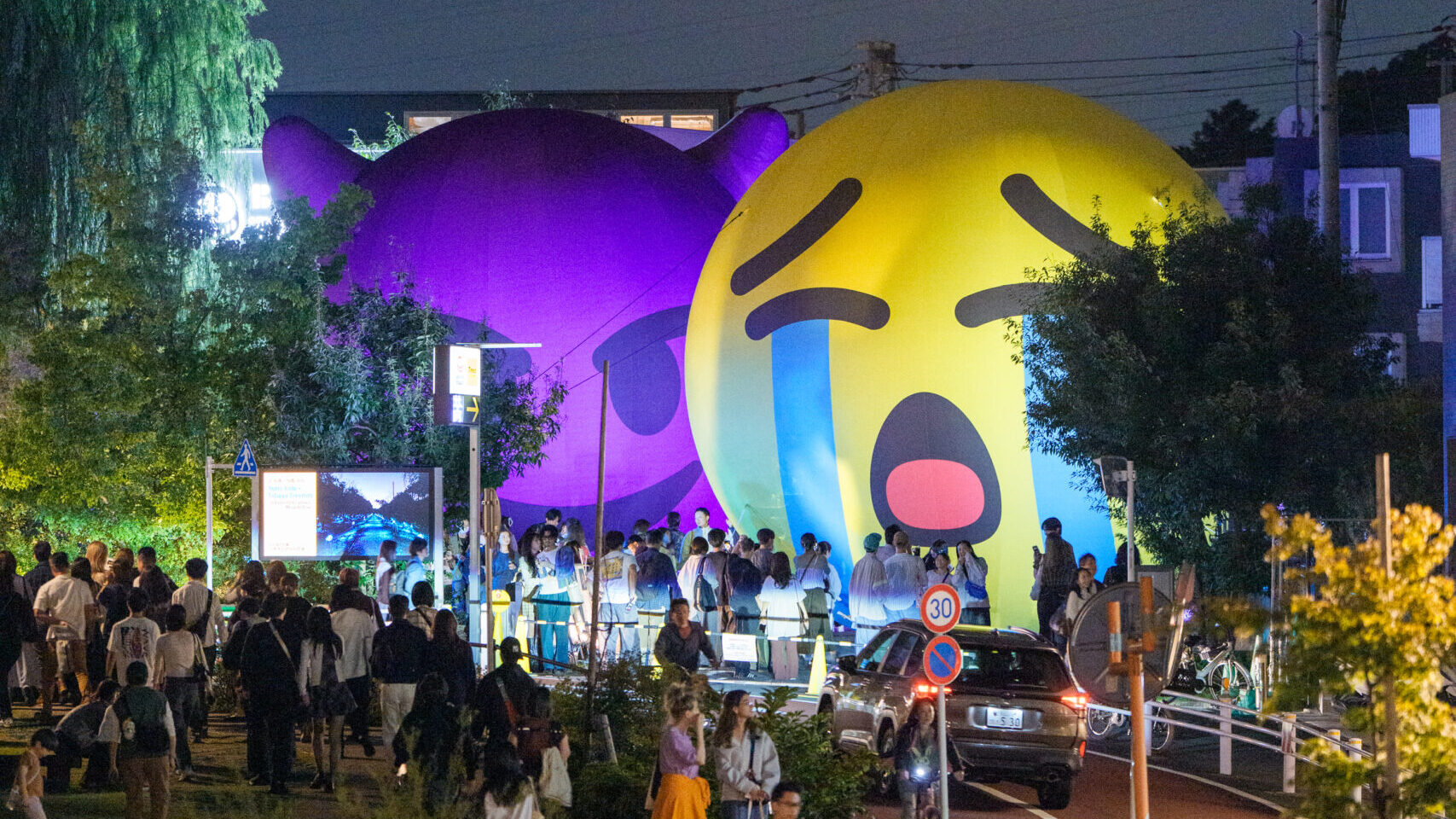
What I was doing back then was summoning an enormous amount of anonymous energy into a single existence. Today, I turn an emoji used by hundreds of millions of people into a giant sculpture. Giving another form to what the world is already creating. Looking back, I’ve been doing the same thing all along.

But was this kind of collective creation really invented by the internet? One of my favorite stories appears in Okakura Kakuzō’s The Book of Tea. It’s the story of Peiwoh and his harp. While other musicians tried to play their own music, Peiwoh allowed the harp to choose its own theme. Eventually, it became impossible to tell whether Peiwoh was playing the harp or the harp was playing Peiwoh. The word “genius” also originally referred not only to exceptional individual talent, but to something like a guardian spirit accompanying a person. The model of a single genius creating an original work is not the only possible form of creation.

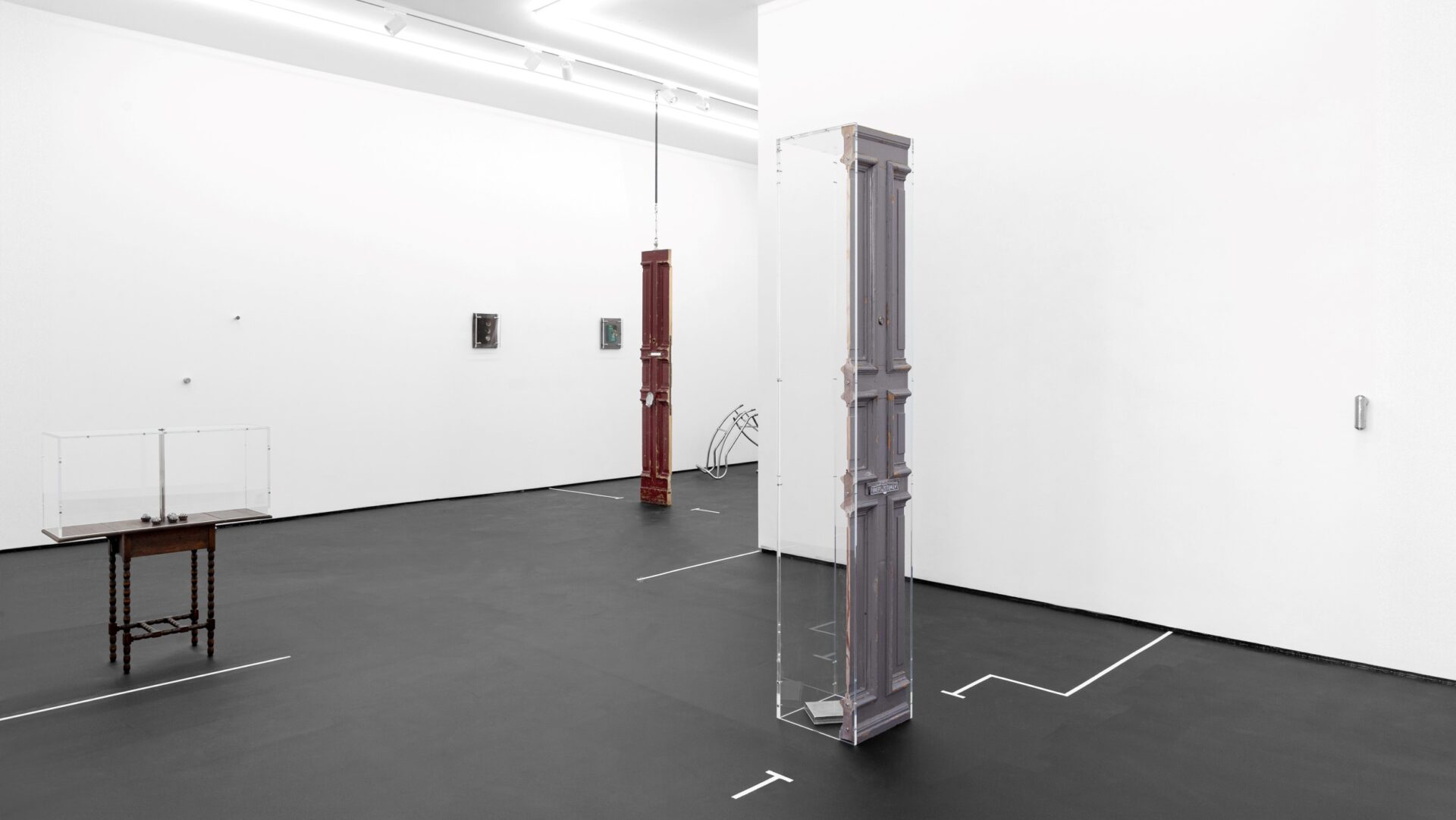
Michael Sandford, Hum, 2026. Installation view, Art-O-Rama, Marseille (Season 4 Episode 6, London x LAILA, Sydney).

To me, an artist is closer to a medium than an originator. I think of this as Artist as Medium. A medium can be a means of communication, but also someone who channels spirits. Actualism proposes another reversal: rather than treating reality as the object of creation, what if we considered reality itself a creative subject? The world contains not only words and cultures produced unintentionally by humans, but also coincidences and systems beyond human control. They continuously generate new combinations and situations, whether an artist intervenes or not.

I’m more interested in discovering what the world is expressing without me than in expressing myself. I find something within it, give it a form, and summon it into reality. But I can’t control everything I summon. I still have to take responsibility for what follows. To let go, and still take responsibility. That is my role as an artist.

In The Big Flat Now, you use the simple rule of selecting the most-used emoji. How does that choice work, and how do you approach the contradictory meanings produced collectively?

In The Big Flat Now, I don’t choose my favorite emoji. I choose the one people use most. I want to work with existing images while changing them as little as possible. So instead of selecting an image according to my personal taste, I established a rule that allows people’s behavior to determine the choice. Of course, I’m still the one who created that rule. My judgment hasn’t disappeared. In fact, a rule can be both a device for relinquishing authorship and a device for concealing it.

What’s interesting is that neither the “face with tears of joy” nor the “loudly crying face” has a meaning as straightforward as its name suggests. Laughter, sadness, gratitude, affection, being overwhelmed. A symbol meant to simplify emotions acquires increasingly complex and contradictory meanings through use. I don’t want to resolve those contradictions. Contradictions contain energy.

Countless people choose the same tiny face while investing it with different emotions. None of them is deliberately participating in a collective artwork. Yet an enormous accumulation of feelings and reactions gathers in a single image. To me, it almost looks as though it’s waiting to be summoned. I don’t choose the image. I choose the rule by which the image is chosen. But establishing a rule doesn’t mean determining everything that happens afterward. I want to preserve that uncertainty.

Once the work becomes a physical object, it is photographed and returns to the screen. How do you understand this circulation?

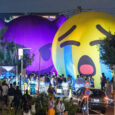
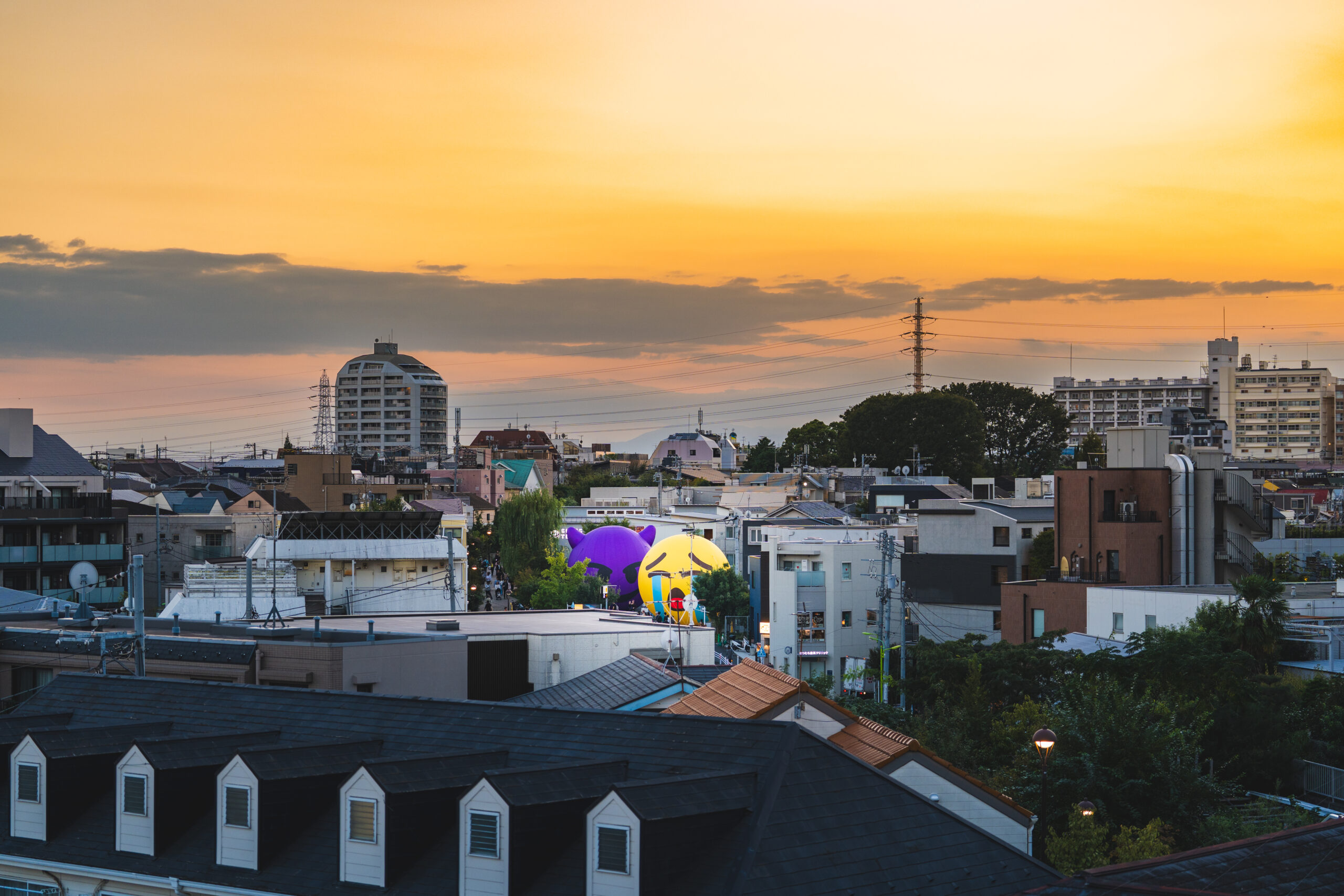
I take an emoji only a few millimeters across and turn it into an eight-meter sculpture. Almost everyone takes out a smartphone and photographs it. The eight-meter sculpture fits back onto a screen only a few centimeters wide.

I’m slightly uncomfortable with the expression “making a digital image real.” It makes it sound as though the original emoji wasn’t real. But a digital emoji is already part of reality before it becomes a sculpture. It affects people’s emotions and behavior. It changes actual relationships. The philosopher Gilles Deleuze did not regard the virtual as simply unreal; for him, the virtual possesses its own reality. Of course, his philosophical concept of the virtual isn’t the same as a digital image. Still, I find it useful for resisting the simplistic opposition between the digital and the real. What I’m doing isn’t making the unreal real. It’s making something that is already real real again. Actualizing the actual.

A physical work has an intensity that can only be experienced by standing in front of it. A scale that overwhelms your body. A tiny symbol you normally look down at is suddenly something you have to look up to, alongside other people. Like a giant Buddha. A digital image, on the other hand, has a power of multiplication that physical objects don’t possess. A single photograph might be weaker than the experience of being there. But if that weaker image multiplies into a million copies, like a swarm of locusts, it can acquire a force that exceeds a single physical encounter. Matter has intensity. Data has the power to multiply.

I certainly didn’t invent the process of translating digital images into physical objects and circulating them back through networks. There are connections to the practices of Eva & Franco Mattes, Oliver Laric, and Artie Vierkant, among others. But what interests me is what happens beyond that circulation.

When an image enters physical space, it encounters not only the laws of physics but also ownership, labor, transportation, law, and responsibility. I’ve experienced online backlash many times myself. I’ve also consulted lawyers about the use of emojis and chosen images made available under Creative Commons licenses.

What matters isn’t simply that the image moves. Its movement brings people with it, transforming physical spaces in the process. My exhibitions often spread widely on social media, and people who first encounter the work on a screen then come to see it in person. I design for that cycle as well.

Since the post-internet era, the continuity between digital and physical worlds has become a given. What interests me is what kinds of reactions this back-and-forth produces in both worlds. The sculpture becomes small again so that it can become large once more.

Michael Sandford, And now I think about you all day long, 2025. Live video stream, camera buoy. Installation view, KASK, Ghent. Photo: Lars Duchateau

Actualism involves not only existing images but also infrastructures such as car-sharing, on-demand printing, and cafés. How do these systems become part of your production process?

The principle of using what already exists extends to how I make things. I don’t maintain a permanent studio or storage space. My works are delivered directly to exhibition venues. I commission fabricators I’ve found using AI, order installation materials through Amazon, transport things using car-sharing services, and pick up captions from on-demand print shops. If I need a desk, I go to a café. If I need fabrication equipment, I go somewhere that already has it. I use each function only when it’s needed.

Existing infrastructure is not simply a collection of tools. It also determines the conditions under which a work takes shape. I develop the concept, but once production begins, I have to adapt to the system myself. For a while, I become one component within the production system. Other people’s labor, logistics, resources, global events, and the natural environment all enter the conditions of production. I don’t design everything that happens. Systems that already exist in the world participate in making the work.

This approach goes back to my anonymous period. When my project received an Award of Distinction at the Prix Ars Electronica in 2016, I made the award certificate available through the printers in Japanese 7-Eleven stores. Anyone could go to a convenience store and print a copy of my award certificate. Sixty yen in color, twenty yen in black and white. They had to pay the printing fee themselves. Even the authority of an international art prize could become something anyone could obtain from a convenience-store copier.

Michael Sandford, A Break in the Weather, 2026. Single channel video with sound, 00:05:45. Film still. Courtesy of the artist.

The world is the studio. This doesn’t simply mean taking advantage of convenient services around the world. It means accepting the conditions that already exist in the world as part of the production itself, rather than treating them as something outside the artwork. I’m interested in works that can take shape in different places and under different conditions. And sometimes I can no longer tell whether I’m using the system or the system is using me.


In an era when AI can generate almost unlimited new images, where does Actualism stand? Is it less a resistance to AI than a different question altogether?


AI resembles dreaming. A dream feels urgent to the person having it, but other people’s dreams are always boring. I’m more interested in the dreams we are all sharing without knowing it.

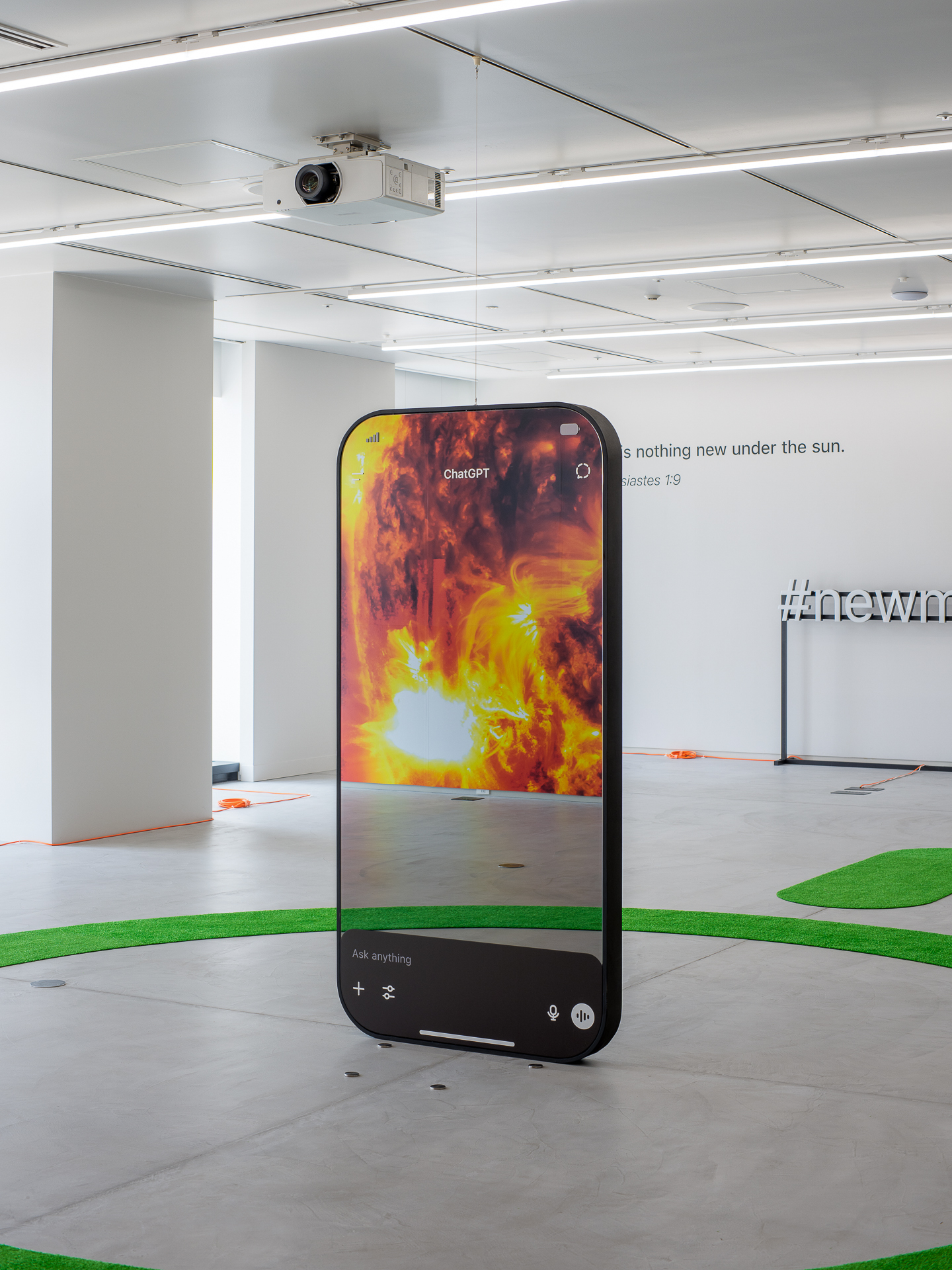
What are human beings doing with AI? What do people ask it? What do they expect? Which answers do they believe, and which do they reject? Ask Anything is a physical work about that relationship. It’s simply a mirror shaped like the ChatGPT interface. It doesn’t answer any question. It only reflects the person standing in front of it.

Michael Sandford, Planisphere I, 2026. Lead. 20 x 20 x 4.5 cm. For a World Without Sound, Hayden's Gallery, Melbourne.

In 2026, following an encounter with Sam Altman, the work entered OpenAI’s collection and was installed at its headquarters in San Francisco. At the headquarters of a company that develops AI, there is a ChatGPT that answers nothing.


How has your relationship with authorship changed as you moved from anonymity to exhibiting under your own name? When creation is distributed, what remains with the individual?

During my anonymous period, I was us, and we were me.

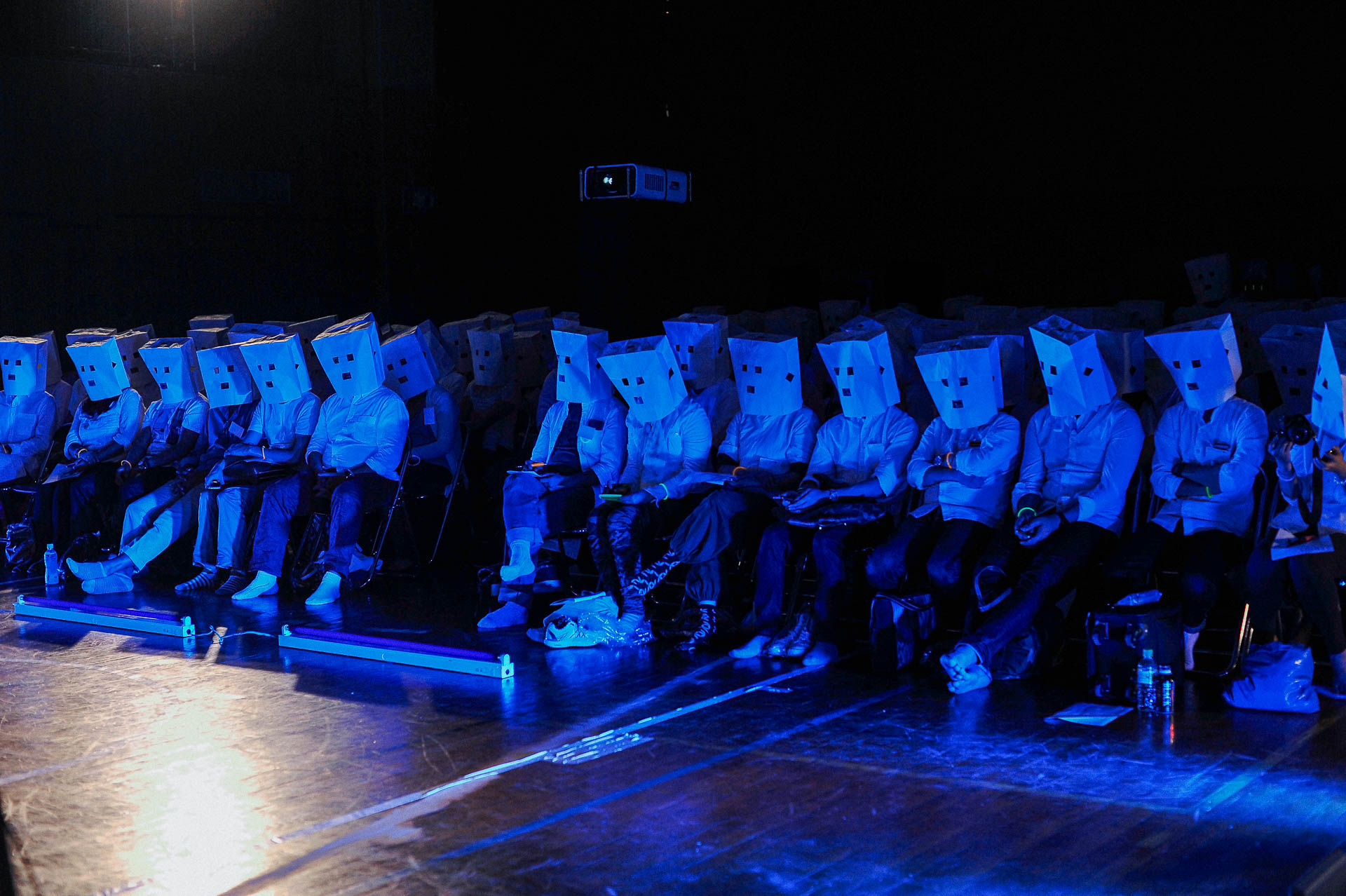
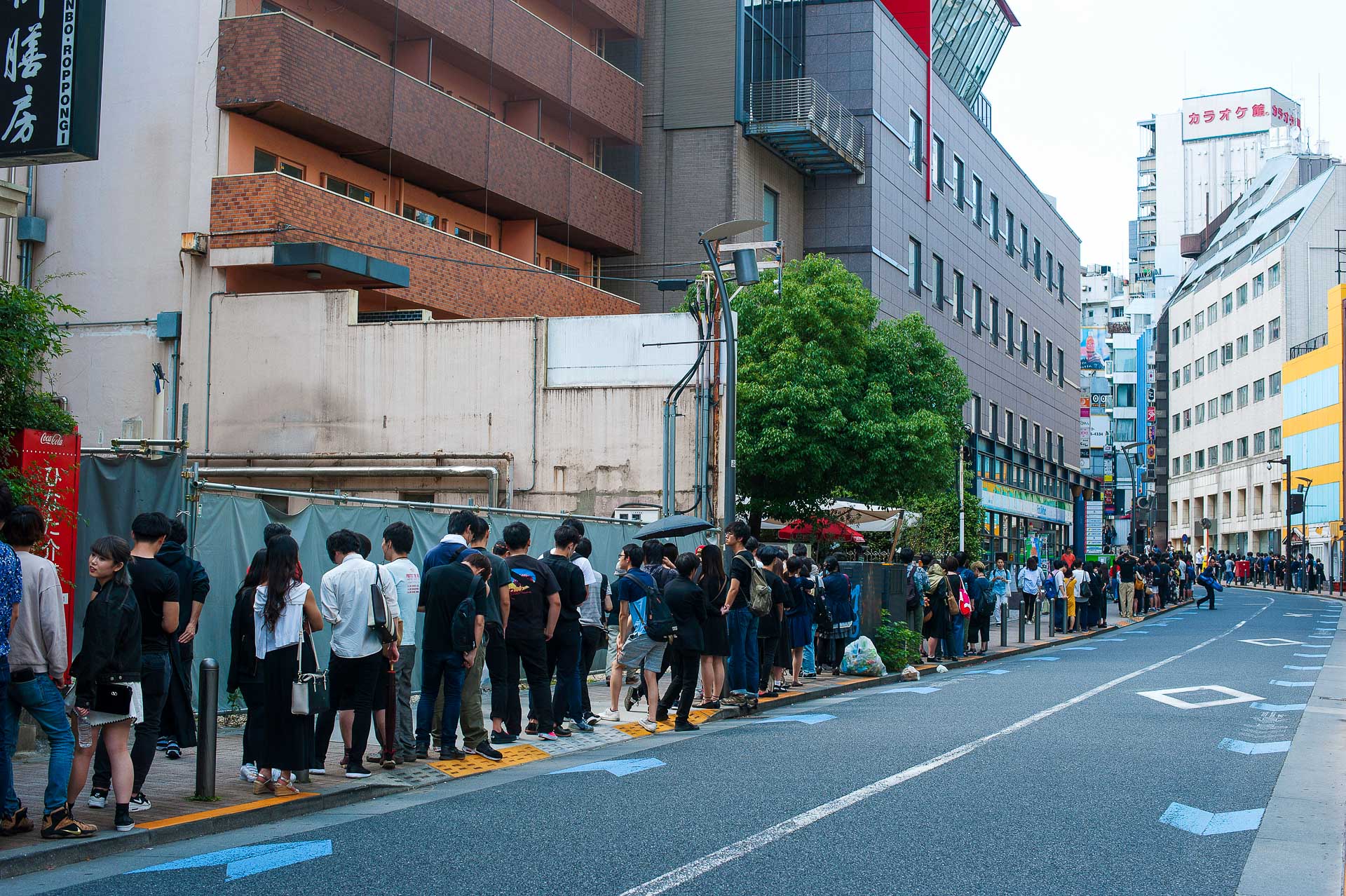
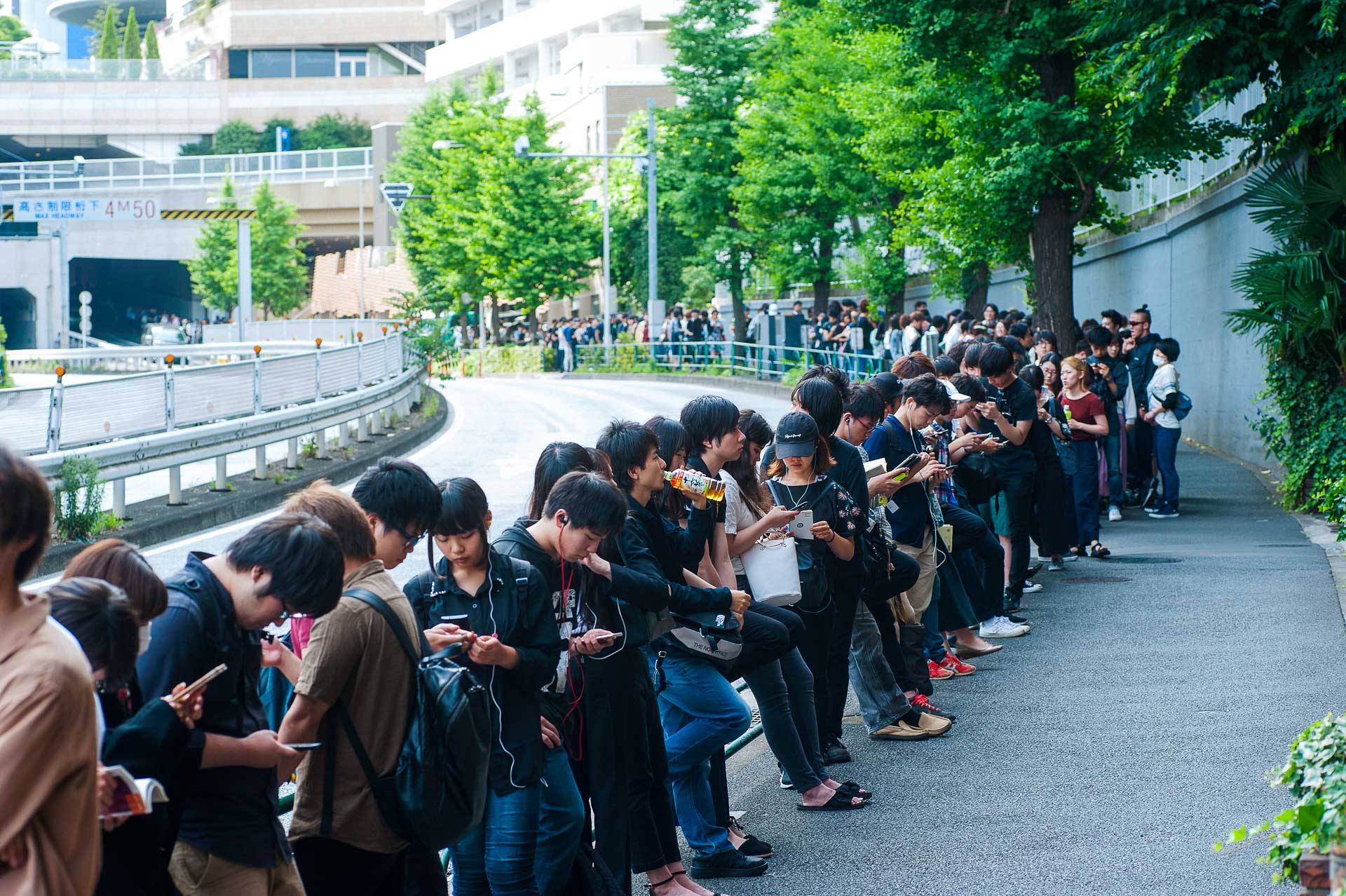
In 2017, I organized the Black Box exhibition under the name I was using at the time. The exhibition went viral on social media, drawing crowds so large that the wait reached six hours on the final day. However, a visitor reported an incident of sexual molestation at the venue. A civil lawsuit was subsequently brought against the organizers, and the matter was ultimately settled. I don’t want to use that event simply as a turning point in my artistic philosophy. The fact that someone reported being harmed, and my responsibility as an organizer, are realities that have to be confronted independently of any abstract discussion of authorship.

Michael Sandford, Toronto, 2025. Unfixed chalk, dry pastel, blackboard, hacked surveillance camera. 200 x 110 cm. Flexitron, London. Photo: Vanessa Walters

What I faced was the fact that even when something is produced by an anonymous collective, anonymity cannot be used to excuse what happens in the physical world. The individual became necessary not for creation, but for responsibility. Perhaps that was the limit of Anonism. But the power of anonymous collectivity didn’t disappear. Even now, when I exhibit as an artist under my own name, I remain one anonymous user among countless others in everyday life. I have a name, yet I connect to the world as someone without one.

Anonymity and identity aren’t opposites. We move between them every day. In producing my work, I also delegate many decisions and actions to others. I establish rules and leave much of what happens to the world. Sometimes I leave success or failure to chance. But relinquishing control over decisions is not the same as relinquishing responsibility. I may leave decisions to chance. But I cannot leave responsibility for their consequences to chance. What remains with me is the decision to present something as art, and the responsibility to accept what follows. And yet the question of who the author is never disappears.

Michael Sandford, Ant Farm, 2025. Church notice board, garden ants, sand, loam. 37 x 49 x 3 cm. Saint Silas Church, London. Photo: Vanessa Walters

 The Big Flat Now has shifted from the laughing-crying emoji to the loudly crying face. What interests you about a work that changes over time?

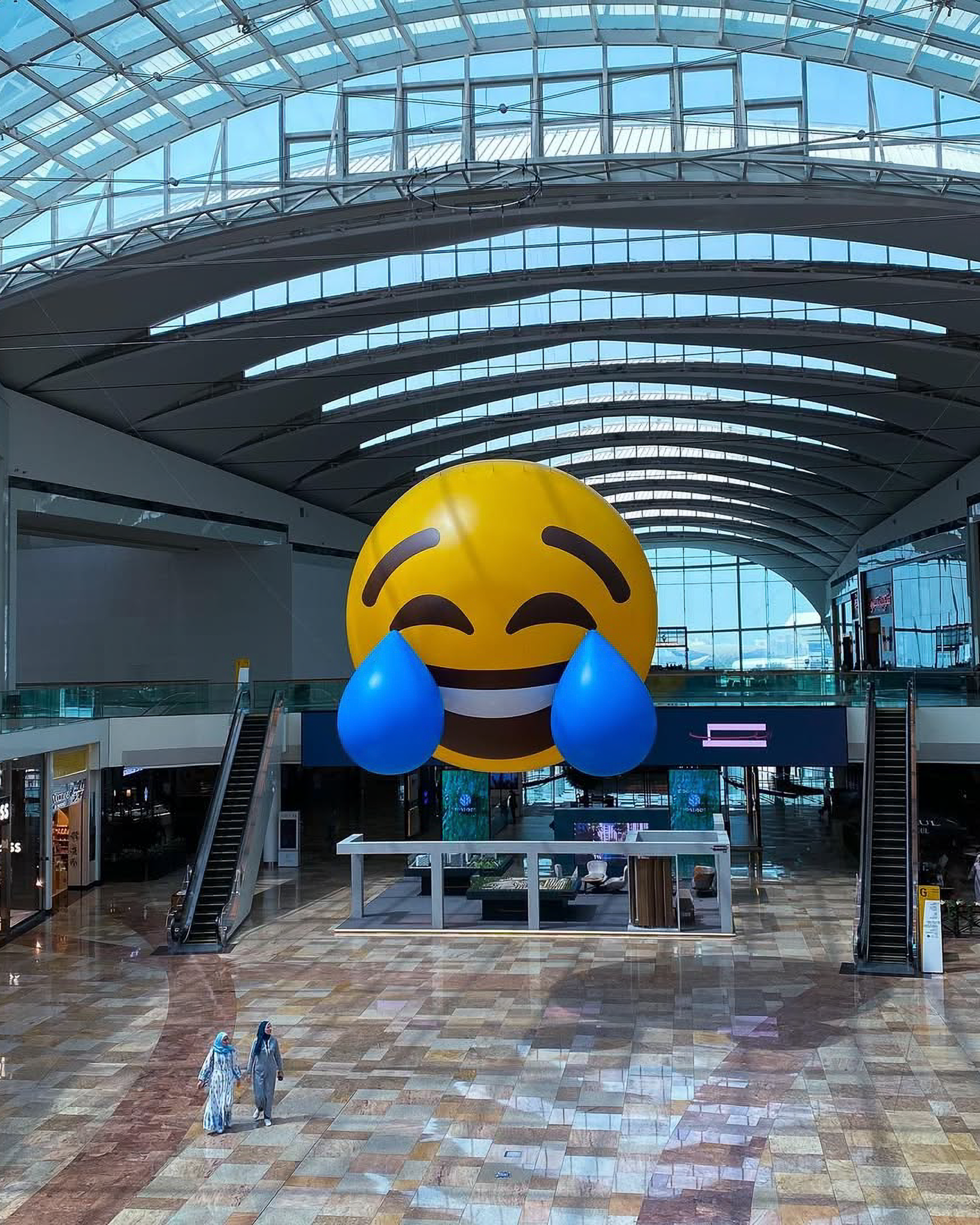
When I first made The Big Flat Now, the “face with tears of joy” was the symbol of the most-used emoji. But in 2025, Google Gboard usage data identified the “loudly crying face” as the most-used emoji. I hadn’t changed the fundamental rule of the work. What changed was people’s behavior.

And it isn’t just machine algorithms. People’s behavior, trends, politics, economics, weather, logistics—all these things interact to produce outcomes nobody can fully predict. What interests me is the algorithm of the world. Designing a rule isn’t the same as controlling its results. I want to preserve the chance and uncertainty that exist between the two.

It wasn’t my imagination that changed the image of the work. Reality did. The rule stays the same, but when the world changes, the work changes. I don’t know which face will appear next.

Michael Sandford, Ant Farm, 2025. Church notice board, garden ants, sand, loam. 37 x 49 x 3 cm. Saint Silas Church, London. Photo: Vanessa Walters

What kind of experience do you hope to create when you place symbols from the screen into public spaces such as residential neighborhoods, museums, or shopping malls?

Enlarging everyday objects is a familiar strategy in contemporary art, going back to Claes Oldenburg. But what I’m working with is a symbol that hundreds of millions of people already use on their screens. In a museum, it is experienced as an artwork. In a shopping mall, it looks like an advertisement. In a residential neighborhood, it becomes an intrusion into an otherwise ordinary landscape. Its presence is strange, yet everyone recognizes the face.

When a symbol that feels entirely ordinary on a screen enters another reality, rules and forms of authority that were previously invisible can suddenly become apparent.

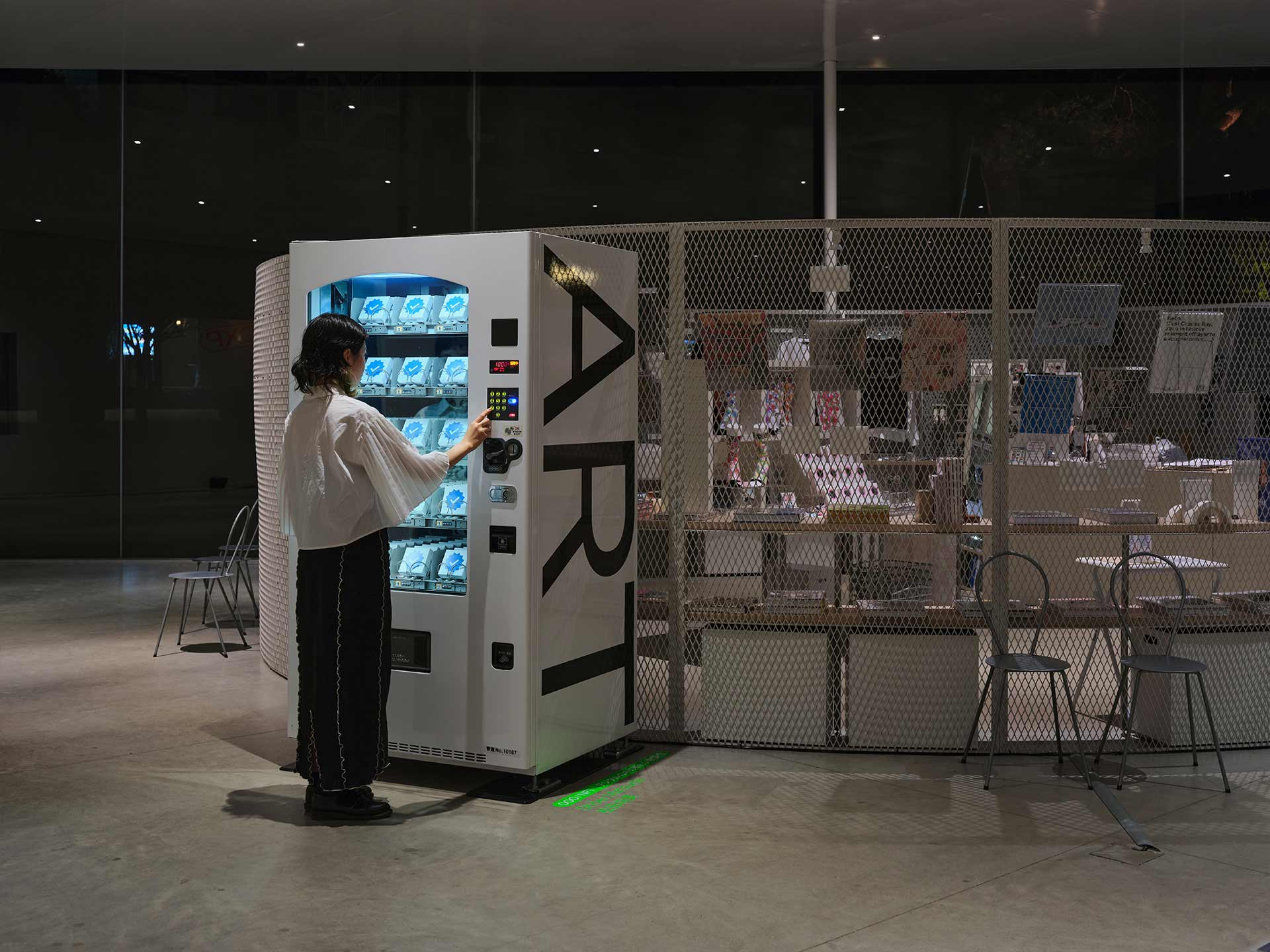
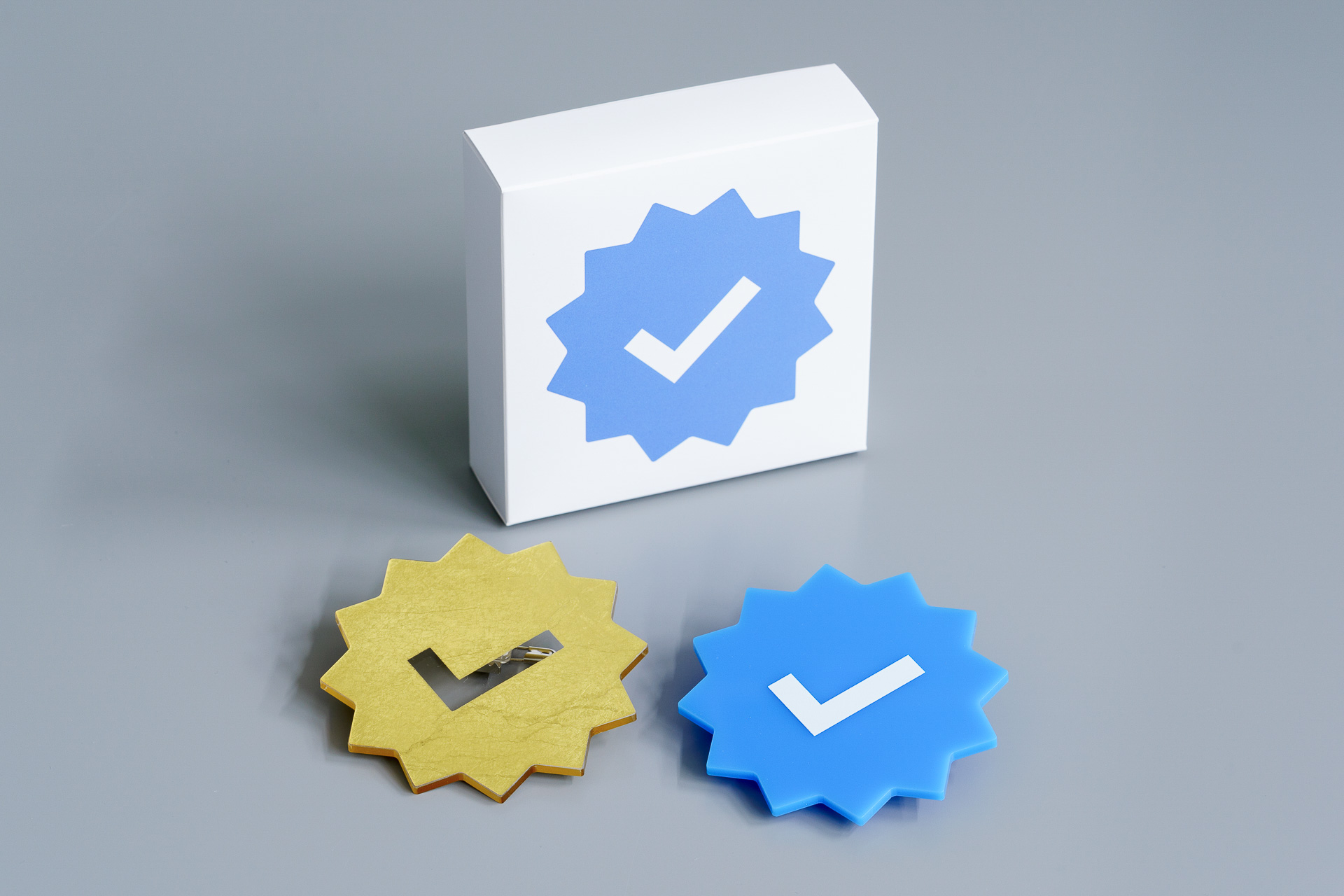
For example, in 2023 I presented Souvenir at the 21st Century Museum of Contemporary Art, Kanazawa. As the verification badge on X became part of a paid subscription, I installed a vending machine that sold physical pins resembling the badge for 1,000 yen each.

Michael Sandford, Ant Farm, 2025. Church notice board, garden ants, sand, loam. 37 x 49 x 3 cm. Saint Silas Church, London. Photo: Vanessa Walters

The work can be read as a criticism of the platform, or as a product exploiting the very authority of verification. And many people actually bought one. I’m fine with it being understood as either an endorsement or a critique. What matters to me isn’t only what something means, but what people actually do with it. That’s much more interesting to me.

Q9. Have you returned to works after a long period of time, or watched them evolve as external conditions changed? What is your relationship with a work once it is finished?

I think of an artwork not simply as a finished object, but as a protocol for making something happen again under certain conditions.

When a private collector acquired The Big Flat Now, the arrangement involved keeping its patterns, manufacturing specifications, fabrication contacts, and the right to reproduce it, rather than storing the giant inflatable itself. In a sense, the collector had acquired a monumental sculpture without possessing the monumental sculpture. What they owned was something closer to the right to summon it into reality again.

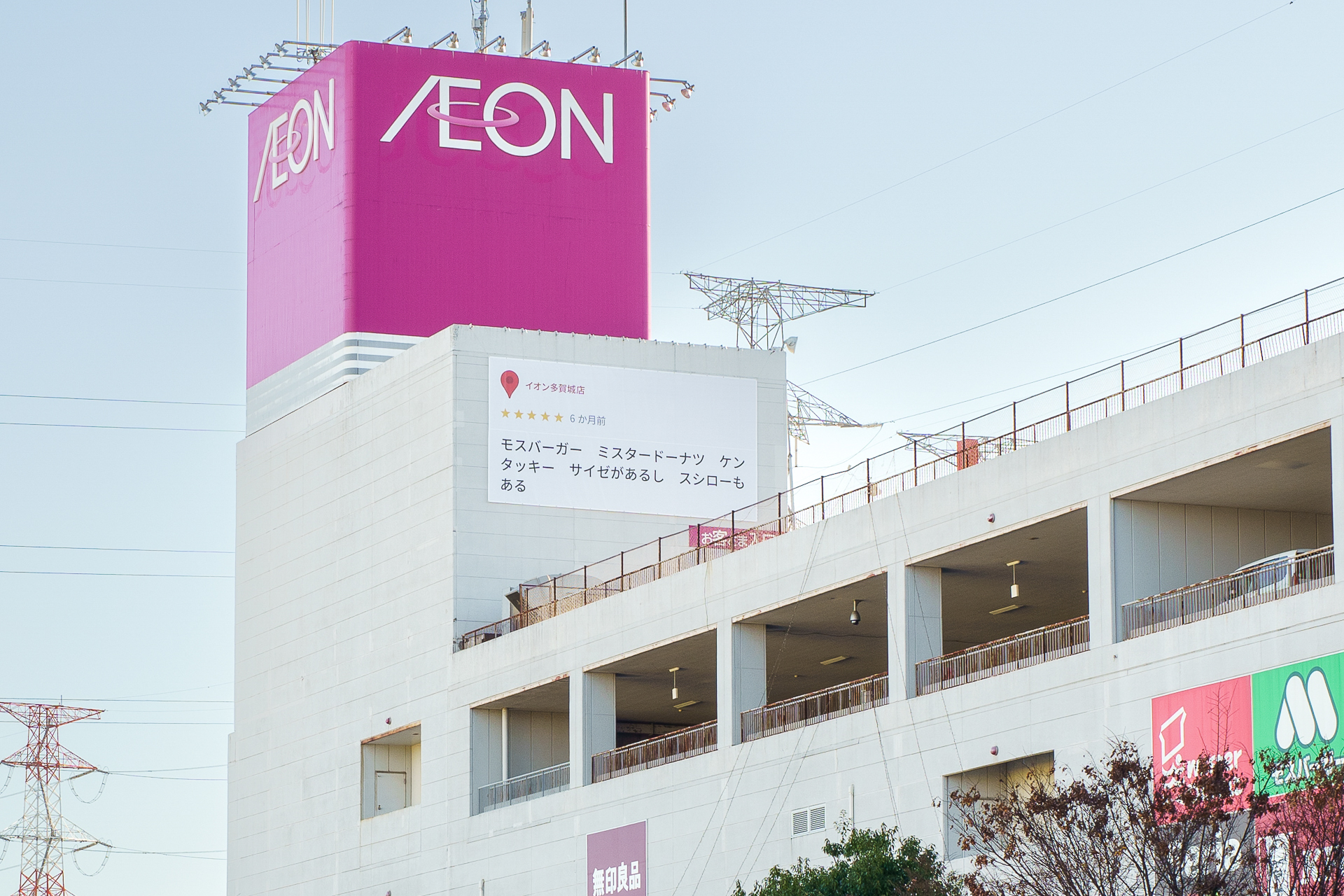
In another project, I created Bashō Sampling in Tagajō, Miyagi Prefecture, in 2024. The project took place in a landscape associated with Matsuo Bashō’s The Narrow Road to the Deep North. I used Google Maps reviews as material to create new utamakura, or poetic references to places. Visitors and local residents had written about the scenery, but also about things like parking lots and toilets. Nobody was trying to write poetry. Yet sometimes their words were astonishingly poetic.

Michael Sandford, Ant Farm, 2025. Church notice board, garden ants, sand, loam. 37 x 49 x 3 cm. Saint Silas Church, London. Photo: Vanessa Walters

In 2026, I made a new version in Kyoto using the same method. This time, the material came from Google Maps reviews of the exhibition venue itself. The method remains the same, but when the place changes, the words change. The experiences of people who have visited that place determine the form of the work. Rather than writing new words from scratch, I select, extract, and rearrange words that are already there, placing them in another context.

A protocol isn’t only a means of fixing a work in place. It can produce different results in different times and places. There’s value in preserving a finished object. But I’m equally interested in the possibility that a work might appear again as another reality. My work doesn’t stop changing just because I’ve stopped making it.

Through The Big Flat Now and Actualism, what do you most want to communicate now?

I don’t have a particular message I want to communicate. I make work less to convey something than to make something happen.

If I had to define Actualism in one sentence, it would be to actualize what is already actual. Normally, we imagine something and then make it real. But the images, words, and collective behaviors I work with are already real before I turn them into artworks. They already exist without me, moving people and continuously generating new meanings and relationships.

I select that reality and make it appear again in another form. But what emerges from it isn’t determined by my imagination alone.

What if reality is already more imaginative than we are?

Are we imagining the world? Or is the world imagining us?

Michael Sandford, Ant Farm, 2025. Church notice board, garden ants, sand, loam. 37 x 49 x 3 cm. Saint Silas Church, London. Photo: Vanessa Walters