

Creation today no longer begins with a blank surface. It hasn’t for quite some time, you might say. Instead, it begins within a field of possibilities that are already there: ready to be selected, combined, discarded, and refined.
With generative systems, a growing share of “technical” knowledge is being transformed into accessible options. The result of this small yet profound revolution in creativity is that the compositional act is gradually shifting away from producing every single element from scratch and toward the ability to navigate what is already possible. Toward choice, in other words.
Skill, then, increasingly concentrates around direction, judgment, and selection: knowing what to ask for, what to keep, what to remove, what to connect, and, above all, where to intervene.
Within this new grammar of possibility, creating may mean less and less producing something out of nothing, and more and more understanding, navigating, and pushing against the systems that make certain possibilities available in the first place.
In this article, we want to explore a few questions raised by this shift: what happens when the creative gesture also becomes an act of selection? Where does expertise move when execution is compressed into a matter of seconds? And, most importantly, how free can a creative process really be when the field of possibilities has already been partly organized, classified, and prepared for us?
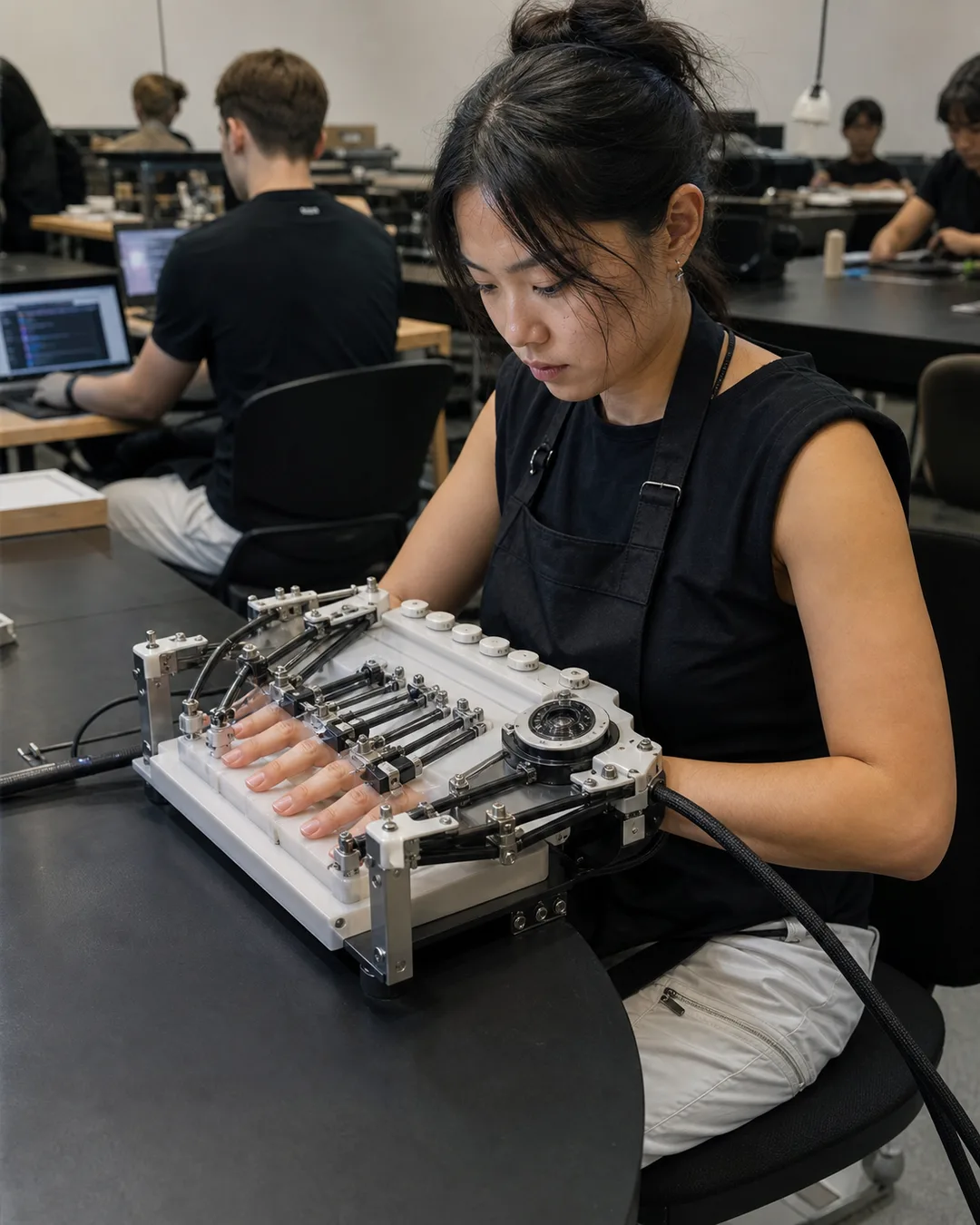
Skill Enters the Prompt: Craft migrates into command design as the device converts technical memory into selectable grammar and makes fluency a capacity to steer.
The prompt absorbs the gesture. A sentence now carries composition, lighting, lens, texture, affect, period, and social address through a grammar that treats craft as an executable structure. The device converts technical memory into selectable instruction, and the artist enters the system through the ability to formulate what the machine can recognize as a request.
Skill changes its visible surface while retaining its pressure. The former discipline of the hand, the eye, the darkroom, the timeline, the brush, and the rendering suite migrates into command design, where syntax becomes a lever and descriptive precision becomes a mode of production. Latent space rewards the maker who understands how visual histories have been indexed, clustered, weighted, and made available as probabilistic neighborhoods.
The prompt functions as a compact contract between desire and model behavior. Every adjective recruits a lineage, every medium tag invokes a training bias, every stylistic cue activates a region of accumulated recognition. The artist’s fluency grows through iterative steering, through an acquired sense of how the model mishears, over-complies, embellishes, corrects, and returns visual consensus as apparent surprise.
This migration also transfers craft into temporal compression. Hours of execution collapse into seconds of generation, yet the time saved reappears as selection, comparison, refinement, and aesthetic governance. The interface accelerates production while demanding a new patience, a vigilance toward the small differences through which authorship survives inside abundance.
The skilled operator now reads outputs as diagnostic traces. An unwanted hand, a flattened face, a seductive surface, a too-perfect room, an uncanny glow, each artifact reveals the training field that produced it and the distribution logic that rewards its recognizability. Craft becomes the intelligence of pressure applied to a system that already knows how images usually win attention.
The old mastery of making becomes the new mastery of steering. The studio’s decisive competence resides in sensing where the machine’s fluent average can be bent, delayed, intensified, or made strange. Skill enters the prompt as memory enters protocol, and the artist becomes a reader of cages.
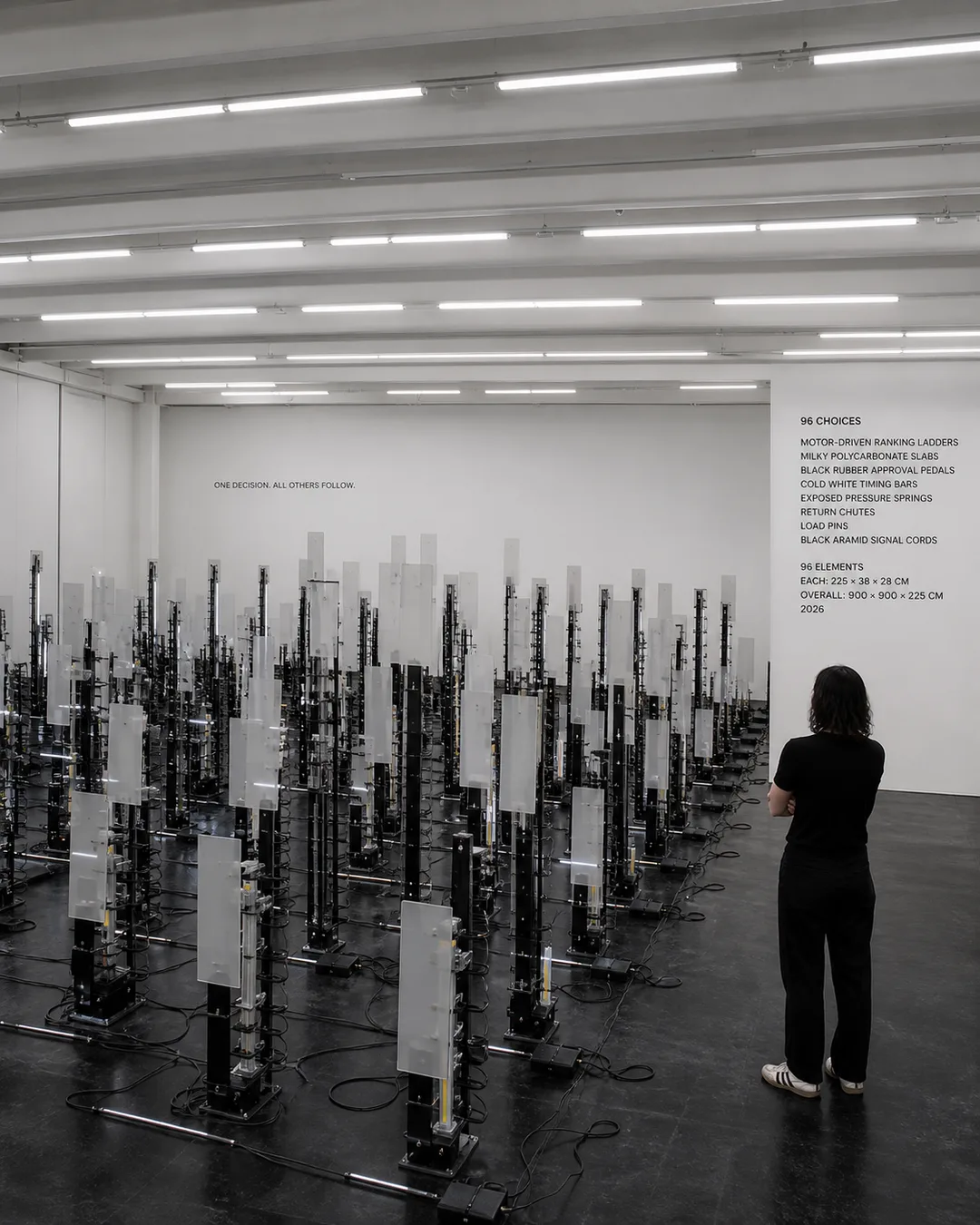
The Menu Learns Desire: The interface trains attention through ranked outputs, turning taste into a chain of approvals, edits, and timed micro decisions.
Ranking gives desire a visible order. The interface offers variants, grids, sliders, seeds, presets, refresh commands, and quality scores, then trains attention through the sequence by which the maker accepts, rejects, enlarges, edits, and returns. Taste becomes operational through timed micro decisions that teach the platform which futures deserve further computation.
The menu appears as convenience and behaves as pedagogy. Its options shape the tempo of judgment, encouraging rapid comparison, immediate approval, and serial dissatisfaction. Feed logic enters the studio as a latent discipline: every output becomes a candidate for continuation, every continuation becomes a behavioral signal, every signal folds the artist’s attention into a larger economy of prediction.
The maker learns to desire in the form the interface can process. Choices accumulate as a choreography of clicks, prompts, re-rolls, crops, upscales, masks, and exclusions, each action refining the relation between imagined image and machinic return. The screen becomes a training environment where taste is continually rehearsed as preference data.
This chain of approvals carries an aesthetic politics. Ranking privileges images that declare themselves quickly, images with legible genre markers, luminous surfaces, centered drama, frictionless atmosphere, and immediate shareability. The generated image often arrives already optimized for circulation, bearing the pressure of platforms that convert attention into a measurable asset.
The interface also reorganizes hesitation. Formerly productive delay, the pause in which form resisted intention, now takes place inside a menu that encourages instant correction. The waiting time between prompt and output becomes an interval of managerial anticipation, a suspended attention trained to receive abundance as a demand for choice.
Taste emerges as a protocol of compliance and deviation. The artist can push against the menu, yet every push takes place through its available handles. Desire becomes legible when it can be ranked, and the menu learns by making preference feel like freedom.
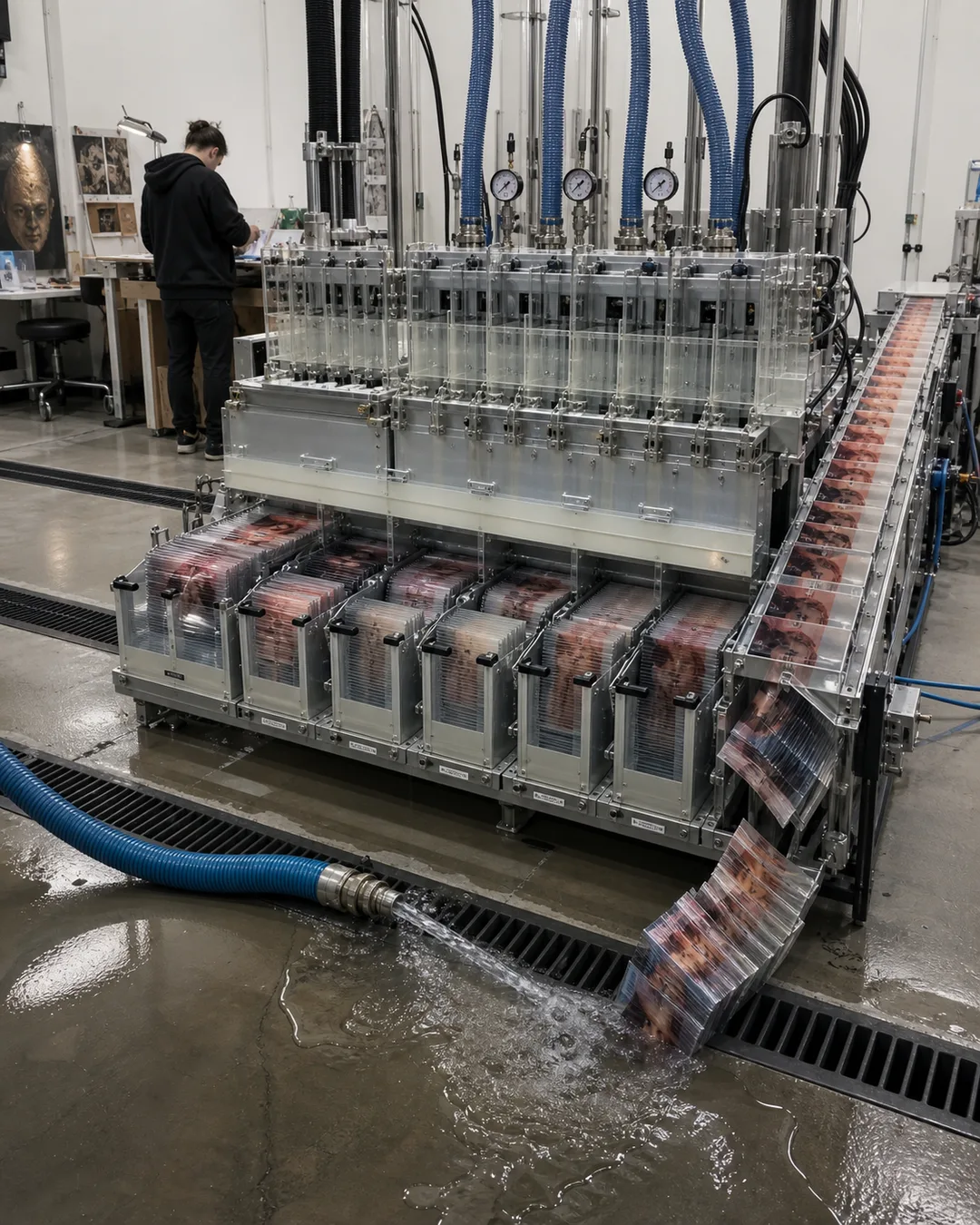
Images Arrive as Markets: The generated image carries the price of speed, scale, and recognizability, linking visual abundance to platforms, subscriptions, and data rent.
The image arrives already priced by speed. Generation compresses labor into a service interval, and that interval belongs to subscriptions, credits, tiers, usage caps, cloud infrastructure, and the continuous metering of creative desire. Visual abundance becomes inseparable from the platform systems that meter access to computation.
Scale gives the image its new economy. A single prompt can produce a sequence, a campaign, a mood board, a speculative archive, a synthetic product world, or a swarm of near-identical variations prepared for distribution. The abundance appears visual, yet its deeper form is logistical: storage, processing, bandwidth, licensing, model access, and the conversion of experimentation into recurring payment.
Recognizability acts as currency. The more quickly an image declares its genre, mood, reference field, and affective destination, the more efficiently it travels through feeds, pitch decks, galleries, shops, and campaigns. Distribution rewards legibility, and generative systems learn to produce images that look ready for circulation before any context has claimed them.
Data rent enters the image through training. The model draws upon vast repositories of visual labor and returns outputs through commercial interfaces that monetize the capacity to recombine what culture has already produced. The image carries the price of prior visibility, as whatever entered archives, platforms, portfolios, catalogs, and social streams becomes raw material for future synthesis.
The economics of speed reshape ambition. The artist gains access to more images than any single practice could physically manufacture, and the excess of possibility becomes a pressure to publish, test, compare, and occupy attention before the feed moves elsewhere. Abundance makes delay expensive and turns hesitation into a cost measured against the velocity of others.
The generated image is therefore a market form before it becomes an artwork. It condenses computation, training bias, interface design, payment architecture, and the platform’s appetite for continuous novelty. The image arrives as vision, and its shadow arrives as invoice.
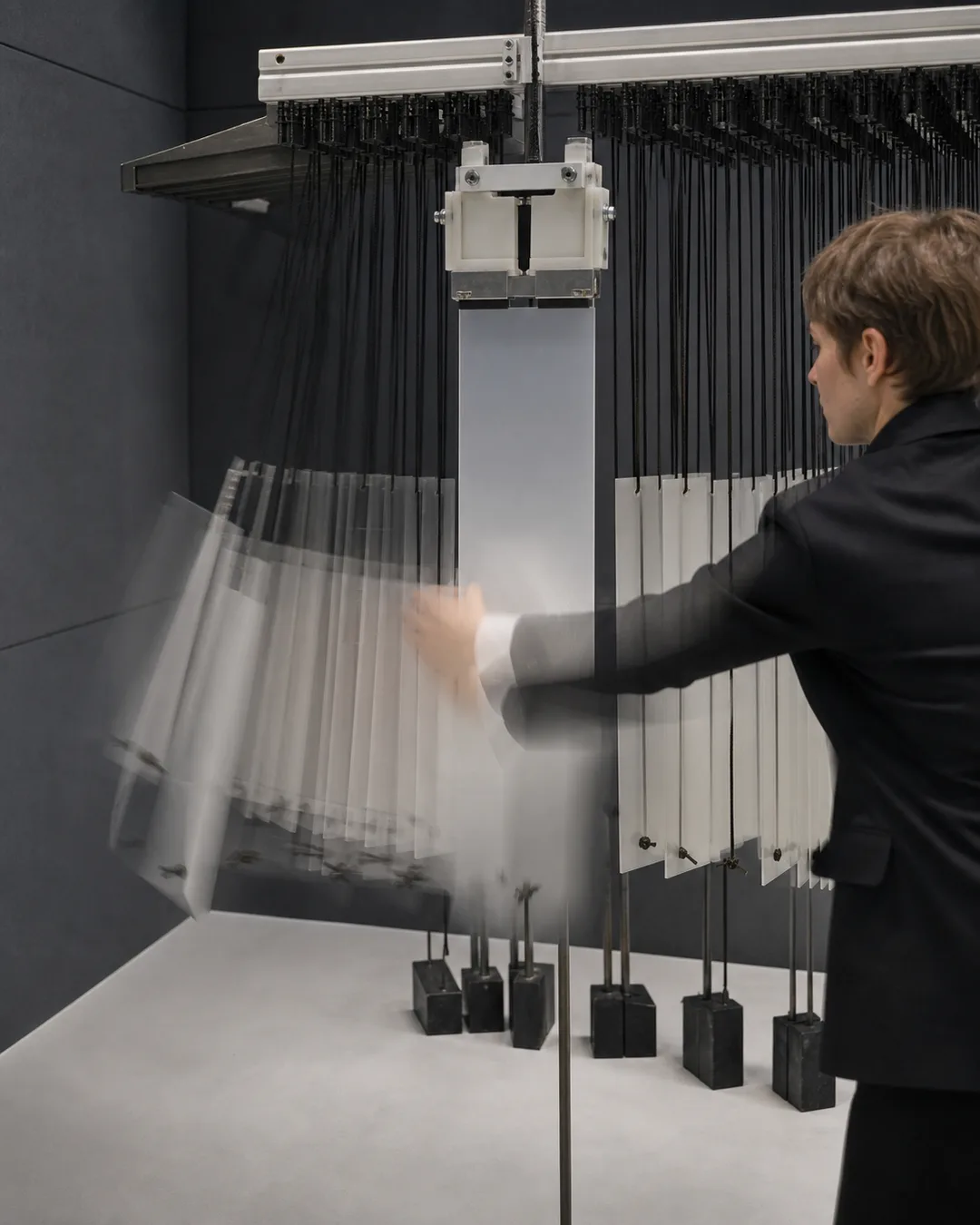
Authorship Becomes Allocation: Creative authority gathers around selection, where the artist composes value by curating variants, stabilizing prompts, and declaring a final state.
Selection becomes the visible site of authority. The artist confronts a field of variants and composes value by choosing which image receives custody, context, refinement, and public address. Authorship gathers around allocation, around the decision that separates one output from the surrounding cloud of possible outputs.
The prompt gains status through stability. Repeated formulations, stored parameters, controlled seeds, versioned workflows, and documented edits create a practice of recurrence inside machinic abundance. Provenance shifts toward the capacity to account for a chain of decisions, where the final image bears the trace of prompts, masks, references, weights, and rejections.
The artist’s role expands into curatorial governance. To make becomes to organize outputs into significance, to establish relations among variants, to determine thresholds, to assign value to one image and leave adjacent images in the residue of the process. The final state is a declaration that grants one arrangement the dignity of completion.
This authorship carries a legal and symbolic tension. Custody becomes distributed across model, platform, dataset, prompt, operator, and venue, while the art system continues to ask for a name, a date, a medium, a certificate, a file, a price. Institutional recognition demands singularity from a process built on multiplicity.
The archive of the work now includes suppressed possibilities. Every finished image implies the images left behind, the seeds abandoned, the prompts revised, the errors cultivated or discarded. Authorship becomes less a sovereign origin than a discipline of allocation within a field that continuously exceeds the final selection.
The signature persists as an act of framing. Its force lies in the ability to declare where the process stops and where value begins. The artist becomes the one who grants an image its finite edge inside a system designed for endless continuation.
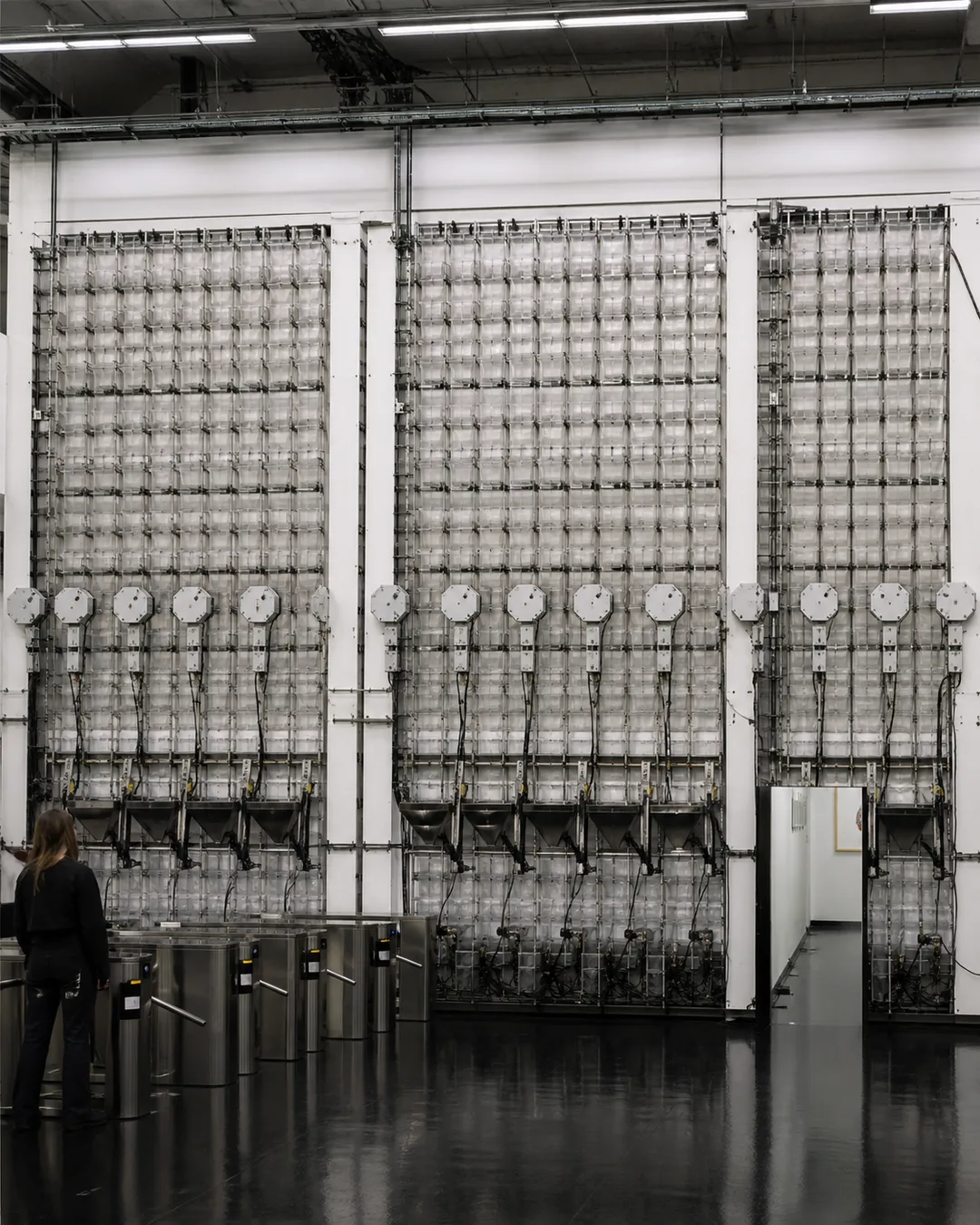
Power Prefills the Possible: Power operates through the available field itself, arranging what can be chosen, repeated, monetized, and recognized as creation.
Power works through the prefilled field. The interface arranges selectable styles, safety limits, content categories, model behaviors, prompt suggestions, ranked examples, and monetizable workflows before the artist begins. The available field becomes the first act of governance.
What can be chosen already carries institutional memory. Training datasets privilege images that were visible, indexed, captioned, circulated, collected, marketed, and technically accessible. The model’s sense of the possible reflects the historical unevenness of visibility, and the generated image repeats those hierarchies through the smooth surface of option.
Protocol organizes repetition. Defaults guide new users toward recognizable results, presets consolidate popular aesthetics, and shared prompt recipes convert experimentation into reproducible style. The system favors forms that can travel, forms that can be taught, forms that can be packaged as workflow, and forms that can be monetized through templates, plug-ins, tutorials, and platform ecosystems.
Recognition becomes a managed threshold. Images gain legitimacy when they align with formats that institutions, feeds, clients, and audiences can process, while deviation requires a labor of framing that often exceeds the labor of generation. The field grants visibility to images that speak its language, then presents that visibility as the natural consequence of quality.
The politics of creation settles in the architecture of availability. The artist chooses, yet the available choices carry the imprint of commercial priorities, moderation regimes, training exclusions, interface assumptions, and ranking systems. Power prefills the possible by making certain gestures effortless and other gestures laborious, by turning convenience into an aesthetic horizon.
Creation chooses its cage because the cage offers speed, fluency, scale, and recognition. The task that remains is a practice of pressure within the available field, a way of making the prefilling visible through the images it permits. Freedom now appears as the skill of sensing the bars before they become style.