

The Gap Between the Promise of a “Digital Twin” of the Brain and the Reality of Adoption
On March 26, 2026, Meta released Tribe v2 (TRIBE v2), a tri-modal foundation model trained to predict how the human brain responds to complex stimuli: images, sounds, videos, and language. It represents a true digital twin of neural activity, capable of generating high-resolution brain activation maps across 70,000 voxels (a 70-fold increase compared to previous models) from over 1,000 hours of fMRI recordings collected from 720 healthy volunteers. The model enables zero-shot predictions for new subjects, languages, and tasks, outperforming traditional linear encoding models by several factors.
For content creators, marketers, and advertising agencies, this opens a fascinating scenario: predicting in advance whether a video, post, or campaign will “perform well” — that is, whether it will stimulate attention, positive emotions, low cognitive load, and thus engagement or virality — without having to conduct costly tests with real subjects or relying solely on superficial metrics like views and clicks. In theory, the potential is almost limitless: testing thousands of variants in seconds, optimizing cuts, music, texts, and framing to maximize positive brain impact.
Yet, just over a month after launch (May 2026), while the scientific community enthusiastically welcomes the possibilities of in silico neuroscience (testing hypotheses without human volunteers, accelerating research on neurological disorders), concrete adoption in the world of content creation and marketing remains still embryonic. A few experimental tools (like tribeV2_ViralAnalyser for Windows), isolated experiments on Reddit and LinkedIn, and media hype on Medium and Instagram, but no mainstream integration into creators’ workflows or platforms like CapCut, Adobe Premiere, or Meta Ads Manager. Why this gap between the stunning theoretical potential and such limited real adoption? This article explores data, barriers, opportunities, and the path forward.
What Is Tribe v2 and How It Emulates the Human Brain’s Response
Tribe v2 (acronym for TRansformer for In-silico Brain Experiments, version 2) is a tri-modal foundational model: it simultaneously processes video, audio, and text. Its three-stage architecture, multimodal encoding, universal integration, and brain mapping, allows it to predict neural activity with unprecedented fidelity. Trained on a unified dataset of over 1,000 hours of fMRI from more than 720 subjects exposed to podcasts, videos, images, and sentences in naturalistic contexts, the model does not merely replicate average patterns; it generalizes in zero-shot to new individuals, languages, and experimental paradigms, recovering results established over decades of neuroscience on language networks, face, body, and place recognition, semantics, and emotions.
Unlike Tribe v1 (Algonauts 2025 winner, trained on only 4 subjects at low resolution), Tribe v2 scales in three dimensions: data, resolution, and generalization. The result is a prediction that often correlates better with the average brain response of a group than a single noisy individual fMRI scan. Meta has publicly released the model on Hugging Face, the code on GitHub, and an interactive demo where anyone can upload stimuli and visualize the predicted brain maps (real vs. predicted comparison, inflated 3D views, heatmaps). The companion scientific paper is available on the Meta AI website.
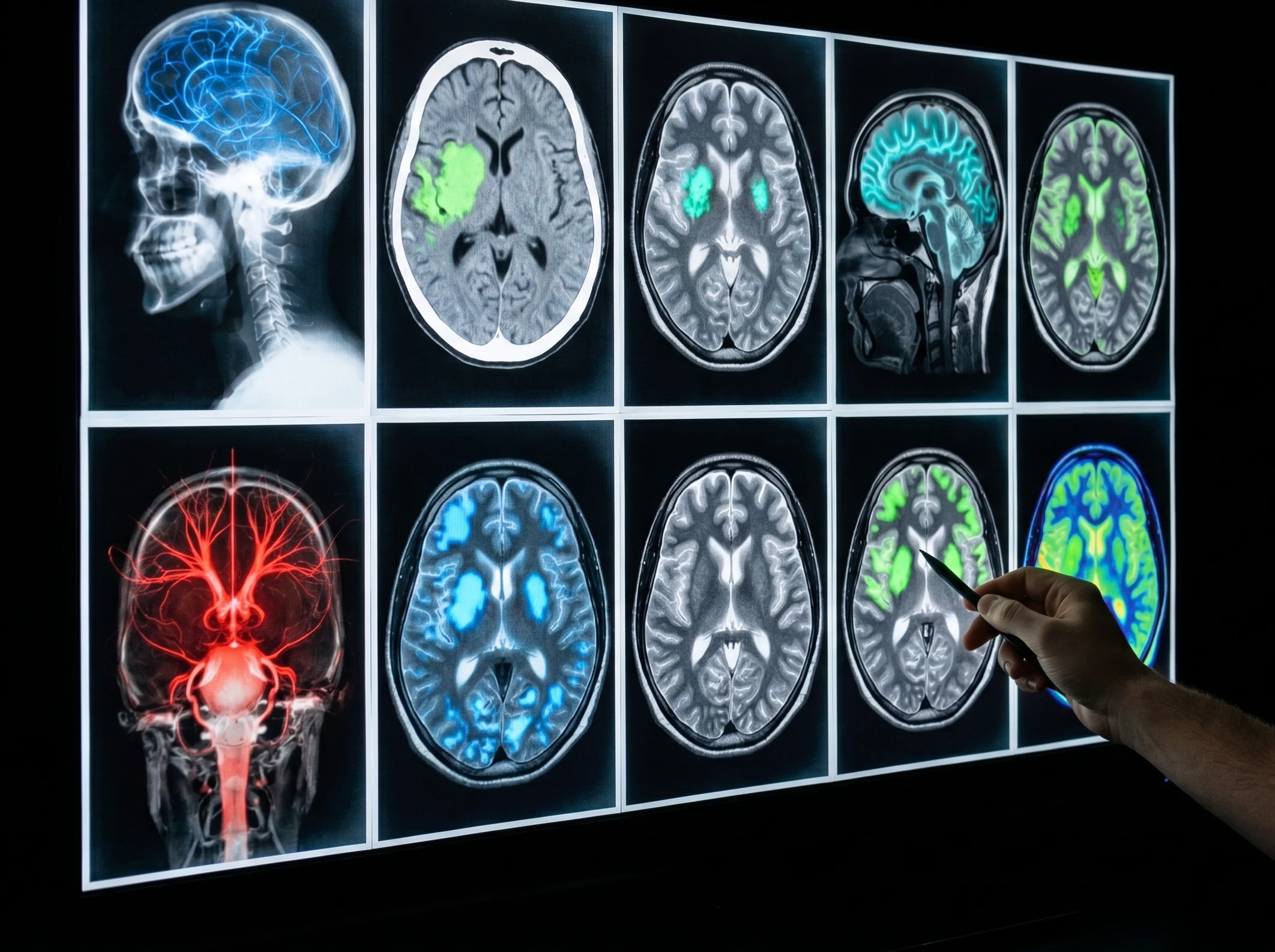
In practice, for a creator this means: upload a video or text, obtain in seconds a 3D map of which brain areas would “light up”, visual attention, reward, emotional processing, cognitive load, and intuit whether the content is “easy to process” (low resistance = high viral potential) or “effortful” (high effort = immediate scroll away).
The Landscape in the Content Sector: From Laboratory to Predictive Virality
Although Meta presented Tribe v2 primarily as a tool for neuroscientists and clinicians (testing theories without human subjects, accelerating discoveries on neurological disorders, inspiring better AI systems), the community immediately grasped the implications for neuromarketing 2.0 and content creation. On Reddit (r/MachineLearning), a user built an experimental interface to analyze social posts: the model correctly “flagged” an Elon Musk post as viral-like. On LinkedIn and Instagram, reels are multiplying that promise: “Before spending thousands of euros on ads, test your video with Tribe v2 and find out if the audience’s brain will ignore it in 0.3 seconds.” A free Windows app, tribeV2_ViralAnalyser (launched end of April 2026), uploads videos, generates 3D brain heatmaps, suggests precise cuts (“trim the slow sections that increase cognitive load”), and allows side-by-side version comparison. Creators who have tried it praise the ability to refine content; critics warn of the risk of a “dopamine machine” that amplifies addiction and polarization.
For agencies and brands, the value is evident: instead of costly A/B tests or limited focus groups, simulate the brain impact of dozens of creative versions before launch, optimizing for low cognitive resistance and high emotional/reward activation. Meta itself, the advertising giant, has every interest in integrating these insights into its advertising tools. Articles on Neuroscience News and The Keyword already talk about “pre-testing creatives with brain-response AI” to avoid budget waste.
Why Is the Gap So Wide? Technical, Ethical, Cultural, and Skills Barriers
The adoption of Tribe v2 faces a combination of technical, ethical, cultural, and practical challenges that together slow its transition from research innovation to everyday creative tool. On the technical side, although the model is open source, running it on long-form video content requires substantial computational power, particularly GPUs, which are not accessible to most creators. In addition, the output it produces, such as detailed voxel-based brain activity maps, is not immediately intuitive. For a typical content creator, understanding what a high activation in the orbitofrontal cortex actually implies for the success of a Reel remains unclear. What is missing are automated translation layers that can convert these complex signals into actionable insights like publish immediately or revise for lower cognitive load, ideally integrated directly into editing platforms, but such user-friendly solutions are not yet available.
Alongside these technical issues, ethical and legal concerns play a significant role. Neural data is inherently sensitive, and even though Tribe v2 does not read real individual brains but instead predicts generalized responses, it still raises questions about privacy, consent, and the potential for misuse. There is a risk that such technology could be leveraged for manipulation or intrusive forms of behavioral influence. Meta itself has highlighted the importance of strong governance frameworks, and the current licensing model, based on a non-commercial structure, reflects a cautious approach. However, analysts and experts writing on platforms like Medium and LinkedIn have pointed out that commercial experimentation could outpace regulation, potentially leading to problematic scenarios where highly optimized, hyper-addictive content is deployed without sufficient oversight.
Cultural and skill-related barriers further complicate adoption. Most marketers and creators are still grounded in traditional performance metrics such as impressions, click-through rates, and watch time. Moving toward interpreting brain-based heatmaps requires not only a shift in mindset but also the development of new interdisciplinary skills that combine neuroscience, data analysis, and creative strategy. At present, there is also a lack of large-scale empirical validation demonstrating a direct and consistent link between Tribe v2 predictions and real-world campaign outcomes like return on investment or measurable engagement. Another limitation is that the model operates on population averages rather than offering insights tailored to specific demographic or audience segments, which reduces its immediate applicability in targeted marketing contexts.
Finally, there are natural adoption barriers linked to the novelty of the technology. Introduced on March 26, 2026, Tribe v2 is still in its early stages, with primary users consisting of researchers, experimental developers, and a small number of technologically advanced creators. Larger platforms and agencies tend to wait for clearer proof of concept and more accessible, integrated solutions before committing to widespread use. This reflects a familiar pattern seen with many emerging technologies, where there is a significant gap between initial scientific breakthroughs and their practical incorporation into everyday workflows.
Between Cognitive Optimization and Market Disruption
Tribe v2 presents a dual reality for the content market, where transformative opportunity coexists with equally significant risk. On one side, its potential is substantial. By effectively democratizing applied neuroscience, it allows researchers and creators to test hypotheses across thousands of stimuli in a fraction of the time previously required. This acceleration could extend beyond media into fields such as therapies for Alzheimer’s, autism, and stroke. For content creators, the implications are clear: more efficient production processes, reduced waste of both time and budget, and content that aligns more closely with audience responses, increasing satisfaction and relevance. For Meta and the broader advertising ecosystem, the optimization potential is considerable, with the possibility of generating large-scale efficiency gains. More broadly, Tribe v2 may inspire a new generation of artificial intelligence systems designed not only to generate outputs but to anticipate and understand their cognitive and emotional effects on users.
At the same time, the risks are concrete and widely discussed. One of the most prominent concerns is the emergence of a highly refined “dopamine machine,” where content is engineered with precision to maximize reward activation while minimizing cognitive effort. This could intensify already visible patterns such as infinite scrolling, social media dependency, reduced attention spans, and increased polarization. In such a scenario, authentic creativity risks being replaced by standardized formulas optimized for neurological impact rather than originality. There is also a structural inequality issue: access to advanced tools like Tribe v2 may be limited to those with sufficient technical expertise or financial resources, creating a competitive imbalance. Furthermore, the ethical question of ownership over predictive models of human cognition remains unresolved, introducing uncertainty around control, accountability, and long-term societal implications.
Bridging the gap between potential and practical adoption requires coordinated and deliberate action. The development of no-code and low-code tools would be a critical step, particularly through integrations with widely used platforms such as CapCut, Canva, and Adobe Premiere Pro, where complex neural outputs could be translated into simplified, actionable metrics like a “brain virality score.” In parallel, targeted education initiatives would be necessary to equip creators with hybrid skill sets, enabling them to interpret and apply neuroscientific data effectively. Equally important is robust scientific validation, with large-scale studies that directly correlate Tribe v2 predictions with real-world engagement and return on investment, an area where Meta itself could play a leading role. Policy and governance frameworks must also evolve, incorporating transparency, independent auditing, and clear limitations on sensitive use cases, particularly those involving minors or manipulative practices. For the technology to scale responsibly, Meta would need to extend access beyond research environments by offering APIs or simplified versions tailored to creators.
Ultimately, Tribe v2 represents more than a technological advancement; it signals a shift in how content is conceived, evaluated, and optimized. As of May 2026, its adoption remains limited, constrained by technical complexity, ethical concerns, skill gaps, and the absence of definitive proof of value. Its trajectory will depend on whether researchers, creators, platforms, and regulators can align on a shared approach that balances innovation with responsibility. Without such alignment, there is a risk that the technology either remains underutilized or becomes concentrated in the hands of a few actors prioritizing attention maximization over collective well-being. The central question for media and marketing professionals is no longer theoretical but strategic: whether to begin experimenting with predictive models of audience response now or risk falling behind as such tools gradually define a new standard for competitive content creation.
Bibliography:
Introducing TRIBE v2: A Predictive Foundation Model Trained to Understand How the Human Brain Processes Complex Stimuli – Meta AI Blog (March 26, 2026)
A Foundation Model of Vision, Audition, and Language for In-Silico Neuroscience – Meta AI Research Publication
TRIBE v2 – Tri-Modal Brain Encoding Foundation Model – Hugging Face (facebook/tribev2)
tribev2: Codebase for Training and Evaluating the Multimodal Brain Response Prediction Model – GitHub (facebookresearch)
TRIBE v2 Interactive Demo: Explore Brain Activity Predictions for Sight, Sound, and Language – atmeta.com