Rirkrit Tiravanija, The House That Jack Built. A re-enactment retrospective at Pirelli Hangar Bicocca

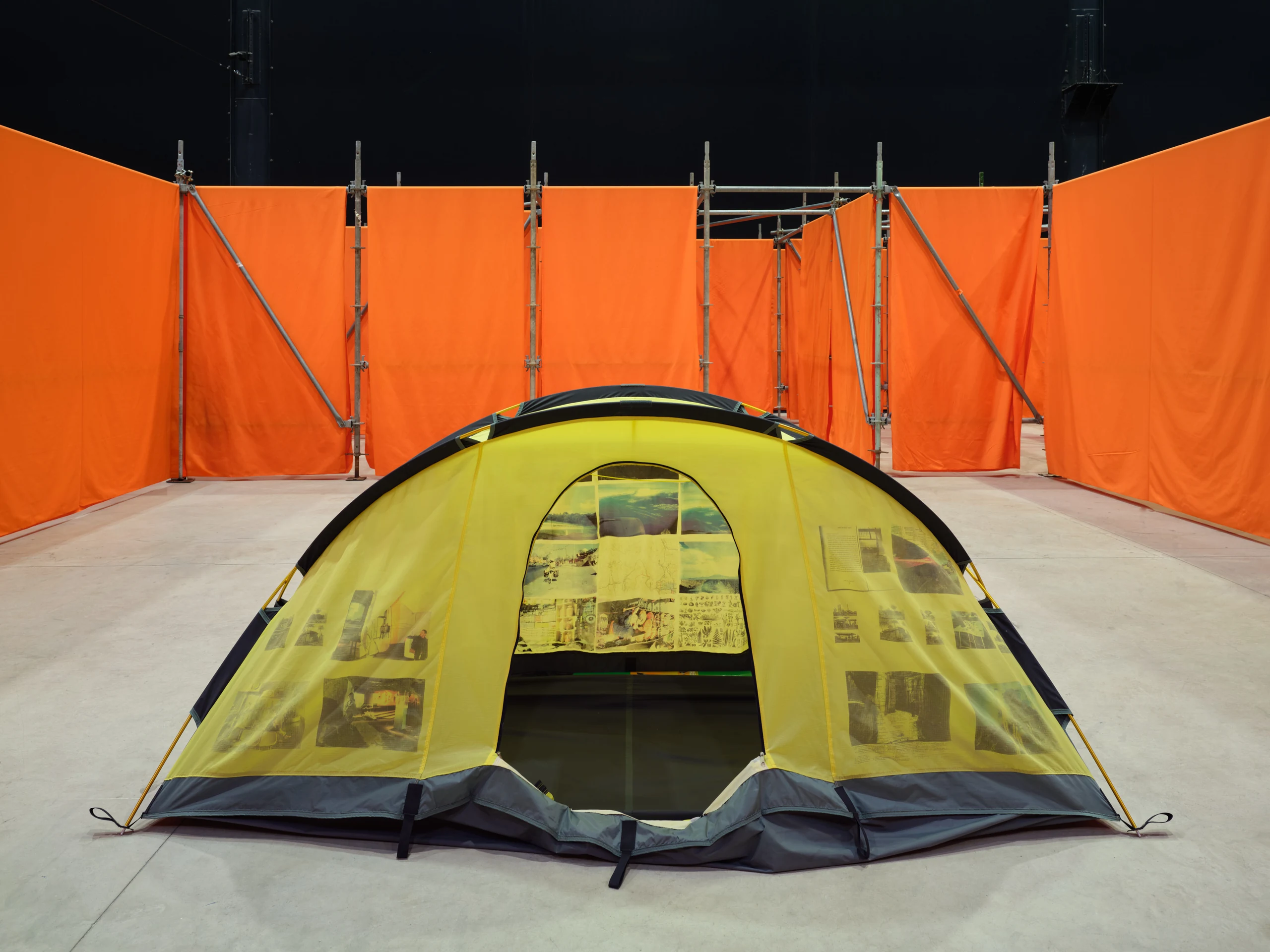
Rirkrit Tiravanija, untitled 1995 (tent installation), 1995. Installation view, Pirelli HangarBicocca, Milan, 2026. Klosterfelde Edition. Courtesy the artist and Pirelli HangarBicocca, Milan. Photo Agostino Osio.

The House That Jack Built is based on the popular nursery rhyme of the same name, a cumulative, never-ending tale in which neither the house nor Jack actually matter. What matters is the muddle of indirect links and added details, the interconnected stories that lie behind or pass through Jack and his House: a metaphor for Rirkrit Tiravanija’s practice, which aims to connect people, to foster relationships through devices for open dialogue.


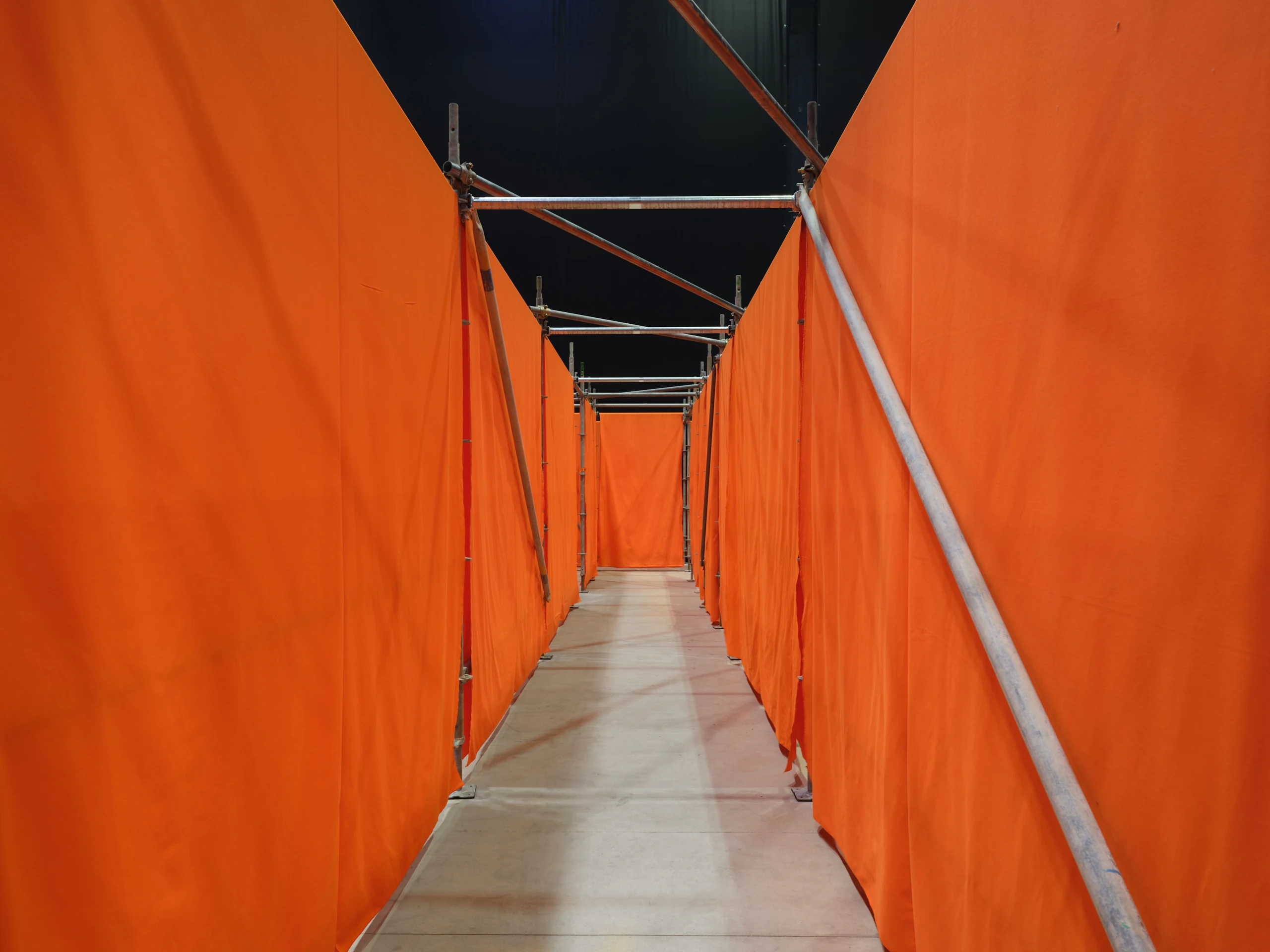
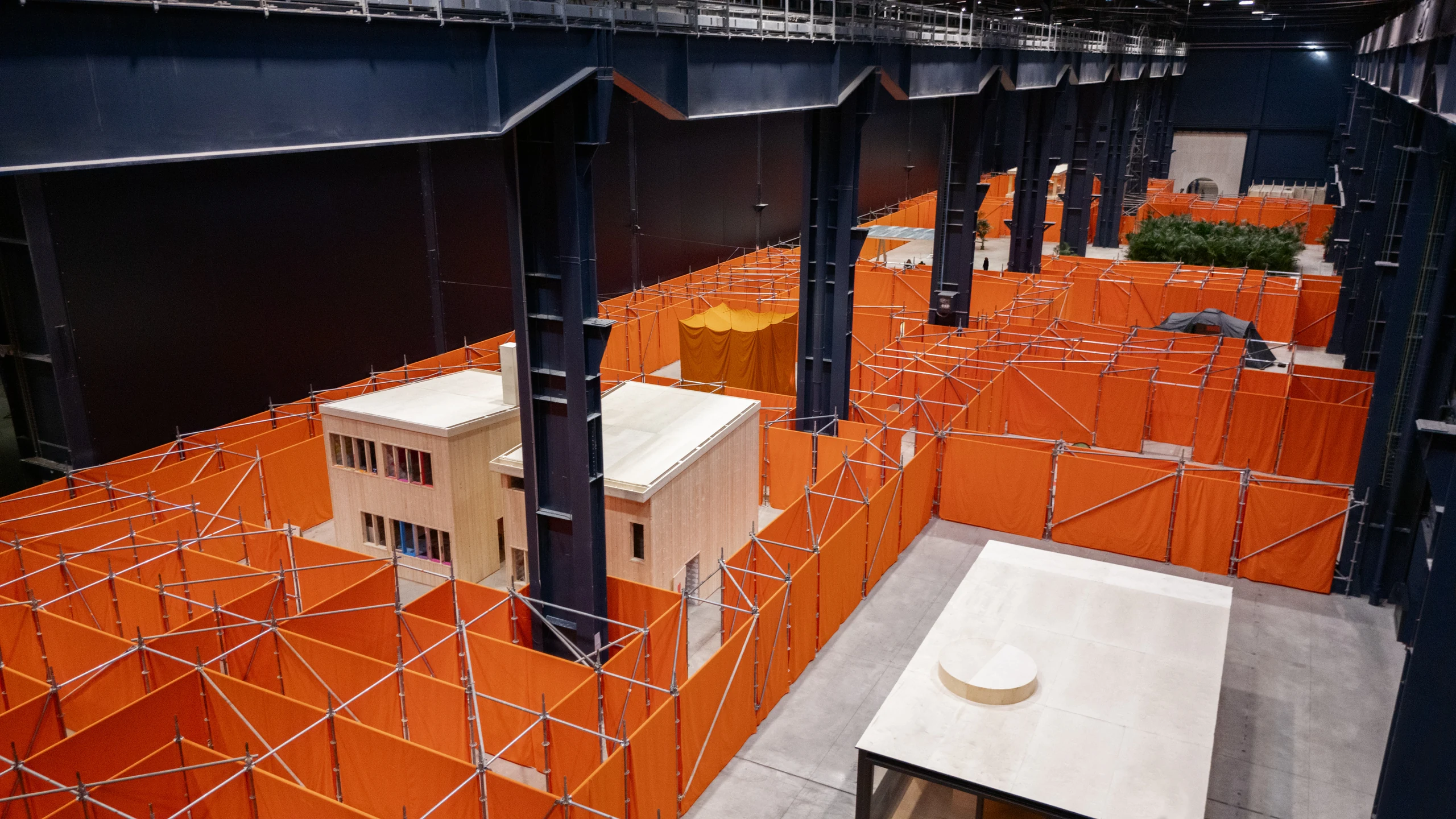
At Pirelli Hangar Bicocca, Tiravanija builds an incipit. He suggests and begins a layered, living architectural narrative, composed of multiple platforms scattered through the space and set within a huge labyrinth made of steel poles and orange fabrics. The labyrinth functions as a rhythmic structure while the platforms are supposed to be the first rhyme to be completed.

Rirkrit Tiravanija, untitled 2026 (demo station no. 9), 2026. Installation view, Pirelli HangarBicocca, Milan, 2026. Courtesy the artist and Pirelli HangarBicocca, Milan. Photo Agostino Osio.

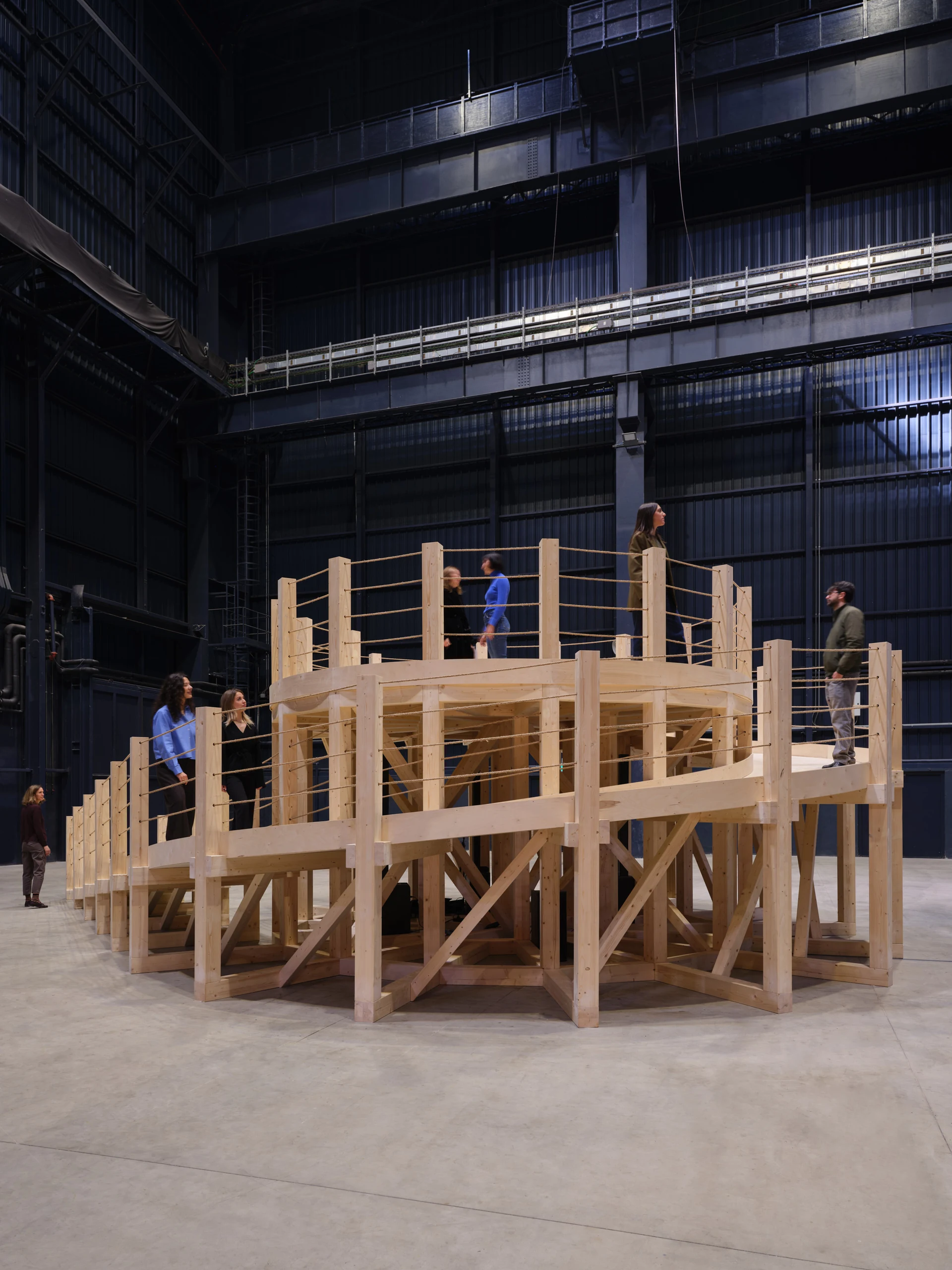
A first hint is untitled 2026 (demo station no.9) (2026) a large spiral wooden structure that visitors can climb, functioning as an open theatre stage that pushes them to “demo” something – to present or try out an action in front of others, for example by creating origami and sharing the experience with others. This platform is based on the theatrical stage Raumbühne (1924) conceived by Friedrich Kiesler (1890-1965) for the International Exhibition of New Theater Technology in 1924, a structure that precedes the labyrinth and functions as a first step, preparing the viewer for the immersive experience.

Entering the labyrinth the visitor may encounter three different architectures depending on the path taken.

Rirkrit Tiravanija, “The House That Jack Built”, Exhibition view, Pirelli HangarBicocca, Milan, 2026. Courtesy the artist and Pirelli HangarBicocca, Milan. Photo Agostino Osio.
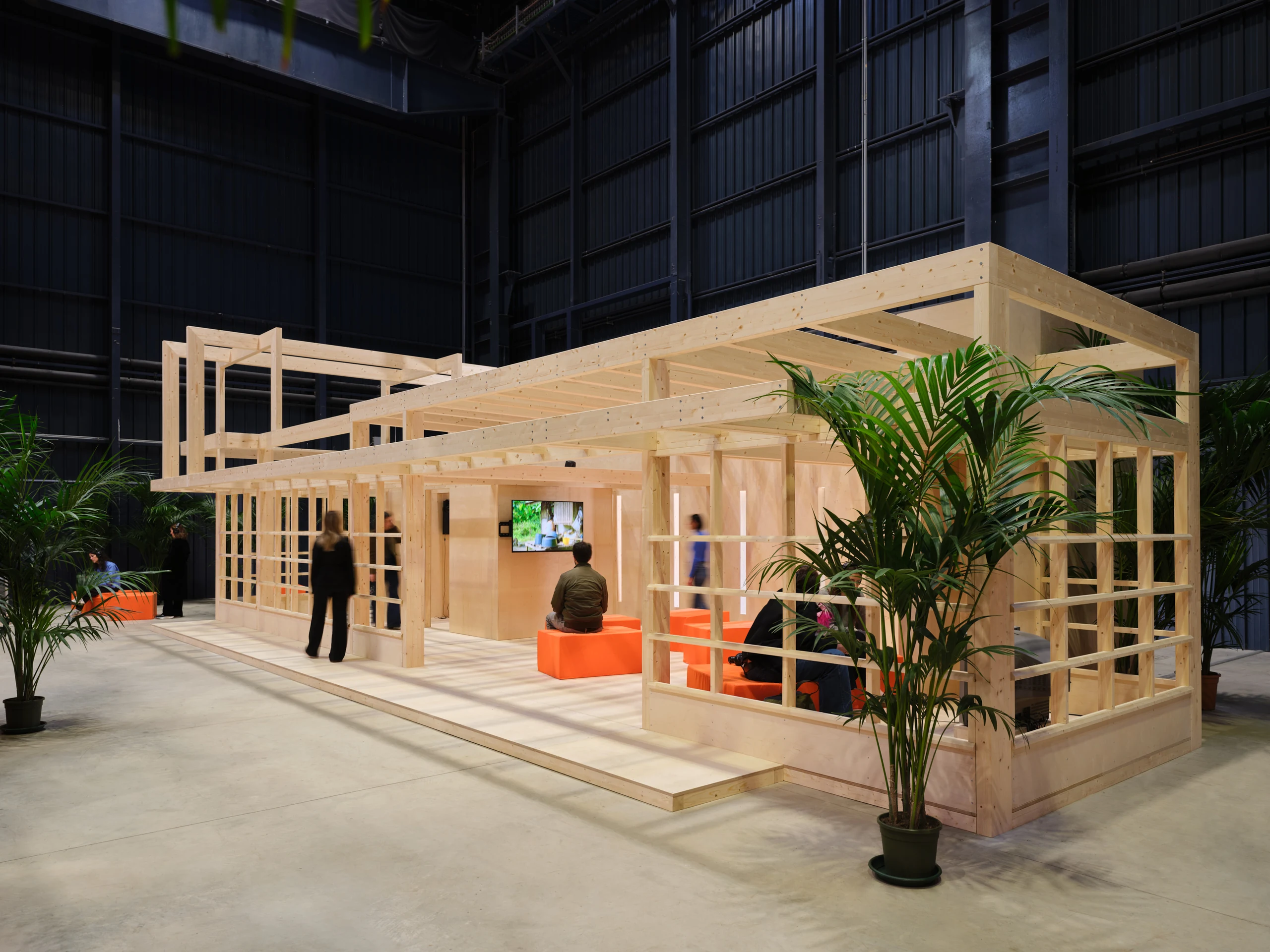
Rirkrit Tiravanija, untitled 2002 (he promised), 2026Installation view, Pirelli HangarBicocca, Milan, 2026. Exhibition copy from untitled 2002 (he promised), 2002, Solomon R. Guggenheim Museum, New York. Courtesy the artist and Pirelli HangarBicocca, Milan. Photo Agostino Osio.

One option could be untitled 2002 (he promised) (2026) a small wooden structure influenced by the Kings Road House (1922) a historical co-living house shared by two couples conceived by the architect Rudolf Schindler (1887-1953) and re-created by the artist as a multiplex cinema with projections of four videos: Vicinato (1995), by Rirkrit Tiravanija and Carsten Hôller; Stories Are Propaganda (2005), by Rirkrit Tiravanija and Philippe Parreno; Chew the fat (2008) and Lung Neaw Visits His Neighbours (2011) by Rirkrit Tiravanija. The structure also presents a series of palms, a tribute to Marcel Broodthaers and his L’Entrée de l’exposition (1974): symbol of the set-up.

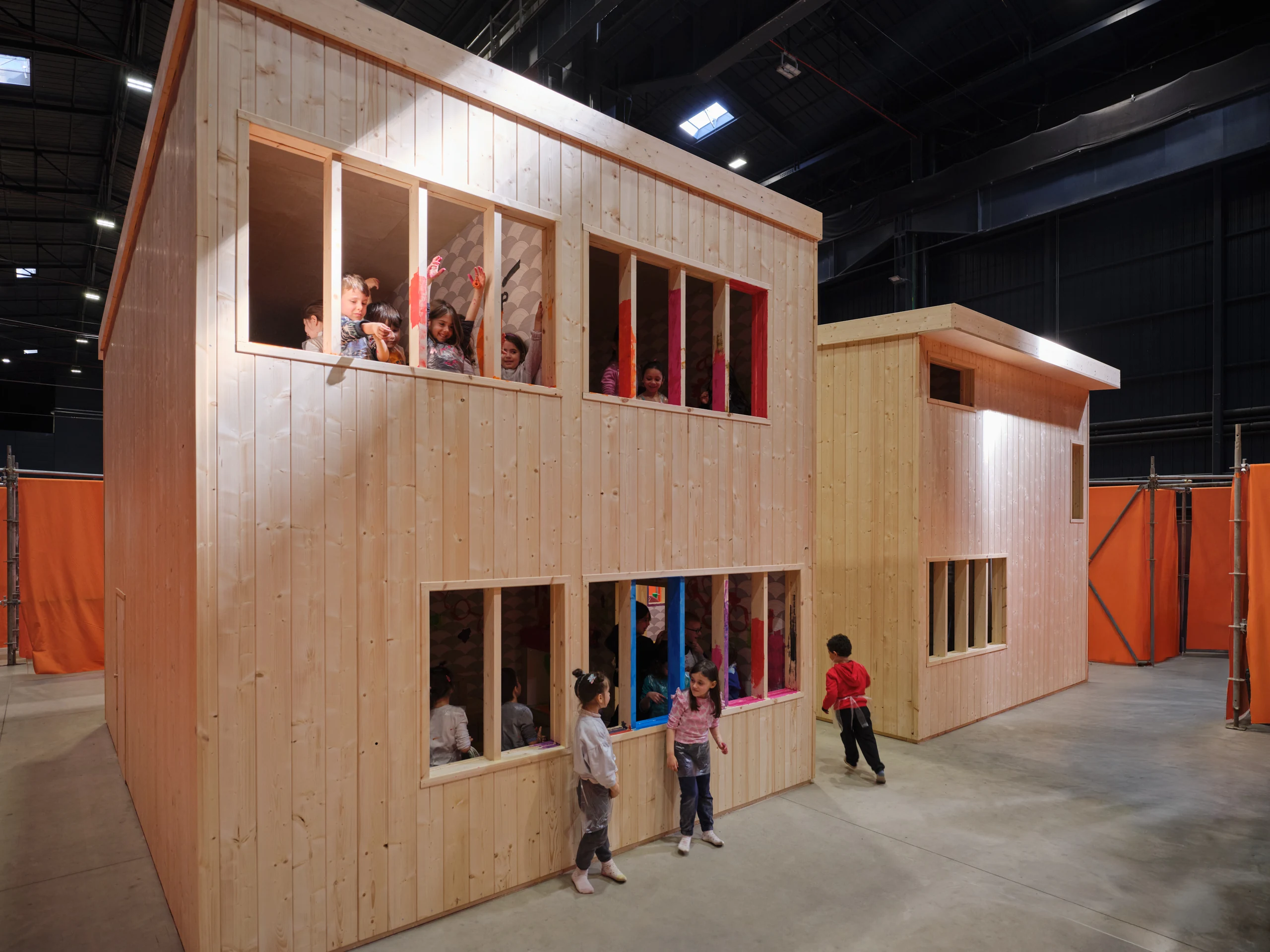
Another path could direct the audience to untitled 20026 (half-scale single family home no. 47, with interior decoration by children of scuola bambini bicocca and “ABC del quartiere”, ages 4 to 6) (2026) a house for kids conceived as a play space and derived from Single Family House no.47 (1930) designed by Sigurd Lewerenz (1885-1975).

Rirkrit Tiravanija, untitled 2026 (half-scale single family home no. 47, with interior decoration by children of scuola bambini bicocca and “ABC del quartiere,” ages 4 to 6), 2026. Installation view, Pirelli HangarBicocca, Milan, 2026. Exhibition copy from untitled 1995 (half-scale single family home no. 47, with interior decoration by children of the storken day care center, ages 5 to 7), 1995, Louisiana Museum of Modern Art, Humlebæk, Denmark. Courtesy the artist and Pirelli HangarBicocca, Milan. Photo Agostino Osio.

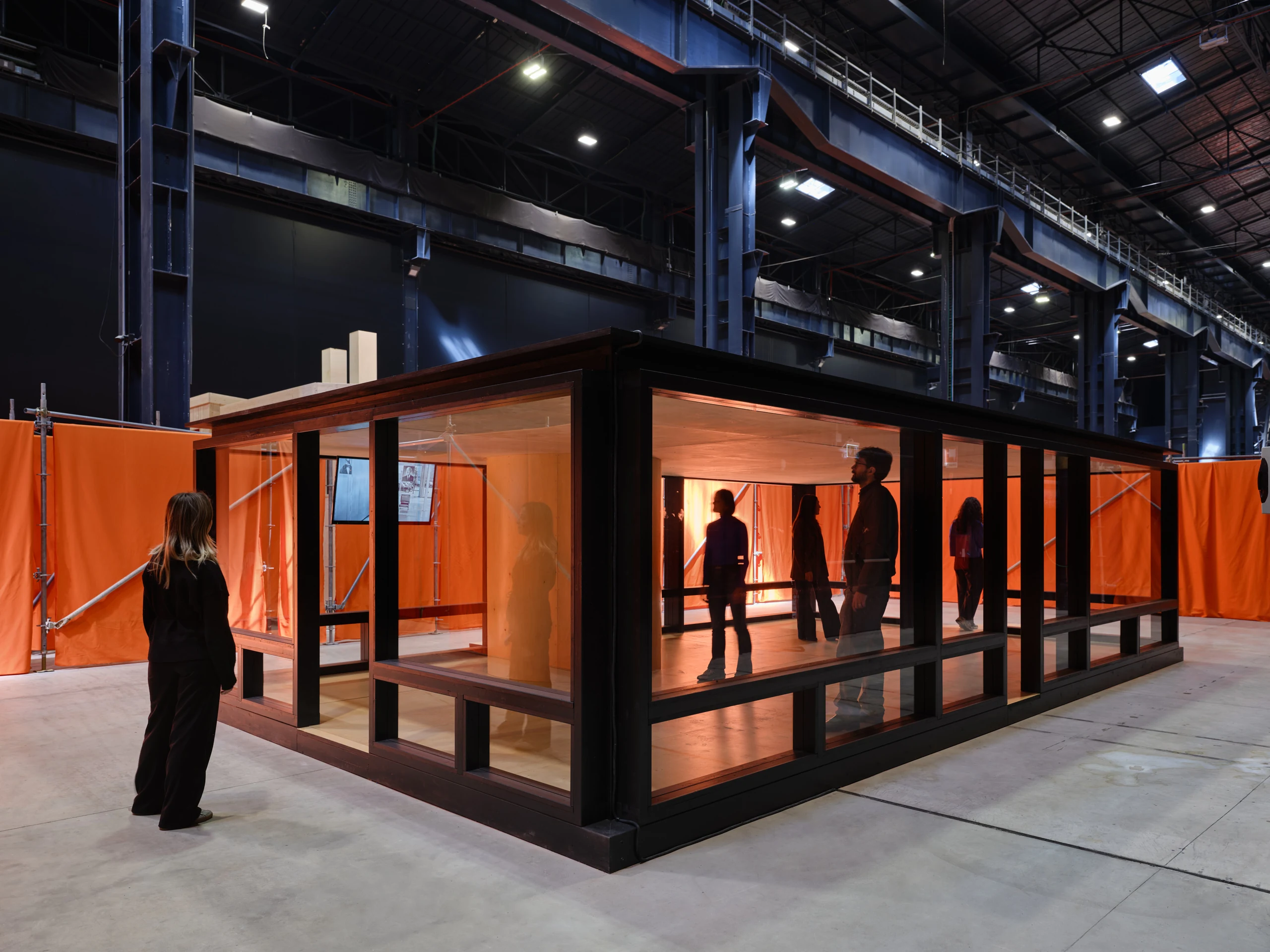
An additional station is untitled 1997 (playtime) (1997) an almost empty pavilion that presents only one short excerpt from Jacques Tati’s Playtime (1967), a platform inspired by the Glass House (1949) a residential space by Philip Johnson (1906-1978).

Rirkrit Tiravanija, untitled 1997 (playtime), 1997. Installation view, Pirelli HangarBicocca, Milan, 2026. Craig Robins Collection, Miami. Courtesy the artist and Pirelli HangarBicocca, Milan. Photo Agostino Osio.

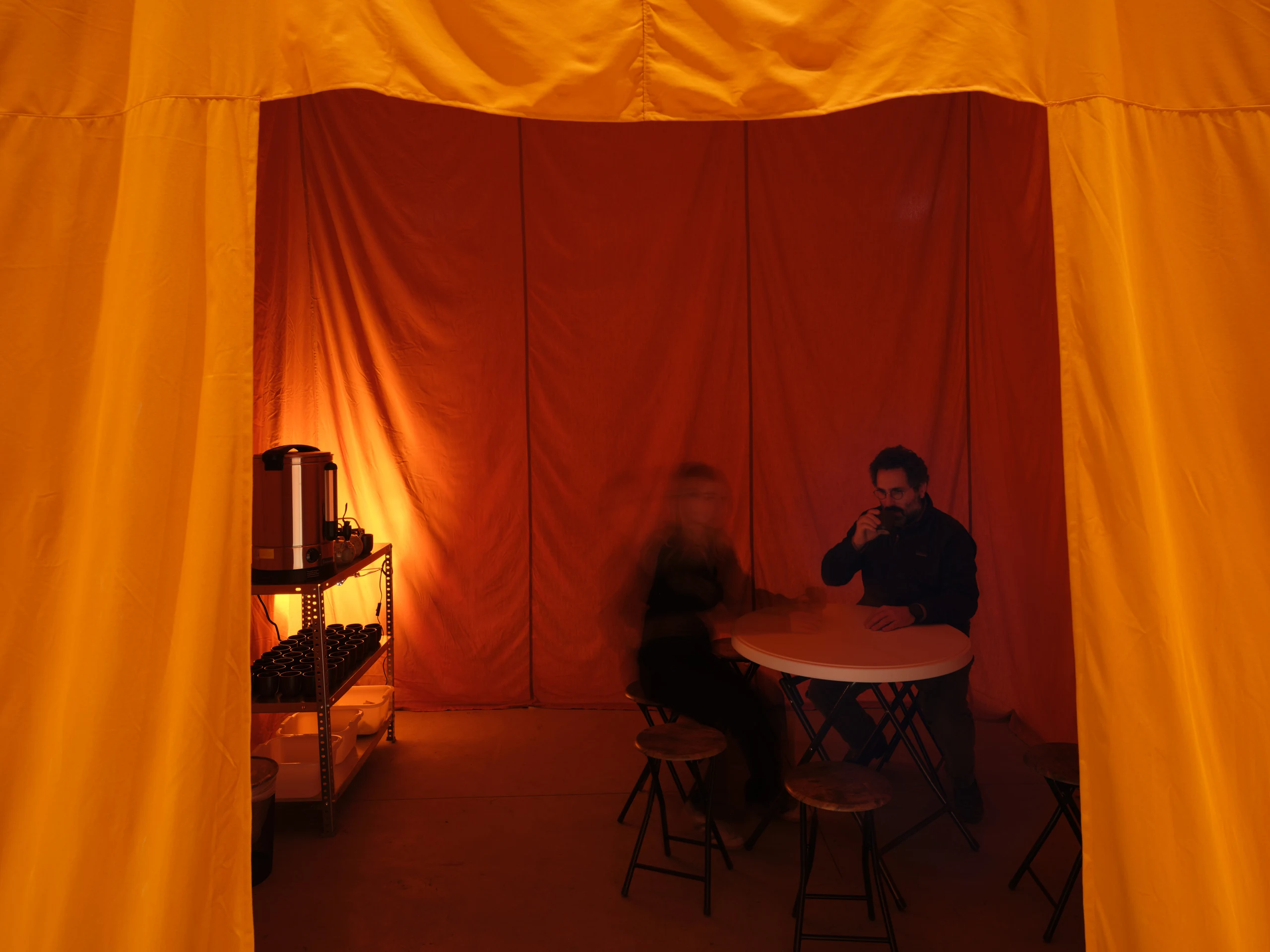
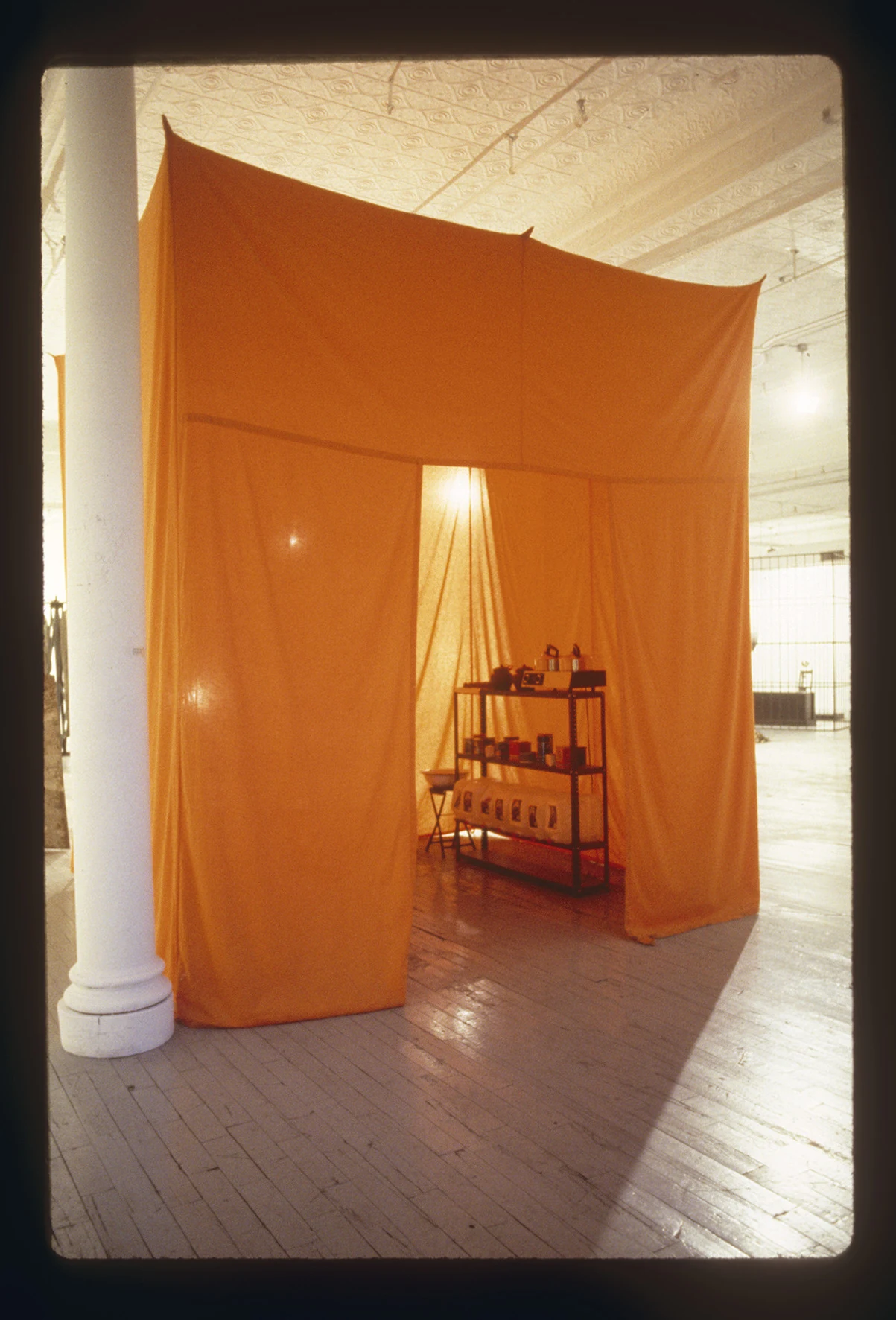
After an intense first rush the participants are invited to enter untitled 1992 (cure) (1992), an orange tent in which the audience is invited to relax and have tea: a pause within the tangled tale that fully absorbs the viewer.

Rirkrit Tiravanija, untitled 1992 (cure), 1992. Installation view, Pirelli HangarBicocca, Milan, 2026. Exhibition copy Carnegie Museum of Art, Pittsburgh; A. W. Mellon Acquisition Endowment Fund, 2001.12. Courtesy the artist and Pirelli HangarBicocca, Milan. Photo Agostino Osio.
Rirkrit Tiravanija, untitled 1992 (cure), 1992. Installation view, “Fever”, Exit Art, New York, 1992. Carnegie Museum of Art, A. W. Mellon Acquisition Endowment Fund. Courtesy the artist.

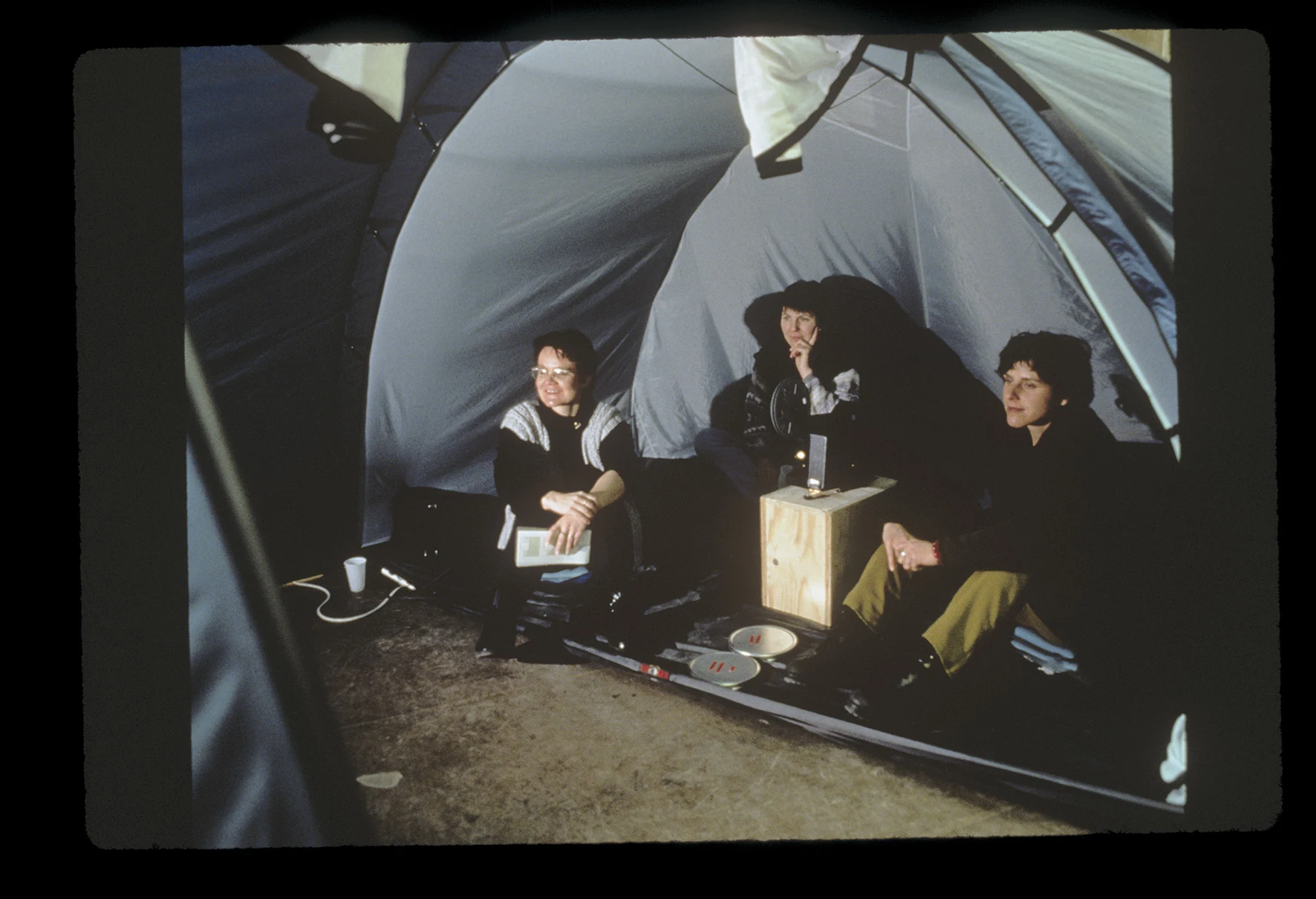
Viewers are then encourage to start again, pausing at multiple “camping” stations where they can find “repairs” into shared camping tents – untitled 1995 (tent installation) (1995), untitled 1997 (cinéma de vile, berlin-bangkok) (1997) and untitled 1998 (cinéma de ville) (1998) – spaces that one can  use to lay down andwhere Super 8 videos are projected: part of an ordinary nomadic journey.

Rirkrit Tiravanija, untitled 1995 (tent installation), 1995. Installation view, Pirelli HangarBicocca, Milan, 2026. Klosterfelde Edition. Courtesy the artist and Pirelli HangarBicocca, Milan. Photo Agostino Osio.
Rirkrit Tiravanija, untitled (cinema de ville, berlin-bangkok), 1997. Installation view, 1st Berlin Biennale, Akademie der Künste, Berlin, 1998. Courtesy the artist.

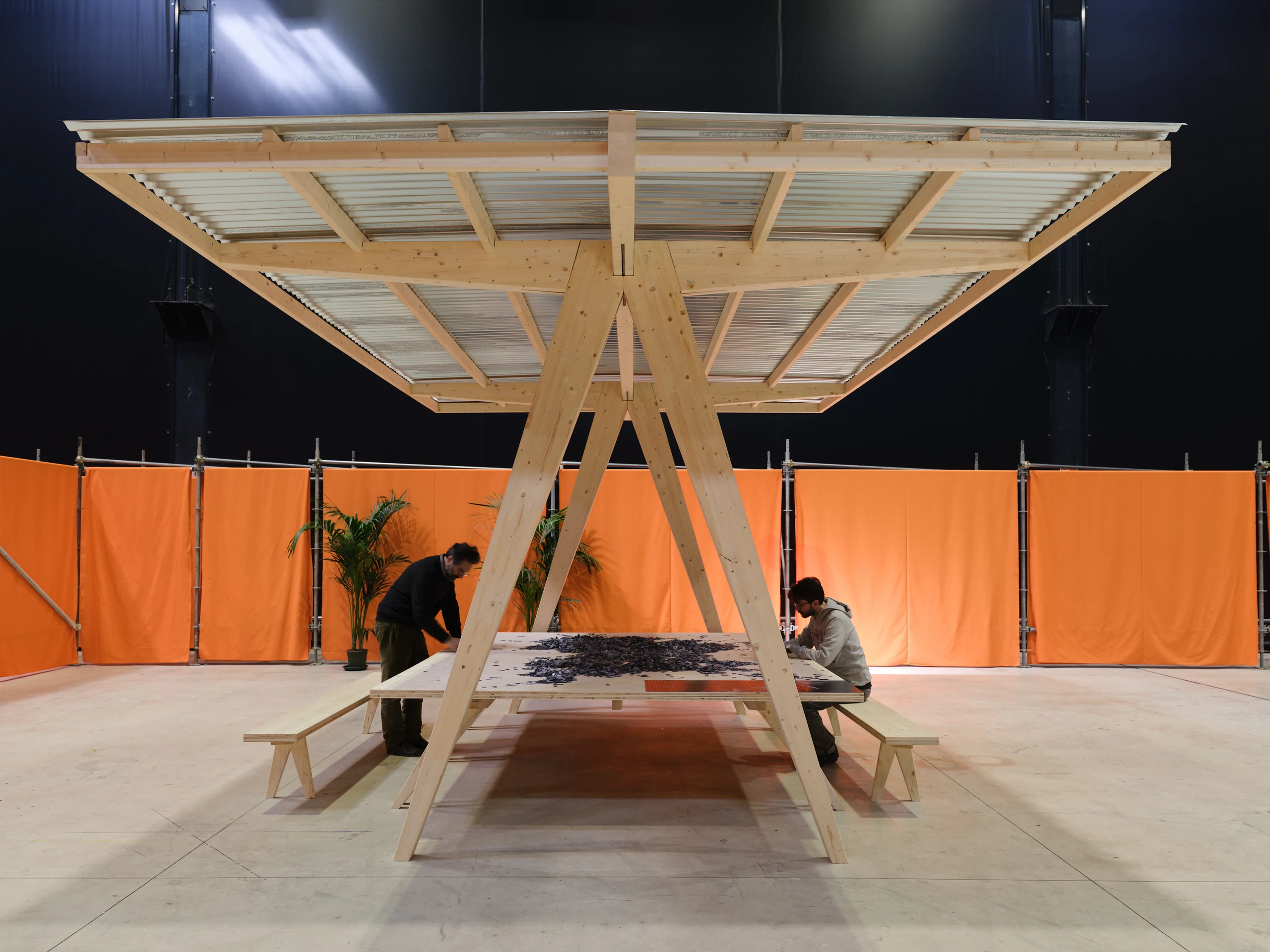
It follows a series of platforms rooted in Jean Prouvé’s architectures and designs – untitled 2006-08 (palm pavilion) (2026), untitled 2006 (tropical house) (2026) and untitled 2006 (pavilion, table and puzzle representing the famous painting by Delacroix La Liberté Guidant le Peuple) (2026) – displayed as inclusive collective structures.

Rirkrit Tiravanija, untitled 2026 (pavilion, table and puzzle representing the famous painting by Delacroix La Liberté Guidant le Peuple, 1830) (photocopy), 2026. Installation view, Pirelli HangarBicocca, Milan, 2026. Exhibition copy from untitled 2006 (pavilion, table and puzzle representing the famous painting by Delacroix La Liberté Guidant le Peuple, 1830), 2006, Collection Walker Art Center, Minneapolis T. B. Walker Acquisition Fund, 2006. Courtesy the artist and Pirelli HangarBicocca, Milan. Photo Agostino Osio.

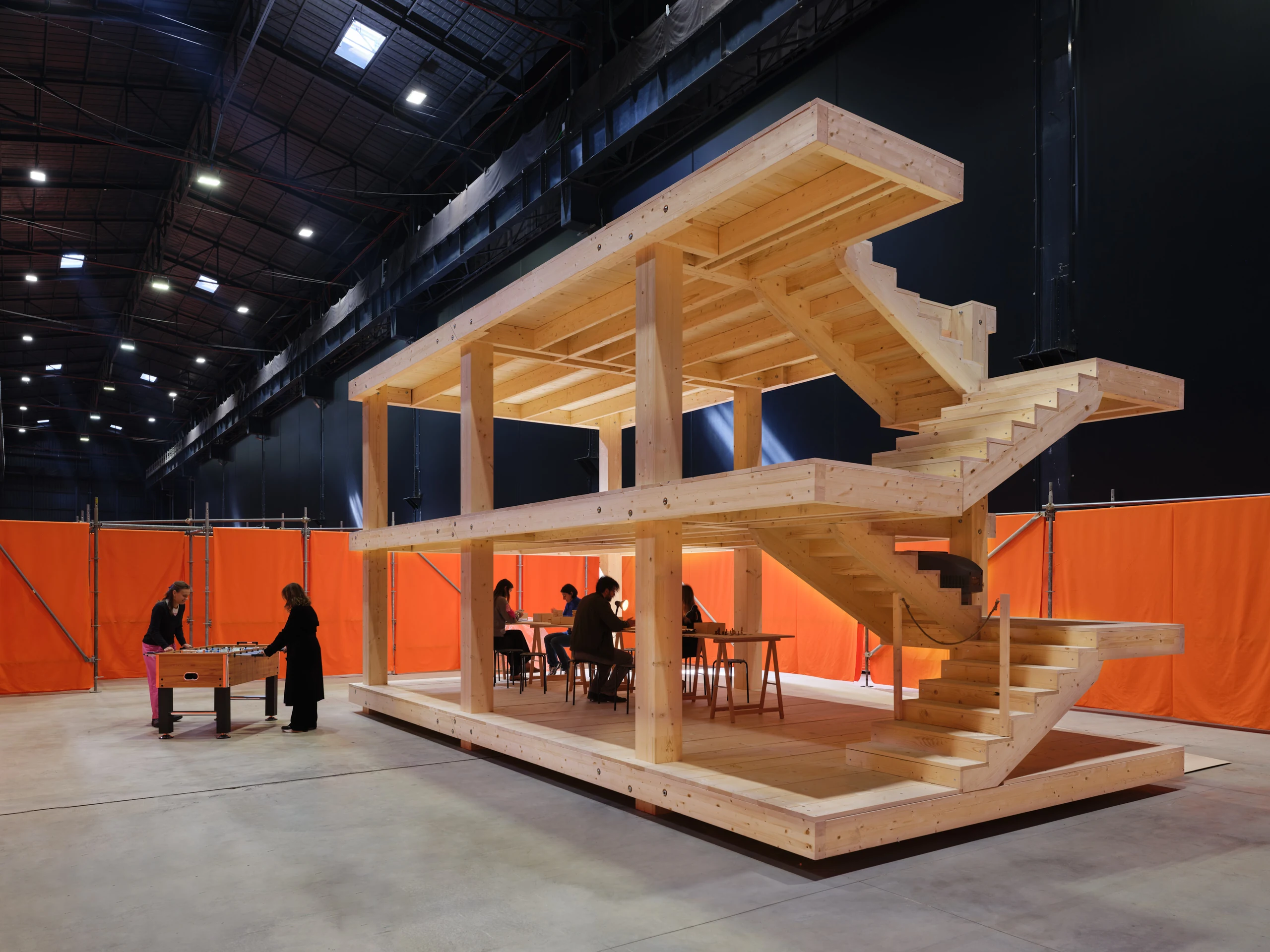
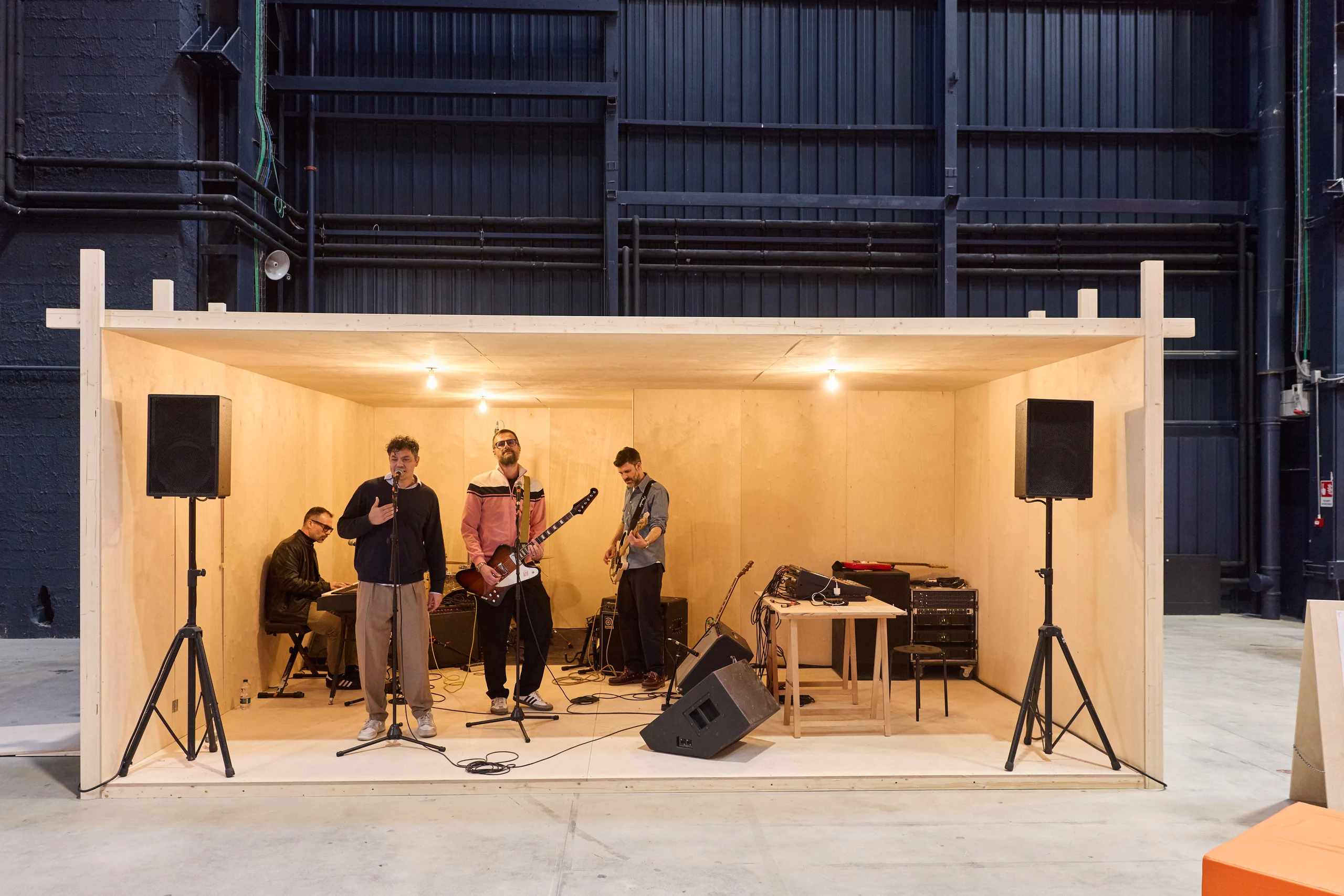
Visitors continue their journey into the labyrinth and they are immediately invited to participate and play inside a community structure: untitled 1998 (dom-ino) (2026), a two-story  structure adapted from Le Corbusier’s Maison Dom-Ino (1914). It is a unique and, at the same time, infinitely replicable building that, with a system of pilotis, generates his famous plan libre, here used as a play area for adults, with board games, like domino or chess. Another open platform by Rirkrit Tiravanija is untitled 1996 (rehearsal studio no.6, open version) (1996), which is a recording studio accessible by reservation in which the participant can find various instruments ready to be played or to be part of a jam session.

Rirkrit Tiravanija, untitled 1998 (dom-ino), 2026. Installation view, Pirelli HangarBicocca, Milan, 2026. Exhibition copy of untitled 1998 (dom-ino), 1998, FNAC01-812, Centre national des arts plastiques. In deposit from 21 January 2002: Abattoirs - Frac Midi-Pyrénées (Toulouse). Courtesy the artist and Pirelli HangarBicocca, Milan. Photo Agostino Osio.
Rirkrit Tiravanija, untitled 1996 (rehearsal studio no. 6, open version), 1996. Installation view, Pirelli HangarBicocca, Milan, 2026. Courtesy the artist and Pirelli HangarBicocca, Milan. Photo Agostino Osio.

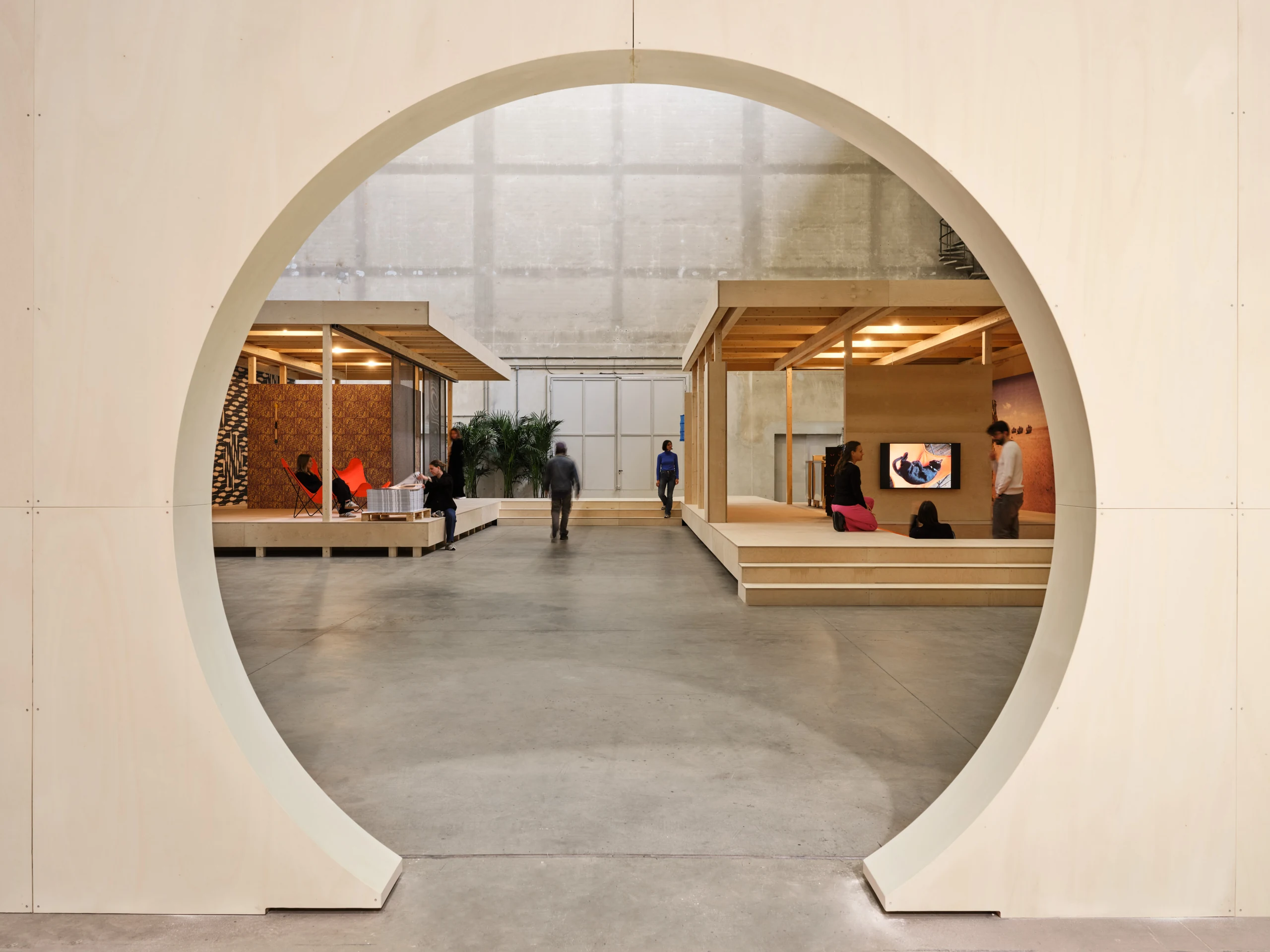
The exhibition ends in the Cube, transformed by the artist into an evocative “chapel” that evokes Carlo Scarpa’s Tomba Brion (1970-1978), a circular door that interrupts the vertical/horizontal tendency of the labyrinth. Entering the Cube the viewer is projected into a partial wooden reproduction of Rirkrit Tiravanija’s house in Chiang Mai (Thailand), imagined by the artist as an open device, a platform in which the participant can be the special guest and host, immersed in a selection of objects and artworks selected by Tiravanija from artist friends: a true dialogue act of generosity that reveals the intention of breaking boundaries between art and life. In fact, the platform is titled untitled 2009 (the house the cat built) (2026) a pun that invites the viewer to return to the nursery rhyme, opening a new stanza that sees the cat as a new presence that emerges from the past and that addresses the contrast between possession and sharing.

Rirkrit Tiravanija, untitled 2009 (the house the cat built), 2026. Installation view, Pirelli HangarBicocca, Milan, 2026. Courtesy the artist and Pirelli HangarBicocca, Milan. Photo Agostino Osio.