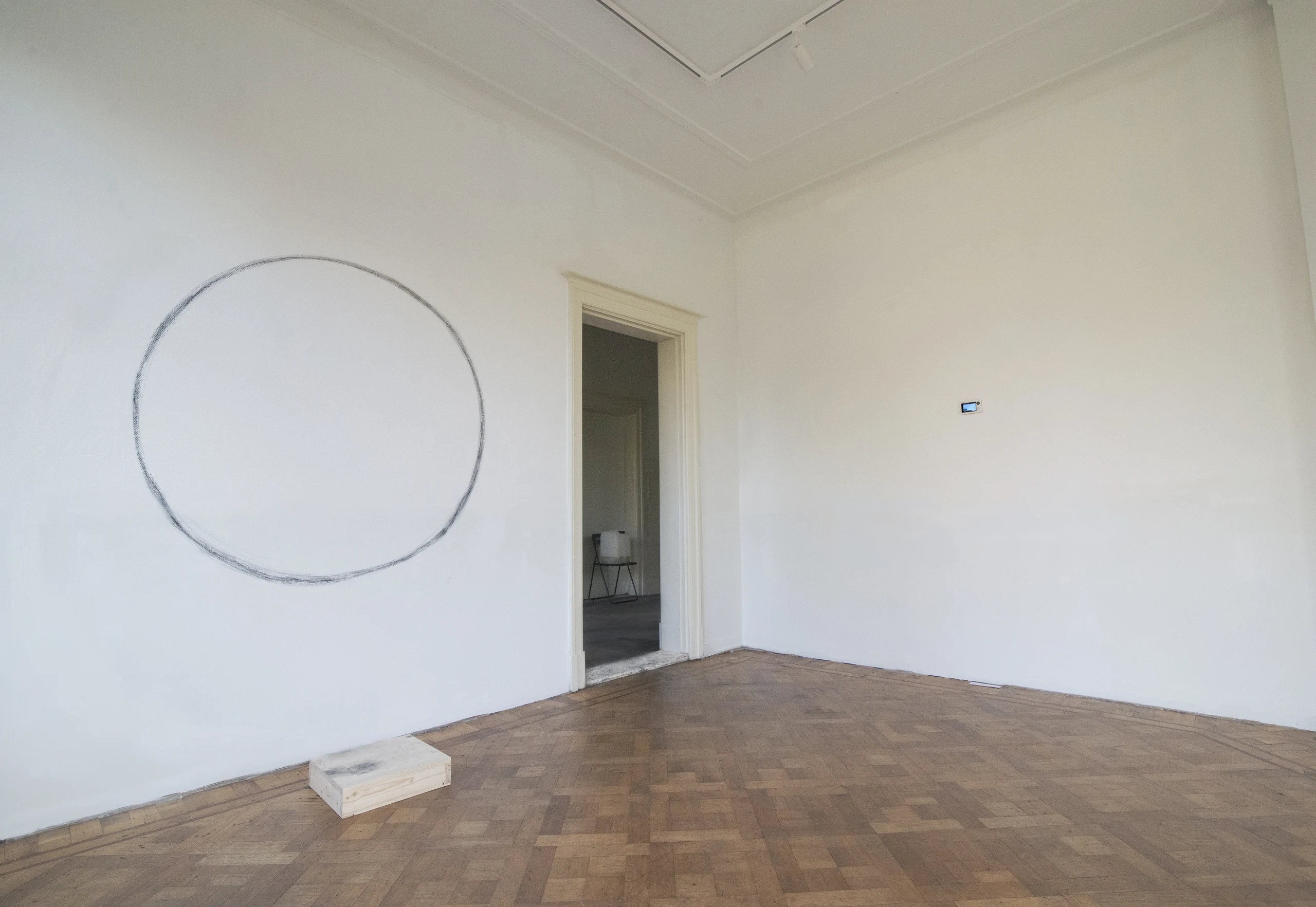
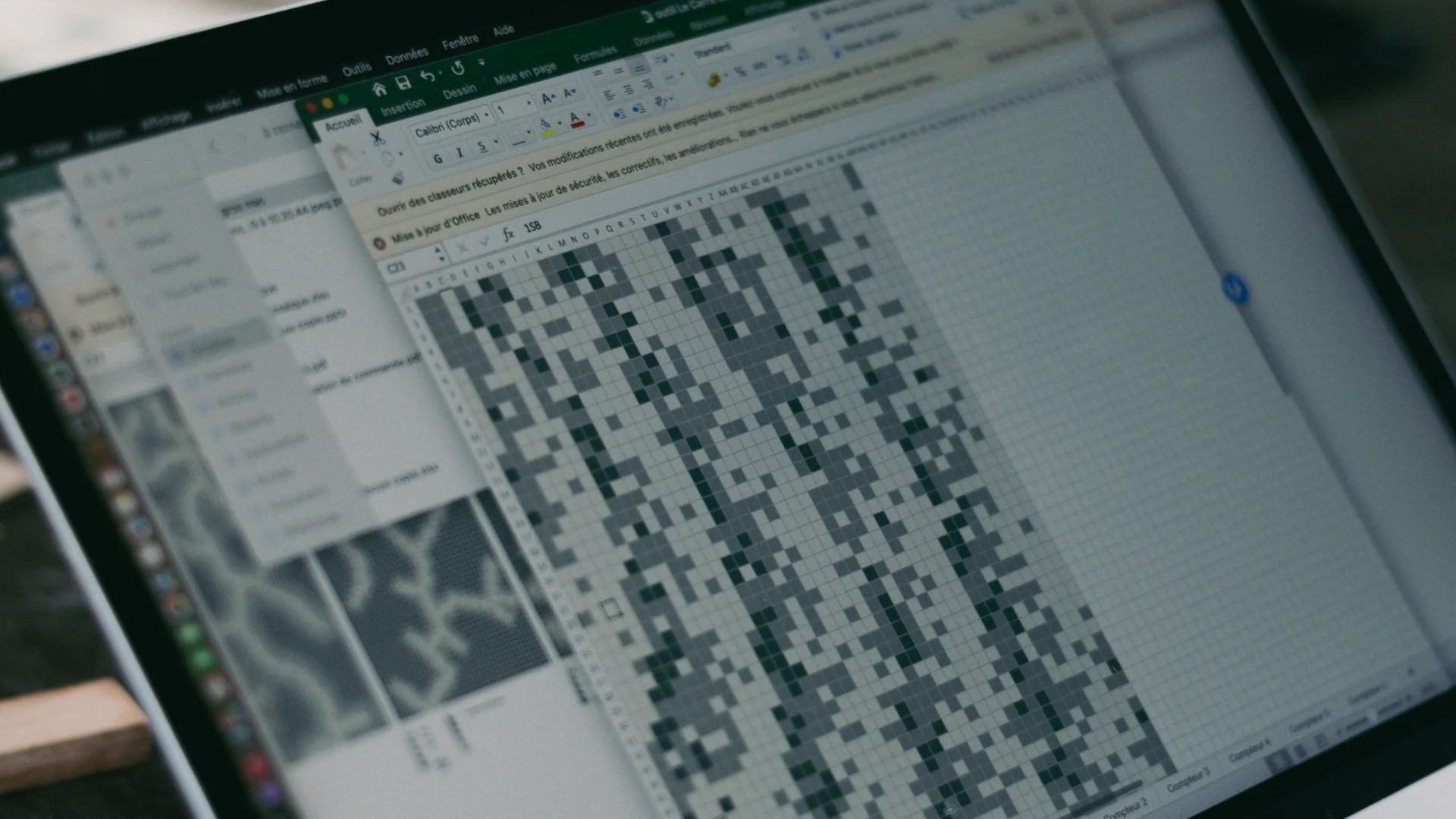
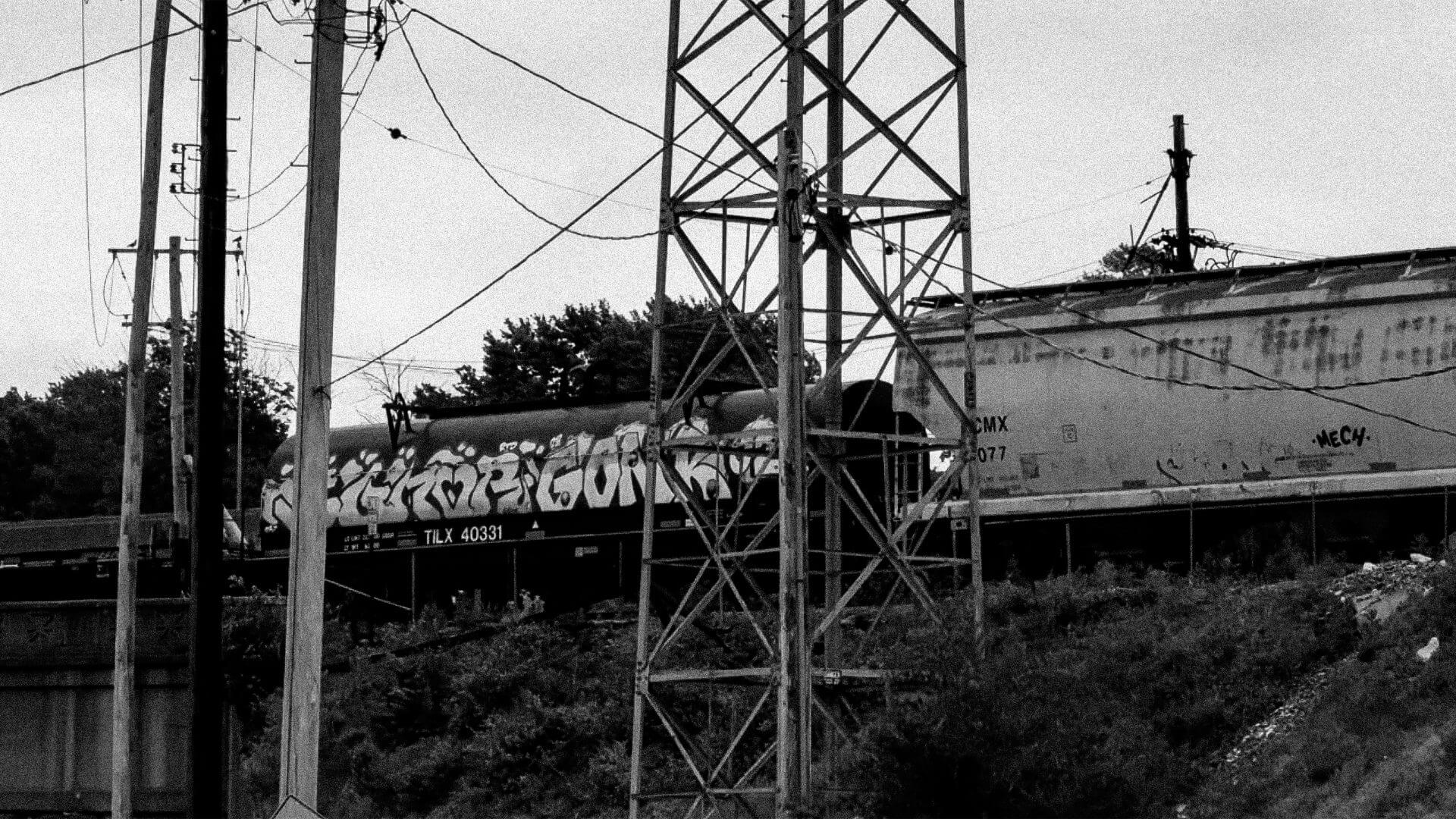
In the heart of Eindhoven, Van Abbehuis stands as a vibrant crossroads for contemporary art. Born from the former residence of the Van Abbe family, the space has evolved into a platform for artistic production, participation and art managed by Frederique Scholtes of the AVA Foundation. Within a city undergoing rapid transformation, Van Abbehuis embodies a new way of thinking about cultural production: collaborative, hybrid, and beyond the confines of the “white cube.”
At FakeWhale, we wanted to dive deeper into the story, philosophy, and ambitions of the people behind it, exploring how a historic house can become a laboratory for the future: an interview with director Fréderique Scholtes.
FW: Van Abbehuis originated from a family home tied to the history of the Van Abbemuseum, and today it has become a hub for ideas and interdisciplinary collaborations.
How did this transformation come about? Could you share the story behind this evolution and the motivations that led you to breathe new life into the space?
FS:The monumental villa was a gift to the municipality by the Van Abbe family, who granted it with the condition that it should become a space for culture. They lived here until the 1940s, across from the museum they founded, and traces of their presence are still visible in the leaded glass of the former billiard room and an art work that never became part of the museums collection (Connecties l, Jan Maaskant) in the front yard.
Converting this framework has been less a linear reinvention and more a gradual tuning into the signallings of the surrounding area of Eindhoven. By unpacking its former domestic architecture into different vacuums for contemporary art – from library, to café, to residency space, to gallery and communal garden – we find ways to link to the rhythm of the city. This is engrained in our programming: when engaging with artists, they are invited into the different spaces of the house, making it impossible to treat them as a static container. Every visit, be it artists or spectators, leaves a trace and allows for temporary interventions that weave into its predecessors.
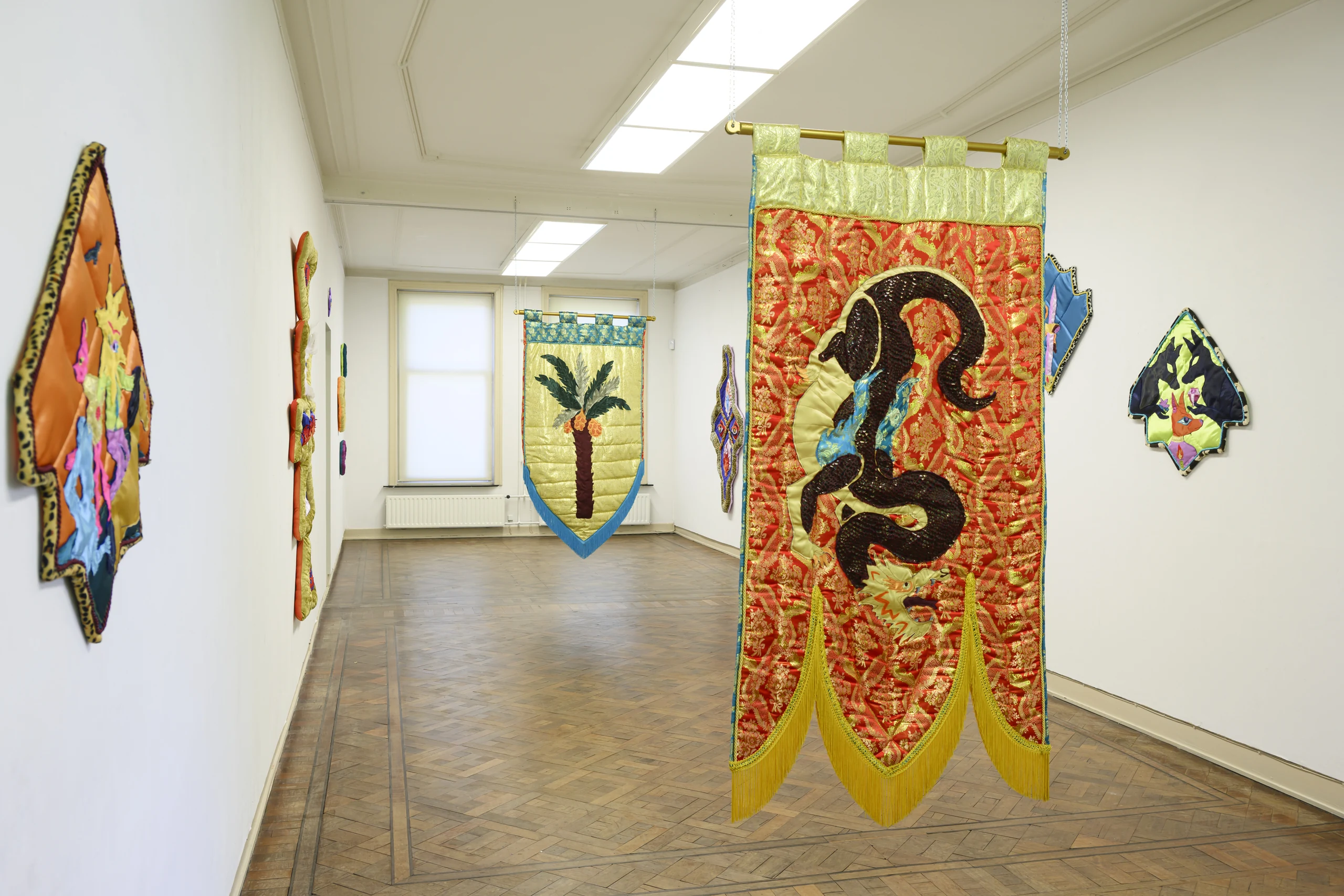
Your motto, “cultural unproduction outside the white cube,” suggests a critical reflection on how art is produced and exhibited today.
How do you interpret this concept, and in what ways does it guide your curatorial and programming choices?
Working outside the white cube is a refusal to neutralize the context in which artistic production processes emerges. You could describe it as a domestic resistance against institutional survival, but how it affects the program is for an outsider to distinguish.
Our aim with this functional disobedience is to allow artistic practices and connections to unfold at different layers, by not necessarily working thematically but using the conditions for exhibiting a test site. On a curatorial level, the approach for the programming is artist-driven and situated, and writes itself in an ongoing interaction between our public and our artists. The works function as catalysts for complicating assumptions about how practices respond to different environments and to give shape to their potential form, for example currently with an intervention in the form of a book shop of Akiko Wakabayashi & Marijn van Kreij in our library space.
Eindhoven is a city where technology and innovation naturally coexist. How does this urban context shape your identity and the collaborations you foster between artists, scientists, and designers?
Café Wednesday – our weekly presentation evening where initiatives, collectives and institutions are linked to the café format of Tom Marioni – is a format in which different domains and practices co-exist within this rhythm and canon, but not subservient to it. Instead of mirroring the city’s emphasis on innovation, we cultivate a complementary cadence: more attuned to the frictions of difference and debate. This makes it possible to connect different communities in ways that examine the implication of civic circumstances.
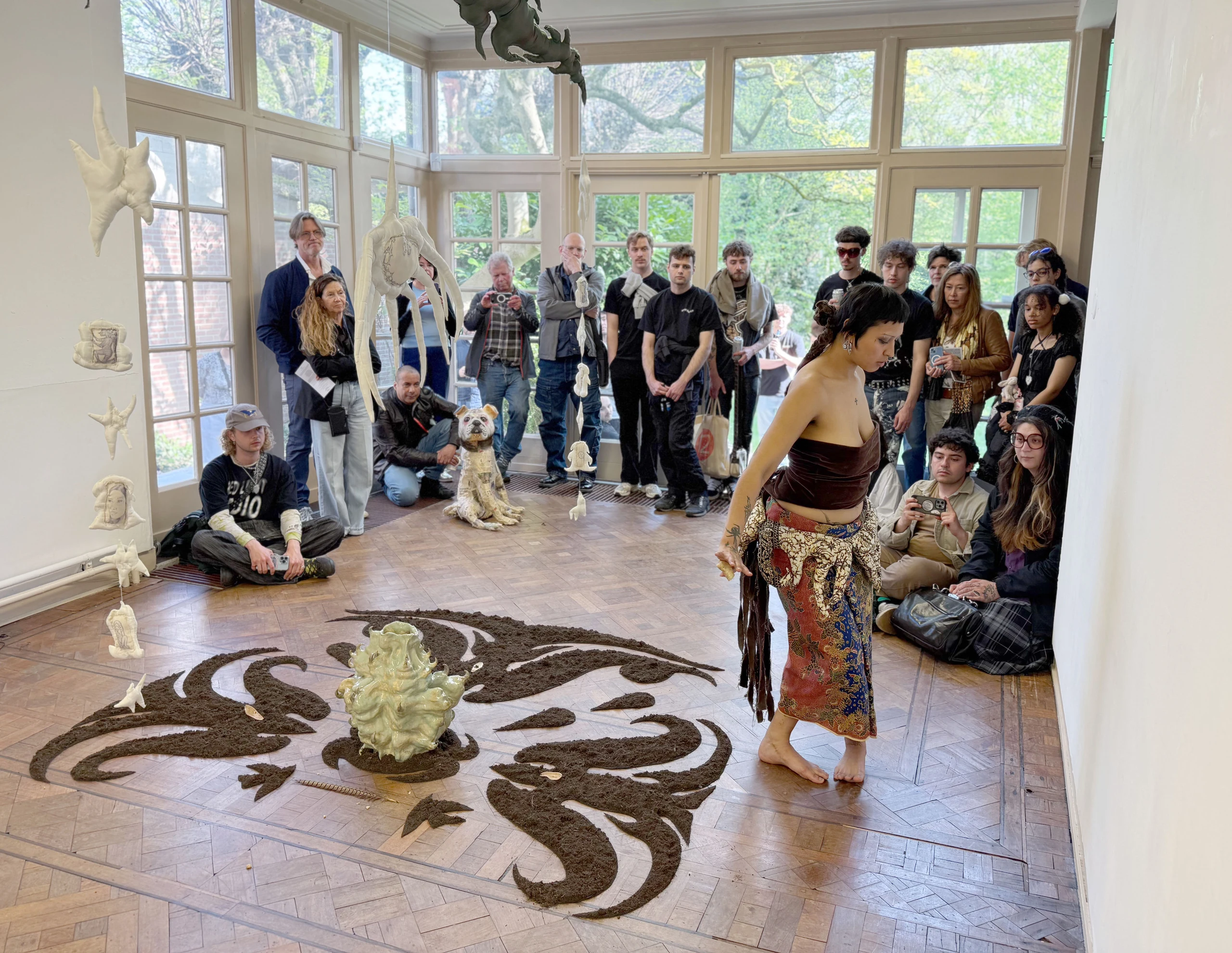
Over the years, you’ve hosted events ranging from performances inspired by conceptual artists to educational projects linked to institutional collections, as well as experiments with exhibition formats in between the architecture of the space.
How do you select the projects and collaborations you choose to support? Is there a common thread connecting such diverse initiatives?
Projects are therefore selected for their capacity to engage with our residential conditions: to move between rooms, to shift scale, and to accommodate different temporalities of use. Collaborations have a shared orientation rather than a shared discipline: whether working with education program Abby, a conceptual score by Ghislaine Leung and Etienne Chambaud or an institutional collaboration with M HKA Book Lovers through David Maroto & Joanna Zielinska: the artists we choose to work with are usually rooted in the potientiality of their alignment to different contexts. What connects these initiatives is a shared preoccupation with how artistic production is conditioned—materially, institutionally and socially—rather than a commitment to a particular medium or format.
Your space is known for its highly participatory approach from workshops to cultural cafés. At a time when many art institutions still struggle to connect with audiences, how do you build genuine relationships with both the local and international community?
Our approach to curating allows the space to remain responsive rather than prescriptive, which is not a one glove fits all situation. This stems from genuine interest over formula: most of our projects and their distinct trajectories only make sense if they come from and are fully engrained within the local ecosystem. When we program an exhibition centering Mike Kelleys work ‘interactive DJ event’, we ensure that a hyperlocal electronic music initiative (in this case Melting Pot Collective) connects to its semantics, and invite them in the space to discuss its implications in the context oof Stroomhuis, an important incubator that burned down in 2024.

Gender identity, cultural diversity, and representation are increasingly central topics in contemporary art. How does Van Abbehuis engage with or integrate these themes within its programs and collaborations?
Our program hasn’t been so much European-centered, not in the sense that we reject it as a premise – as an art space located in NL, it becomes part of this discourse by default– but our prowess is to let distant adhesions seep into the local infrastructure. Working with dance company CorpoMaquina, who perform urban performance at local schools, it comes apparent how the intersections in which different domains can be connected heighten the accessibility of contemporary art. Its often engrained in small gestures, like switching out red wine for palestine cola during a collaboration with a local mosque, critiquing Cardi B’s trial with Angel Rose Oedit-Doebé or hosting a talk with Abril Cisneros & Alonso Cedillo about conspiracy theories. How cultural production determine the dominant frameworks of institutional tendencies are concerns that are part of how our space is allocated as well as how collaborations form, but we aren’t interested in artificial windowdressing.
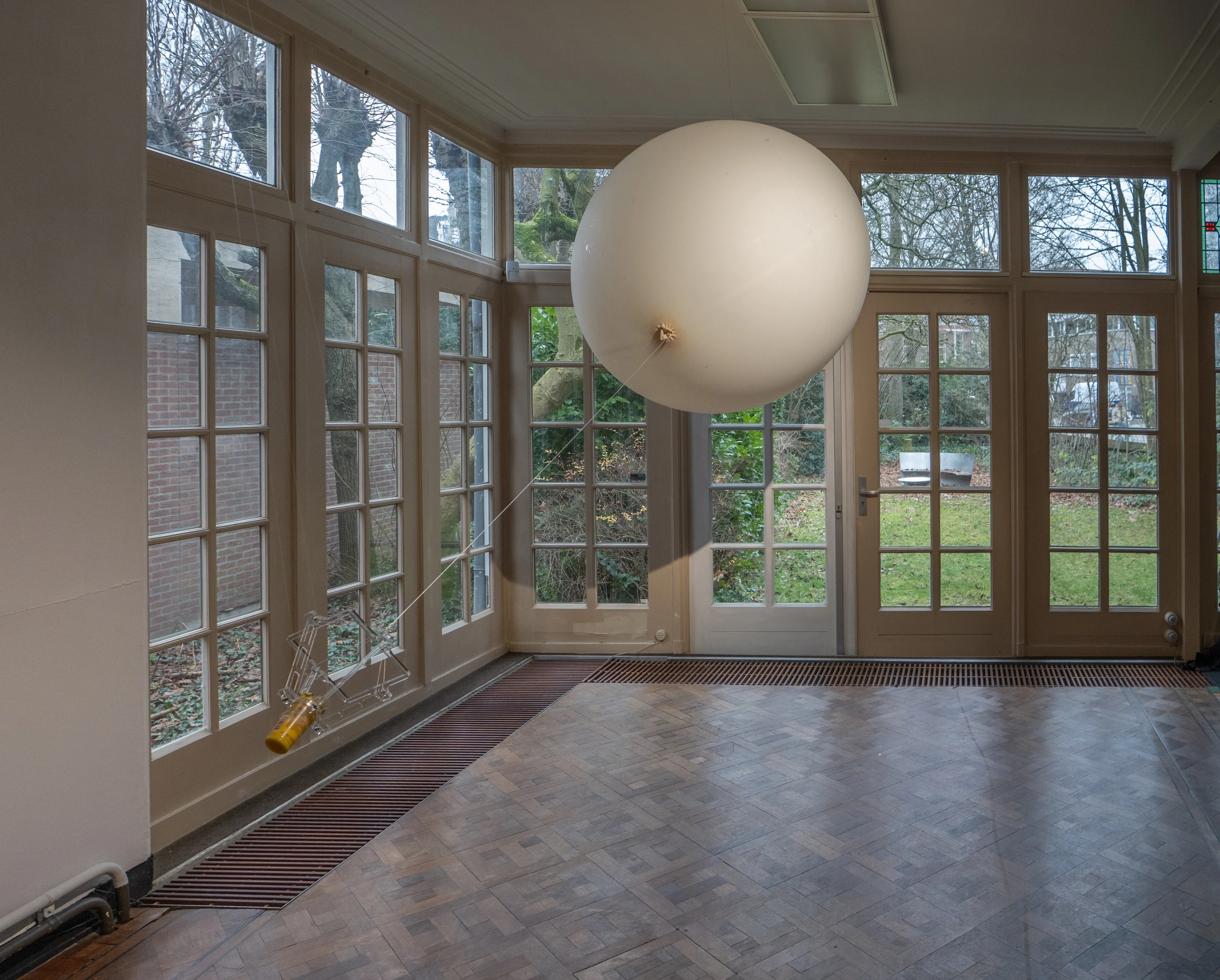
Looking at your digital activities, where you promote events and partnerships, how important are digital media today in building a cultural community and engaging new audiences?
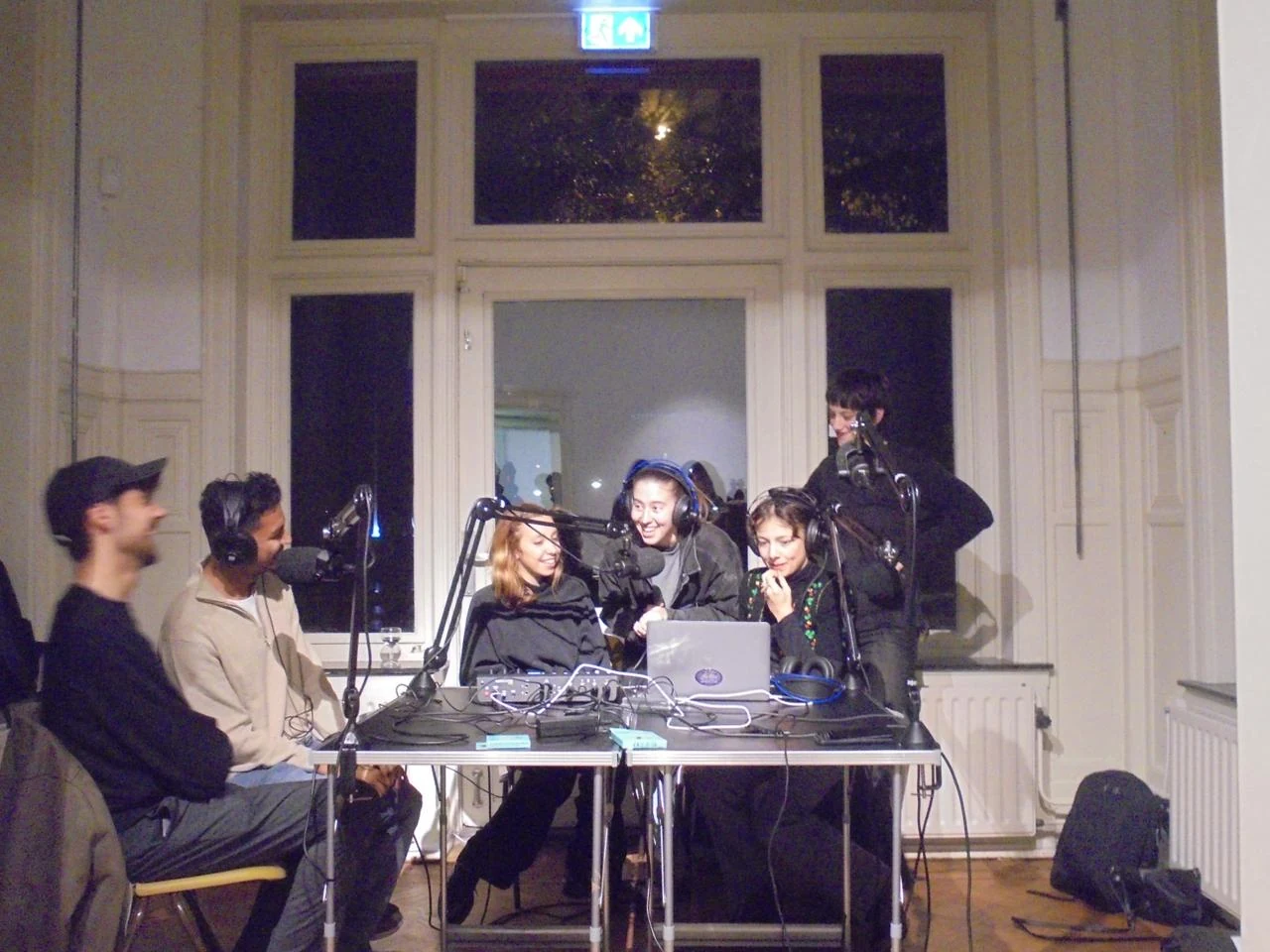
In collaboration with Rararadio and DVR Collective Radu Mihai-Tânasâ, Demi van Kuijk & Vinith Bhandari (Worm Rotterdam) we host public radio sessions. The project brings together a range of actors involved in artistic production—gardeners, participants, educators, fund advisors, and are distributed as a method that allows to include those that are typically only included for a specific agenda. By situating these conversations within the context of our space and extending them through broadcasting, we seek to reverse the role of transmittors of how value, authorship, and participation are negotiated within contemporary art. For us its a nice way to defy geographical limits and engage with international audiences that cant easily make the trip to Eindhoven.
Finally, looking to the future, what projects or directions excite you most in the coming years?
Do you see the identity of Van Abbehuis continuing to evolve, or have you reached a point of balance between experimentation and historical continuity?
To lose balance sometimes is part of living a balanced life. Right now our focus is to stay reflective on the role of the project space and its function as presentation, development and staying in constant motion when it comes to cultivating presentation forms for art. In this way we are more focused on the how, than the what and the aim is not to stabilise, but to attune to current tendencies that are sometimes violently unstable. Yet concretely, to unveil on the short term we’re very excited to be extending our outreach through participation in a few art manifestations and fairs, for example Het Zuid Manifest, and our new show at the end of May with Jakub Jansa, Moe Mustafa, Marcos Kueh, Stijn Peeters and Gabi Dao through curatorial collective Text my Sister.