The Power of Not Fitting a Category
For decades, the contemporary art world appeared to operate according to a fairly clear division of labour. Galleries sold art. Museums conferred legitimacy. Foundations supported research. Independent spaces occupied the experimental margins, often associated with financial insecurity and a position outside the major international circuits. That division is becoming harder to defend. An increasing amount of artistic activity takes place in organisations that resist easy classification. They mount exhibitions without formally representing artists, sell work without operating like conventional galleries, collaborate with institutions without adopting their bureaucracy, and can radically alter their identity, programme or structure in a matter of months. Their advantage is not necessarily that they have more resources. It is that they can operate with fewer commitments. An established gallery must protect its market, maintain commercial relationships, honour obligations to represented artists and preserve some consistency in its programme. An institution must navigate administrative procedures, public responsibilities, funding agreements and often complicated decision-making processes. An independent space can, at least potentially, move between these functions without having to assume all of them at once. That structural ambiguity is precisely what makes it interesting. In some cases, even well-established galleries find it useful to work with independent spaces as complementary exhibition platforms. Artists gain further opportunities to show their work, galleries extend their cultural reach indirectly, and independent spaces build relationships and credibility without necessarily entering the traditional machinery of commercial representation. But there may be more at stake than a convenient partnership between different kinds of organisations. If a space can open quickly, test different formats, combine cultural and commercial activities, change course without undermining an established identity, or even close without maintaining a permanent institution, its apparent fragility may conceal a competitive advantage. That raises an unavoidable question: what if independence is no longer simply a cultural position, but one of the most effective organisational models available to contemporary art? This investigation follows five dimensions of that question, from operational freedom and relationships with galleries to artistic experimentation, financial sustainability and institutional transformation. The aim is not to celebrate independent spaces uncritically. It is to establish where their flexibility offers a genuine advantage, where its limits lie, and why traditional players may increasingly need organisations they once regarded as peripheral.
Freedom as a Competitive Advantage
There is a contradiction in the way the art world continues to regard independent spaces. On one hand, they are celebrated as places of experimentation, able to identify artists and ideas before they enter established circuits. On the other, they are often described as transitional organisations, expected eventually to grow into galleries, foundations or recognised institutions. Independence is treated as a temporary condition, a stage to be outgrown. But what if that reading is wrong? What if, rather than being an incomplete version of the traditional gallery, the independent space is an organisational form in its own right, with advantages that larger structures cannot easily reproduce? To understand the difference, we need to begin with something rarely discussed: the cost of commitments. A gallery representing a stable roster of artists takes on responsibilities that extend far beyond organising exhibitions. It invests in production, supports careers, develops relationships with collectors and institutions, attends fairs and maintains a degree of continuity in its programme. Every decision has implications for earlier ones. Introducing an artist, changing direction or testing an exhibition format can affect the business as a whole. For a museum or foundation, the pressures are different but no less substantial. Budgets, boards, approval procedures, obligations to funders and the public can turn programming into a process measured in years. An independent space with a lean structure can avoid many of these organisational commitments. It need not represent the artists it exhibits or devise a multiyear commercial strategy for each of them. It can stage a show because the project matters, without having to place it within a plan for increasing market value. The practical consequence is straightforward: fewer competing interests need to be reconciled before a decision can be made. That does not mean independent spaces are free of responsibilities. Contracts, safety requirements, permits, costs and obligations to artists still apply. Indeed, the lack of an established structure can make an economic setback considerably more dangerous. The difference lies in how much freedom the organisation has to define its own role. An independent space might spend six months as a research venue, then stage an exhibition with works for sale, develop a publishing project, collaborate with an international gallery and return to an entirely experimental programme. It need not choose one identity and defend it indefinitely. This is where the distinction between cultural and commercial activity begins to lose some of its usefulness. In the conventional model, selling belongs to galleries, while research and cultural legitimacy are associated chiefly with institutions and nonprofits. In practice, these boundaries have never been so clear. Museums help establish market value; galleries finance culturally significant production; and independent organisations often rely on sales, editions and commercial partnerships to support their work. An independent space can acknowledge that overlap without feeling obliged to resolve it. It can sell a work without taking on the artist as a represented client. It can work with a collector without building its programme around that person’s tastes. It can mount a show with no immediate commercial prospects and, a few months later, develop a financially viable project. None of this guarantees freedom from compromise. A small space can become dependent on one funder, one collector or its own sales. Independence is not a status secured once and for all; it is a condition that has to be negotiated continually. Still, compared with an organisation built around permanent obligations, the ability to change function is difficult to dismiss. And this is not simply a question of artistic freedom. It is a question of organisational design. A structure with few layers of decision-making can respond quickly to an opportunity, start a collaboration without prolonged internal negotiations, alter its calendar or test a project before its economic model is fully defined. In a field where reputations take years to establish and organisations tend to protect what they have already built, the ability to change direction without jeopardising an entire business has particular value. That does not automatically make independent spaces more efficient. Speed can become improvisation; flexibility can conceal precarity; a lack of procedures can produce poor working conditions. A lean organisation works only if its freedom to decide is matched by the ability to deliver. But it introduces a possibility that the conventional art world tends to underestimate: a cultural organisation need not treat growth in size as an obligatory goal. A space can matter without becoming large. It can acquire authority without representing dozens of artists. It can exert considerable influence through a handful of exhibitions, carefully chosen collaborations and a network that extends far beyond its physical footprint. Seen this way, independence stops being merely a cultural declaration. It becomes another way of distributing resources, responsibilities and decision-making power. A crucial question remains. If these organisations can operate with greater freedom, why would established galleries choose to collaborate with them rather than regard them as competitors or marginal players? The answer takes the investigation beyond the internal structure of the independent space and into its position within the art world’s wider balance of power.
The Laboratory the Traditional Art World Cannot Afford
One of the art world’s stranger habits is that almost everyone claims to be looking for something new, while not everyone can afford to recognise it when it appears. For a commercial gallery, backing an unknown artist means accepting risks far beyond the cost of an exhibition. Collectors must be persuaded, a credible account of the work developed, production financed and, above all, a commitment sustained that may not find a market for years. The more established the gallery, the more that decision must coexist with expectations already in place. Independent spaces can approach the same problem from a very different position. Because they do not necessarily have to build a market for every artist they exhibit, they can present work that has no established audience, no recognisable price and sometimes no final form. That difference matters. A gallery also invests in the prospect that a project can develop commercially. An independent space can decide that the research itself is reason enough to show it. This does not make independent spaces inherently braver or more advanced. Many follow dominant trends closely; others reproduce the very hierarchies they claim to resist. But their structure can make room for risks that would require far more justification elsewhere. Consider an artist working with temporary installations, perishable materials or interventions intended to exist only for the duration of an exhibition. The project may produce no readily saleable object. At a gallery, that decision would need to fit a broader strategy. At an independent space, it can be the entire reason for the exhibition. The same is true of interdisciplinary practices crossing performance, sound, technology, publishing and socially engaged work. The absence of established commercial categories need not be an obstacle. It can be the starting point. These spaces can therefore function as laboratories in which not only new artworks, but new ways of exhibiting, producing and engaging an audience, are tested. And the value of an experiment is not determined solely by its immediate success. A show may attract few visitors, generate no sales and receive little press, yet still contribute to an artistic practice. It may allow a curator to test an idea, an artist to realise an ambitious project for the first time or a group of researchers to meet people they would otherwise never encounter. These outcomes are difficult to measure with the instruments normally used by the market. A sale produces a clear financial figure. The contribution of an exhibition to the development of an artistic language may become visible only much later, if at all. Independent spaces occupy precisely that uncertain territory, where cultural value has not yet been translated into commercial value. But it would be naive to imagine that distance from the market is permanent. The history of contemporary art is full of languages and practices that began at the margins and were gradually absorbed by galleries, fairs and institutions. Experimental spaces can play an important part in that process. They provide early visibility to work that has not found an established place and help form the first networks of recognition. Experimentation, in other words, can create capital that does not appear on a balance sheet. It consists of relationships, documentation, curatorial judgment, reputation and the ability to identify artists before they become widely sought after. It can accumulate even when individual exhibitions produce little revenue. This raises a difficult question. If an independent organisation helps build an artist’s reputation before that artist enters a commercial gallery, who benefits from the value created in the earlier years? There is no single answer. Sometimes the independent space remains an active part of the artist’s professional network. In other cases, its contribution is gradually forgotten. Documentation, critical texts and collaborations survive, while the organisation that made them possible continues to operate on limited resources. It is one of the art world’s recurring paradoxes: innovation is partly supported by organisations that may never share in the financial rewards of its later recognition. For some operators, however, this apparent weakness can become a long-term strategy. An independent space that develops a recognisable programme over several years builds a history. Every exhibition contributes to its identity, every collaboration extends its network and every artist presented helps establish its cultural position. Unlike a newly opened commercial gallery, it does not necessarily have to prove from the outset that it has a market. It can build authority first and decide later how to use it. This reverses the usual sequence of commercial development. Instead of opening a gallery and investing in the construction of a programme, one can develop an experimental programme first and only later decide whether to turn it into a commercial operation. The transition is not automatic and brings new obligations. But the cultural record built during the independent years can become a valuable resource for the new organisation. A gallery founded this way can enter the market with years of documented activity, established relationships and a curatorial direction that was not developed solely in response to buyers’ expectations. That is an advantage a gallery founded directly as a commercial business may struggle to acquire, particularly when it must generate revenue from the beginning. Of course, the transition raises questions of its own. Will the experimental programme survive when the organisation must rely on sales? Will the artists who built its reputation remain central? How far can the new commercial identity use its independent history without retrospectively changing its meaning? These questions do not invalidate the trajectory. They reveal its complexity. The essential point is that an independent space need not decide its destination in advance. It can remain a laboratory, become a curatorial platform, develop a market or turn into a gallery. Its earlier history need not disappear. It can be preserved, reinterpreted and carried into a new identity. This may be one of independence’s least obvious competitive advantages: the chance to accumulate cultural recognition before taking on the full responsibilities of a commercial structure. But the investigation now runs into an unavoidable question. If experimentation can generate reputation, relationships and future economic value, who finances the years before those rewards become available? And what interests might sit behind the apparent generosity of those who support an independent space? To answer that, we need to turn from artists and exhibition programmes to the people who make these organisations materially possible. Cultural independence, however genuine, always has a cost. The way that cost is paid can tell us more than the exhibition programme itself.
The Economics of Independence: Who Really Pays for Freedom?
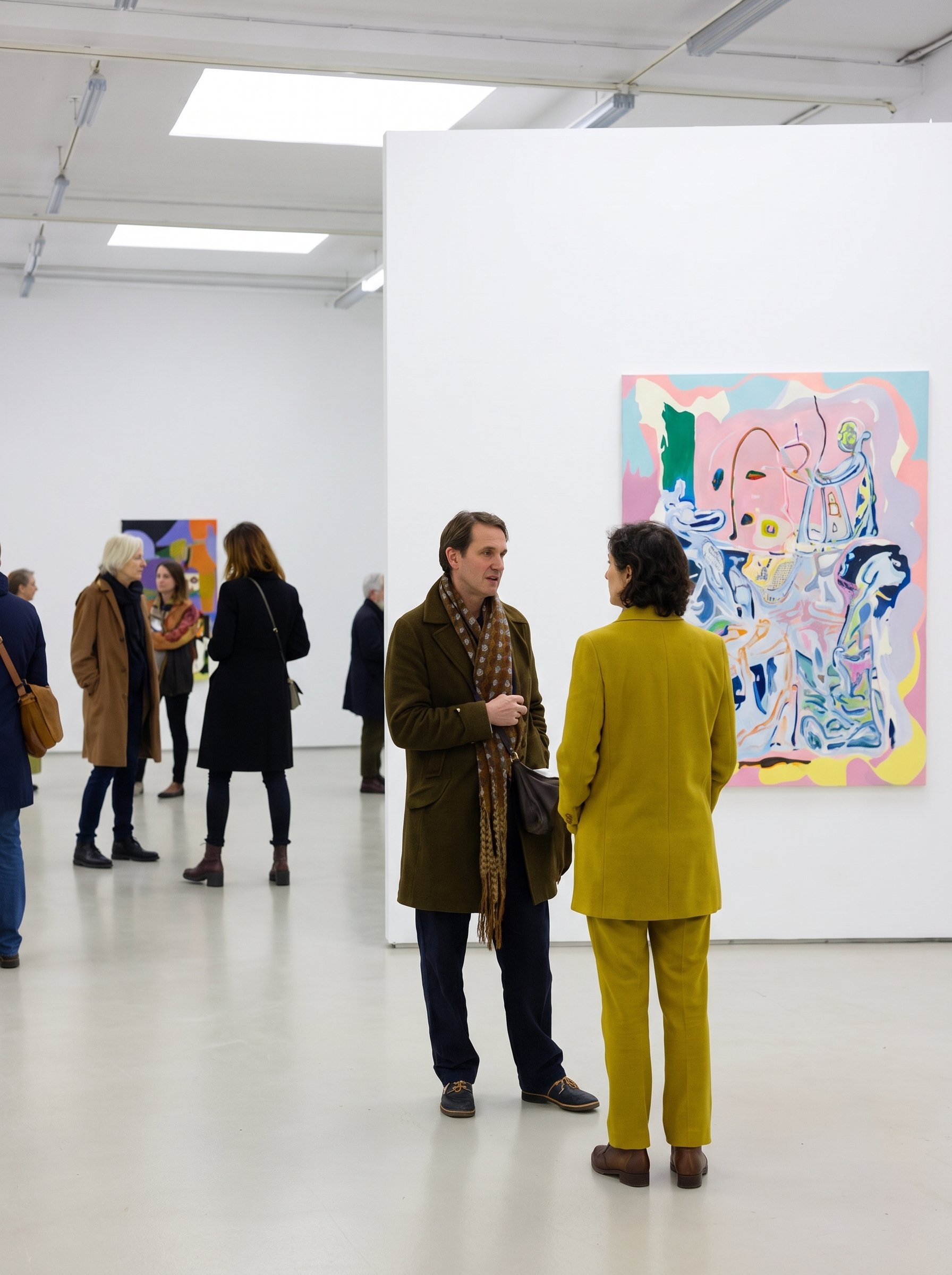
There is a question that rarely appears in an independent space’s press release but probably explains a great many of its decisions: who pays? Behind an experimental exhibition, an ambitious curatorial programme or the opening of a new venue there is always an economic structure. Someone pays the rent, finances production, covers transport, employs staff or makes a building available. If income does not cover those costs, the shortfall must be absorbed somewhere. To understand independent spaces, we therefore need to set aside the language of experimentation for a moment and look at the accounts. A conventional commercial gallery generally supports an ongoing operation. Rent, salaries, insurance, communications, production, art fairs and artist management are expenses that do not disappear when sales slow. Keeping that machinery running inevitably affects decisions. An independent space may be built around a much more variable cost structure. It can share a building with other activities, open only for certain periods, work through temporary partnerships or concentrate its resources on a few projects each year. It may dispense with a permanent venue altogether, using different sites according to the needs of each exhibition. The advantage is not necessarily spending less. It is having greater control over when and where money is spent. An organisation that does not have to maintain twelve months of continuous programming can direct more of its budget to producing a single exhibition. One without permanent staff can engage different specialists for different projects. A space that does not attend fairs can devote resources to work with no immediate commercial return. This flexibility comes with an obvious risk. Reducing fixed costs can mean shifting financial uncertainty onto collaborators, artists and founders. Many spaces survive through unpaid labour, personal generosity and resources that never appear in formal accounts. An apparently efficient organisation may simply be one whose costs are being privately subsidised. Economic lightness and economic sustainability are not the same thing. There is, however, a second and less visible dimension to these models. Not all independent spaces are founded to produce a direct profit. Some are supported by artists, others by curators, entrepreneurs or collectors. When the person financing the organisation already participates in the art market, the economic meaning of that investment can change substantially. For a collector, opening an exhibition space is not necessarily just an act of patronage. It can also alter their position within the system. A conventional collector enters the market mainly through acquisitions. They visit galleries, attend fairs, build relationships with artists and try to gain access to the works they want. When that collector establishes an independent space, they cease to be merely a buyer. They become someone who can generate visibility, organise exhibitions and contribute to an artist’s reputation. That shift can have concrete economic consequences. In the primary market, particularly for artists in high demand, money alone does not guarantee access. Galleries may choose buyers according to the quality of their collections, their willingness to lend works to institutions, the durability of their relationships and the likelihood that the work will be well cared for and publicly seen. A collector with an exhibition space can offer something a buyer without one cannot: a place to stage a show, present an artist publicly, produce documentation and contribute to the circulation of the work. That does not mean opening a space guarantees discounts or privileged terms. It can, however, strengthen the collector’s negotiating position and, under certain circumstances, improve access to works that would otherwise be difficult to acquire. An investment in an exhibition venue can therefore generate indirect benefits that do not appear in the organisation’s profit-and-loss statement. A show that sells nothing may still consolidate a relationship with an important gallery. A privately funded programme may strengthen a collector’s standing within an international network. The ability to offer an artist visibility may become a resource when building a collection. At this point, the boundary between cultural and economic interests becomes difficult to draw. Not necessarily because there is a conflict. Private collecting has played a decisive role in establishing museums, foundations and institutions that have widened public access to art. But it would be equally naive to ignore that financing cultural activity can bring personal, reputational and commercial benefits. Taxation adds another layer. In some jurisdictions, foundations and nonprofit cultural organisations can qualify for particular deductions, exemptions or other favourable tax treatment. The United States is an especially revealing case, because the relationship between private museums, wealthy collectors and tax advantages has drawn both journalistic scrutiny and regulatory attention. A 2023 ProPublica investigation examined how some wealthy individuals have used private foundations to secure substantial tax benefits, raising questions about public access and the boundary between private interests and philanthropy. This is not a universal feature of independent spaces. Rules vary considerably by country, and a privately owned exhibition venue does not automatically qualify for tax advantages simply because it presents culture. In Italy, for example, the Art Bonus applies to specified kinds of donations and eligible beneficiaries, not indiscriminately to the establishment of private art spaces. The issue nevertheless matters because cultural patronage can form part of a much broader economic strategy. For some founders, an independent space is an expense they willingly bear out of cultural conviction. For others, it can be a reputational investment, a means of building relationships, a complementary commercial activity or a combination of these things. That range of motivations helps explain why organisations that look similar from the outside may operate on entirely different economic models. A space financed by a wealthy collector may sustain years of programming without sales. One supported by a group of artists may depend on personal contributions and voluntary work. A hybrid organisation may fund part of its research through artworks, editions, consultancy or private partnerships. The public sees exhibitions, artists and press releases. Behind them may be economies that have almost nothing in common. This makes it particularly difficult to judge independent spaces by conventional performance measures. An organisation that breaks even every year may be fragile if the result depends on hundreds of hours of unpaid work. A space that consistently records losses may be entirely sustainable for a founder who regards the expense as part of their collecting activity. A structure generating commercial income may reinvest every penny in cultural production. Profitability tells only part of the story. Another advantage deserves attention: the ability to change the financial model without necessarily rebuilding the organisation from scratch. A space originally financed by a single founder can gradually introduce sales, partnerships or publishing. A project supported by artists can develop into a professional organisation. An initially noncommercial space can build a market around some of the artists with whom it has worked. These transitions are not painless. Changing the model often means taking on new tax, administrative and contractual obligations, as well as renegotiating relationships with artists and audiences. But experimenting with different sources of funding can reduce the need to rely on a single revenue stream from the outset. The economic advantage of independence may therefore lie in keeping several options open. A commercial gallery generally has to demonstrate that it can sell. A public institution must account for how it uses the resources entrusted to it. An independent space can devise a different balance, provided it can cover its costs and meet the obligations attached to its activities. That freedom, however, has a less visible price: dependence on the people who make it possible. When a space exists because of a single patron, its cultural autonomy may be considerable, but its financial continuity remains tied to that person’s decisions. When it relies on voluntary work, its programme depends on collaborators’ availability. When it funds itself through sales, it may gradually encounter the very commercial pressures from which it once sought distance. There is no economic model that is independent by definition. There are different ways of financing autonomy, each with its own constraints. The decisive question is how far an organisation can change its structure without losing what made it distinctive. Some independent spaces do more than change their funders or sources of income. At a certain point, they change their nature. They become commercial galleries, adopt new names, begin representing artists and turn years of experimentation into a cultural history that carries weight in the market. It is worth examining this transition without assuming that entering commerce necessarily means abandoning the independence that came before. In some cases, the reverse may be true: the independent years made it possible to build something that the pressures of the market would have made far harder to achieve from the outset.
Open, Evolve, Close: The Advantage of Not Having to Last
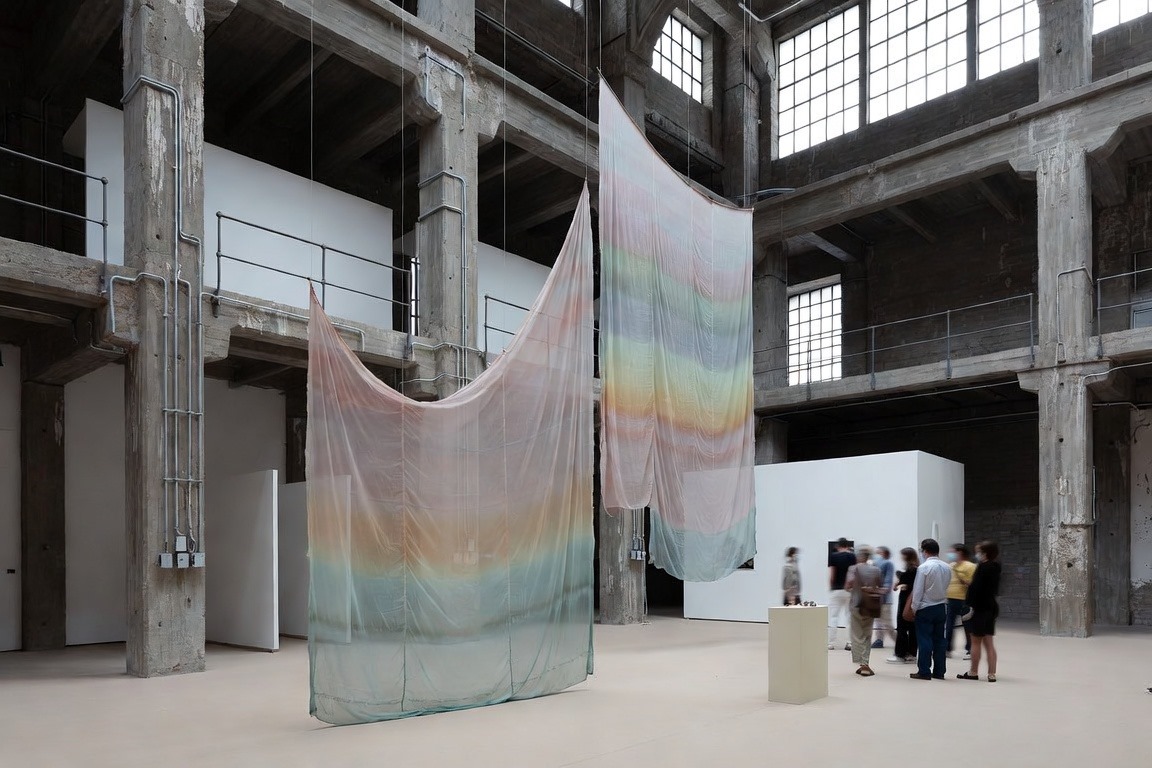
In the art world, longevity is almost always treated as evidence of success. A gallery that survives several generations, a museum that expands its premises or a foundation that strengthens its endowment are familiar models of growth. Continuity suggests authority, while closure tends to be read as failure. Yet the history of independent spaces makes that equation difficult to sustain. Some of contemporary art’s most influential experiments lasted only a relatively short time. Others changed names, premises and structures repeatedly, eventually becoming organisations quite different from those that originally opened. Still others closed without erasing their contribution to artists, artistic languages and cultural networks. The history of 112 Greene Street, founded in New York in 1970, is instructive. The venue became a focal point for experimentation through installations, performances and interventions that sat uneasily within the conventions of commercial galleries. Its structure and identity evolved, and the organisation later became known as White Columns. One of New York’s longest-running alternative art organisations thus emerged through transformation, not the preservation of an unchanged original model. Continuity, in this case, did not mean standing still. There is another trajectory, perhaps more interesting economically: the independent space that becomes a commercial gallery. A newly founded gallery generally faces two problems at once. It has to establish a recognisable cultural programme while also finding a market capable of supporting it. Those aims do not always pull in the same direction. Artistic research takes time, trial and error, and the freedom to show projects that may not immediately interest collectors. The market imposes deadlines, costs and expectations. Even a gallery sincerely committed to experimentation must sell enough to keep operating. An independent space can separate these processes in time. It can devote its early years to developing a curatorial identity without immediately proving its commercial viability. It can stage difficult shows, invite little-known artists, change direction and document a history that includes experiments that did not work. If it later becomes a gallery, it does not necessarily begin from zero. It brings an archive, an exhibition history, professional relationships, an artist network and, above all, a reputation built under conditions in which market pressures may have been less decisive. The advantage is clear: some of the cultural work a new gallery would otherwise have to undertake alongside its commercial activity has already been done. In London, The Approach offers an example of such an evolution. Founded in 1997 as an artist-run space above a pub in the East End, it gradually developed into a commercial gallery while retaining an identity connected to its experimental beginnings. The transition did not require erasing its past. That earlier history helped shape the character of the organisation it became. The example challenges a familiar assumption: that a credible gallery must present itself as a gallery from day one. In certain circumstances, the opposite approach may be more advantageous. Build the programme first. Test relationships with artists. Develop an audience. Only then introduce a commercial structure. A change of name, legal identity or operating model can mark a new phase of a project that already has a recognisable history. This need not have been the original plan. Many organisations evolve in response to unexpected opportunities, expanding networks or the need for new funding. The result can nonetheless be similar: cultural capital accumulated during the independent period is carried into an organisation capable of operating commercially. Such transformations are not free of contradictions. Once commercial, the new gallery must confront expectations it may previously have avoided. Some artists may no longer fit the programme; certain forms of experimentation may become financially untenable; and its relationship with the public may change. An independent past does not guarantee that the original freedom survives intact. It does, however, offer something a business founded directly as a commercial gallery may find harder to develop: an existing cultural genealogy. In a field where credibility partly depends on the ability to recognise and support artists over time, that genealogy can be a substantial resource. There is another, more radical difference between independent spaces and conventional institutions: the possibility of treating closure as an organisational decision rather than a defeat. A foundation with a permanent building, employed staff, property and institutional responsibilities cannot easily stop operating without serious consequences. A commercial gallery must manage contracts, representation agreements, consigned works and established relationships. An independent space organised around a temporary project can begin with a defined lifespan. It can occupy a building for a few months, develop a sequence of exhibitions, complete its programme and end once its objectives have been met. It does not have to turn every successful experiment into a permanent institution. This avoids a problem many institutions know well: the gradual replacement of cultural objectives by the need to preserve the structure meant to serve them. As an organisation grows, an increasing share of its resources goes towards maintaining its own existence. Buildings must be managed, staff paid, funding renewed and activities planned far in advance. Continuity becomes a responsibility that shapes future decisions. A temporary space can instead concentrate its energy on a particular question without constructing an apparatus designed to survive beyond it. That is not an argument for precarity. A lack of continuity can make it difficult to preserve archives, provide decent professional conditions and build lasting relationships. Closing a space also leaves financial, legal and ethical obligations towards those involved. But the ability to finish a project without automatically calling its ending a failure introduces a different measure of success. Perhaps an exhibition space should be judged not only by how many years it remains open, but by what it makes possible while it exists. An exhibition that changes an artist’s trajectory, a programme that introduces unfamiliar practices to a city, or a collaboration that generates relationships continuing elsewhere may have effects far more durable than the organisation that enabled them. In that sense, the physical closure of a space does not necessarily mark the end of its influence. Works continue to circulate. Artists pursue their research. Curators develop new projects. Relationships formed during one experiment can migrate into other organisations. Independence therefore makes it possible to imagine a cultural structure whose value is not tied to its own permanence. And here the five strands of this investigation come together. Operational freedom allows an organisation to choose the functions it performs. Partnerships with galleries let it participate in wider networks without reproducing their structures. Experimentation builds a cultural record that can precede commercial recognition. Financial flexibility makes different funding models possible. Finally, the ability to transform allows an organisation to preserve the value it has created even when its form changes radically. None of these advantages is automatic. Independent spaces can be financially fragile, culturally unremarkable, constrained by funders or unable to provide sustainable working conditions. Traditional galleries, meanwhile, can demonstrate a commitment to research and innovation that many independent organisations lack. But the comparison reveals something worth taking seriously. Authority in contemporary art has historically been associated with stability, scale and the ability to consolidate a position. Independent spaces suggest another possibility: influence built through mobility, collaboration and the ability to change form. Their strength does not necessarily come from being small, alternative or outside the market. It comes from having the option not to become something else merely to prove their worth. They can remain independent, become galleries, evolve into institutions or simply bring their work to a close. Perhaps that is the investigation’s most consequential finding: in a system that has long regarded permanence as a form of power, the freedom to change, or even to disappear, may be an equally important advantage.