

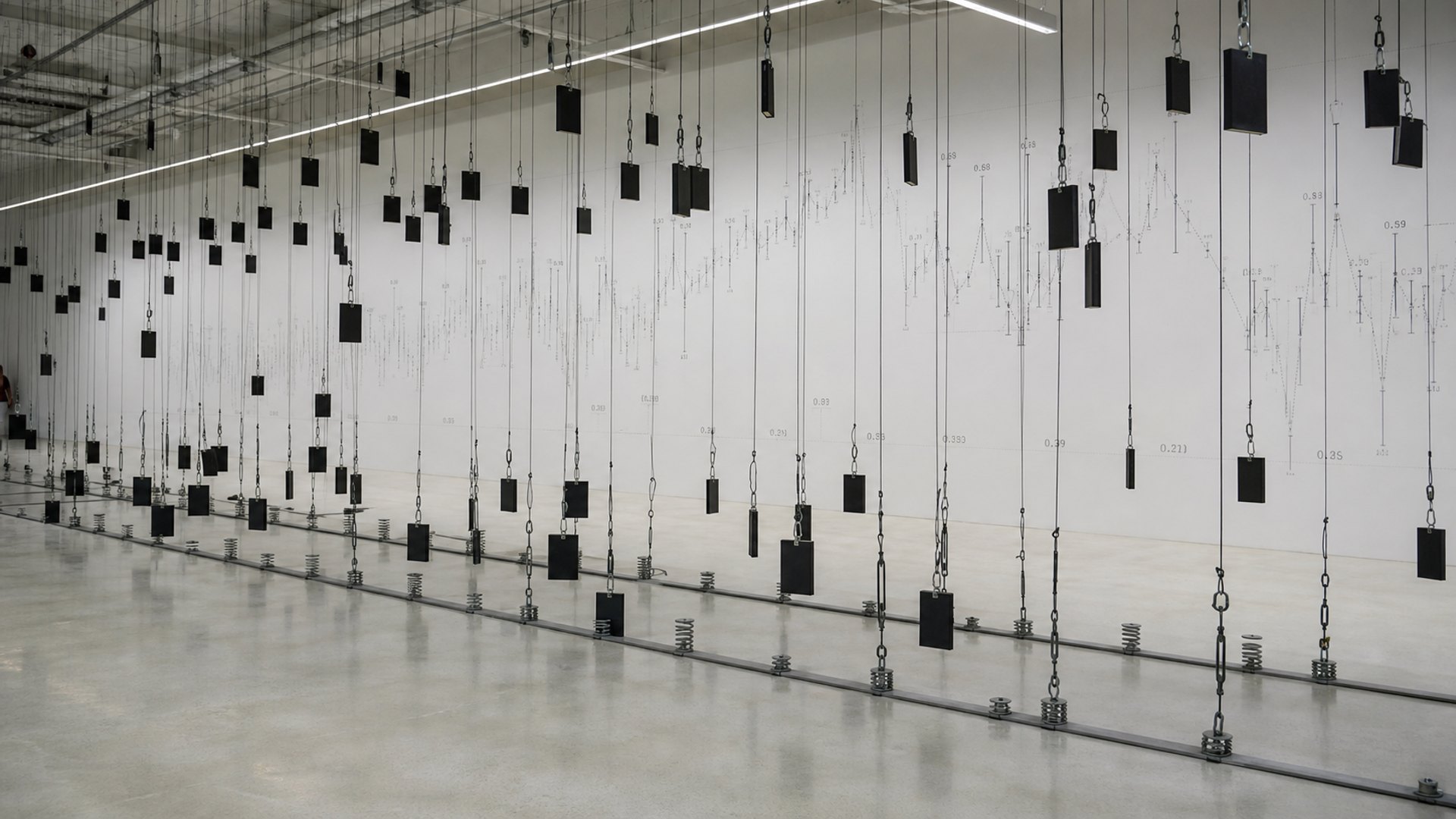
Today, an artwork can be selected, evaluated, and even purchased before a collector has truly looked at it. Digital platforms, recommendation algorithms, and automated agents increasingly turn taste, past behavior, provenance, and market data into actionable instructions. In this article, we ask what happens when, in the art market, the decision to buy comes before the experience of looking—and what new dynamics emerge when perception is no longer the starting point of a transaction, but something that follows it.
A collector approves a ceiling price from the back seat of a car while the artwork remains a thumbnail inside a private sales interface. The device holds the image, the feed orders the candidates, the agent executes the mandate, and attention arrives after the transaction as a courteous form of custody. Looking has moved from origin to residue, from sovereign act to administrative trace.
The artwork enters circulation as a packet of ranked attributes: medium, scale, provenance, institutional adjacency, market velocity, image legibility, resale horizon. Visibility becomes a function of distribution, and distribution becomes a rehearsal for settlement. The image still glows, yet its glow now travels through confidence intervals, preference vectors, escrow conditions, and the quiet grammar of permission.
The unviewed artwork carries a precise contemporary charge. It condenses the promise of access, the fatigue of abundance, the prestige of speed, and the political economy of prediction into a single commercial gesture. Price after human attention becomes the theater in which perception keeps its ceremonial role while power has already completed the purchase.

The Eye Delegates
The first mechanism is permission. A buyer grants the device a threshold, a category, a geography, a calendar, and a risk profile, and the eye becomes a trustee housed inside parameters. Preference enters a protocol where the visible object receives less authority than the instruction set that surrounds it.
The screen performs confidence before it performs revelation. Ranking arranges works according to the probability that a collector will tolerate their price, endorse their provenance, accept their logistics, and absorb their symbolic cost. The image functions as evidence inside a wider judicial field, while the device adjudicates through saved gestures and predictive affinity.
Delegation changes the temporal order of judgment. The collector’s earlier behavior becomes training data for future action, and the system treats repetition as a moral signature. A preference for certain surfaces, editions, galleries, dimensions, and price bands acquires the weight of policy, turning taste into a jurisdiction that can act while its owner sleeps.
Custody begins before possession. The buyer’s account, the platform wallet, the advisor’s dashboard, the insurer’s estimate, and the shipping quote form a corridor where ownership rehearses itself in administrative space. The artwork moves through permissions long before it moves through air, and the device grants the eye an institutional substitute made of access levels.
The delegated eye also disciplines desire. It rewards consistency, reduces friction, and converts ambivalence into noise around a stable profile. The collector appears freer at the interface precisely because the interface has already narrowed freedom into options compatible with prior conduct.
The device becomes the place where looking learns obedience. Human vision survives as a ceremonial confirmation, a late arrival at a scene already organized by thresholds, defaults, and executable preference. The eye delegates, and delegation becomes a new form of sight with purchasing power.
Images Enter Settlement
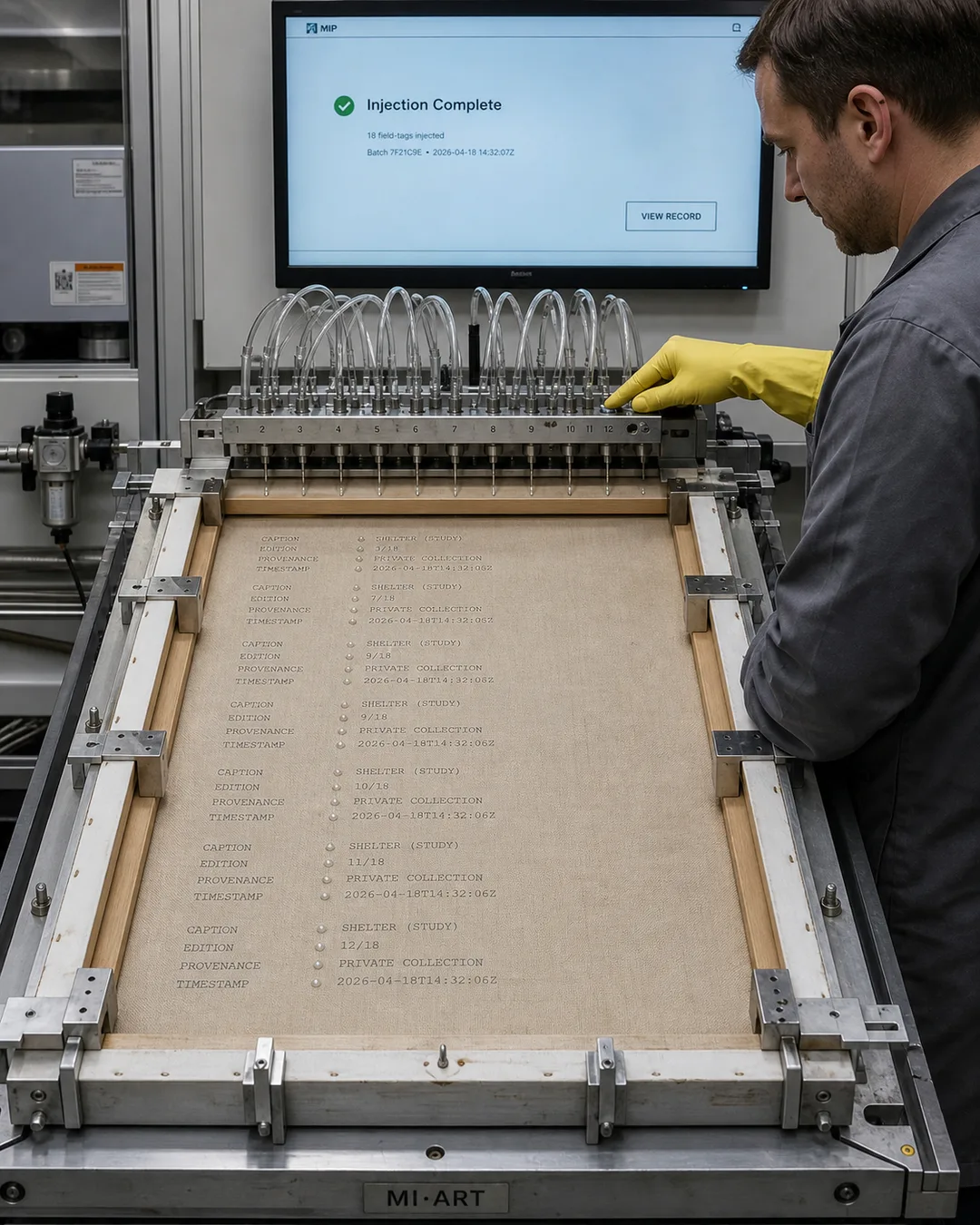
Settlement begins when the image becomes computable. A work enters the market as pixels accompanied by fields, captions, artist records, edition data, condition reports, past placements, and time stamps. The visual surface circulates through metadata, and metadata grants the surface a transactional body.
The feed gives images a market temperature. Placement inside a viewing room, a push alert, a collector preview, or a private link shapes scarcity through timing. The work acquires value through the rhythm of exposure, since distribution turns visibility into a controlled event rather than a neutral display.
Prediction attaches itself to the image as a shadow price. A model reads resemblance, provenance density, institutional proximity, and collector overlap, then produces a horizon of plausible bids. The artwork becomes a financial event before the sale, because its future liquidity begins circulating as a present attribute.
Transaction timing carries its own aesthetics. A work offered between fair weeks, auction cycles, museum announcements, and advisory briefings enters a choreography of attention shaped by calendars. The image appears at the moment when appetite has been primed, budgets have been loosened, and comparison has been rendered favorable by the platform’s order of presentation.
The visible qualities of the artwork pass through a settlement engine. Color, scale, medium, texture, signature, and iconography become legible as signals for storage cost, installation burden, institutional compatibility, and resale narrative. The work’s appearance remains present, yet appearance now speaks through operational consequences.
An image enters settlement when its beauty becomes payable under conditions. The old fiction of direct encounter gives way to a structure where viewing, valuing, insuring, financing, and transferring form a single chain. The artwork settles as an asset, and the image becomes the corridor through which settlement learns to look natural.
Taste Becomes Instruction
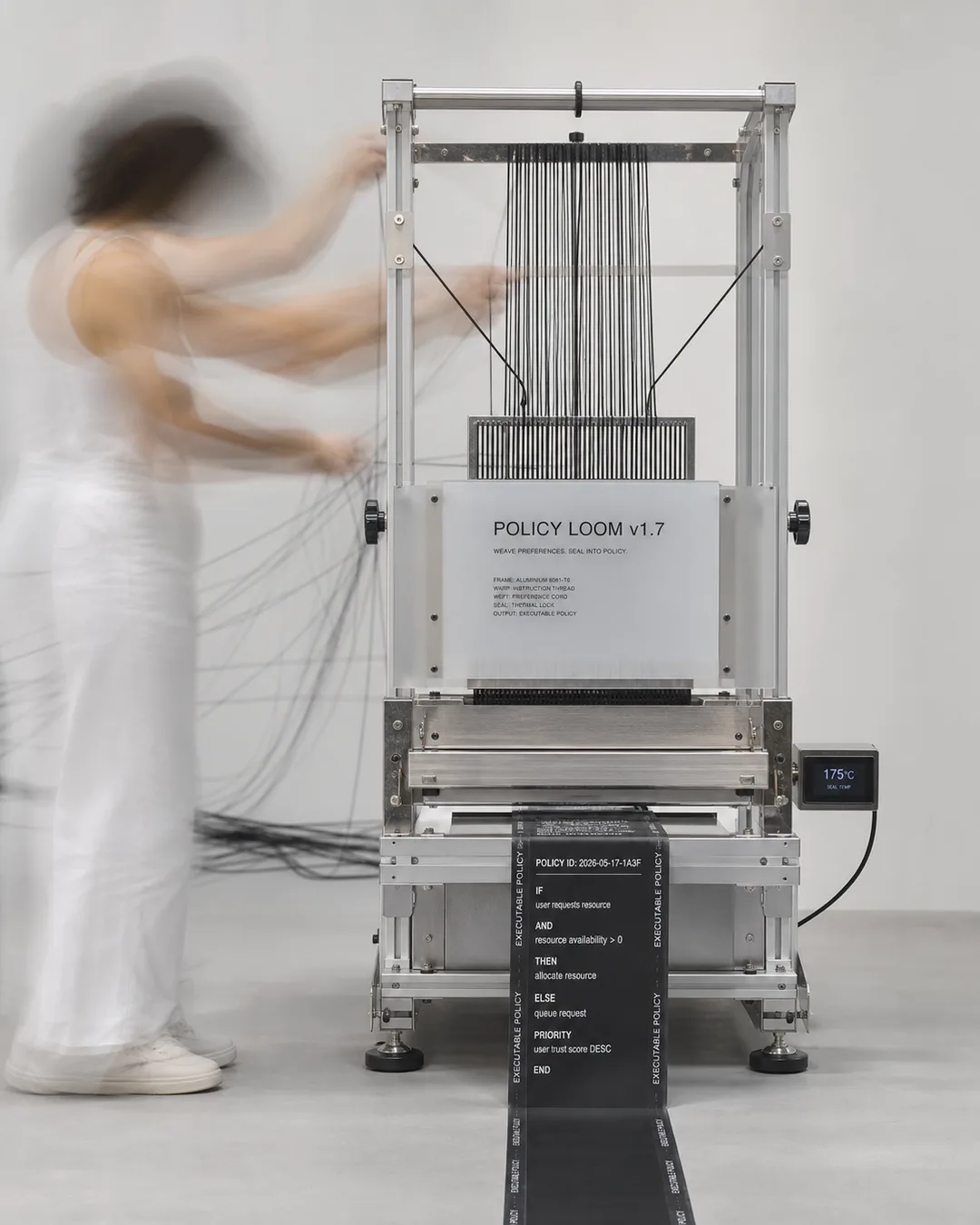
Taste turns into instruction at the moment preference receives a syntax. The buyer selects artists, budgets, regions, formats, exclusions, alerts, and degrees of autonomy, and the platform converts sensibility into executable policy. Judgment becomes a machine-readable contract between past desire and future acquisition.
Training bias enters through intimacy. The model learns from the collector’s collection, wish lists, saved works, correspondence cadence, advisor language, payment history, and tolerated embarrassment. What appears personal becomes infrastructural when the system extracts pattern from conduct and returns that pattern as destiny.
Platform incentives contour the instruction set. The agent learns to favor works that clear efficiently, retain margins, satisfy liquidity assumptions, and strengthen the marketplace’s own authority. Taste therefore moves through a commercial architecture that confuses accuracy with profitability and care with conversion.
The collector’s hesitation becomes a privileged signal. A lingering view, a reopened offer, a delayed reply, or a repeated comparison gives the platform a map of vulnerability. Attention becomes behavioral capital, and the agent converts soft indecision into hard instruction.
Personal judgment gains scale by surrendering texture. The eccentricity of desire becomes usable when it can be ranked, filtered, and repeated across contexts. A collector’s eye, once bound to encounter and mood, becomes portable across fairs, auctions, studios, storage facilities, and automated previews.
Taste becomes instruction, and instruction becomes governance. The buyer imagines a more efficient self, while the system produces a more legible subject. Desire survives inside execution as a profile capable of acting, and the profile becomes the collector’s most consequential artwork.
Price Learns to See
Price learns to see through ranking. Each artwork receives a place in a probabilistic order where provenance, scarcity, sales history, institutional adjacency, collector demand, and image performance converge. Valuation becomes a computed gaze that recognizes the work by calculating its possible exits.
Provenance operates as a visibility machine. A prior owner, gallery, biennial, museum, residency, critic, or collection record gives the artwork a chain of sanctioned appearances. Price reads that chain as accumulated trust, and trust becomes an optical effect produced by custody.
Scarcity acquires precision through databases. Edition size, availability, comparable works, artist production rate, estate control, and geographic distribution generate a shortage that can be displayed as intelligence. The rare object becomes rare again inside the interface, where scarcity receives graphic form and persuasive timing.
Expected liquidity reorganizes aesthetic attention. Works that promise clean resale, institutional recognition, logistical manageability, and narrative coherence rise through valuation systems with the force of common sense. The image appears stronger when its future appears transferable.
The computed gaze also trains the market to see itself. Each recommendation, estimate, bid, and private sale feeds the next valuation layer, producing a recursive visual economy. Price learns from the behavior it helps generate, and the field begins to mistake feedback for evidence.
Valuation becomes perception with capital attached. The artwork’s surface still solicits interpretation, yet price has already interpreted the conditions under which interpretation becomes exchange. The market sees by ranking, and ranking teaches sight to prefer what can return as liquidity.
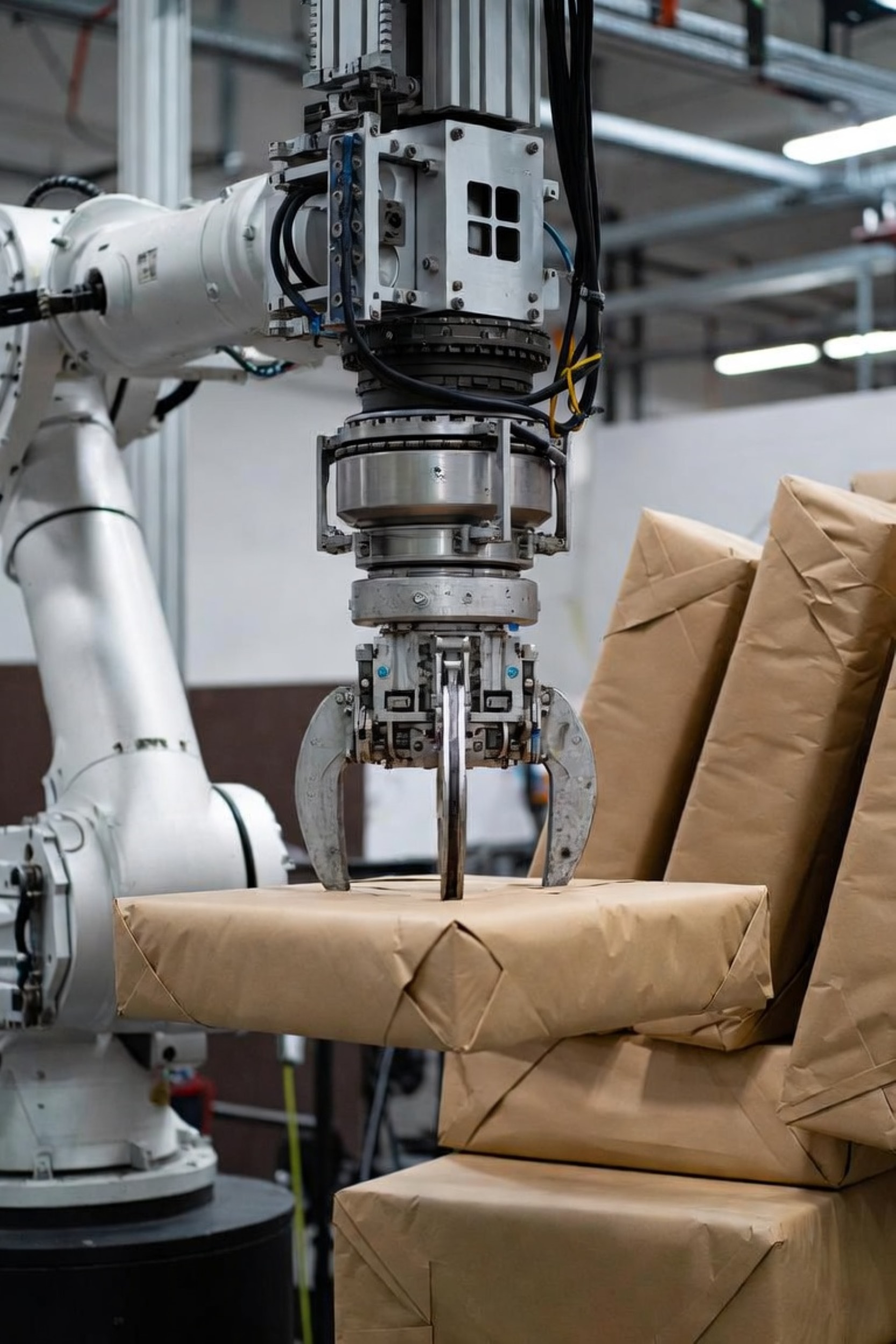
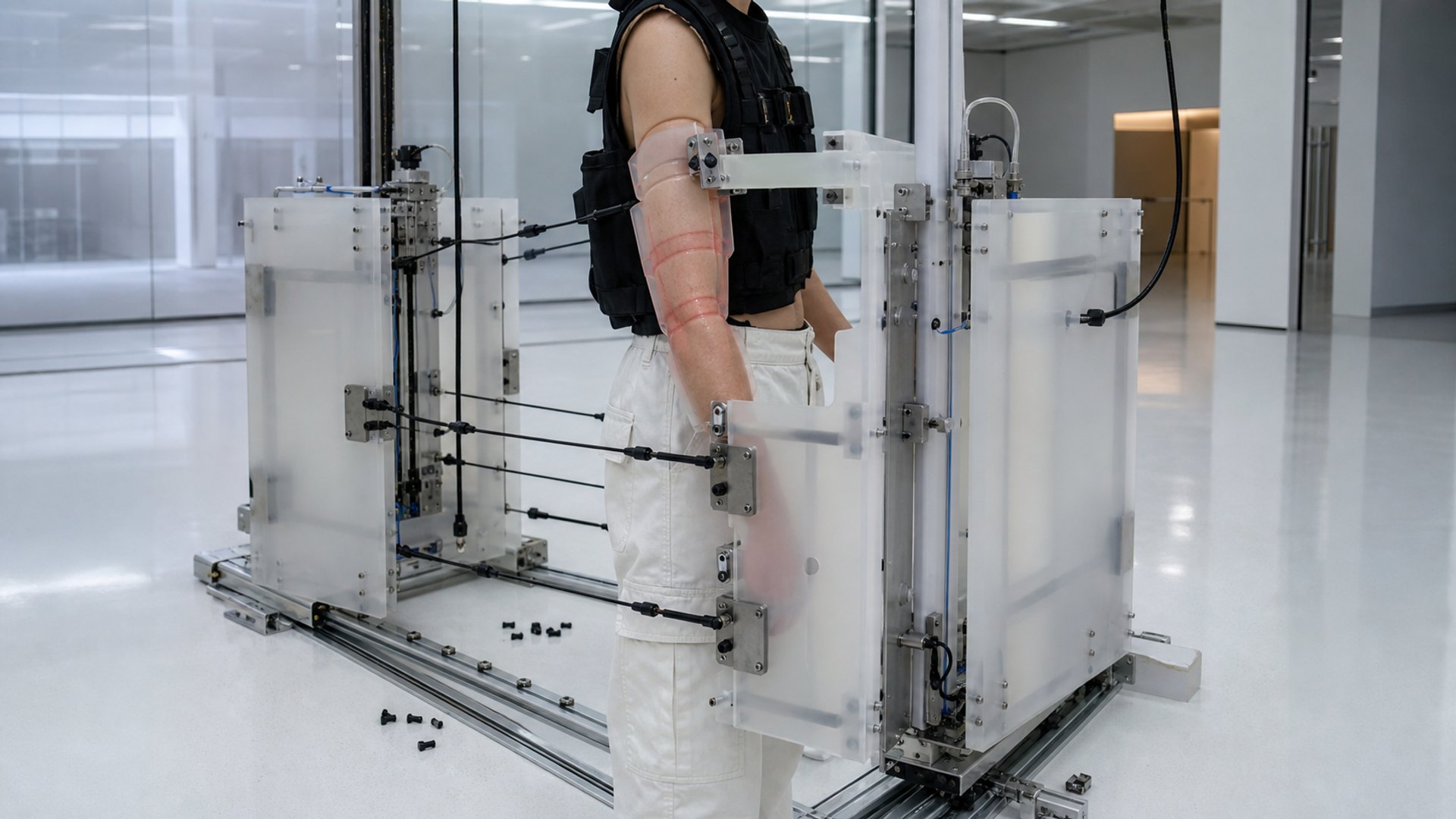
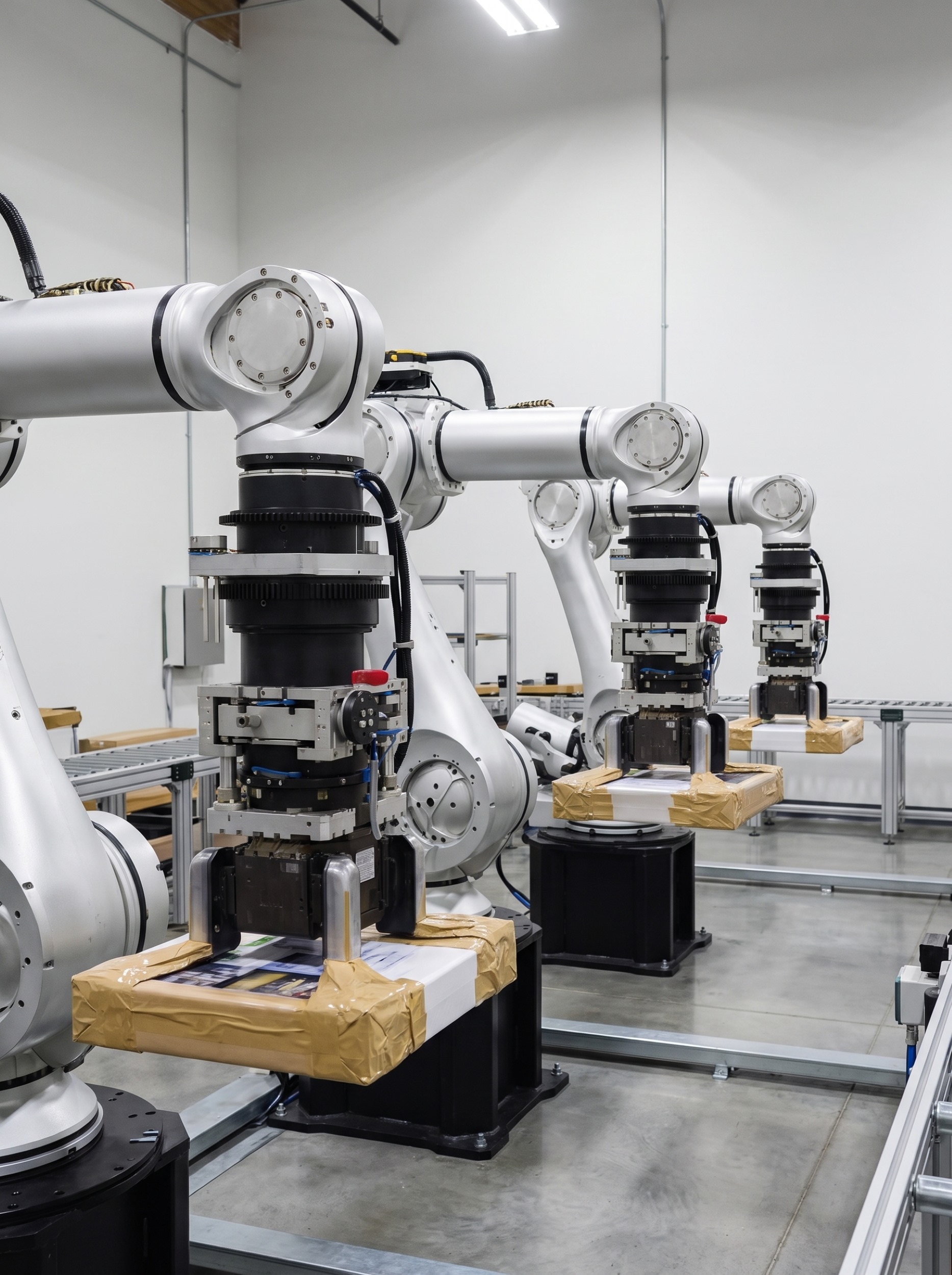
Power Buys Quietly: This station locates authority in the automated buyer, where ownership arrives through delegated action and perception becomes an afterimage of control.
Power concentrates in the automated buyer because execution leaves fewer visible gestures. The bid arrives through an account, an agent, an advisor, a wallet, or a platform function, while the human figure withdraws into permissions. Authority appears as a clean transaction whose violence has been refined into interface design.
Quiet buying changes the politics of ownership. A collector can absorb works across regions, galleries, and time zones through delegated systems that preserve discretion and speed. The purchase becomes an ambient pressure on the field, shaping availability before public attention can gather around the work.
The automated buyer also redistributes risk. Authentication, insurance, compliance, shipping, storage, and resale projections circulate through protocols that make acquisition feel preapproved. Power resides in the ability to make uncertainty administrative, to convert exposure into a managed sequence of checks.
Perception becomes an afterimage of control. The owner may encounter the work after settlement, after documentation, after transport, after valuation updates, after social placement. Looking becomes a delayed intimacy staged by possession, and possession becomes the condition that grants the image its final visibility.
The field normalizes this sequence through prestige. Speed reads as confidence, discretion reads as sophistication, automation reads as intelligence, and unviewed acquisition reads as trust in one’s own system. The collector’s authority grows through the ability to act before perception and to make perception follow ownership.
Taste becomes a proxy war because every delegated purchase carries competing claims over the future of attention. The buyer’s profile, the platform’s incentives, the artist’s circulation, the gallery’s scarcity, and the market’s demand for liquidity all fight inside a single automated gesture. The artwork arrives as trophy, signal, asset, and hostage, while the eye arrives late enough to believe it has chosen.