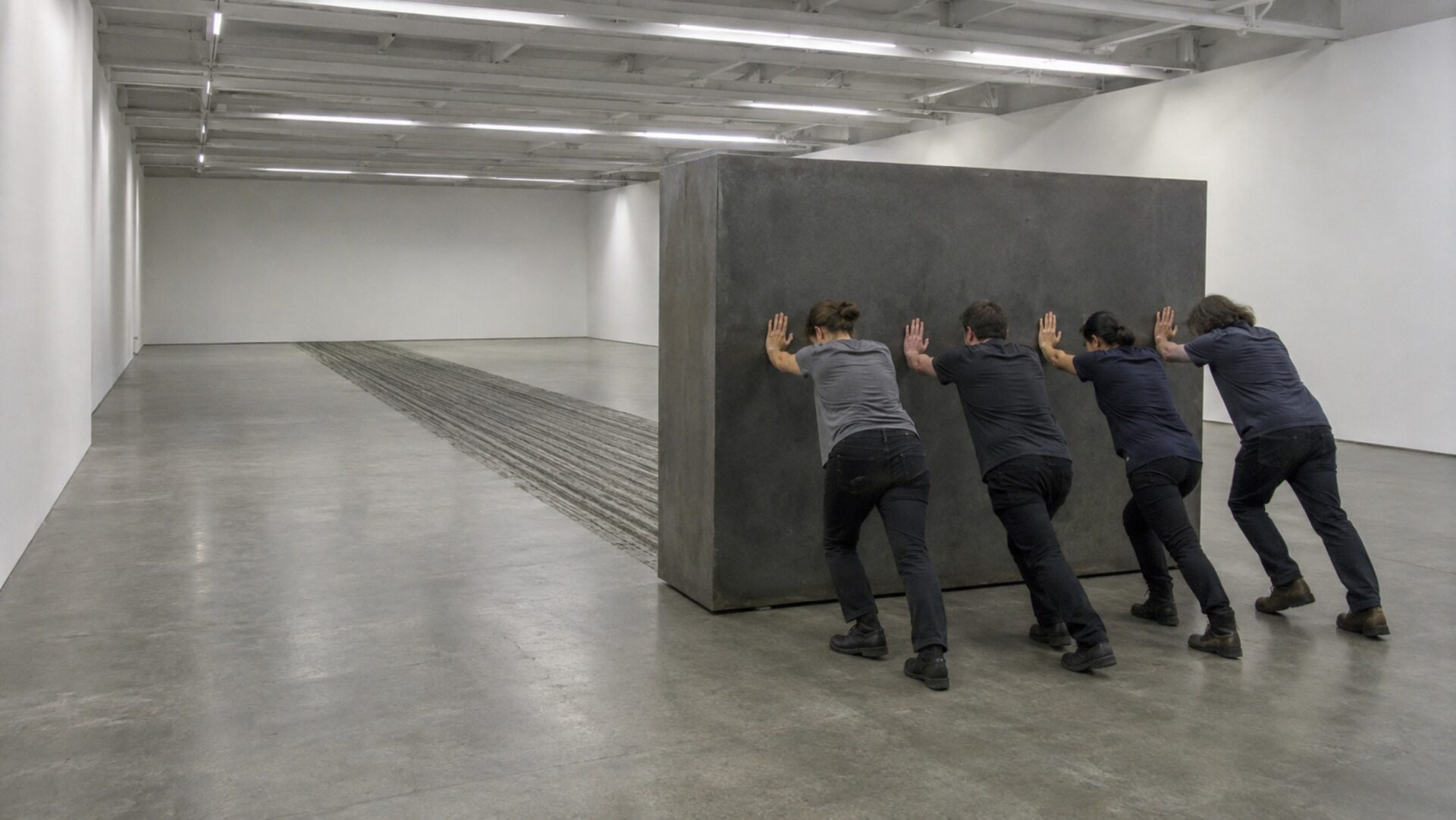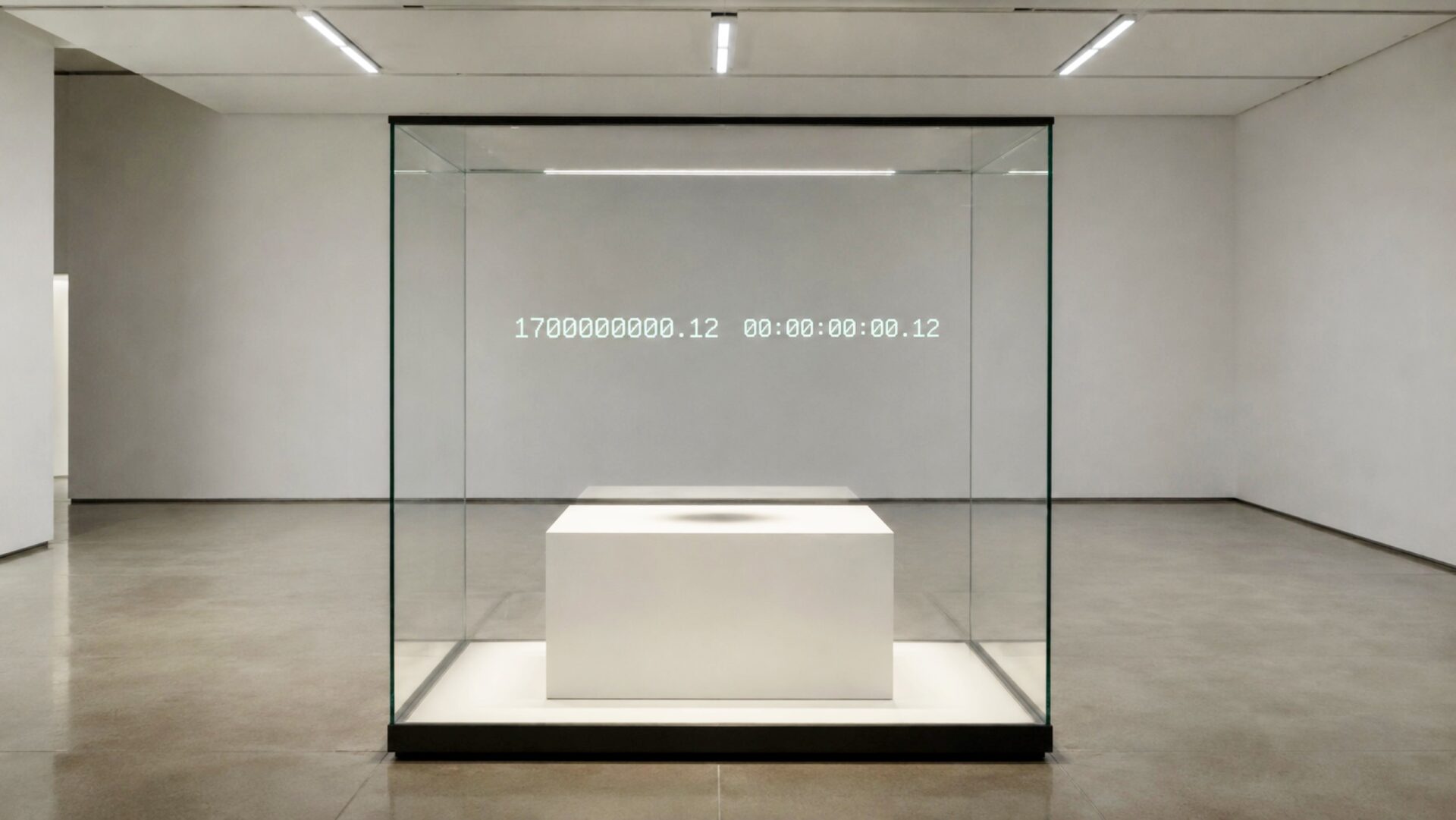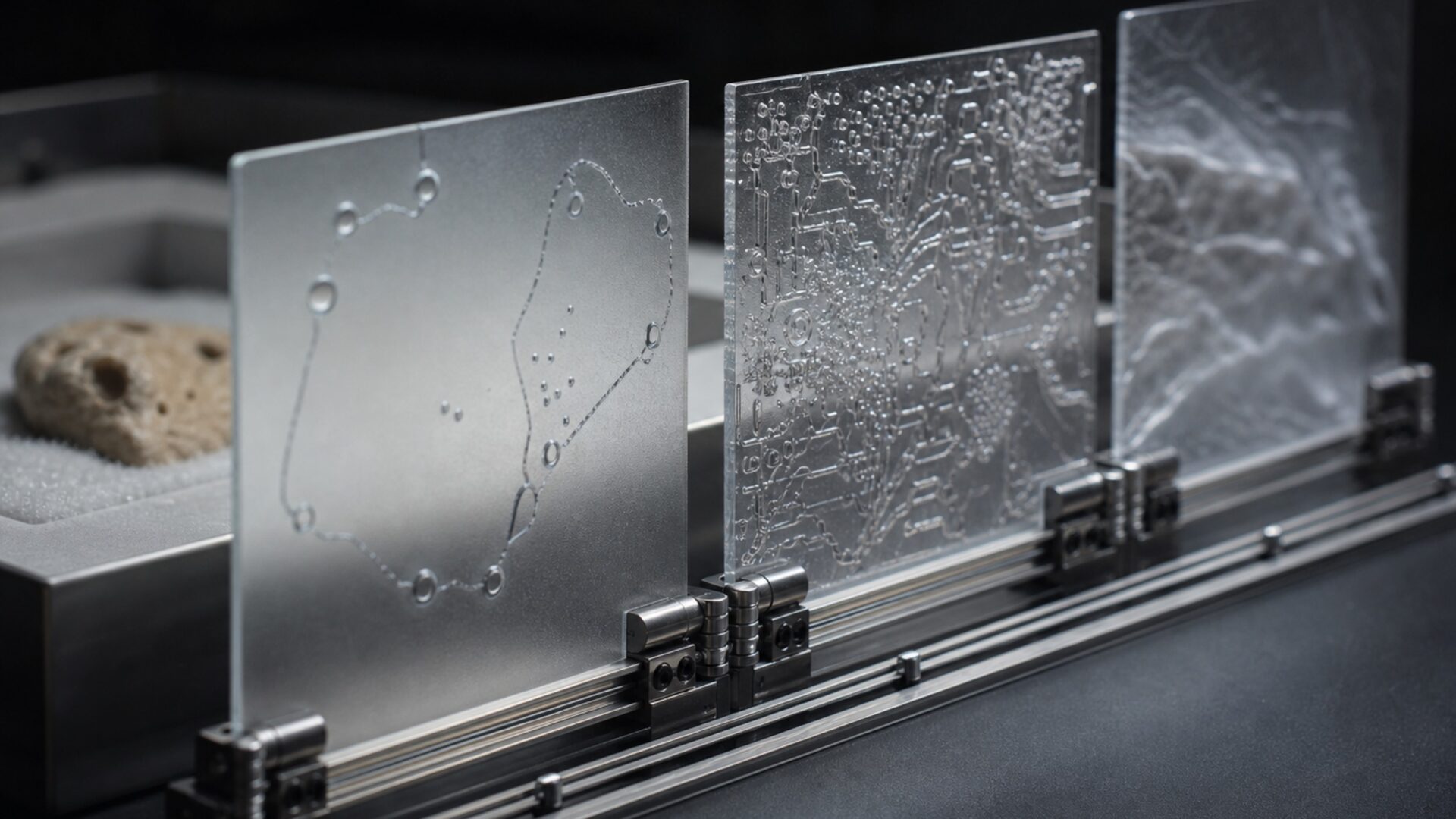
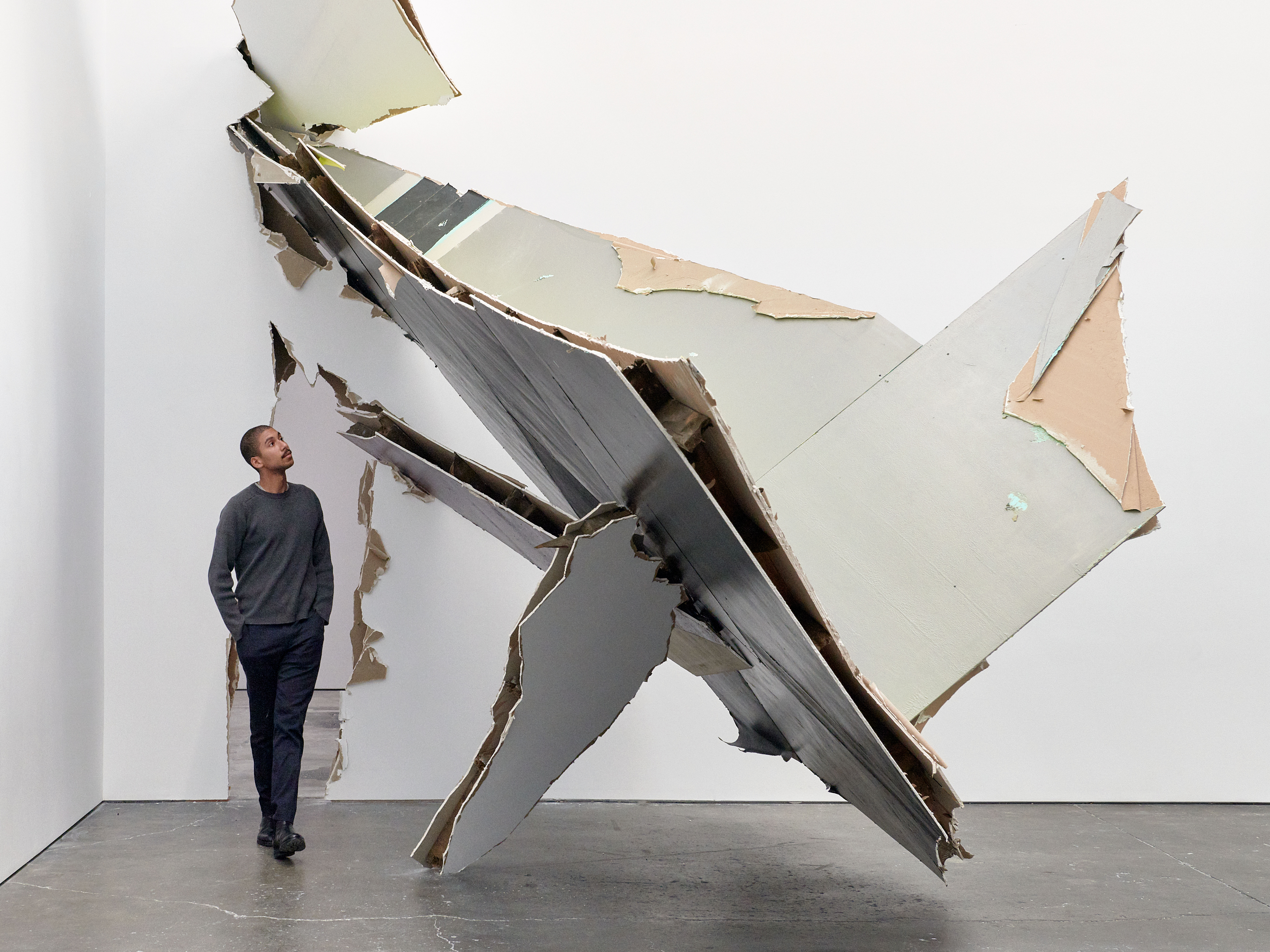
Last night we were looking through a catalogue of Andy Warhol’s Oxidation Paintings: canvases coated with metallic pigments and then literally urinated on. The copper reacted, the surface stained, shifted in colour, corroded. The accident was never concealed. It became the image.
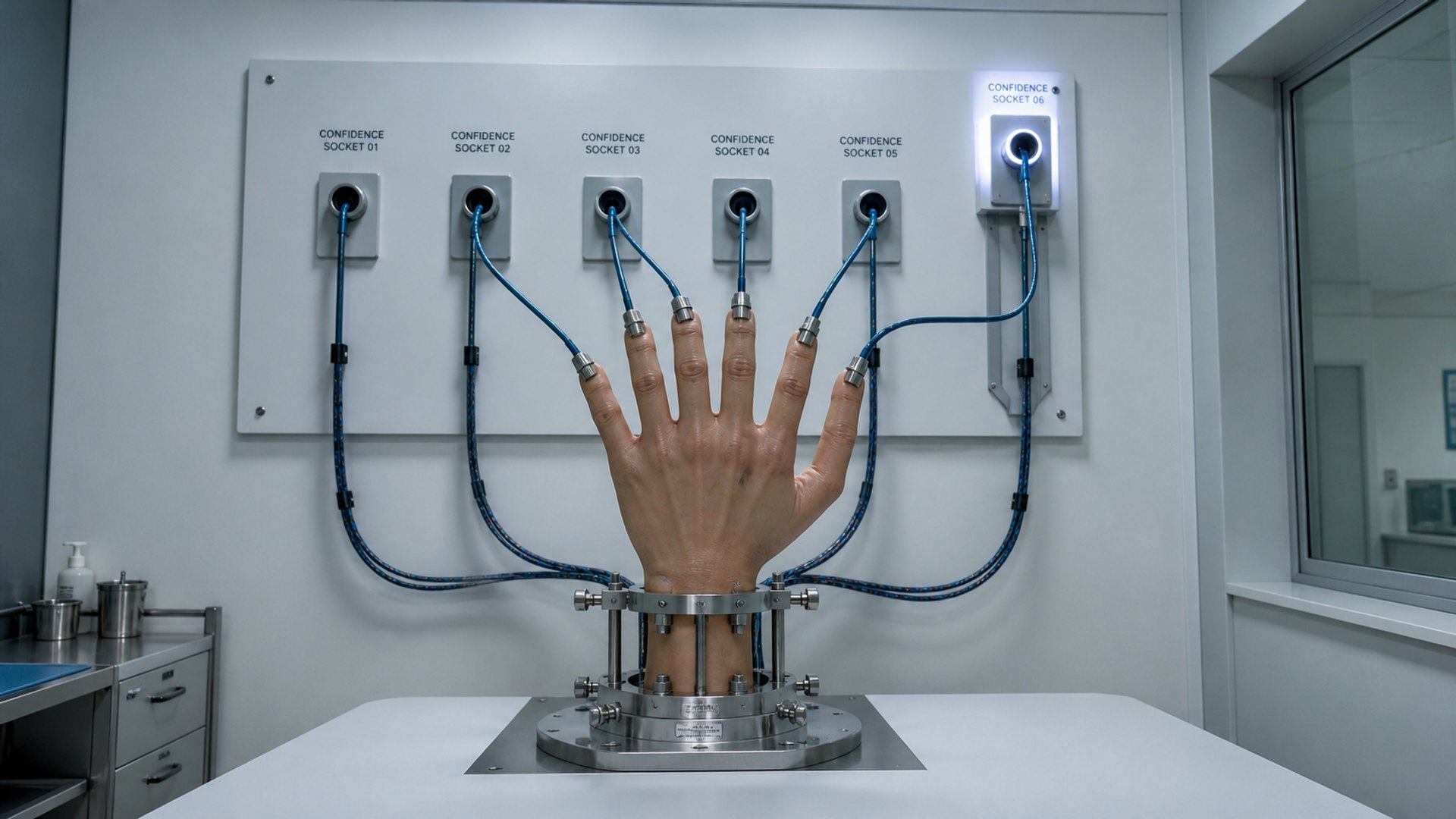
That immediately made us think of the early glitches of generative AI: six-fingered hands, multiplying teeth, bodies dissolving into one another, details suspended somewhere between plausibility and absurdity. For a time, we learned to recognise an AI-generated image precisely through what it failed to resolve. The error acted as an index, making the presence of an otherwise invisible system legible on the surface.
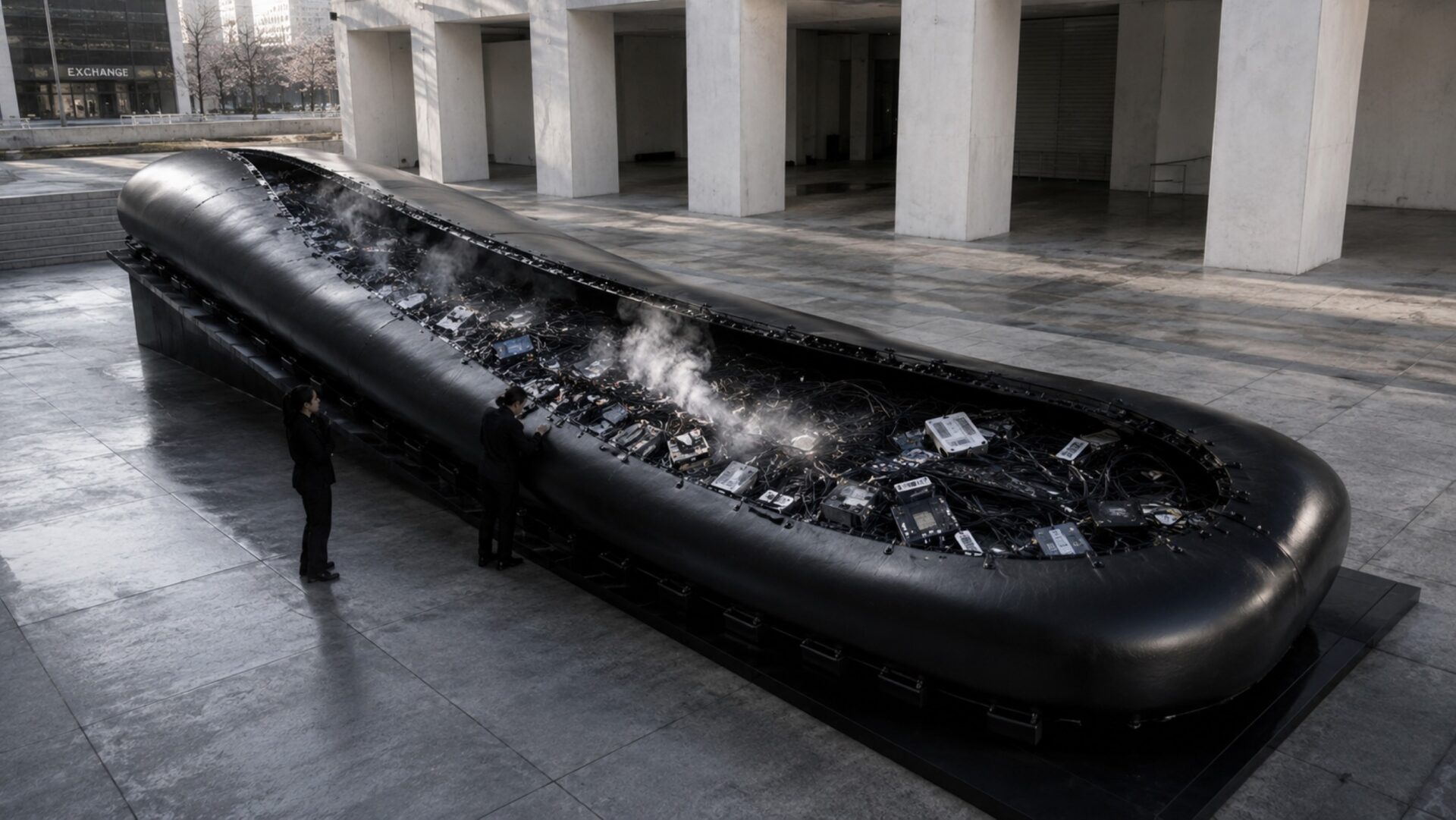
This may be the most interesting thing about the AI glitch. Before becoming an aesthetic, it was a form of accidental transparency: a moment when the machinery surfaced within the image, briefly exposing the probabilistic logic underneath. The flaw became more than a technical failure. It became a signature, a symptom, almost a proof of provenance.
And that is where this article begins: what happens when the errors through which we learned to recognise the machine begin to disappear?
Generative AI inherits this economy through another architecture. Latent space produces the look of contact through calculation rather than touch, yet its visible errors perform a parallel social function: they give viewers a handle on an otherwise abstract chain of training, extraction, compression, prompt, and platform delivery. The malformed hand becomes a receipt for statistical borrowing, a small public window onto an image regime built from inaccessible archives and accelerated prediction.
The market names such artifacts quickly because platforms require legible difference. Attention converts deformation into format, and format converts suspicion into circulation. Early AI damage therefore becomes both a wound and a logo, a failure of local coherence that trains the public to recognize machine authorship as a style before it can read machine authorship as a system.
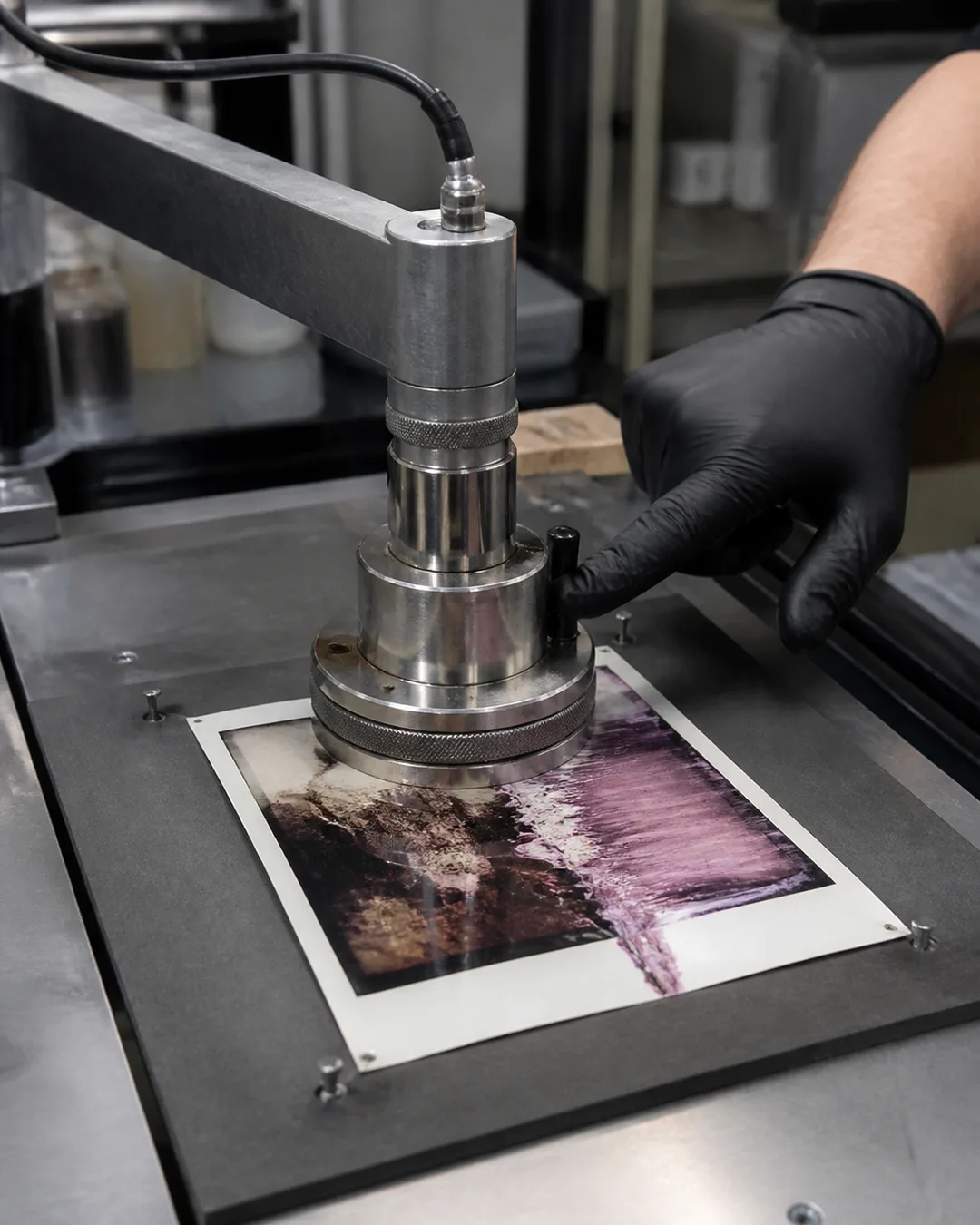
Chemical Trespass
The Polaroid’s surface turns into a custody field when chemistry is interrupted. Nadya Wharror’s altered Polaroids operate through pressure, staining, heat, and abrasion, turning the instant photograph into a site where device logic and bodily intervention share the same fragile support. The image carries a protocol of contact, because the emulsion records both the camera’s demand for immediate visibility and the hand’s demand for delayed disturbance.
Wharror’s gesture matters through its operational intimacy. The Polaroid promises distribution at the scale of the palm, a private print born from an industrial cartridge, and chemical trespass reroutes that promise through a counter-procedure performed on the object itself. The surface becomes a small laboratory where provenance appears as rupture, where the authority of the instant image gathers around marks that index handling, contamination, and the risk of irreversible change.
The altered Polaroid produces error as negotiation rather than accident. Its blur, flare, seep, and scar emerge from a conflict between the image’s mechanical closure and the body’s insistence on continued access after exposure. Training bias has no role here, yet the scene prepares a grammar for later algorithmic damage: the viewer learns to read irregularity as the place where an apparatus reveals its terms.
This older image economy binds desire to material proof. Attention moves toward the wound because the wound seems to certify presence, and the damaged surface becomes a compact between touch and belief. A chemical bloom on a face or a dragged stain across a room produces a form of trust built from visible interference, a trust that accepts alteration as evidence of proximity.
Wharror’s altered Polaroids establish a crucial displacement. The photograph’s truth becomes less a claim about the captured scene than a record of negotiations among exposure, surface, custody, and intervention. Error enters the image as a material politics of access, and the damaged print teaches recognition to seek the apparatus at the site of the scar.
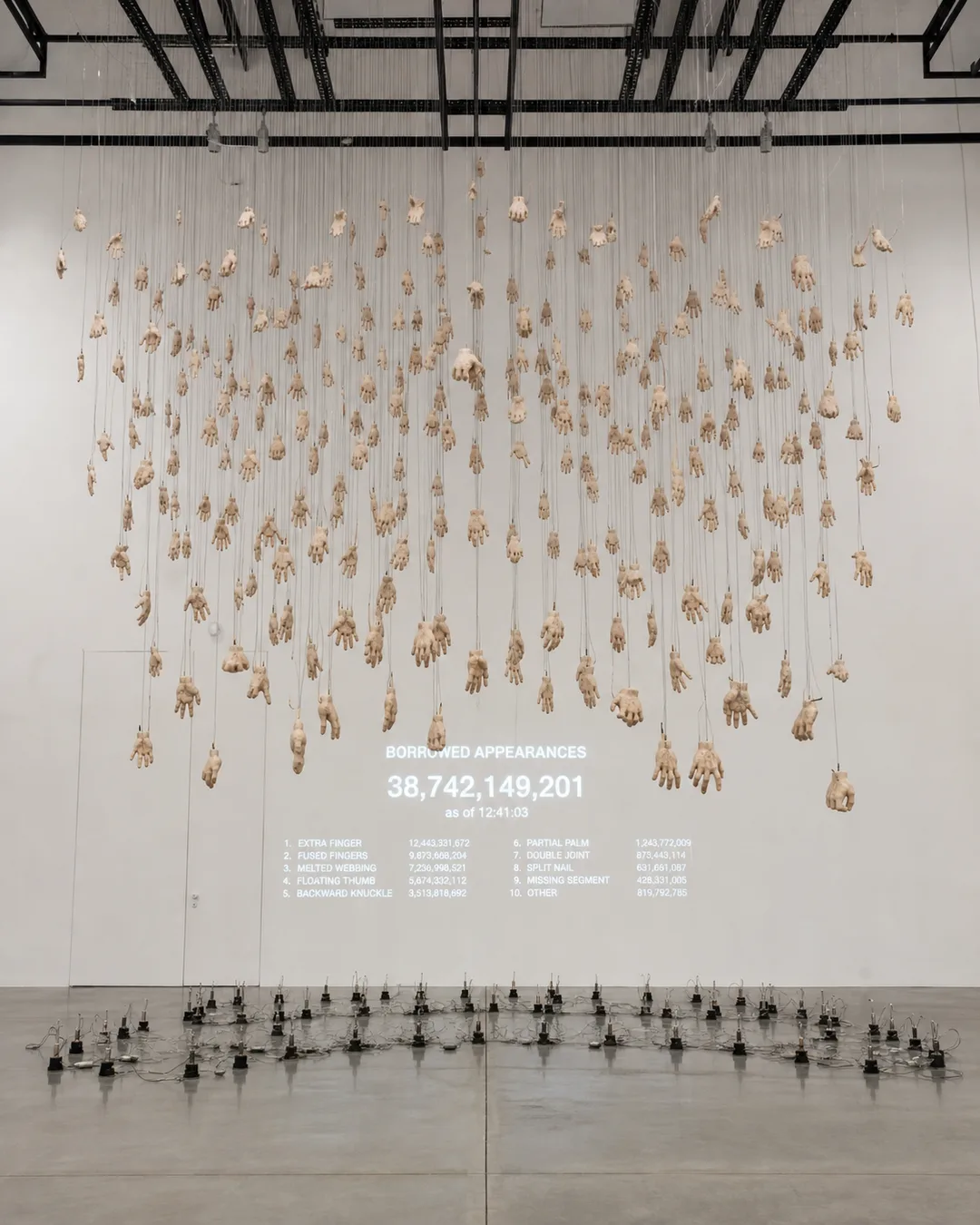
The Model’s Visible Debt
The first generative systems displayed their debts through anatomy. Warped hands, floating teeth, melted objects, inconsistent shadows, and patterned pixels functioned as public traces of training rather than private defects inside a sealed machine. The image cohered at the level of atmosphere, genre, and pose, while its local fragments exposed the statistical pressure of borrowed appearances.
The hand became the privileged site of this exposure because attention gathers around gesture. Fingers carry social meaning, labor, touch, orientation, counting, oath, signature, and command, and the model’s distortion of them opened a visible fracture inside prediction. Latent space produced a plausible hand-shaped region, then failed to stabilize the relational grammar of joints, nails, knuckles, grip, and occlusion, making the body appear as a probabilistic compromise.
Teeth performed a related disclosure through repetition. Smiles in early AI images often arrived as crowded thresholds, too regular and too unstable at once, giving the mouth the status of a corrupted interface. Training data had supplied endless faces optimized for recognition and appeal, and prediction condensed those images into dental excess, a micro-architecture of desirability where platform portraiture returned as a crowded statistical residue.
Objects melted because the model managed style before structure. Chairs, glasses, earrings, lamps, fabrics, and tools slid into each other across boundaries that the prompt treated as secondary, producing continuity where material relation required constraint. This deformation made statistical borrowing publicly legible, because the model’s fluency in image atmosphere exceeded its custody over objecthood.
Shadows and pixels completed the confession. Inconsistent light marked the image as a composite of visual probabilities rather than a scene organized by shared physics, while strange textures and repeating noise patterns gave the surface an aftertaste of dataset compression. The artifact revealed a model trained on worlds already formatted by feeds, stock platforms, advertising, amateur archives, screenshots, and reposted images, so its visible debt appeared as a compressed history of circulation.
The early AI image therefore taught the public to see extraction through deformity. Its errors made the archive momentarily visible, giving statistical borrowing a face, a hand, a tooth, a shadow. The model’s debt surfaced through the body’s surplus parts, and prediction grew extra fingers because the image regime had already multiplied every gesture into data.
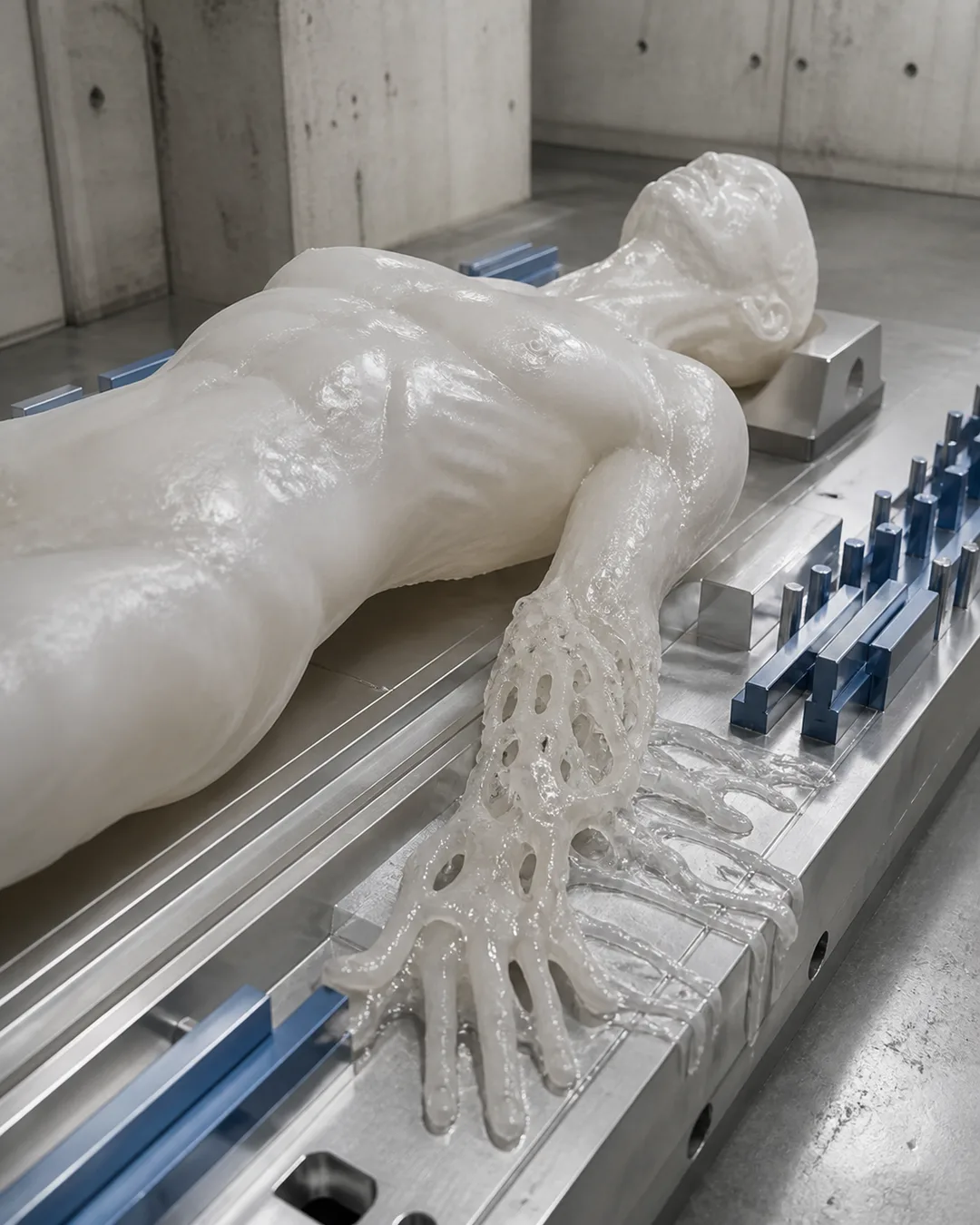
Glitch After Transmission
AI deformation emerges inside prediction rather than after transmission. The glitch belongs to distributional strain, to the pressure by which a model composes a probable image from learned relations and fills local uncertainty with invented continuity. The artifact arrives fully rendered, yet its coherence remains uneven because probability distributes confidence across zones of attention.
Earlier glitch aesthetics often depended on damaged signals, corrupted files, broken codecs, degraded tapes, unstable circuits, or compression artifacts moving through media infrastructure. Generative deformation relocates that drama into the synthesis of the image itself, where latent space produces a visual whole whose smallest decisions carry unequal levels of certainty. The hand, the mouth, the reflection, and the edge of an object become sites where prediction negotiates between resemblance and structural obligation.
The prompt operates as a protocol for controlled ambiguity. It summons categories, moods, names, styles, materials, and relations, while the model resolves these cues through patterns learned from images already optimized for platform legibility. This process yields a peculiar authority: the generated image appears decisive at the level of composition, then reveals hesitation in details that demand relational consistency.
Local collapse matters because it shows how coherence is allocated. A face receives priority because recognition ranks it highly, while a background hand, a glass stem, or a distant chair can absorb the cost of uncertainty. Attention inside the image repeats attention outside the image, with salience determining where the system spends its credibility and where it deposits its remainder.
Pixel patterns intensify this allocation. Surfaces often carry ornate texture, pseudo-grain, synthetic brushwork, or hyperreal sheen, giving the image a dense skin that conceals and advertises its mode of production at the same time. Distribution turns these skins into signatures, because viewers learn to identify machine images through the visual habits of prediction, even when prompts chase photographic, cinematic, documentary, or painterly authority.
The glitch after transmission becomes an internal condition of generation. The signal arrives intact because the break has already been integrated into the architecture that produced it. Error ceases to mark interruption alone and begins to mark the uneven geography of confidence inside a machine that sees by ranking likelihood.
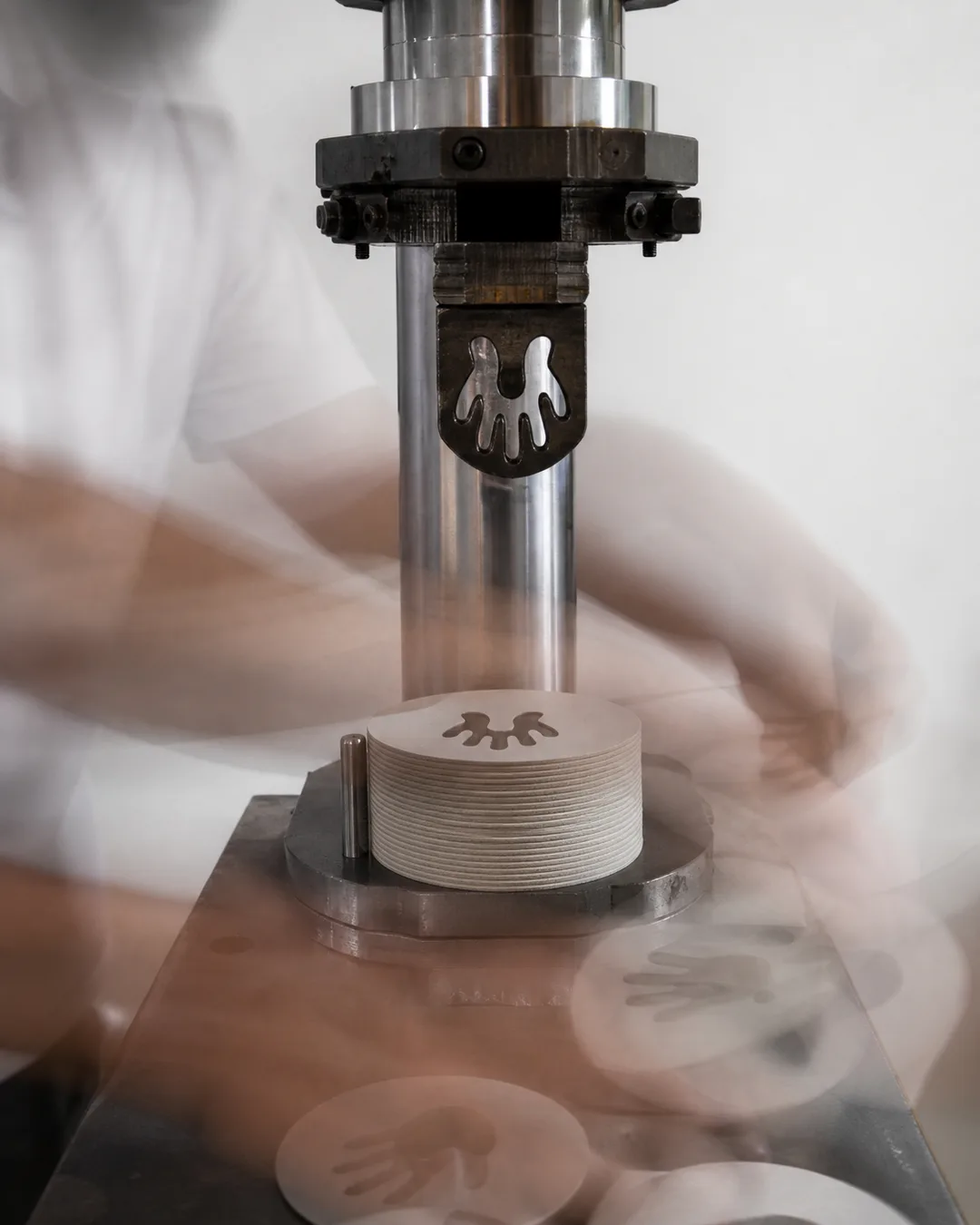
Failure Becomes Format
Platforms convert recognizable failure into a circulation asset. The early-AI look gained value because it could be identified rapidly in the feed, clipped into discourse, mocked, collected, sold, critiqued, and commissioned as a sign of compromised novelty. Ranking rewarded the image whose deformity made the machine visible at thumbnail scale.
This visibility created a shared currency among artists, clients, critics, developers, and viewers. The malformed hand, the waxy face, the impossible garment, the glossy ruin, and the too-perfect atmosphere became shorthand for participation in a new image economy. Distribution flattened divergent intentions into a common surface, allowing skepticism, excitement, satire, demonstration, and opportunism to circulate through the same visual code.
Artists used early AI damage as both material and alibi. Some works staged the artifact as evidence of an emergent alien vision, while others treated it as a symptom of extraction, automation, and platform capture. In both cases, provenance became unstable by design, because the image carried fragments of countless prior images while presenting itself as a singular output attached to a prompt, a tool, a subscription, and a user account.
Clients also learned the code quickly. The early-AI aesthetic promised speed, abundance, and futurity while its visible compromises provided a manageable badge of experimentation. A campaign could display machine authorship through controlled abnormality, and the feed could translate that abnormality into engagement, turning technical limitation into promotional texture.
Criticism followed the same path of legibility. The artifact gave language a surface to grip, allowing analysis to move through hands, teeth, shadows, melted objects, and uncanny textures rather than through inaccessible training infrastructures. This visibility enabled critique while also narrowing it, because attention settled on the visible wound while the deeper protocol of dataset extraction, labor displacement, energy use, interface dependency, and platform enclosure continued beneath the image.
Failure became format at the exact point where recognition met market need. The early-AI look supplied a style of machine authorship that could be consumed before it was understood. Damage entered circulation as an index of newness, and the compromised image became profitable because it made automation feel both strange and available.
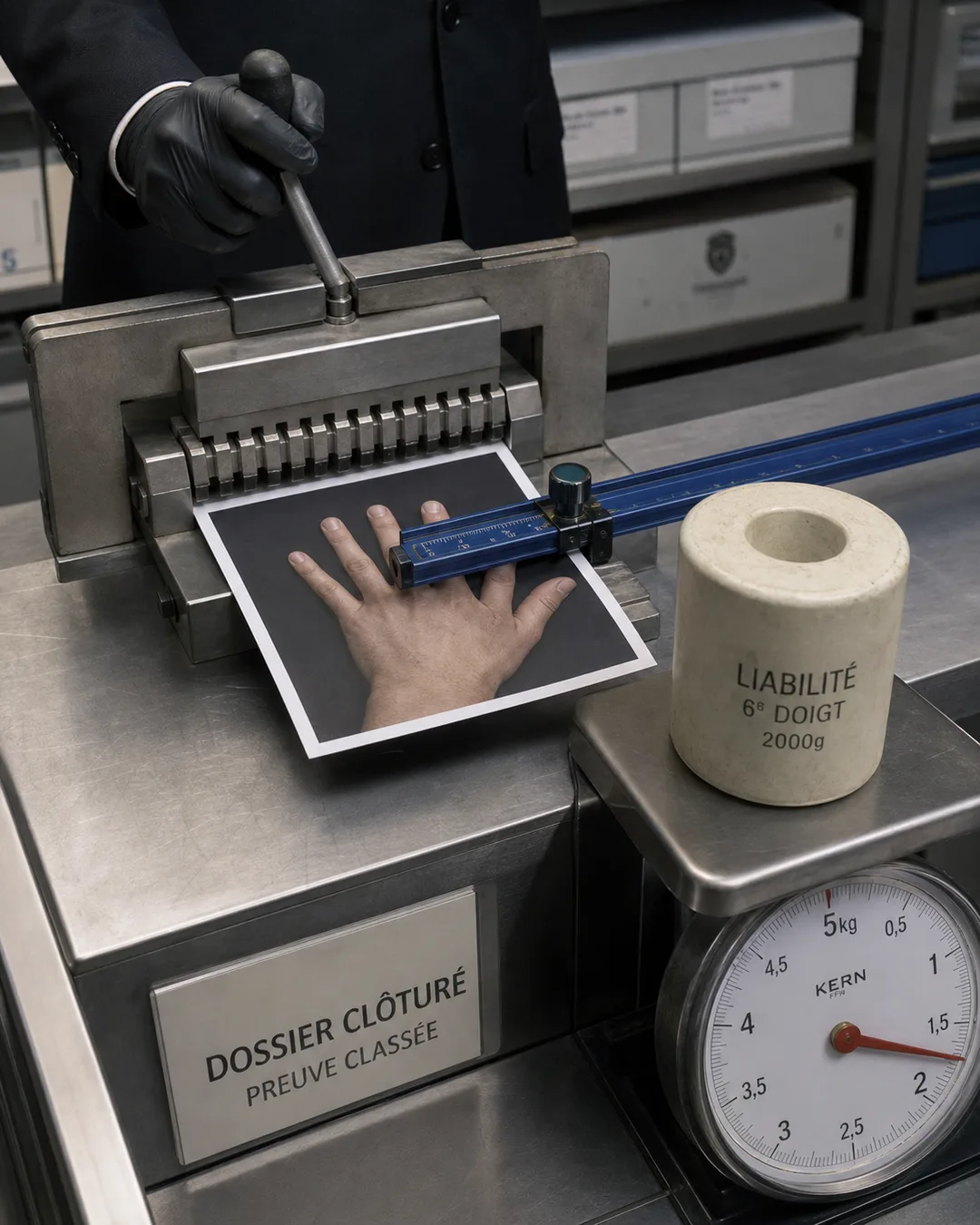
Power Reads the Artifact
Institutions read visible anomaly as an administrative instrument. A malformed hand, an inconsistent shadow, or a synthetic texture can trigger decisions about trust, liability, authenticity, labor value, and control over appearance. The artifact becomes evidence inside systems that require legibility before they assign responsibility.
Museums, schools, newsrooms, platforms, agencies, courts, and marketplaces all develop protocols around machine visibility. Provenance tools, disclosure labels, content moderation systems, watermarking schemes, detection software, and authorship policies translate visual suspicion into governance. The anomaly gives these structures a convenient object, because power prefers a mark it can cite over a process it must expose.
This citation carries economic force. A visible AI artifact can devalue labor by presenting image production as effortless, while the same artifact can increase market interest by branding the work as technologically current. Distribution decides which reading dominates, because the platform’s ranking environment frames the damaged image as joke, threat, innovation, fraud, concept, or collectible according to the attention it can extract.
Authenticity becomes a custody problem under these conditions. The question shifts toward who controls the chain of appearance: the model provider, the dataset owner, the prompt writer, the platform, the client, the viewer, the archive, the institution that certifies the result. Visible anomaly functions as a handle on that chain, even though the chain extends far beyond the pixels that make it readable.
Labor value gathers around this handle with particular intensity. The early-AI artifact can obscure the human work embedded in datasets, tagging, moderation, interface design, prompt iteration, aesthetic judgment, and post-production, while also producing new forms of precarious expertise around correction, detection, branding, and verification. Power reads the extra finger as a technical slip, then uses that slip to reorganize who receives credit, who absorbs risk, and who gains access to the market for images.
The political force of the artifact lies in its administrative clarity. Visible damage lets institutions assign categories to a field built from opaque training and accelerated distribution. Prediction grew extra fingers, and power learned to count them.