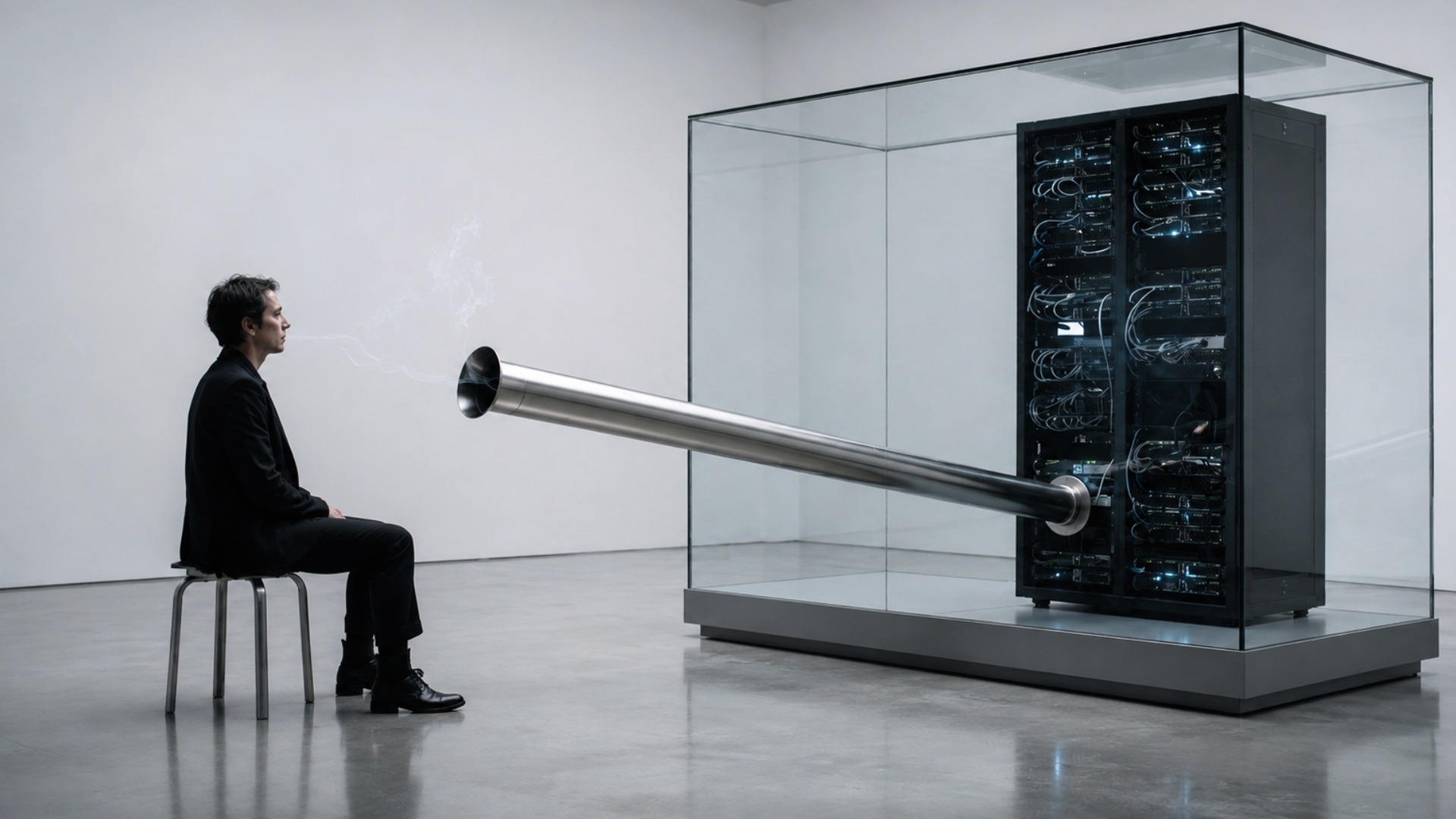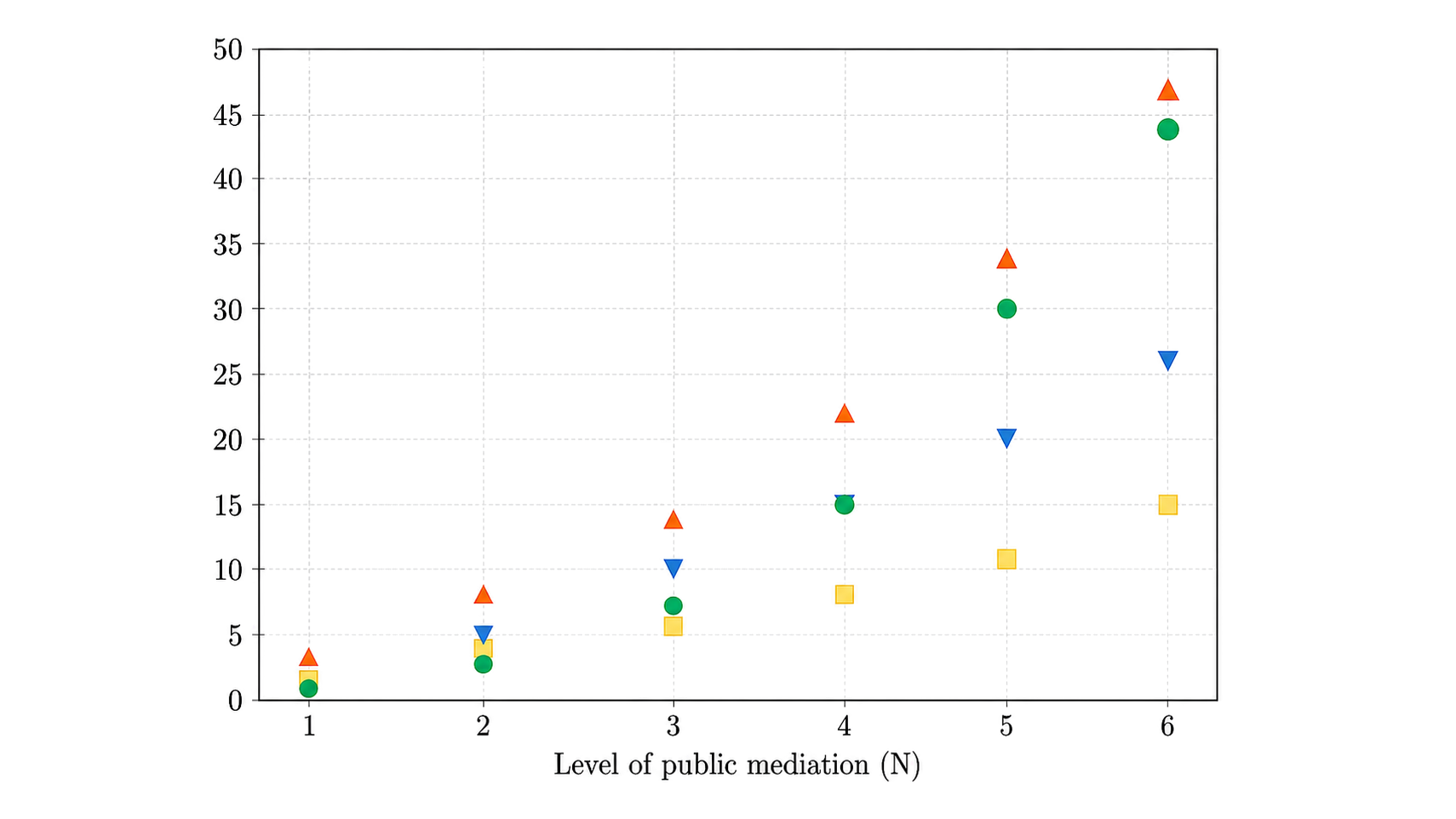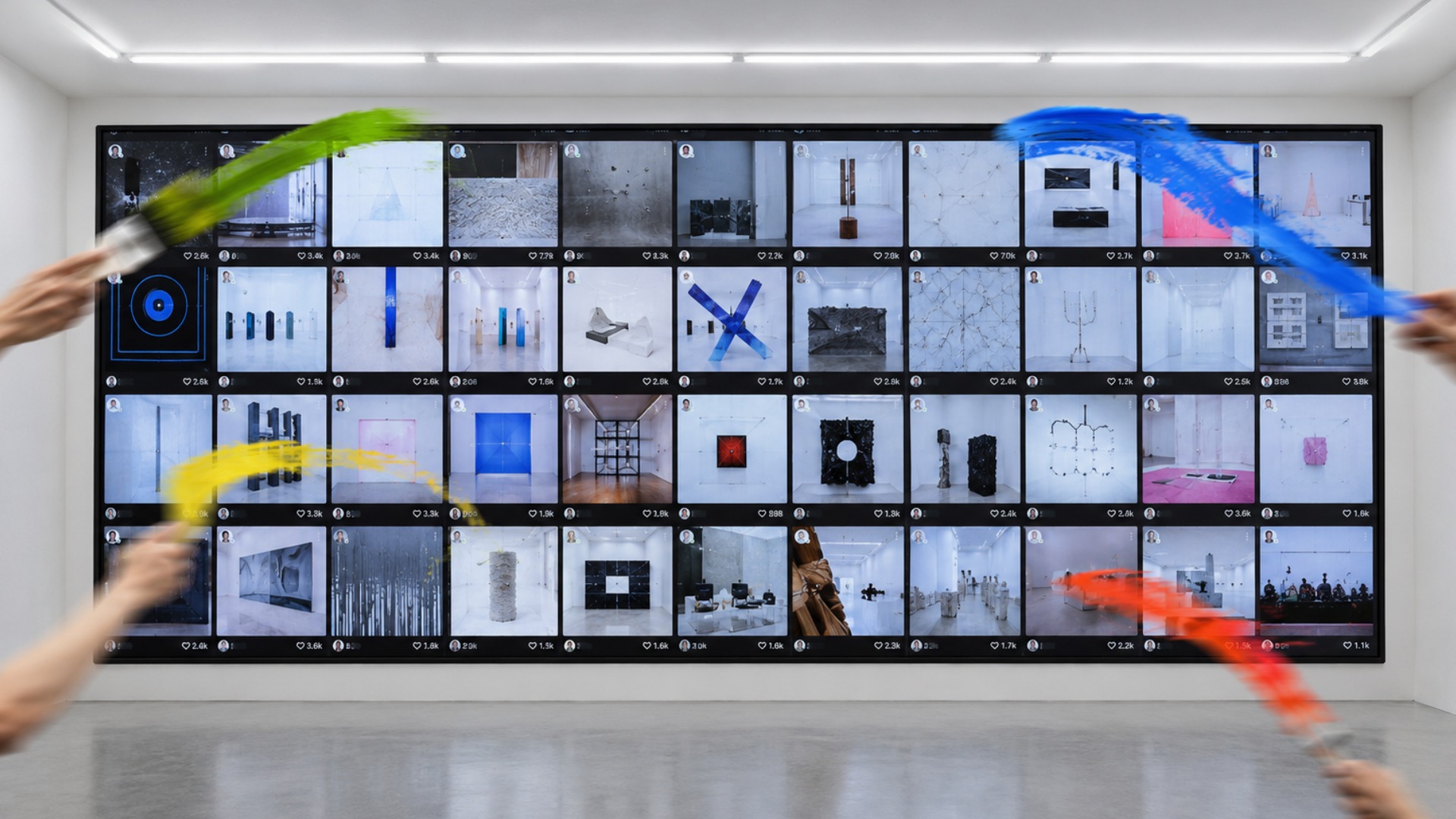

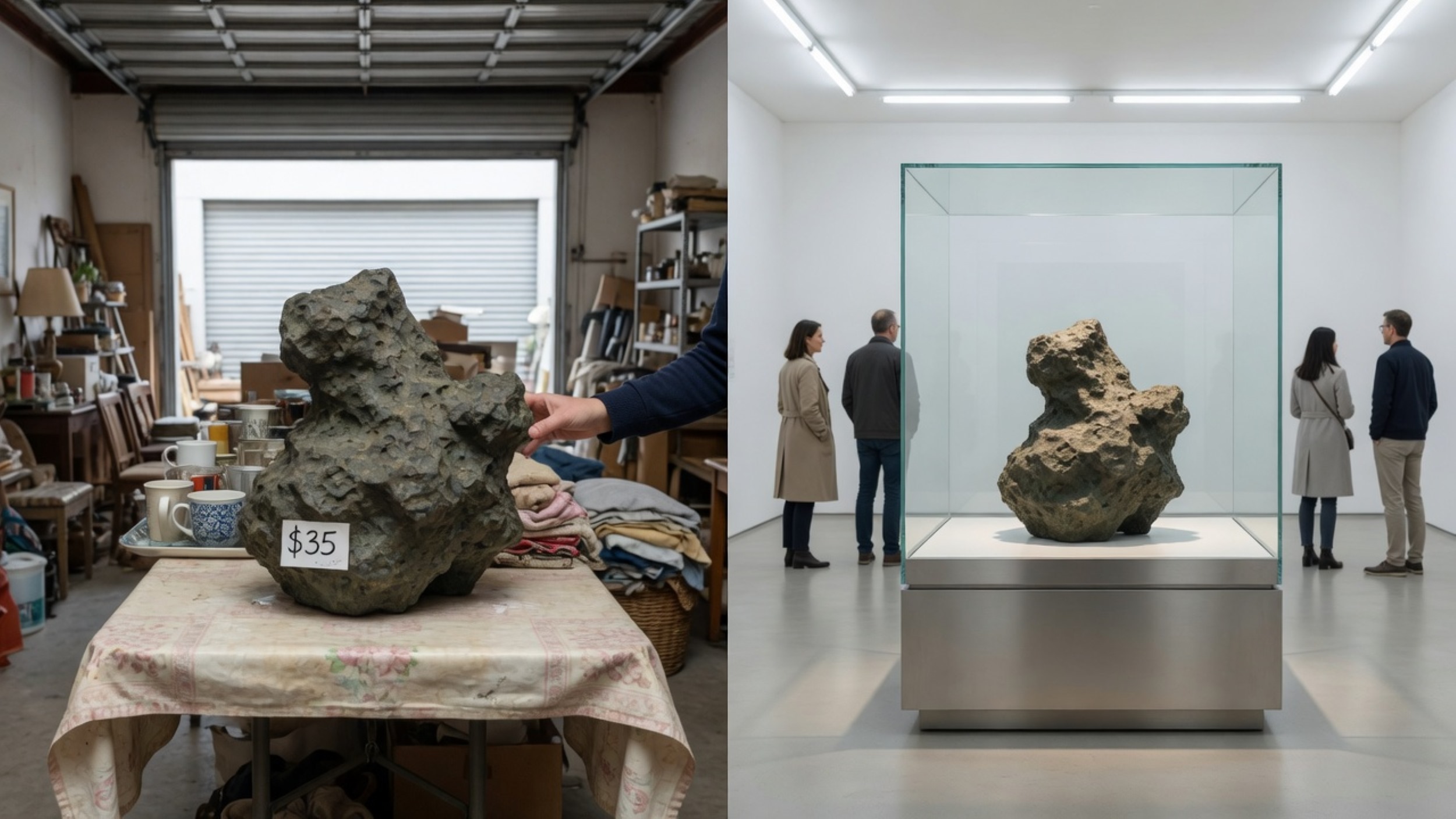
Imagine completing a work and showing it to the world. Nothing happens. There is no criticism, no rejection, no invitation, no sale and no message from someone who understood what you were trying to do. There are no hostile comments, but there are no compliments either. The work enters a silence so complete that you cannot tell whether it has been ignored, misunderstood or simply never seen.
The next morning, you return to the studio. Would you begin another?
The romantic answer is immediate: a real artist would continue. The authentic artist creates out of necessity and remains indifferent to prizes, praise, sales, institutions and audiences. Recognition belongs to the career, not the work. If external approval becomes necessary, then the artist must not have been genuinely motivated in the first place.
This idea is attractive because it protects artistic freedom from the instability of public judgment. It is also psychologically and materially incomplete. Human beings do not stop being social when they enter a studio. The desire to be seen, understood or answered does not automatically corrupt artistic intention. Nor is recognition merely a flattering accessory added after the work is finished. It can provide information, confidence, belonging, resources and evidence that continued effort is possible.
Art can certainly be produced without awards. It can be produced without sales, institutional endorsement or a large audience. It can even be made in prolonged isolation. The more difficult question is whether a practice can be sustained indefinitely without any form of recognition at all—not even the response of a trusted peer, a small community, an imagined future viewer or the artist’s own developing standards.
To answer that question, recognition must first be separated into its different forms.
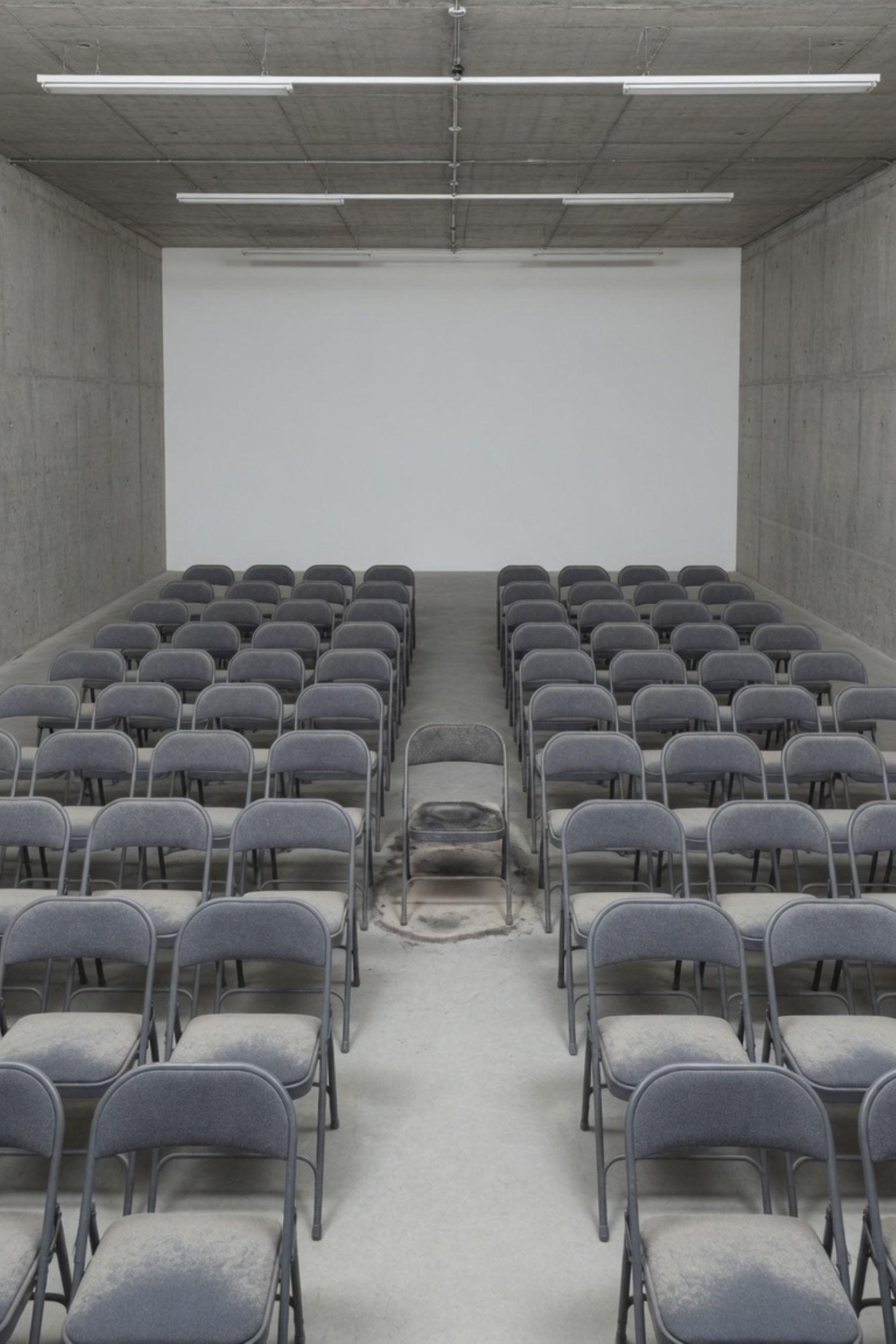
Recognition Is Not One Thing
A prize, a compliment, a thoughtful question and a purchase may all be described as recognition, but they do not produce the same psychological or practical effect.
Attention is the most elementary form: someone noticed that the work existed. Understanding goes further: someone recognised its question, method or intention. Evaluation introduces judgment: the work was considered strong, weak, relevant, original or moving. Institutional recognition places the artist inside an authorised structure through an exhibition, residency, collection, publication or award. Economic recognition converts attention into material support through a sale, commission, fee or grant.
An artist may receive one form while lacking all the others. A work can attract thousands of online views without generating serious interpretation. A curator may understand a practice deeply but be unable to offer an exhibition. A collector may purchase an object for reasons unrelated to the artist’s central concerns. A prize may provide visibility without establishing a durable community.
Compliments are equally variable. “Beautiful” signals approval but may tell the artist very little. A specific observation—about a spatial decision, material tension or unresolved contradiction—can demonstrate that another person has genuinely spent time with the work. The first response rewards the artist; the second also returns information.
This distinction matters because artists do not necessarily desire admiration as much as they desire evidence of contact. They want to know whether something travelled from the work into another mind.
Recognition is therefore not only applause. It is a feedback system through which artists test whether their private decisions have become publicly perceptible.
The Myth of the Purely Intrinsic Artist
Psychology distinguishes between intrinsic motivation—engaging in an activity because it is interesting or satisfying in itself—and extrinsic motivation, in which the activity is connected to an external outcome. Artistic mythology strongly privileges the first. The artist should supposedly be driven by curiosity, obsession, pleasure, urgency or the need to solve a problem, never by approval.
Intrinsic motivation is indeed central to creative work. Teresa Amabile’s research has repeatedly connected creativity to deep involvement in the activity itself. An artist absorbed by a material, question or process is more likely to take risks than someone working only to satisfy a predetermined reward.
But intrinsic and extrinsic motivation are not sealed compartments. Recognition can interfere with internal motivation, but it can also support it. What matters is how the response is experienced.
Self-Determination Theory, developed by Edward Deci and Richard Ryan, proposes three fundamental psychological needs: autonomy, competence and relatedness. Autonomy involves experiencing one’s actions as self-directed. Competence concerns the sense that one can act effectively and develop mastery. Relatedness involves meaningful connection with others.
Artistic practice can satisfy autonomy because the artist makes decisions according to self-generated values. It can satisfy competence through the progressive command of materials, ideas and processes. Recognition becomes relevant to relatedness and competence: another person’s response can confirm that the work is legible, that a decision produced an effect and that the artist belongs to a meaningful conversation.
External recognition becomes dangerous when it damages autonomy. A compliment that says “this decision affected me” can reinforce competence without dictating the next work. A reward that says “repeat this style if you want continued approval” transforms recognition into control.
The opposition between pure intrinsic motivation and contaminated external motivation is therefore too simple. The same exhibition, prize or compliment can either support or weaken artistic motivation depending on what it appears to reward.
Why Compliments Matter More Than Artists Admit
Artists often minimise their need for positive responses because dependence on praise appears incompatible with seriousness. Yet the absence of response creates a practical problem: silence contains almost no usable information.
A rejection at least establishes that someone made a decision. Criticism identifies resistance. A disagreement reveals that the work has entered another person’s interpretive structure. Silence does not explain whether the work failed, the communication failed, the network failed or nobody encountered it at all.
A specific compliment can interrupt this ambiguity. It tells the artist that a particular decision registered. This may strengthen creative self-efficacy: the belief that one is capable of producing meaningful or original work. Self-efficacy does not guarantee quality, but it affects whether a person continues after uncertainty, difficulty or failure.
Recognition also makes effort socially visible. Much artistic labour disappears into the studio: discarded versions, technical experiments, research, applications, installation planning and the emotional work of sustaining an unresolved project. A finished object may conceal months or years of decisions. When another person recognises the precision or difficulty of the result, the invisible labour briefly becomes legible.
This is not simply vanity. It is a form of orientation. The artist learns that effort has produced an effect beyond private intention.
However, not every positive response is equally sustaining. Generic praise may provide a temporary emotional lift while leaving the artist dependent on repetition. Precise recognition tends to be more useful because it confirms contact without claiming ownership of the work’s future.
“I like it” closes a response. “I kept thinking about the distance between those two elements” gives the artist evidence that a relationship inside the work remained active in someone else’s mind.
When Recognition Becomes a Form of Control
Recognition can sustain a practice, but it can also reorganise it around anticipation. Once an artist knows which work receives attention, each new decision is shadowed by a prediction: will the audience respond again?
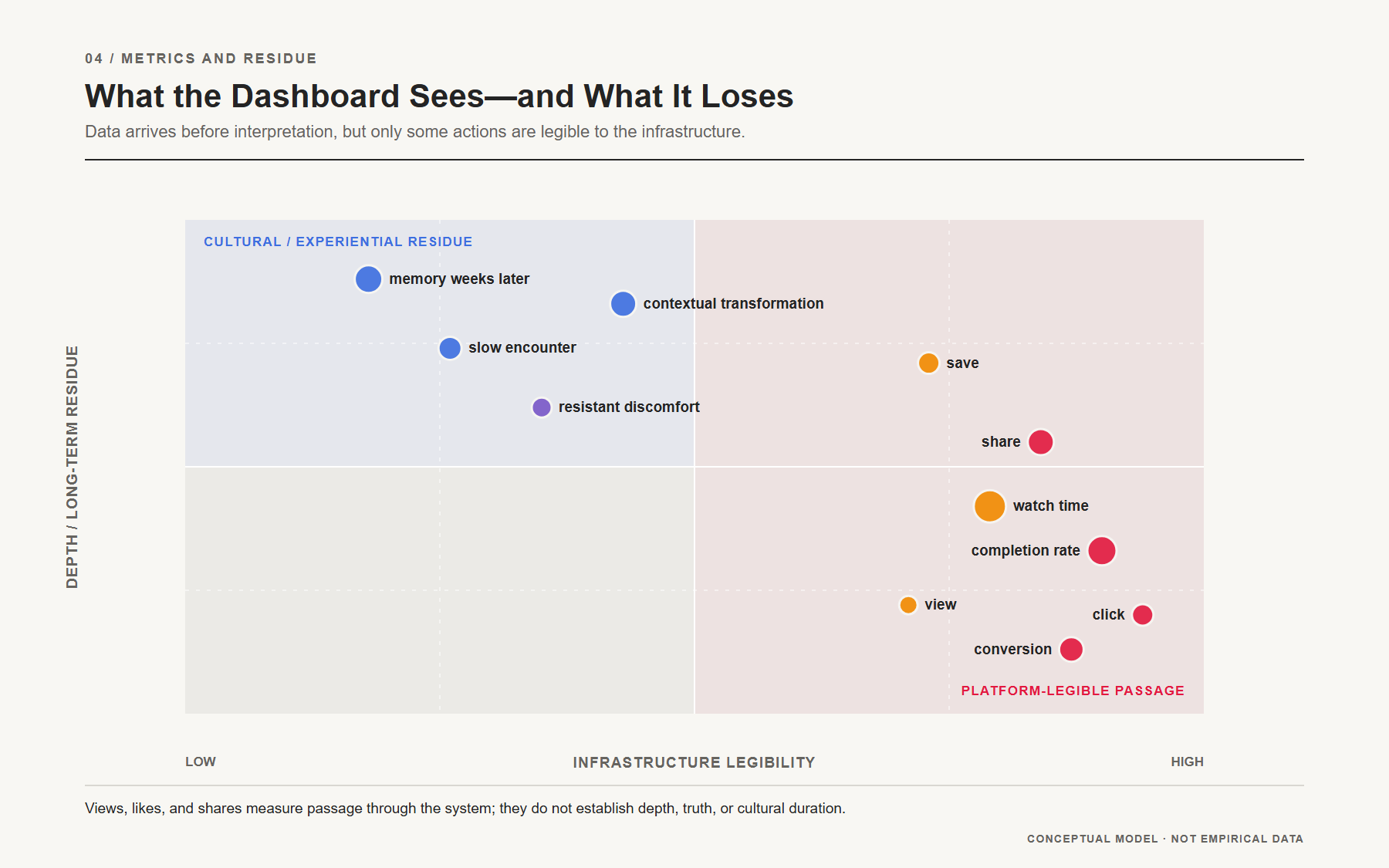
Social platforms intensify this pressure by translating recognition into visible quantities. Likes, shares, views and follower growth offer immediate evidence of response, but they also compress different forms of judgment into comparable numbers. A thoughtful encounter and a momentary reaction can become statistically indistinguishable.
The resulting danger is not that artists consciously decide to become superficial. Adaptation is often gradual. A particular format performs well, so it is repeated. Complex transitions are simplified because recognisable images circulate more efficiently. The work begins to internalise the conditions of its distribution.
Research on external rewards suggests why this can be psychologically complicated. Deci, Richard Koestner and Ryan’s meta-analysis found that some expected tangible rewards can reduce intrinsic motivation, particularly when they are experienced as controlling. The creator’s attention shifts from the activity to the condition attached to it.
Positive feedback does not inevitably produce the same effect. When feedback communicates competence without threatening autonomy, it can strengthen motivation. The decisive question is whether recognition says, “your decision had an effect,” or, “continue behaving this way if you want access to approval.”
Prizes can operate in either register. An award may provide resources, confidence and the freedom to take greater risks. It can also create pressure to protect the identity that was rewarded. The artist becomes responsible for remaining recognisable as the person who deserved the prize.
Recognition first confirms the practice and then quietly requests continuity. What was once discovered through experimentation risks becoming a brand that must be maintained.
Does Every Artist Have a Public?
Not every artist produces for a large, visible or physically present audience. Some work privately, anonymously or with no intention of exhibiting. Art can be connected to ritual, personal investigation, grief, pleasure, devotion, compulsion or the simple need to understand a material. In these situations, the act of making may be sufficient for long periods.
Yet the absence of an actual audience does not necessarily mean the absence of every public. An artist may address a future viewer, an absent person, a small group of peers or an imagined interlocutor. They may produce against the standards of a community they have rejected. Even refusal remains relational when it refuses someone or something.
The artist can also become a provisional audience for the work. They produce, step back, return later and attempt to encounter the result as something no longer identical to their intention. The studio contains an internal division between the person who makes and the person who judges what has been made.
This internal audience, however, is constructed from social experience. The artist’s standards have developed through education, observation, conversation, rejection, admiration and exposure to other work. What appears to be solitary judgment contains internalised communities.
Howard Becker’s concept of art worlds challenges the image of the completely isolated producer. Artworks depend on networks of cooperation: people manufacture materials, maintain spaces, document exhibitions, transport objects, publish writing, preserve archives and develop conventions through which work becomes intelligible.
An artist outside the classical gallery system does not necessarily stand outside every art world. They may belong to an online community, local scene, activist network, music culture, gaming environment, craft tradition, tattoo community, independent publishing circuit or group of technically specialised practitioners.
The relevant public does not need to be large. Sometimes one informed peer can provide more meaningful recognition than thousands of distant viewers.
Recognition Depends on the Community That Gives It
There is no universal audience capable of recognising artistic value from a neutral position. Every community rewards particular qualities and overlooks others.
A commercial gallery may value continuity, collectability and the ability to sustain exhibitions. A curatorial community may respond to research, discourse and institutional relevance. An online audience may favour immediacy, reproducibility and visual impact. A technically specialised community may recognise a difficult process invisible to the general viewer.
The same work can therefore appear unsuccessful in one field and important in another. Lack of recognition does not always indicate lack of quality; it may indicate a mismatch between the work and the evaluative structure in which it has appeared.
Pierre Bourdieu described cultural production as a field in which different agents compete for forms of economic, social and symbolic capital. Recognition is not merely an emotional response. It establishes position. A curator’s invitation, a critic’s essay, an artist’s recommendation or a prize can transfer symbolic legitimacy even before substantial money is involved.
This explains why recognition from a reference community can matter more than general popularity. The artist wants to be acknowledged by people whose judgment they consider meaningful. Ten responses from respected peers may carry more psychological weight than ten thousand anonymous reactions.
But the reference community can also become a closed tribunal. When artists depend entirely on the approval of a narrow group, they may reproduce its language, assumptions and hierarchies. A community sustains practice by making it visible, yet it can limit practice by making only certain forms of visibility rewarding.
The task is not to escape all communities, which may be impossible, but to understand which community has been granted the power to define success.
Prizes Are Never Merely Symbolic
Artists are sometimes advised to treat awards as meaningless because selection processes are subjective, political and inconsistent. This advice can protect self-esteem, but it ignores what prizes actually do.
Award recognition can produce publicity, institutional introductions, commissions, representation, teaching opportunities, higher prices and access to future funding. Even when the object received is purely symbolic, the status it communicates may alter how others evaluate the artist.
A field experiment by Michael Kosfeld and Susanne Neckermann found that a purely symbolic award increased performance in a non-artistic work setting. The result cannot be transferred mechanically to artistic practice, but it demonstrates that public recognition can possess motivational force even without financial value.
For artists, symbolic and material recognition are rarely separable for long. A prize may create time by funding production. A positive review can persuade an institution to take a risk. A residency offers equipment, space and social contact. A sale pays for materials and rent. Recognition does not only make an artist feel authorised to continue; it can make continuation economically possible.
This is where the romantic ideal of indifference becomes politically convenient. If the authentic artist should need nothing from society, then institutions do not need to provide fees, healthcare, social security, studio access or stable working conditions. Passion becomes an excuse for unsupported labour.
The artist may possess unlimited internal motivation and still run out of money, time, energy or space. Psychological commitment cannot purchase materials or protect working hours.
To ask whether art can be made without recognition is therefore partly to ask who can afford to continue while remaining unseen.
Some artists respond to silence by becoming more autonomous. Without external expectations, they experiment freely, abandon recognisable styles and follow questions that have no immediate audience. Periods of obscurity can protect the work from premature definition. For others, silence gradually weakens the sense of competence and relatedness. Decisions begin to feel arbitrary because nothing returns from outside the practice. The artist may continue working while losing the ability to evaluate whether the work is developing or merely repeating itself.
The psychological effect depends partly on how silence is interpreted. If obscurity is understood as protected research, it may preserve motivation. If it is experienced as evidence of exclusion or irrelevance, it can produce shame, self-doubt and withdrawal.
The distinction is difficult because recognition systems are unreliable. Strong work can remain invisible because of geography, class, discrimination, timing, language, limited networks or the simple saturation of cultural production. Weak recognition is not a clean measurement of weak art. Yet artists cannot always neutralise silence intellectually. Knowing that evaluation systems are imperfect does not eliminate the emotional force of being ignored. Human beings remain sensitive to signs of inclusion and exclusion even when they understand those signs critically.
Research with professional musicians has found that autonomous motivation and social support can help buffer some of the exhaustion associated with insecure creative careers. This suggests that persistence is not produced by inner strength alone. It emerges from an ecology of motivation, relationships and material resources.
The most durable practices may not be those that eliminate the need for recognition, but those that distribute it. Instead of relying on one prize, dealer, platform or critic, the artist develops several forms of response: private standards, trusted peers, broader audiences, economic support and communities that value different dimensions of the work.
What Kind of Recognition Sustains Art?
Recognition is most constructive when it does not attempt to purchase the artist’s next decision.
It should be specific enough to provide information. It should recognise choices, processes and effects rather than treating talent as a mysterious personal essence. It should allow disagreement and uncertainty. It should make the artist feel seen without suggesting that visibility must now be repaid through repetition.
Useful recognition can include a rigorous studio conversation, a carefully written response, an invitation that provides real working conditions, a purchase that respects the practice or a question that reveals an unexpected reading. It can also involve criticism, provided the criticism engages with what the work is attempting rather than using the artist as a target.
The most sustaining community may not be the one that offers continuous praise. It may be the one capable of combining attention with honesty. Pure approval provides warmth but little direction. Pure judgment produces anxiety. A viable artistic ecology offers recognition without removing friction.
Artists, in turn, can learn to distinguish nourishment from measurement. A compliment may nourish confidence. A critical exchange may nourish development. A grant may nourish time. A sale may nourish material continuity. None of these should be mistaken for a complete verdict on the value of the practice.
Recognition is evidence that a relationship has occurred, not proof that the work is important. Lack of recognition is evidence of an absent relationship, not proof that the work has failed.
Can Art Be Produced Without Recognition?
Yes. Art can be made without prizes, compliments, exhibitions, sales or public visibility. It can be produced privately for years or for an entire lifetime. Curiosity, pleasure, necessity, discipline, devotion and the need to give form to experience can all sustain creation.
But two different questions are often concealed inside the first.
Can an object be made without recognition? Clearly, yes.
Can a practice remain psychologically, socially and materially sustainable without any response from another person or community? Sometimes, but far less easily, and never under identical conditions for everyone.
Recognition does not create the artist’s initial desire, but it can protect that desire from exhaustion. It can confirm competence, establish belonging, provide material resources and reveal that the work has entered a world larger than the studio.
The artist does not necessarily need applause. They may need a witness.
A witness is different from a judge. The witness does not determine whether the practice deserves to exist. They confirm that something has occurred and that its effects have crossed the boundary between private intention and shared experience.
The provocative question in the title therefore has no heroic answer. Some artists would continue if nobody ever told them the work was good. Some would continue while suffering. Some would change their practice, find another community or stop. None of these outcomes offers a simple measurement of artistic authenticity.
Perhaps the more important question is not whether artists should be capable of surviving without recognition, but why culture repeatedly celebrates their ability to survive without support.
Art can begin in solitude. It can resist approval and develop against the values of its time. But even the most independent practice eventually confronts a social horizon: someone who might see it, misunderstand it, preserve it, challenge it or carry it forward.
Recognition is not the reason all art is made. It is one of the conditions through which making becomes sustainable, and through which a private act becomes part of a shared world.