Fakewhale in Dialogue with Michail Pirgelis

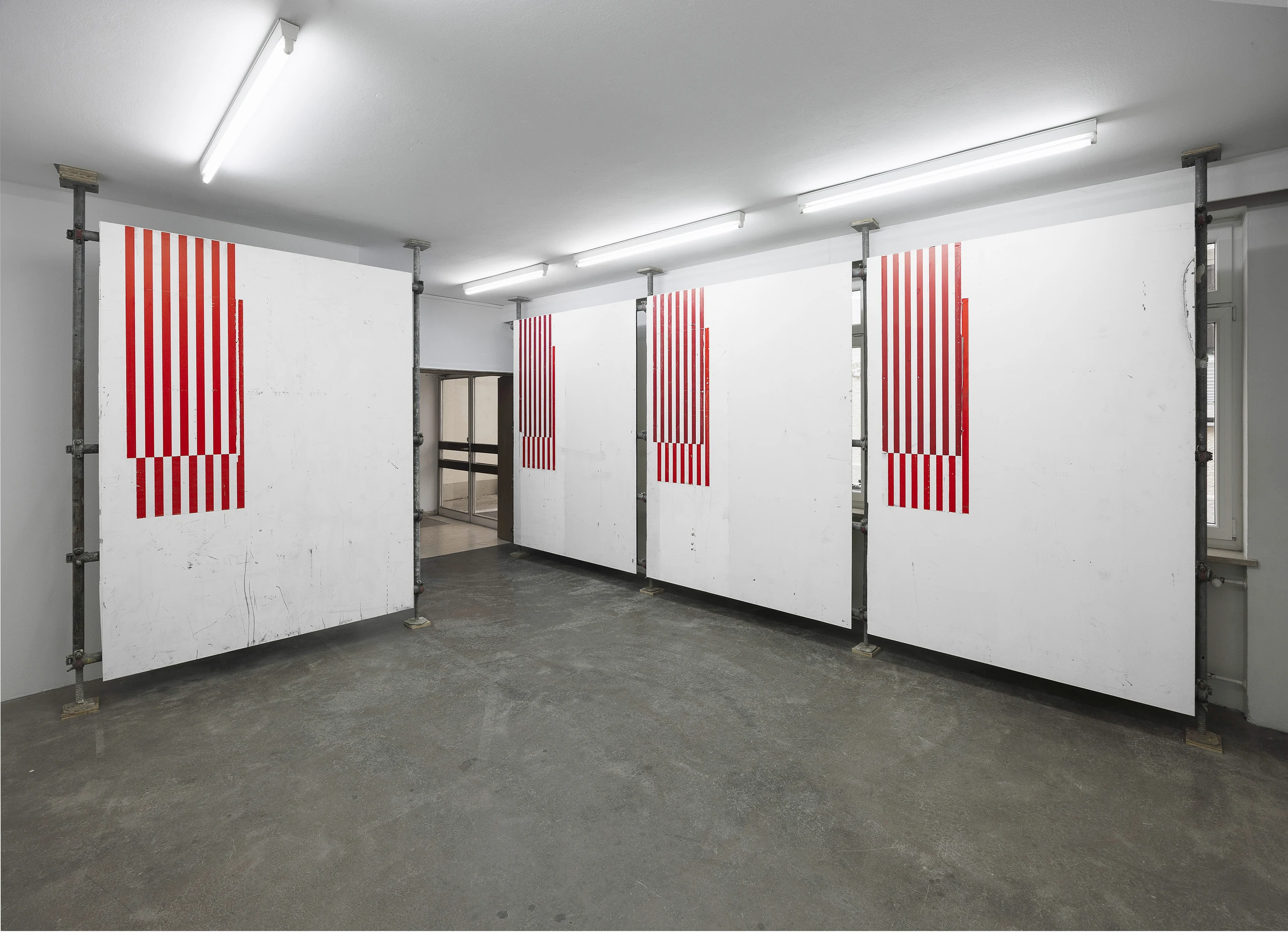
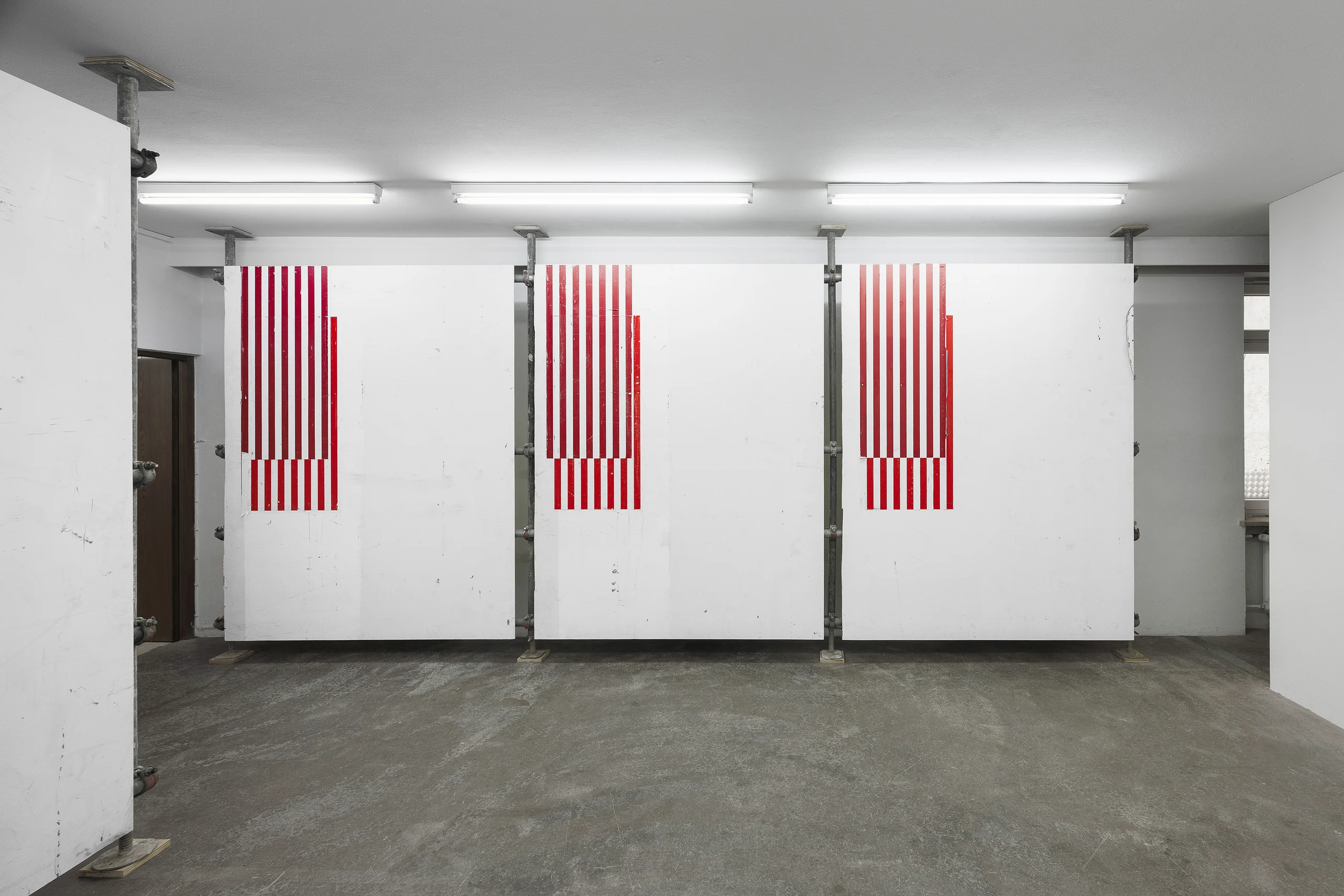
Michail Pirgelis Hawaiian Hills Installation view, Kunstraum München, Munich, February 26–April 19, 2026 (pictured here: Lines of Apollo, 2025) © Michail Pirgelis Courtesy the artist and Kunstraum München Photo: Thomas Splett

Michail Pirgelis (b. 1976 in Essen, lives and works in Cologne) is one of the most compelling German sculptors of his generation. His practice is based almost entirely on the recovery of decommissioned passenger aircraft parts, sourced from the vast airplane graveyards of the American desert. Through a deliberately minimal intervention, he transforms these industrial materials into works that oscillate between sculpture, abstract painting, and conceptual readymade.

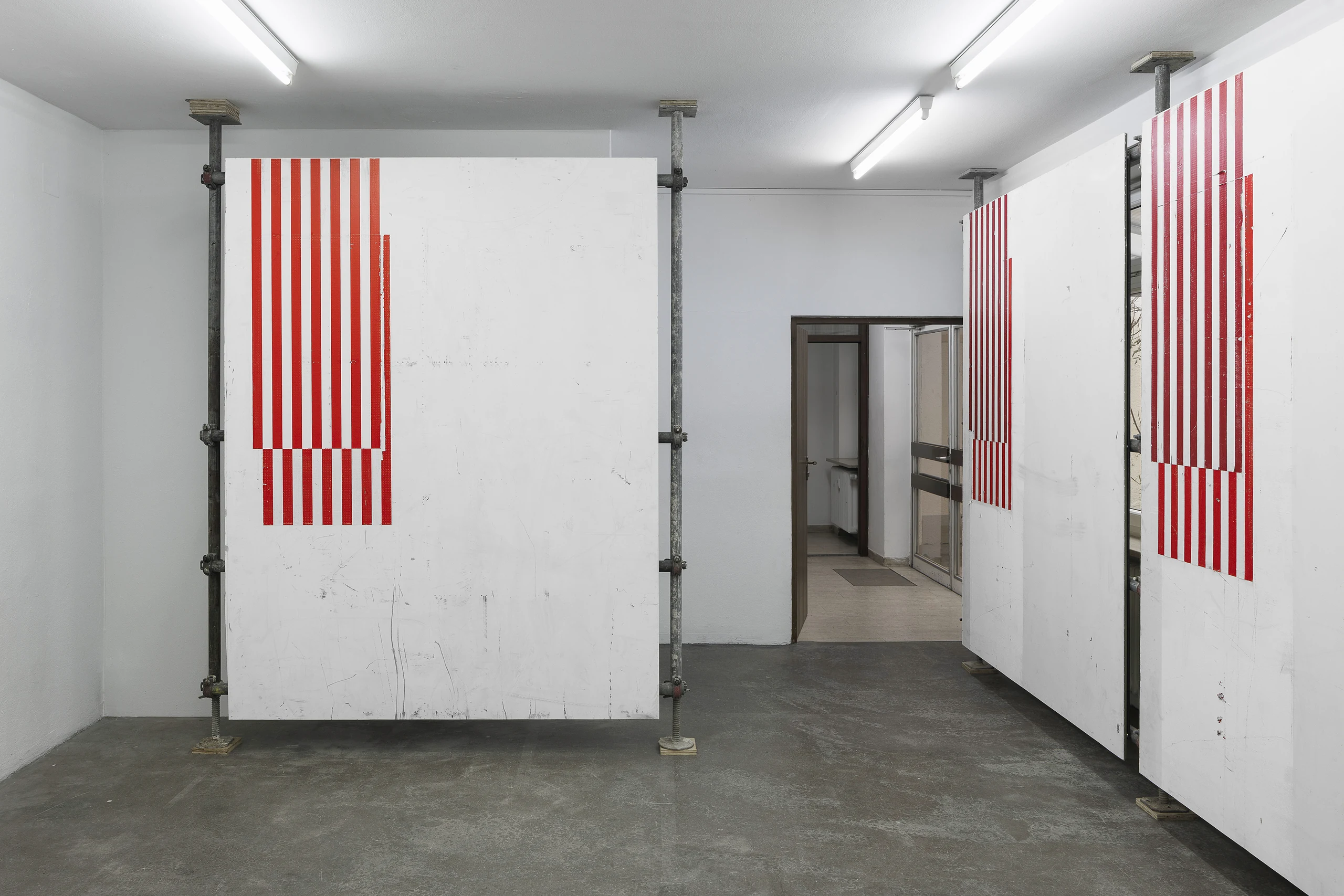
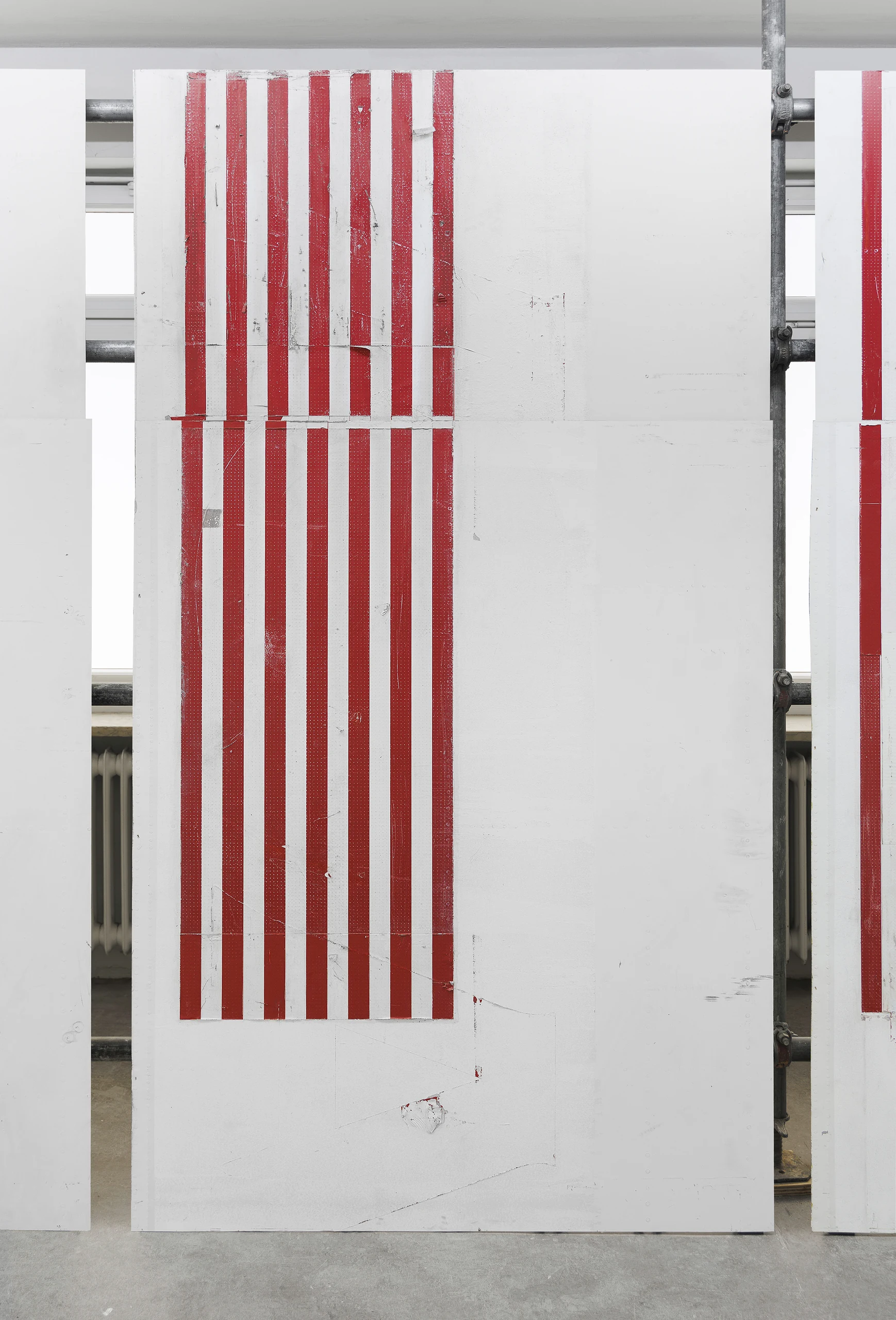
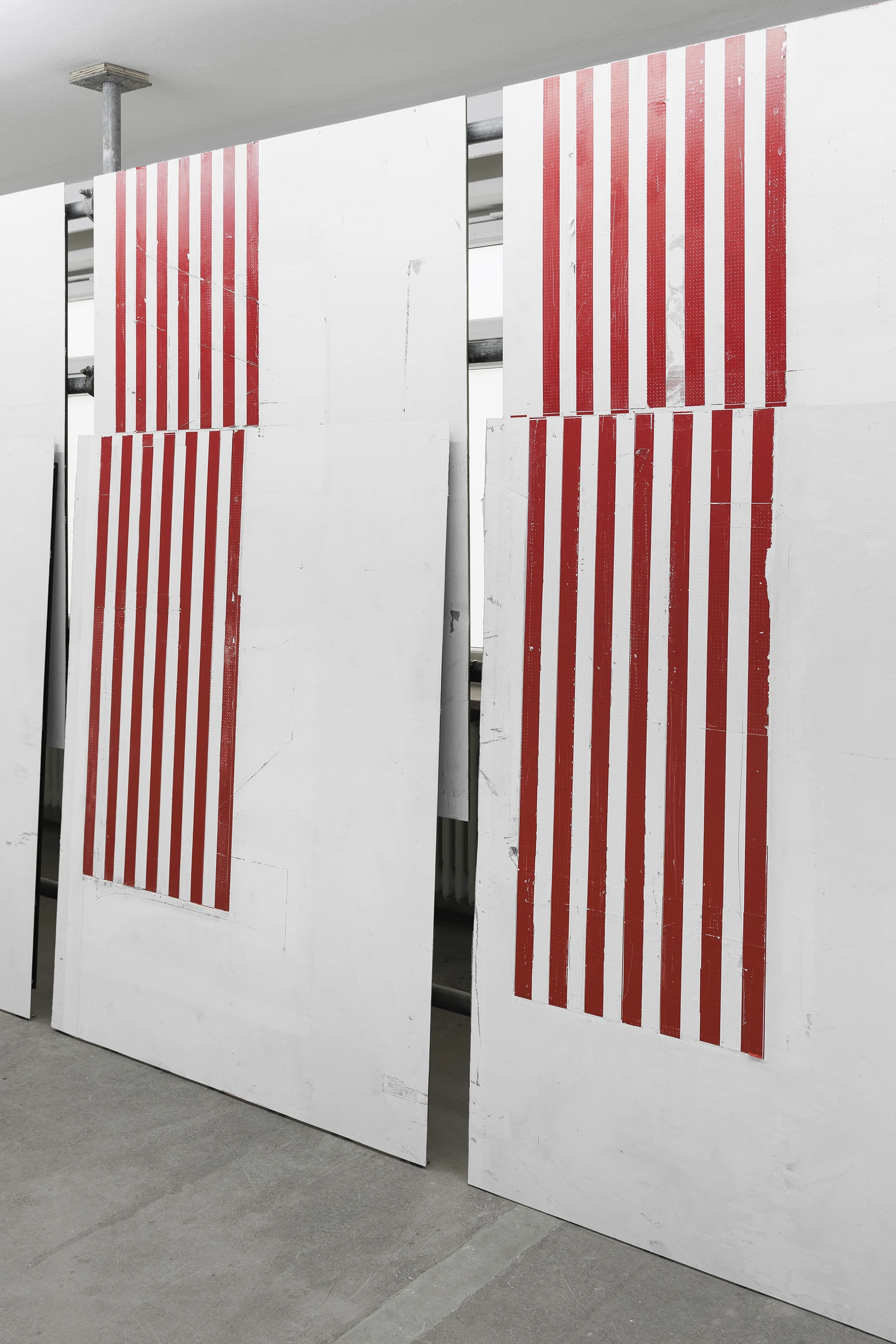
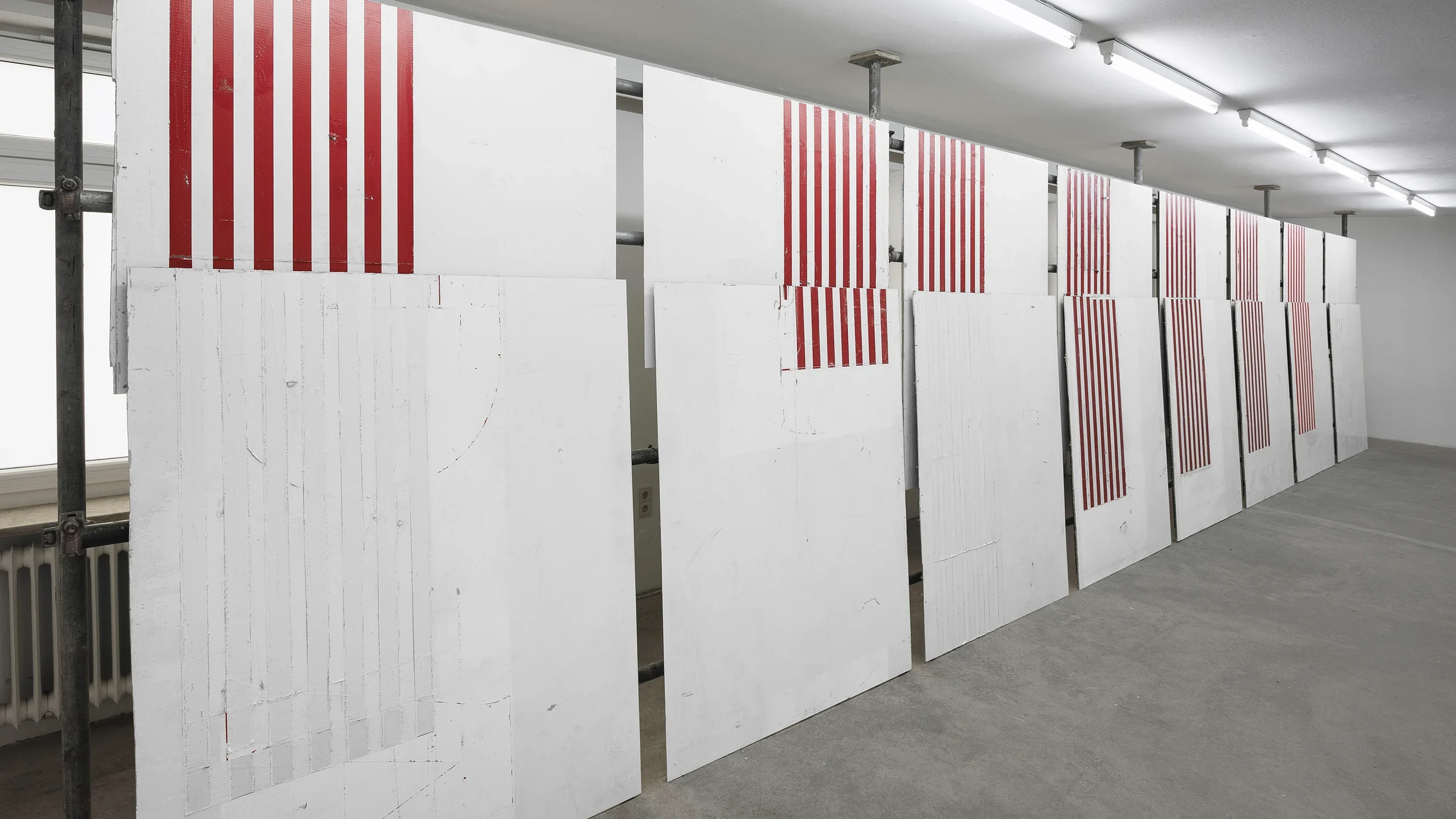
In his latest solo exhibition, Hawaiian Hills (Kunstraum München, February–April 2026), Pirgelis presented a new series of large-scale site-specific works made from original fuselage sections marked by red and white stripes. Resembling fragments of abstract flags, these works were installed on a freestanding display structure spanning the two floors of the exhibition space, making the reverse side of the panels visible as well.

In this interview, we discuss his relationship with aircraft material, the meaning behind the title Hawaiian Hills, the evolution of his visual language, and the subtle yet perceptible return to a painterly dimension emerging in this exhibition.

Michail Pirgelis Hawaiian Hills Installation view, Kunstraum München, Munich, February 26–April 19, 2026 (pictured here: Lines of Apollo, 2025) © Michail Pirgelis Courtesy the artist and Kunstraum München Photo: Thomas Splett

When did you begin working with decommissioned aircraft parts, and what struck you the first time you entered one of the large airplane graveyards in California or Arizona?

My first artwork was created twenty-five years ago. It was a pivotal moment in my life when I decided to abandon my engineering studies and engage with art for the first time.

Initially, my works were entirely ephemeral. This approach actually grew out of necessity, as it was the only way I could access original aircraft components. I would borrow specific parts from aviation companies and transfer them into the art world. For a limited period, they existed as artworks; however, I eventually had to return them so they could be used again in their original function. I was not permitted to alter them, but because they were removed from their technical environment, their functionality disappeared, leaving only their abstract visual language. I was deeply drawn to the idea of possessing these elements for a limited time, of their existing as art for a fleeting moment before returning to the sky and slipping back into anonymity.

Years later, during my fine arts studies, I had the opportunity to visit an aircraft boneyard in the United States for the first time, and I was absolutely overwhelmed. I was struck by the archaic beauty of the place, as well as by the remnants of our civilisation. These were objects that, only a few years earlier, had stood for progress and technological achievement, now abandoned in the middle of the desert.

It was there that I first had the freedom to cut parts directly from various aircraft and to transform them so that they became autonomous sculptures, existing independently as artworks.

Michail Pirgelis Hawaiian Hills Installation view, Kunstraum München, Munich, February 26–April 19, 2026 (pictured here: Lines of Apollo, 2025) © Michail Pirgelis Courtesy the artist and Kunstraum München Photo: Thomas Splett

Your intervention on the materials is intentionally minimal. What does it mean for you to “let the material speak,” and where do you instead feel the need to intervene?


The urge to intervene accompanies every single step in the creation of a work. It begins with the selection of the material, continues through cutting and shaping, and extends all the way to its completion.

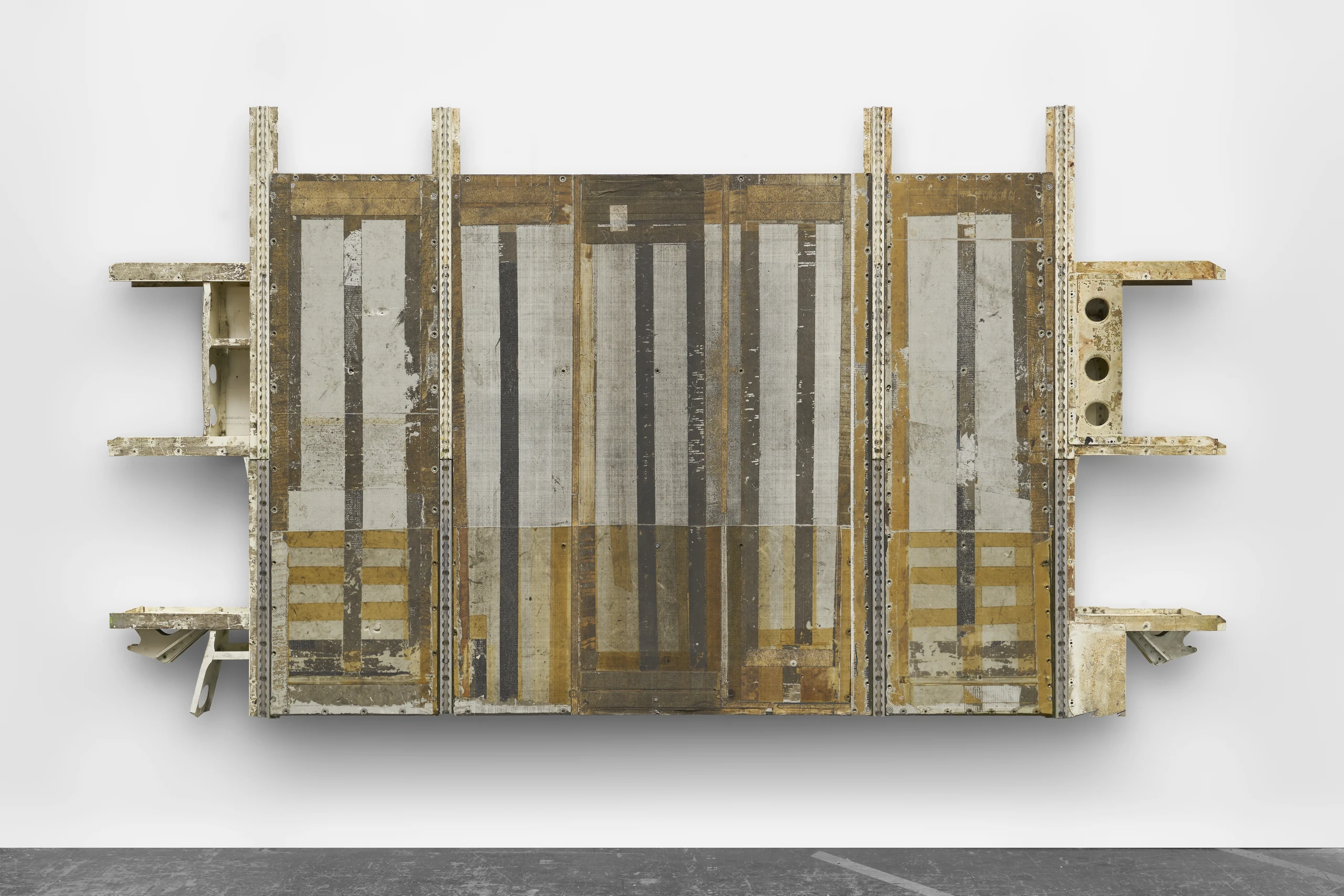
While the material certainly carries its own inherent “language,” the decisive factor is the process of abstraction. In this process, information is selectively highlighted, erased, or subverted. I rarely add or supplement; instead, I focus on reducing the object to its absolute essence. Ultimately, this results in works that exist entirely detached from their original purpose.


The title Hawaiian Hills evokes ideas of vacation, desire, and romanticism. How did this title emerge in relation to such industrial and “dead” materials?


For me, Hawaiian Hills embodies a place of longing, an imaginary space. In fact, the title evokes precisely a kind of counterpoint, an oasis of sorts, to the barren desert landscape from which my work emerges.

My sculptures often derive their titles from geographic locations or topographical formations. Sometimes the provenance and history of the material itself play a central role; at other times, the titles refer to actual travel destinations or the specific sites where I first discovered it. In other cases, they may also be purely associative and of a less tangible nature, but then convey the emotional or conceptual dimension of the works.


Michail Pirgelis Hawaiian Hills Installation view, Kunstraum München, Munich, February 26–April 19, 2026 (pictured here: Lines of Apollo, 2025) © Michail Pirgelis Courtesy the artist and Kunstraum München Photo: Thomas Splett

In this exhibition, you work almost exclusively with red and white striped fuselage sections that become fragments of abstract flags. What do these stripes represent for you?


These stripes were once flags that now reveal only a fraction of their original information through deliberate fragmentation. While they evoke symbols of national identity, they remain fragmentary and refuse to provide a complete image. Through their constant repetition across multiple panels, they transform into a rhythmic overall composition akin to a visual score. In this way, abstract compositions emerge that formally recall Minimal Art, though they were not consciously conceived in that style.

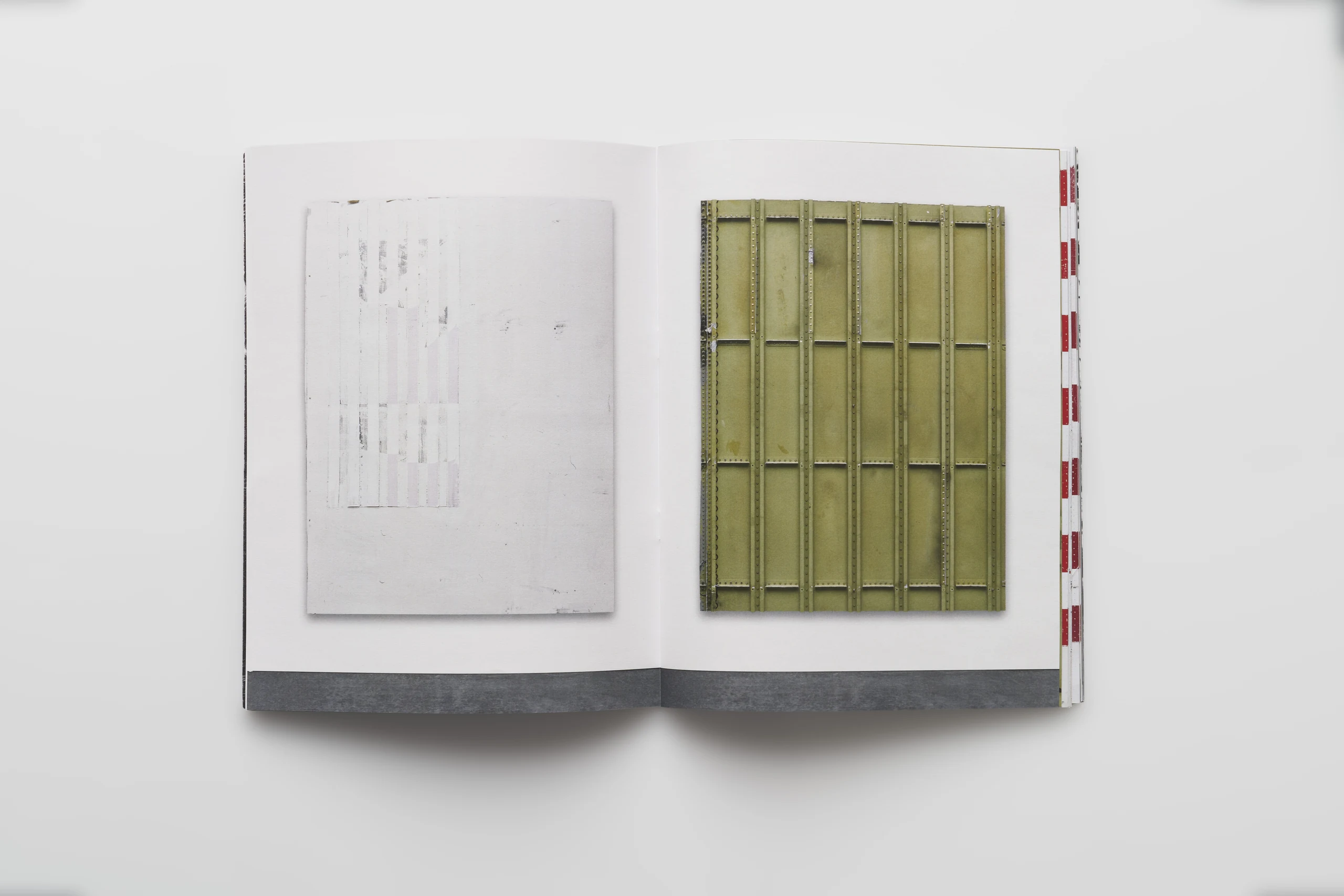
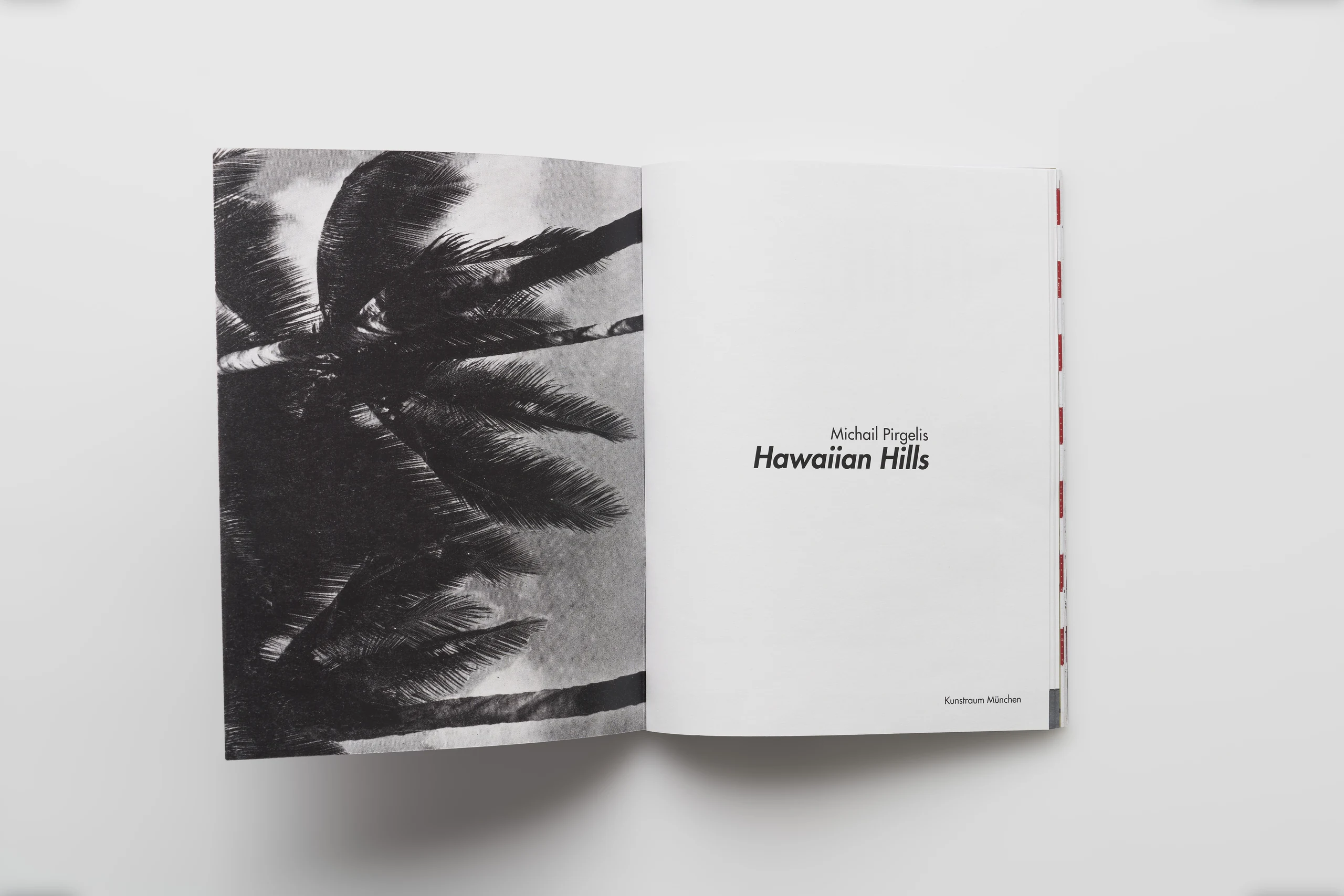
I extend this repetitive motif throughout the exhibition catalogue, pushing it almost to its limits. Over entire sequences of pages, the stripes run continuously, almost like a flipbook—repeating with minimal shifts, overlaps, and details that produce moments of difference and alignment.


The works in Hawaiian Hills oscillate between minimalist painting, relief, and sculpture. How do you experience this ambiguity of genre?


I deliberately embrace this ambiguity. At its core, my approach feels closely aligned with classical sculpture. At the same time, I find references to painting or reliefs deeply compelling, as they allow me to explore and redefine the boundaries of sculpture in different directions. I am less interested in the stability of a category than in its constant fraying at the edges, as an open system that continually repositions itself.

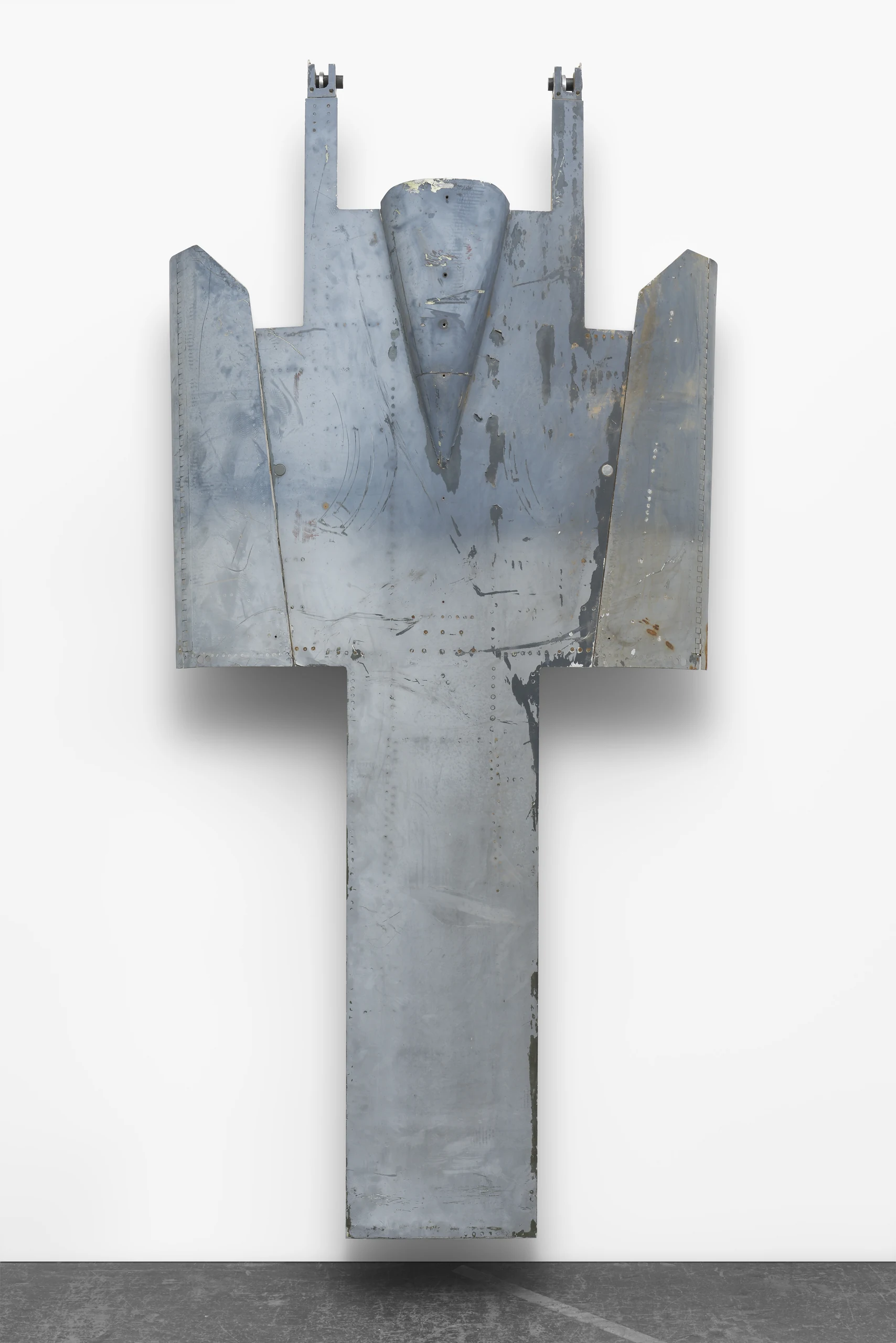
Michail Pirgelis Allsmoke Mountain, 2026 Aluminum, titanium, lacquer 283 × 138 × 31 cm | 111 3/8 × 54 1/4 × 12 1/8 inches © Michail Pirgelis Courtesy the artist and Sprüth Magers Photo: Ben Hermanni
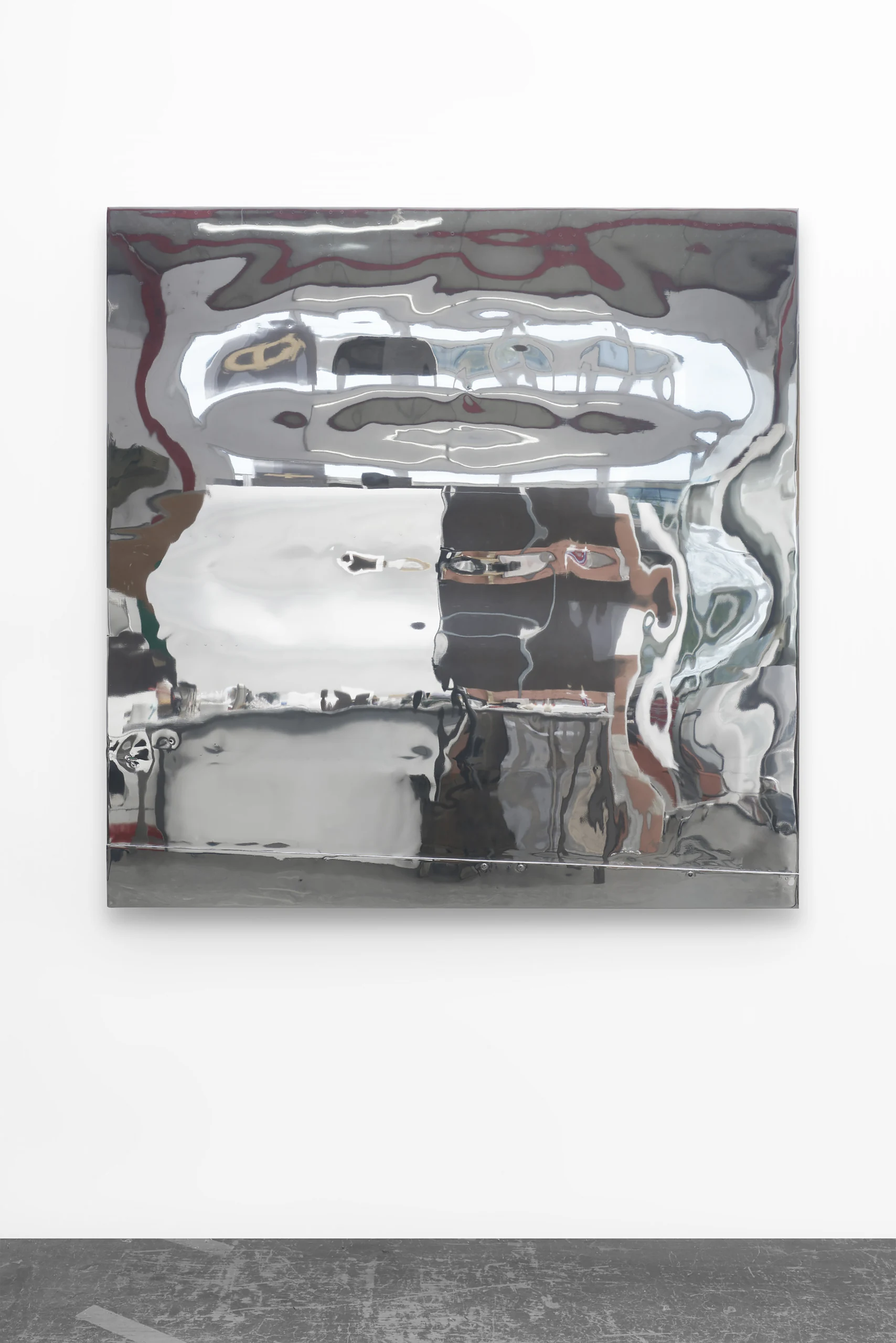
Michail Pirgelis Missing Master, 2020 Aluminum, titanium 145.5 × 147 × 4 cm | 57 1/4 × 57 7/8 × 1 5/8 inches © Michail Pirgelis Courtesy the artist and Sprüth Magers Photo: Ben Hermanni

You chose to present the works on a freestanding display structure, making the reverse side visible as well. Why did you decide on this scenographic solution?


To present the works as a cohesive whole without spatial interruptions, a free-standing construction was essential. At the same time, it allowed me to create a new, permeable architecture within the space, one that challenges and disrupts conventional viewing habits and invites them to be questioned. By choosing to work with a scaffolding structure, I was able to make both the front and back of my works visible. In some areas, I overlapped the panels or leaned them against one another, creating multiple layers that continually generate shifting visual references and new configurations.

This scenographic choice simultaneously shifts the position of the viewer. It creates a situation that demands movement and physical engagement. The construction thus becomes a temporary architectural structure that reorganises perception, aligning with the internal logic of the works themselves: fragmented, serial, and non-hierarchical.

Your works often speak about the aura of objects, traces of time, and the beauty of decay. How important is it for you to preserve this patina of the material?


First and foremost, I’m interested in authentic materials. In this context, the patina is crucial. I couldn’t work with brand-new materials that lack a sense of identity. The origin of the substance, together with the visible traces on its surface, forms the driving force that ultimately defines the work.


Your work is often associated with Post-Minimalism and the readymade tradition. How do you personally relate to these artistic legacies?


I don’t see myself as belonging to any particular tradition, even if my work shares formal affinities with Post-Minimalism and the Readymade. Of course, I feel connected to certain artistic positions and ideas, but I view my sculptures as entirely autonomous works.

Their origins lie in industrial production processes, yet over the course of their existence, they gather traces of time, intervention, and human presence. Through this, they come to exceed their original function and resist classification within any clearly defined artistic movement.

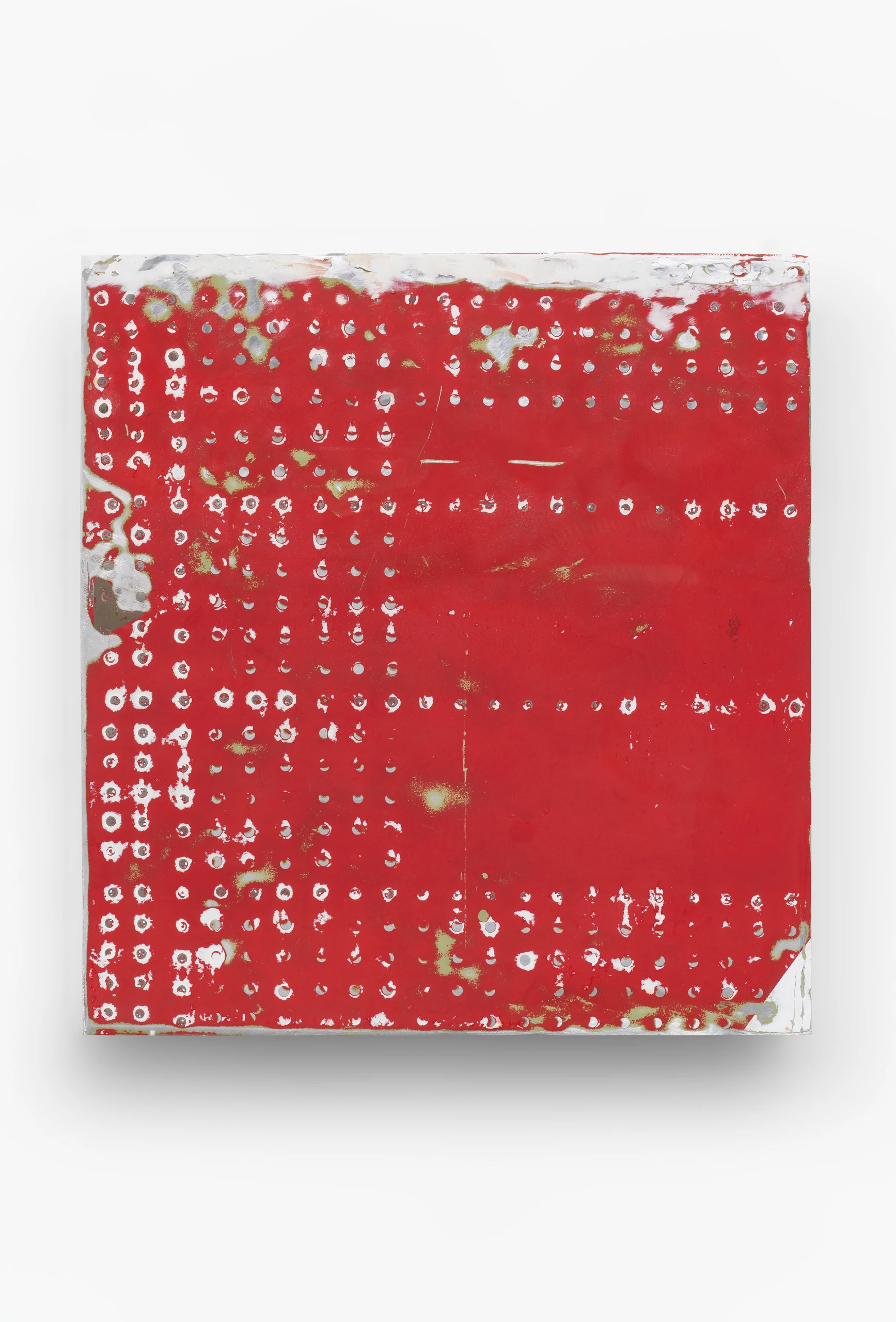
Michail Pirgelis Perforated Past, 2020 Aluminum, titanium, lacquer 57.5 × 53.5 × 5 cm | 22 5/8 × 21 × 2 inches © Michail Pirgelis Courtesy the artist and Sprüth Magers Photo: Ben Hermanni
Michail Pirgelis Hawaiian Hills Kunstraum München, Munich, February 26–April 19, 2026 Exhibition catalogue © Michail Pirgelis Courtesy the artist and Kunstraum München Photo: Ben Hermanni

In recent years, there has been much discussion about a “return to painting” in contemporary art, with new tendencies mixing abstraction, gesture, and materiality. In Hawaiian Hills, there seems to be a stronger painterly influence compared to your earlier works. What is your view on this broader tendency, and how do you experience it within your own practice?


My work springs from a profound inner necessity. I find that I am able to distance myself from general trends and prevailing currents precisely because my works inhabit the space between fixed categorisations.

The two major bodies of work created for Kunstraum München, Hawaiian Hills and Lines of Apollo (both 2025), feature raw, textured surfaces built up through multiple layers: overpainted airline lettering and logos, markings from aircraft salvagers, flaking paint, and perforated strips of colour. These layers and elements are initially shaped by environmental conditions—sun, wind, and desert sandstorms—before being further processed in my studio.

In some instances, I push this process to the point where the patina is completely removed, sanding and polishing the surface down to bare aluminium. The image eventually disappears into a purely reflective surface, as in Missing Master (2020), which was also included in the exhibition.

Conversely, I leave other surfaces with their painterly quality and gestural character, even though they were never intended as paintings. It is an aesthetic that takes shape through erosion, time, and chance.

Michail Pirgelis Hawaiian Hills Kunstraum München, Munich, February 26–April 19, 2026 Exhibition catalogue © Michail Pirgelis Courtesy the artist and Kunstraum München Photo: Ben Hermanni
Michail Pirgelis Show Low, 2021 Aluminum, fiberglass, titanium, tape 178 × 325 × 16 cm | 70 × 128 × 6 1/4 inches © Michail Pirgelis Courtesy the artist and Sprüth Magers Photo: Ben Hermanni