

There is a subtle violence in how the human eye surrenders to what it has already seen, a kind of collusion between memory and desire that transforms insistence into authority. It is no coincidence that our perception of beauty is so intrinsically linked to familiarity, a mechanism that depth psychology has attempted to map, but which contemporary aesthetics has elevated to a true ontology of form.
The first time we encounter a sign, it appears as an intrusion, an alterity that must be decoded and processed through cognitive effort; the tenth time, that same sign has already transformed into a reassurance, a mnemonic trace that requires less energy to be accepted and which, precisely because of this metabolic saving, is gratified by the neural reward system. This predisposition toward recursion is not simply a lazy biological automatism, but the foundation upon which the entire scaffolding of collective taste rests. If we analyze the trajectory of what we define as ‘iconic,’ we realize that an icon rarely arises from an absolute and isolated singularity; instead, it feeds on a relentless dissemination that smooths its edges and standardizes its reception. Repetition acts as a process of controlled erosion, where original meaning is gradually replaced by a kind of ‘aura of frequency’, a value that resides not in the object itself, but in the number of times it has intersected our waking consciousness. In the age of digital saturation, this phenomenon has undergone a paroxysmal acceleration, transforming the loop into a fundamental cell of visual and conceptual language. We no longer seek the exception, but the confirmation of an already encoded expectation, a return to the identical that protects us from the anguish of nonsense and the unpredictable.
Repetition thus becomes the supreme technique of aesthetic consolidation, capable of ennobling the banal and making the ephemeral sacred through the sheer force of temporal persistence, an exercise of power that transforms the ‘already seen’ into the ‘ever desired.’ Examining the power of repetition therefore means diving into a dialectic that links the biology of recognition to the philosophy of mass production, passing through the avant-gardes that made the multiple their banner of revolt against individual genius.
Upon reflection, we realize that repetition is not the negation of creativity, but its most radical and pervasive form, a tool capable of iconizing any fragment of reality, provided it is re-presented with the clinical precision of an endless ritual.
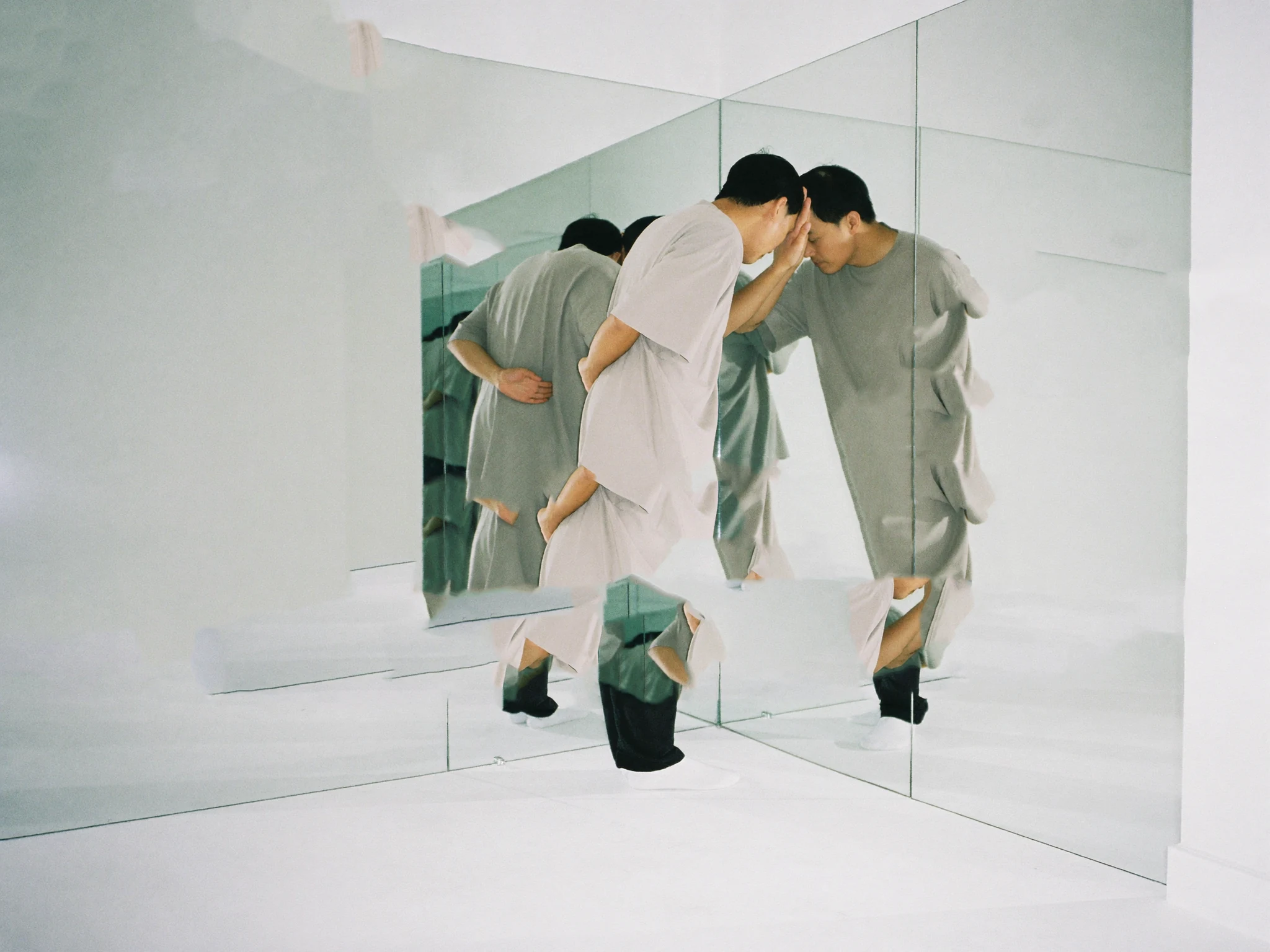
The Syntax of Habit
Perception is never a virgin act, but a process of stratification where every new vision rests upon the debris of previous ones. The economy of recognition operates through a mechanism of reduced friction, in which the human brain rewards the fluidity of decoding over the complexity of the unknown. When an aesthetic repeats itself, it ceases to be an interrogation and becomes a default answer, a groove that the mind traverses with increasing ease, mistaking this lack of effort for a judgment of positive value.
The common error lies in thinking that pleasure derives from novelty, when in reality, most of our aesthetic gratifications are linked to the confirmation of a pre-existing model. The psychology of the ‘mere-exposure effect’ teaches us that simple repeated exposure to a stimulus is sufficient to increase our preference for it, regardless of its intrinsic qualities.
It is a form of seduction by exhaustion, where the resistance of the intellect gives way to the capitulation of the senses, now habituated to a presence that has become a habitat. From this perspective, beauty is a function of frequency within our visual horizon. An image that appears everywhere, from billboards to smartphone screens, ends up acquiring a kind of ontological legitimacy that places it above criticism. It exists because it repeats, and it repeats because its existence has now been validated by the consensus of reiteration, creating a vicious cycle where taste is nothing more than the result of massive exposure. Repetition also acts as a filter that selects the most resilient elements of an aesthetic—those that can survive the degradation of time and distraction. What is too complex or too tied to a specific context tends to fade under the weight of replication, while what is essential, graphic, and immediately legible is fortified. Repetition is thus a process of formal purification, tending toward the abstraction and simplification necessary for the creation of a universal and instantaneous language.
We can therefore state that the history of taste is not a narrative of discoveries, but a chronicle of sedimentations, where what we consider classic today is simply what has been repeated with the most consistency and the least disturbance. The aesthetics of repetition reveals that our freedom of choice is an illusion fueled by the vastness of the archive, but the coordinates of our desire are traced by the frequency of stimuli. Beauty, in the final analysis, is but the memory of a habit turned into dogma.
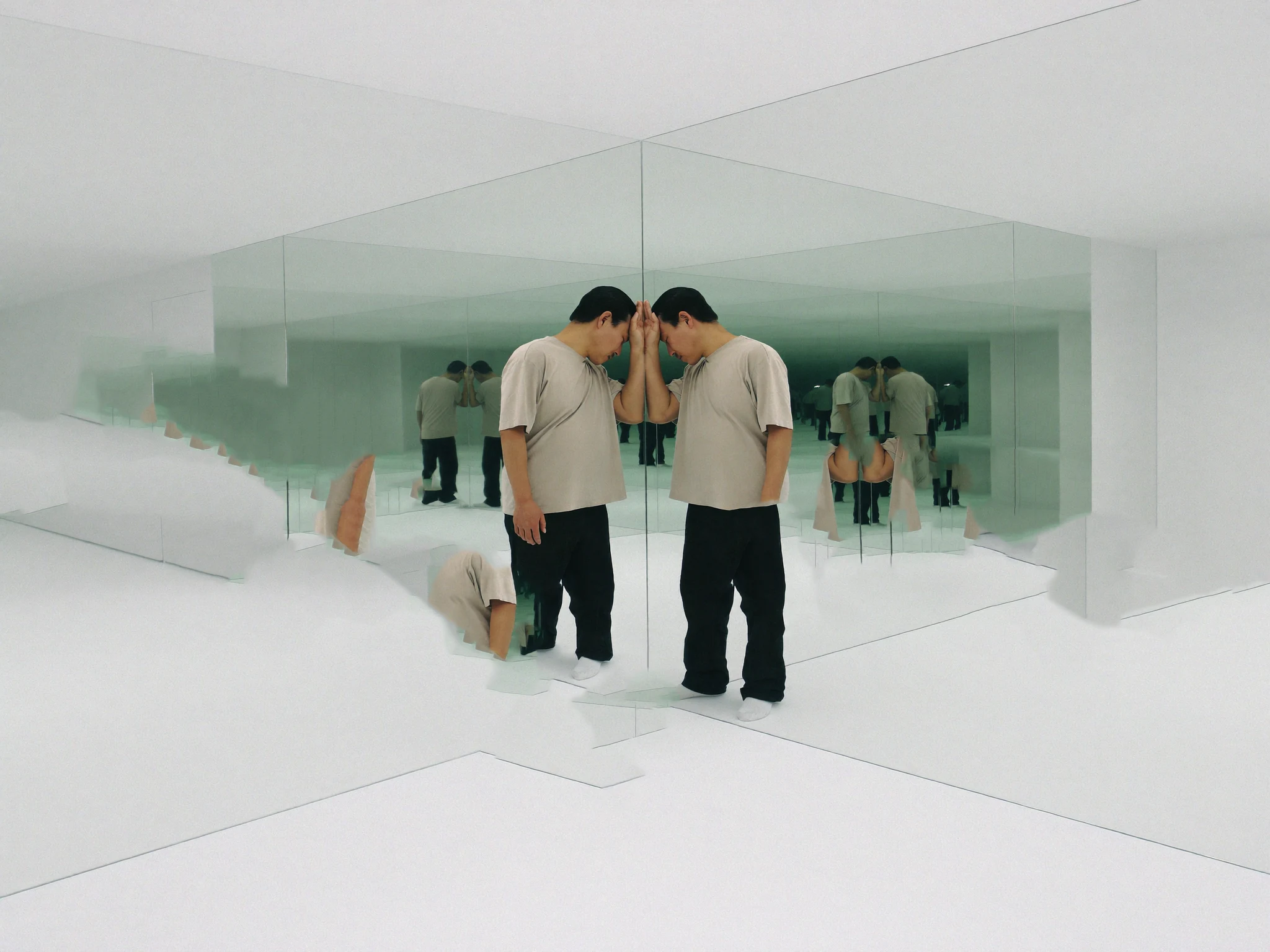
The Aura of the Multiple
Uniqueness is an obsolete category of nostalgia, a romantic residue that ignores the iconographic strength of the series. With the advent of technical reproducibility, the work of art did not lose its aura, as Benjamin feared, but simply shifted it from the plane of the original to that of distribution. The contemporary aura resides not in the ‘here and now’ of the singular object, but in its ubiquity, in its ability to be everywhere simultaneously and to occupy every interstice of daily reality.
Andy Warhol was not just the painter of Pop Art, but the theologian of repetition as an act of secular consecration. By multiplying Marilyn’s face or the Campbell’s soup can, he was not devaluing the subject, but extracting it from the flow of time to deliver it to the eternity of pure form. Serial repetition transforms the particular into the universal, stripping the object of its practical function to clothe it in a purely visual dignity, where value is determined by the precision of the replica. In this context, the copy does not emulate the original with the intent of replacing it, but acts as its structural reinforcement, a testament to its power.
The more a form is replicated, the more it detaches from its material origin to become an idea, a concept that can be evoked without the need for the physical presence of the work. Repetition is the necessary condition for an image to transform into an icon, as only through iteration can it take root in the collective unconscious as an indisputable truth. Conceptual art took this principle to its extreme consequences, demonstrating that the act of repeating can be charged with an intellectual tension superior to the creation of new content. Artists like Donald Judd or Sol LeWitt used modularity and sequence not to decorate space, but to interrogate it, forcing the viewer to confront the obsession with structure. Repetition becomes a language that speaks of order, of system, and of an aesthetic that rejects the sentimentalism of inspiration to embrace the logic of production.
The true revolution of the aesthetics of the multiple lies in the fact that it has made beauty a commodity accessible through its very overabundance. It is no longer necessary to possess the ‘unique’ to access the sublime; the sublime has become a shared experience, mediated by the proliferation of identical signs that create a sense of global belonging. Repetition has democratized ecstasy, shifting focus from the excellence of the artist’s hand to the effectiveness of the propagation system.
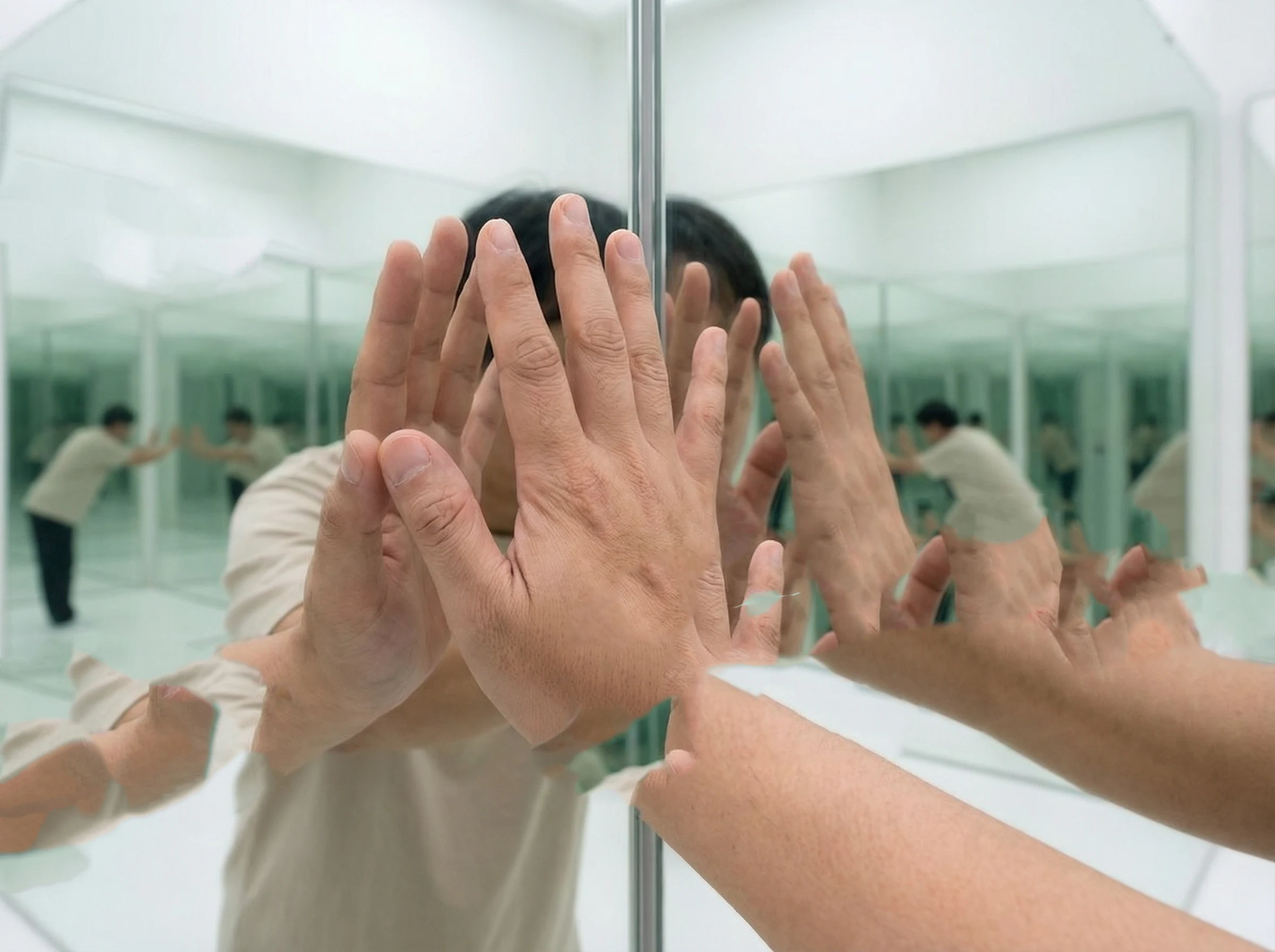
The Semantic Void
Semantic saturation manifests at the moment when a word or an image, subjected to constant hammering, loses its capacity to signify and becomes pure sound or pure form. If we repeat a term aloud a hundred times, it will eventually crumble, revealing its arbitrary and phonetic nature, detached from any reference to the real world.
This emptying is not a loss, but a liberation of the aesthetic object from the yoke of meaning, allowing it to exist as an autonomous and self-referential entity. In art and design, repetition pushed to excess performs a similar process, transforming content into pattern and message into rhythm. A logo repeated infinitely across a surface no longer communicates a brand’s identity but creates a texture, a visual atmosphere that transcends the logic of commerce. It is in this space of communicative aphasia that repetition reveals its deepest power: the ability to generate an aesthetic of the absolute, where the eye can finally rest on the surface without the obligation to dig for hidden meanings.
This phenomenon of abstraction through reiteration is also visible in the structures of minimalist music, where short melodic fragments are repeated with infinitesimal variations. Composers like Steve Reich or Philip Glass have shown that repetition is not monotony, but a way to alter the perception of time and space. Through insistence on the same, the listener is led into a state of waking trance, where every small deviation from the original model acquires dramatic, almost metaphysical importance. The beauty of repetition thus lies in its ability to neutralize the noise of interpretation. In a world obsessed with the need to explain and justify every aesthetic choice, repetition offers the refuge of a tautology: a thing is beautiful because it is that thing, and it is even more so because it continues to be it. This semantic emptying allows form to shine with its own light, no longer reflected by history or psychology, but emanated by its own phenomenal persistence. The collapse of meaning under the weight of replication is the final stage in the maturation of a taste.
When we no longer feel the need to ask what an image means, but simply enjoy its repeated presence, we have reached the pinnacle of aesthetic appreciation. The pneumatic void created by repetition is not a lack, but the threshold of a new visual fullness, where the image offers itself in its most radical nakedness, free from the duty to say anything other than itself.
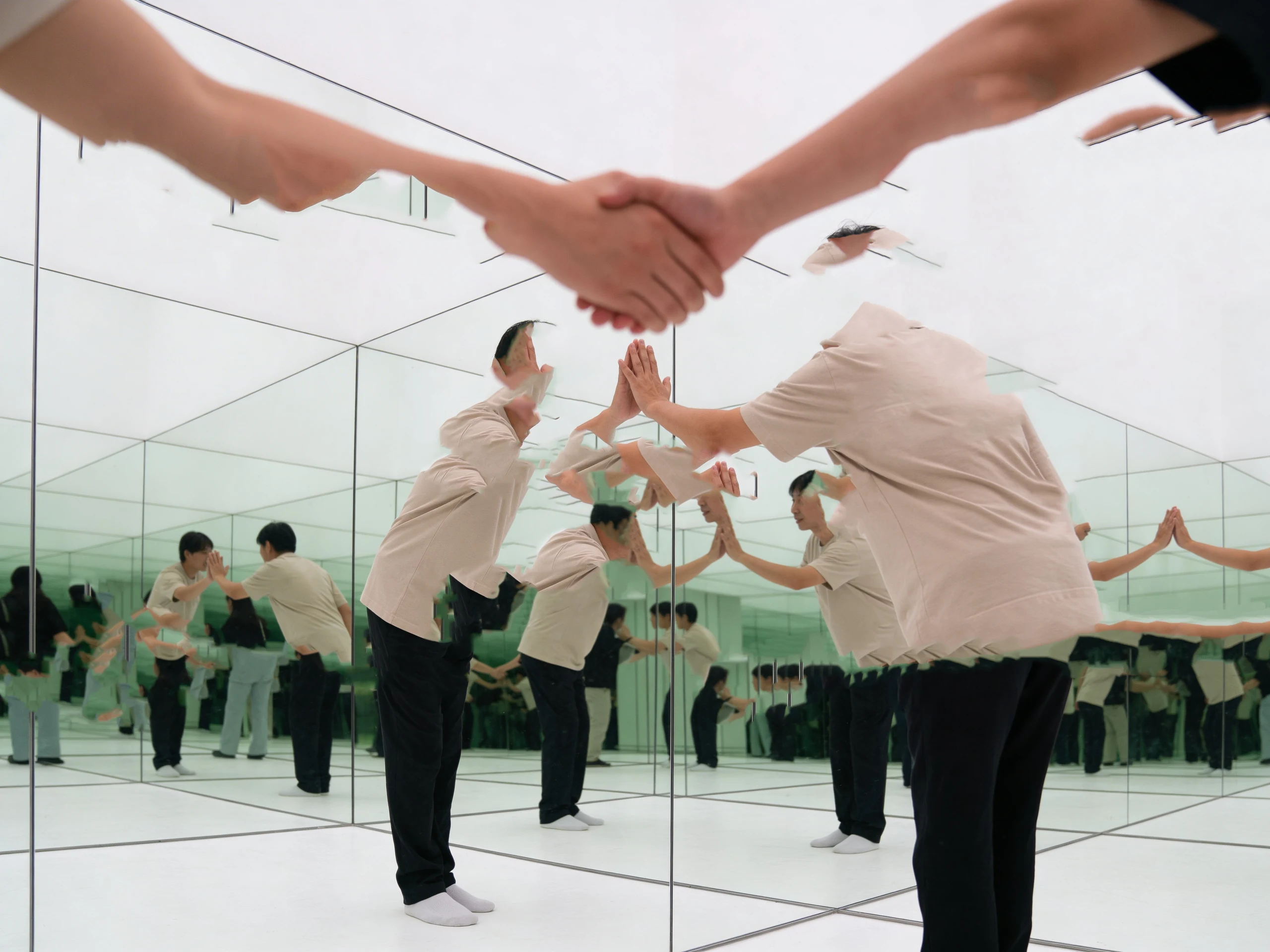
The Mechanics of Desire
The digital feed represents the supreme form of aesthetic claustrophobia, a system in which repetition has been engineered to optimize the retention of our attention. Algorithms do not merely reflect our tastes; they shape them through a forced diet of variants of the identical, creating a feedback loop that consolidates every trend until it becomes inevitable. The contemporary ‘core aesthetic’ is not an invention of creative geniuses, but the result of an algorithmic selection that rewards what has already been clicked, shared, and replicated. In this architecture of persistence, the concept of ‘trend’ has replaced that of ‘style,’ marking the transition from a historical vision of art to an instantaneous and recursive one. An aesthetic is born, spreads virally through thousands of nearly identical iterations, and dies the moment saturation prevents any further pleasure of recognition. But in that brief span of time, repetition has the power to transform a quirk or a mediocrity into an absolute canon, simply by occupying the totality of our visual attention.
The meme is the minimum unit of this new aesthetic of repetition, an image that lives and proliferates exclusively through its replication and variation. The strength of the meme lies not in its originality, but in its ability to be recognized in different contexts while maintaining a fixed structure that guarantees its legibility. It is the apotheosis of the power of repetition: a fragment of reality that becomes an icon not for artistic merit, but for its contagiousness—for its ability to generate infinite echoes in a digital resonance chamber. This dynamic has profoundly altered how we construct our aesthetic identity. We no longer seek to distinguish ourselves through singularity, but to position ourselves within a flow of repetitions that guarantees belonging to a community. To be ‘aesthetically correct’ means knowing how to master the codes of repetition, precisely replicating the poses, filters, and angles that the algorithm has already consecrated as worthy of attention.
The algorithm, ultimately, has removed the friction between desire and its satisfaction, eliminating the labor of search in favor of a reassuring tautology. We are immersed in an aesthetic of confirmation, where the unknown is systematically filtered out so as not to disturb the quiet of the already known. The algorithm does not simply select what we like; it inhabits our cognitive processes, training us to find beauty only in what presents itself with the mask of a face already met.
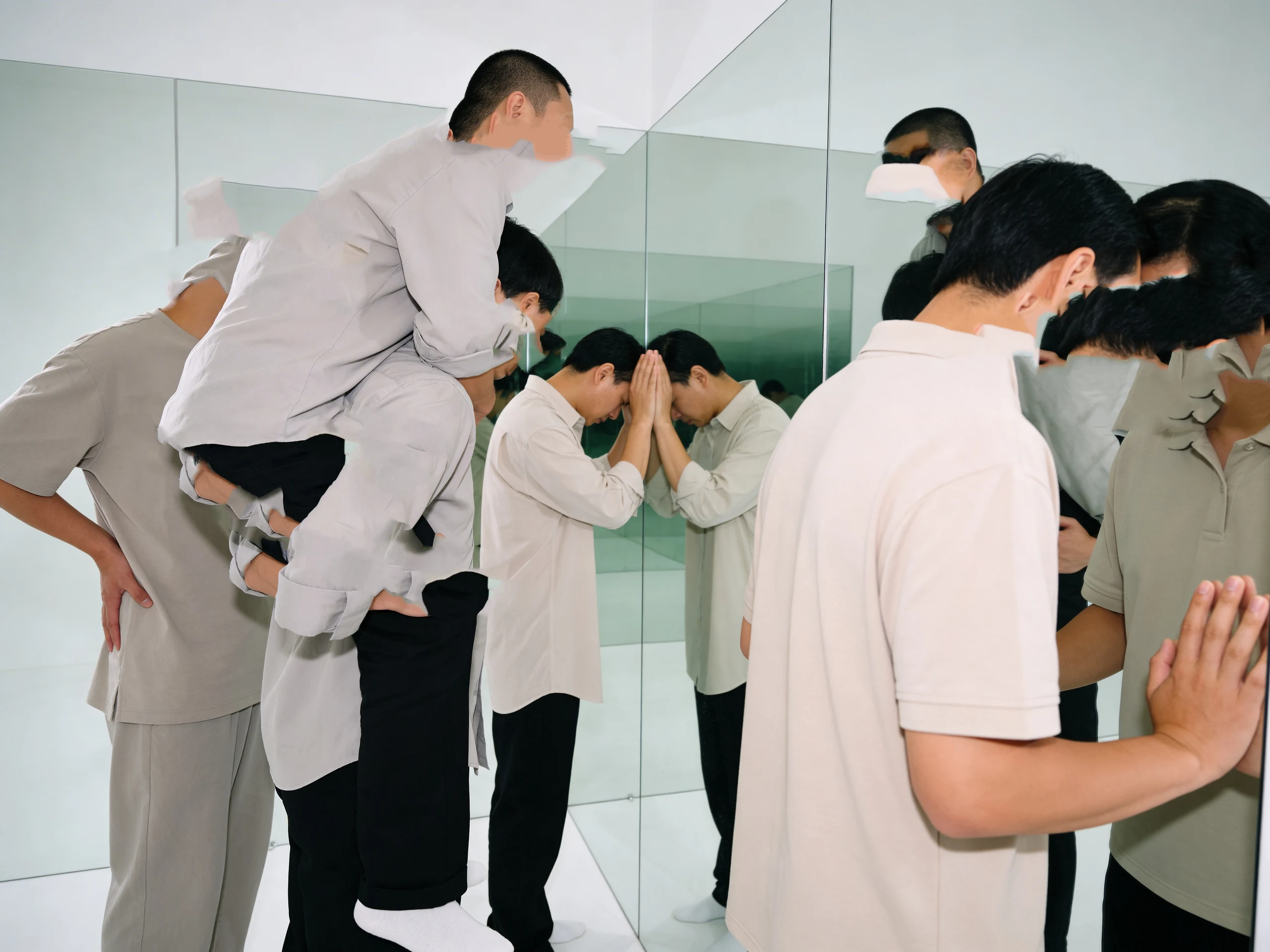
The Architecture of Ritual
The modern icon is an architecture of redundancies, a monument built not of stone, but of the frequency of the sign. In contemporary branding, repetition has replaced eloquence, based on the assumption that the consumer’s memory is a territory to be conquered through military occupation of the visual space.
A brand is not a promise of quality, but an insistence of presence; it does not have to convince the intellect, but must colonize the retina until it becomes an indistinguishable element of the natural landscape. This ritual logic is reflected in how luxury objects are produced and communicated. The ‘iconic’ bag or the ‘legendary’ watch does not derive its status from unreachable artisanal excellence, but from its immutability over time and its constant re-proposal in prestige contexts. Repetition serves to create a sense of permanence in a fluid world, an aesthetic anchor that offers the illusion of metaphysical stability through loyalty to a form that never changes. The architecture of ritual applied to taste transforms consumption into a form of liturgy, where the act of purchasing and displaying an object repeated thousands of times becomes a gesture of submission to a higher order. The logo is no longer a graphic sign, but a visual mantra that, through its omnipresence, acquires an almost magical power of value transmutation. What is common becomes precious not because it is rare, but because it is universally recognized—a rarity in reverse founded on the widest possible dissemination. In this scenario, the function of the designer or art director is not to invent new forms, but to manage the persistence of existing ones, ensuring that repetition never lapses into boredom but always remains in the zone of reassurance.
It is a job of icon maintenance, an exercise in semantic control that aims to preserve the authority of the sign through its impeccable replication. Variation, when it occurs, must be minimal and controlled, a subtle ripple on a surface of absolute identity. The brand, therefore, does not act as an identity, but as a heartbeat—a constant pulse signaling the vitality of an aesthetic system. Its strength lies not in its ability to amaze, but in its ability to endure, to return cyclically to the observer’s horizon with the certainty of an astronomical phenomenon. The icon is an empty container filled by the sheer frequency of its appearance, transforming repetition into the ultimate foundation of contemporary sacredness.
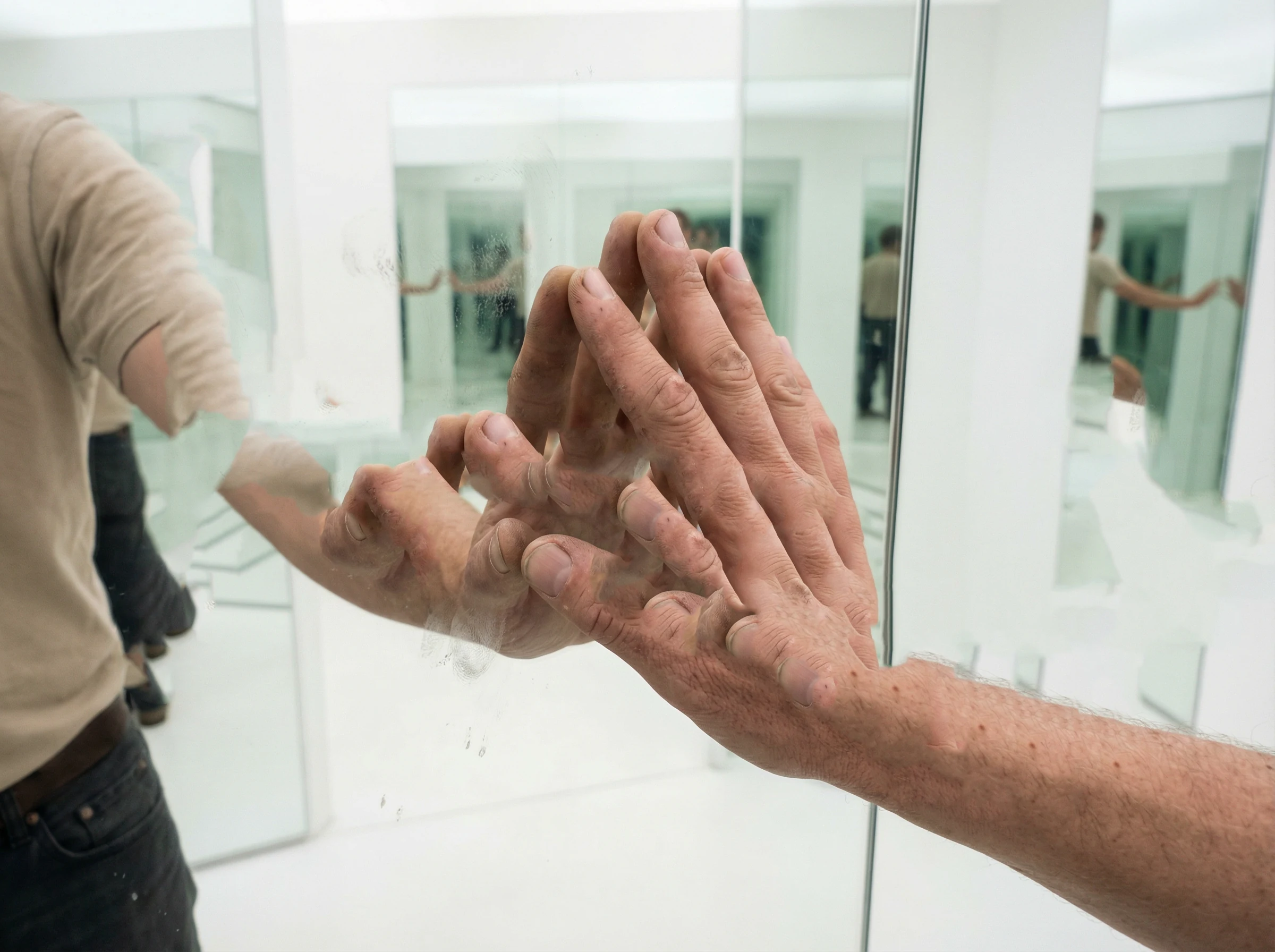
The Ecstasy of the Identical
One could argue that repetition is, in truth, a small death of the original, but it is also the only path to its resurrection in a form that knows no decay.
The philosophy of Gilles Deleuze taught us that repetition is never the reproduction of the same, but the production of difference through iteration; however, in the aesthetics of consolidated taste, we seek exactly the opposite: the annulment of difference in favor of an immobile identity.
We return to the identical not because we lack imagination, but because repetition is the only tool we possess to exorcise the terror of linear time. The aesthetics of repetition offers us the illusion of an eternal present, a world where forms do not age because they are constantly re-proposed in their artificial youth. The joy we feel in finding a familiar module, a known color palette, or a predefined narrative structure is the joy of one who feels safe from chaos. Repetition transforms history into a series of reassuring cycles, where the end is never final because it is only the prelude to a new beginning identical to the previous one. In this search for the ecstasy of the identical, the individual disappears to make room for a collective consciousness that feeds on shared symbols.
Beauty is no longer a solitary experience of discovery, but an act of social recognition, a celebration of ‘us’ through the sharing of the same visual archive. Repetition is the glue that holds consumer society together, offering a common language that requires no translation because it has been learned through constant and passive exposure. But there is a limit beyond which repetition ceases to be comfort and becomes sublime transcendence, a point where redundancy becomes so extreme that it annihilates the observer’s subjectivity. In that total saturation, where every inch of reality is covered by the replication of the sign, man finds himself before a new form of nature: an artificial nature, made of codes and patterns, possessing the same fearsome majesty as a forest or an ocean. Repetition has won, transforming the world into a museum of itself.
Our obsession with the ‘beautiful because repeated’ finally reveals our profound fatigue regarding the duty to be original. In an era that imposes creativity upon us as an economic imperative, the return to the identical is the only true form of silent resistance. We unconsciously seek repetition to escape the anguish of choice, to inhabit a beauty that asks nothing of us except to be recognized, an immobile ecstasy that protects us from the abyss of a future that resembles nothing we know.