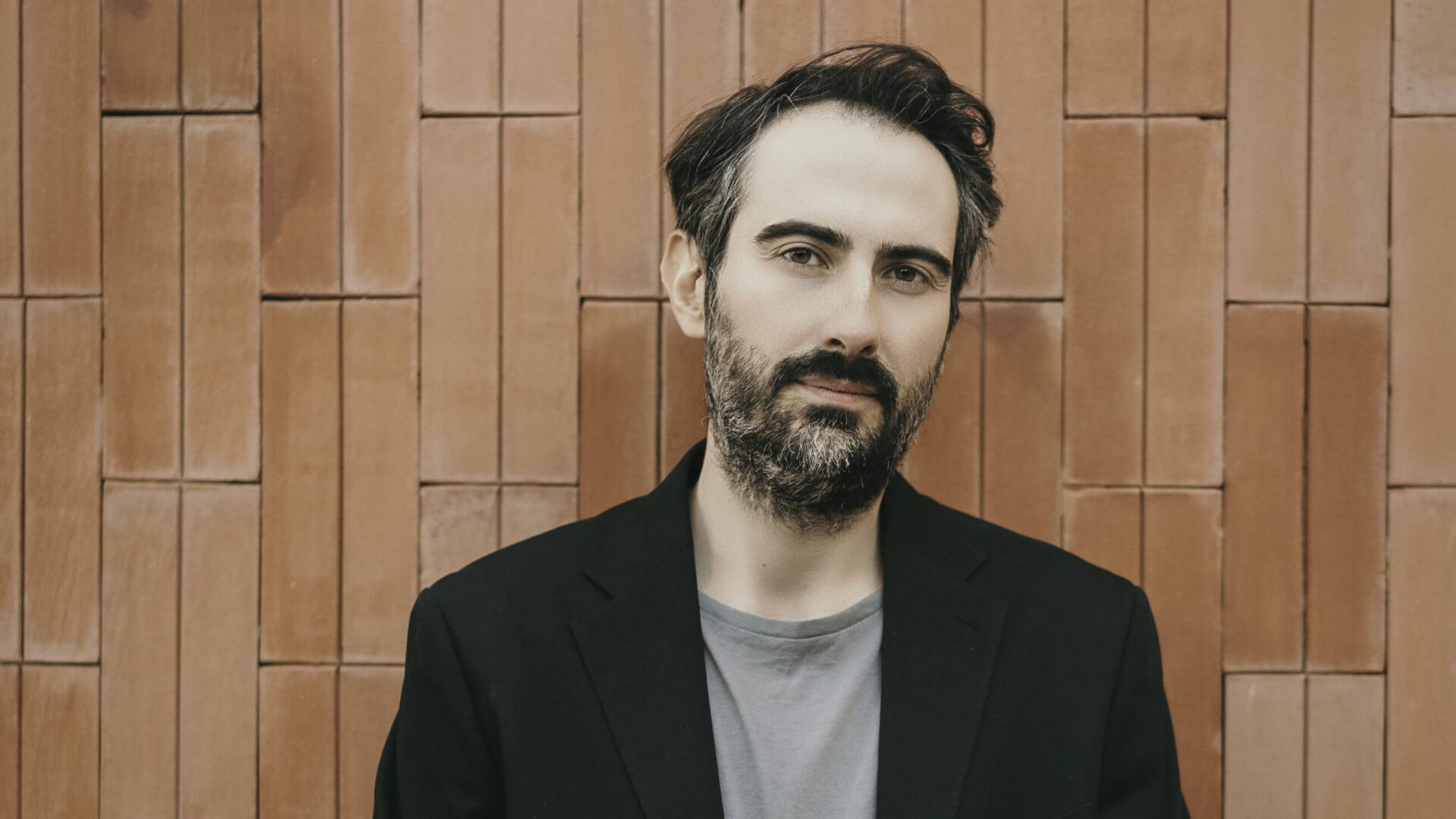
Greg Jager’s work moves across territories, media, and languages with a radical and open approach. Blending public art, installation, performance, publishing, and site-specific intervention, his projects often inhabit ruins, marginal landscapes, or post-industrial spaces and digital errors to open critical reflections on environmental, social, and symbolic dynamics. For FakeWhale, we had the opportunity to delve into his practice, tracing the evolution of his process, the recurring concepts in his work, and his visions for imagining alternative futures.
Fakewhale: How did your artistic journey begin? What were the early influences or environments that led you toward working in the arts?
Greg Jager: My creative path took shape in the early-2000s subcultures of Rome, where I moved from Calabria to study design. I was drawn to marginal places, outside the city’s normative rhythm. At night I entered subway tunnels to write my name on parked trains. It wasn’t just graffiti writing; it was a descent into the city’s unconscious, its raw, dysfunctional side. In that darkness the body crossed thresholds, oscillating between fear and wonder.
I was also immersed in the sonic and visual scenes around social centers and squats, spaces where sound, images, and bodies merged into collective experiences. That’s where I began to see creativity as abrasive, unsettling, and shared. Over time, graphic design became a personal language, gradually merging with installation, performance, and sound. The common thread has always been the same: confronting the contradictions of the world and the ruins capitalism leaves behind. Each work is a space where body and thought can explore deviation.

Collaboration seems to play a recurring role in your projects, whether with curators, performers, or the public. What does the collective dimension mean to you in the context of your creative process?
You’ve touched on a central aspect of my work, and I’d like to respond through a keyword: responsibility. It’s not only ethical, but deeply political, and something I continuously reflect on with collaborators, curators, performers, and artists. What role does an artistic device assume when presented to the public? What responsibility do the artist, curator, and audience share?
The collective dimension comes from the desire to challenge the unilateral relationship between artist and audience. It’s not about producing and observing, but about creating a space where everyone participates in a shared experience or potential change. Sympoiesis, the practice of co-creation that traverses human and non-human intelligences, bodies, materials, sounds, and artificial intelligences, is central. Engaging with these forms allows me to generate outcomes I could never create alone and to navigate the tension between intention and unpredictability.
Your research touches on themes like opacity, transformation, abandonment, ecology, and a critique of anthropocentrism. Which of these ideas feels most urgent to you today, and why?
I believe all these issues are urgent and deeply interconnected in our time. We are living through the bottleneck of late capitalism, where social and environmental struggles have been quickly absorbed into mainstream power and neoliberal ideology. As Mark Fisher observed, we are trapped within capitalist realism, the illusion that ‘there is no alternative.’ Within this context, digital repressive systems, pervasive surveillance, and data manipulation intensify the situation. Social networks and artificial intelligences don’t provide neutral facts; they construct algorithmic experiences in which public perception is shaped more than ever before, far beyond what television or print media could achieve. We live in the era of post-truth: media operate as instruments of control, and truth, designed in advance, becomes viral, memetic, and ultimately absorbed as “normal”. It’s a deeply unsettling landscape, where the everyday feels like a horror movie in which we are unaware protagonists.
So the question I ask is: how can we hack dangerously normative and bright systems?
My aim lies here: to generate conditions of opacity in which artistic practice can interfere with reality, question the very idea of normality, and temporarily suspend it.

You work with a wide variety of materials, stone, concrete, glass, sound, light, and reclaimed elements from abandoned spaces and digital environments. How do you choose the materials for a given work, and what role do they play in shaping meaning?
I never confine myself to a single technique or medium. I prefer that the materials chosen for an installation are capable of conveying emotion and physical sensation, while at the same time being intimately connected to the site where the work takes shape.
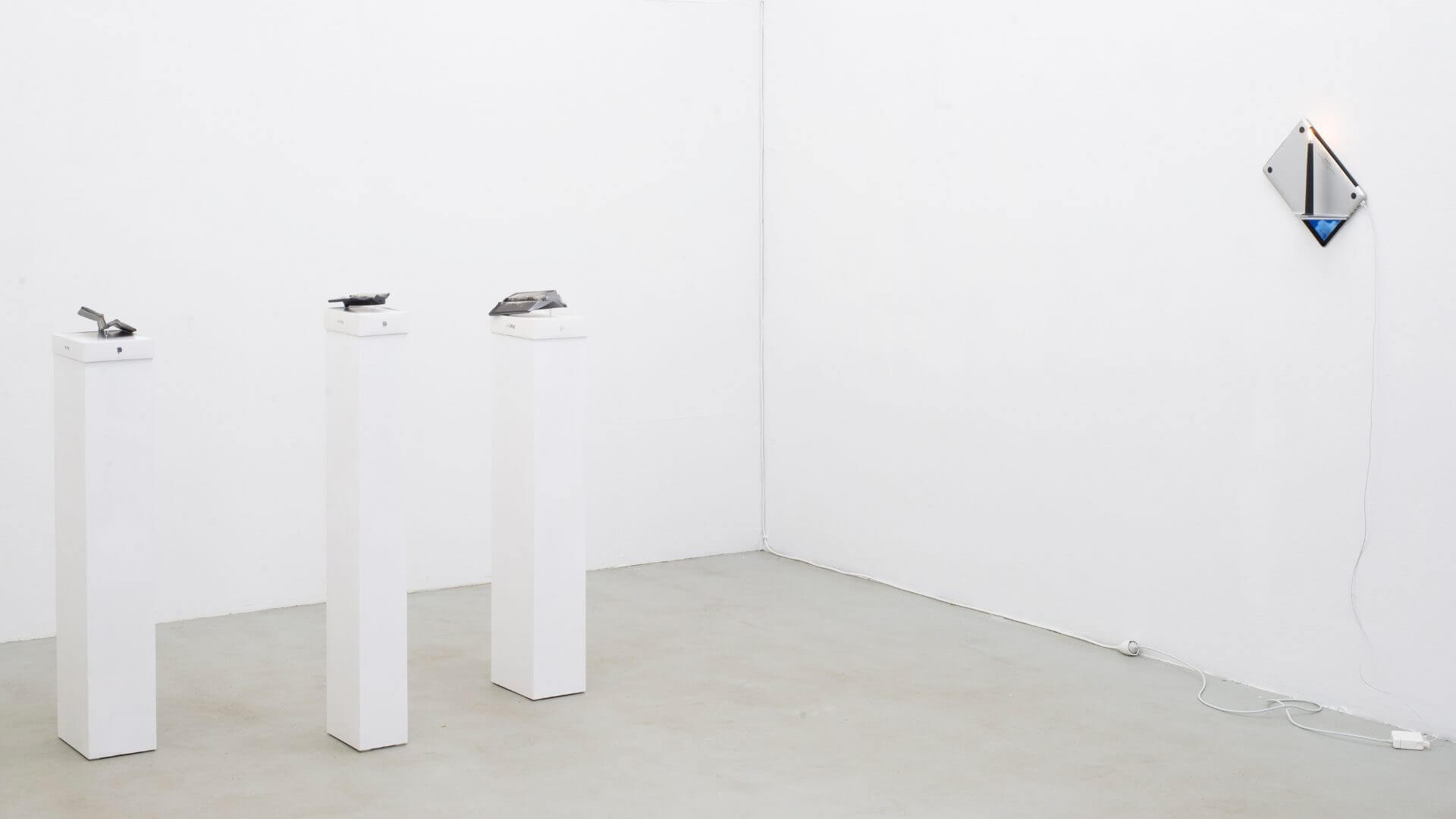
All the materials I work with, whether stone blocks, ice, digital devices, or sound and images, carry a rough, lo-fi texture; they speak of erosion, decay, and ongoing transformation. The objects and materials I choose are often ordinary or even banal, yet within the narrative of each project they acquire a profoundly alien meaning.
The interplay between materials and site becomes a device to explore meanings: the physical and perceptual qualities of the materials themselves guide the experience and suggest unexpected trajectories. In this sense, the choice of materials is not dictated by technique, but by their ability to sustain and amplify the concepts I aim to explore, turning the installation into a continuously evolving organism.
In projects like “Ballad of the End” and “Nigredo” and “Out of Focus”, audiences are invited to physically engage with the work, often in immersive or multisensory environments. What kind of experience or awareness are you hoping to activate in participants?
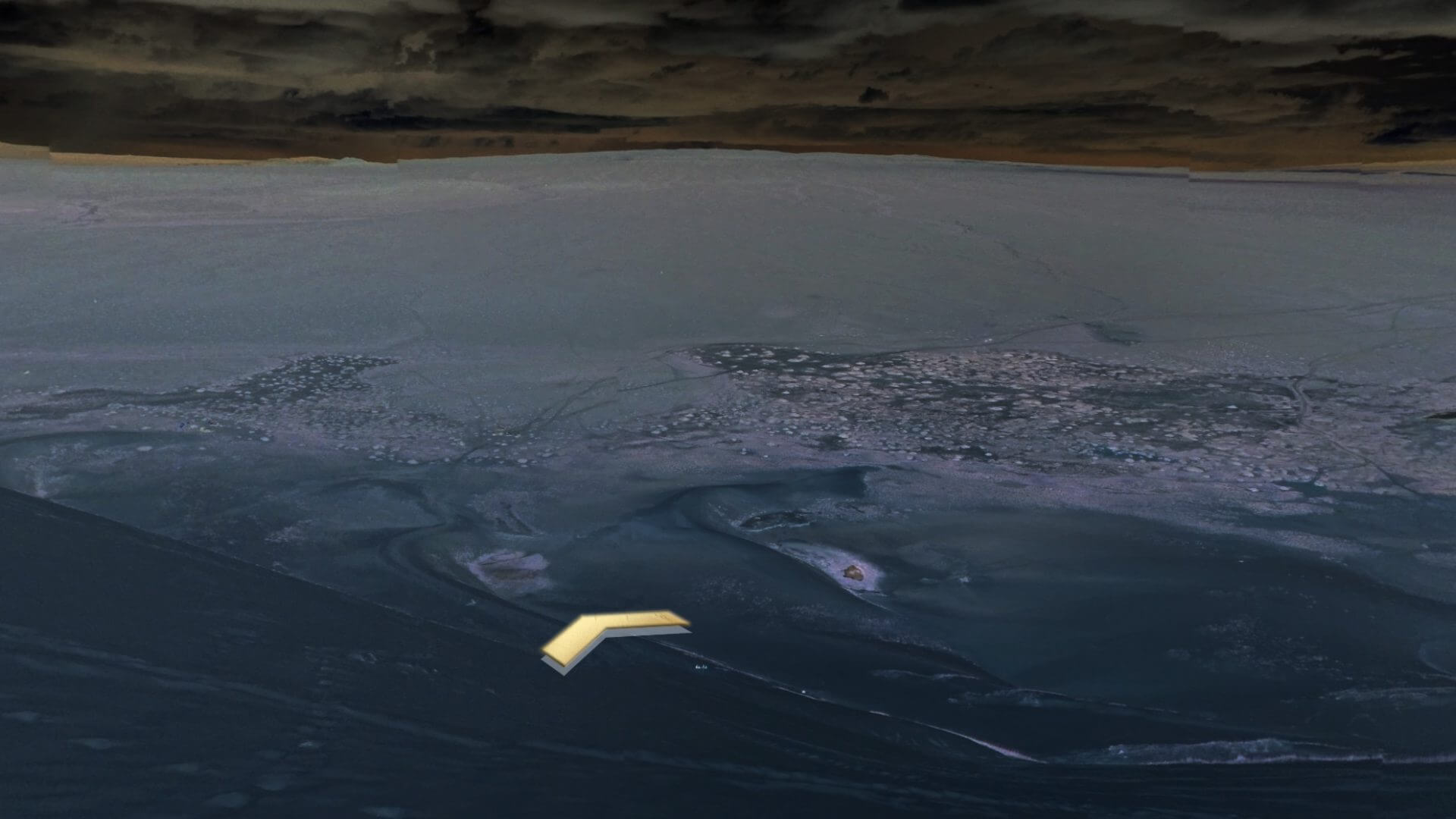
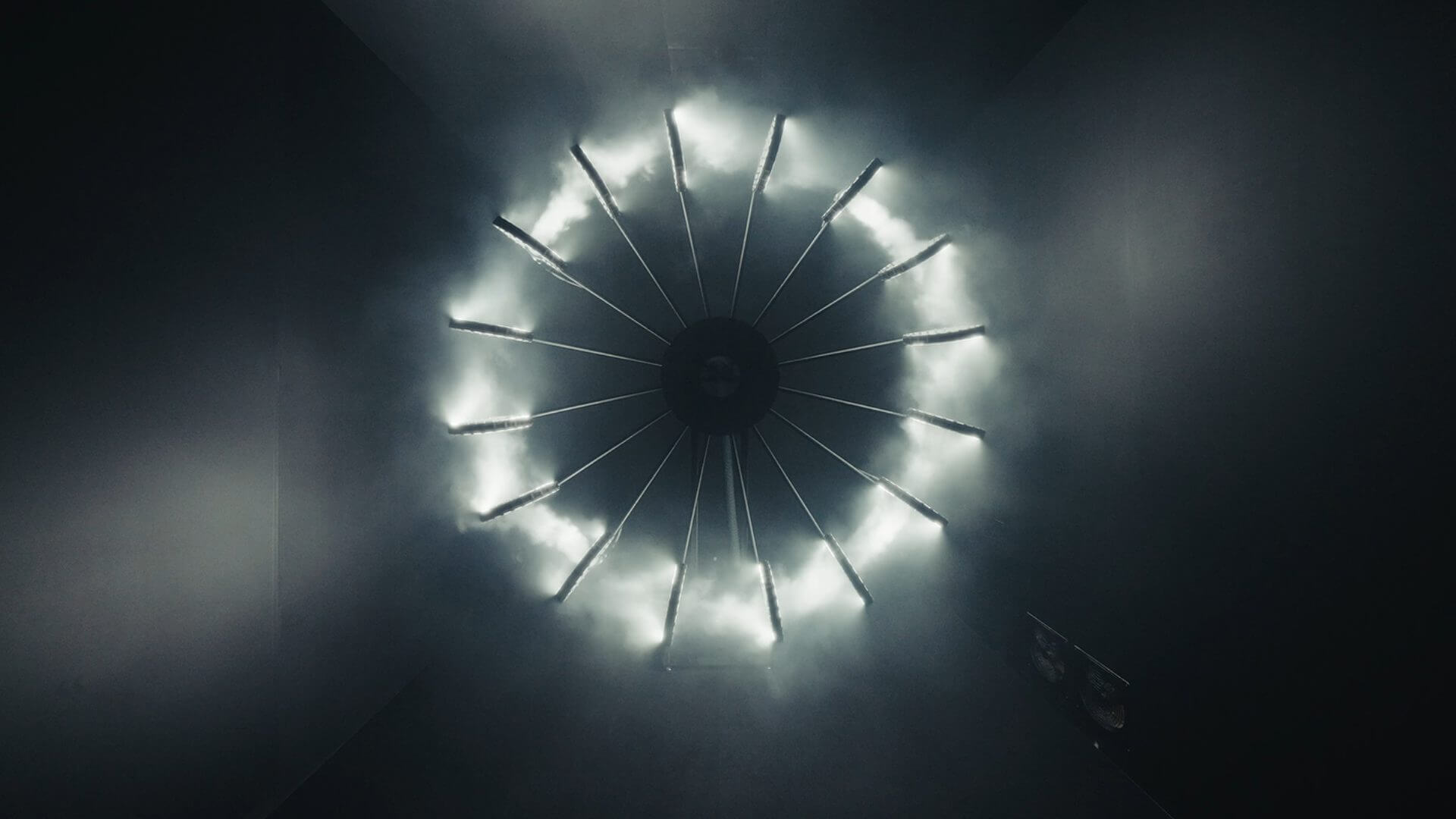
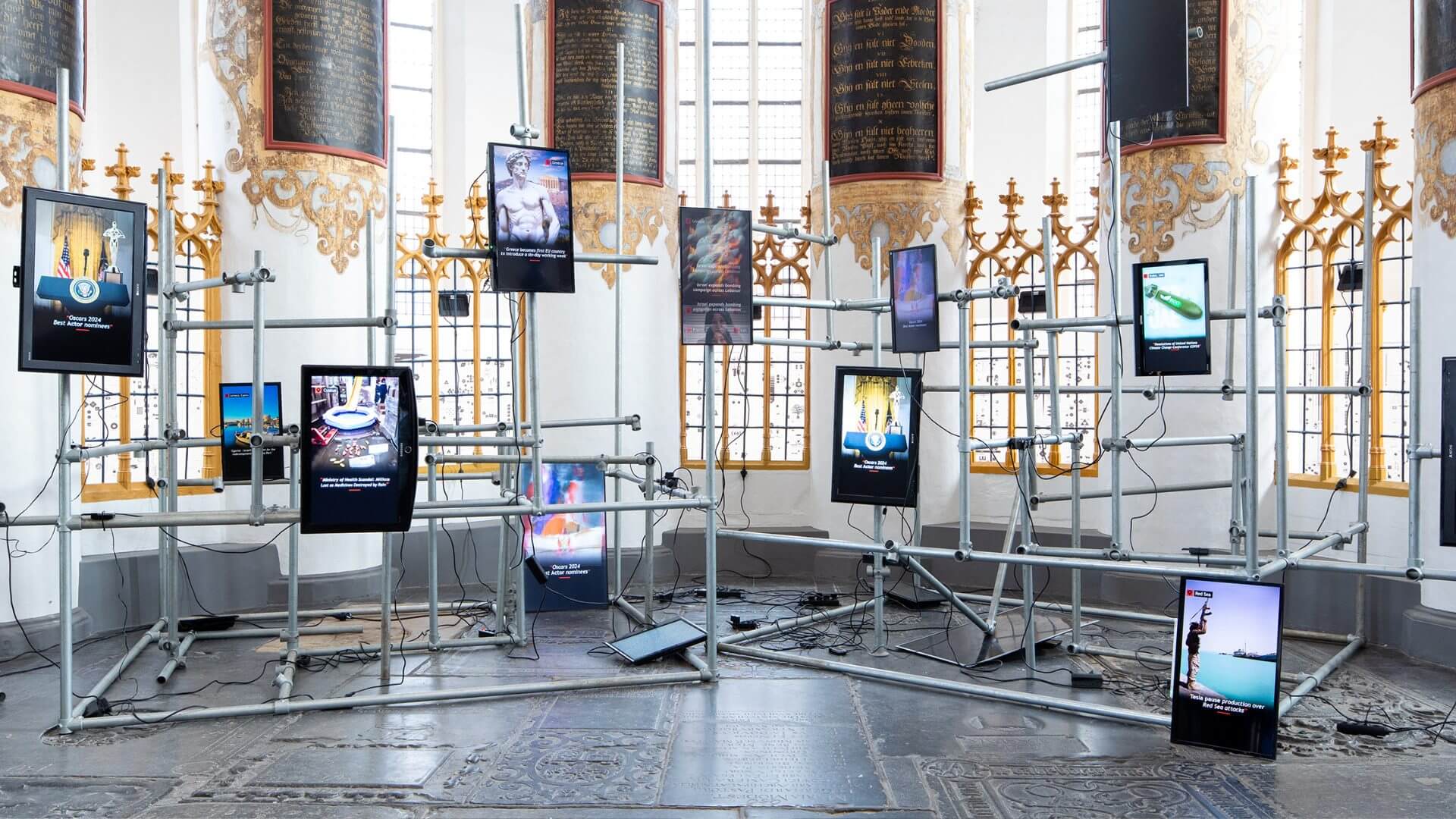
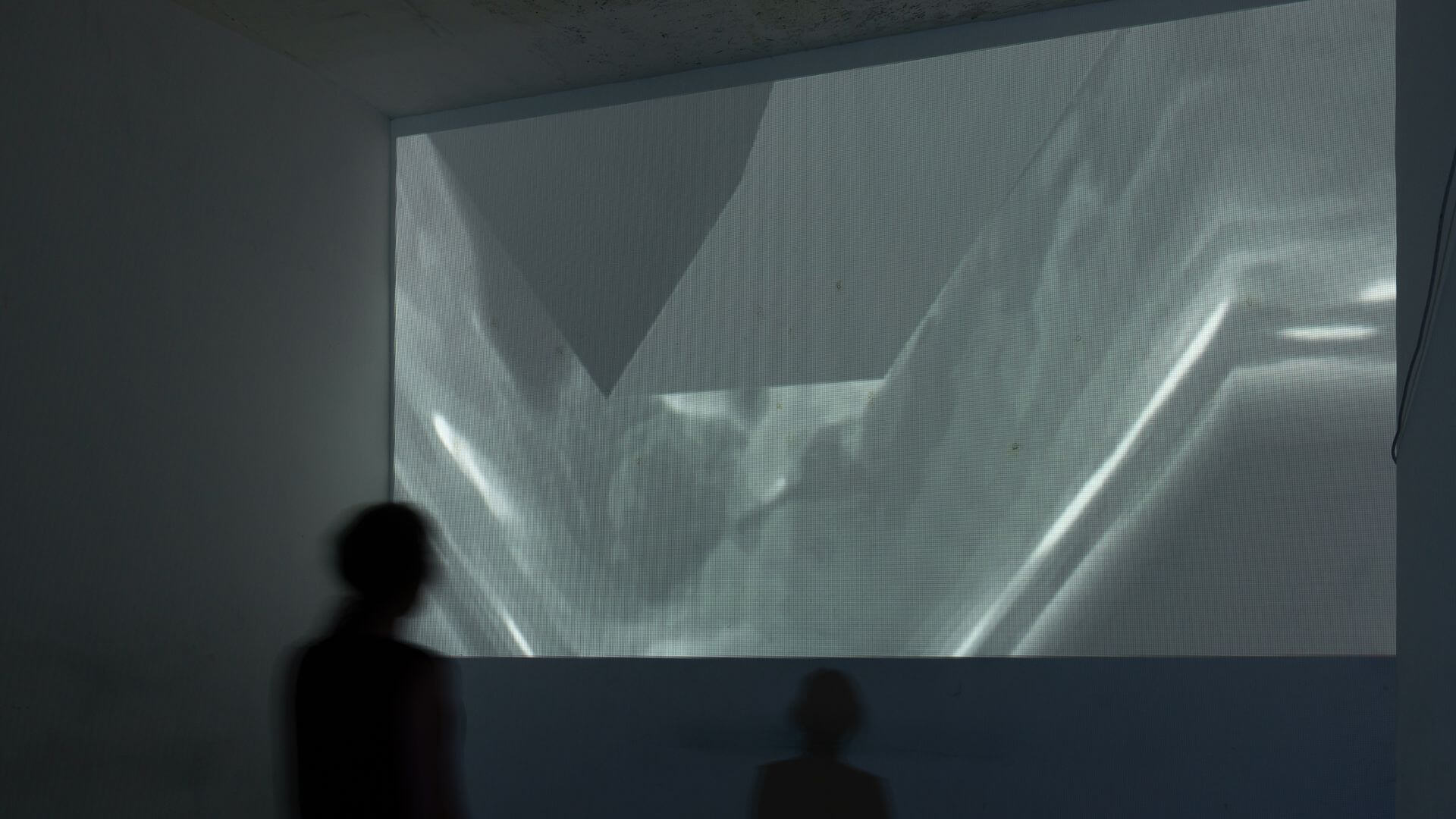
Well, in works like Ballad of the End, presented at the Galleria d’Arte Moderna in Rome in collaboration with Jordi Pallarés and Dito Publishing and later at Fondazione Rusconi in Bologna with Hidden Garage during 2022/23, Nigredo, curated by Miniera, the curatorial duo Giuseppe Armogida and Marco Folco, in 2023, and Out of Focus, a large-scale project presented during Divago Festival in Genoa in 2024, the audience does not passively observe. They are invited to become part of the projects. Physical engagement,moving, touching, interacting with materials, navigating dark tunnels, or moving through lights and sounds — activates an awareness of process, impermanence, and interdependence. Stone blocks, melting ice, liminal zones, blurred images, and immersive environments have their own rhythms, resistances, and temporalities, unfolding subtle, spontaneous, and dynamic interactions.
This physical and perceptual engagement becomes an exercise in unlearning — a way to challenge normative modes of seeing and inhabiting the world, and to rehearse alternative forms of coexistence.
My aim is to create spaces of conscious divergence, where the usual linearity of perception is interrupted, and action intertwines with a politics of attention and care. Often, the audience navigates unusual environments: walking in darkness, passing through tunnels, or experiencing spaces immersed in fog or fragmented light. Rewriting the rules of a space and ignoring established social norms puts the mind in a state of openness, allowing the possibility to explore a living laboratory of co-presence, where materials, bodies, and perceptions weave together into a shared field of transformation.
The idea of the “trace”, whether as a physical mark, memory, or gesture , runs through much of your practice. What does it mean to you to leave or collect traces?
Traces runs through much of my work in many different ways.
It’s not just a mark or residue: it is a political and poetic act, an affirmation of presence, and a living language that continues to speak after the gesture has ended.
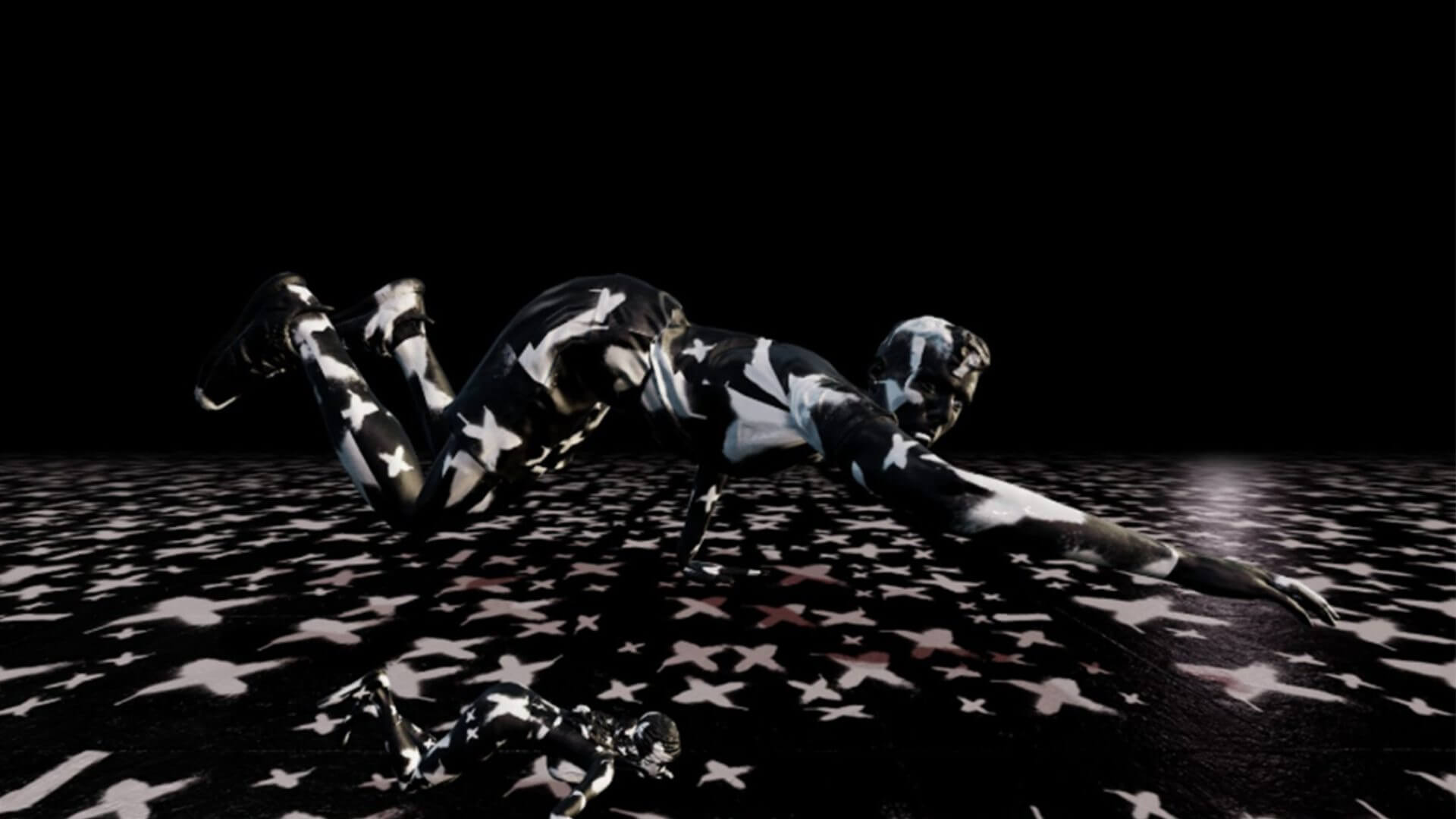
I’m fascinated by spontaneous marks in public space or bugs in digital devices: manifestations of error, what escapes pre-established rules. This is my creative territory, where the system falters and new possibilities for perception and thought emerge.
Traces require the audience to reconstruct meaning. Materials, bodies, and environments produce autonomous signs that become language and knowledge.
In works like Grounded, there’s a strong interplay between the human and the non-human. How do you imagine new forms of coexistence or collaboration across these boundaries?
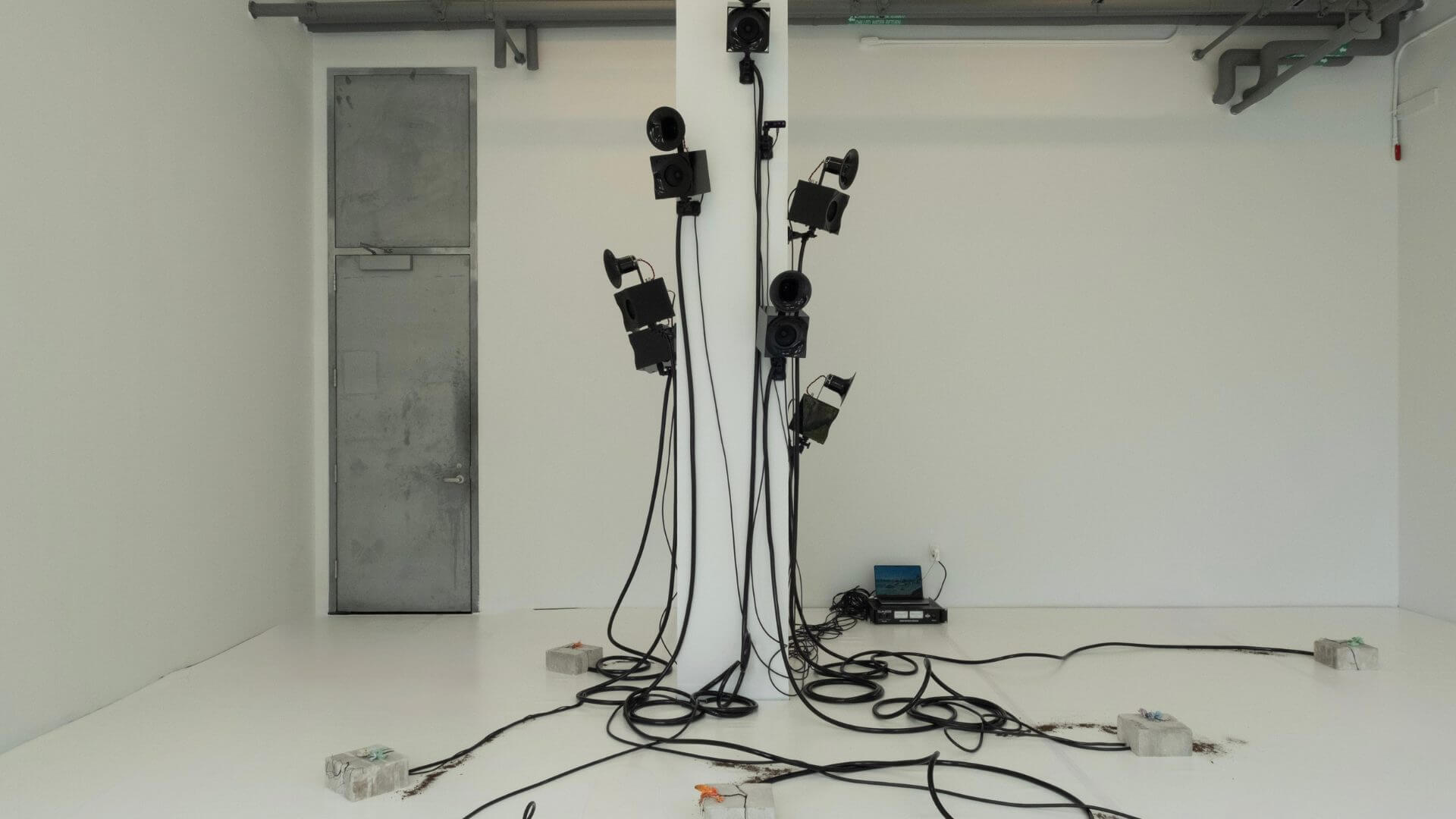
Grounded is a participatory project realized in Veio Park, near Rome, in which I invited a group of people to explore the Mesopotamian myth “The Descent of Ishtar into the Underworld” through a simple gesture: digging into the earth with their hands. The furrows traced were then filled with cement, extracted after about a month, thus transforming an ephemeral action into a spontaneous sculptural trace.
This gesture confronted us with a paradox: humans have colonized nature, making it functional to the machine of consumption, yet that same nature determines us, contains us, and precedes us. Coexistence between the human and the non-human has always been in place, but humans have drawn a clear boundary between two worlds — natural and artificial — which, in fact, are one and the same.
Grounded therefore proposes a form of coexistence between humans and nature: exploring the subsurface in a tactile way, coming into contact with its porosity and resistance generates a shared experience in which the concept of responsibility becomes central. Artistic practice becomes a bridge between the human and the non-human, transforming participation into a laboratory of co-presence and new forms of relationship. The sculptural casts represent the outcome of this negotiation.

How does your approach shift when working in an unconventional spaces as opposed to an exhibit context?
In both cases it’s a nice challenge.
Unconventional scares are already charged with history, traversed by a sedimentation of events and presences. I am interested in engaging with this layering and incorporating it into the project, letting the memory of the place become part of the narrative. In Dismantle I worked in an abandoned factory, in Nigredo inside underground tunnels, and in Out of Focus in a church: different spaces, yet united by a physicality that interacts in a unique way with sound. The acoustics of each place have their own identity and profoundly shape the perception of the work, transforming the site itself into part of the artwork.
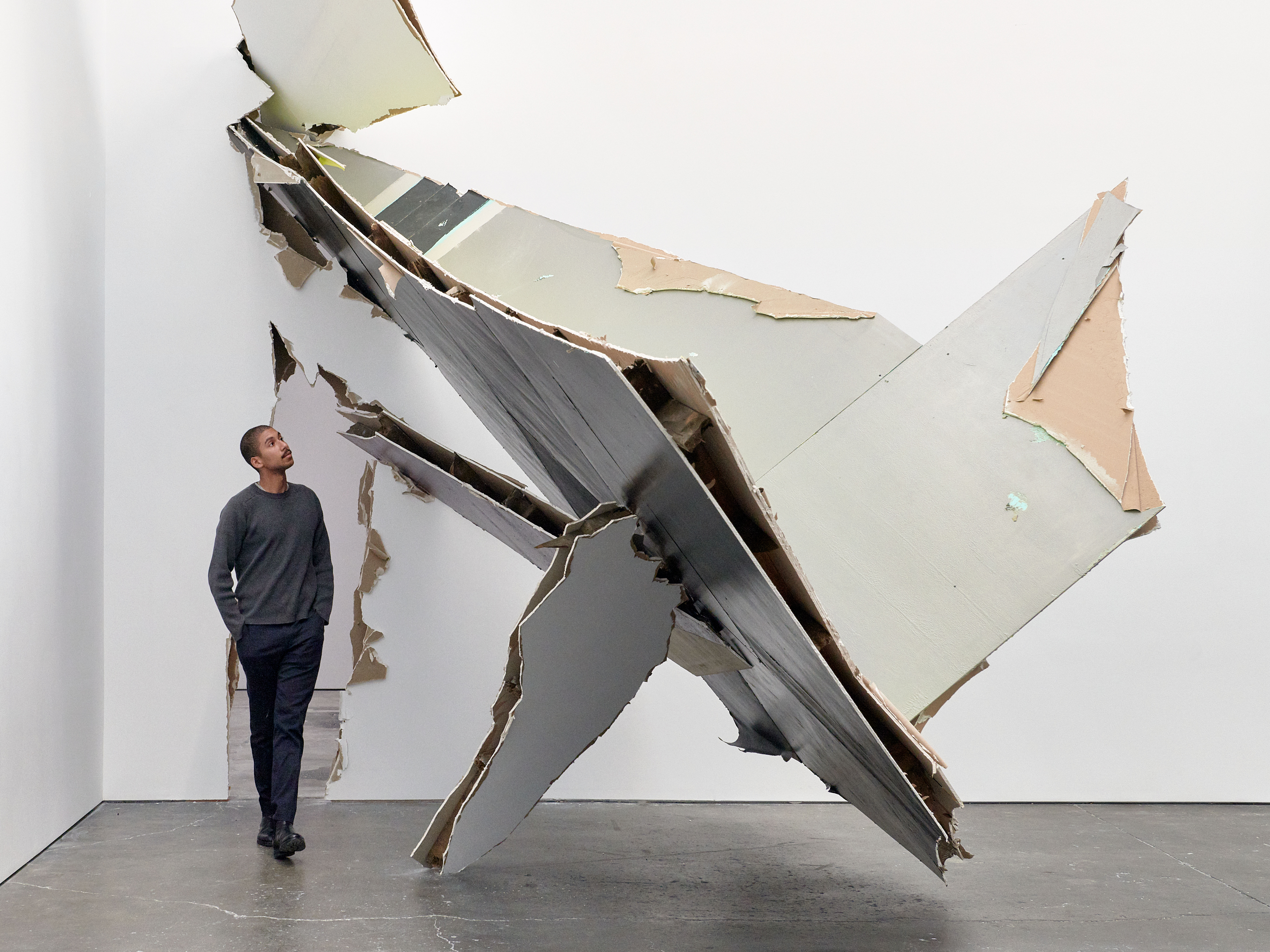
Inside a white cube, however, the rules change: it is a neutral space, built for visibility. In Uncharted Zone I chose to deconstruct the exhibition function, working through subtraction. I created an installation that removes rather than adds: low but precisely calibrated lights, almost empty walls, subtle and barely perceptible interventions. I wanted the audience to experience a sense of suspension and perceptual disorientation, as if the space itself had stopped functioning in its usual way.
Artist books, frottage, and editorial formats often appear as part of your projects. How do you relate to the act of documenting or translating ephemeral experiences into printed or archival forms?
For me, documentation is never neutral or secondary: it is a further extension of the project, a way to keep the experience alive beyond the time and space in which it took place. Zines, frottages, and editorial editions become tools to record marks, transformations, and ephemeral materials, while also allowing for their reinterpretation, turning the act of documenting into an autonomous creative gesture.
Entrusting an editorial volume to the audience means, once again, give responsibility. Paper is architecture, and flipping through the pages of a publication can become a performative gesture. For Ballad of the End, I produced a zine with Dito Publishing, and the basic idea was not to bind the pages and to give the signatures in different sizes, proportionate to the bricks I used in the installation. The reader of the editorial project thus has the possibility to manipulate the paper, change the order of the pages, and create his own narrative.
hat are you currently working on, and what themes or directions do you feel drawn to explore in the near future?
I prefer to leave the future a bit open, as it’s always unpredictable and I don’t like to plan too rigidly. I have new ideas and the intention to expand existing projects, allowing them to circulate in international festivals and platforms. In any case, I will continue to feed my curiosity in a way that is obsessive, exploratory, and resistant to repetition.