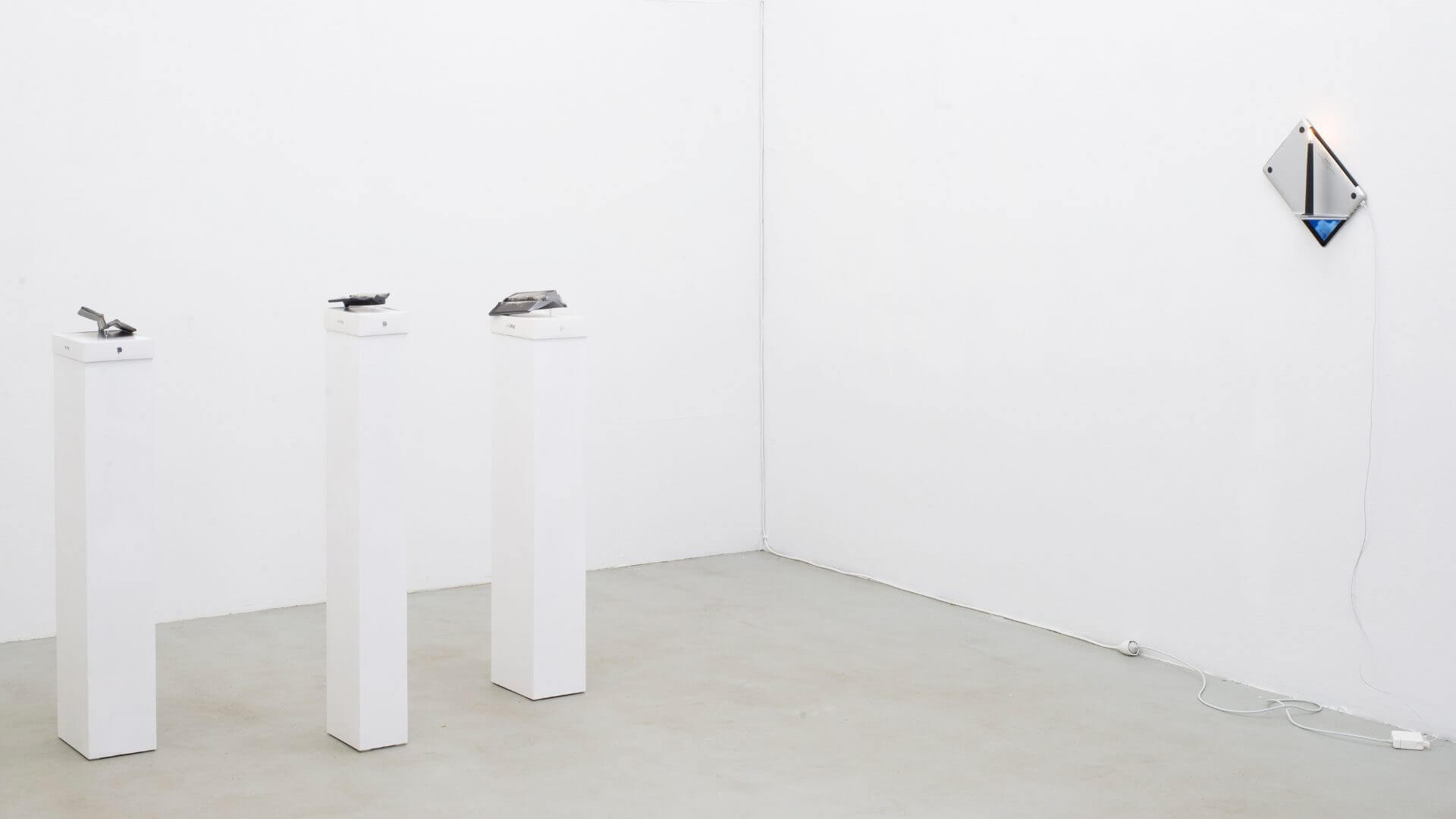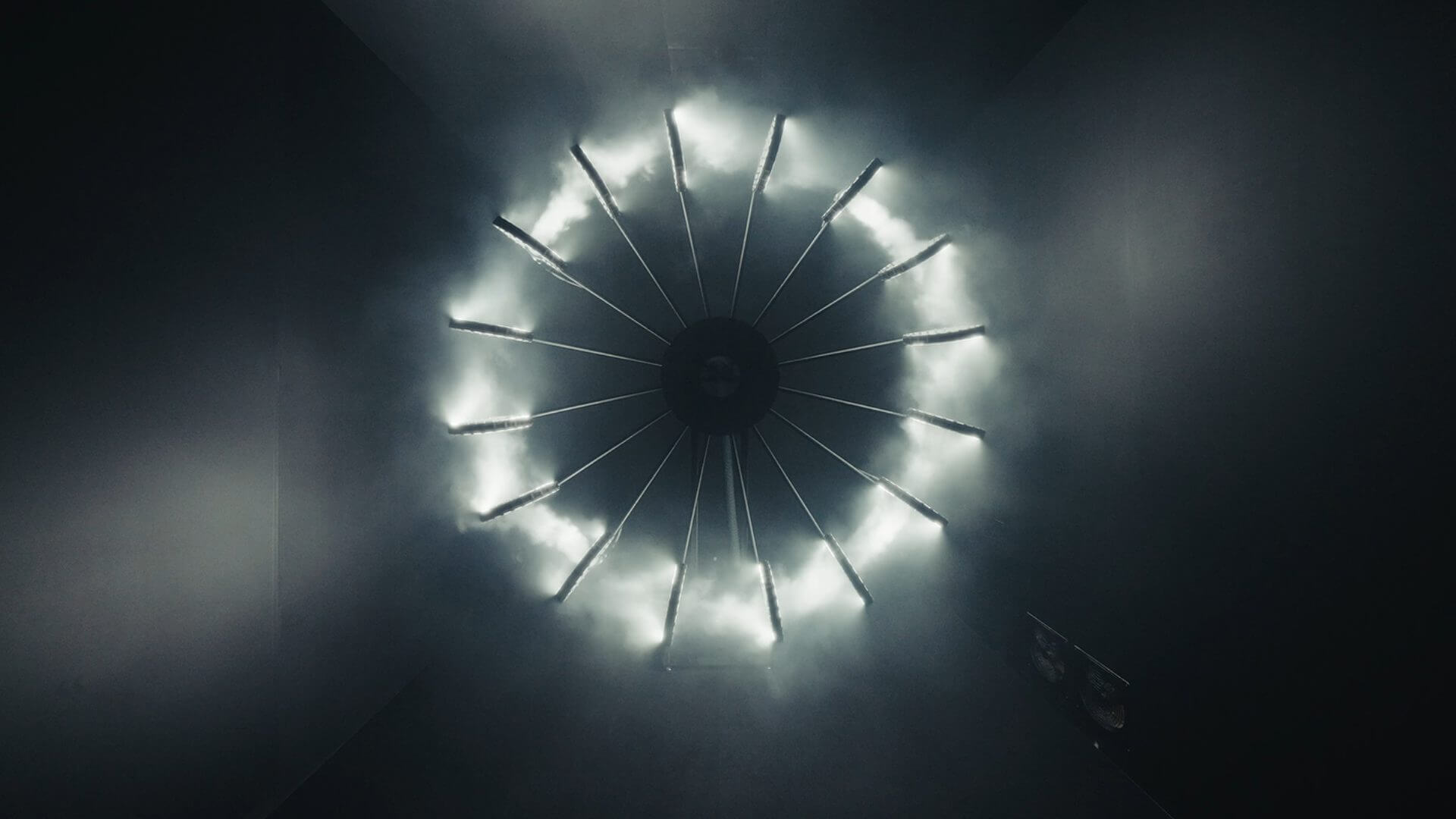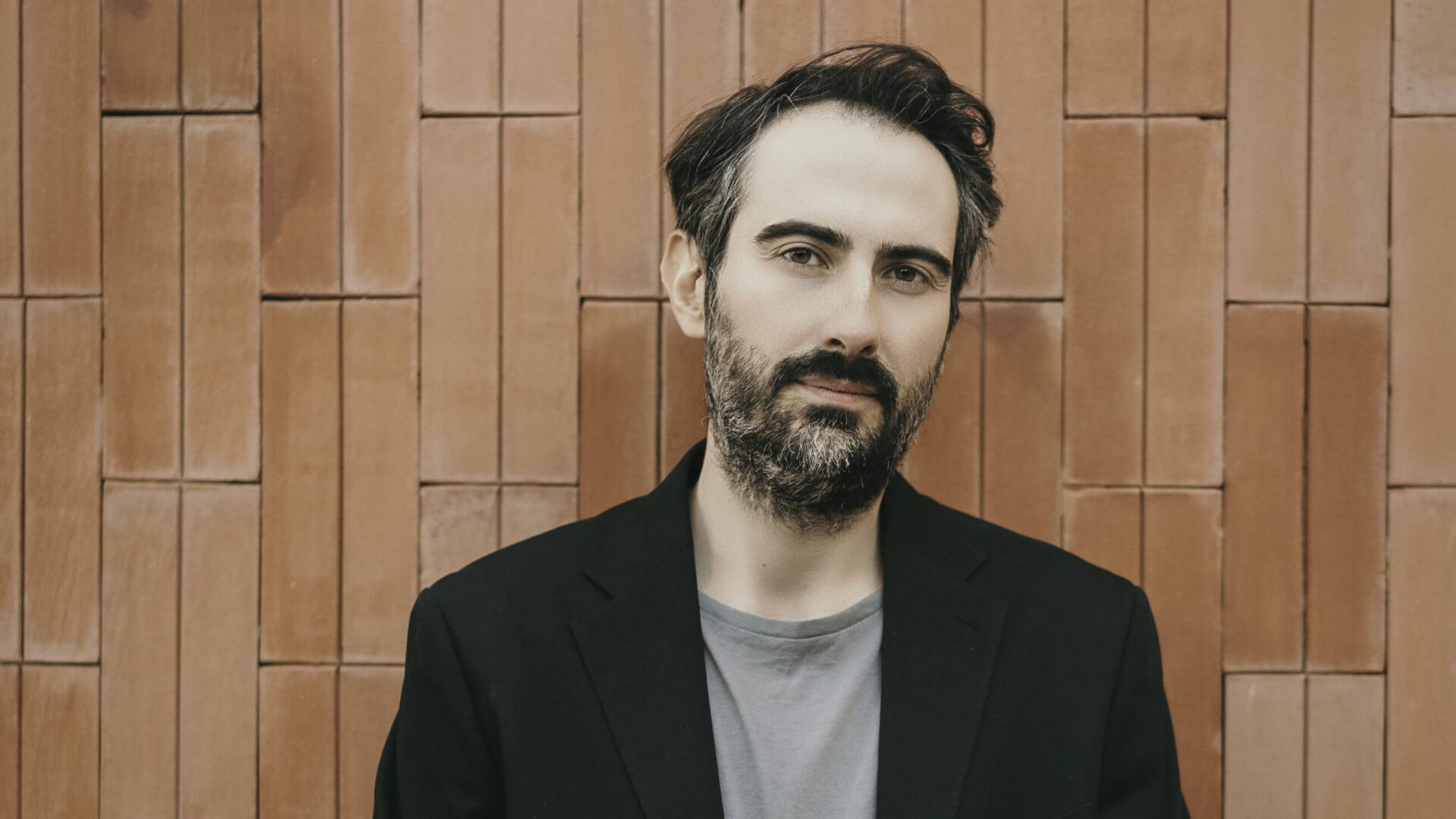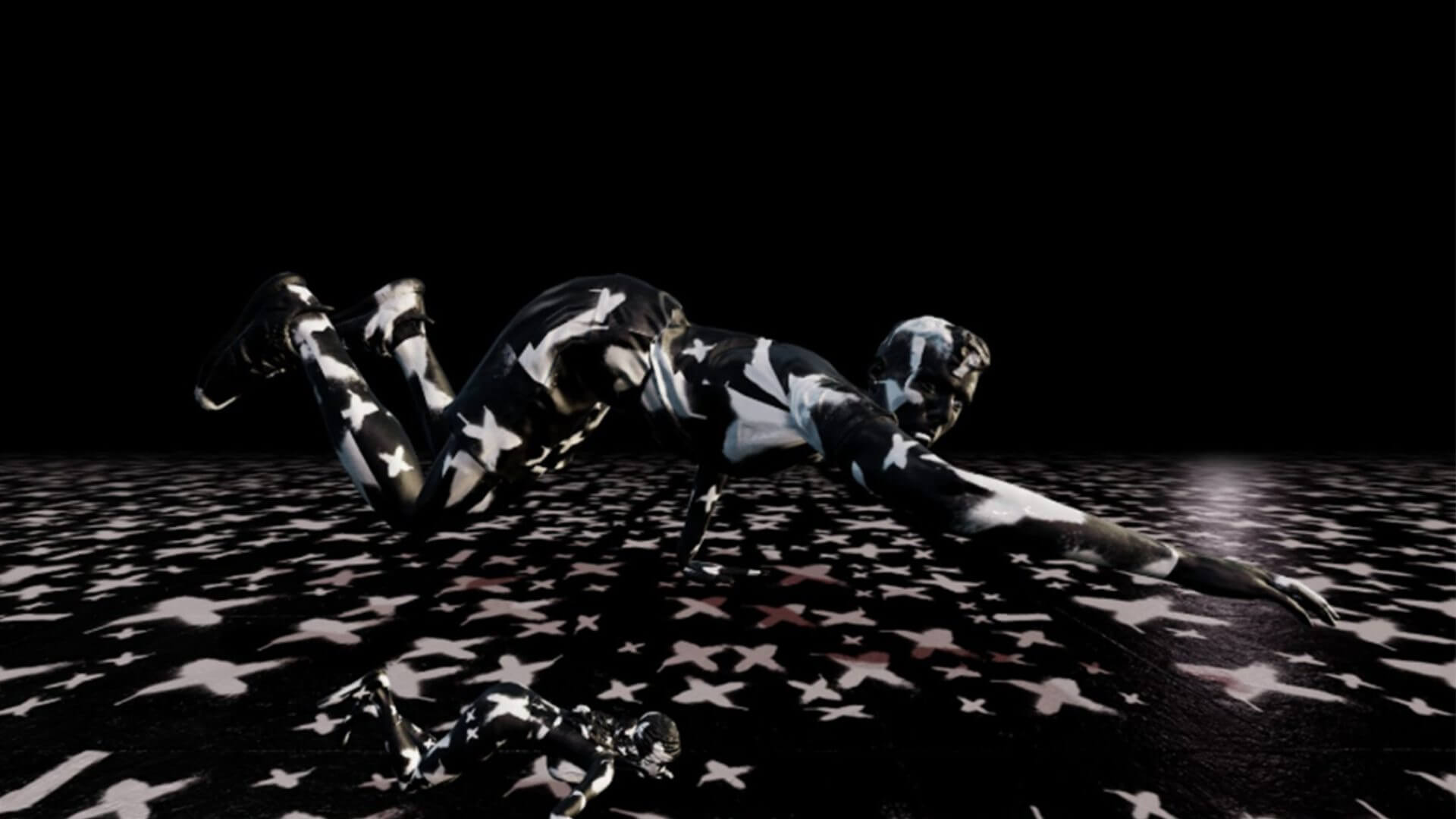
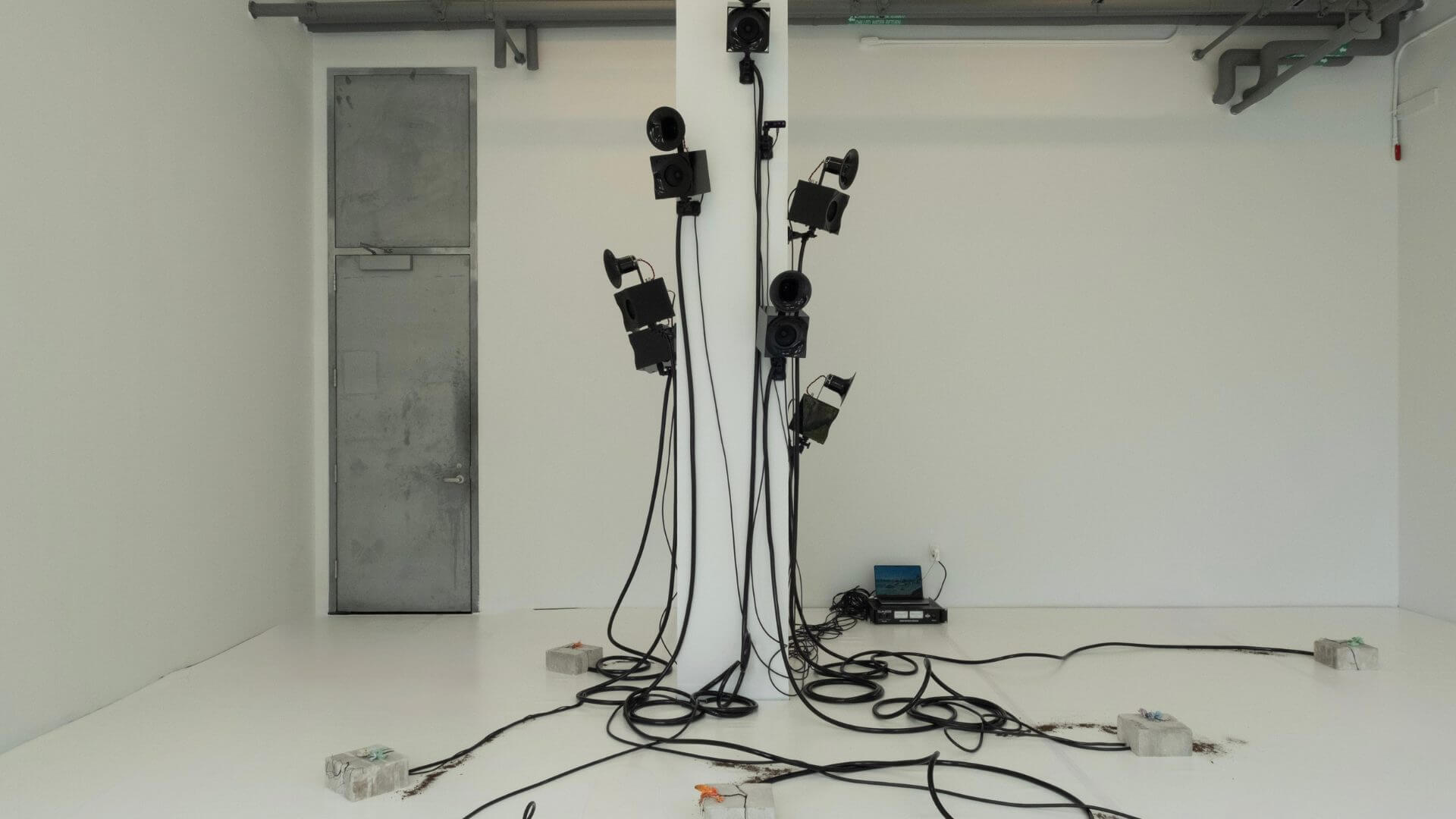
There’s something profoundly tactile, though entirely invisible,in the installations of KiefferWoodtli. Their work doesn’t just ask to be observed; it moves through you. Blending ecology, sound, and sensory perception, the Swiss duo builds environments where the relationship between humans and nature isn’t just a theme, but a living, reactive material. In Arboreal Severance, presented within the almost diplomatic framework of the Planetary Embassy by Swissnex in New York, KiefferWoodtli turns the space into a sentient system that listens and responds. Unlike Arboreal Serenade, which embraced symbiosis, this new work speaks of distance, rupture, and absence. The sound here doesn’t comfort , it fractures, withdraws, and falls silent when we enter. As if to remind us that something in the way we inhabit the Earth has been irreversibly severed.
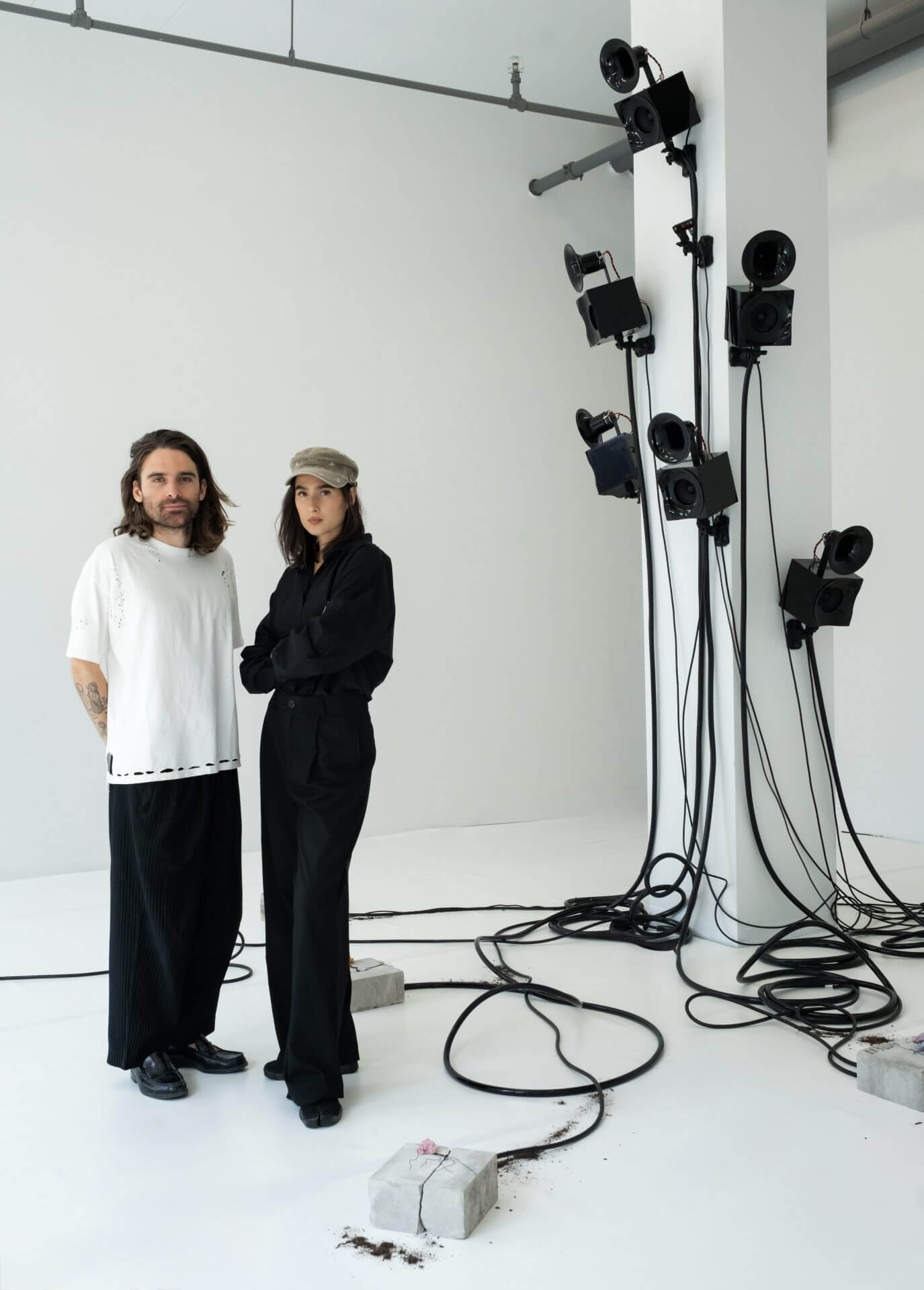
Fakewhale: Could you tell us how you came together as a duo and how your artistic journey began?
KiefferWoodtli: When we met in Zurich 2019, we were both already pursuing our own artistic paths, yet what instantly connected us was a shared philosophical curiosity. A need to question everything. Each of us had independently decided to leave Switzerland and travel, and soon after, we set out together for Central America. When the pandemic arrived, we found ourselves “stranded” in Costa Rica, surrounded by nature that was, in many ways, healing itself in the absence of human interference.
Watching this quiet regeneration reshaped our perspective. Our daily conversations – about perception, time, and the living systems around us – became the foundation of a shared language. From the beginning, it wasn’t about forming a collective, but about finding a way to express what neither of us could articulate alone.
Working together allowed us to think in layers. To merge intuition and structure, concept and emotion. Nature became both our teacher and our laboratory, a source of reflection and material for creation. Out of that dialogue, our first joint works began to take shape.
What themes and questions would you say most profoundly guide your practice?
At the heart of our practice lies the question of existence: the urge to explore ourselves through the act of encounter. Whether it is a tree, a sound, a material, or another person, every work begins with the same curiosity: Who are we in this exchange?
Our practice is a continuous process of sensing, listening, and remembering. An attempt to find our way back to ourselves through nature, through experience, through creation. We are drawn to the invisible rhythms that connect things: the breath beneath the surface, the pulse that runs through matter, the dialogue between the organic and the constructed.
In this sense, our work is less about creating representations of the world, and more about opening perceptual spaces. Places where feeling, technology, and form meet in a single gesture of awareness.
How do you see poetry, technology, and sensory experience intertwining in your work?
For us, poetry lies in the multiplicity of experience. It’s not confined to words, but extends into everything that resonates. Sound, light, matter, presence. The written word often appears in our installations as a fragment or pulse of thought, yet it exists alongside other forms of language: vibration, image, silence.
We are interested in how meaning unfolds through the senses. How a work can be understood emotionally, physically, and intuitively at once. Humans are sensual beings; we process the world through layers of perception, and with our work we try to create spaces that mirror this complexity.
Technology, in this sense, becomes a poetic instrument – not one of control, but of listening. It allows us to translate unseen processes into experiences that can be felt: the pulse of a tree, the rhythm of light, the quiet systems that sustain life.
In the end, what matters to us is not the medium, but the resonance — that brief moment when perception turns into feeling, and the boundary between observer and world softens.
The relationship between humans and nature runs through much of your practice. In your view, what role can art play in reshaping this connection?
Art has always had the ability to move people beyond intellect. To reach emotional and sensory layers where transformation actually begins. We live in an age of information, where knowledge is abundant yet rarely embodied. Facts alone rarely change us. What moves us is experience. The moment something resonates, bypassing reason and touching something we had forgotten.
We believe art can reawaken this sensitivity. It can remind us that our relationship to nature is not an abstract idea but a lived experience that unfolds in every breath, every gesture, every choice. You don’t need to know anything to understand a work of art – you only need to feel. And in that feeling, a simple truth returns: we’re part of what we observe.
Arboreal Serenade was an important milestone, presented at Art Basel and later acquired into a permanent collection. What did this project mean to you both?
Arboreal Serenade deepened our relationship with the living world — and with our own practice. Spending months attuning to a single organism, listening to its inner rhythms, invited us into a slower, more reciprocal way of working. It became a further unfolding, a new layer of awareness within an ongoing conversation about connection and resonance.
It also gave us the opportunity to express the multiplicity of our process: from integrating live sensor systems into the work to composing the soundscape, from translating data into movement to hand-painting visual elements that were later digitized. Each layer carried its own logic and sensitivity, yet they converged into a shared language between nature and technology, intuition and care. In that dialogue, we found a reflection of our own relationship to the natural world. Complex, delicate, and deeply alive.
With Arboreal Severance, you shift from symbiosis to separation. What led you to explore this “cut,” and how does the new work differ from the earlier one?
After exploring symbiosis in Arboreal Serenade, it felt essential to turn toward its counterpart: separation. Both works stem from the same root: a desire to understand our relationship with nature not as a fixed state, but as a spectrum. To experience connection fully, we must also look at its absence.
Arboreal Severance emerged from this impulse — to study the “cut,” the silence between signals. Where Serenade invited immersion and resonance, Severance creates distance. It makes the rupture tangible: the disconnection between humans and the living systems we belong to. Yet, even in this absence, something continues to breathe — a faint pulse, a reminder that the dialogue is never truly lost.
For us, it’s less about contrast than about complementarity. Like two sides of one current, Serenade and Severance mirror each other — one outward, one inward; one celebrating unity, the other listening into the fracture. Together, they form a continuum of remembrance.
The soundscape of Arboreal Severance originates from the living signals of a 101-year-old tree. Could you describe the technical and emotional process of translating these signals into sound?
Yes, the soundscape of Arboreal Severance is generated from the physiological signals of a 101-year-old Japanese Pagoda tree. Sensors capture real-time data such as sap flow, photosynthesis, and transpiration, forming a living score that shifts with the tree’s state. As visitors enter the space, subtle changes in density and distortion occur — a reminder that perception itself is never neutral, but part of the exchange.
Alongside this data, we integrated field recordings around the tree. Wind through leaves, ground vibrations, traces of its environment – to preserve a sense of place. For the fractured passages, we asked: how does distortion feel, not just sound? These tones were shaped intuitively, letting emotion guide the texture of interruption.
For us, this process isn’t about scientific sonification but about listening. The data become a language, a way for the tree to speak in frequencies we can perceive. Translating these signals was deeply emotional; we weren’t composing sound, we were composing attention.
The installation reimagines the exhibition space as a living organism. What materials and sensory strategies did you employ to create this immersive effect?
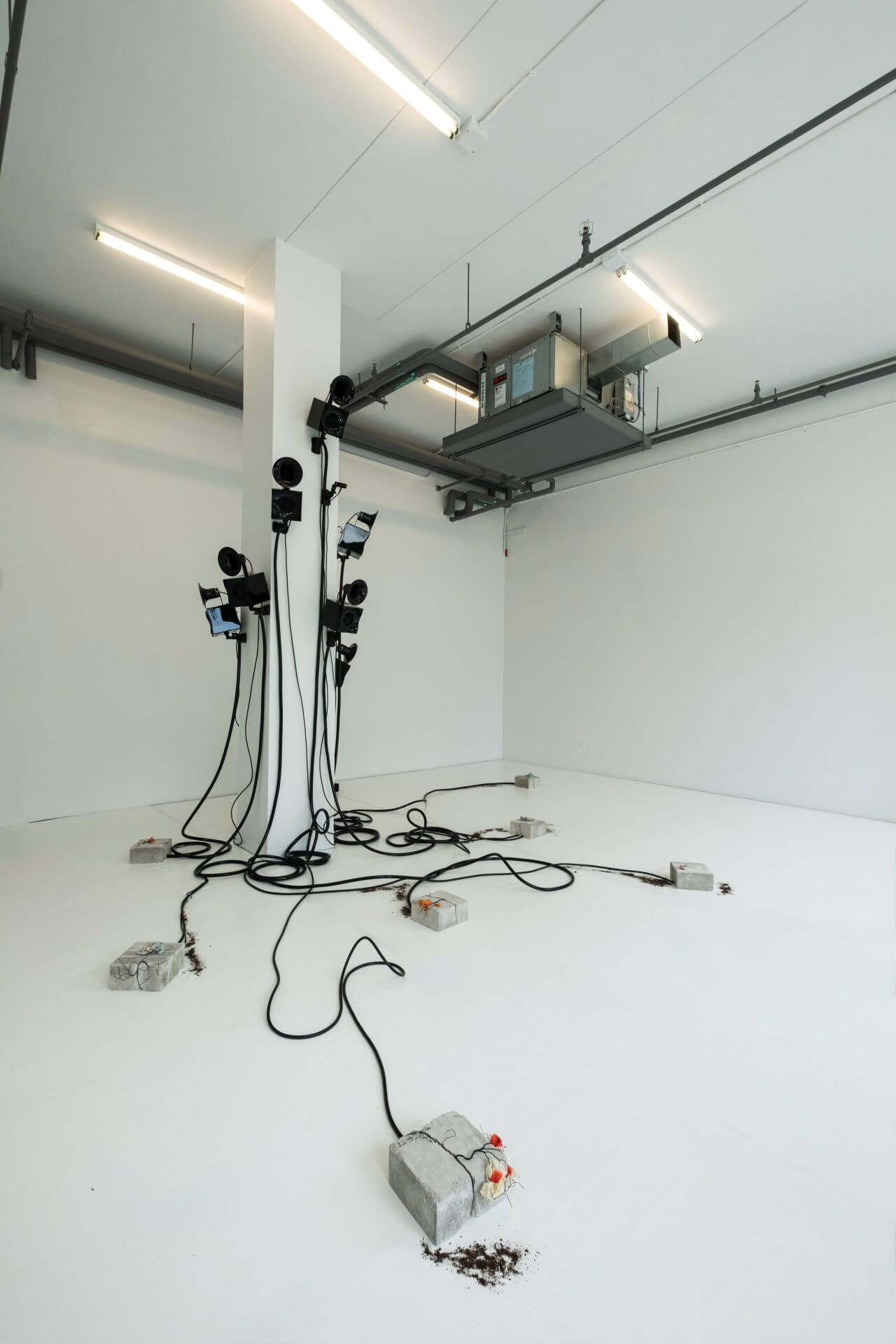
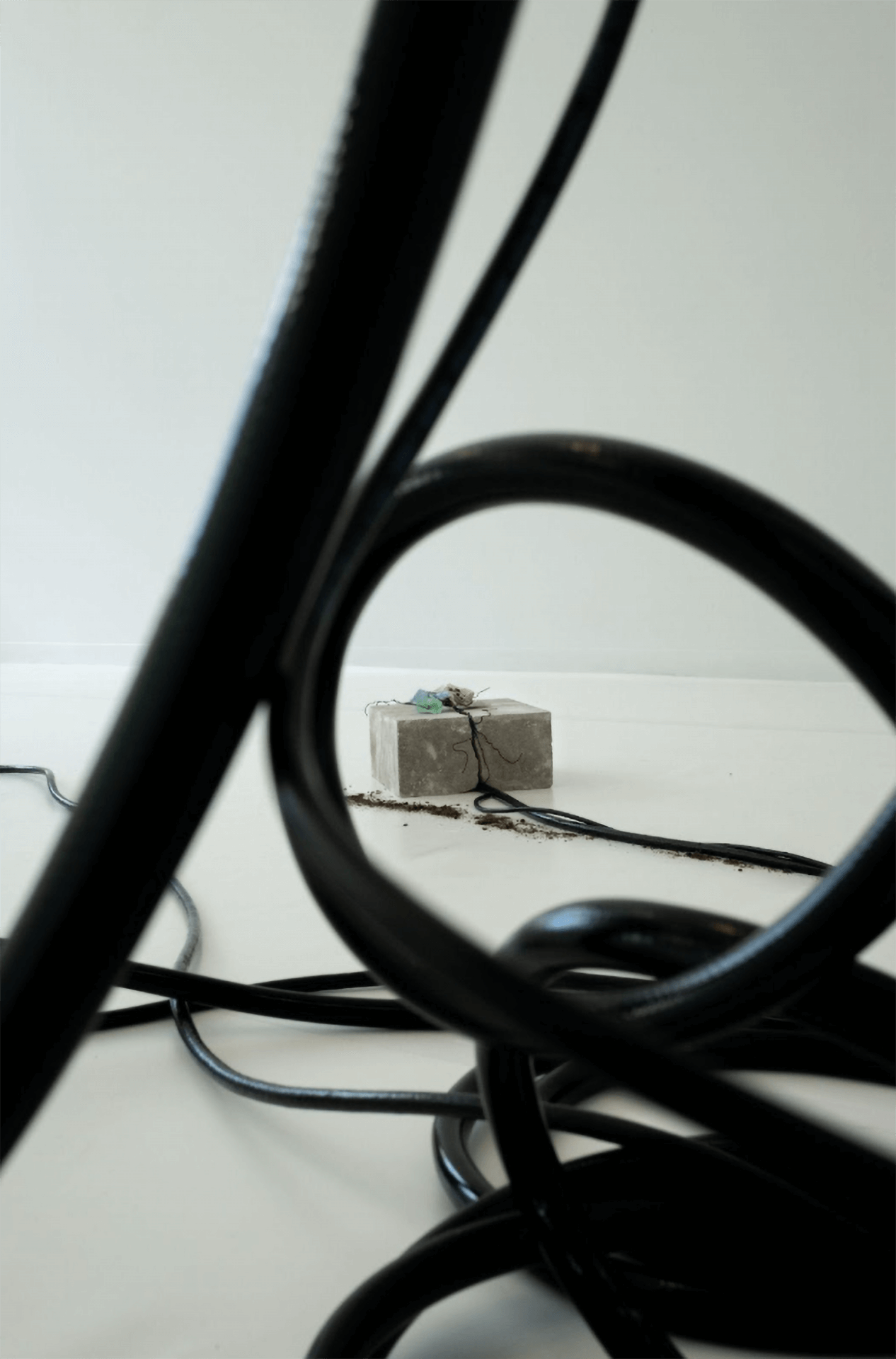
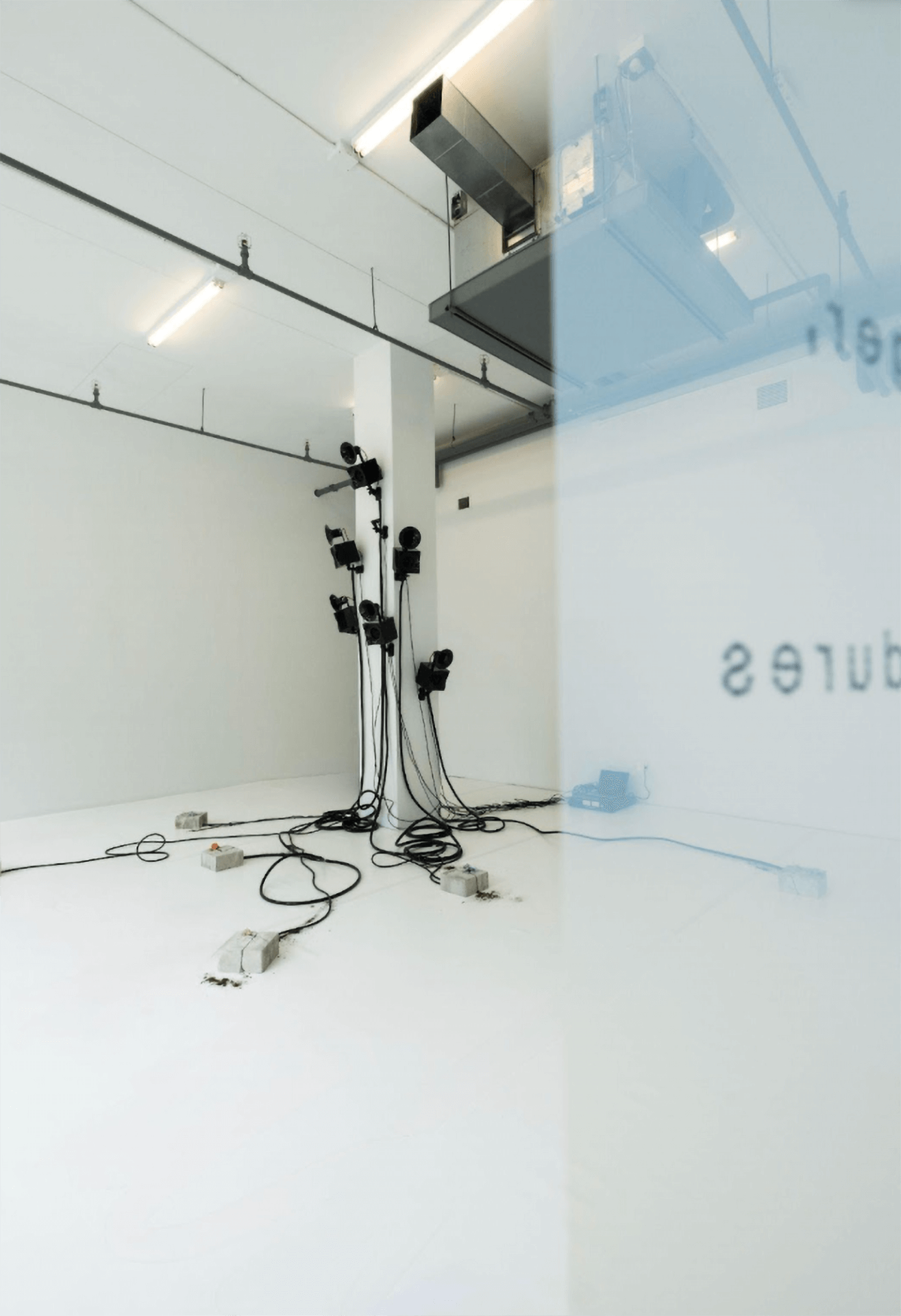
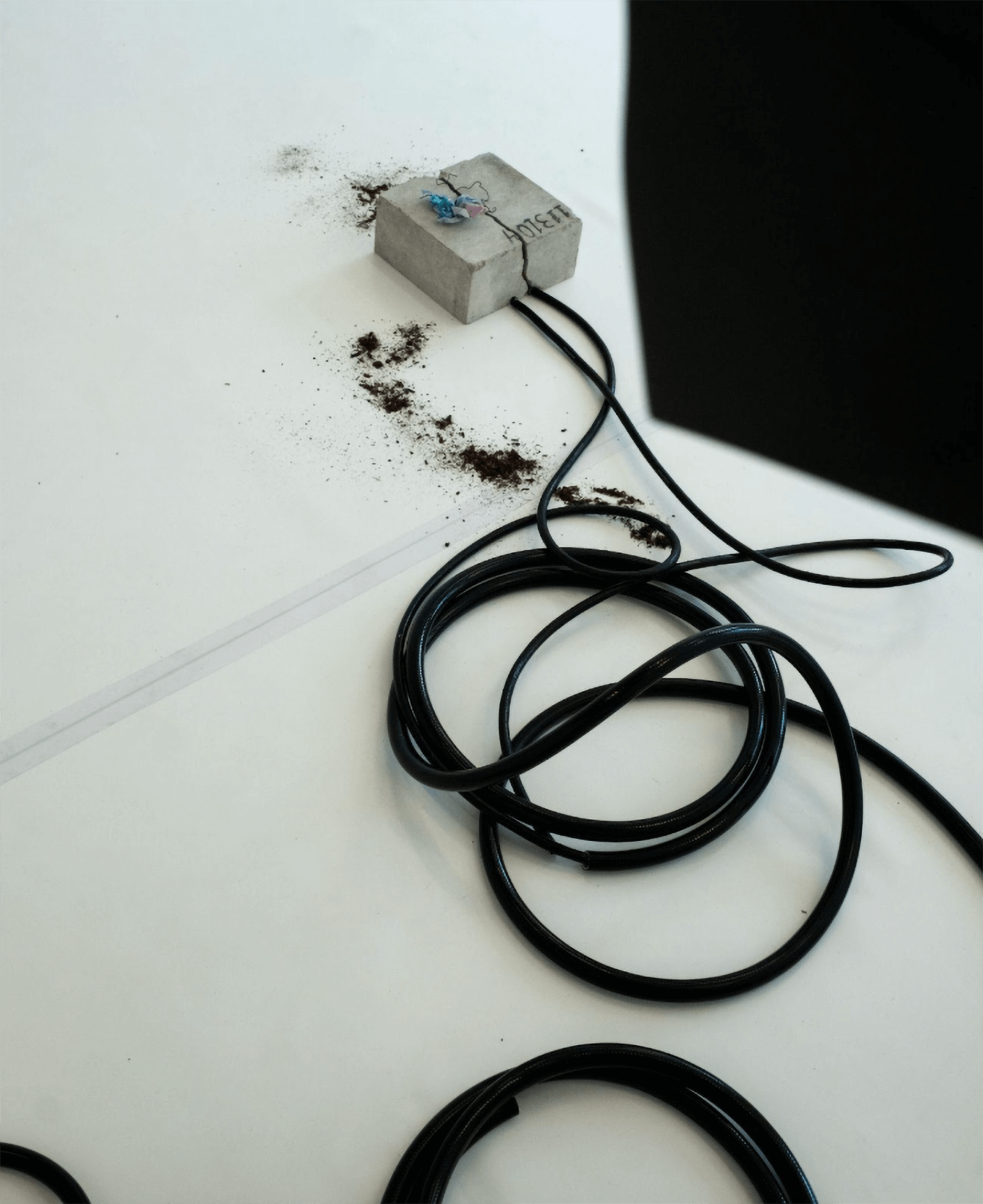
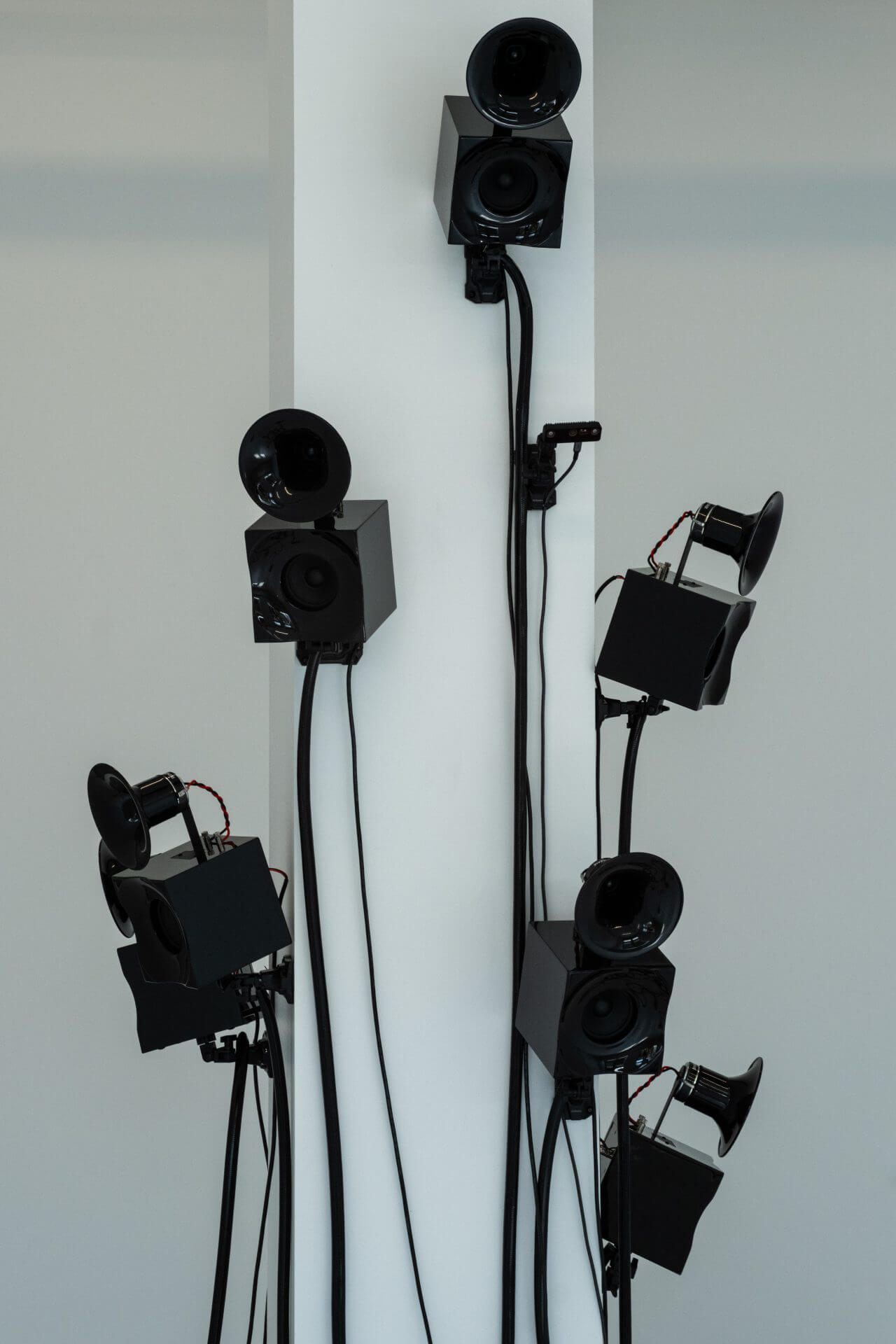
The installation unfolds through a set of materials that behave like a living system: responsive, fragile, interdependent. Black speakers, heavy cables, fine black wire, limestone, soil, and painted Awagami paper form its core vocabulary. Each carries a different state of being: endurance, fracture, memory, renewal.
Sound moves through the space like circulation. As people enter, it begins to distort. The white, almost clinical atmosphere heightens every shift in tone and vibration; the smallest sound, the faintest scent of rubber or soil, becomes charged with presence.
It doesn’t represent life — it listens to what remains alive within stillness.
Presenting the work during Climate Week NYC adds a context of urgency. What do you hope the audience experiences and carries with them after encountering Arboreal Severance?
Presenting Arboreal Severance during Climate Week felt meaningful because the work speaks to a dimension of the crisis that is rarely addressed — not only the loss of ecosystems, but the loss of relationship.
We often approach the climate emergency through data and action, yet beneath it lies something quieter: a crisis of perception, of forgetting that we are part of the same living system we’re trying to protect.
The installation doesn’t aim to teach or warn. It offers space to feel whatever arises. Discomfort, grief, stillness, maybe even a sense of belonging, or perhaps the need to remember something.
Feeling is the beginning of remembering, and remembering is the first step toward reconnection.
Finally, looking ahead, where do you envision the Arboreal series evolving, and more broadly, the trajectory of your practice in the coming years?
We see the Arboreal series not as a closed chapter, but as a living organism in itself, one that will continue to evolve across places, formats, and states of being.
At its core, our practice is an ongoing exploration of existence: what it means to be human, to perceive, to belong, to be in relation. Each iteration of Arboreal opens a new layer within that wider inquiry.
Further, our practice will keep deepening the realm of sensory experience. Using sound, material, painting, and space as intertwined languages for awareness. The ways these elements manifest may shift and expand: from large-scale installations to intimate gestures, from physical forms to digital or ephemeral expressions – all part of the same continuum.
Whatever questions arise along the way become the compass – the work grows from there.