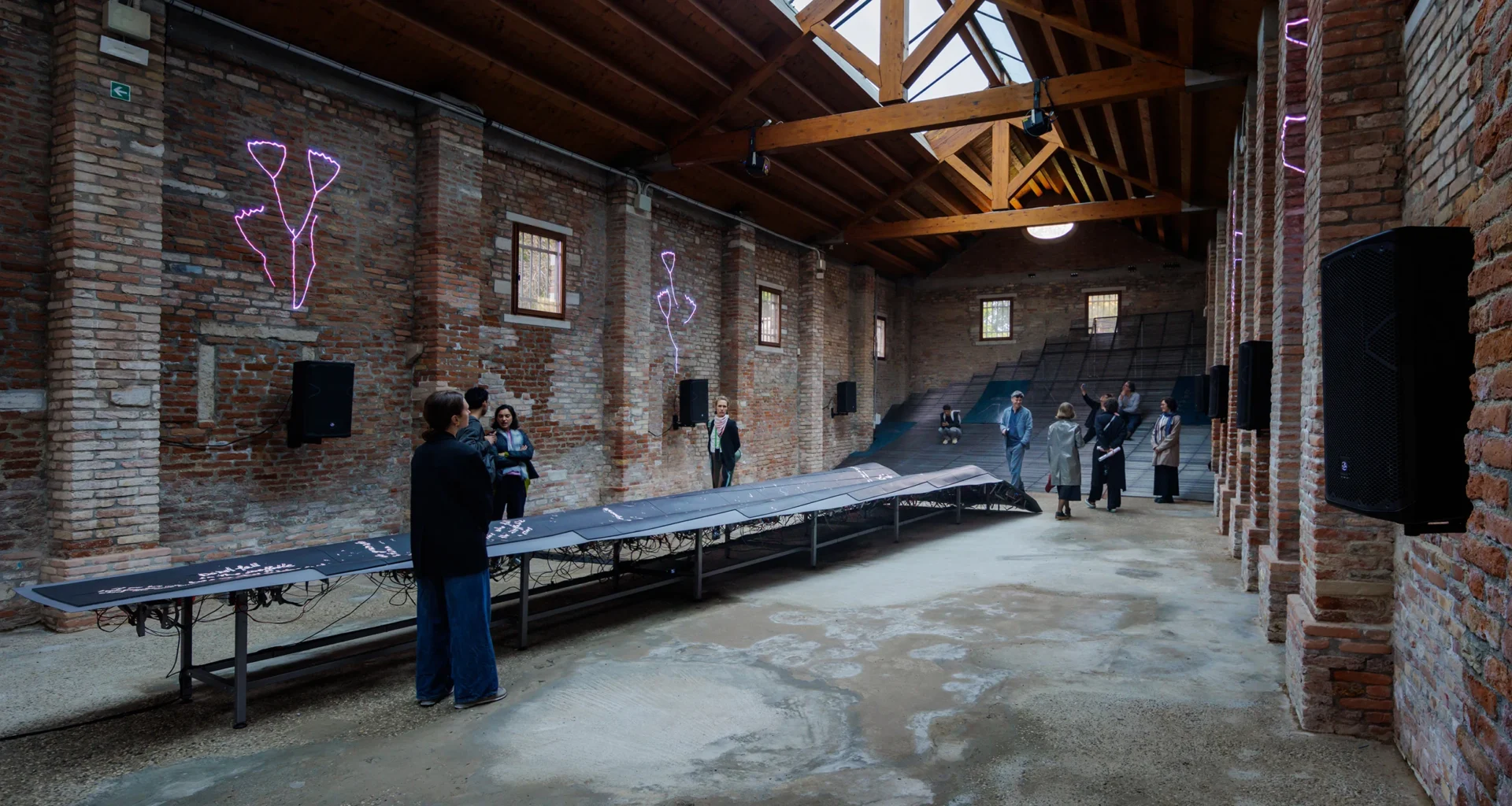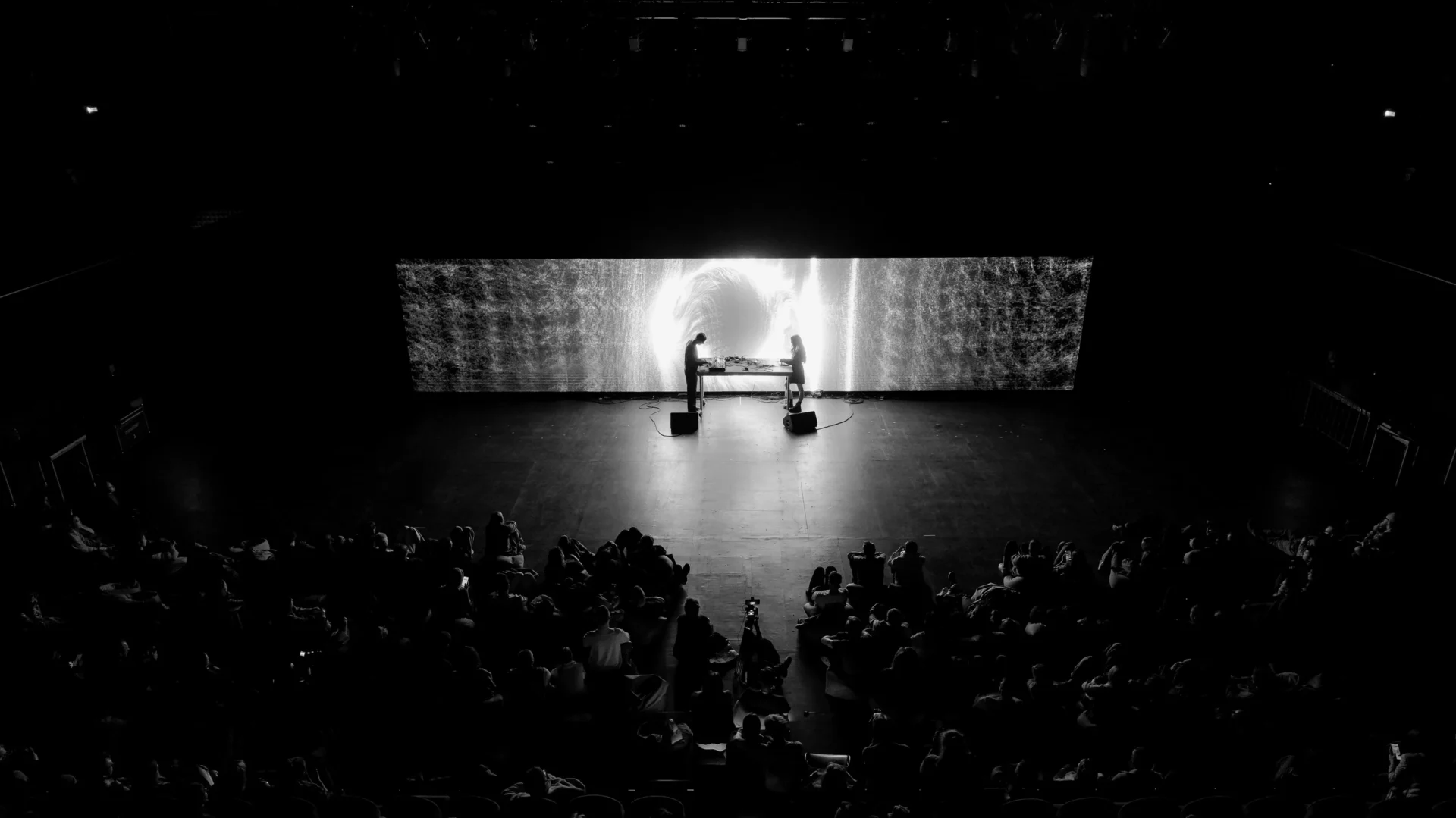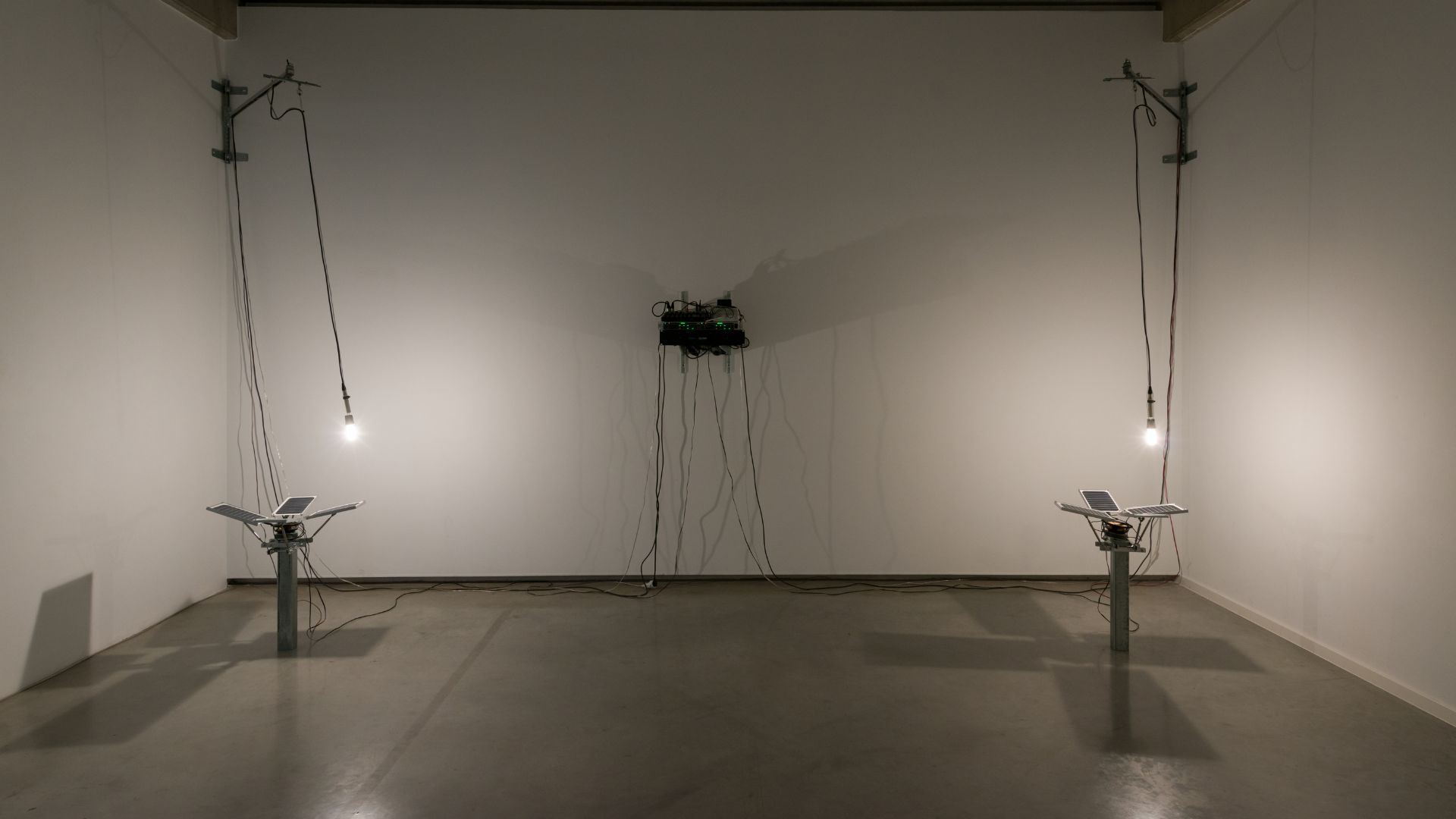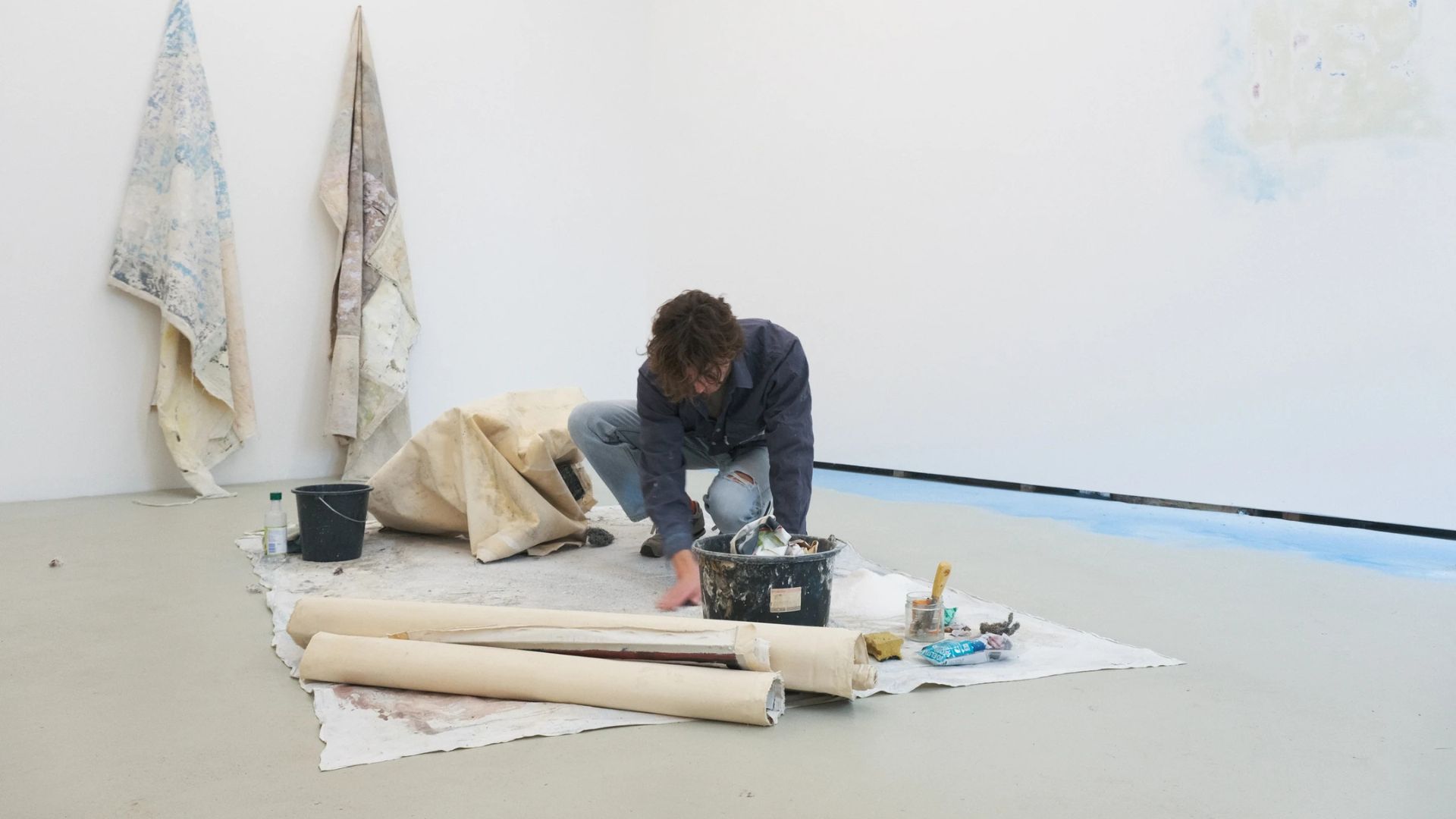
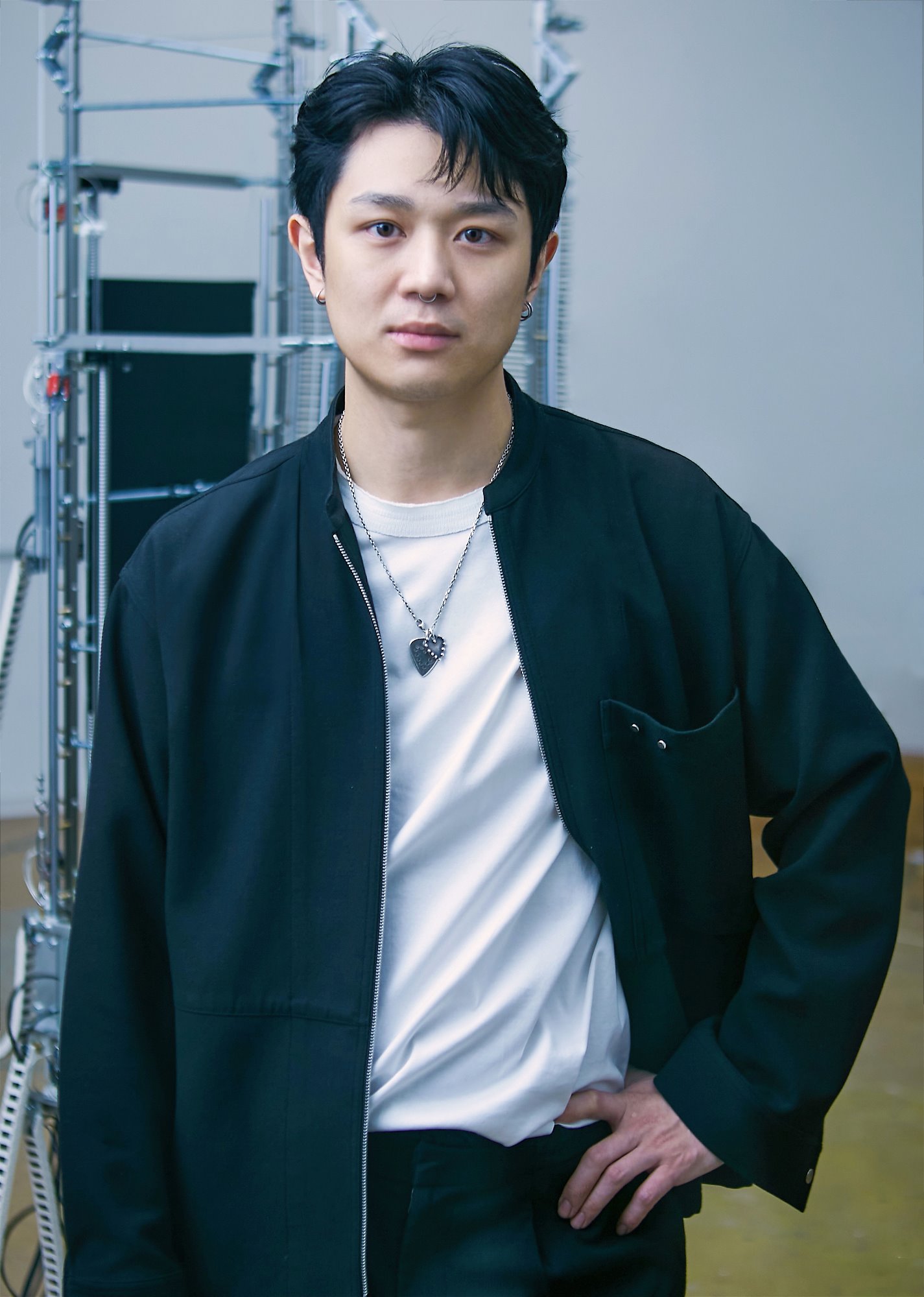
Born in Seoul in 1992 and currently based in Munich, Younsik Kim explores what happens to sculpture in an age dominated by digital images. Working across kinetic sculpture, installation, video, and photography, he combines traditional materials such as ceramic, glass, and steel with contemporary technologies including motors, displays, and electronic systems.
Central to his practice is the idea of the “physical death of sculpture”, the loss of scale, weight, texture, and bodily presence that occurs when an artwork is reduced to an image and circulated online. Rather than opposing digital culture, Kim investigates the tensions between material permanence and digital immateriality, creating works that foreground friction, resistance, memory, and duration. His practice ultimately asks how sculpture can continue to exist as a physical, sensory experience in a world increasingly shaped by screens.
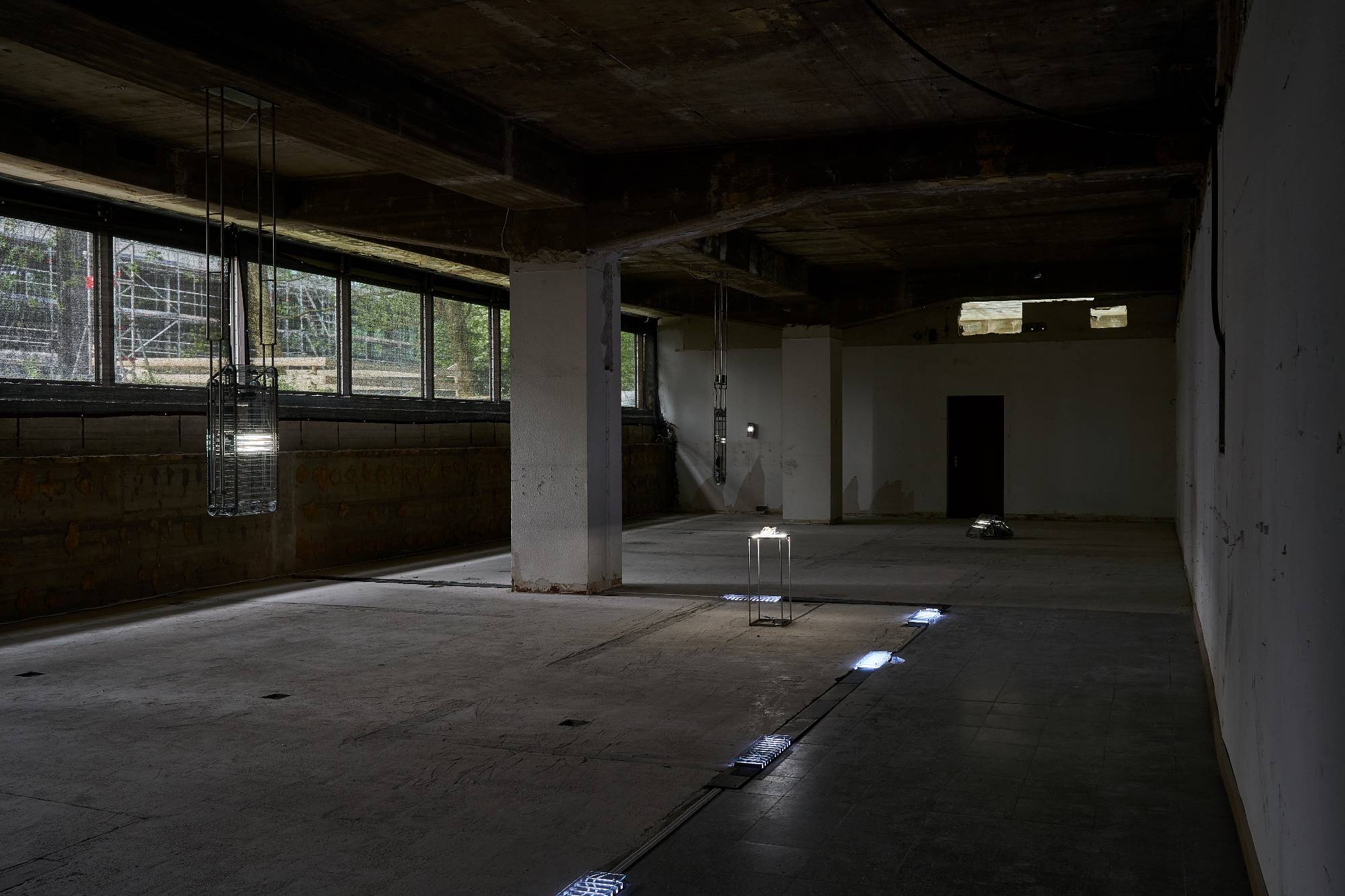
In your statement, you speak of the “physical death of sculpture” as the loss of material agency when a work is converted into a digital image for social media. How did this concept originate, and to what extent was it influenced by your work as a documentation photographer for exhibitions?
The concept of the “physical death of sculpture” began with my personal frustration as a sculptor who also works as an exhibition documentation photographer. Even before I started this side job, I was very interested in media trends and paradigms. I was concerned not only with the flattening of sculptural materiality into digital images, but also with how this mechanism triggers a different kind of cultural tendency.
When a sculpture is captured by a camera, it is reduced to a flat image. It loses its physical scale, its texture, and the specific, atmospheric “weight” that occupies space. This is a primary phenomenon that inevitably occurs when anything is transferred into another medium, and it is something we have faced for a long time. However, the age of social media, where image-driven platforms are dominant, seems to have created a “new normal.”
As images of artworks spread across various web channels, they are granted a “non-material” life, but at the same time, the original relationship structure of the material medium is reversed. The focus shifts toward creating “cool images” to distribute and insert into various consumption pools. As a result, the value of the physical body of the sculpture fades, and I began to witness the power reversal between the material body of the sculpture and its shadow—the image. My journey as a documentation photographer allowed me to witness many such cases, which provided concrete evidence for thoughts I had already been developing. This experience is the fundamental background from which the concept of the “physical death of sculpture” emerged.
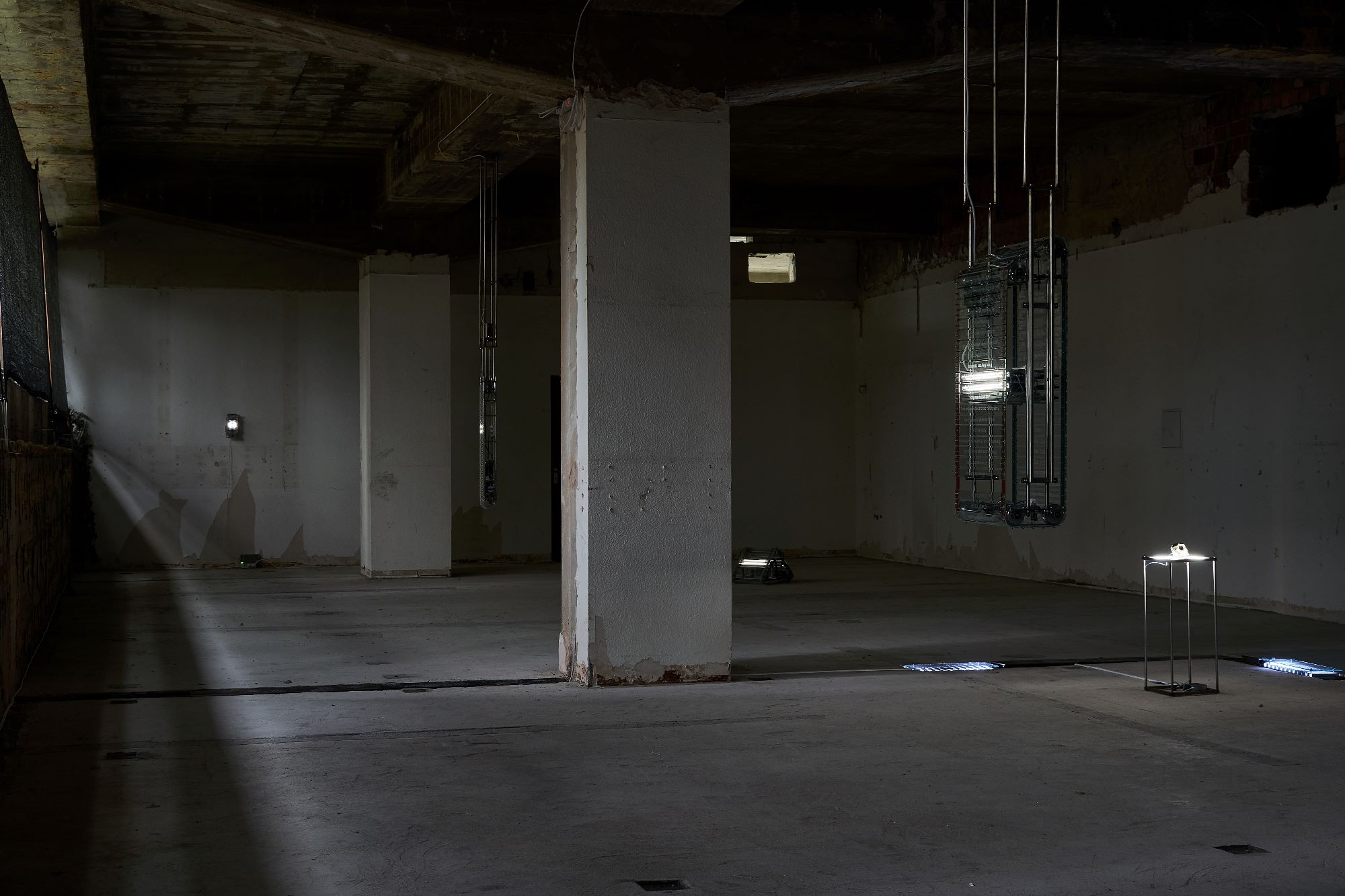
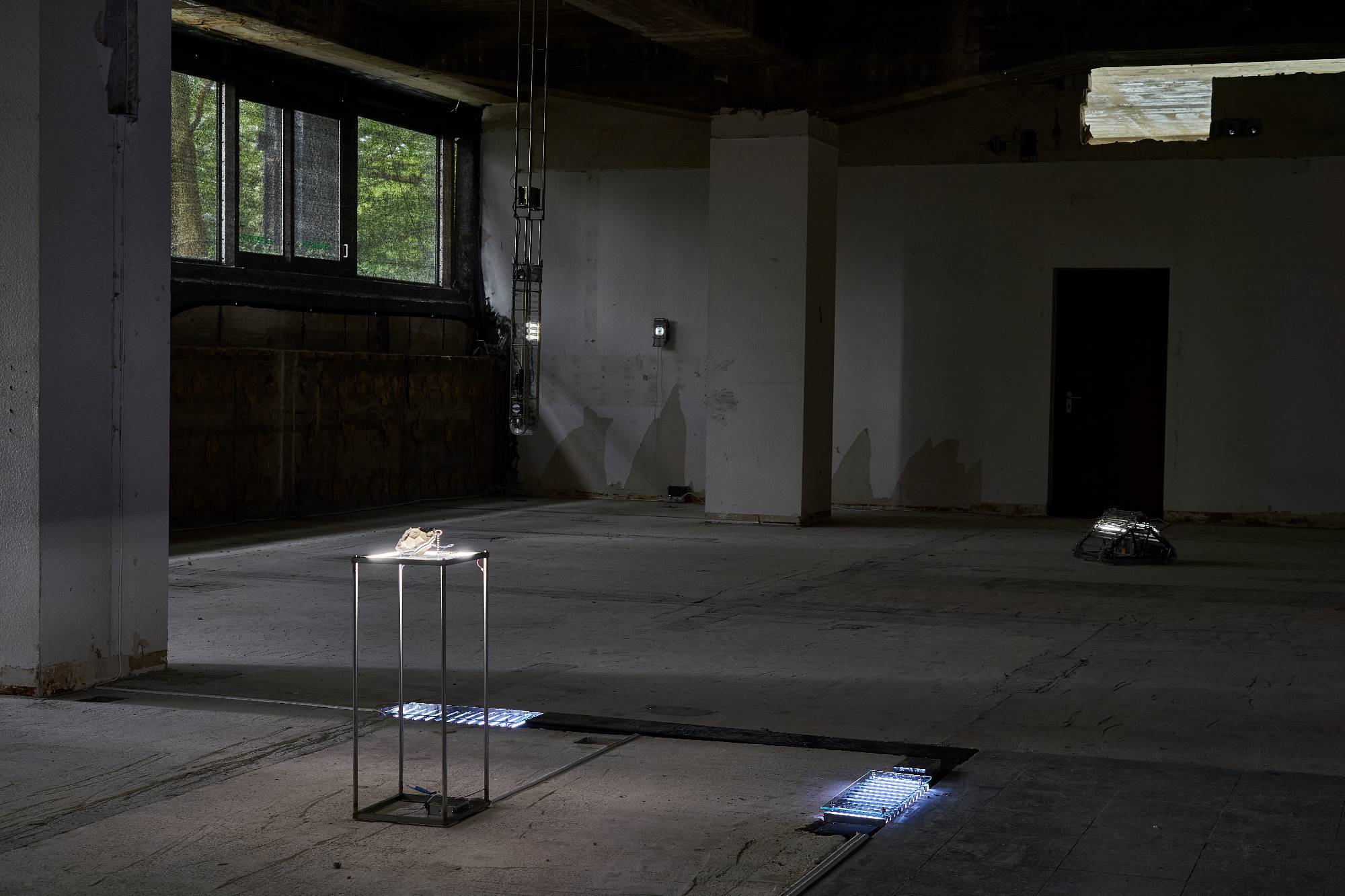
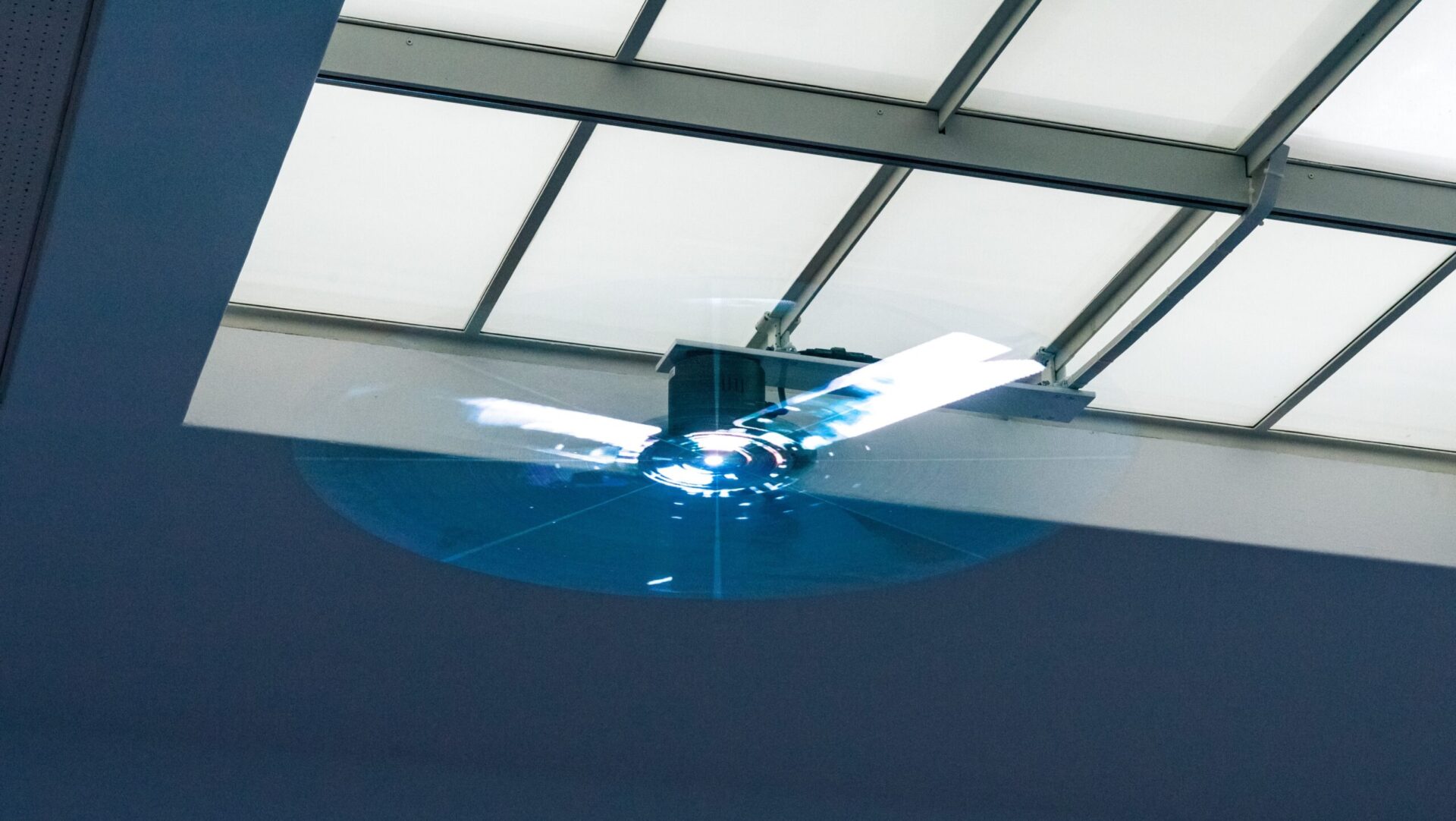
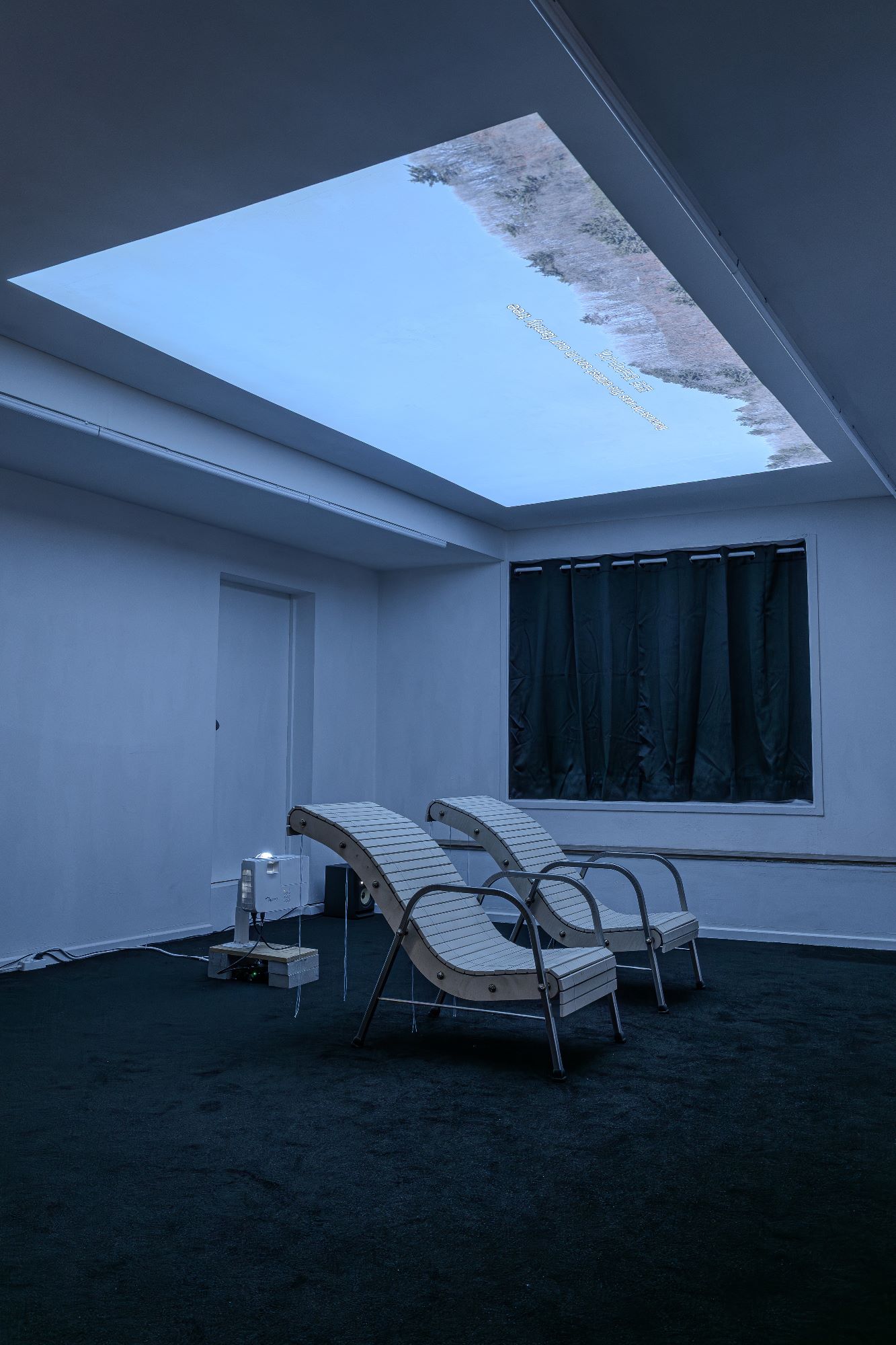
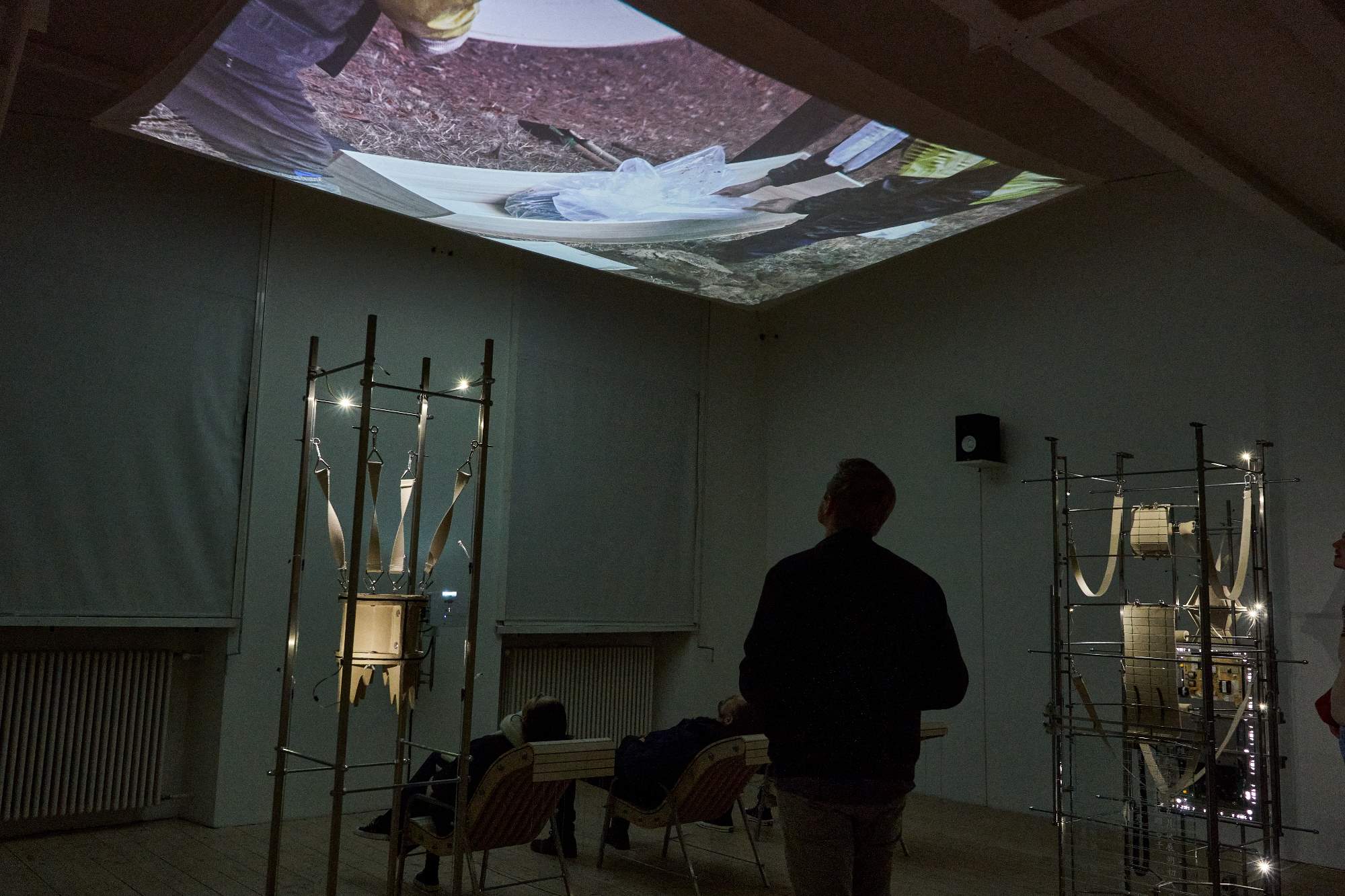
Umzug (2023) is a video installation in which the audience watches from below the relocation of ancestral graves while lying on cold ceramic sunbeds. Why did you choose the gesture of burial and “moving” as a starting point for reflecting on the sculptural body and preservation?
Umzug is a work that captures the event that directly helped me solidify the concept of the “physical death of sculpture.” In terms of the causal relationship, Umzug could even be considered to have come first. The relocation event in the video documentary was about my own family; it was an actual relocation my father had been preparing for several years. I created the video work by capturing the context of generations, tradition, and the preservation of the body, based on my research into the relocation process.
As I filmed the process, the materiality of the buried body and the traditional act of burial—which aims to preserve that body—seemed very similar to the context of the “sculptural body” I had been thinking about. The process of moving ancestral graves in Umzug was a metaphor for the migration of memory across generations, but for me as a sculptor, it also made me think about the human body, the sculptural body, and the context of material preservation.
Initially, I planned it only as a video to be included in a sculpture, but I wanted to create something closer to a physical body in this age of digital images. I focused on sculptural, material, and bodily sensations, using space, ceramic beds, a video projected horizontally onto the ceiling, and surround
sound to create a video installation. By having the audience lie on cold ceramic sunbeds and watch the movement of the preserved bodies from below, I focused on a physical experience of the death of the body, the process of its preservation, and the landscape through senses like touch, spatial orientation, and the direction of their gaze. It is an experiential installation where one can sense that, even though sculptural bodies are constantly being rearranged, recontextualized, or archived in the digital age like the remains of ancestors, they still stubbornly maintain a substance that cannot be fully digitized.
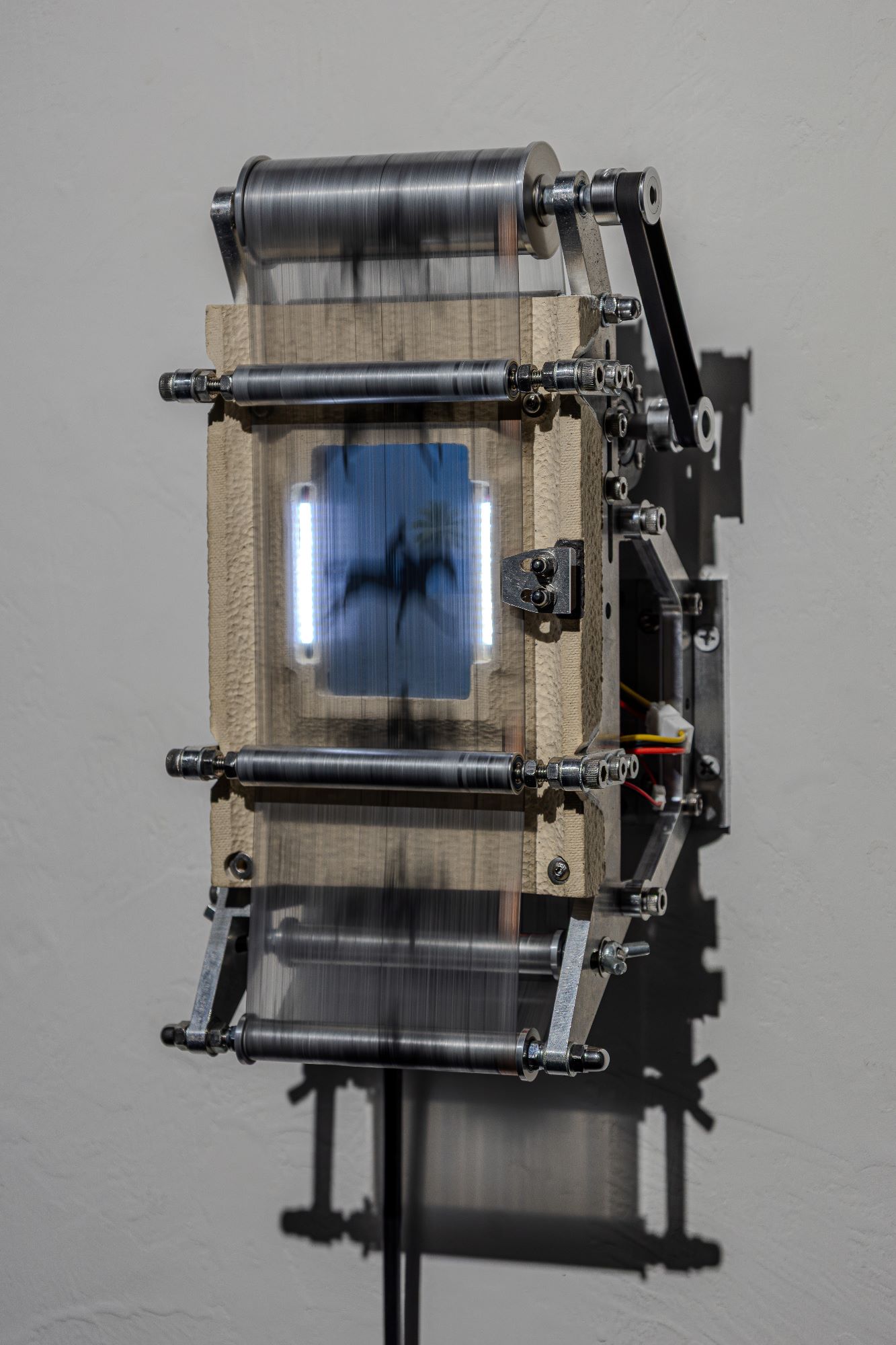
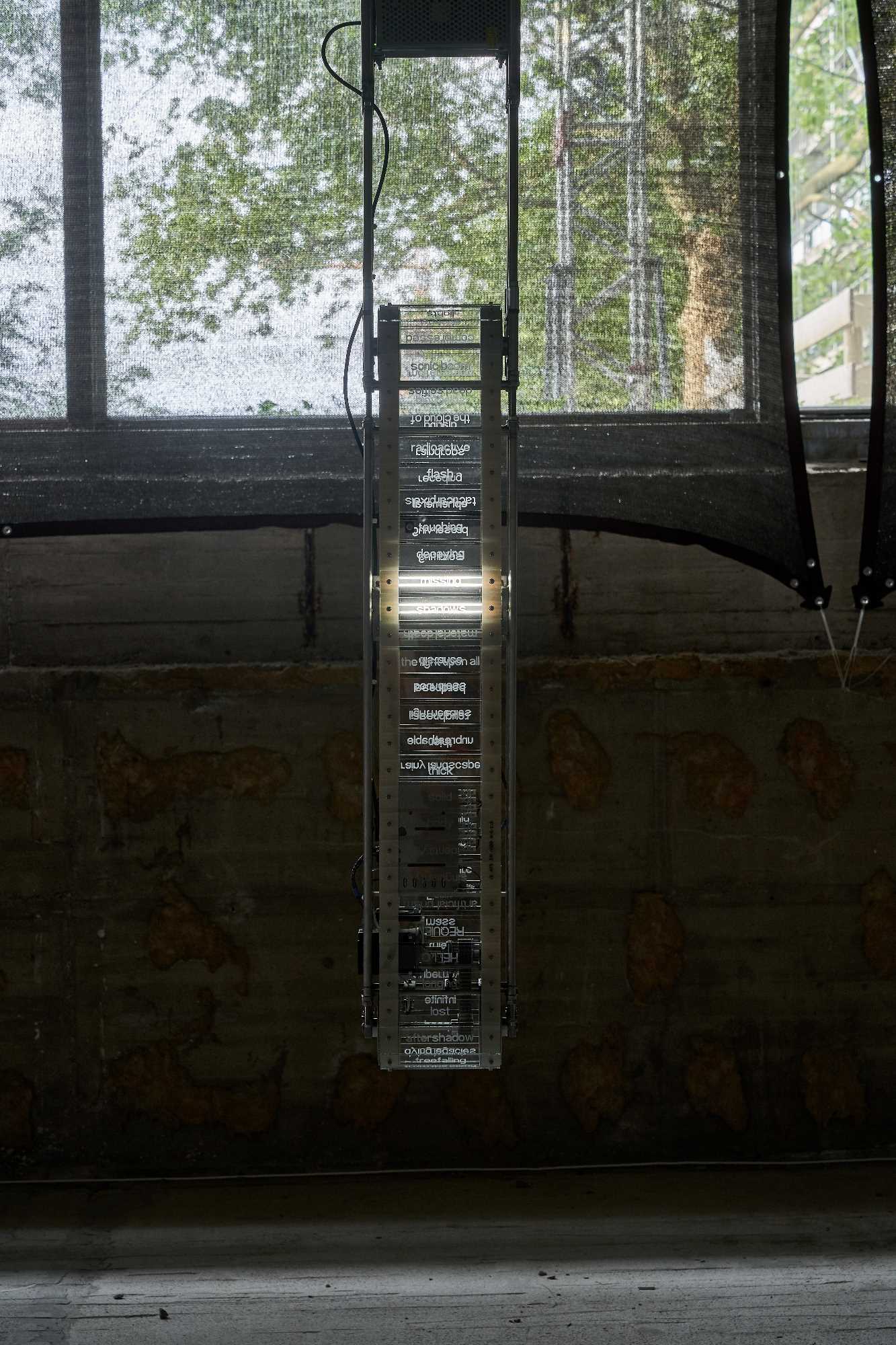
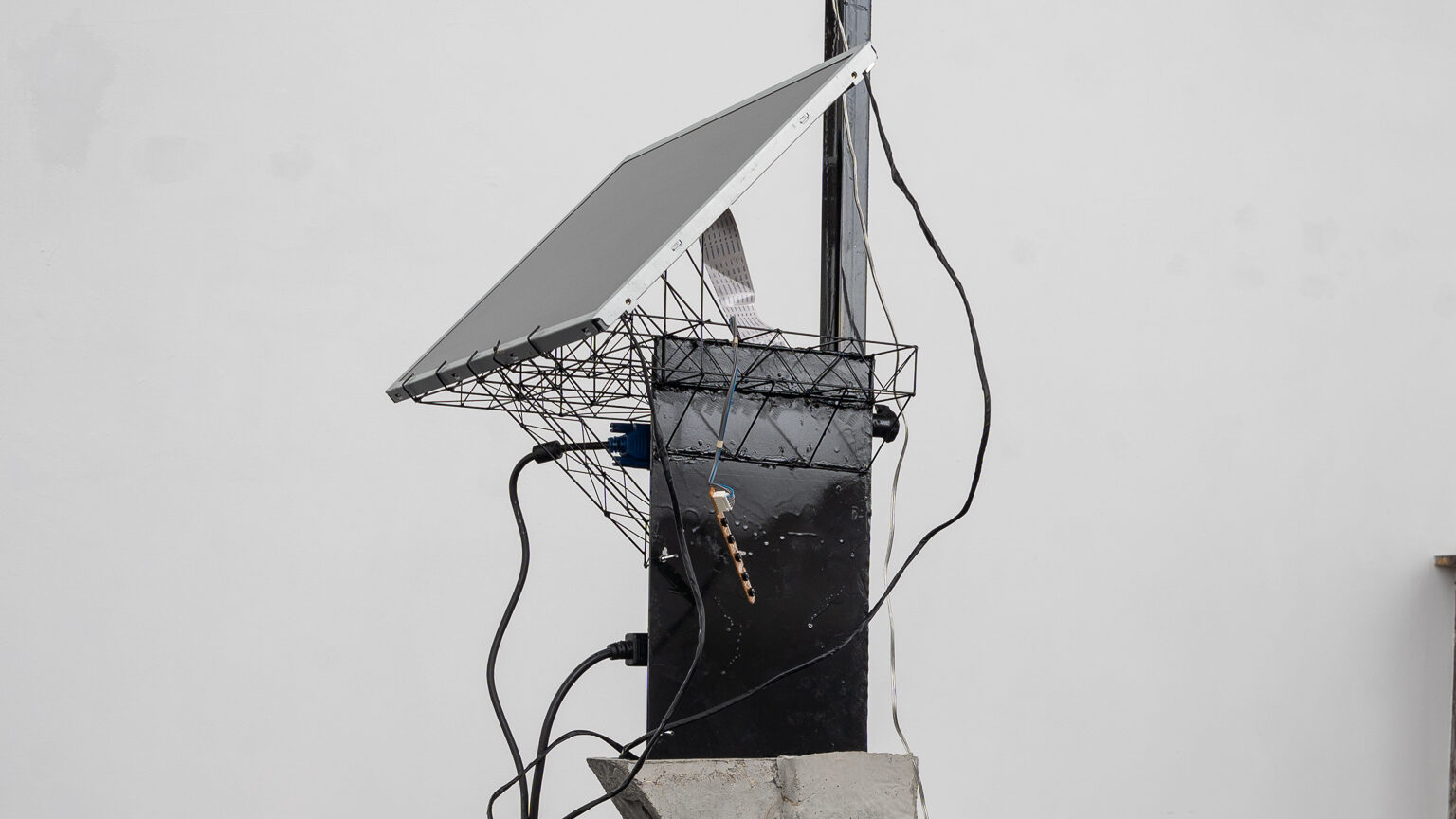
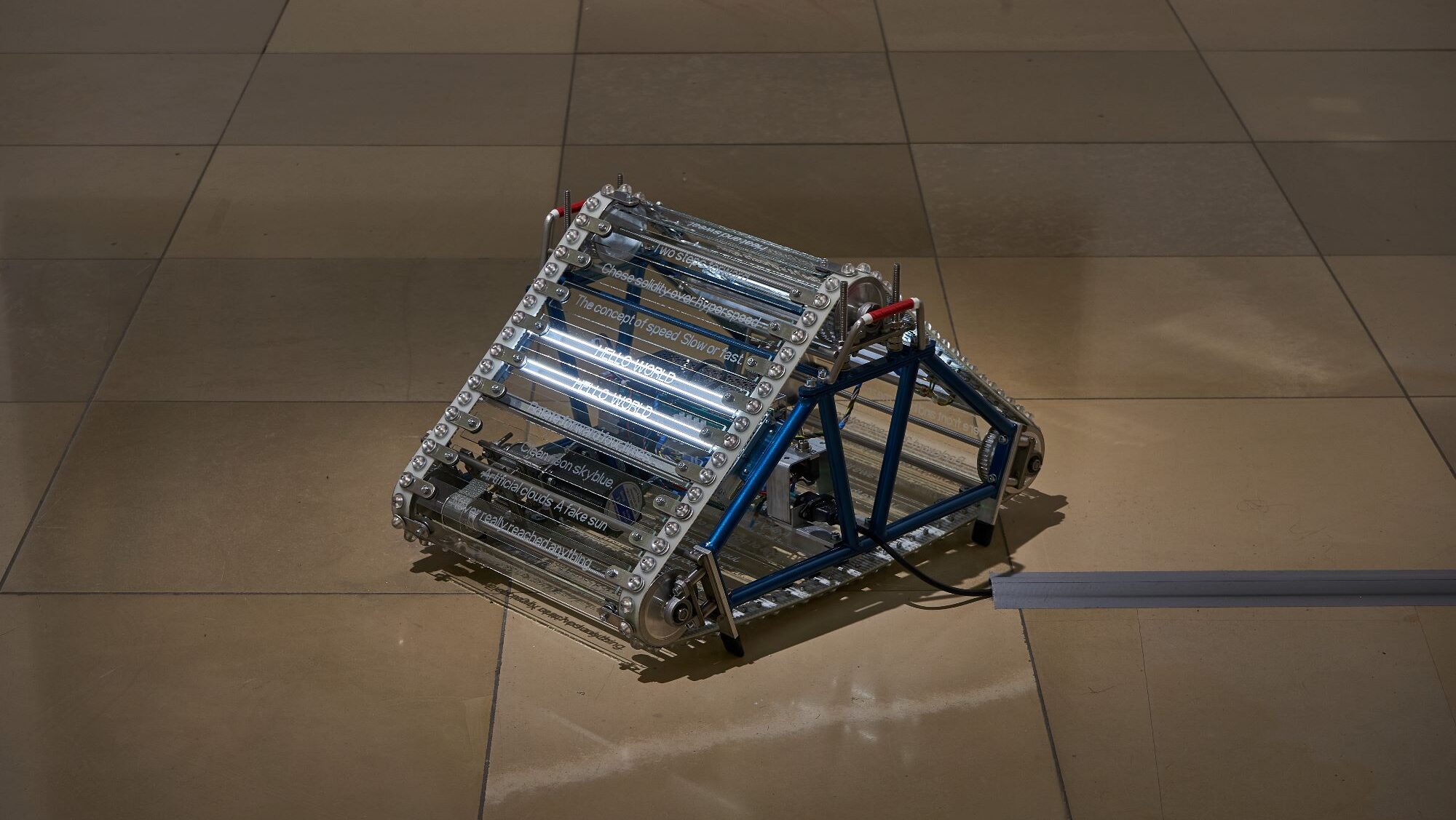
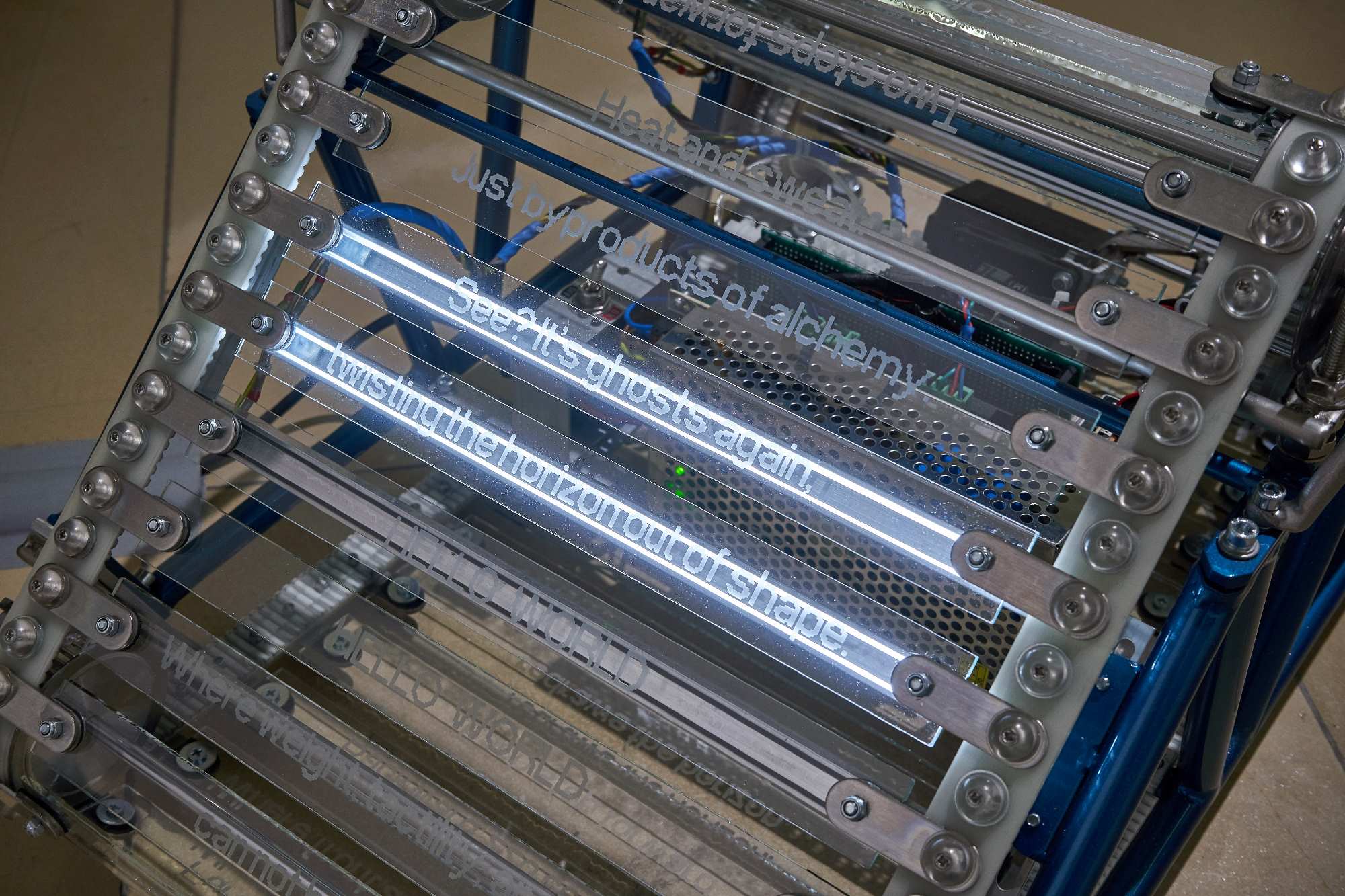
The Ghost Touch series translates the everyday gesture of vertical smartphone scrolling into mechanical objects made of glass, metal, and motors. In what way does the “ghost touch” — that is, the absence of friction, resistance, and weight — become for you a critical tool to speak about the loss of tactile sensibility in digital experience?
“Ghost touch” began with a question about the illusory nature of the interactions that occur on touchscreens. A smooth screen surface, stripped of mechanical resistance, induces an immediate response, but the images behind it are thoroughly detached from material sensation. I wanted to observe the place where tactile sensibility is erased in digital experience through the extreme gap between this world of smooth images and the physical senses inherent in sculpture. This contains not only a sense of regret for the loss of touch, but also reflection on what kind of physicality the images consumed on the endless, infinite scroll structure actually possess.
The Ghost Touch series applies a brake of “material limitations” to the infinite scroll of the digital. The process of translating smooth operations on a screen into the laborious movements of chunks made of solid, dense pieces like motors, metal, and glass generates a physical “cost.” The lightness of digital gestures collides head-on with the friction, resistance, and the arduous movements of these masses as parts mesh and turn. We access information as if by magic through the small glass window of a smartphone, but in reality, behind it lies a world of massive data centers and complex machinery operating under strict physical laws.
This work reminds us that the vast material infrastructure that enables easy access to information is, in fact, dependent on a great deal of sculptural activity and mechanical labor. Translating the physical entities hidden beneath the smooth screen into the movements of machines is a process of confirming that the digital does not exist only as an image. Exposing the mass of reality hidden behind digital experience by dragging the complex physical laws that machines must perform to call up images and text into the movements of solid machines—this is the sculptural attitude of this series.
Your kinetic sculptures often show repetitive, circular, or blocked movements that contrast with the illusion of infinite, frictionless mobility. How do you explore the themes of movement, physical resistance, and “temporal density” in your practice?
The movement we primarily face in digital interfaces is fluid, infinite, and frictionless. It creates an illusion that everything is “forever easy,” without delays or physical constraints. In contrast, my kinetic sculptures show movements that are repetitive, circular, or seem obstructed by something. This is a point that stands in stark contrast to the digital mobility that chases efficiency.
I do not leave the movement of my sculpture to be consumed simply as a visual element. Instead, I make friction, torque, and the physical limits of the material the core of the movement. In my work,
movement is rooted in physical reality. It is a process that reveals the noise and vibration generated as motors turn and gears mesh, along with the resistance experienced by the weight of the materials.
To me, “temporal density” is a concern focused on the vast gap between the two media: the material world of our bodies and the digital medium. It is a thought about what kind of time our senses of speed, weight, and volume (especially thickness) operate in. On a primary level, if a digital image is light information consumed in an instant, the movement of my sculpture makes you experience the “texture” of physical time. Even the boredom or frustration a viewer feels while watching this repetitive cycle is a part of the physical resistance I intended. This is my way of making the viewer face the “duration” occupied by a physical object, rather than consuming the sculpture as a quick visual stimulus. Beyond the time related to primary perception speed, it also involves concepts regarding how these things operate, exist, and what kind of reality they have, regardless of whether it is a digital or a material medium.
You often try to give new life or a new “body” to sculptural forms that would otherwise be discarded or disappear over time. How do you approach the concepts of preservation, migration, and transformation of sculptural materiality throughout your research?
Preservation and transformation are not grand philosophical concerns, but rather the realistic process of working as a sculptor. In my work, “migration” was inspired by the migration functions of smartphones or laptops. Just as data and settings are maintained even when you change devices in a digital environment, I contemplate how to move the existence of a sculpture—which has become difficult to maintain physically in an age that easily fragments and discards them—into a new body of different forms and materials.
According to the habits of these times, sculptures are easily consumed and disappear, but I cannot agree with this flow. So, the method I chose is to house the remains of a sculpture in a sturdy body like ceramic. Just as an urn holds remains, I transmit the form and structure of the sculpture into a ceramic vessel to ensure it isn’t swept away by the sense of speed in an age that prioritizes disposal
over material preservation. Ceramic is not just a material; it is a physical case that protects the sculpture’s existence from systemically enforced extinction and allows it to endure for a long time.
I know that a sculpture cannot migrate as smoothly as digital data. However, I have excluded the option of leaving the sculpture as waste or only as a record. By borrowing the concept of digital migration, I have built a methodology to transmit the existence of a sculpture—which can no longer remain in the ways of this age—into a new material body to maintain its existence physically. Ultimately, in my work, the preservation, migration, and transformation of materiality are a sculptural system that provides a new body—capable of holding its weight and history—to a sculpture that has become difficult to possess physically due to the flow of the times, allowing its existence to continue to operate within that body.
You often juxtapose mechanically generated images from physical materials with digital videos on screens. How do you explore the relationship between these two forms of “animation” and the concept of the “weight” of an image?
I treat a digital screen not just as a video playback device, but as a “material” that possesses physical and mechanical properties itself. The screen is juxtaposed in an equal position with other sculptural materials as a formal element that projects images onto the surface through light. I explore the moment when an image becomes “heavy” at this point. In the process of being
combined with various physical conditions in a small space and integrated into a single body with other sculptural materials, the digital image, which is essentially weightless, takes on the physical burden of the projected object the moment it combines with a material system that rotates or vibrates. I experiment with the middle ground where the hegemony between digital and physical reality intersects through the relationship between these two animations.
My recent work, 0g field of 12phliars, is the result of deepening this exploration. This work juxtaposes the digital animation of a running horse and rider playing on a screen with another animation created by a 12-frame printed film rotating mechanically above it within a single rectangle. Here, the digital image implements a smooth flow that the printed film cannot, while the printed film animation is distorted by physical limits such as gravity, friction, mechanical error, and “jello effects” caused by mismatches in light and timing, yet it shows an image with a clear “thickness.” The viewer witnesses the light movement of the digital horse and the heavy afterimage of the printed horse, which is physically intertwined with it, inside a single frame.
The interesting point is that the process of coordinating media with such different attributes becomes a “physical negotiation” as a sculptor. In a series of works where a small display is juxtaposed with ceramic and metal, both media are eventually placed within the constraints of the same physical laws. The digital image demands the optimization of material limits—such as hardware placement, wiring, and heat control—within a limited space, while the printed film image simultaneously demands the precision engineering tasks of motor and bearing conditions, film tension, and light-emitting timing. Ultimately, what I am looking for is neither perfect digital nor crude machinery. I am sculpting a new sensory reality called the “weight of an image” at the dangerous middle ground where digital smoothness meets the resistance of physical engineering and breaks down each other’s boundaries.
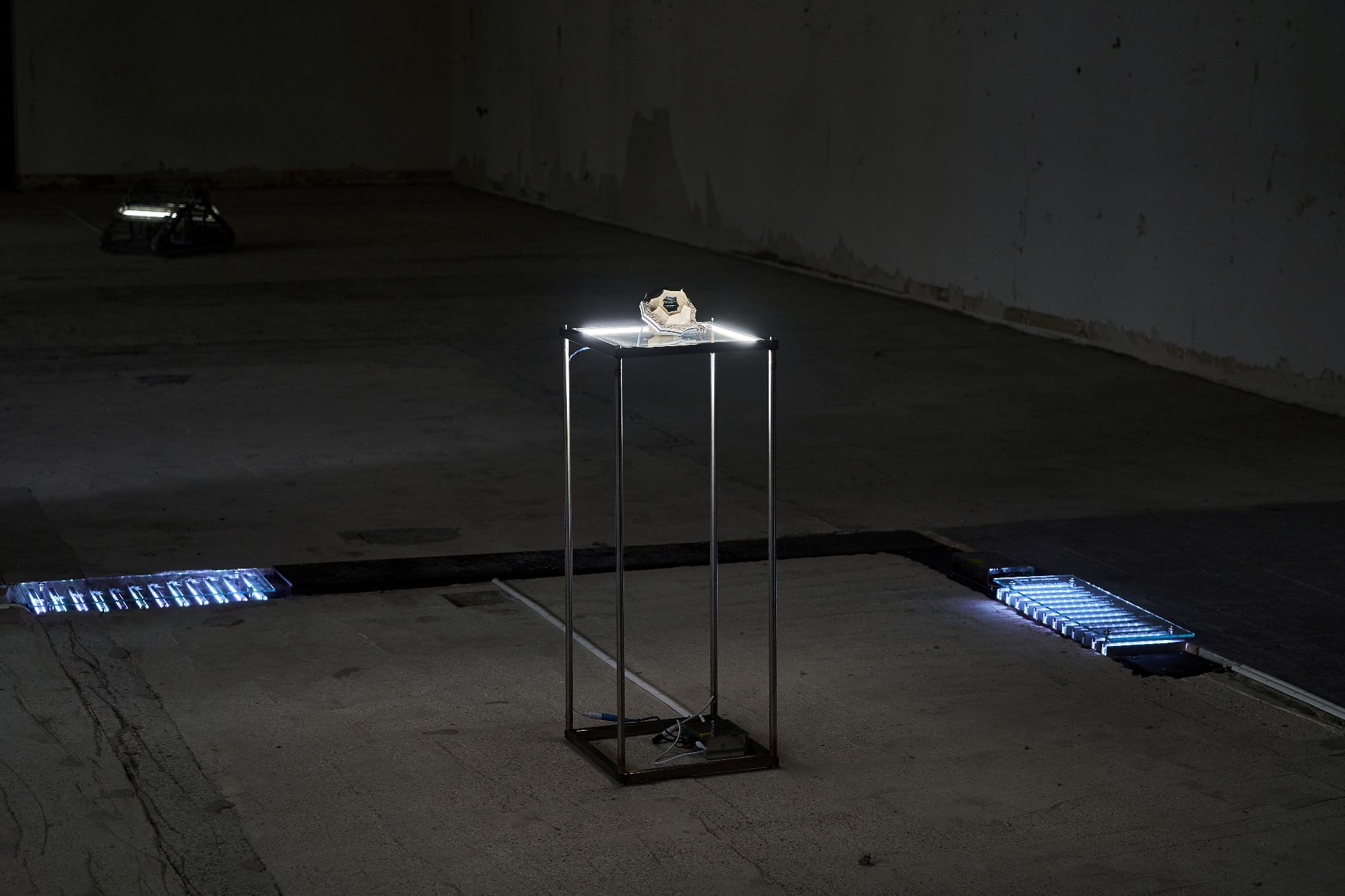
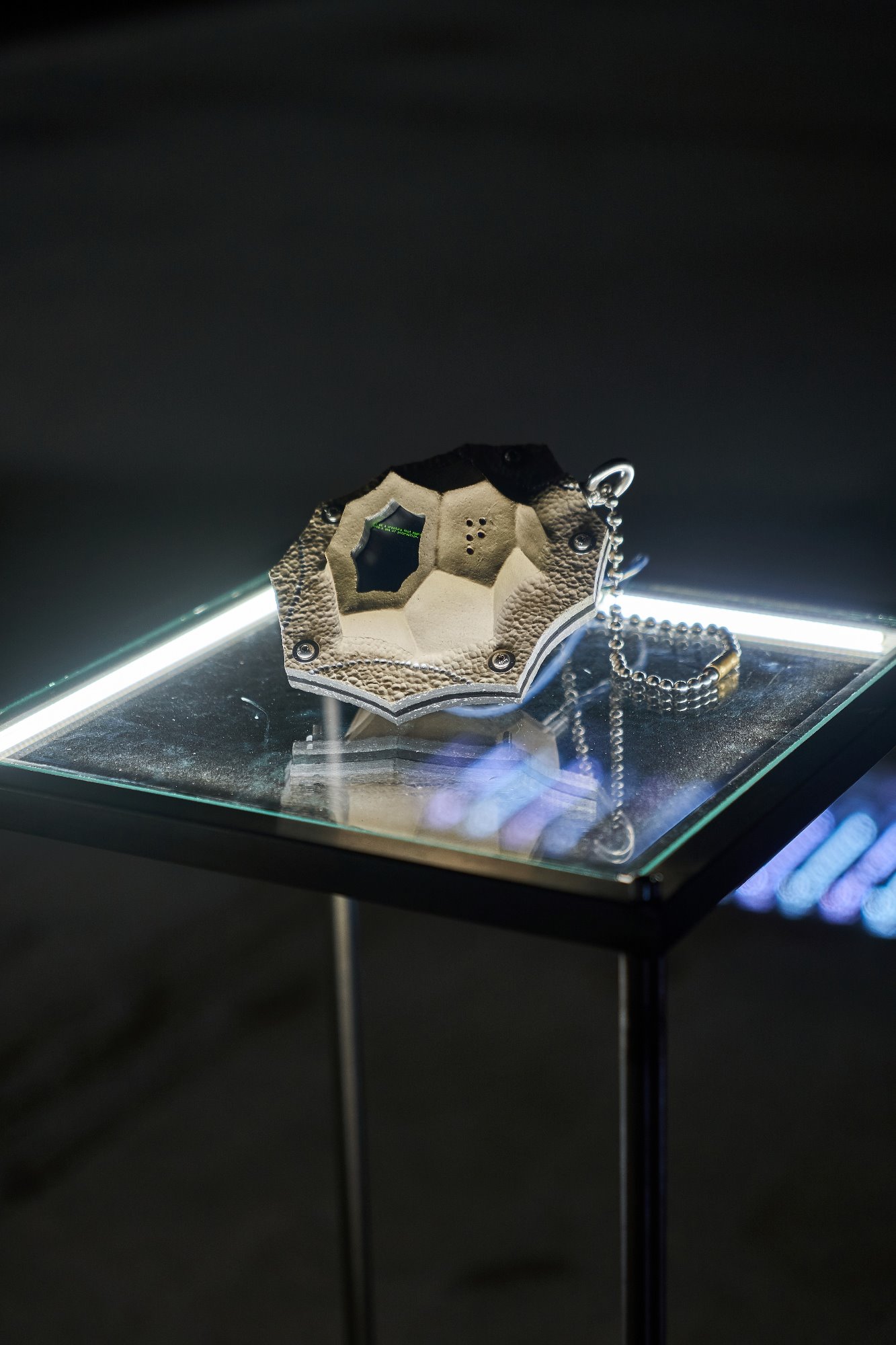
Many of your recent works combine durable traditional materials (ceramic, stainless steel, glass) with electronic devices (motors, Arduino, displays, LED). How do you balance the tension between semi-permanent materiality and technical fragility?
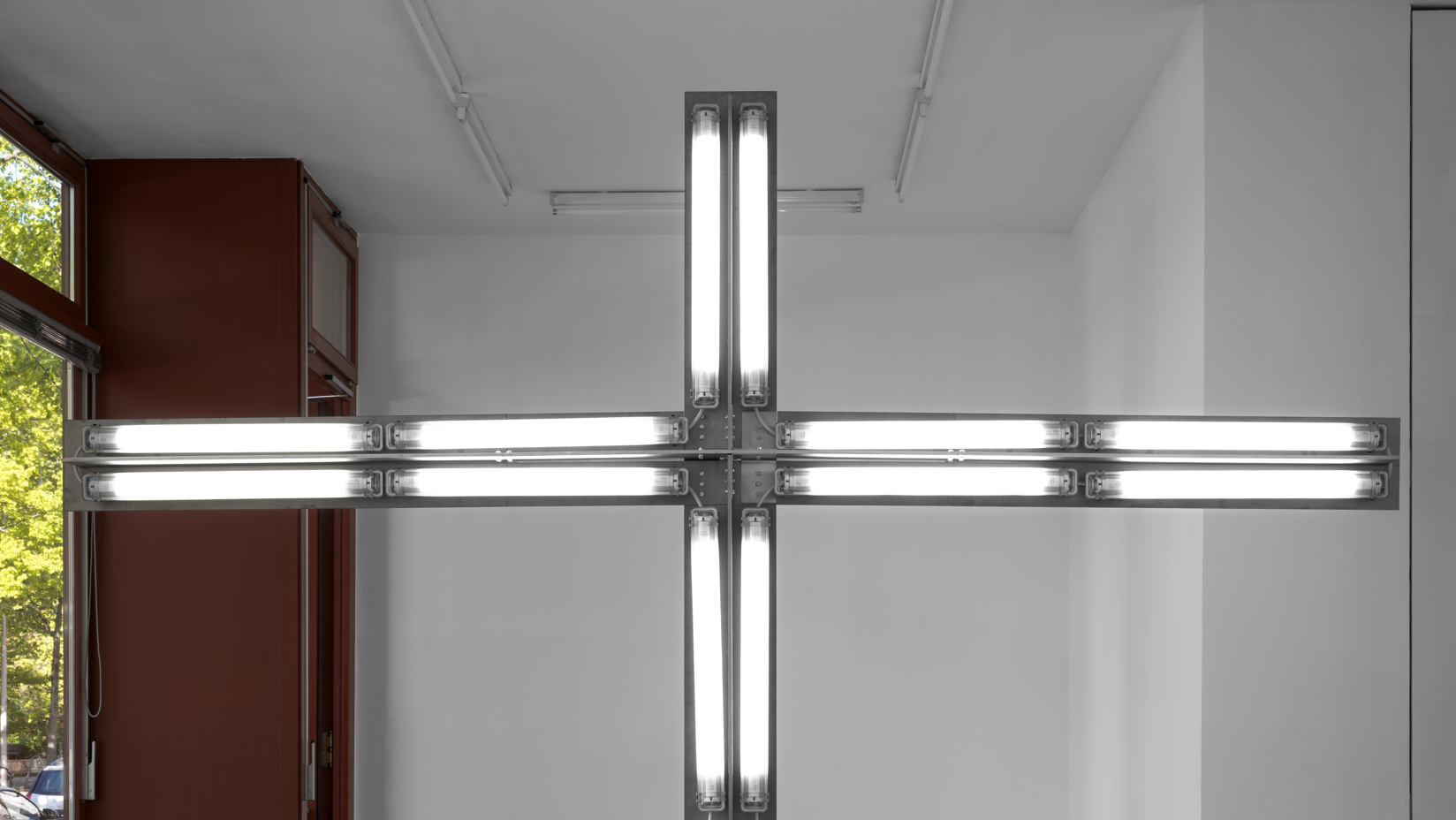
That is a good question. This tension is an essential element in my work. The act of combining traditional materials that have withstood a long time, like steel or ceramic, with electronic devices that have fast and fickle lifespans, like motors, Arduino, and LEDs, is a process of building a kind of “fragile monument.” It reminds us that even the most stable materials we have are being integrated into the unstable structure of a digital system that must be constantly broken and replaced.
The reason I stick to this unstable combination is that it becomes a powerful antithesis to the light digitization of images today. Digital images are losing their weight and physicality through easy duplication and consumption. On the other hand, I give a concrete substance to that fragile digital medium through solid materiality, and attempt to make the concept of “body preservation” possible again within the medium of sculpture. In other words, technical instability is not a flaw in the work, but a core mechanism that proves the ontological value of sculpture by resisting the volatility of digital images that vanish in an instant.
By planting the technology that ages the fastest into the material that changes the least, the sculpture refuses to become a stuffed monument that avoids the flow of time. Instead, it throws itself into that flow to experience the effects of time directly. Here, the permanent material becomes the foundation that supports the sculpture’s physical body to form physical temporality, and the technology inside
adds a contemporary context and operational technical temporality to the sculpture. Ultimately, through this work, I am not making a “sculpture as a completed state,” but attempting to keep the substance of a “sculptural body” until the end, even in the process of parts wearing out and the system changing over time. By drawing technical instability into sensory tension, my sculpture does not simply reflect the lightness of digital images, but is reborn as an organic entity that upholds the value of material preservation while accepting physical laws and wear and tear head-on.
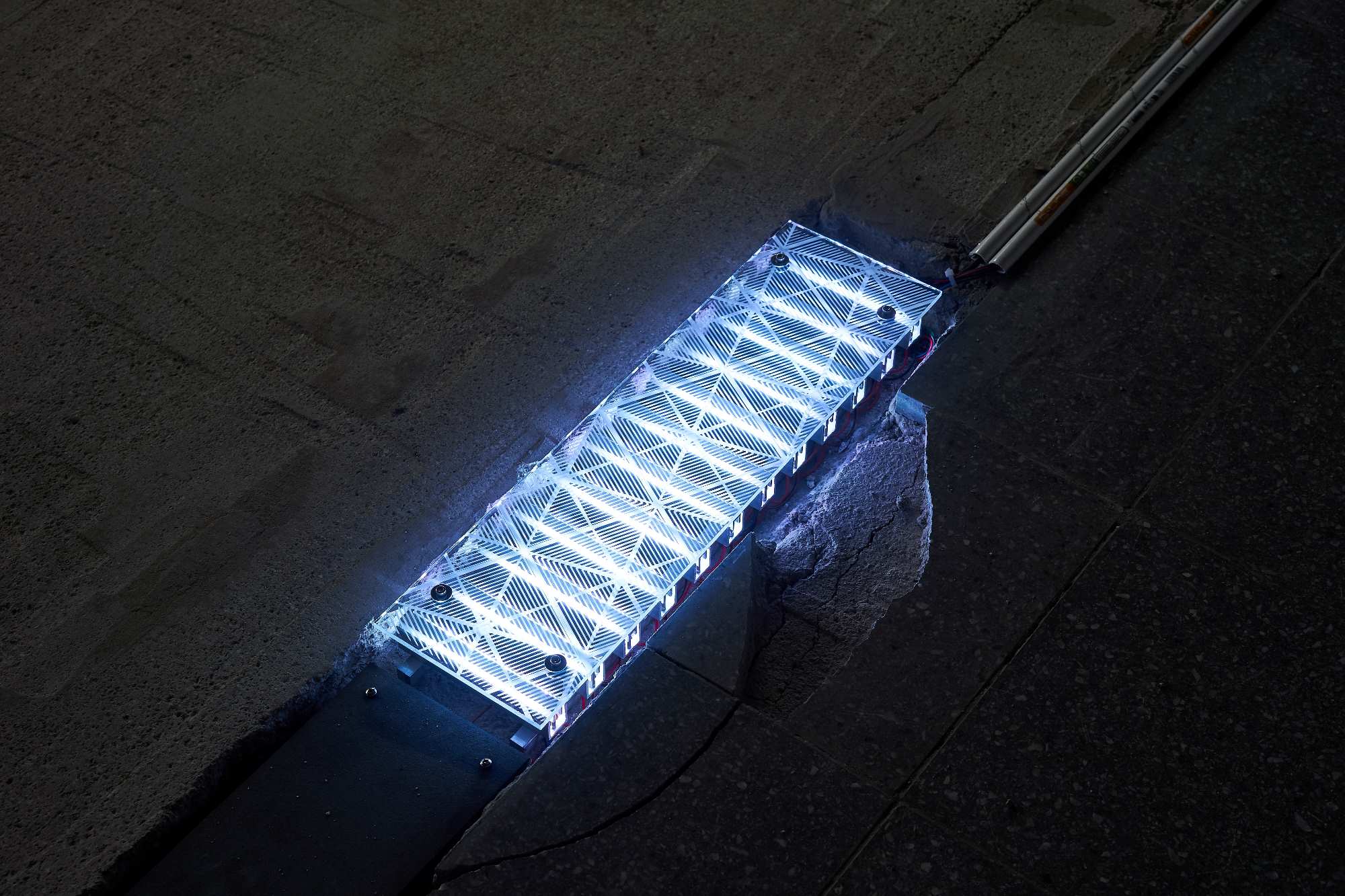
Exhibition title Kid, Lapis Philosophorum’s just a legend. deals with the idea of a digital philosopher’s stone that can perfectly transform and preserve everything. Why did you feel the need to declare that “the philosopher’s stone does not exist,” even while continuing to seek sculptural alternatives to digital transformation?
The statement “the philosopher’s stone does not exist” is not a nihilism that denies the future of sculpture. Rather, it is the most realistic declaration to strip away the illusion of “perfect transformation and preservation” promised by digital media and reclaim the essence of sculpture. Today, as sculpture is consumed as an image through SNS platforms, it is often treated as if “digital transformation” is a philosopher’s stone that transcends physical limits and guarantees eternal life. However, photos or videos are not the object itself, but merely a “representation” accompanied by omissions and elisions. A significant portion disappears the moment a three-dimensional sculptural experience of volume, texture, and space is reduced to a two-dimensional image. My declaration that the philosopher’s stone does not exist is to clarify that a sculpture transformed into a digital image can never be equated with the “sculpture itself.”
Just as we still recognize it as having been a “human body” even after the corpse is transformed into another material through cremation in the modern relocation process, the same applies to sculpture. In a reality where a sculpture is easily treated as a byproduct or discarded for digital records, if we blindly trust in the philosopher’s stone of “perfect digital transformation,” we might abandon our responsibility as sculptors to care for the remains of the material body left behind. I think facing the physical death of the sculpture that has not fully migrated to digital and asking questions until the end of the process of those remains disappearing is the minimum responsibility I have as a sculptor in my relationship with materials.
My works are not an attempt to find a digital philosopher’s stone. Rather, by intentionally choosing materials and forms that cannot be perfectly replicated digitally, I am making an effort to secure the physical temporality that only that material can possess, paradoxically. Because it is not perfectly transformed into digital media, the material substance remains in that place and gains the possibility of being preserved for a longer time. Ultimately, acknowledging that the philosopher’s stone does not exist is not a sense of helplessness, but the start of a new response. When we accept the fact that magical transformation does not exist, we can finally face the weight of the material, not the image. I am talking face-to-face with the physical entities that wear out and disappear as a sculptor, and I am proving the unique temporality of sculpture that images can never reach.
Looking at your entire trajectory from documentation photography to kinetic pieces and recent installations, what do you see as the most urgent task for a sculptor working with physical materials in an image-dominated era?
I do not deny that we are living in an era of images. Looking at the history of technology, the changes in lifestyles or trends brought about by technological advancement are not something we can stop or prevent. It is more accurate to view it as a new paradigm where media has completely changed our way of perceiving and how we face the world. However, as a sculptor, I find myself asking at this point: what are we losing, what still remains by our side, and what can we do? In
media environments like SNS, sculpture is often consumed as smooth images. In that process, the physical weight or flow of time that constituted the physicality of sculpture is often pushed aside as secondary. Rather than criticizing this phenomenon, I am simply measuring the gap between what I have and what I have lost as a sculptor.
There clearly exist things for a sculptor such as the materiality of the material that cannot be replaced by digital images, the wear and vibration experienced as machines operate, and the state of matter that slowly changes with entropy. The work I am trying to do is not to reject the image, but to call back the “existence of matter”—which the image cannot fully explain—into the realm of sculpture.
Ultimately, the sculpture I think of is an act of filling the remaining area that the image could not fill with the weight of the material. It goes beyond using matter as a tool to create form, and deals fully with its inherent physical laws and time. Perhaps the task a sculptor can do in this era is to put the materials that prove their own physical temporality back in their place, behind the objects that the image consumes and volatilizes. I just consider this process as a natural question as a sculptor and the driving force of my work.