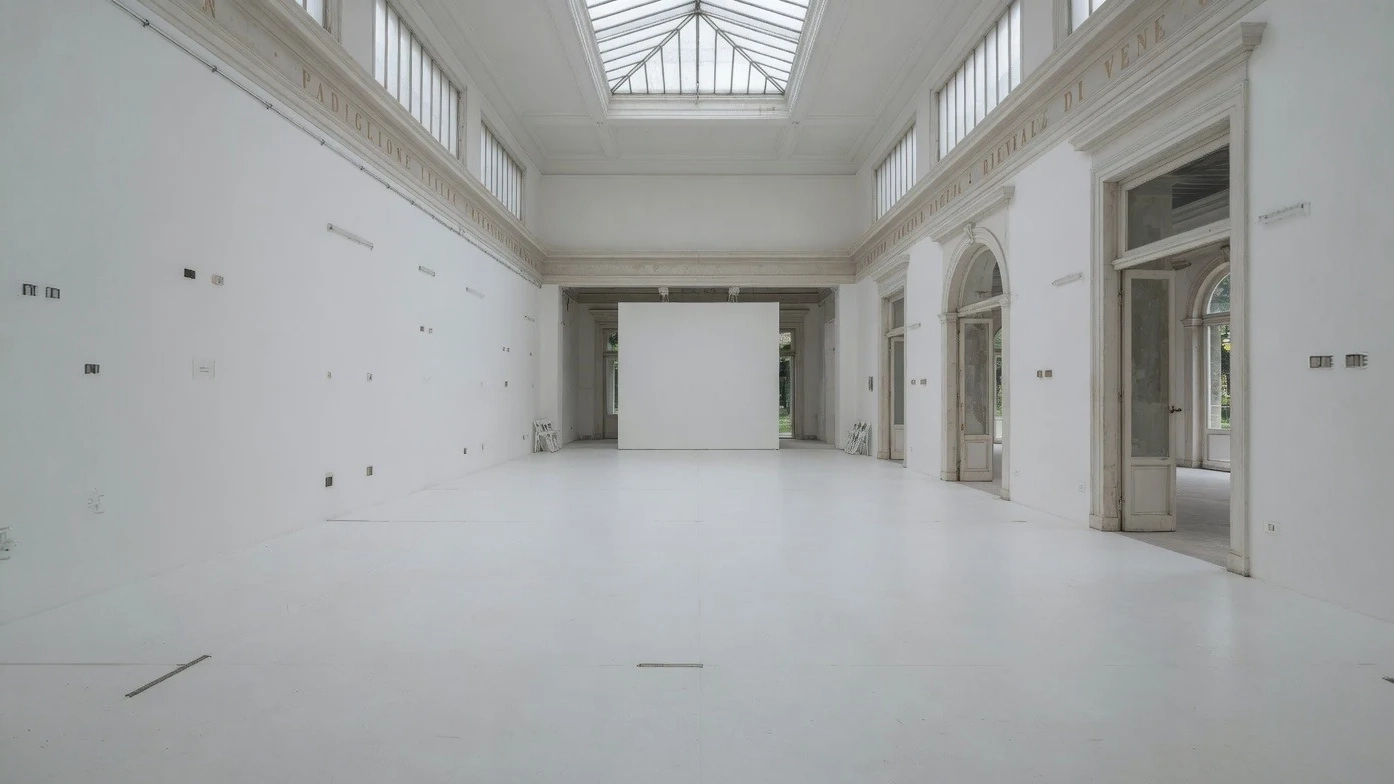
Venice, April 2026. Just weeks ahead of the opening of the 61st International Art Exhibition (May 9–November 22, with previews on May 6–8), the Biennale is preparing for an edition that promises to shift the focus from spectacular display to the depth of intimate resonance. The title chosen by curator Koyo Kouoh, In Minor Keys, remains the beating heart of the project, carried forward with absolute fidelity by her team (Gabe Beckhurst Feijoo, Marie Hélène Pereira, Rasha Salti, Siddhartha Mitter, and Rory Tsapayi) following the artistic director’s untimely passing in May 2025. No replacement, no deviation: Kouoh’s curatorial legacy is being realized exactly as conceived, in a gesture of rare institutional coherence.
The central exhibition, unfolding across the Giardini, the Arsenale, and various locations throughout the city (with extensions to Forte Marghera), brings together 110 participants, individual artists, duos, collectives, and artist-led organizations, selected not by nationality or trend but through elective affinities, converging practices, and relational geographies. It is a cross-cutting selection, with a strong presence of voices from the Global South and the diaspora, privileging the living (over 60% of invited participants) while engaging in dialogue with historical figures. This is not a numerical blockbuster in the vein of recent editions: here, emotional, sensory, and subjective density takes precedence. Art becomes a “natural habitat” for listening, fragility, and slowness.
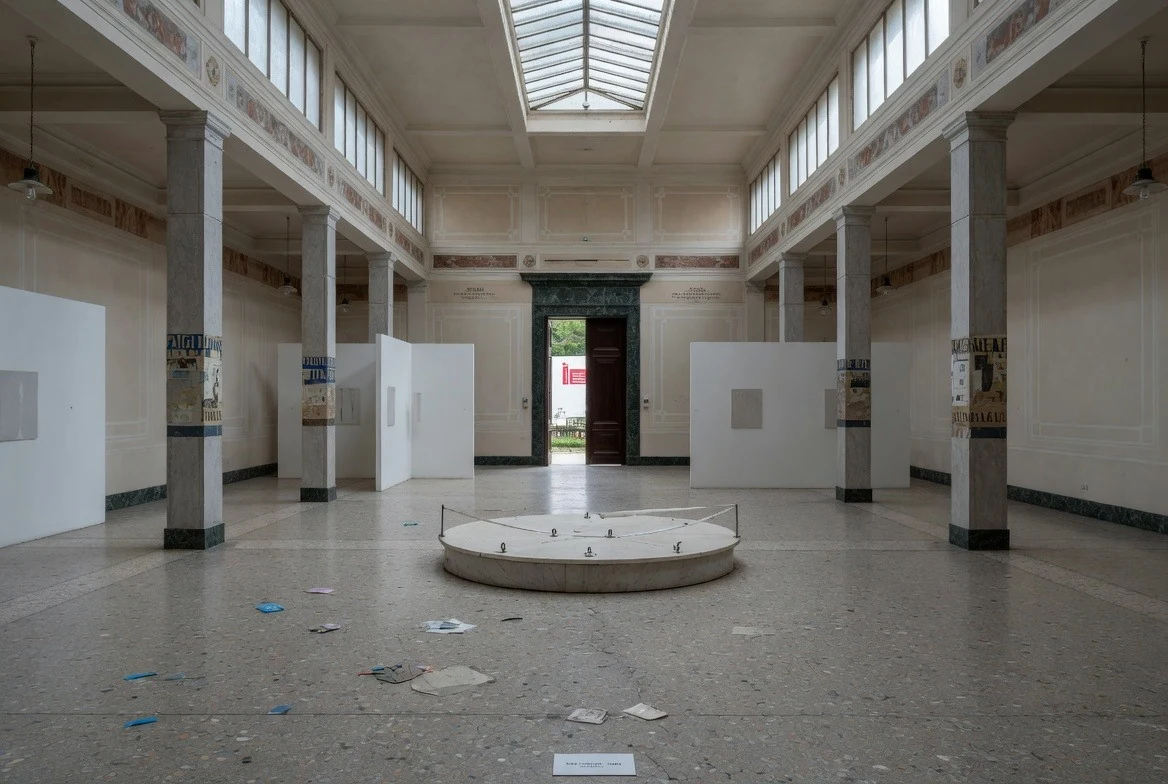
Among the major structural innovations envisioned by Kouoh are the “oases” and “shrines”, spaces of pause, memory, and invocation that traverse the exhibition as contemplative intervals. Two central shrines will pay tribute to Issa Samb and Beverly Buchanan, seminal figures whose legacies are invoked as living presences rather than museum citations. Alongside them are “Rest” spaces (featuring contributions by Linda Goode Bryant, Kennedy Yanko, Annalee Davis, and others) and a “Creole Garden”, where the practices of Wangechi Mutu, Otobong Nkanga, and Carsten Höller will enter into dialogue, a multisensory creole garden weaving together body, land, ecology, and narrative.
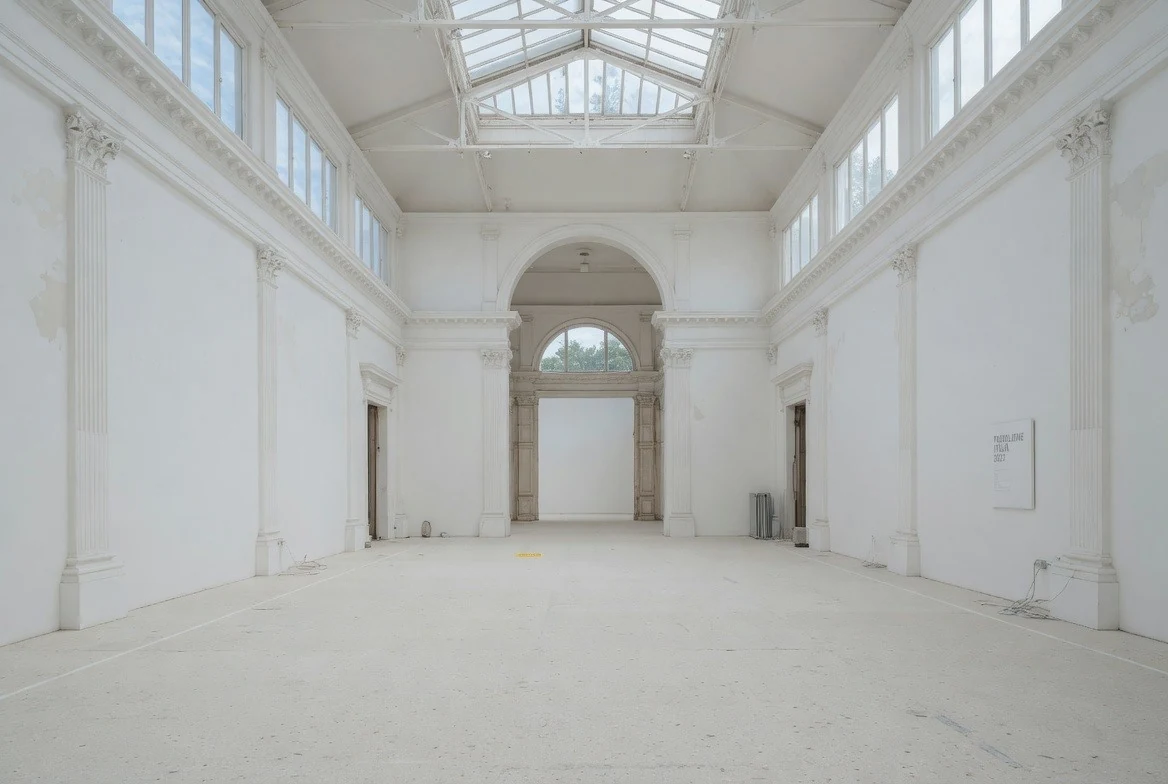
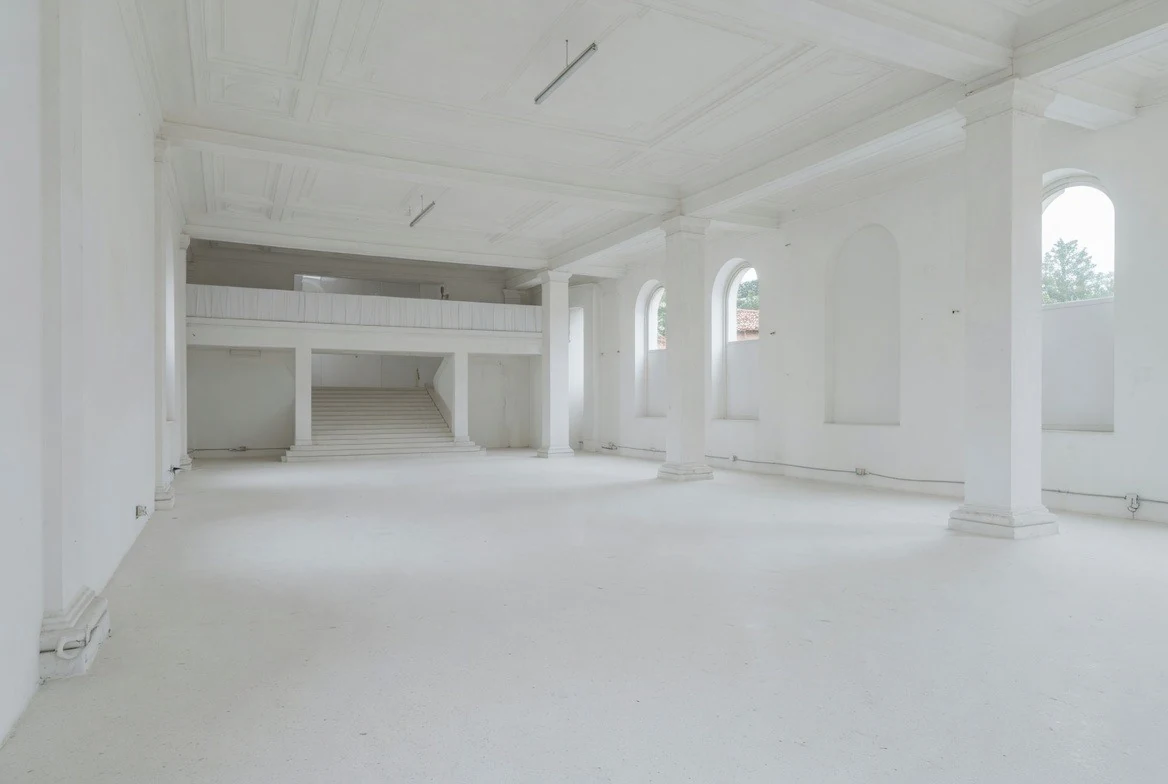
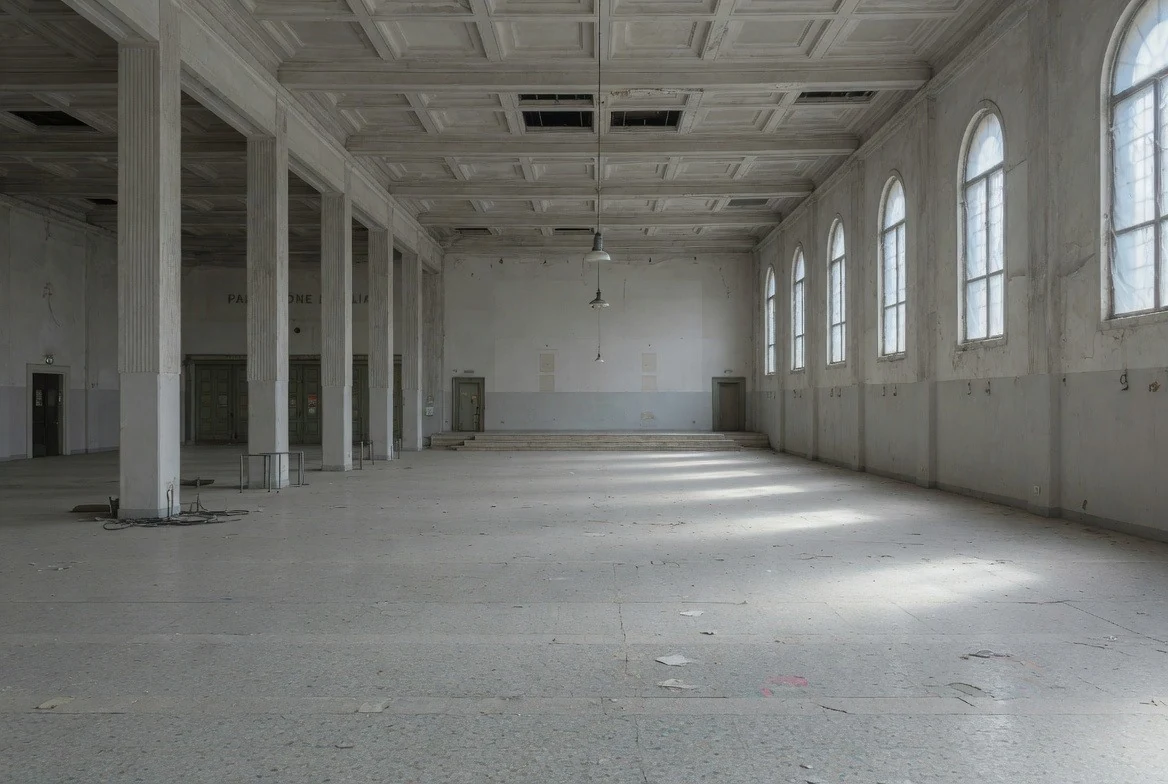
The program also includes processions and invocations (with Nick Cave, Alvaro Barrington, Ebony G. Patterson, and others), a Poetry Caravan, Deep Listening sessions inspired by Pauline Oliveros, and six “alternative schools” or artist-led organizations (including blaxTARLINES, G.A.S. Foundation, and Kouoh’s own RAW Material Company). The exhibition architecture is designed by Wolff Architects, while the Central Pavilion at the Giardini reopens following significant restoration, a strong signal of continuity and renewal.
Cult Artists Involved and What They Will Present
The list of invited participants forms a cross-disciplinary contemporary pantheon. Among the most anticipated cult figures is Laurie Anderson, the pioneer of performance and sound art, who will bring her distinctive universe of sonic and technological storytelling, closely aligned with the “minor tonalities” of the exhibition’s title. Wangechi Mutu and Otobong Nkanga, two major figures in postcolonial sculpture and installation, will be central to the Creole Garden: Mutu with her hybrid corporeal and mythological forms, Nkanga with her deeply researched work on land, resources, and material memory. Kader Attia, known for his exploration of repair and colonial trauma, is expected to present works addressing fracture and processes of reconstruction. Nick Cave will contribute his Soundsuits and performative installations within the processions and invocations, introducing movement, sound, and collective ritual.
Powerful voices such as Torkwase Dyson, Alvaro Barrington, and Tuấn Andrew Nguyễn will contribute installations engaging with ecology, migration, and forms of quiet resistance. Khaled Sabsabi, featured both in the central exhibition and the Australia Pavilion, will present large-scale works reflecting complex identities and intercultural narratives. A historically evocative presence is Marcel Duchamp, functioning as a curatorial ghost aligned with the evocation of past presences. The selection also includes numerous other notable artists such as Pio Abad, Philip Aguirre y Otegui, Akinbode Akinbiyi, Fabrice Aragno, the collective fierce pussy, and Sammy Baloji, alongside a wide range of voices from African, Asian, and Latin American contexts. The absence of Italian artists in the central exhibition has been noted, though the Biennale compensates with strong national representation across the pavilions.
The Italy Pavilion and National Participations
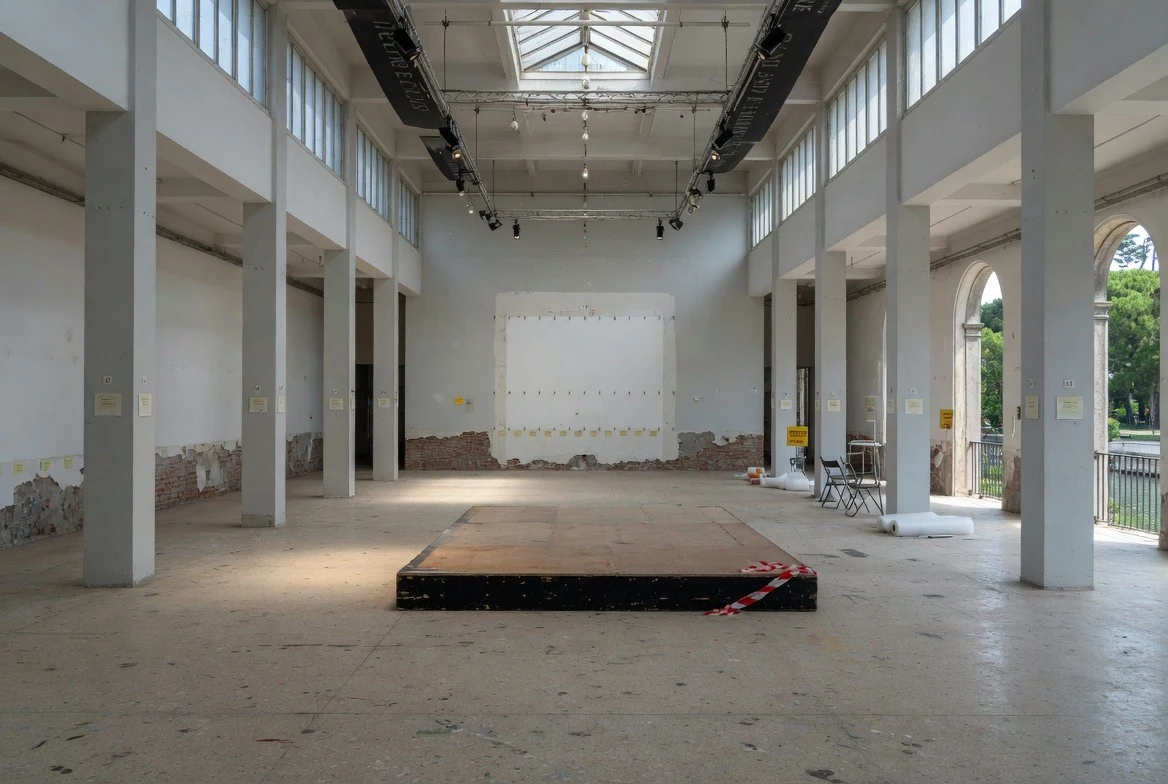
The Italy Pavilion at the Tese delle Vergini (Arsenale), titled Con te con tutto, is entrusted to Chiara Camoni and curated by Cecilia Canziani. The project takes the form of a transformative environmental installation: an evolving landscape inviting dialogue between sculpture, the visitor’s body, slowness, and relationships with other forms of life. It is a domestic and relational work that closely embodies the ethos of “minor tonalities.”
There are 100 National Participations (including seven first-time participants: Guinea, Equatorial Guinea, Nauru, Qatar, Sierra Leone, Somalia, and Vietnam) and 31 Collateral Events. Among the most anticipated pavilions are those featuring figures such as Yto Barrada (France), Florentina Holzinger (Austria), Miet Warlop (Belgium), and Lavar Munroe (Bahamas), with further announcements expected.
What to Expect in Venice
The 2026 Art Biennale will not be another endurance-style exhibition. It is conceived as an experience of active listening, fertile pauses, and subterranean connections. As Kouoh’s team has stated, the aim is to “attend to minor tonalities”: the emotional, the sensory, the subjective. In an increasingly noisy and polarized world, Kouoh envisioned an edition that foregrounds the resilience of fragility, the force of the whisper, and the beauty of unexpected convergences.
Between renewed gardens, an immersive Arsenale, and Venetian streets punctuated by installations, from the glass works of Dale Chihuly to the rocket by Goshka Macuga, Venice is preparing for an edition that will be remembered not for its spectacle, but for its resonance. In Minor Keys is not merely the title of an exhibition; it is a proposition for deep listening.
Alongside this central score, Venice transforms into a true archipelago of parallel voices. The 31 official Collateral Events recognized by La Biennale di Venezia enrich the city’s fabric with rare density and quality, many of them seemingly conceived to resonate with Kouoh’s “minor tonalities.” They are not mere appendices, but lateral chambers that extend and multiply the curatorial discourse.
Among the most compelling is Nalini Malani – Of Woman Born at the Magazzini del Sale, a large-scale multichannel installation presented by the Kiran Nadar Museum of Art. It transforms the space into a constantly shifting chamber of thought dedicated to women, myth, and global conflict: a work of poetic memory and feminist resistance that aligns closely with Kouoh’s call for deep listening. At the San Marco Art Centre, the Dia Art Foundation presents Lee Ufan in a landmark exhibition: the master of Korean minimalism reshapes the space into an experience of silent presence and near-mystical relation with matter and void, a true exercise in sensory “rest.”
The theme of testimony and silence finds powerful expression in “___________” (Gaza – No Words – See the Exhibit) by the Palestine Museum US at Palazzo Mora, an installation that speaks through absence and urgency, reminding us that even a whisper can be a political act. Hong Kong responds with Fermata, a project centered on suspension and held breath, while Catalonia presents Claudia Pagès Rabal with Paper Tears at Docks Cantieri Cucchini, a delicate yet incisive work on rupture, memory, and the fragility of paper as a metaphor for resistance.
The British nations offer two proposals closely aligned with the spirit of the edition: Scotland + Venice with Bugarin and Castle at Olivolo, and Wales with Sownd by Manon Awst and Dylan Huw at the Istituto Santa Maria della Pietà. Both are site-specific projects that weave together sound, landscape, and identity in an intimate register. East Asia is strongly represented by Su Xiaobai’s Alchemical Universe at Palazzo Soranzo Van Axel, a meditative, almost alchemical painting practice that transforms color into vibrating matter, and by The Spirits of Maritime Crossing 2026 from the Bangkok Art Biennale Foundation at Palazzo Rocca Contarini Corfù, a journey through migration, diaspora, and fluid narratives that directly engages with the Global South emphasis of the central exhibition.
Voices of resistance and performance are also prominent: If All Time Is Eternally Present (featuring Kandis Williams, Meriem Bennani & Orian Barki, and Tai Shani) at Palazzo Nervi Scattolin explores time, body, and subjectivity in a contemporary key, while Official. Unofficial. Belarus. by the Belarus Free Theatre at the Chiesa di San Giovanni Evangelista stages the struggle against censorship through urgent and necessary performance. Closing the circle is Hybrids by Leandro Erlich at the Negozio Olivetti, a perceptual and illusionistic environment that invites viewers to question their own senses, echoing Kouoh’s “oases” as spaces of pause and re-attunement.
Also worthy of attention are Ronald Ventura’s Luna (at MUSE and Castel Belasi), the retrospective dedicated to Tadeusz Kantor at the Procuratie Vecchie, and Instruments of the Mind by Vyacheslav Akhunov at Palazzo Franchetti, alongside numerous other projects dispersed across palaces and foundations, turning Venice into a single, expansive choral composition for six months.
Together, these 31 Collateral Events are not mere “adjuncts”: they are variations, echoes, and improvisations that render In Minor Keys a total experience. Some whisper, others raise their voices softly, others still invite silence. All, however, participate in Kouoh’s radical gesture: to withdraw art from spectacle and restore it to its oldest and most necessary function, allowing us, together, to feel a little less alone.
Venice, April 2026. The Biennale has not yet begun, yet it is already clear that this year the background noise will be different. Lower. Deeper. More human.