Fakewhale in Dialogue with Leon Billerbeck

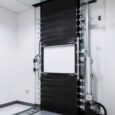
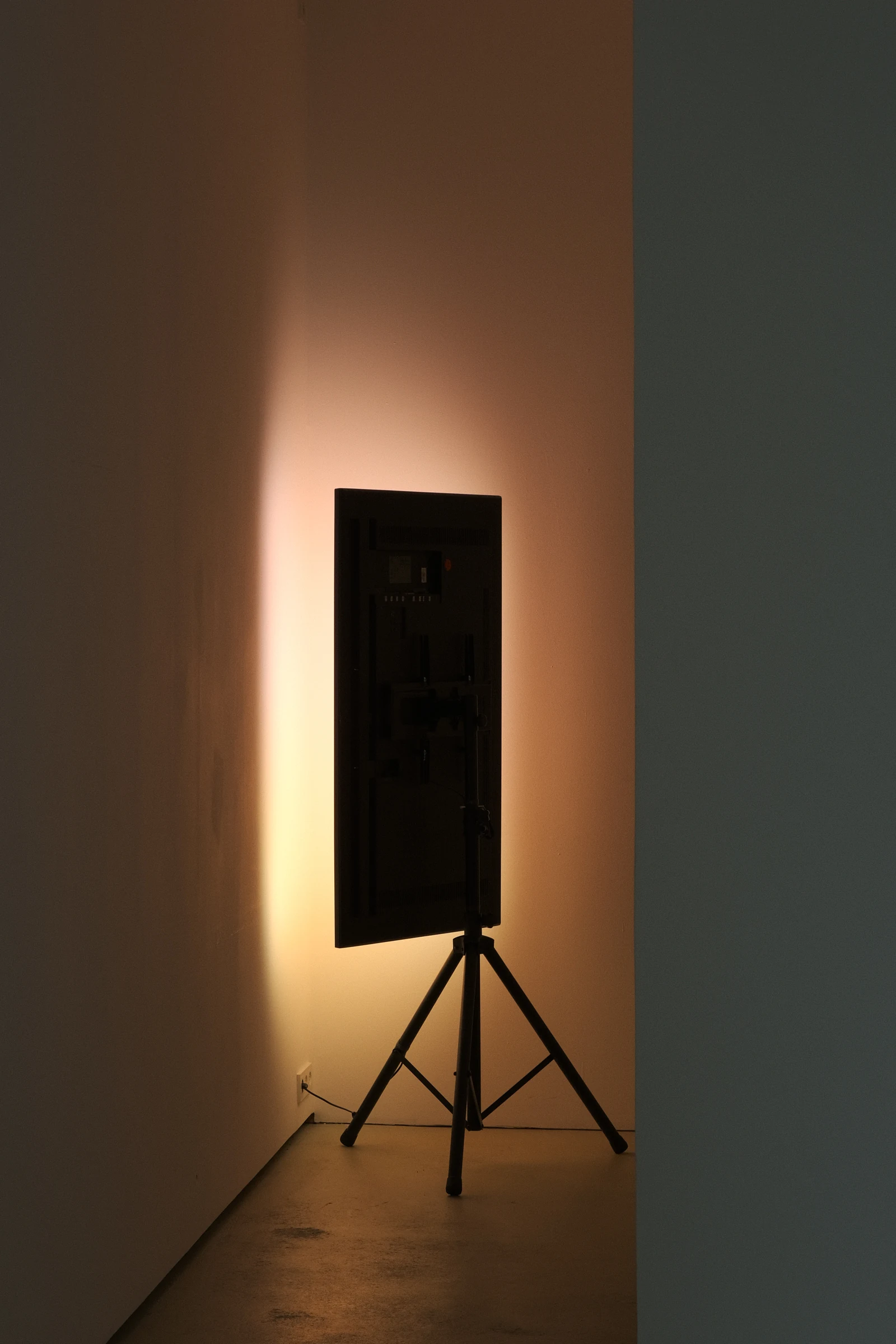
„2251 deleted photos and videos“, tripod, LCD-screen, video loop, 200x75x75cm, 2024. © Leon Billerbeck

Leon Billerbeck is a German artist working across photography performance and installation. His practice reflects on image production in a digital age shaped by excess accumulation and constant circulation.

Through processes of deletion transformation and material experimentation he explores the relationship between digital archives memory and the body. His work often turns everyday gestures into reflective and ritual like actions.

In this interview we discuss his approach to absence materiality and the role of art in a world saturated with images.


FW: When did you first realize you wanted to work in art?

Leon Billerbeck: I started writing poetry, making music and taking photographs quite early, maybe when I was around 12 years old. It all started as a hobby, and when I finished high school, the decision to study media art at the bauhaus in weimar and discovering all these artists and their works, like Paul Klee and his diaries for example, I realized I could make art my life’s project as well. And I started trying. 


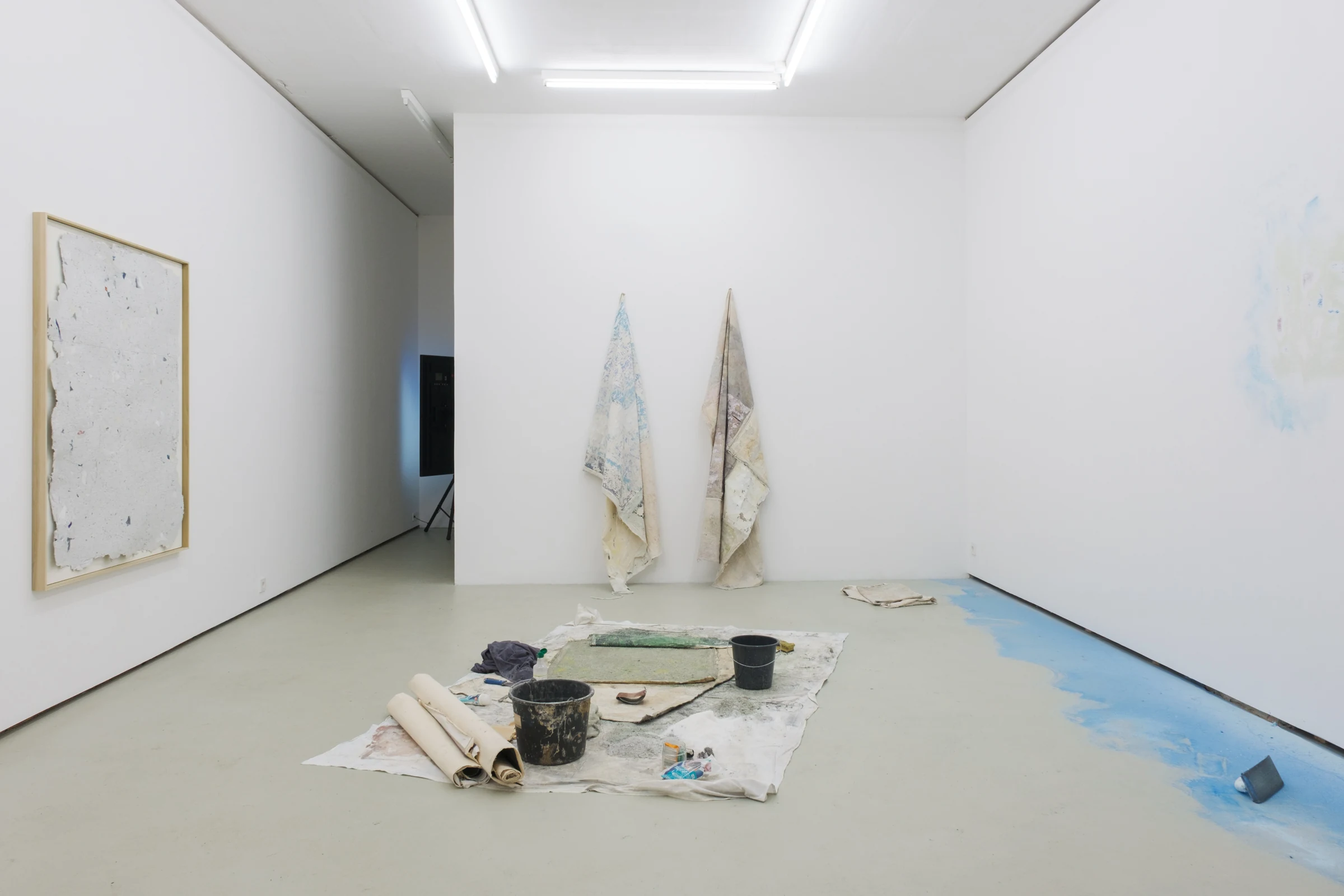
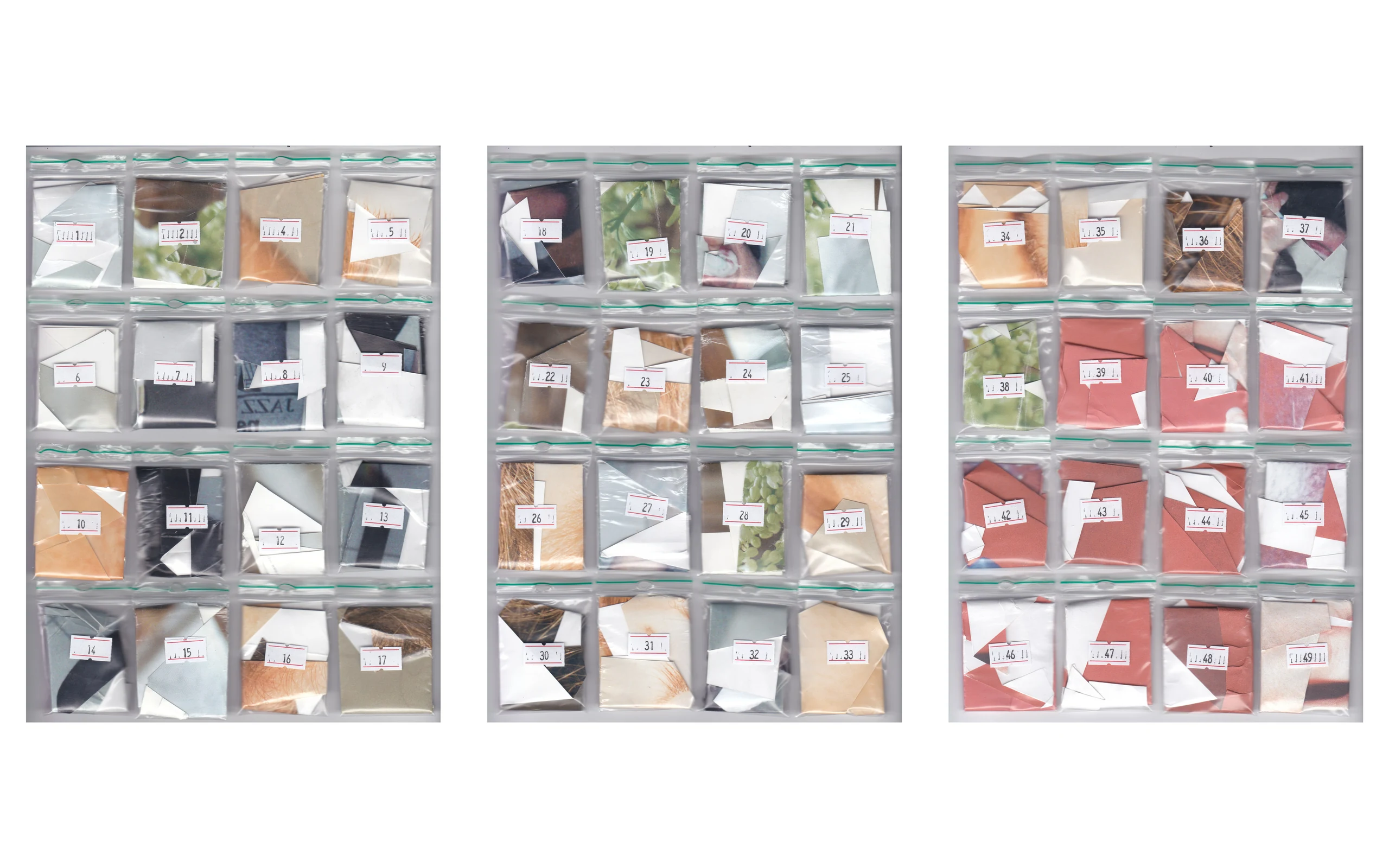
Installation View, …]3291 deleted objects[…(abwesen), Gallery Shower, Leipzig, 2023. © Leon Billerbeck
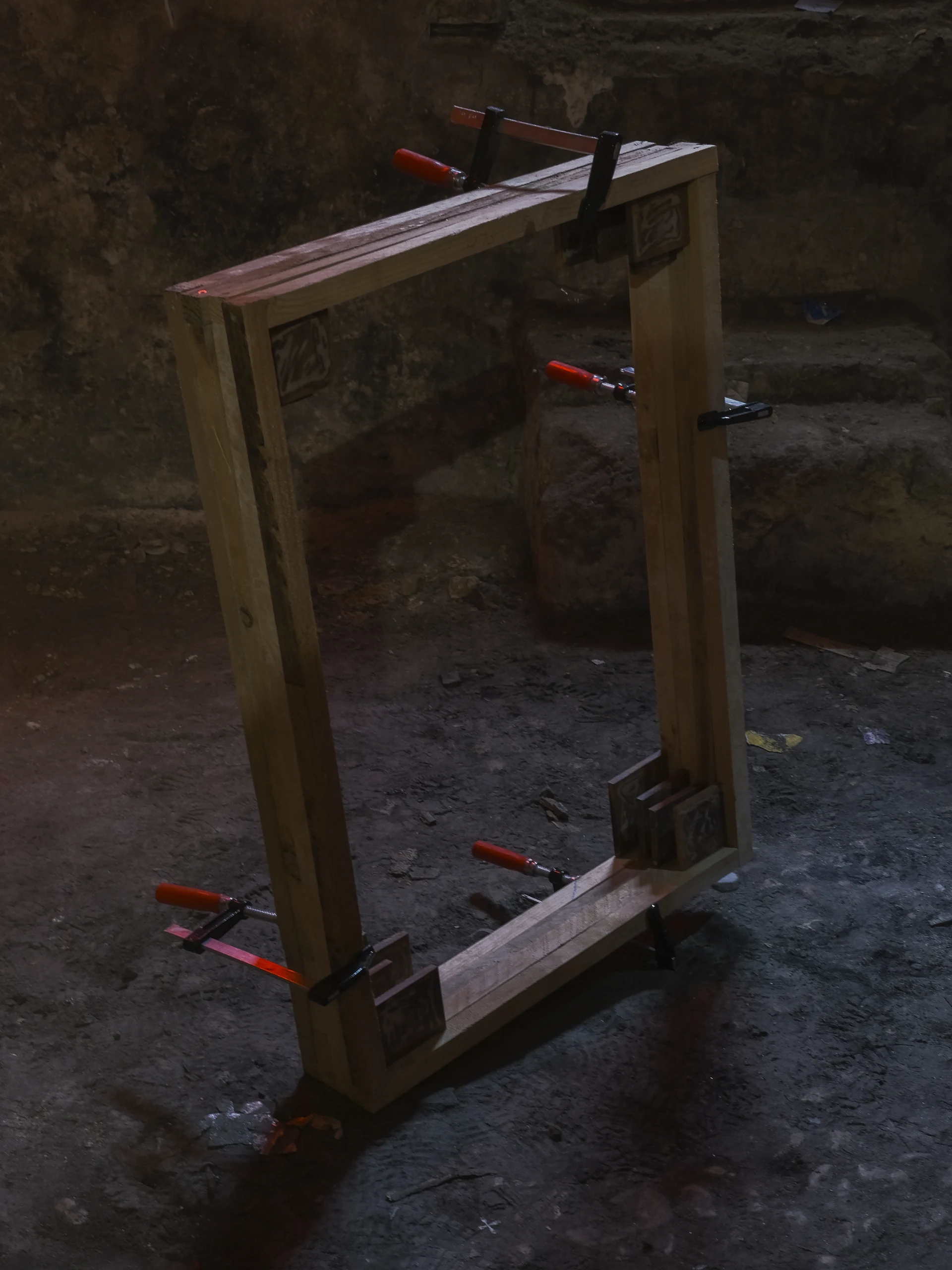
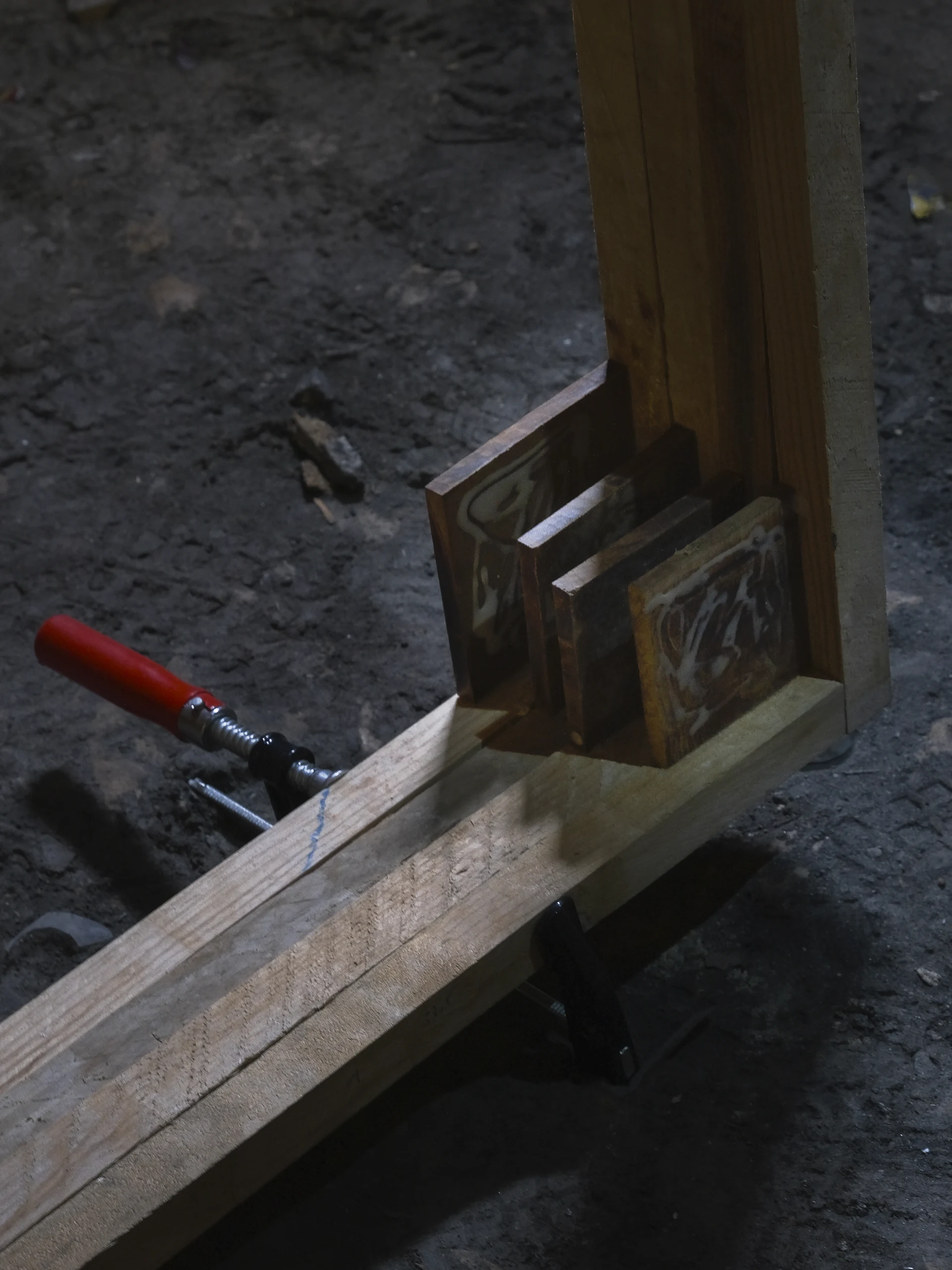
« Hold and contain » , 86 × 60 x 27 cm, wood, glue, screws, clamps, 2026.

You work across photography performance and installation how did this interdisciplinary approach develop for you?

Since my first creative output as a young teenager was poetry and music, which I performed on stage, and photography and video started to be a practice that I was interested in very early as well, I was always kind of interested in everything. In the beginning I was mostly working on photography or film projects though, and producing music at the side, as a separate thing. But over the years I noticed that there is no need to separate everything, that It can work together. And I think this is very I got more interested in performance and installation art, since it opens up this platform to bring diverse things together. 

Your work often engages with ideas of deletion reduction and absence are you more interested in removing images or transforming them into something new?

This is the core question of my recent work I think. I cannot answer it yet, and maybe never will. But Jean-Paul Sartre said something interesting about this in « Being and Nothingness » . He says, that no condition of being can ever be nothing, but that nothingness is rather the constant change of states, the transformation from one being to another.  And I realized the same thing in my processes and trials to erase, delete, deconstruct, that I am always left with something after. The object is not gone, it has transformed. So a certain kind of failure always takes place. And at this very thin line between transformation , presence and absence, my work is situated I think. And somewhere near there, I assume something like « emptiness ». 


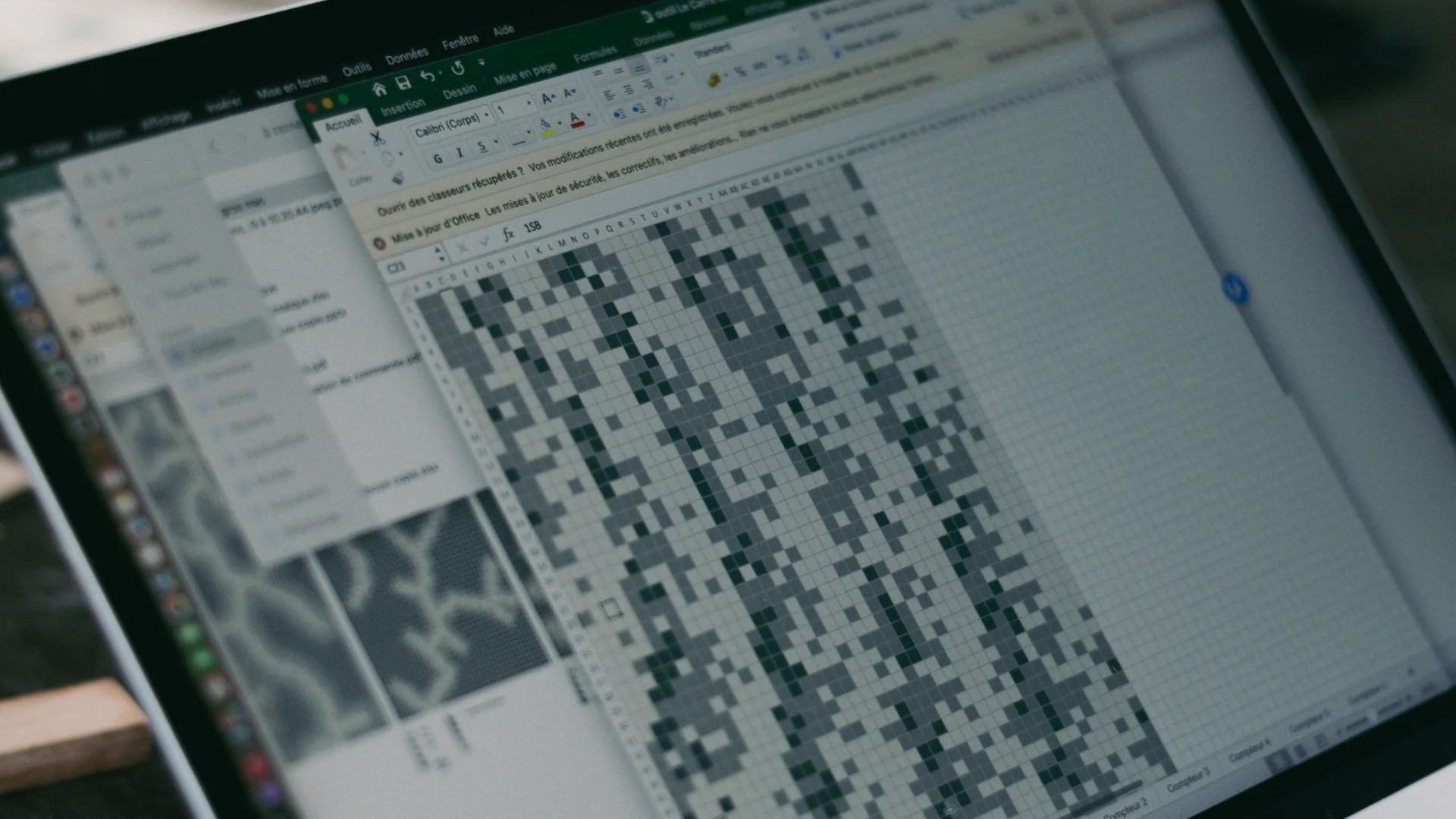
„2251 deleted photos and videos“, tripod, LCD-screen, video loop, 200x75x75cm, 2024. © Leon Billerbeck

In your project dealing with deleting images from your phone what did you discover about the relationship between digital archives memory and the body?

With this project I started deleting Images and videos on my phone in sessions of 30 minutes while I scrolled through a randomly selected period of my past. I realized that it is a very emotional and therefore physical experience to see my past life passing through beneath my scrolling thumb. People you met, old friends, family, vacation, work, sad selfies, happy selfies, documents, screenshots of train tickets and google maps directions. It is a very intimate and absorbing act. Like doomscrolling through your own life. It is actually hard to stop, since it is so entertaining in a melancholic and euphoric way at the same time. You sit there, and laugh, and cry, and think and switch positions, in silence. I think it is somehow comparable to looking at old family photo albums, just much closer, saturated and intense.

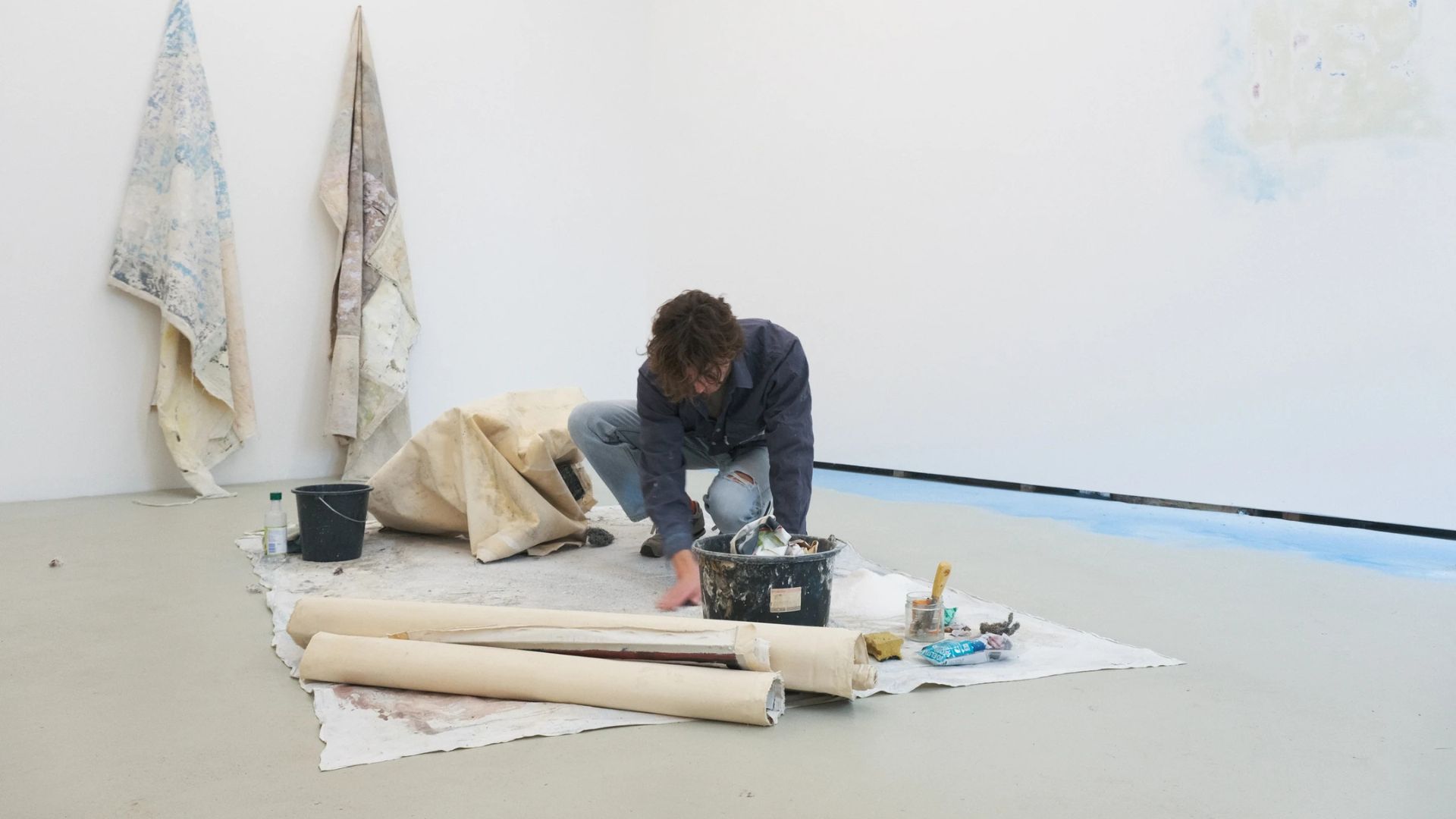
At the same time, I tried to confront this practice of deleting digital imagery with the erasure of material images, and I noticed while scrubbing of paintings with sanding paper and steel wool, that the digital process of erasure is somehow much more cruel and emotional, because you can delete thousands of images in half an hour, just by moving your thumb, but it takes you days of sweaty work to just make one painting disappear. I still find this relation very interesting, because it appears to be the opposite. On the paintings you can see the traces of physical work while the phone screen stays the same, as if nothing ever happened. So there is a kind of strange but intense anti-corporality in the act of deleting content from the phone.

Why are materials like water salt textiles and everyday objects so central to your work?

Water has naturally become an important part of my work in various different forms and projects. And I think that it stems from its very unstable, transformative but powerful presence that I feel attracted to. How you can gather it from the sky. How you can wash paintings with it. How it evaporates. 

Salt has interested me for a long time due to its  history of healing and conservation purposes. In Yoga and other Indian healing practices it is widely used to cleanse the body internally and externally for example. At the same time it is widely known for its bleaching properties for laundry as well, so there is a kind of double dimension to salt’s relationship to « cleansing » , firstly spiritually and medically, and secondly domestically. 

So I think in the process of washing and sanding the paintings, I realized that I am treating them like laundry, like trivial objects of everyday life and that by this, I somehow empty them of their image, but also of their sacrality as an artwork. It turns into an everyday object itself. But at the same time I noticed that this laundry washing becomes itself a ritual, a kind of performance, and therefore the line between ritual, performance, art and everyday life blurred. And the salt brought exactly those two components into the process as well. 

Of course other artists like guy debord, Yves klein and marcel Duchamp inspired me as well to think more about these intersections of every day life and art. 

„Volcano“, UV-Print on aluminium, 100x120x5cm, 2023.

Your practice seems to move between intimate gestures and broader reflections on contemporary society how do you balance the personal and the collective?

This is also a very important question. I think about it a lot and I think it is one of the hardest things to do in the arts, to build an authentic bridge between the intimate and personal to the public and collective. I try to be honest with myself and work only things that really interest and touch me personally. And I think this is the first important step to be able to relate to the collective experience of the world. Because people feel affected when they feel that you share an intimate process with them. At the same time, of course the personal is already necessarily part of the universal and vice versa. So I think if you engage with contemporary topics and have an opinion on it, it becomes something personal as well, and therefore also your personal reaction to it feedbacks into contemporary discourse. 

Spirituality Zen Buddhism and ritual appear as influences in your work how do they shape your creative process?

In Zen Buddhism and Yoga as well, it interests me how every day life and its actions can become meditation and ritual depending on your perspective and engagement with it. Like in the tea ceremony, the cleaning of the yard with a broom, walking along a path. The sense of it is mostly to empty your thoughts completely, to just concentrate on this one action fully aware, and exactly there lies the twist between an ordinary task that we do kind of on the side, and a dedicated action that becomes ritual and meditation. In that context also repetition plays an important role, in everyday life acts, as we have to do them every day again, and also in mantra chanting and countings breaths etc. to cleanse ones mind from other thoughts. So for me there lies the essence of silence, an intense absence and presence at the same time. A search for the state of emptiness or at least desaturation. Exactly what I am trying to investigate in the context of image consumption, circulation and production. 

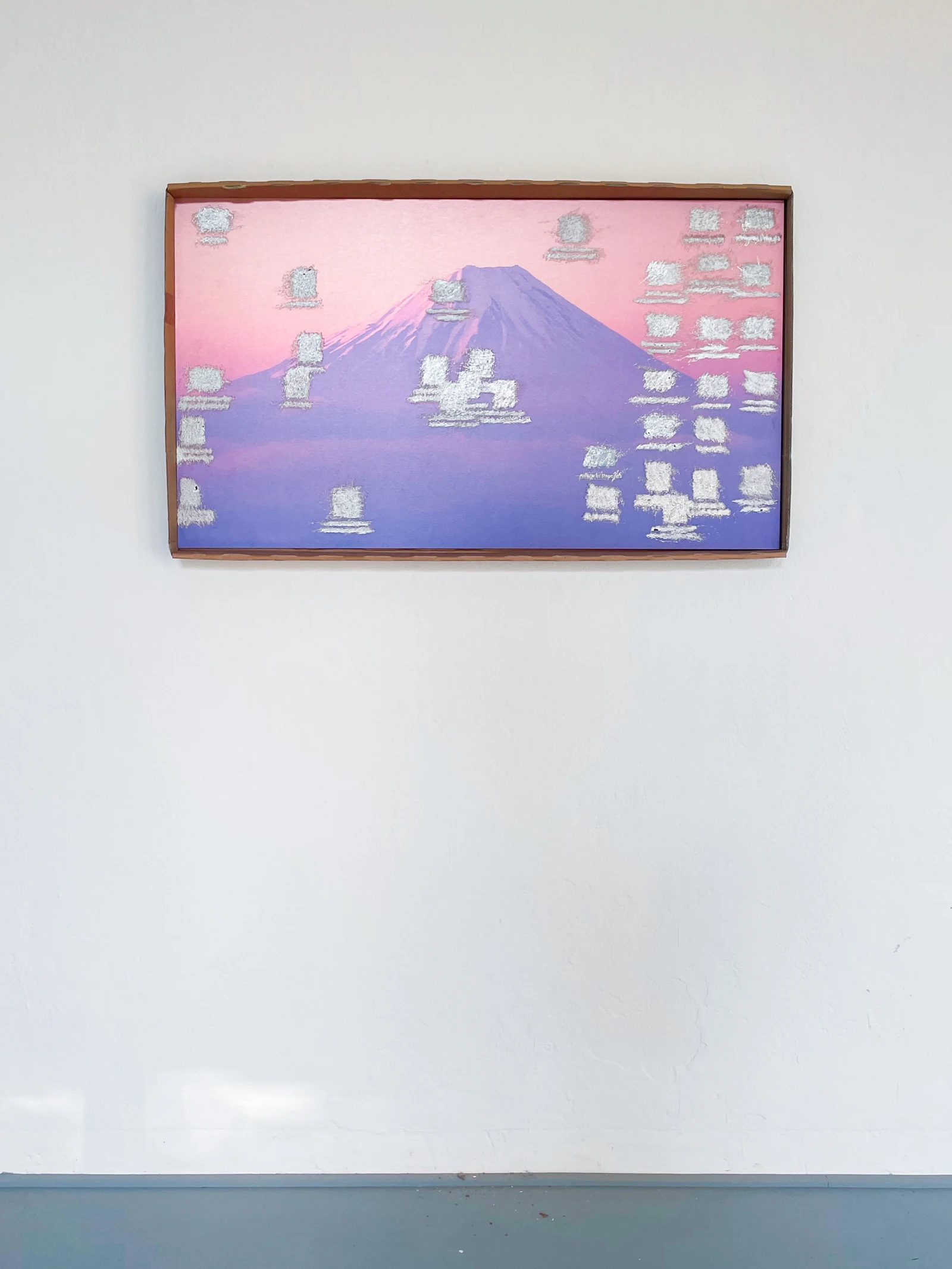
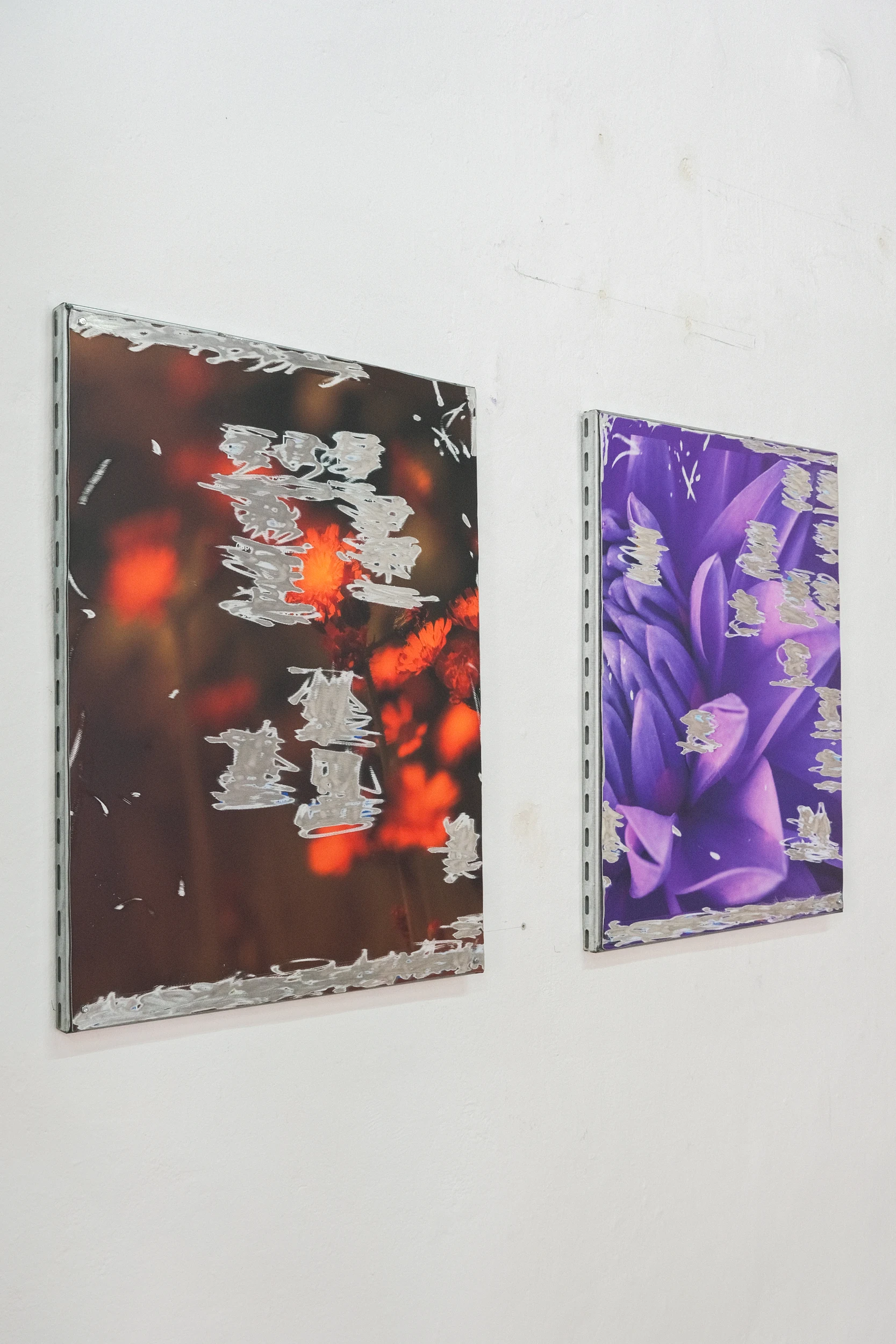
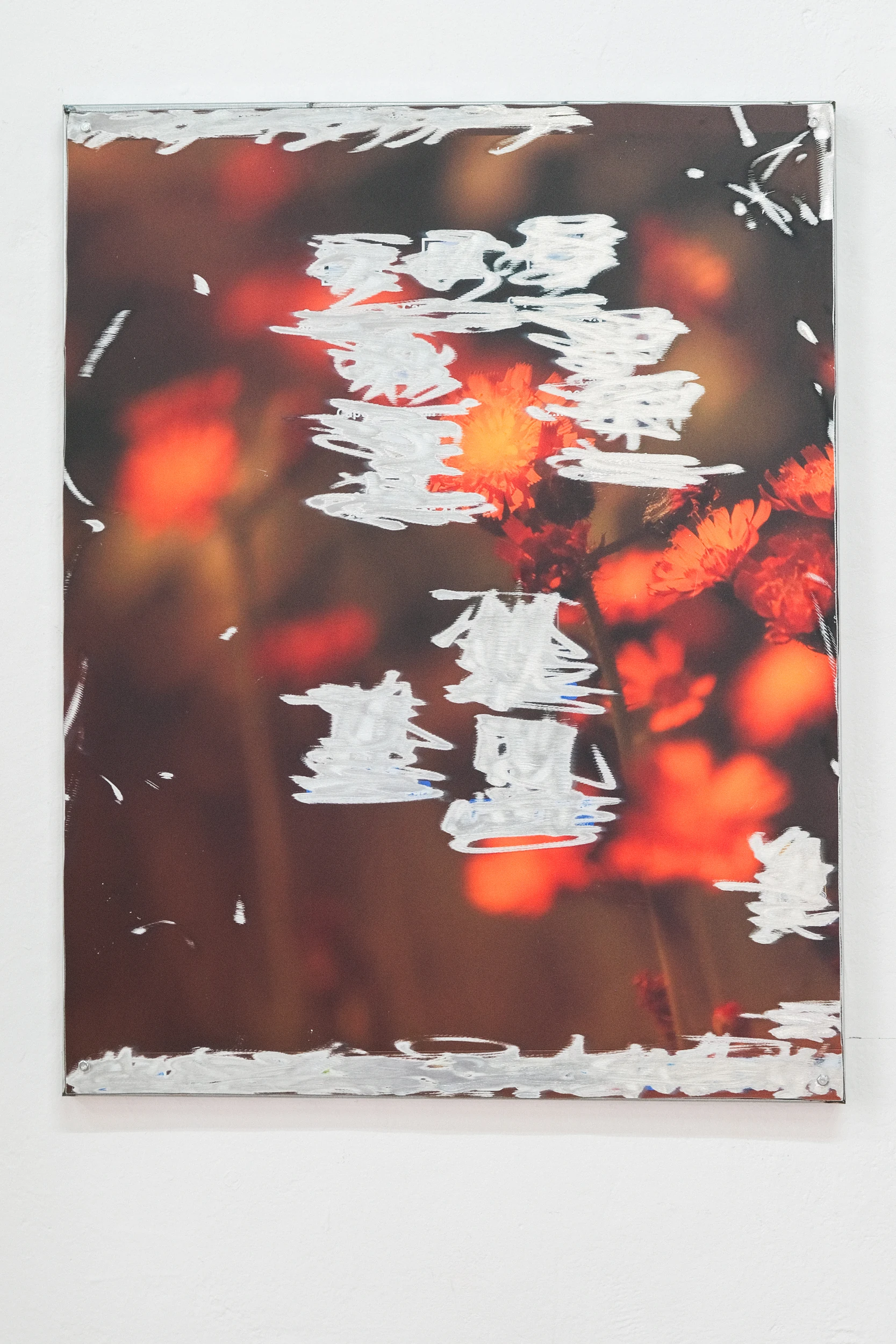
Décos mortes (Fond d‘ecran I & II), UV-Print on aluminium, stainless steel, 62 x 79 cm. Provence Art Contemporain, Marseille, 2025. © Leon Billerbeck

In works like Ataxia Ataraxia which stem from a deeply personal experience how do you translate something intimate into a universal language?

This is very related to the question of how to move between the intimate and the collective. It is a general challenge in each artistic project, but as I said, I think It comes naturally from your personal being in the world and having a certain opinion on contemporary topics. In the case of Ataxia/Ataraxia I found it very touching how many people could relate to this project even though it was the most auto-biographic one that I have done. I was a bit afraid that it is too personal and nobody will understand, but the contrary was the case. It was so personal and so emotional, that it touched the public even more. On the one hand it is the topic of the project, but of course it is also important to find an accessible way to transmit your ideas. I feel like it is much related to intuition and empathy and also the willingness to take a risk. You never really now before who and how people are moved. You try to put yourself in their position, you test things, you exchange with others in the process. But in the end, you never know for sure. Somehow it can be quite surprising what works actually spoke the most to the audience. 

In a world saturated with images and content what do you think is the role of the artist today? 

There are innumerable problems and tensions in the world, not just the image saturation and content consumption. Therefore I feel the role of the artist should be as it has been at least for the last 150 years, to critically observe and reflect the circumstances of this world , personal and global, and comment from his/her own perspective. One artist can not comment on every topic, since it depends so much  on very personal struggles and interests, so I think each artist should decide freely on his/her own what to work on and use this as a platform  to criticize and expose, to contribute to shaping and (mis)understanding the world. 


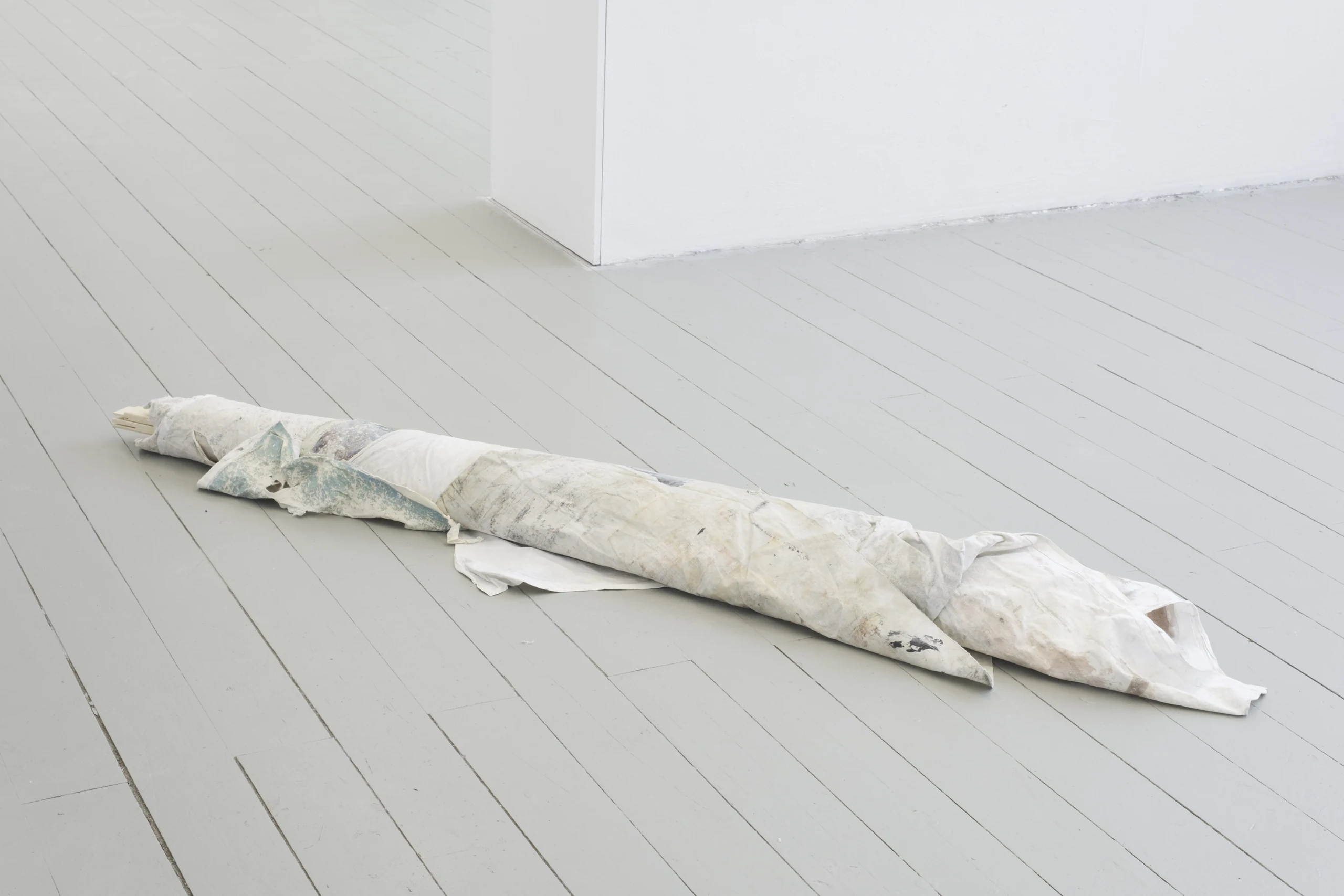
„Roll 1“, washed canvases, Acryl and oil rests, unmounted canvas stretchers, 175x30 x20cm, 2024. ©Leon Billerbeck
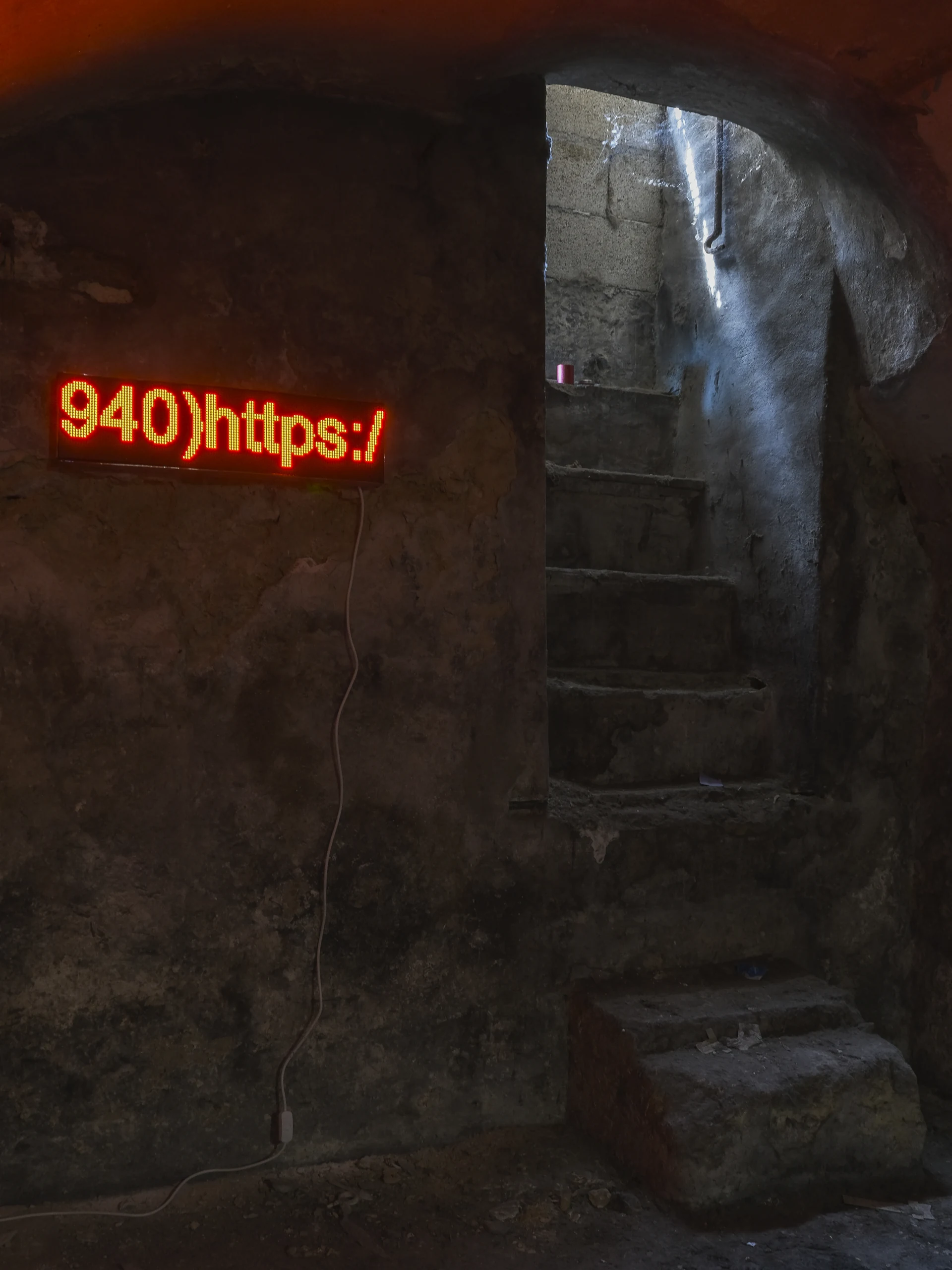
« Expired Image Content » , 64 x 16,5 x 6,5 cm, steel, LED panels, 2026. & « Abspannen (remove) 1, 10 x 5 x 5 cm, staples, tea jar, 2024.