
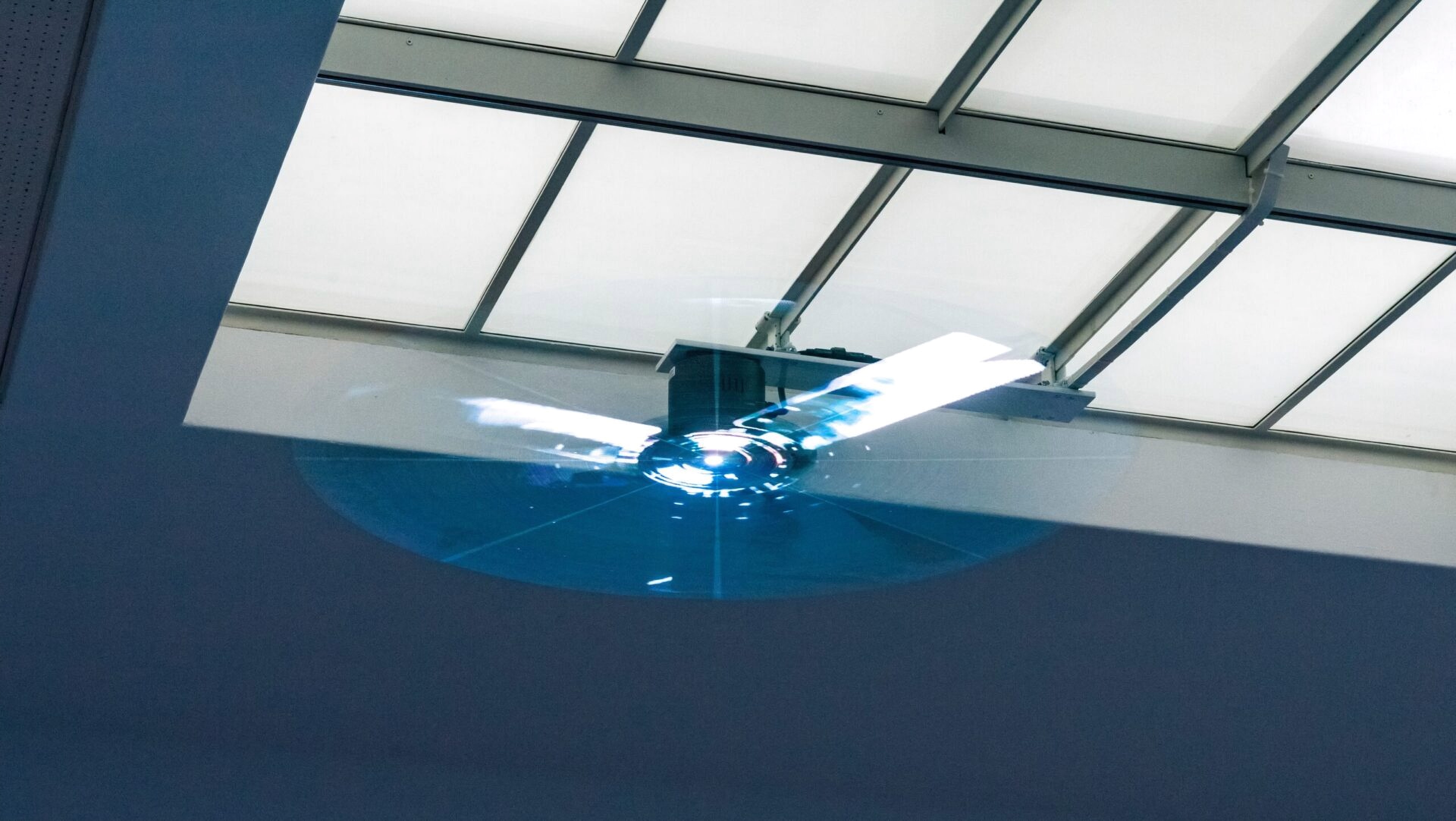
Between modernist utopias, digital perception, and embodied memory, Lilian Kreutzberger’s practice examines the moment when objects cease to be mere presences and begin to exert power over our experience.
There is a fundamental difference between inhabiting a space and understanding the conditions that make it inhabitable. We tend to think of architecture as a material structure: an arrangement of surfaces and volumes that defines routes, establishes boundaries, and organizes our presence in the world. Less often do we consider how every environment not only accommodates our movements but also helps direct them, determining what we can see, do, and even imagine. For Lilian Kreutzberger, this awareness is the starting point for a practice spanning sculpture, painting, installation, and digital technologies, one that questions the supposed neutrality of the objects and surfaces around us. Her work occupies a territory where matter can never be entirely separated from image, and perception can no longer be understood as an entirely autonomous experience. The familiar may suddenly reveal itself as artificial, while the seemingly immaterial acquires a physical presence and a striking capacity to shape our behavior.
At the heart of this inquiry lies a question about the changing nature of environments themselves. The screen is no longer simply a device we sit in front of; it is becoming a condition that extends into space, embeds itself in objects, and alters our relationship with them. A wall, a piece of furniture, or an urban surface can become an interface: a site for transmitting images and information, a mechanism capable of acting upon individual sensibility. Kreutzberger sees this prospect neither solely as technological decline nor as a promise of liberation. Rather, she approaches it as an ambivalent transformation, in which new possibilities for experience coexist with less visible forms of control. This ambiguity is precisely what keeps her work from becoming a straightforward dystopian statement. She is not seeking to prove that technology inevitably distances us from reality; she asks what happens when reality itself begins to be organized according to the logic of digital mediation.
One of the most compelling strands of her thinking emerges from her engagement with New Babylon, Constant Nieuwenhuys’s utopian project for a continuously transformable planetary environment, liberated from the constraints of work and permanent settlement. Kreutzberger describes replacing the name of Constant’s imagined city with the word “Internet” in his manifesto, only to discover how many passages remained unexpectedly relevant. This gesture matters because it suggests an unforeseen continuity between the great architectural visions of the twentieth century and today’s digital infrastructure. The internet can be understood as a form of distributed architecture: an environment through which we move, build relationships, access resources, and encounter restrictions. Yet whereas Constant’s utopia envisioned spatial transformation as a way of expanding the possibilities of life, the contemporary digital environment contains a fundamental contradiction: it offers apparently limitless freedom through structures whose workings are increasingly difficult to understand.
This gap between the promise of freedom and the organization of behavior also shapes Kreutzberger’s relationship with the modernist legacy. Her interest in Superstudio and in large-scale rationalist structures is more than a matter of formal reference. What draws her attention is modernity’s confidence that designed conditions could determine the course of human experience. Grids, modular repetition, and systematic spatial organization become evidence of a desire for control that has not disappeared but changed form. Where modernist architecture made its structures visible through façades, volumes, and geometries, digital systems operate through far less legible mechanisms, regulating access, attention, and behavior without necessarily allowing individuals to recognize how that regulation takes place.
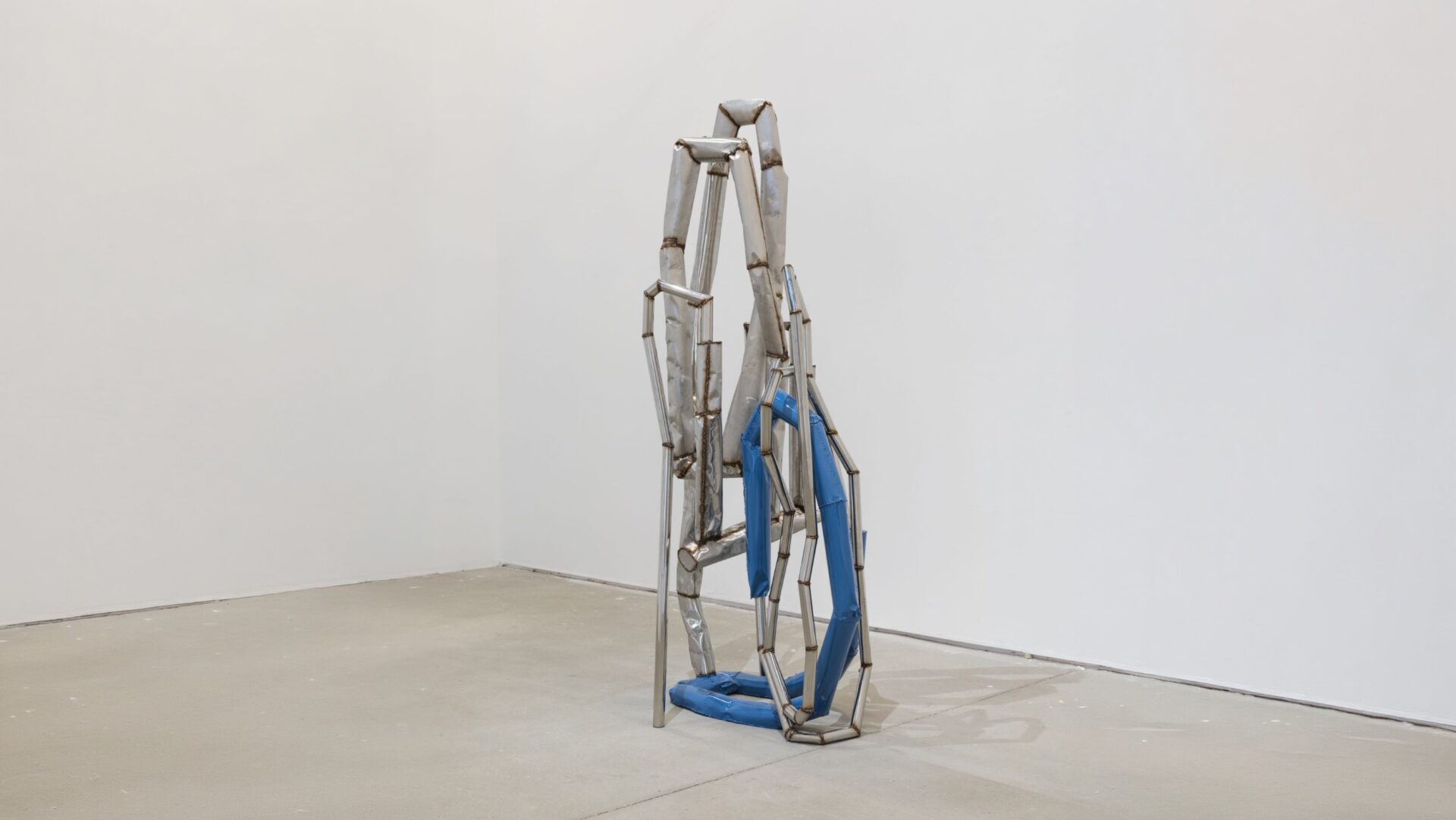
These concerns become especially tangible in her references to New York’s privately owned public spaces: areas nominally open to everyone but governed by rules set by private owners. An incident she recounts, involving a prohibition on lying down on a bench along Fifth Avenue, exposes the paradox of such places. Accessibility does not necessarily entail freedom of use. The question is not simply who owns a space, but who has the authority to decide what kinds of behavior are permitted within it. In The City of Tomorrow (2014), presented at Socrates Sculpture Park in Queens, Kreutzberger had already explored this contradiction through a modernist façade laid horizontally, as though a fragment of Manhattan’s urban order had been removed from its function and brought crashing to the ground. The building, an emblem of verticality, efficiency, and organization, became a structure stripped of its original authority. Its presence still evoked the language of architectural power, while simultaneously exposing its fragility.
From this perspective, urban space becomes a particularly revealing analogy for online life. The internet, too, presents itself as an open territory, seemingly available for circulation and participation, while access to its services depends on opaque infrastructures and terms set elsewhere. Even the distinction between public and private becomes unstable. We may be physically alone at home while simultaneously exposed to systems that record our behavior, select content, and direct our attention. Kreutzberger identifies something more radical here than the simple erosion of privacy. What is at stake is the possibility of existing in digital space without being continuously identified, interpreted, and reduced to a profile. The gradual disappearance of anonymity thus becomes a question of freedom: the freedom to withdraw from scrutiny, to remain unavailable for constant measurement.
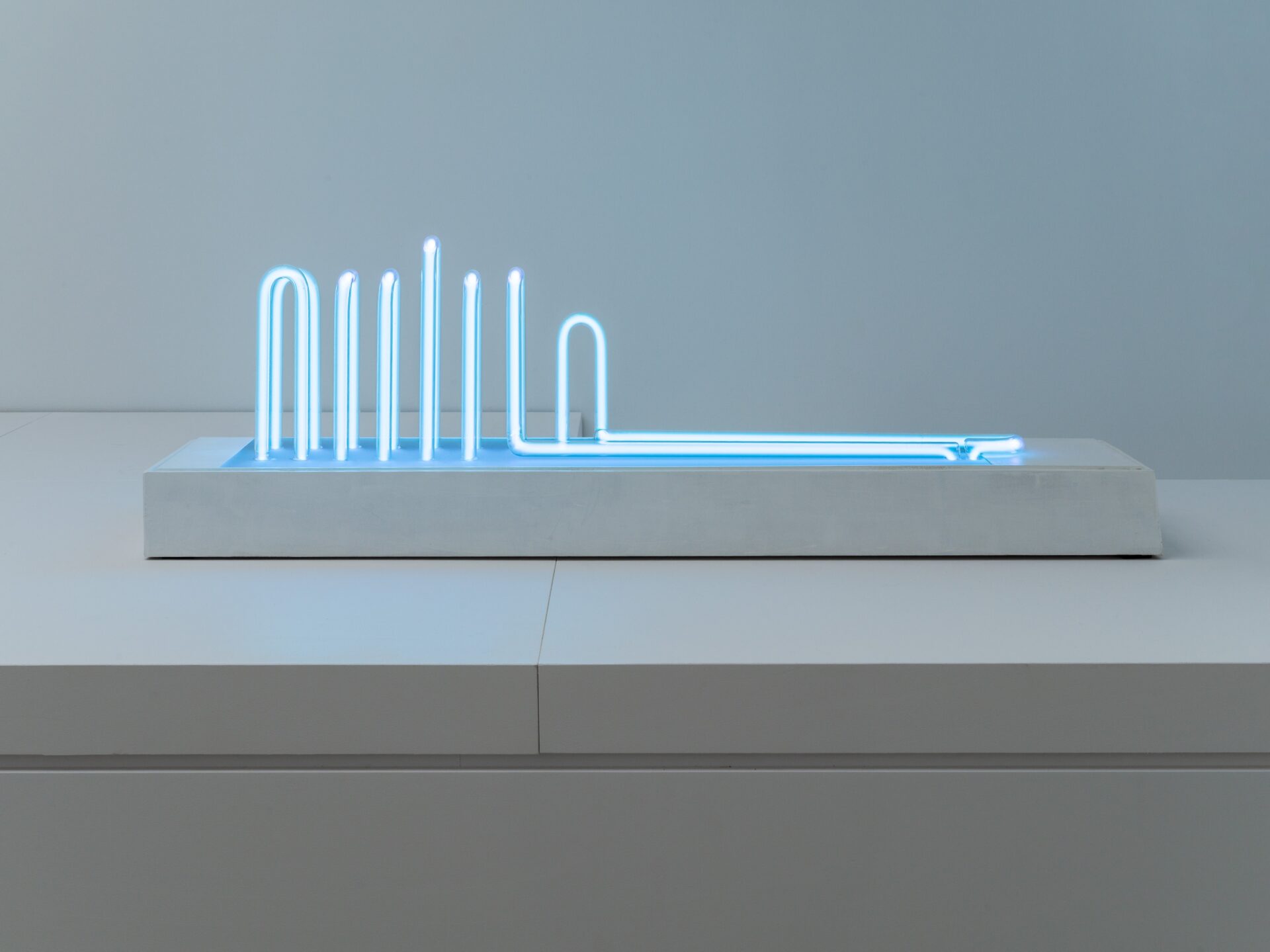
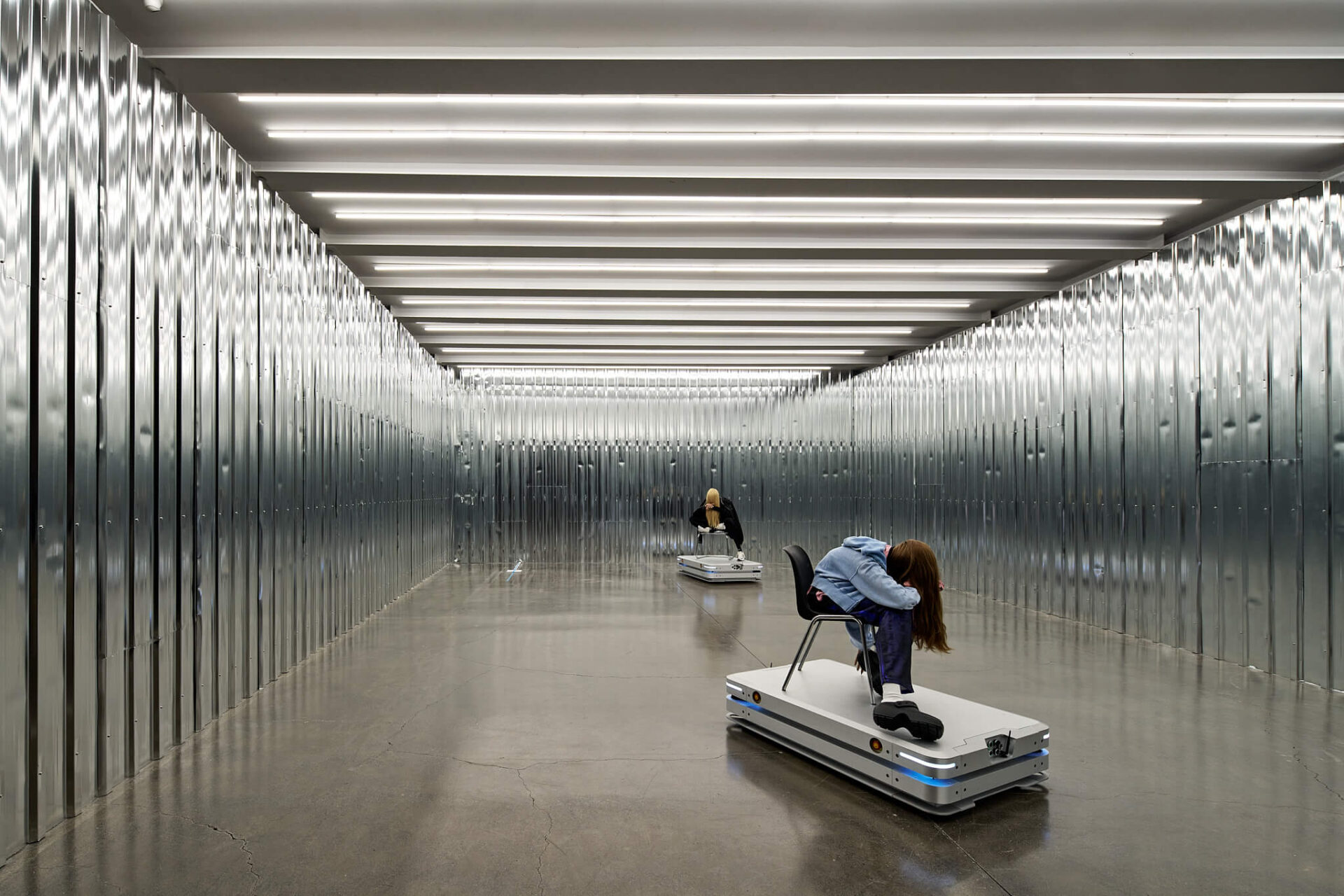
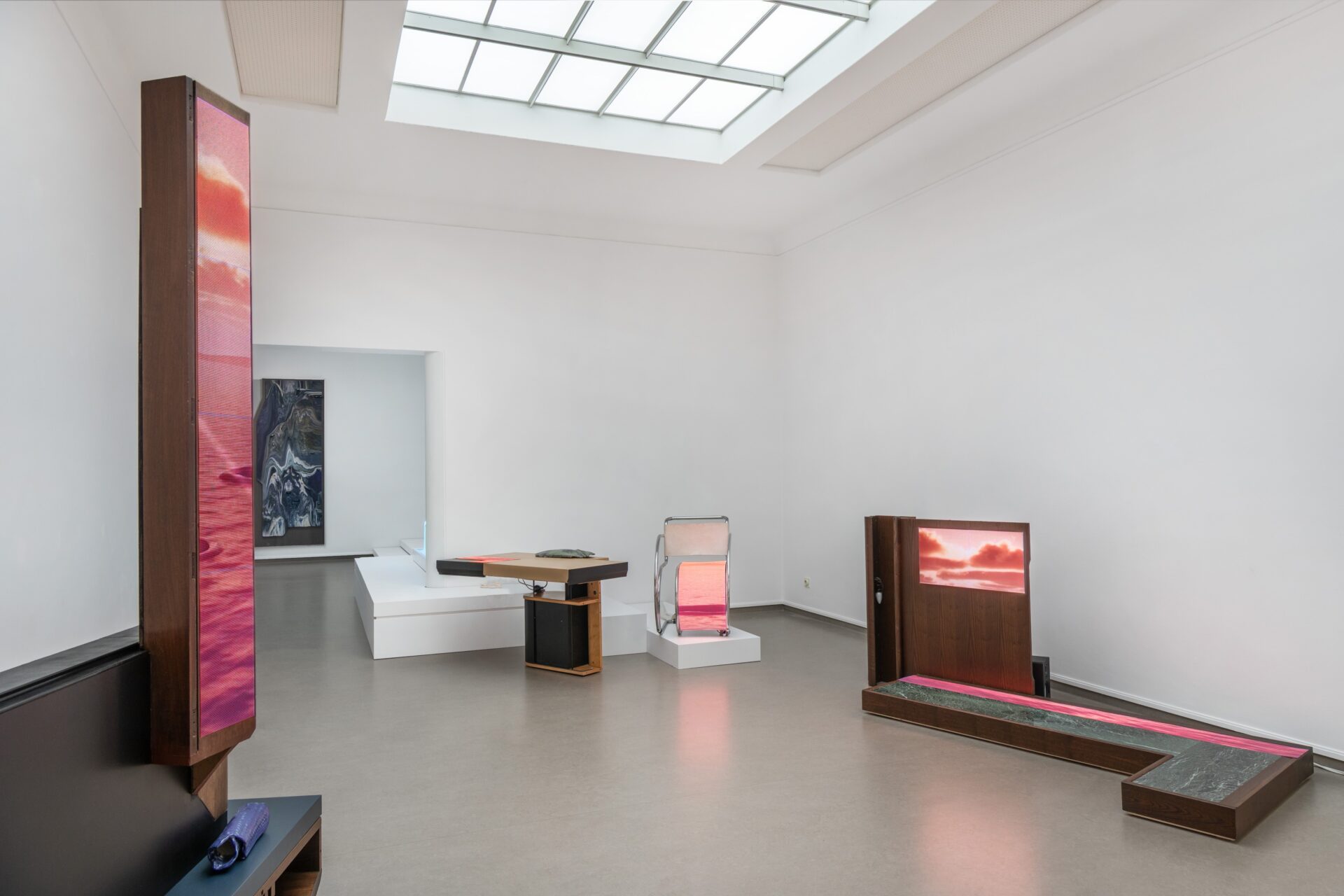
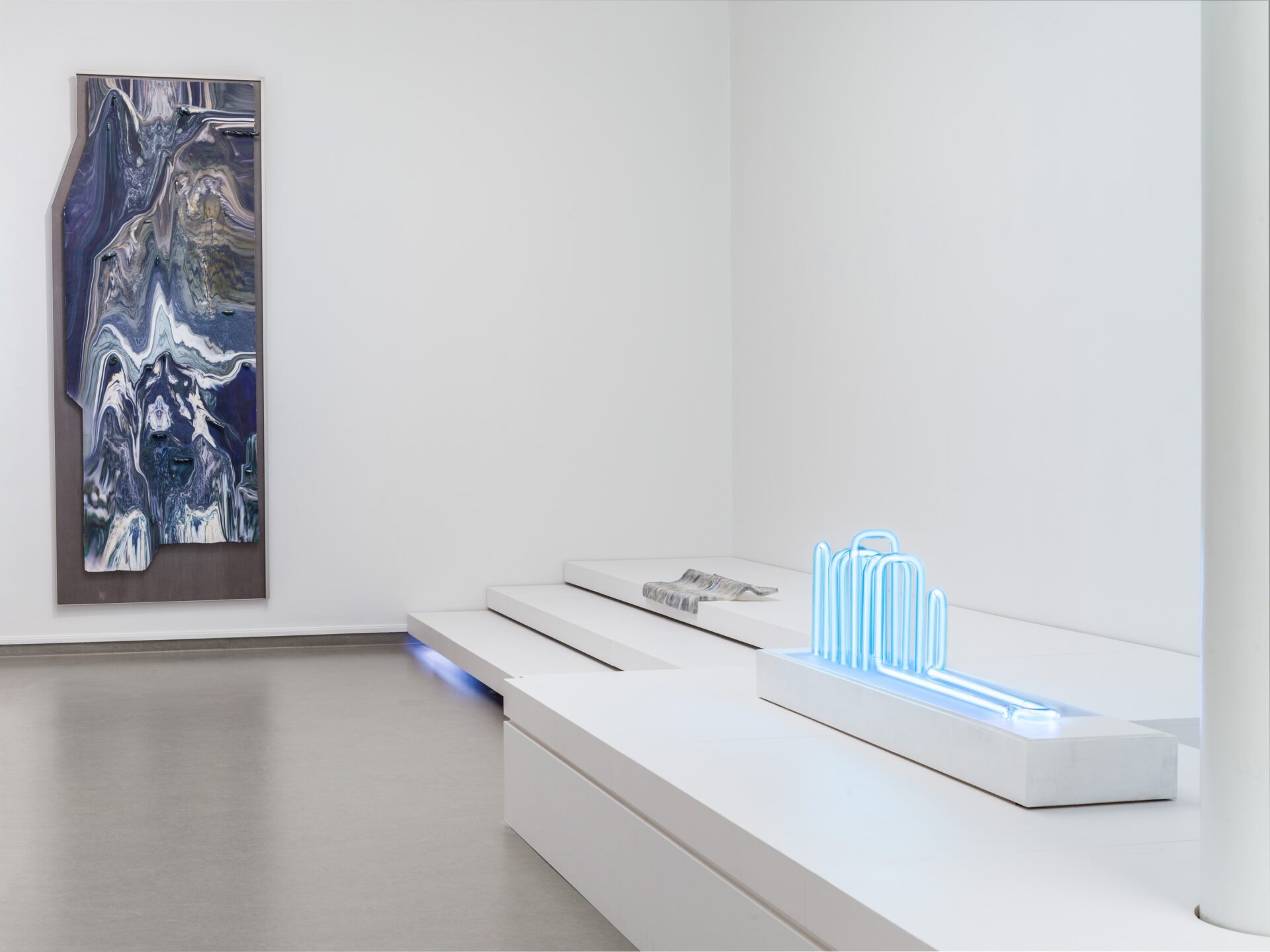
RAUHFASER, presented at the Kröller-Müller Museum, brings these reflections together in an environment where architecture, objects, and digital images seem to belong to a single, evolving organism. The title itself contains one of the project’s deepest conceptual keys. Rauhfaser is a textured wallpaper used to cover walls and conceal imperfections; when spoken, the word also recalls the Dutch rouwfase, meaning a period of mourning. The association arises from the artist’s personal experience and a family memory: her father appreciated this type of wallpaper precisely because it could disguise unevenly finished surfaces. The linguistic coincidence becomes a remarkably rich conceptual figure. A covered wall is a surface that conceals, protects, and makes an imperfect structure livable. Mourning, too, is a process of learning to live with a rupture that cannot simply be erased.
The exhibition therefore takes on an intimate dimension without becoming an explicitly autobiographical narrative. Kreutzberger understands the project as a discreet form of ceremony, a way of giving presence to a period of loss that profoundly marked her life. Yet this individual experience gradually expands into a broader condition, in which mourning also concerns the transformation of objects, the disappearance of their functions, and perhaps the gradual loss of an immediate relationship with materiality. This is not to equate human grief with technological obsolescence, but to recognize a shared structure in the experience of absence: something persists as a trace even when the form through which we knew it is no longer available. A surface may retain the appearance of a material without possessing its properties; an object may keep a recognizable shape after losing its function; a memory may continue to act upon the body long after the event that produced it has passed.
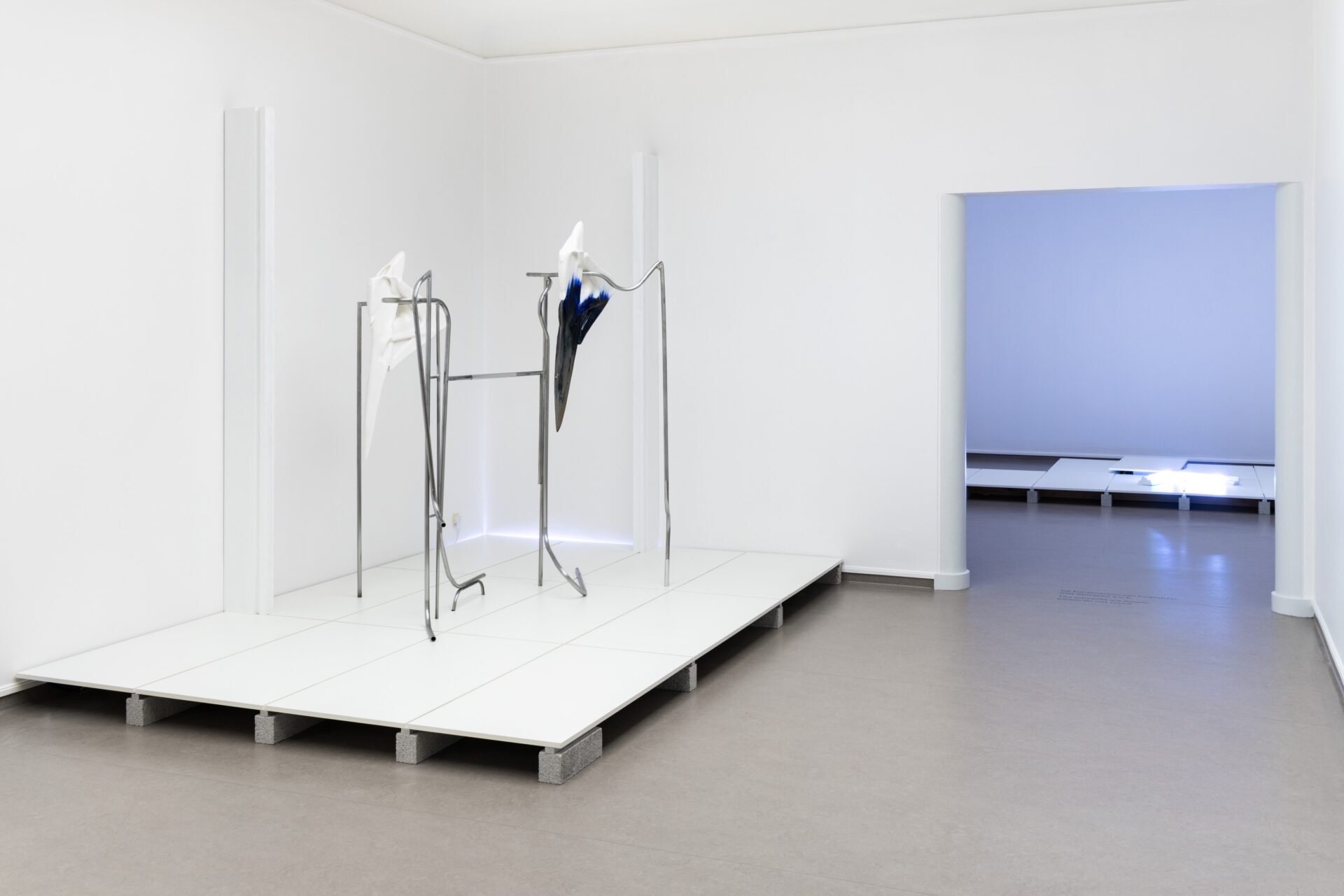
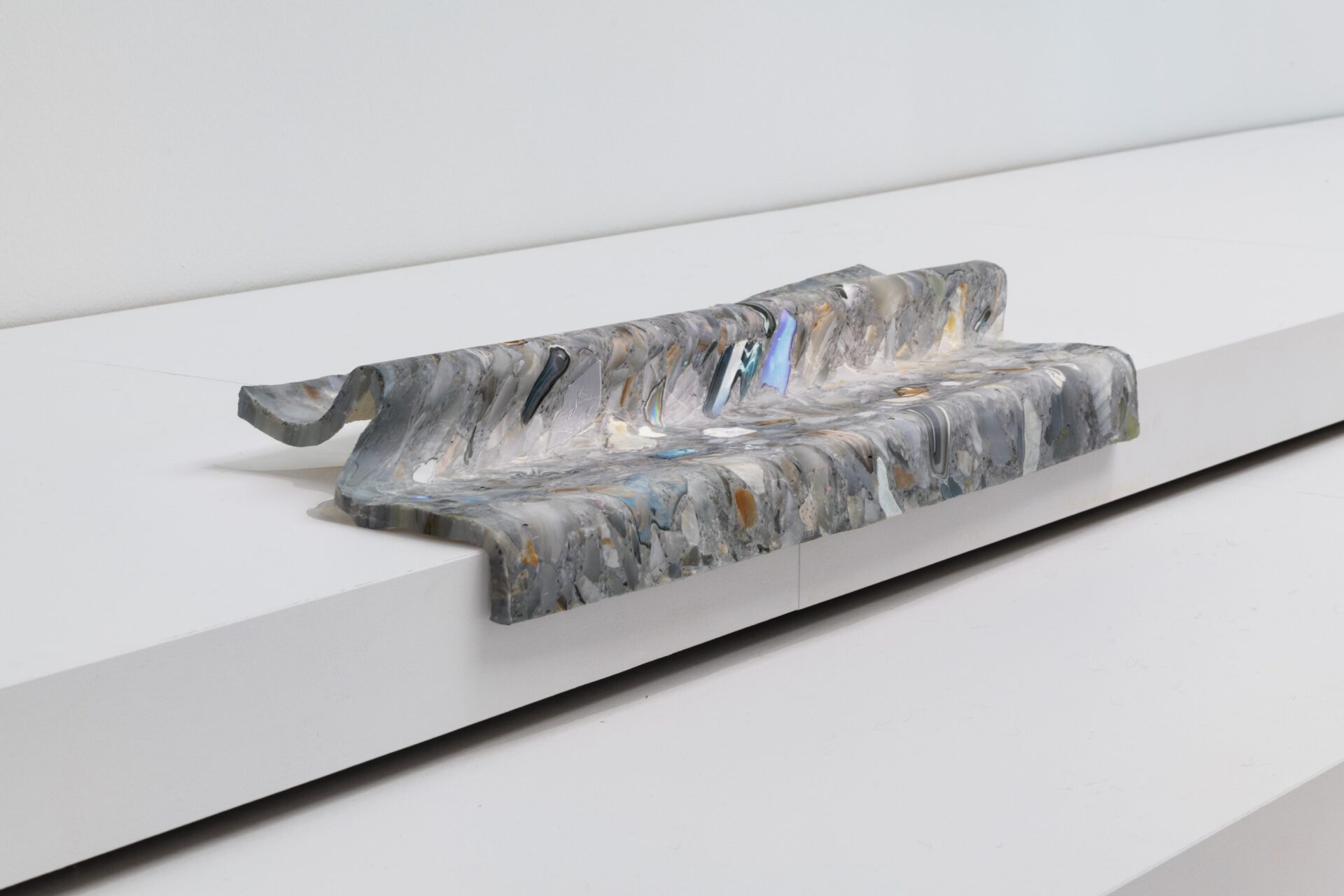
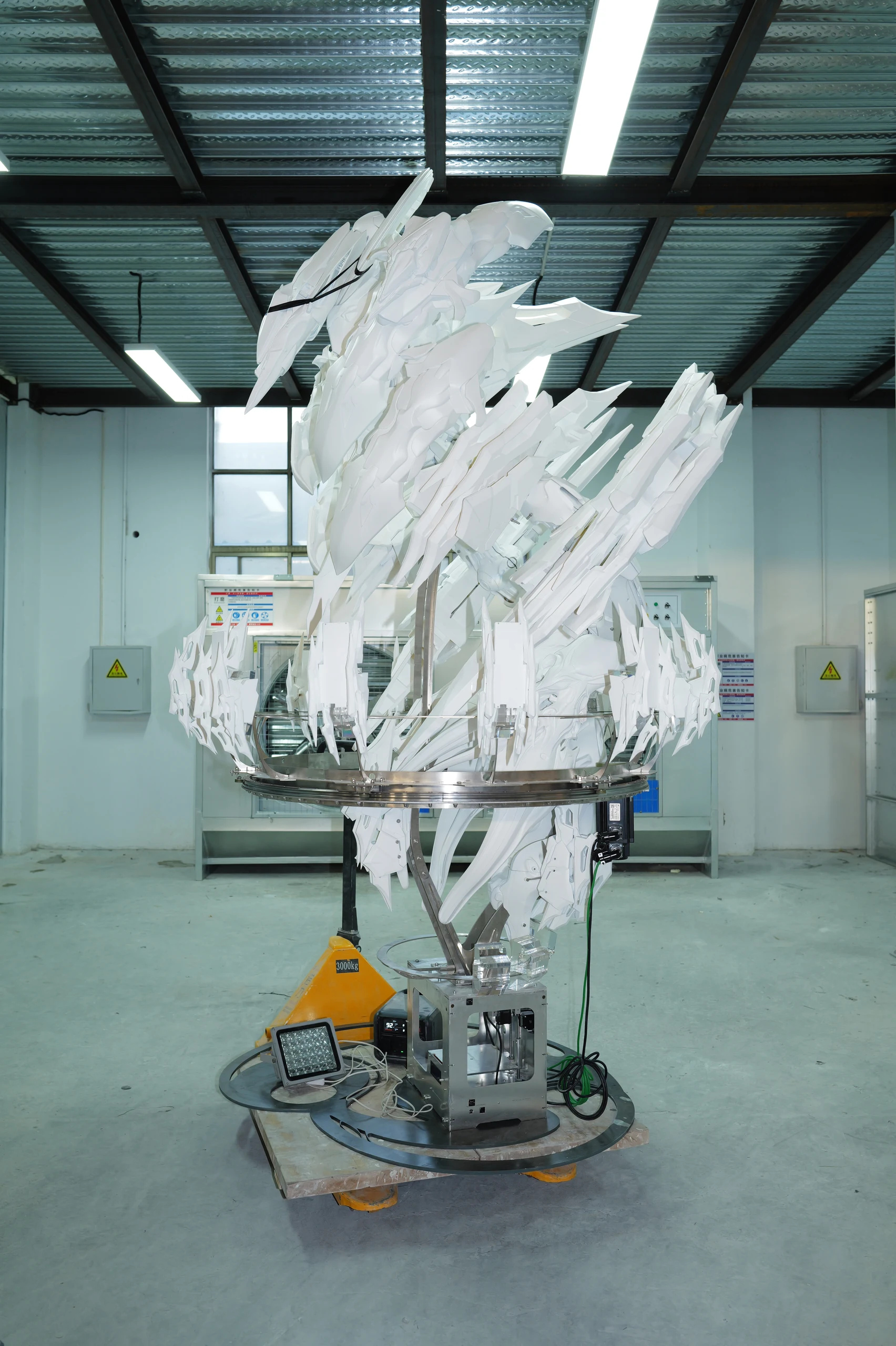
It is within these layers that the artist’s practice becomes particularly resonant. Loss is not represented only through melancholic imagery or recognizable symbols; it becomes a principle embedded in the construction of the works themselves. Ceramic sculptures derived from digitally distorted models of irons preserve a distant memory of the original object while moving away from its practical use. Surfaces that imitate marble reproduce its appearance without necessarily sharing its substance. Architectural fragments become supports for images documenting other structures, themselves detached from their original functions. Each transition produces a displacement: an object’s identity no longer coincides with its material, function, or image, but is distributed across these elements without ever settling into a final synthesis.
Marble, in particular, occupies a significant place in this vocabulary. Historically associated with permanence, monumentality, and authority, it is subjected to processes of simulation and visual transformation that contradict its apparent solidity. Its surface may seem to melt, acquire qualities incompatible with stone, or become an image of itself. This is about more than optical deception. Marble is also a familiar material in representative interiors, lobbies, and spaces of transition between public and private life. To destabilize its visual consistency is to intervene in a language through which architecture has long communicated stability, prestige, and endurance. Kreutzberger uses the seduction of the image as a threshold: first drawing the viewer in, then making the instability of their expectations impossible to ignore. Illusion is not the endpoint of the work but the means through which perception discovers its own unreliability.
This approach finds one of its most complex expressions in Aftersun, an installation incorporating LED screens into secondhand furniture. The work takes inspiration from EMDR, a psychotherapeutic approach used in processing traumatic memories, and reworks aspects of its principles into an artistic experience composed of text, moving images, sound, and spatial arrangement. The initial premise is both ordinary and unsettling: what if a refrigerator, a table, or another domestic object could offer a form of therapy through its surface? Care would no longer be confined to a specialized setting; it might appear directly within the environments we inhabit. An object would cease to be a passive component of the home and take on a relational function, addressing its viewer and intervening in their attention.
To develop the work, Kreutzberger collaborated with writer Lize Spit, who gathered accounts from people with experiences of therapy and grief, transforming them into a narrative that retains the specificity of individual lives without collapsing them into a single identity. This material is interwoven with references to Superstudio’s Ceremonia and textual fragments developed with artificial intelligence, alongside animations by Anna Chocoli and a soundscape by Nils van Lingen. The plurality of voices does not produce a linear story but a composition in which personal experience enters a collective structure. The sculptures alternately assume the roles of narrator, interlocutor, and therapeutic figure, eventually behaving like parts of a body distributed throughout the space, capable of pointing toward its own sites of pain.
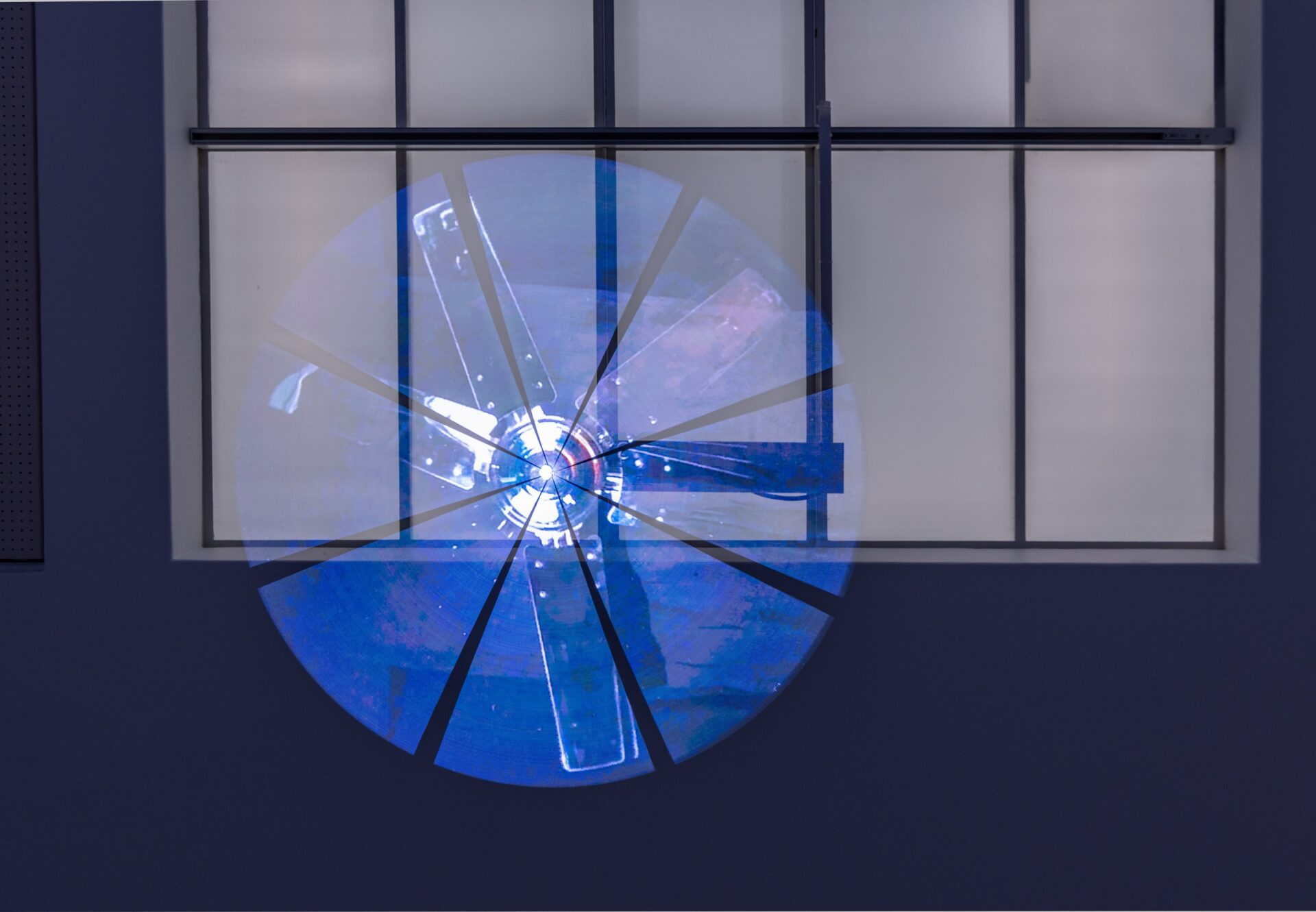
The decision not to confine this experience to a single screen is crucial. Text travels across different surfaces, requiring visitors to orient themselves physically, redirect their gaze, and follow a kind of choreography of reading. Memory is not merely recounted; it is translated into a sensory arrangement involving the body. This is an important shift, restoring a spatial dimension to technology that is often overlooked. Reading, looking, and remembering are not purely mental activities: they involve posture, movement, attention, and duration. The installation does not simply depict the relationship between body and screen; it stages that relationship, making the visitor part of the perceptual structure under examination.
As the experience unfolds, images of materials begin to shift and merge, as though wood and marble were gradually losing their identities. Other passages invite attention to memories, emotions, and bodily sensations, until a landscape appears in which four suns rise above the sea’s horizon and then vanish, leaving four black voids behind. This image seems to condense one of the work’s most powerful poetic insights: disappearance is not the same as nothingness. It produces a negative presence, a form of absence that continues to occupy perceptual space. The setting sun does not simply leave darkness; it leaves a trace of its withdrawal.
Yet it would be misleading to regard Aftersun as a therapeutic device in any clinical sense. Kreutzberger makes clear that she does not imagine the installation functioning as actual therapy. Her interest lies instead in the possibilities and risks of surfaces capable of influencing our senses and mental states. The distinction is essential because it preserves the work’s critical complexity. The artist does not propose a technological solution to suffering, nor does she turn psychological vulnerability into a promise of healing. She constructs a situation in which the very idea of care becomes ambiguous: what might accompany, support, or offer someone a meaningful experience could, under different circumstances, be used to manipulate, disorient, or control.
Here one of the most theoretically consequential aspects of her practice comes into focus. The issue is not whether screens are good or bad, but that they have the capacity to act upon our experience. They do not merely display content: they organize attention, generate emotional states, shape spatial perception, and may alter our relationship with ourselves. The possibility of receiving support remotely, finding communities of shared experience, or accessing useful information coexists with exposure to invasive stimuli and forms of behavioral influence that are not always recognizable. Kreutzberger does not attempt to resolve this contradiction. On the contrary, she seems to regard it as essential to understanding the present.
Her position becomes even more nuanced when we consider that the digital, despite its frequent appearance of immateriality, depends on physical structures and concrete devices. In some works, individual LEDs remain deliberately visible, interrupting the illusion of a continuous surface. The image reveals itself as an assembly of discrete elements, luminous points that constitute its infrastructure. It is a seemingly simple gesture with significant conceptual force: to make the pixel visible is to remind us that simulation has a material basis, that the apparent fluidity of the image is sustained by components, technologies, and processes. The distinction between material and immaterial turns out to be far less secure than contemporary language often suggests.
In this sense, Kreutzberger’s work cannot be read as a nostalgic defense of physical objects against their digital replacement. She continues to recognize the irreplaceable role of manual work, painting, and the direct transformation of materials in her practice, but she does not regard these methods as incompatible with advanced technologies. Painting, in particular, remains present as a way of thinking through surfaces, even when it does not take the conventional form of a canvas. What changes is the support, the relationship between image and object, and the possibility that a surface might not merely be looked at but might respond, transform, and intervene in its surroundings.
The collaborative nature of RAUHFASER also raises questions about authorship. Bringing together writers, architects, animators, musicians, and technical specialists transforms the artist’s role. It no longer consists exclusively in producing objects directly, but also in coordinating different sensibilities and forms of knowledge. Kreutzberger acknowledges the difficulty of communicating an intuition that has not yet fully taken shape while allowing collaborators room for independent contributions. This is more than a practical production requirement; it reflects, at the level of method, the relational nature of the works themselves. If contemporary environments are composed of interdependent systems, their artistic interpretation may also require a distributed form of authorship, in which the outcome cannot be attributed entirely to a single gesture.
There remains, however, a crucial distinction between collaboration and the loss of control. In the first, openness to others can create unforeseen possibilities; in the second, systemic opacity can diminish an individual’s capacity to understand and direct what happens. Kreutzberger’s practice seems especially attentive to this difference. Autonomy is not secured through isolation, but through the ability to recognize the relationships in which we are implicated. An environment can be shared without becoming coercive; technology can become part of experience without necessarily taking freedom away; a surface can interact with the body without reducing it to a passive recipient of stimuli. But none of these outcomes is guaranteed by technology itself. They depend on how it is designed, used, and made accessible.
This is perhaps where the connection to twentieth-century architectural utopias returns most forcefully. Constant and Superstudio imagined radical transformations of the human environment, questioning the relationship between spatial organization, freedom, and collective life. Kreutzberger engages with that tradition at a historical moment when many of its intuitions appear to have materialized in unforeseen ways. We do live within networks that cross geographical borders, change how we inhabit the world, and enable new forms of connection. Yet the expansion of possibility has not eliminated the problem of power; in many respects, it has made power harder to locate. The promise of an infinitely transformable environment now confronts the reality of systems that are constantly transforming us in turn.
The strength of Kreutzberger’s work lies in her refusal to separate this political reflection from the sensory and emotional dimensions of experience. Control is not merely a question of infrastructure, just as mourning is not merely an internal event. Both manifest through bodies, memories, objects, and the spaces we move through. A bench on which we are forbidden to lie down, a surface that asks us intimate questions, a material that seems to lose its consistency, a screen that exposes its own pixels: these are different situations converging on the same question. How much of our experience genuinely belongs to us, and how much is produced by the conditions surrounding us?
The answer is not offered as a single, unequivocal indictment. Kreutzberger seems more interested in keeping open the possibility that things are simultaneously more than they appear and less stable than we would like. An object can be both memory and simulation; technology can be both support and threat; architecture can offer protection while prescribing behavior. This coexistence of meanings prevents the works from becoming illustrations of a thesis. Instead, they restore a genuinely critical function to aesthetic experience: not confirming what we already know, but unsettling the confidence with which we think we know it.
Ultimately, Lilian Kreutzberger’s practice invites us to understand the surface not as the outer limit of things, but as the place where our relationship with the world is negotiated. It is at the surface that an object presents itself to the eye, an image takes on substance, architecture establishes a boundary, and the digital intervenes in our sensibility. Yet the surface is also where something may be concealed, altered, or returned in another form. The wallpaper that hides a wall’s imperfections, evoked by the title RAUHFASER, becomes a particularly apt metaphor for contemporary life: we inhabit environments that appear familiar and functional, while beneath their visible continuity lie accumulated fractures, memories, devices, and relations of power.
The artist does not attempt to strip away these layers in search of some original, unmediated reality. Instead, she invites us to recognize that reality is constituted through them. Perhaps the most urgent task, then, is not to separate the real from the simulated, the material from the digital, or the intimate from the public once and for all, but to understand how these dimensions act together, reshaping our capacity to feel, remember, and choose. In a world where every surface might become a screen, freedom will depend not only on what we are allowed to see, but on our ability to recognize who—or what—is organizing our gaze.