




Beginning in the 1960s, sculpture underwent a radical transformation that concerned, above all, the very material of the artwork. For centuries, sculptural language had been grounded in “noble” materials, marble, bronze, wood, but in the postwar period artists began to question this very assumption: it was no longer the material that guaranteed the value of the work, but the conceptual gesture that activated it.
This shift became particularly evident in Europe and the United States between the late 1950s and the early 1960s. Artists such as Alberto Burri began working with burned burlap, melted plastics, and industrial materials, transforming scraps and residues into painterly-sculptural surfaces. During the same period, Piero Manzoni used radically anti-artistic materials, from cotton to organic matter, to question the very nature of the art object.
Sculpture thus ceased to be a stable and permanent object and became a field of material experimentation. In the following years this trajectory expanded: Arte Povera introduced earth, coal, live animals, lead, coffee, and burlap sacks, transforming matter into energy and process.
At the same time, in the United States and within the Pop context, practices such as soft sculpture emerged, where artists like Claes Oldenburg used fabric, foam, and flexible materials to produce soft, deformable sculptures that imitate everyday objects.
Over the following decades sculpture would continue to expand: industrial materials, plastics, resins, found objects, technological devices, and eventually digital systems progressively entered the vocabulary of sculptural practice. This transition was not merely technical. It represented a deeper transformation: matter became a critical language through which artists interrogate society, industry, technology, and the body.
From Burri’s burned ruptures to the contemporary sculptures of artists such as Janson Dodge or Michael E. Smith, the history of sculpture over the last sixty years can be read as a continuous redefinition of the relationship between form, matter, and context.
It is not simply a matter of new materials, but of a shift in paradigm: sculpture no longer represents the world through stable materials, but directly absorbs the substances, residues, and infrastructures of the time in which it emerges.
The Crisis of Noble Matter: Burri and the Beginning of Post-Material Sculpture
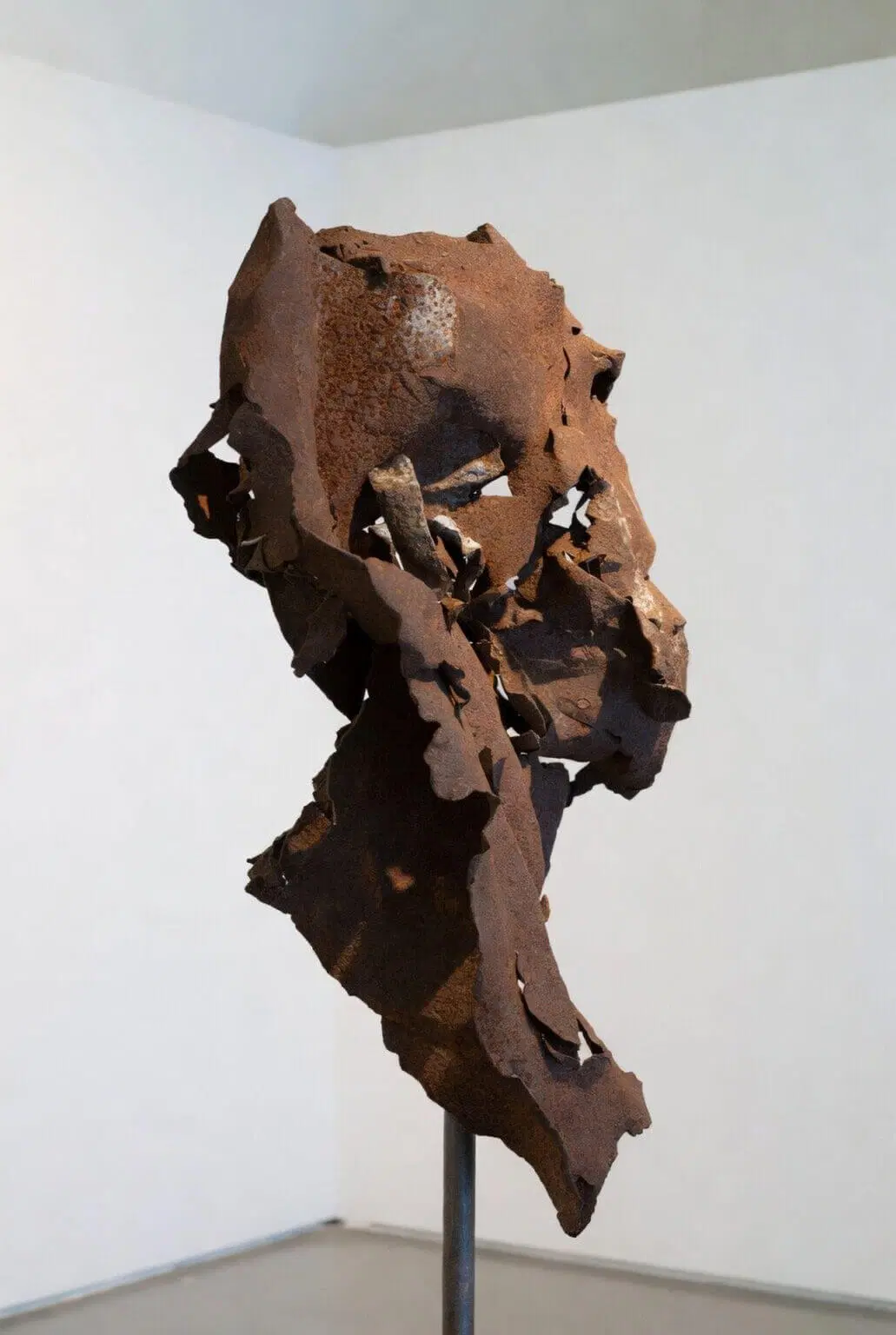
When examining the transformation of materials in contemporary sculpture, the starting point is not a simple technical innovation but a true epistemological crisis of artistic matter. Beginning in the 1960s, sculpture gradually ceased to be based on the idea of a privileged material, marble, bronze, stone, and began instead to interrogate matter as a field of tension between industry, history, and artistic gesture.
The first signal of this transformation had already appeared in the 1950s with Alberto Burri, a decisive figure in dissolving the traditional hierarchy of materials. In his Sacchi (1952–1956) the painted canvas is replaced by torn, stitched, and burned burlap. With the Plastiche series (1958–1962), Burri introduces industrial synthetic materials, fused with fire until they become sculptural membranes. In later works such as the Cretti, the surface behaves like a geological crust that fractures, transforming the material into a temporal process.
Burri does not simply introduce new materials: he shifts attention from the object to the transformation of matter. Combustion, tension, and scar become the language of the work. In this sense, his practice anticipates many of the strategies that would later define contemporary sculpture.
In the same years other figures emerged who contributed to destabilizing the material tradition of art. Piero Manzoni used cotton, kaolin, organic matter, and even the body itself as an artistic device. In works such as the Achromes (1957–1963), matter loses any representational function and becomes pure physical presence.
At the same time in the United States sculpture underwent a similar process along a different trajectory. Robert Rauschenberg introduced found objects and everyday materials in his Combines, while Jasper Johns incorporated wax, newspapers, and industrial materials into pictorial surfaces, dissolving the boundary between painting and object.
The material question became even more radical with American Minimalism. Artists such as Donald Judd, Carl Andre, Dan Flavin, and Robert Morris no longer worked matter in the traditional sense. They used industrial steel, plexiglass, anodized aluminum, fluorescent tubes, materials produced by industry and often fabricated in factories. Sculpture was no longer shaped by the artist’s hand but emerged from an impersonal production system.
Carl Andre in particular used metal plates or bricks arranged directly on the floor, transforming the exhibition space into an integral part of the work. Dan Flavin, through his fluorescent light installations, replaced solid matter with an immaterial material: industrial light.
This transformation introduced a new paradigm: sculpture was no longer defined by mass but by the relationship between materials, space, and perception.
In Europe the shift took an even more radical form with the emergence of Arte Povera in the late 1960s. The critic Germano Celant identified a generation of artists who rejected the industrial neutrality of Minimalism and chose primary, organic, or energetic materials.
Jannis Kounellis used coal, iron, coffee sacks, and even live horses in his installations.
Mario Merz introduced neon, branches, wax, and stone to construct the igloos that would become one of the symbolic forms of the movement.
Michelangelo Pistoletto worked with mirrors and reflective materials, transforming the work into a device that includes the viewer.
Giovanni Anselmo used granite, lettuce, earth, and physical tensions to make the invisible forces of nature visible.
Giuseppe Penone worked with trees, skin, and bronze to investigate the relationship between the body and organic matter.
Gilberto Zorio introduced chemical reactions, acids, and metals, creating unstable and energetic works.
In this context matter was no longer a simple formal support: it became an energetic process. Earth, fire, lead, neon, animals, vegetation. Everything could enter the sculptural language.
During the same years another line of experimentation developed through what came to be called post-Minimal sculpture. Artists such as Eva Hesse began to use latex, fiberglass, ropes, and unstable synthetic materials, creating works that degrade over time. In these sculptures matter is not stable but vulnerable.
Bruce Nauman also explored industrial materials, neon, and architectural structures to construct perceptual environments. Richard Serra, by contrast, introduced enormous sheets of industrial steel that radically altered the perception of space.
If these trajectories are observed together, one crucial point emerges: between the late 1950s and the 1970s sculpture underwent an unprecedented material revolution.
Marble and bronze did not disappear, but they lost their symbolic monopoly. Sculpture became an open territory into which plastic, steel, light, earth, textiles, organic materials, and industrial substances could enter.
From this moment forward the question would no longer be which material to use, but what kind of relationship a material could establish with the contemporary world.
It is this initial rupture that made everything that followed possible: from the soft sculptures of Pop Art to the industrial installations of the 1980s, and eventually to contemporary works constructed from found objects and residues of technological society.
Industrial Matter, the Body, and Instability: Sculpture from the 1970s to the 1990s
If the 1960s mark the crisis of traditional material, the period between the 1970s and 1990s represents the phase in which this transformation became systemic and irreversible. During these decades sculpture definitively ceased to be an object defined by a stable material and instead became an expanded field where industry, the body, everyday objects, and social residue coexist.
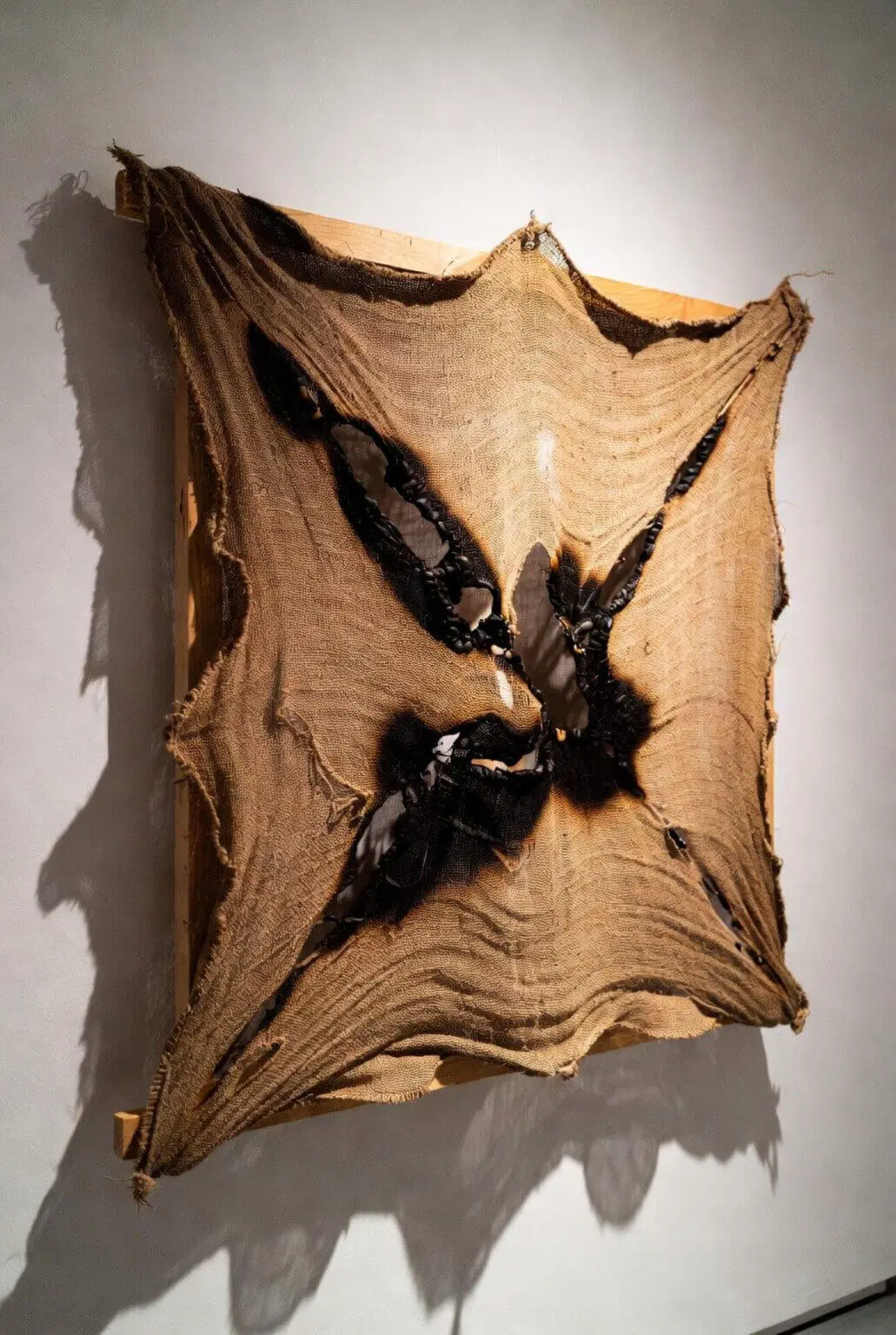
One of the most important trajectories concerns the introduction of heavy industrial structural materials. No artist embodies this direction more than Richard Serra. Since the 1960s Serra had worked with molten lead and rolled steel, but from the 1970s onward he developed his famous monumental sculptures in Corten steel. Works such as Tilted Arc or the later Torqued Ellipses series transform industrial metal into perceptual architecture. The material is not modeled in the traditional sense: it is bent, tilted, and arranged in space so that the viewer’s body enters into relation with weight and gravity.
Alongside Serra, artists such as Anthony Caro and Mark di Suvero had already begun using welded industrial steel to construct abstract sculptures that interacted with urban space. However, in the 1970s industrial metal was no longer merely a formal material: it became a symbol of infrastructural modernity.
At the same time another line of research developed around soft and unstable materials. After the pioneering experiments of Eva Hesse, many artists began using latex, rubber, plastic, and synthetic resins to produce sculptures that rejected the rigidity of tradition.
Claes Oldenburg and Coosje van Bruggen introduced the so-called soft sculpture, creating everyday objects made of padded fabric and flexible materials. Hamburgers, electrical plugs, typewriters, or lipsticks became monumental sculptures oscillating between Pop irony and material transformation.
During the same years Robert Morris explored felt, lead, and foldable materials, creating works that respond to gravity. His felt pieces—large sheets of felt left to fall freely—transform sculpture into a physical process in which the material is not fully controlled by the artist but follows its own laws.
Another fundamental dimension concerns the relationship between sculpture and the everyday object. While Minimalism had privileged pure industrial materials, in the 1980s many artists began working with already existing objects, introducing a stronger narrative and social dimension.
Haim Steinbach used shelves and consumer goods, transforming sculpture into a display device that frames the logic of consumption. Jeff Koons produced polished steel objects imitating inflatable toys or kitsch commodities, pushing industrial fabrication toward a hyper-polished and spectacular aesthetic.
At the same time other artists developed a more ambiguous and unsettling relationship with objects. Paul McCarthy employed food materials, silicone, plastic, and domestic elements to construct disturbing environments in which the body and matter appear to collapse into one another.
In the 1980s and 1990s sculpture also began confronting the residues of industrial society. Thomas Schütte introduced materials such as aluminum, ceramics, and resin to produce figures oscillating between monument and caricature, while Rebecca Warren worked with clay and bronze in deliberately imperfect ways that destabilize the traditional language of figurative sculpture.
Simultaneously a more radical line emerged around the poetics of debris. Artists such as Jessica Stockholder assembled furniture, textiles, plastic, and domestic objects into chromatic installations that transform ordinary materials into spatial compositions.
In this period figures also appeared who would carry the material question in new directions in the following decades. Rachel Harrison, for example, combined cement, cardboard, found objects, and photographs to create hybrid sculptures functioning almost like three-dimensional collages. The work was no longer conceived as a coherent object but as a system of heterogeneous materials coexisting in tension.
Looking at this landscape, it becomes clear that between the 1970s and 1990s sculpture underwent a phase of radical expansion. The materials employed ranged from industrial steel and lead to felt, rubber, latex, synthetic resins, plastic, domestic objects, consumer goods, and even the residues of industrial production.
Sculpture was therefore no longer defined by the transformation of a single material but by the assemblage of multiple material systems.
This shift prepared the ground for what would happen in the new millennium. When artists such as Michael E. Smith, Janson Dodge, and other contemporary sculptors began working with debris, abandoned objects, and post-industrial materials, the material revolution had already taken place.
The material of sculpture would no longer be chosen for its purity or nobility, but for its capacity to narrate the material conditions of the present.
Sculpture as an Archaeology of the Present: Objects, Residues, and New Economies of Matter
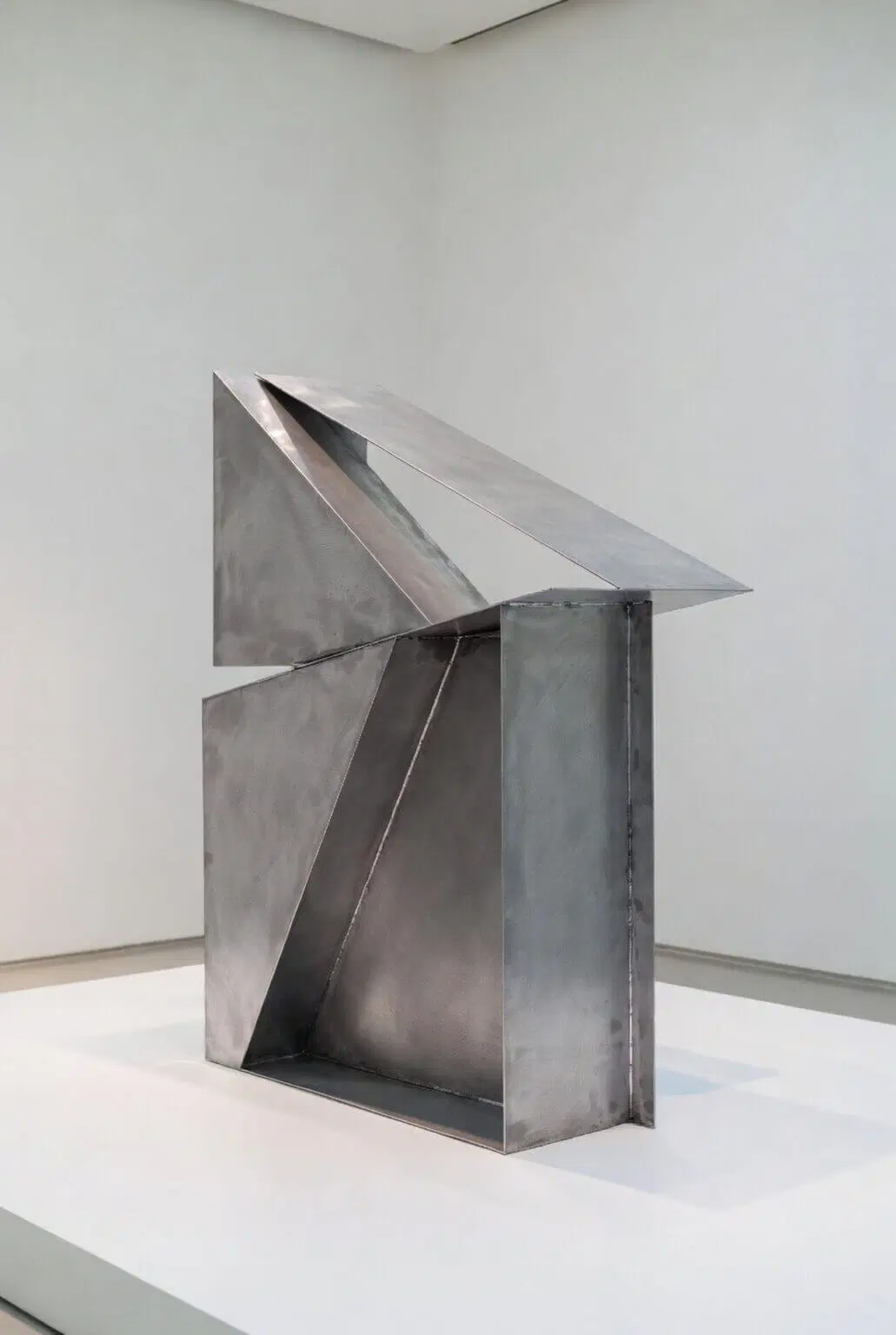
If between the 1960s and 1970s sculpture shattered the hierarchy of materials, and between the 1980s and 1990s absorbed industrial logic and the everyday object, beginning in the 1990s a further shift in perspective emerged. Matter was no longer chosen only for its physical presence or symbolic value. Instead, it became a cultural trace—a fragment that carries with it the economic, social, and technological infrastructures that produced it. In other words, sculpture began to function as a form of archaeology of the present.
This shift is particularly evident in the work of artists who began treating objects not as neutral materials but as elements charged with history. In this sense the work of Fischli & Weiss represents an important threshold. Their installations, built from apparently banal everyday objects, stage fragile and precarious choreographies in which ordinary materials acquire an almost philosophical dimension. The object is no longer simply incorporated into sculpture; it becomes an actor within a temporal and narrative structure.
During the same years another line of research developed that pushed sculpture into an even more ambiguous territory, where the boundary between found object, assemblage, and sculptural composition became increasingly porous. Rachel Harrison is one of the key figures in this transformation. Her works combine cement, cardboard, photographs, industrial products, and fragments of contemporary visual culture. Sculpture no longer appears as a coherent and autonomous object but as an unstable system of relations, a structure that seems constantly to oscillate between construction and collapse.
In this context matter definitively loses any claim to purity. What matters is no longer the material itself but the network of meanings that passes through it. A box, a block of cement, a fragment of plastic, or a printed image are not neutral elements: they are residues of productive systems, traces of an economy of objects that sculpture critically reactivates.
This understanding of matter also finds fertile ground in the work of Thomas Hirschhorn, who uses cardboard, adhesive tape, aluminum foil, plastic, and poor materials to construct extremely dense installations. His works do not seek formal stability; on the contrary, they deliberately expose the precariousness of their materials. In Hirschhorn sculpture becomes a kind of temporary infrastructure reflecting the political and media conditions of contemporaneity.
At the same time some artists began interrogating matter in relation to the history of sculpture itself. Rebecca Warren, for example, works with clay and bronze but deliberately sabotages the traditional perfection of these materials. Her sculptures appear incomplete, deformed, almost provisional. Through this strategy Warren reopens a dialogue with sculptural tradition while showing how matter can be continuously destabilized.
In parallel, other artists explored the relationship between sculpture and the built environment. Thomas Houseago uses plaster, iron, and wood to produce monumental figures that retain visible traces of the construction process. The material is not smoothed or concealed but exposed in its rawness, as if the sculpture were still in formation.
This period therefore marks a fundamental change in how matter is perceived. If Minimalism emphasized the industrial neutrality of materials and Arte Povera highlighted their primary energy, sculpture of the 1990s and early 2000s focused on the cultural and historical dimension of objects.
Every material carries an implicit biography. A piece of plastic is not merely plastic; it is the product of a global production chain, of a system of consumption, of an invisible logistics. When it enters the space of sculpture, this history does not disappear but remains present in latent form.
It is within this context that the ground was prepared for a new generation of artists who would push this logic even further. Figures such as Michael E. Smith, who works with found objects often almost invisible or marginal, or Janson Dodge, who uses materials and fragments of objects in minimal and enigmatic configurations, carry sculpture toward a condition in which matter appears increasingly reduced, almost residual.
Contemporary sculpture no longer seeks to produce monumental forms or to assert the physical presence of the work in space. Rather, it works with what remains—with what has been discarded, forgotten, abandoned.
In this sense the material of sculpture becomes less a constructive element and increasingly an index of historical time. Every object, every fragment, every residue contains the trace of a system that produced it. Sculpture simply isolates these traces, placing them in relation to space and to the viewer’s gaze.
What emerges is a profoundly contemporary sensibility. Matter is no longer celebrated for its permanence, as in the monumental tradition, but for its capacity to testify to the fragility and complexity of the present.
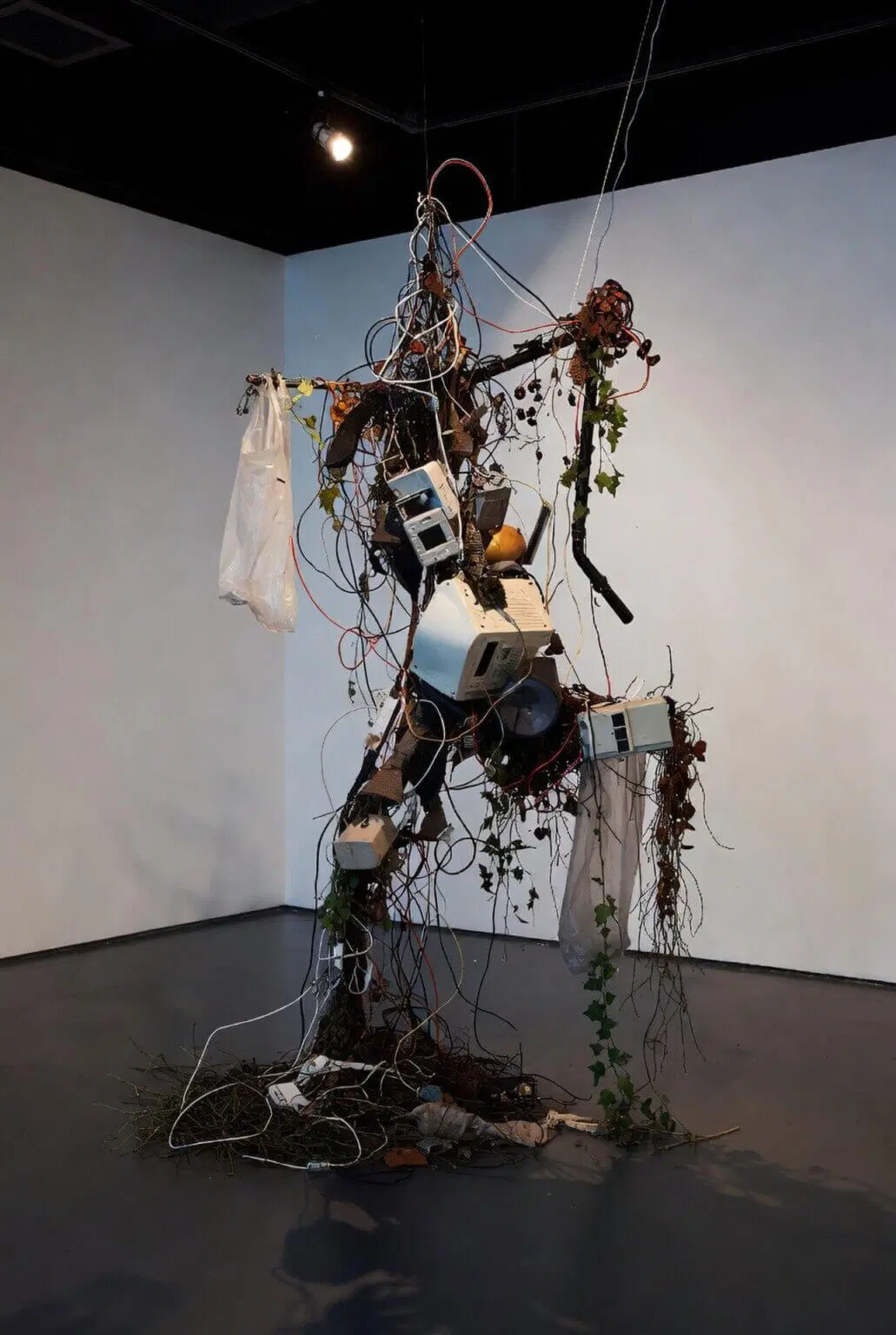
Matter After the Object: Residual Minimalism and New Ecologies of Sculpture
Entering the landscape of sculpture over the past twenty years, it becomes clear that the question of material has undergone yet another mutation. After the radical expansion of material possibilities between the 1960s and the 1990s, many contemporary artists no longer seek to introduce new materials into sculptural language. The transformation instead concerns the way matter is reduced, isolated, and recontextualized.
Recent sculpture tends to operate with a minimal quantity of elements, often fragmentary, sometimes almost invisible. In this sense one might speak of a kind of residual minimalism, a condition in which the work no longer presents itself as a complex construction but as an extremely essential configuration that activates a tension between object, space, and memory.
One artist who has made this direction particularly visible is Michael E. Smith. His sculptures are often composed of found objects or ordinary materials subjected to minimal interventions: a fragment of plastic, a metal structure, a modified domestic object. At first glance the work almost seems to withdraw from view, as if sculpture had been reduced to a clue. Yet precisely this subtraction produces a form of perceptual intensity. The viewer is compelled to interrogate the material carefully, recognizing the subtle transformations introduced by the artist.
In Smith’s work matter always appears as something already existing, a residue of industrial production or everyday life. The artistic intervention does not radically transform the material but shifts it into a condition of suspension where its original function is neutralized. Within this space of ambiguity the object loses its utility and acquires a new, almost enigmatic quality.
A similar sensibility runs through the work of Janson Dodge, who uses everyday objects and materials to construct highly measured sculptural configurations. His works often seem to emerge from a logic of subtraction: few elements, precise relationships, a fragile balance between form and context. Here again matter is never spectacular or monumental; on the contrary, it appears deliberately ordinary.
What unites these practices is a certain distrust toward sculpture as a self-sufficient object. The work no longer claims to assert a dominant presence in the exhibition space. Instead it behaves like a minimal interference within the perceptual field, a nearly imperceptible variation that alters how the viewer experiences the environment.
This direction also reflects a broader shift in how matter is perceived in contemporary culture. After decades of industrial expansion and the proliferation of objects, sculpture seems to confront a world already saturated with materials. The artist no longer needs to produce new matter; they can work with what already exists, with the fragments circulating within the everyday landscape.
In this sense many contemporary sculptures can be interpreted as micro-ecologies of materials. Objects are chosen not only for their form but for the relationships they can establish with one another and with the surrounding space. A piece of metal, a plastic surface, an industrial component becomes part of a relational system in which each element influences the perception of the others.
This approach also introduces a new temporal dimension. Matter no longer appears as stable and permanent but as something that carries an implicit history: an industrial production, a previous use, a process of transformation. When these materials enter sculpture, this history is not erased but remains present as a trace.
Contemporary sculpture therefore seems to operate under particular conditions. It no longer seeks to construct new material monuments but to reactivate the latent presence of objects that already populate the world. The artistic gesture consists in modifying the context in which these materials are perceived, creating a situation in which their meaning becomes unstable.
From this perspective matter is no longer the foundation of sculpture in the traditional sense. It is not a stable support upon which form is built. Rather, it becomes a device of inquiry, a way of reflecting on the material infrastructures of contemporaneity.
This transformation prepares the ground for the most recent phase of sculpture, in which matter increasingly enters into dialogue with the technological, digital, and infrastructural conditions of the present. In this new phase the question will not only be which materials to use, but how sculpture can exist in a world where matter itself is increasingly mediated by technological systems and invisible networks.
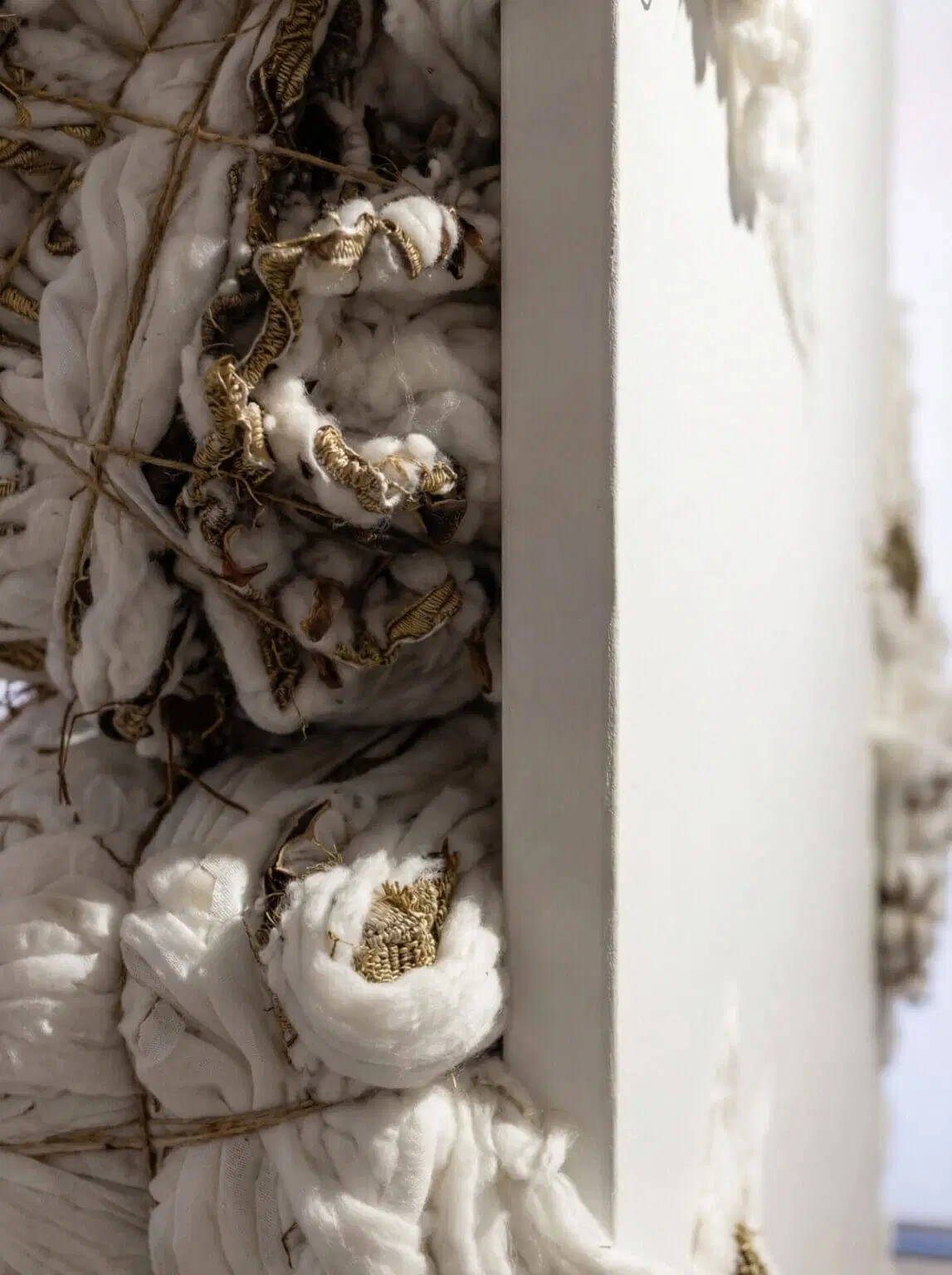
Matter, Infrastructures, and the Contemporary Condition
If we observe the trajectory that runs through sculpture from the 1960s to the present, it becomes clear that the transformation of materials has not been merely a formal issue. It has been a transformation in the way art relates to the material reality of its time. Today this transformation reaches a new phase in which matter is no longer simply a physical element but becomes an index of the invisible infrastructures that organize contemporary life.
In the work of many artists active over the past two decades, sculpture no longer simply incorporates industrial materials or found objects. What emerges instead is a sensibility that considers matter as the point of intersection between productive systems, global logistics, technology, and everyday life. Sculpture thus becomes a device that makes these normally invisible structures perceptible.
The work of Michael E. Smith represents one of the most radical examples of this condition. His works are often composed of ordinary objects that seem to resist immediate identification: a deformed metal element, a fragment of plastic, an altered domestic structure. The artist’s intervention is minimal but precise, and this precision produces a powerful perceptual tension. The object appears familiar and at the same time strange, as if it had been extracted from a functional system and placed into a suspended space.
In these works matter is never neutral. Every element seems to carry the trace of an industrial process, of a previous use, of an economic circuit that remains implicit. Sculpture does not explicitly expose these histories but allows them to surface through the enigmatic presence of the object.
A related sensibility can also be seen in the work of Janson Dodge, where sculpture often takes the form of essential configurations constructed from everyday objects and materials. Here again the artistic gesture does not consist in the spectacular transformation of matter but in creating a situation in which objects lose their original function and acquire a new perceptual quality. The works seem to operate in an intermediate zone between everyday object and sculptural structure, as if sculpture had emerged from a process of subtraction rather than construction.
This direction reflects a broader condition of contemporary culture. We live in a world in which material production is everywhere, where objects circulate continuously through global logistical networks. In this context sculpture no longer needs to produce new matter in order to assert itself. It can work with what already exists—with what has been produced and then forgotten.
What changes is the way these materials are observed. Contemporary sculpture often adopts an almost archaeological gaze, as if the objects of the present were already the artifacts of a possible future. A fragment of plastic, an industrial component, a domestic object can become a clue to a broader economic and technological system.
From this perspective matter assumes a far more complex temporal dimension. It is not only what physically constitutes the work but also what testifies to the history of the infrastructures that produced it. Sculpture is no longer an isolated object but a point of condensation for material relations that traverse contemporary society.
This transformation in a sense completes the trajectory that began in the 1950s with Burri’s combustions. At that time the radical gesture consisted in destroying the traditional nobility of artistic materials. Today the situation is different. Sculpture no longer needs to demonstrate that any material can become art. That lesson has long since been absorbed.
The contemporary question concerns how to observe matter in a world where every object is already the product of complex systems. Sculpture becomes a space of attention, a place where objects can be removed from the continuous flow of production and circulation in order to be observed in their singular presence.
In this sense the history of materials in sculpture over the last sixty years can be read as a progressive transformation of perception. From marble to iron, from plastic to found objects, and finally to the residues of contemporary production, matter has ceased to be a simple formal support and has become a key to understanding the material world in which we live.
Contemporary sculpture no longer seeks to impose new forms upon matter. Instead, it attempts to understand what matter can reveal about our time.


